


Sales EQ — Cliff Notes Summary
Quality
Certified
Sales EQ (Jeb Blount, Wiley, 2017) argues that sales-specific emotional intelligence — not IQ, product knowledge, or process discipline — separates ultra-high performers from average reps. Buyers decide emotionally and justify logically, so the seller who manages their own disruptive emotions while shaping the buyer's emotional experience wins complex deals.
What Sales EQ actually claims, and why the claim still lands
Most sales books sell a process. Blount sells a diagnosis. His starting premise is that the traditional seller's advantage — knowing more than the buyer about the product, the market, and the competitive field — has evaporated. Buyers arrive at the first call having read the docs, watched the demo recording, priced the alternatives, and polled three peers in a Slack community. Blount calls the convergence of information parity, larger buying committees, and commoditized product categories the "Perfect Sales Storm," and his verdict on the old skill set is blunt: it's all but obsolete.
What replaces it is a stack. Blount breaks sales intelligence into four layers, and the ordering is the whole argument:
- Innate intelligence (IQ) — raw cognitive horsepower. Largely fixed, and, in his read, wildly overrated as a predictor of quota attainment.
- Acquired intelligence (AQ) — product depth, industry fluency, competitive knowledge, methodology. Fully learnable, and increasingly cheap to acquire.
- Technological intelligence (TQ) — how fast a seller absorbs new tooling. In 2017 that meant CRM hygiene and sequencers; today it means conversation intelligence, intent data, and LLM-assisted research.
- Emotional intelligence (EQ) — the sales-specific ability to read and regulate emotion, in yourself first and the buyer second.

The claim is that IQ, AQ, and TQ have all collapsed into table stakes. Everyone has the battlecard. Everyone has the call recording. Everyone has a research assistant that can produce a competent account brief in ninety seconds. The differentiator that resists commoditization is the one that lives in the room: whether the rep can hold their composure when a CFO opens with "we're only taking this call as a formality," and whether they can leave that CFO feeling heard rather than handled.
This matters more, not less, as the top of funnel gets automated. When outbound volume goes up an order of magnitude and every message is competently written, competence stops being a signal. The scarce good becomes the thing that can't be generated — a seller who notices that the champion went quiet after the pricing slide and asks about it directly instead of sending a follow-up nudge on day three. Anthony Iannarino, who wrote the book's foreword, has made a parallel argument for years: the level you compete at is set by the value of the conversation you can hold, not the collateral you can send.
The adjacent implication for revenue operations is underappreciated. If EQ is the differentiator, then every system that scores reps purely on process compliance is measuring the commoditized layer and ignoring the decisive one. A team can be 95% MEDDPICC-compliant and still lose the same deals repeatedly because nobody in the pipeline review ever asks whether the buyer likes talking to the rep.
The step-by-step process the book actually prescribes
Blount's framework isn't a stage model bolted onto the CRM. It's a sequence of emotional checkpoints that runs underneath whatever stage model you already use. Rendered as a workflow, it looks like this.
Step one: the pre-call ritual. Blount names four disruptive emotions that originate on the rep's side of the table — fear of rejection, desperation for the number, eagerness that triggers premature pitching, and attachment to one specific outcome. The prescription is deliberately unglamorous: before the call, name the emotion out loud or in writing, acknowledge what it's pushing you to do, and decide not to do that. Two minutes. Teams that install this well usually attach it to an existing artifact — a line at the top of the call prep note — because a ritual with no home in the workflow doesn't survive contact with a busy Tuesday.
Step two through four: the five questions, in order. The most-quoted section of the book holds that every buyer is unconsciously running five questions about the seller: *Do I like you? Do you listen to me? Do you make me feel important? Do you get me and my problems? Do I trust and believe you?* Blount's argument is that when all five are yes, saying no becomes very difficult, and when any one is no, no volume of feature-function closes the gap. The sequencing is the practical insight. Discovery training drills question four almost exclusively — pain, impact, quantification — so reps arrive with a good question list and no relational floor under it. That's how a technically flawless demo loses to a softer competitor whose rep simply seemed easier to work with for the next three years.
Step five: influence through the People Principles. Blount's synthesis here is openly derivative and he says so — Cialdini, Carnegie, Maslow. Reciprocity, acknowledgment, likability, consistency, similarity, expertise, authority. The value isn't originality; it's the application to a committee deal where each principle attaches to a different stakeholder. The economic buyer responds to authority and expertise. The end user responds to acknowledgment and similarity. Running the same influence play across all seven seats is why some reps get a strong champion and a hostile committee.
Step six: non-complementary behavior. This is the chapter practitioners cite most, and it's the most immediately usable. Human default under aggression is to mirror it — a defensive buyer produces a defensive seller, and both escalate. Non-complementary behavior means responding to hostility with calm curiosity instead. Blount credits the concept to an *Invisibilia* episode, "Flip the Script," which drew on research by Christopher Hopwood on interpersonal complementarity. In practice it looks like meeting "your pricing is insulting" with "that's a real reaction — walk me through what you were expecting" rather than a defense of the pricing model. The pattern break buys you the next ninety seconds, which is usually all you needed.
Step seven: shape win probability, or disqualify. Blount treats a deal as three processes running at once — the sales process the CRM tracks, the buying process procurement and legal run, and the decision process, which is the messy group-emotional story of how the committee actually lands. Most CRMs only model the first. The rep's job is to influence all three at each emotional inflection point: the moment after discovery, the moment after the demo, the long silence after the proposal goes out. And when the deal fails the ideal-customer filter, kill it — Blount treats disqualification as a superpower, because attachment to a bad deal is the primary manufacturer of desperation, and desperation collapses questions one through five in every subsequent conversation.
Costs, timelines, and what installing this realistically takes
The book itself is trivially cheap — a hardcover, a Kindle copy, or an audiobook credit. The real cost is organizational, and teams consistently underestimate it because "read a book" doesn't feel like a change program.
Reading time. The book runs roughly 300 pages across 20-odd chapters. A working seller reads it in six to eight hours, or listens in about seven. Blount narrates his own audiobook, which matters more than it sounds — the delivery carries the tonal instruction the text describes.
Time to first behavior change. The self-regulation pieces move fastest. Reps who run the pre-call ritual consistently tend to report feeling steadier on hostile calls within a few weeks, because the intervention is small and the feedback is immediate. Non-complementary behavior takes longer, because it fires exactly when your nervous system is least available for new habits. Expect a quarter of deliberate practice before it's reliable rather than occasional.
Time to pipeline impact. This is where honesty matters. If your average sales cycle is 90 days, no behavioral change shows up in closed-won for at least one full cycle plus ramp — call it four to six months before you can look at win rate and say anything defensible. Anyone promising a measurable lift in six weeks is reading noise. Enterprise teams with nine-month cycles should plan to evaluate on leading indicators only for the first two quarters.
Enablement cost. A serious install is not a book club. The realistic shape is: a half-day kickoff, a scoring rubric added to existing call reviews, one coaching conversation per rep per week focused on a single EQ habit, and a manager who is themselves competent at the thing they're coaching. That last constraint is the binding one. The whole program collapses if the frontline manager runs pipeline reviews by interrogation, because you cannot ask reps to practice non-complementary behavior with buyers while modeling complementary escalation with their own team.
Tooling cost. Nothing new is strictly required. If you already run a conversation-intelligence platform — Gong, Chorus, Clari Copilot, or any of the newer entrants — you can build EQ scoring on top of the transcripts you already capture, tagging calls where the rep pitched inside the first three minutes or talked past a buyer's objection. If you don't have one, a manager listening to two calls per rep per week accomplishes most of it at zero incremental spend, just with less coverage.
Opportunity cost, which nobody budgets. The disqualification discipline is the expensive part, culturally. Telling a rep at 60% of quota to kill three deals in their pipeline is asking them to accept a worse-looking forecast this month in exchange for better allocation next quarter. That trade only survives if leadership actually rewards it — which means the comp plan and the pipeline review have to stop punishing an honest stage-out.
Where teams get this wrong
They treat it as a soft-skills veneer over an unchanged system. The most common failure is buying the book for the team, running one workshop, and changing nothing about how deals are inspected. Reps revert within a month because every incentive in the environment still rewards activity volume and stage progression. If the weekly forecast call still opens with "why isn't this in commit," you've taught EQ and reinforced desperation in the same week.
They read empathy as agreeableness. Blount's frame gets flattened into "be nice, build rapport, don't push." That misreads the book badly. He is explicit that the point of clearing questions one through three is to earn the standing to challenge — to tell a buyer their stated requirement is wrong, or that their timeline is fantasy. Empathy is the load-bearing structure underneath the hard conversation, not a substitute for it. This is also where the apparent conflict with the Challenger model resolves: challenge delivered without an emotional floor reads as arrogance, and challenge with one reads as expertise.
They score the wrong layer. Most call review rubrics are pure process — did the rep confirm metrics, identify the economic buyer, establish the decision criteria. All useful, all measuring AQ. Almost nobody scores whether the buyer talked more than the rep, whether the rep acknowledged an emotional statement before moving on, or whether they pitched before the buyer had described a problem in their own words. The fix is a dual score: keep the process rubric, add a five-question rubric scored one to five, and review both.
They skip the manager layer entirely. Blount is writing to individual sellers, so organizations naturally deploy it to individual sellers. But EQ habits are coached, not read. A team where managers can't demonstrate the behavior on a live call gets a shelf full of books and a flat win rate.
They ignore the multi-threading gap. This is a genuine limitation of the source material, not a misreading. The book gives comparatively little attention to systematically building relationships across a committee — it reads as a one-rep-one-buyer emotional dynamic scaled up. Modern committee deals with seven-plus stakeholders need a deliberate multi-threading motion as the *first* discipline. Run Sales EQ alongside a coverage map; don't let it substitute for one.

They forget the book pre-dates product-led motions. Blount assumes the seller drives the process. In a PLG or self-serve-first motion, the buyer often arrives having already evaluated the product and enters the human conversation at procurement or expansion. The five questions still apply — they may apply harder, because the seller has less time to establish them — but the sequencing assumption that the rep opens the relationship no longer holds. Adapt rather than discard.
They confuse emotional regulation with emotional suppression. The instruction is to notice fear and decide not to act from it, not to feel nothing. Reps who interpret it as suppression become flat and read as insincere, which fails question five faster than nervousness ever did.
Decision framework: when Sales EQ is the right prescription
Not every stalled revenue org has an EQ problem. Prescribing this book to a team whose actual issue is unqualified pipeline or a broken ICP wastes a quarter. The diagnostic question is where deals die.
Read the branches as a triage. If reps can't get meetings at all, the constraint is upstream and Blount's own *Fanatical Prospecting* is the more direct fix — Sales EQ assumes you're already in conversations. If deals die late on price and terms, the constraint is negotiation, and *INKED* is the closer match from the same author. If deals die in procurement and legal, you have a buying-process mapping gap, which is a RevOps problem more than a seller-skill problem.

The band where Sales EQ is genuinely the right tool is narrow but common: reps are getting meetings, the product demos well, discovery notes look complete, and deals still evaporate between the demo and the proposal with no clear objection. That silence-after-a-good-meeting pattern is the signature of a relational floor that was never built — the buyer had no reason to prefer this seller, so they defaulted to the incumbent or to nothing.
The second gate on that diagram is the one that decides whether the program survives. If frontline managers can't demonstrate the behavior themselves, coach them first and delay the rep rollout by a quarter. A rollout into managers who don't model it produces cynicism, and cynical teams don't get a second attempt at the same initiative.
For the *Cliff* Notes version of the whole *strategy*: memorize three things from this book and you have most of its value — the five questions, the four levels of sales intelligence, and non-complementary behavior. The rest is supporting argument. Blount's own summary of the thesis is that emotion is the catalyst that turns interest into action, and everything operational in the book is downstream of taking that literally.
Related questions
Should I read Sales EQ or Fanatical Prospecting first?
Fanatical Prospecting, if your problem is empty calendars — it's the more tactical, more immediately actionable of the two. Sales EQ if you're already in conversations that don't convert. The books address different constraints and the sequencing follows your actual bottleneck, not publication order.
Does Sales EQ contradict the Challenger Sale?
Not really. Blount's position is that challenge is delivered through empathy rather than instead of it — you earn the standing to push back by first clearing the like-me, hear-me, respect-me questions. Challenger describes what to say; Sales EQ describes the conditions under which it lands.
Is this useful for customer success and account management?

Yes, arguably more so. Renewal and expansion conversations are dense with the same emotions — fear of switching cost, resentment about a support failure, status anxiety about a decision the buyer already defended internally. The five questions apply to every revenue-facing role, not just new-logo closing.
Can you measure EQ improvement, or is it purely qualitative?
You can proxy it. Track talk-to-listen ratio, time-to-first-pitch, second-meeting conversion rate, and the share of deals that stall with no stated objection. None is a direct EQ measure, but all four move when the underlying behavior changes, and they're already sitting in your conversation-intelligence tool.
FAQ
What exactly is sales-specific emotional intelligence, versus general EQ?
General EQ describes broad awareness and regulation of emotion across any context. Sales-specific EQ narrows it to the emotional conditions of a commercial conversation — managing rejection sensitivity, quota desperation, and attachment to a specific outcome, while deliberately shaping the buyer's experience of being understood. The difference is domain and stakes, not mechanism.
Can an analytical, low-natural-EQ rep actually learn this?
Blount's position is that it's a trainable skill set rather than a fixed trait, and the book is structured accordingly — the self-regulation practices in particular are procedural enough that a systematic person can install them like any other habit. Analytical reps often do well with the pre-call ritual precisely because it's a checklist.
Is the book theory or practice?
Both, weighted toward frameworks. The five questions, the four levels of sales intelligence, the People Principles, and non-complementary behavior are all directly applicable. The Kahneman and Damasio material in the early chapters is scaffolding for why the frameworks work; you can skim it without losing the operational content.
How does this hold up now that AI handles most routine selling tasks?
Better than most 2017 sales books. The core claim — that the commoditizable layers of selling stop being differentiators — is exactly what automation accelerates. The book's weakest section is its treatment of technological intelligence, which reads as dated; the emotional-intelligence material is the part that ages well.
Does it work for SDRs, or is it strictly enterprise AE material?
It's written with complex deals in mind, but the emotional dynamics scale down. An SDR's cold call is a compressed version of the same five questions, answered in forty seconds instead of forty minutes. The disqualification discipline is arguably more valuable for SDRs, who are under the most pressure to manufacture meetings that shouldn't exist.
What's the single highest-leverage chapter if I only read one?
The non-complementary behavior chapter. It's self-contained, the technique is learnable in one sitting, and it applies immediately to hostile calls, procurement pushback, and internal conflict alike. Most practitioners who cite this book are, in practice, citing that chapter.
Sources
- Wiley — Sales EQ publisher page
- Jeb Blount — official Sales EQ product page
- O'Reilly Learning — Sales EQ table of contents
- Keller Center for Research, Baylor University — INSIDER: Sales EQ
- NPR Invisibilia — "Flip the Script"
- Goodreads — Sales EQ reader reviews
- Amazon — Sales EQ hardcover listing
- Revenue.io podcast — How to Be an Ultra High Performer with Jeb Blount
Related on PULSE
- The Advantage by Patrick Lencioni — Cliff Notes Summary for Sales Leaders
- Major Account Sales Strategy by Neil Rackham: Summary, Key Lessons, and RevOps Takeaways
- Demand-Side Sales 101 by Bob Moesta: Summary, Key Lessons, and RevOps Takeaways
- Cracking the Sales Management Code by Jason Jordan and Michelle Vazzana: Summary, Key Lessons, and RevOps Takeaways
- Founding Sales by Pete Kazanjy: Summary, Key Lessons, and RevOps Takeaways
This page will be disappearing soon. Save it to your device for $1 — or read it free while it is here.
@Kory-White- · if Venmo asks, the last 4 of my number are 2012
This page is gone.
This one is off the shelf now. $1 keeps it on your phone for good — the whole page, pictures and diagrams included.
 pulse-recentWhat is the first concrete step in The Sandler Rules by David Mattson for a sales leader to implement the system in 2027?
 pulse-recentSnap Selling by Jill Konrath — Top 10 Key Takeaways for Sales Leaders in 2027
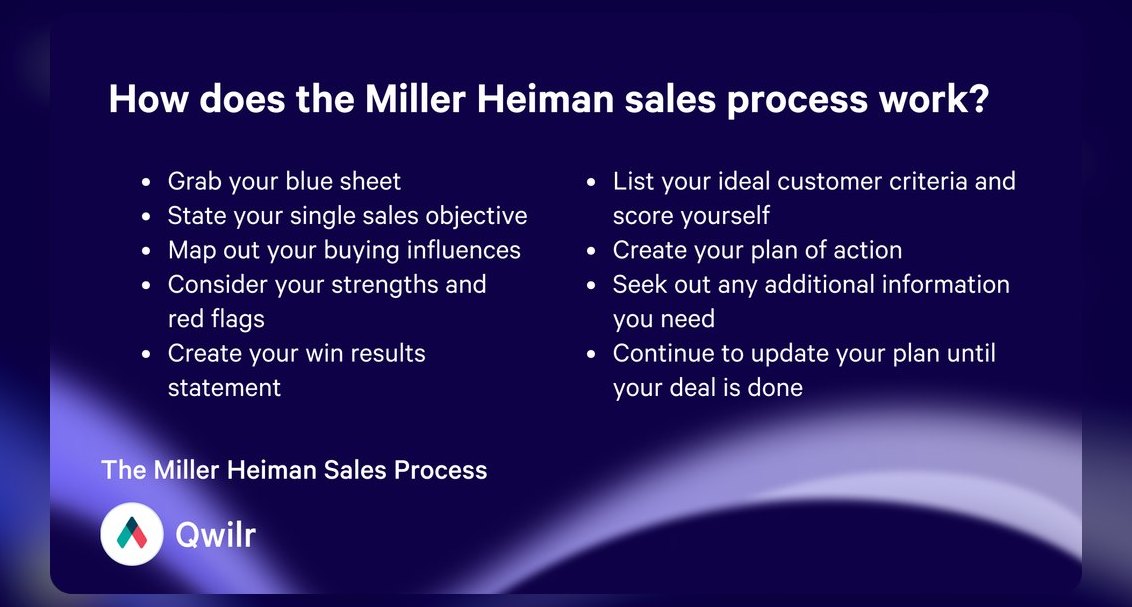 pulse-recentWhat is the step-by-step process for Strategic Selling by Miller Heiman in 2027?
 pulse-recentCoaching Salespeople into Sales Champions by Keith Rosen — Top 10 Key Takeaways for Sales Leaders in 2027
 pulse-recentWhat is the most actionable step in The Sandler Rules for Sales Leaders by David Mattson to improve discovery in 2027?
 pulse-recentSales EQ by Jeb Blount — Top 10 Key Takeaways for Sales Leaders in 2027
 pulse-recentWhat are the concrete steps in Sandler Rule #7 for handling a prospect's budget objection in 2027?
 pulse-recentHow does *The New Strategic Selling* define the first step in qualifying an opportunity in 2027?
 pulse-recentThe Closer’s Survival Guide by Grant Cardone — Top 10 Key Takeaways for Sales Leaders in 2027
 pulse-recentTraction by Gabriel Weinberg and Justin Mares — Top 10 Key Takeaways for Sales Leaders in 2027