


Insight Selling — Cliff Notes Summary
Quality
Certified
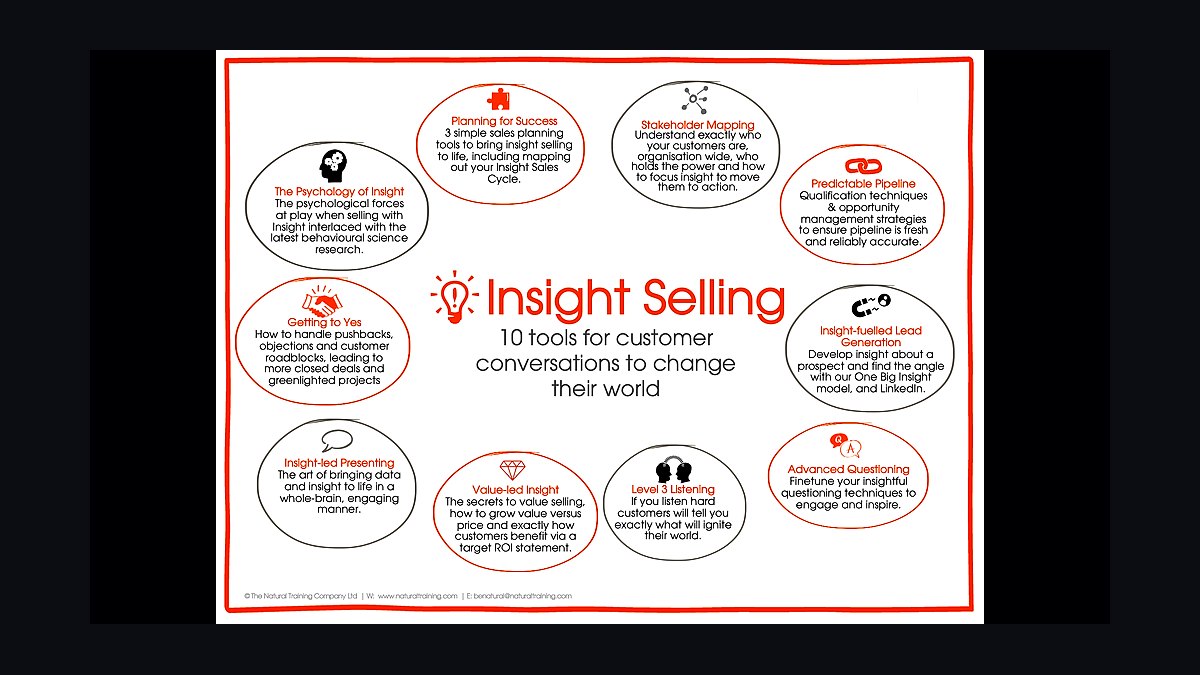
*Insight Selling* (Wiley, 2014) by Mike Schultz and John Doerr of RAIN Group argues that sales winners beat second-place finishers by bringing new ideas, not better pitches. Built on research into hundreds of real B2B purchases, it organizes winning behavior into three levels — Connect, Convince, Collaborate — with insight as the differentiator.
Insight selling versus the consultative model it replaces
The most useful way to read this book is as a direct comparison between two operating modes that look similar from the outside and produce very different win rates. Mode one is classic consultative selling: ask good discovery questions, uncover a stated need, map your capability to that need, propose. Mode two is insight selling: bring a perspective the buyer did not have, change how they frame the problem, then map to the reframed need. Both involve questions. Both involve listening. The difference is who supplies the new information.
Schultz and Doerr's research design is what makes the comparison worth taking seriously. Rather than surveying sellers about what they believe works, RAIN Group surveyed *buyers* — people who had just completed a B2B purchase — and asked them to rate both the winning seller and the runner-up on dozens of behavioral factors. That structure matters. Self-reported seller data tells you what sellers think they did. Buyer-reported data on a matched pair (winner versus the vendor who came second in the same deal) isolates what actually separated them, because the deal, the budget, the timeline, and the buying committee were held constant.
The headline finding is that winners and second-place finishers were not separated by small margins on many factors. They were separated by large margins on a specific cluster of factors, most of which had nothing to do with product superiority. Second-place sellers were, by the buyers' own accounts, competent. They listened. They understood the need. They presented a reasonable solution. They lost anyway, because the winner did something additional.
This is where the comparison gets practically useful. If you are losing deals to obviously better products, insight selling will not save you — that is a product problem. The book is aimed at the far more common situation where a rep loses a deal and the postmortem reads "they just clicked better with the buyer" or "the other vendor brought some ideas we hadn't thought about." Those two sentences are not soft factors. In the RAIN research they are the factors.
The trade-off is real and the book is honest enough to name it. Consultative selling is cheap to run — you can train discovery in a week and the rep can execute it without domain depth. Insight selling is expensive. It requires a seller who reads the buyer's industry, synthesizes patterns across accounts, and can hold a defensible point of view under pushback from someone who has worked in that industry for twenty years. You cannot script it. That cost is why most organizations claim insight selling and practice consultative selling.
There is a second comparison the book invites, and it is the one most readers actually want: *Insight Selling* versus *The Challenger Sale* (Dixon and Adamson, 2011). Both books reject product-led pitching. Both say the seller must bring something the buyer does not already have. They diverge on the delivery mechanism. Challenger's answer is teach-tailor-take-control, with constructive tension as the engine — the seller pushes, the buyer is productively uncomfortable, the seller controls the sale. Schultz and Doerr's answer is collaboration: the seller joins the buyer's side of the table and the insight emerges from working together on the problem. Neil Rackham, whose *SPIN Selling* established the modern research-driven sales book, wrote the foreword to *Insight Selling*, which situates it deliberately in that lineage.
In practice the two books describe overlapping populations of winners with different emphases. Challenger is better at explaining why passive relationship-builders lose. *Insight Selling* is better at explaining what the winner's conversation actually sounded like, because it was built from buyer accounts of specific interactions rather than a rep-behavior typology. Teams that run both usually take Challenger's commercial teaching content and Schultz and Doerr's three-level conversational structure.
Choosing which mode a given deal deserves
Not every deal earns insight investment. The book makes this point explicitly and it is the part most enablement teams skip, which is why insight-selling rollouts stall — reps are told to bring a perspective to every opportunity, including the $12,000 renewal where the buyer already has a PO number and just wants the paperwork.
The decision comes down to four questions. First: does the buyer actually know what they want? If the requirement is fully specified and the buyer is running a procurement process against a fixed spec, insight arrives too late to reframe anything — you are in a bake-off and your job is to win on the stated criteria. Second: how many stakeholders are involved? Insight travels through a buying committee as ammunition for your champion; with a single decision-maker who owns the budget, the calculus is simpler and faster. Third: what is the deal size and the length of the commitment? A three-year platform contract justifies the research hours; a monthly seat expansion does not. Fourth: is there genuine uncertainty about the right approach, or only about the right vendor? Insight is leverage on the first kind of uncertainty and nearly useless on the second.

A practical filter many teams use: reserve full insight preparation for deals where the annual contract value clears roughly six figures, three or more functions are involved, and the buyer has not yet issued a formal requirements document. Below that line, run efficient consultative discovery and spend the saved hours on the deals that can absorb the investment. This is a resource-allocation strategy, not a statement about which method is philosophically superior.
The failure mode on the other side is worth naming too. Sellers who decide a deal deserves insight and then lead with it — before establishing any credibility — reliably damage the relationship. The buyer hears an outsider with three weeks of industry reading telling them their operating assumptions are wrong. The book's sequencing is not decorative: Connect precedes Convince precedes Collaborate because the right to challenge is earned, not assumed.
Two operational notes on running this filter. Keep the routing decision at the opportunity level, not the account level — the same customer can present a strategic reframable problem in one quarter and a mechanical renewal in the next. And re-evaluate after first discovery, because the answer to "does the buyer know what they want" changes once you have actually talked to them; roughly a third of deals that looked spec-locked turn out to have an unexamined assumption underneath the spec.
The specific mechanics behind each level
The three-level model is the book's spine, and each level has concrete content rather than being a slogan.
Connect has two halves, and Schultz and Doerr are insistent that most sellers do only one. The first half is connecting the dots — linking what the buyer needs to what you can actually deliver, in the buyer's language, without a capability tour. The second half is connecting personally: being someone the buyer wants in the room. The research finding that unsettles people is that the personal half is not a nice-to-have that gets you a tie-breaker at the end; buyers cited it as a primary separator between the winner and the vendor who came second. Responsiveness is a large part of this. Returning a call the same day is not charisma, and it is measurable.
Convince is the analytical level, and it runs on three vectors the book states plainly. Maximum return: the buyer must believe the upside is real and worth the disruption. Acceptable risk: the buyer must believe the downside is bounded and survivable. Best choice among alternatives: the buyer must believe this specific option beats the others, including doing nothing. Missing any one of the three kills the deal in a different way. Fail on return and you lose to budget reallocation. Fail on risk and you lose to the status quo, which is the largest competitor in enterprise software. Fail on the comparative case and you lose to a named rival.
Note that "convince" here does not mean pressure. The book is specific that it means making the return case, the risk case, and the comparative case explicit and defensible — usually on paper, usually in a form the champion can forward without you in the room. A one-page business case that survives being read by a CFO who has never met you is the artifact this level produces.
Collaborate is the top level and the one the title is named for. Winners were described by buyers as behaving like members of the buying team rather than external vendors — bringing ideas, working the problem jointly, and being willing to say when something was a bad fit. Collaboration is the delivery mechanism for insight, which is the point that makes the model cohere: insight delivered from outside the tent reads as a lecture; the same insight delivered from inside reads as a contribution.

The book's other distinct contribution is splitting insight into two types, which *The Challenger Sale* does not do. Interaction insight happens live: the seller asks a question sharp enough that the buyer arrives at a new realization themselves during the conversation. Nothing is presented; the framing is changed by the question. Opportunity insight is prepared: the seller arrives with a specific idea the buyer has not surfaced — an unpriced risk, an underserved segment, a cost hiding in a process everyone treats as fixed.
The split matters operationally because the two require completely different enablement. Interaction insight is a questioning skill, trained by role-play and call review. Opportunity insight is a research and synthesis skill, trained by building a library of cross-account patterns and industry material and giving reps time to prepare. Teams that treat "bring insight" as one skill train neither well.
Chapter-level value content runs on a three-legged stool: resonate (the buyer feels genuinely understood), differentiate (you are meaningfully distinct from the alternatives), and substantiate (the claims are backed by proof the buyer can verify). Most sellers are adequate on resonate and substantiate. Differentiate is where deals die, because product differentiation is copyable and increasingly thin — a competitor can match a feature list in a quarter. A unique perspective on the buyer's problem cannot be scraped off a website, which is the strategic argument for insight as the differentiation engine.
The trust chapter borrows David Maister's trusted-advisor equation: credibility plus reliability plus intimacy, divided by self-orientation. The structure of that formula is the lesson. Self-orientation sits in the denominator, so a seller who is transparently working their own quota can have excellent credibility and reliability and still score near zero. This is also why the sequencing argument holds — buyers do not accept challenge from someone they read as self-interested.
Turning the book into an operating cadence
The gap between reading *Insight Selling* and changing a win rate is a process gap, and it closes with a small amount of recurring structure rather than a training event.
Start with deal scoring. Take every live opportunity above your insight threshold and rate it 1–5 on each of the three levels. Connect: do we have a personal relationship with more than one person, and are we responsive within a day? Convince: does a one-page business case exist that a finance stakeholder could read alone? Collaborate: have we brought a specific idea this buyer did not have before we showed up? Most pipelines score high on Connect and low on Collaborate — reps are friendly with buyers and bringing zero new thinking. That diagnosis is the whole value of the exercise, and it takes about fifteen minutes per rep per week.
Then work the lowest score. A Connect gap is fixed with a scheduled one-to-one that has no agenda item about your product. A Convince gap is fixed by building the one-page case, which usually reveals that nobody on the deal team can actually state the buyer's expected return in the buyer's own units. A Collaborate gap is fixed with a prep block: one seller, ninety minutes, one specific idea for one specific account, drawn from cross-account patterns or the buyer's own public filings and industry reports.
Sequencing across a quarter matters. Do not roll out all three levels simultaneously. Connect behaviors change fastest because they are mostly discipline — response times, meeting preparation, remembering what the buyer said last time. Convince changes next, because it requires building templates and getting finance to bless the return model. Collaborate changes last and slowest, because it requires reps to develop a point of view, which takes months of reading and pattern synthesis and cannot be shortcut with a slide.
Manager coaching should follow the same order. In pipeline review, replace "what's the next step" with three questions: what did we learn about this buyer as a person, what does their business case say in their numbers, and what idea did we bring that they did not have. The third question is uncomfortable the first several times it is asked, which is the signal that it is doing work.
Two cautions on implementation. First, the scoring is a coaching instrument, not a forecast input — the moment reps learn that a low Collaborate score delays their commit, the scores become fiction. Keep it separate from the forecast call. Second, do not let opportunity insight degrade into recycled industry statistics. A market-growth number from an analyst deck is not insight; the buyer has seen it. Insight is a claim about *their* business that they cannot get from a search engine, which is exactly why it requires preparation time and cannot be mass-produced.
Where the book has aged and where it has not
The durable parts are the research structure, the three-level model, the interaction-versus-opportunity split, and the trust-as-prerequisite argument. Those hold because they describe buyer psychology rather than market conditions, and buyer psychology in complex purchases has not fundamentally shifted. The observation that buyers describe major B2B purchases as difficult and complex — a finding Gartner has documented repeatedly in its buying research — has only strengthened the case for a seller who reduces that complexity.
The dated parts are the examples and the channel assumptions. The case material skews toward early-2010s enterprise technology buying, before product-led growth normalized self-service evaluation and before AI assistants changed what buyers can research on their own. Some of the outreach guidance reflects social-selling norms that have since shifted considerably. Conversation-intelligence tooling now provides a measurement layer for these behaviors that did not exist when the book was written, which means claims that were once assertions can be checked against call data.

The strategic argument has arguably gotten stronger with age. When any competitor can generate a competent solution narrative in seconds, the solution narrative stops being a differentiator. What survives is the part that requires a human who understands this buyer's specific situation well enough to say something the buyer has not heard. That is a reasonable summary of why a 2014 book still gets recommended to new sellers.
Related questions
How does Insight Selling differ from The Challenger Sale?
Both reject product pitching. Challenger delivers insight through constructive tension — teach, tailor, take control. Schultz and Doerr deliver it through collaboration, joining the buyer's side. Challenger explains why relationship-builders lose; *Insight Selling* better describes what the winning conversation sounded like, since it was built from buyer accounts.
Is insight selling worth it for small or transactional deals?
Usually not. The preparation cost — industry reading, cross-account synthesis, a prepared opportunity insight — only pays back on complex, multi-stakeholder purchases where the buyer is still defining the problem. On a spec-locked renewal, efficient consultative discovery wins on speed and the saved hours go to bigger deals.
What is the difference between interaction and opportunity insight?
Interaction insight is generated live: a question sharp enough that the buyer reaches a new realization themselves. Opportunity insight is prepared in advance: a specific idea the buyer has not surfaced. The first is a questioning skill trained by role-play; the second is a research skill trained by building pattern libraries.
Which chapter matters most for a new account executive?

The trust chapter. It frames trust as credibility plus reliability plus intimacy over self-orientation, and the denominator is the lesson — visible quota-motivation cancels every other strength. New AEs typically fail on sequencing, challenging buyers before earning the standing to do it.
Can this framework be used as a deal-qualification grid?
Yes, and many teams do. Connect maps to champion and pain, Convince maps to metrics and decision criteria, Collaborate maps to a jointly built business case. Score each 1–5 per open deal, work the lowest, and keep it out of the forecast call so scores stay honest.
FAQ
What exactly is insight selling and how is it different from consultative selling?
Insight selling means teaching buyers something new about their own business that changes how they frame the problem. Consultative selling asks questions to uncover an existing need and then maps a solution to it. The difference is the source of new information: in consultative selling the buyer supplies it, in insight selling the seller does. Both use discovery; only one of them changes what the buyer is trying to buy.
Who should read this book, and who should skip it?
Read it if your team already runs competent discovery but keeps losing competitive deals where the buyer says the winner "brought ideas." Skip it if the fundamentals are not in place — insight selling layered on top of weak qualification and poor responsiveness produces reps who lecture buyers. Also skip it if your motion is genuinely transactional; the framework is designed for complex, multi-stakeholder purchases.
How do you deliver insight without lecturing the buyer?

Ask permission before offering an observation, frame it as a pattern you have seen in comparable situations rather than a verdict on their competence, tie it to something specific about their business, and then stop talking and invite their reaction. If they push back with information you did not have, update your view out loud. Insight that survives contact with the buyer's expertise is credible; insight that ignores it is noise.
Is Connect-Convince-Collaborate a linear sequence or simultaneous?
The dependency is real but the execution overlaps. You cannot collaborate credibly with someone who does not trust you, so Connect genuinely precedes the rest. In a live deal, though, you cycle through all three repeatedly — a new stakeholder joins the committee and you are back at Connect with that person while running Convince with the original champion.
How do you know whether you actually delivered insight?
The buyer tells you. Phrases like "I hadn't thought about it that way" or a request to bring the idea to someone else in the organization are the signal. A harder test: would the buyer have reached this conclusion without you in the next ninety days? If yes, you delivered information, not insight. Watch also for whether the buyer's stated priorities or evaluation criteria change after the conversation.
Does research from 2014 still apply to how B2B buying works now?
The core finding does, because it describes what buyers value in a seller rather than what channels they use. The mechanics have shifted — self-service evaluation, remote committees, AI-assisted research — and those shifts mostly raise the value of a seller with a genuine point of view, since generic solution narratives are now trivially easy to obtain elsewhere. Treat the framework as current and the case studies as period pieces.
Sources
- Insight Selling — Wiley publisher page
- RAIN Group — Insight Selling book page
- RAIN Group blog — What is insight selling
- Amazon — Insight Selling, hardcover listing with Neil Rackham foreword
- Goodreads — Insight Selling reader reviews
- getAbstract — Insight Selling executive summary
- Kim Tasso — Book review: Insight Selling
- Gartner — B2B buying journey research
- Harvard Business Review — The End of Solution Sales
Related on PULSE
- The Challenger Sale by Matthew Dixon and Brent Adamson — Cliff Notes Summary
- SPIN Selling by Neil Rackham: Summary, Key Lessons, and RevOps Takeaways
- Gap Selling by Keenan: Summary, Key Lessons, and RevOps Takeaways
- Secrets of Question-Based Selling by Thomas Freese: Summary, Key Lessons, and RevOps Takeaways
- The SPIN Selling Fieldbook — Cliff Notes Summary
- Selling the Invisible by Harry Beckwith — Cliff Notes Summary
This page will be disappearing soon. Save it to your device for $1 — or read it free while it is here.
@Kory-White- · if Venmo asks, the last 4 of my number are 2012
This page is gone.
This one is off the shelf now. $1 keeps it on your phone for good — the whole page, pictures and diagrams included.
 pulse-recentSandler Rule #1: What is the first concrete step to build a prospect's trust in a sales conversation in 2027?
 pulse-recentThe Challenger Customer by Brent Adamson — Top 10 Key Takeaways for Sales Leaders in 2027
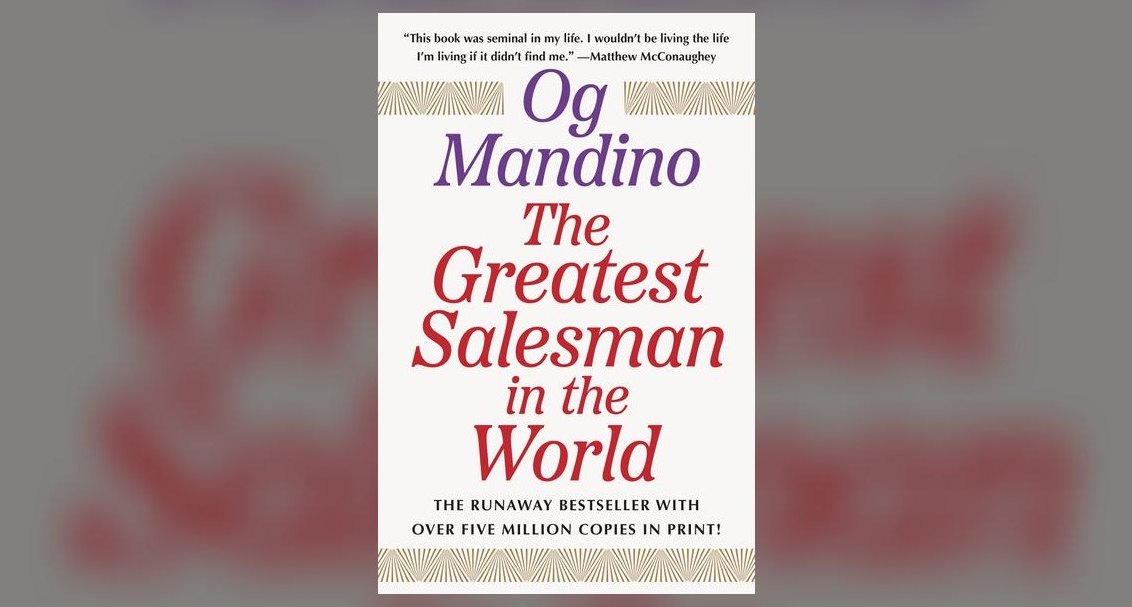 pulse-recentThe Greatest Salesman in the World by Og Mandino — Top 10 Key Takeaways for Sales Leaders in 2027
 pulse-recentSales Engagement by Manny Medina — Top 10 Key Takeaways for Sales Leaders in 2027
 pulse-recentThe Collaborative Sale by Keith Eades — Top 10 Key Takeaways for Sales Leaders in 2027
 pulse-recentWhat is the first concrete step in Sandler Rule #4 for a sales leader to implement in 2027?
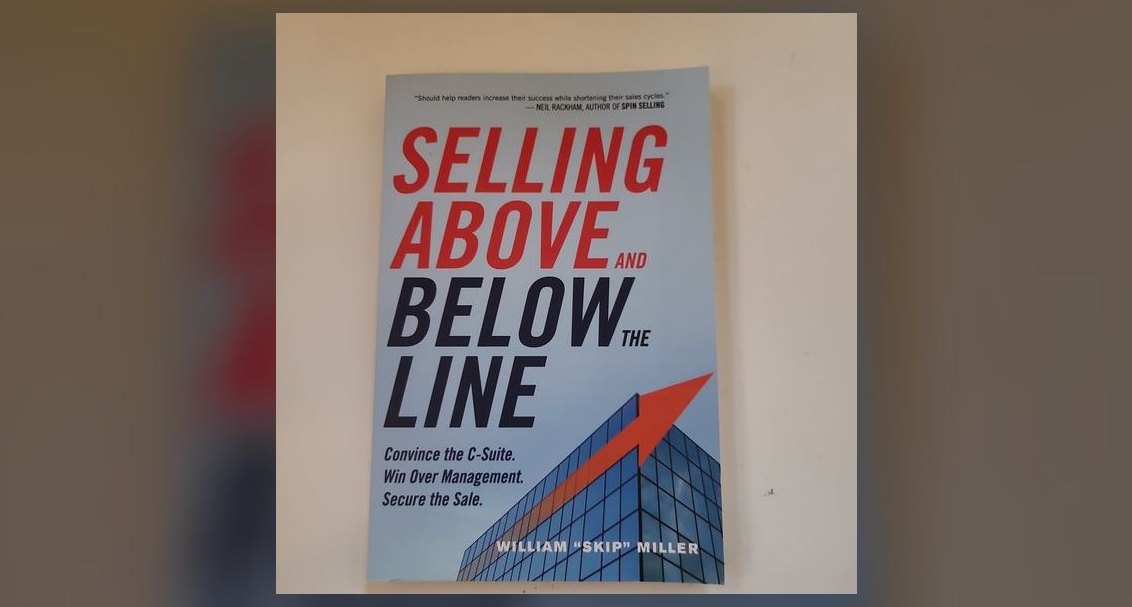 pulse-recentSelling Above and Below the Line by Skip Miller — Top 10 Key Takeaways for Sales Leaders in 2027
 pulse-recentInsight Selling by Mike Schultz and John Doerr — Top 10 Key Takeaways for Sales Leaders in 2027
 pulse-recentHow do you implement the Sandler Rules in your first 30 days as a new sales rep in 2027?
 pulse-recentSPIN Selling by Neil Rackham — Top 10 Key Takeaways for Sales Leaders in 2027