


What’s the core message of *Predictable Revenue* for startups in 2027?
Quality
Certified

The core message of *Predictable Revenue* is that pipeline is a manufactured output, not a lucky one: split prospecting from closing, give dedicated outbound reps a researched account list and a written sequence, measure meetings rather than dials, and revenue becomes forecastable. In 2027 AI accelerates the mechanics but does not replace the specialization.
The outcome you should expect
Startups adopting this model correctly stop asking "will we hit the number?" and start asking "how many meetings do we need to book this month to hit next quarter's number?" That shift is the whole point. The book's promise is not more revenue in week two — it is a arithmetic relationship between activity today and closed business one sales cycle from now.
Concretely, the outcome looks like a chain you can run backward. If your average contract value is $24,000, your AE closes 20% of qualified opportunities, and 60% of the meetings an outbound rep books survive to become real opportunities, then every closed deal requires roughly eight booked meetings. Need $600,000 in new ARR next year? That's 25 deals, roughly 200 meetings, and — at 10 to 15 meetings per outbound rep per month — one to two reps working steadily for twelve months. None of those numbers came from the book; they came from your own funnel. Ross's contribution is the insistence that you *have* those numbers at all and that you compute the chain in that direction, rather than hoping a founder's network keeps producing.
The second outcome is emotional as much as operational: the founder stops being the bottleneck. In most pre-product-market-fit companies, revenue arrives through the CEO's relationships, conference conversations, and inbound curiosity. Those channels are real but they are not controllable. You cannot decide to have more of them next Tuesday. Outbound, run as a process, is controllable — you can decide to research forty more accounts, and forty more researched accounts reliably produce a knowable number of conversations. Ross's word for this is "predictable," and the distinction he draws is between revenue you *earned* and revenue you can *reproduce on demand*.

The third outcome is a diagnostic one. Once you have a written sequence and a defined ideal customer profile, failure becomes informative. If a rep runs 150 well-researched, well-personalized touches into a segment and books nothing, you have learned something specific and valuable about that segment — the message doesn't land, the pain isn't urgent, or you're talking to the wrong title. Undisciplined outbound teaches you nothing when it fails, because you can never separate "bad market" from "bad execution." A documented process is a controlled experiment. That's an underrated part of the message and the reason the framework survives even when a particular startup's outbound numbers look bad.
Expect the ramp to be slower than founders want. Realistically, a new outbound rep takes 30 to 60 days to become productive, and the meetings they book take a full sales cycle — often 60 to 120 days in B2B — to convert. So the honest timeline from "we hired an outbound rep" to "outbound is contributing forecastable revenue" is closer to six months than six weeks. Startups that abandon the model at month three usually abandon it right before the compounding starts.
What drives that outcome
Three mechanisms do the work, and they are not equally weighted.
Specialization is the load-bearing one. Ross's Salesforce observation was that a rep asked to prospect, qualify, demo, close, and onboard will always deprioritize prospecting, because prospecting is the only one of those tasks with no deadline attached and the worst emotional return per hour. Closing feels like progress; cold outreach feels like rejection. So the prospecting silently disappears, the pipeline dries up two quarters later, and nobody can point to the day it broke. Splitting the roles doesn't make anyone better at prospecting — it makes prospecting *someone's actual job*, protected by their own compensation plan. That structural fix, not any script, is why the model works.
The corollary matters for hiring order. Most startups hire an expensive Account Executive first and then wonder why that AE isn't generating pipeline. An AE with an empty calendar is a very costly cold caller who resents the work. Ross's inversion — build the pipeline-generation function before the closing function — means the first AE arrives to a calendar with meetings on it, which is also the only fair way to hold them to a quota.
Process is the second mechanism. A sequence written down is a sequence you can debug. If every rep improvises their own emails, and one rep books three times as many meetings, you cannot transfer whatever they're doing to anyone else. The written sequence — how you research an account, what the first email says, what the follow-up call references, when you send the break-up note — turns individual talent into organizational capability. It also makes onboarding a new rep a matter of weeks rather than a matter of luck.
Measurement on leading indicators is the third. Closed revenue tells you about decisions made 90 days ago. Meetings booked this week tells you about revenue 90 days from now. Ross's insistence on counting conversations, meetings set, and pass rate from prospector to closer — rather than dials, emails sent, or activity theater — is what makes the system a control loop rather than a report.
A fourth driver deserves mention because 2027 makes it louder: trigger quality. Ross wrote about targeting high-value accounts; the modern version is targeting high-value accounts *at the right moment*. A new VP of Engineering at a target account, a funding announcement, a job posting that implies the pain you solve, a competitor's contract coming up for renewal — these are timing signals, and outbound sent into a signal converts substantially better than outbound sent into a calendar slot. The discipline is the same discipline; the input got sharper.
Benchmarks and realistic ranges
Ross's book is deliberately light on universal numbers, and any source that hands you precise industry-wide conversion rates is selling something. What follows are the ranges practitioners actually plan against, offered as planning scaffolding rather than as facts from the book.
Account volume per rep. A dedicated outbound rep doing genuine research — reading the company's recent announcements, understanding the buyer's role, writing a first email that couldn't be sent to anyone else — handles somewhere in the range of 30 to 100 net-new accounts per month. Below 30 they are underloaded; above 100 the personalization is theater. Where you land inside that band depends almost entirely on deal size. A $200,000 ACV enterprise motion justifies deep research on 20 accounts; a $12,000 ACV mid-market motion needs volume and lighter-touch personalization to be economical.

Touches per sequence. The common failure is quitting at three. Working sequences typically run 8 to 14 touches across three to five weeks, mixing email, phone, and social. The critical design constraint is that each touch must carry new information — a relevant customer story, a specific observation about their business, a question. A sequence of eight "just following up" notes performs worse than three good ones because it trains the recipient to ignore you.
Reply and meeting rates. Plan conservatively. A well-targeted, genuinely personalized sequence into a well-chosen ICP might produce a positive reply rate in the low single digits, and meetings booked as a fraction of accounts worked lands in a similar band. Anyone promising 20% is either counting differently or working an unusually hot niche. The practical planning move: assume a low rate, compute how many accounts you must work to hit the meeting number, and check whether that account volume is even available in your total addressable market. Many startups discover here that their ICP is too narrow to support an outbound motion at all — which is itself a valuable finding, and a reason to broaden the segment or lean harder on inbound and partnerships.
Pass rate from prospector to closer. This is the health metric nobody watches closely enough. If the AE accepts and holds fewer than roughly two-thirds of the meetings the outbound rep books, your qualification bar is broken or the two roles disagree about what "qualified" means. If the AE accepts nearly everything, the bar may be too low and you're burning expensive closer time on tire-kickers. The fix is not a policy document; it's a weekly meeting where the AE and the prospector review the last ten handoffs together, one by one.
Ramp and tenure. Budget 30 to 60 days before a new outbound rep is at full productivity, and be honest that outbound roles have high turnover — the work is repetitive and the rejection is constant. If you plan headcount assuming everyone stays two years, your model is wrong. Build a hiring cadence that assumes replacement.

Cost side. The CAC math is where outbound programs quietly die. Fully loaded, an outbound rep plus tooling plus the AE time consumed on their meetings has to be recoverable against the deals produced. A common sanity check is whether acquisition cost is recovered inside twelve to eighteen months of gross margin. If your ACV is small and your sales cycle is long, human outbound may simply not clear that bar, and the honest answer is a self-serve or product-led motion instead. *Predictable Revenue* is a strategy for a particular economic shape — mid-to-high ACV B2B with identifiable buyers — and pretending otherwise is how startups burn a year.
Risks, edge cases, and failure modes
Spray and pray, wearing an AI costume. The oldest failure mode has a new outfit. In 2027 a founder can generate 5,000 "personalized" emails in an afternoon, each with a machine-written first line referencing something scraped from a website. The volume is new; the outcome is the same as buying a list in 2011, only faster and more damaging to your sending domain. Buyers have gotten very good at recognizing generated personalization — the tell is that the observation is accurate but pointless. Referencing a funding round without connecting it to a specific problem you solve reads as automation, and it burns the account. The discipline Ross prescribed is *more* valuable when the mechanical cost of outreach approaches zero, because the only remaining differentiator is whether the message is actually worth reading.
Deliverability collapse. Related and technical: aggressive volume from a poorly warmed domain gets you filtered, and once your primary domain's reputation is damaged, your recruiting emails and customer emails suffer too. Startups routinely discover this after three months of "we're sending plenty, why is nothing landing." Separate sending domains, gradual volume ramps, and honest list hygiene are now table stakes, not optimizations.
Hiring a VP of Sales before the playbook exists. This is Ross's most expensive named mistake and it remains the most common. The logic founders use is that an experienced sales leader will figure out the motion — but a VP of Sales is a scaler, not a discoverer. Handed no ICP, no documented sequence, and no proof that anyone outside the founder's network will buy, they will spend six months and a large budget building a team around a motion that doesn't work yet, and then leave. The founder must close the first customers personally, because the ICP is discovered in those conversations and cannot be delegated before it exists.
Role separation taken too literally, too early. The inverse failure. A four-person company does not need three sales specializations. The message is about function, not headcount: at the earliest stage, one person may do all of it, but they should do it *in separate, protected blocks of time* — prospecting mornings, closing afternoons — so the prospecting doesn't get eaten. Specialization by calendar precedes specialization by job title.
Sequence decay. What worked last quarter degrades. Subject lines get pattern-matched, a competitor starts using your angle, the market's attention moves. Teams that treat the playbook as finished watch reply rates drift down for months without noticing, because nobody owns the number. Someone must own sequence performance and be running a small test continuously — one variable, enough volume to mean something, a decision at the end of it.

Optimizing the wrong end. Enormous energy goes into email copy when the actual constraint is the target list. If you are emailing the wrong companies, no subject line rescues it. Before rewriting the sequence for the fourth time, check whether the accounts share the characteristics of your best existing customers. Win/loss review feeding back into the ICP is the highest-leverage loop in the whole system and the one most often skipped.
Compensation working against the structure. If outbound reps are paid on closed revenue, they will chase deals and stop prospecting; if they're paid purely on meeting count, they will book junk. The workable compromise pays on *accepted, held* meetings or on sourced pipeline — a metric the prospector controls but that still requires the meeting to be real. Get this wrong and no amount of process documentation fixes the behavior.
Regulatory and channel risk. Outbound operates inside real constraints — consent regimes in some jurisdictions, platform rate limits on social outreach, corporate filtering. A motion that works in one market may be legally or practically unavailable in another. Check before you build a team around it.
The edge case where the whole model doesn't apply. If your buyers are unidentifiable, your ACV is a few hundred dollars, or your product is bought impulsively by individuals rather than evaluated by committees, outbound specialization is the wrong strategy. The honest read of *Predictable Revenue* is that it's a manufacturing manual for a specific product; applying it to a self-serve consumer tool wastes a year.
A practical rollout plan

Treat the first quarter as an experiment with a written hypothesis, not as a hiring plan.
Weeks 1–4: the founder does it. Write the ICP as a testable statement — company size, industry, the specific trigger or pain, the exact title who owns that pain. Build a list of 50 accounts that match it. The founder personally runs the sequence: research, first email, call, follow-up. This is non-delegable because the point isn't the meetings, it's learning which parts of the message make people lean in. Record what they say. Rewrite the sequence twice during this month.
Weeks 5–8: document and hire. Now that a sequence has produced conversations, write it down properly — the research checklist, the templates with the variable parts marked, the objection responses, the qualification bar. Hire one outbound rep, not three. One rep produces a clean signal; three produce noise you cannot attribute. Onboard them by having them shadow the founder's calls for a week before they touch an account.
Weeks 9–12: run and instrument. The rep works the list. Track meetings set, conversations held, accounts worked, and pass rate weekly — on a single visible dashboard, not in someone's spreadsheet. The founder still closes. Hold a weekly 30-minute review of the last ten handoffs.
Month 4 onward: decide honestly. Either the numbers support a motion or they don't. If meetings are landing and converting, hire the first AE and let the founder step back from closing. If not, the diagnosis is specific: bad list, bad message, or bad market — and you now have the data to tell which, which is exactly what undisciplined outbound never gives you.
Two adjacent moves compound this. First, build referral requests into the close itself rather than treating them as a favor asked later — the ask lands best in the week after a customer sees value, and referrals worked through the same sequence convert far better than cold accounts. Second, keep an inbound engine running in parallel even while outbound is the primary bet. Inbound leads are usually lower intent but cheaper; outbound is higher intent but expensive. Startups that run only one of the two end up either invisible or unable to control their own growth rate.
Related questions

Does this framework still apply if we're product-led?
Partially. Self-serve acquisition replaces the top of the funnel, but the moment you sell to teams or enterprises, someone must prospect into accounts already using the product. The specialization logic transfers to expansion motions.
Should the first outbound hire be senior?
No. Seniority matters less than coachability and tolerance for rejection. A senior closer in a prospecting seat usually leaves within a quarter. Hire for process discipline and hunger, and pay for meetings that hold.
How does this compare to The Challenger Sale?
They solve different problems. *Predictable Revenue* is about pipeline architecture — who does what and how you count it. *The Challenger Sale* is about what happens inside the sales conversation. Most teams need both, in that order.
What if we have no budget for a dedicated prospector?
Then the founder prospects, in protected morning blocks, with the same written sequence. The structure matters more than the headcount. Specialize the calendar first; specialize the org chart when you can afford to.
FAQ

What is the single most important takeaway from Predictable Revenue? Separate the function that creates pipeline from the function that closes it, and protect the pipeline-creation function with its own person, its own process, and its own compensation. Everything else in the book follows from that structural decision.
Does the model still hold in 2027 with AI doing outbound? Yes, and arguably more so. AI compresses research, drafting, and sequence management, which lowers the cost of volume — but that makes message quality and targeting the only remaining differentiators. Automation without the underlying discipline just produces expensive, faster spam.
How many outbound reps should a startup hire first? One. A single rep gives you an attributable signal about whether the motion works. Hiring a pod before the sequence is proven multiplies an unvalidated process and makes failure impossible to diagnose.
How long before outbound contributes forecastable revenue? Plan on roughly six months: 30 to 60 days of rep ramp plus one full sales cycle for the first meetings to convert. Startups that judge the program at month three are measuring ramp, not performance.
What should the founder personally do? Define the ICP, write and test the first sequence, and close the earliest customers themselves. The playbook is discovered in those conversations. Hiring a sales leader to discover it on your behalf is the most expensive common mistake in the book.
Is outbound ever the wrong strategy? Yes. If your contract values are small, your buyers are unidentifiable, or purchases are individual and impulsive, the cost of human outbound will not clear the payback bar. Product-led or partner-led motions fit that shape better.
Sources
- https://predictablerevenue.com/blog
- https://www.saastr.com/category/sales/
- https://www.gartner.com/en/sales
- https://hbr.org/topic/subject/sales
- https://www.salesforce.com/resources/research-reports/state-of-sales/
- https://blog.hubspot.com/sales
- https://openviewpartners.com/blog/
- https://firstround.com/review/
Related on PULSE
- How does *Predictable Revenue* recommend structuring a territory plan when your ICP shifts to mid-market in 2027?
- Predictable Revenue — Cliff Notes Summary
- Predictable Revenue by Aaron Ross and Marylou Tyler — Cliff Notes Summary
- Predictable Revenue by Aaron Ross — Cliff Notes Summary & Key Takeaways
This page will be disappearing soon. Save it to your device for $1 — or read it free while it is here.
@Kory-White- · if Venmo asks, the last 4 of my number are 2012
This page is gone.
This one is off the shelf now. $1 keeps it on your phone for good — the whole page, pictures and diagrams included.
 pulse-booksWhat is the best way to apply the Four Tendencies framework to build a daily reading habit in 2027?
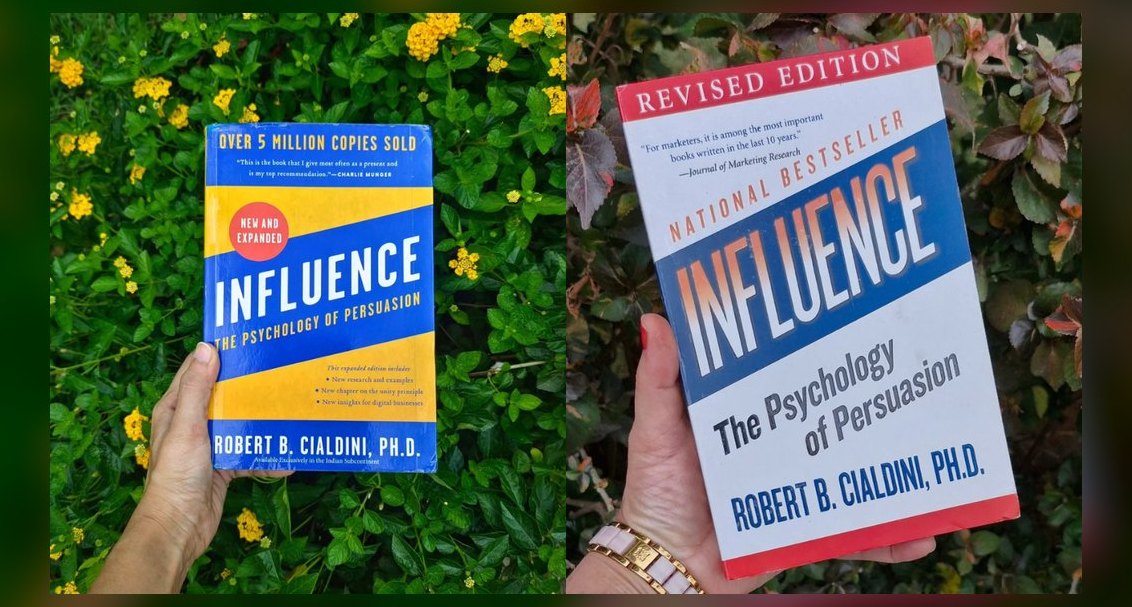 bsHow does *Influence: The Psychology of Persuasion* explain why “free” offers actually work in B2B sales?
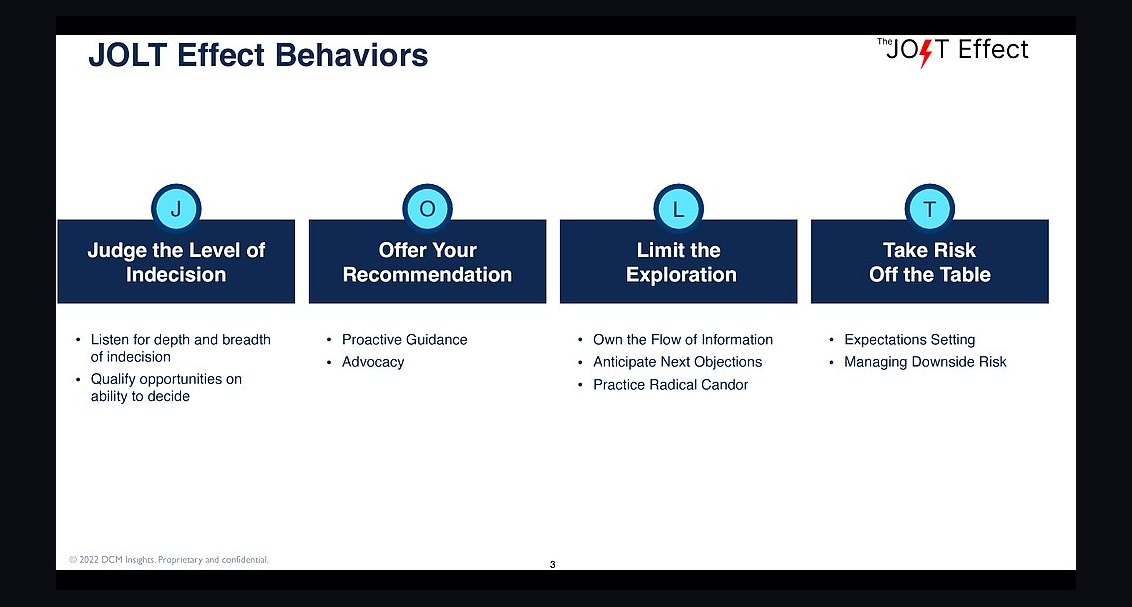 bsHow do you apply *The JOLT Effect* to reduce buyer hesitation in enterprise sales?
 bsHow can *Fanatical Prospecting* change your approach to social selling and LinkedIn outreach in 2027?
 bsHow do you use *Never Split the Difference* to handle difficult conversations with customers in 2027?
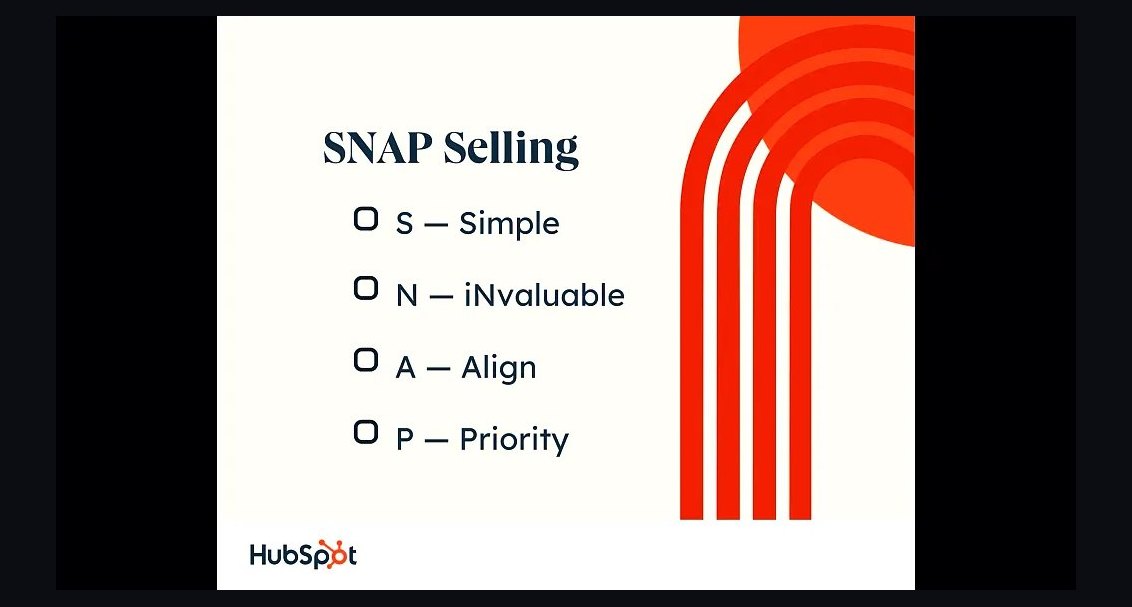 bsHow does *SNAP Selling* help you shorten a six-month sales cycle into three months in 2027?
 bsWhat’s the most underrated chapter in *How to Win Friends and Influence People* for building executive relationships?
 bsCan *How to Win Friends and Influence People* still make you more likeable in 2027?
 bsWhat’s the most actionable chapter in *How to Win Friends and Influence People* for cold calling in 2027?
 bsWhat’s the best cold-calling template from *New Sales. Simplified.* for 2027?