


What’s the one insight from *The JOLT Effect* that changes how you handle indecisive buyers in 2027?
Quality
Certified

The core insight is that indecision is a separate loss category from preference — buyers who want your product still fail to buy because they fear being wrong. So the winning strategy is not more information or more persuasion; it's reducing perceived risk of the decision itself: recommend a path, cap exploration, and make the choice safely reversible.
What customer indecision actually is, and why it changes the loss math
Matthew Dixon and Ted McKenna's *The JOLT Effect* (Portfolio, 2022) grew out of conversation analysis on a large corpus of recorded B2B sales calls. The central finding reframes a category most revenue teams had already given a name to but never diagnosed properly: "no decision." For years, pipeline reviews treated no-decision losses as a discovery failure. The story went: the rep didn't establish enough pain, didn't quantify the cost of inaction, didn't build a compelling business case. The prescribed cure was always more — more discovery questions, more ROI modeling, more urgency around the status quo.
The JOLT research says that cure is aimed at the wrong disease roughly half the time. There are two distinct reasons a deal dies without a purchase, and they respond to opposite treatments:
Status quo bias — the buyer isn't convinced that change is worth it. They're comparing your solution against doing nothing, and doing nothing is winning. This is the classic problem, and the classic cure works: sharpen the pain, quantify the cost of inaction, build urgency around the gap between where they are and where they could be.
Customer indecision — the buyer is already convinced that change is worth it. They want to buy. They believe the problem is real and your solution addresses it. What stops them is a different fear entirely: the fear of *screwing it up*. Choosing the wrong vendor, the wrong tier, the wrong time. Being the person who signed the contract that didn't work.
The two look nearly identical in a CRM. Both show as stalled deals with high engagement and no signature. But the treatments are inverted, and that inversion is the whole insight. When you apply status-quo medicine to an indecisive buyer — more urgency, more pain, more fear of inaction — you *raise the stakes on a decision they're already too afraid to make*. You make the choice feel bigger and more consequential, which is exactly the wrong direction. The buyer's internal monologue isn't "I'm not sure this matters." It's "I'm not sure I can get this right." Turning up the volume on why it matters makes the second fear worse, not better.

The research also identified something uncomfortable about the behaviors that correlate with winning indecisive deals. Some of the classic high-performer moves — deep discovery, extensive teaching, thorough option exploration — showed *negative* correlation with closing indecisive buyers. The rep who runs a beautiful consultative process, surfaces every consideration, presents every configuration, and then asks "so what do you think?" is handing an anxious buyer an even larger surface area to be anxious about.
For a revenue leader, the practical consequence is a forecasting change first and a coaching change second. If a meaningful share of your closed-lost-no-decision pile is indecision rather than status quo, then your win-rate improvement plan is not "better discovery." It's "risk reduction at the point of commitment." Those are different skills, different collateral, different comp conversations, and different deal-desk policies. Most teams have invested heavily in the first and almost nothing in the second.
The 2027 context sharpens this. Buyers now enter conversations having consumed a large volume of self-service research — analyst content, peer communities, review sites, AI-summarized comparisons. They arrive informed and simultaneously more paralyzed, because information abundance raises the felt cost of being wrong. Add multi-year procurement scrutiny, larger buying committees, and heightened sensitivity to wasted software spend, and you get a market where the deciding buyer's dominant private question is "what happens to me if this fails?" rather than "is this good?"
What indecision looks like across the funnel, not just at close
Indecision doesn't announce itself at the contract stage. It leaks earlier, and it leaks in the neighboring workflows most teams don't instrument.
In inbound and SDR handoffs. A prospect who books three meetings across two months, attends every one, brings a new person each time, and never advances a stage is displaying the additive-stakeholder pattern. That's not a qualification failure; it's a buyer distributing responsibility so no single person owns the outcome. Rushing them to a demo makes it worse.
In product-led and self-serve motions. The trial user who logs in for the fourth week without inviting a teammate, and who has already read your security page twice, is an anxiety case. The self-serve equivalent of "take risk off the table" is not a longer trial — a longer trial extends the paralysis. It's a smaller commitment with a clear exit: month-to-month, seat minimum of one, documented data-export path, and a visible cancel flow. Counterintuitively, showing people how to leave increases how many stay long enough to become customers.
In renewals and expansion. Customer success teams meet the same phenomenon in reverse. An account that keeps "evaluating" a module expansion for three quarters while using their current footprint happily is an indecisive expansion buyer. The person who has to sponsor the expansion internally is exposed to blame if usage doesn't materialize. The JOLT-shaped move is the same: recommend a specific scope, limit the exploration to two options, and give them a usage-based ramp so the downside is bounded.
In partner and channel deals. Here the risk is compounded — the end buyer fears the wrong choice *and* the partner fears recommending the wrong vendor. Reference calls that include a partner peer, not just an end customer, address the second fear directly.
In procurement and legal. Indecision often relocates rather than resolves. A business sponsor who is anxious will happily let a security review or a legal redline become the visible reason for delay, because a process reason is safer to report internally than "I wasn't sure." When a deal that had strong champion energy suddenly develops an unusually thorough procurement process, read it as a possible indecision signal, not purely as a compliance event.
Adjacent domains show the same mechanics. Healthcare decision science has long documented that patients presented with more treatment options and more literature defer more often. Retail and e-commerce merchandising found that reducing SKU count in a category frequently raises conversion. Financial advisory practice built entire product structures — target-date funds, model portfolios — around the observation that people who are convinced they should invest still fail to allocate when handed too many choices. None of those fields cured the problem with more education. All of them cured it with a default recommendation plus a reversibility mechanism.
The step-by-step process: running JOLT inside a real sales cycle
The framework has four moves. What matters operationally is where each one attaches to your existing stages.
J — Judge the level of indecision. This is diagnosis, and it belongs in discovery, not in closing. You are trying to determine two things: is this buyer status-quo-hesitant or decision-anxious, and if anxious, is the anxiety about *information* ("I don't know enough yet") or about *outcomes* ("I know enough, I'm afraid of being wrong"). Useful diagnostic questions:
- "How does a decision like this normally get made here — and what usually slows it down?"
- "If you had to decide by Friday, what would be the hardest part?"
- "What's the worst outcome you're trying to avoid?"
- "Who else has to feel good about this, and what would each of them worry about?"
Listen for who the buyer positions as at risk. "We might not get the value" is one kind of answer. "I'd be the one who pushed for it" is a very different one, and it tells you the deal is about personal exposure.
Score it. A simple three-level tag on the opportunity — low, moderate, high indecision risk — recorded by the rep after the second call, is enough to change coaching and forecasting. Deals tagged high should not be inspected with "did you build urgency?" They should be inspected with "what have you done to make this reversible?"
O — Offer your recommendation. Take a position. An indecisive buyer is asking for a guide, and a rep who neutrally lays out options is refusing the role. The recommendation must be concrete: which tier, which scope, which start date, which sequencing, and the reasoning behind each. "Given the two teams you named and the timeline you're working against, I'd start with the mid-tier on the two teams that already have clean data, not all five — the other three will need work you don't want to pay for yet."
A recommendation that costs you something is more credible than one that doesn't. Recommending the smaller package, or telling a buyer that a feature they asked about is not worth the money for their use case, buys enormous trust. It also proves you're optimizing for their outcome rather than the quarter, which is exactly the doubt an anxious buyer is holding.
L — Limit the exploration. The instinct to answer every question fully is the instinct that kills these deals. Limiting doesn't mean stonewalling; it means declaring what's decision-relevant and what isn't. Three techniques:
*Advance and defer.* "That's a real question, and it's an implementation question, not a decision question. Let's park it for the kickoff and answer it with your actual data instead of guessing now." This validates the concern while removing it from the critical path.
*Answer with authority instead of options.* When asked "which integration approach should we use?", the paralyzing answer is a comparison of three. The useful answer is "the API path — here's why, and here's the one condition under which I'd change that recommendation."
*Cap the option set.* Send two priced options, not five. If the buyer asks for a third, offer it as a replacement for one of the two rather than an addition.
T — Take risk off the table. This is where deals actually turn. You are not lowering price; you are lowering the consequence of being wrong. Mechanisms, roughly ordered by how much they cost you:
- Scoped start. Begin with one team, one region, one workflow. Smaller decision, smaller failure surface.
- Ramped commercial terms. Seats or usage that step up on a schedule, so year-one exposure is a fraction of the full contract.
- Documented success criteria. Written, mutually agreed definition of what "working" means at 30/60/90 days, signed by both sides. This converts a vague fear into a testable claim.
- Named implementation ownership. A specific person, named in the agreement, with a specific onboarding plan and escalation path.
- Peer proof matched to their profile. References from the same industry, similar size, similar starting conditions — and ideally one who had a rocky start and recovered, because a flawless reference is less believable than a survivable one.
- Exit clarity. Data export, offboarding process, and termination terms explained proactively. Buyers assume the worst about lock-in; naming it defuses it.
- Performance-linked terms. Where your business supports it, tying a portion of fees to agreed milestones. Use sparingly and only where the metric is genuinely in your control.
Sequence matters. Diagnosis before recommendation, recommendation before risk reversal. Leading with risk reversal — opening with a guarantee before you've taken a position — reads as desperation and signals that you also think the purchase might fail.
Costs, timelines, and what it actually takes to operationalize
Adopting this is not a training event. Treat it as a change program across four workstreams, each with real cost.
Enablement. Diagnosing indecision and then deliberately narrowing a conversation runs against habits reps have been rewarded for. Expect a multi-week rollout, not a single kickoff: an initial workshop, then recurring call-review sessions where the specific behaviors get scored. The most effective mechanism is reviewing recorded calls against a short rubric — did the rep take a position, did they cap the option set, did they name a reversibility mechanism — rather than abstract discussion. Budget for the review time, which is usually the larger cost. Managers reviewing two calls per rep per week is a meaningful ongoing commitment.
Collateral rebuild. Most proposal libraries are built to expand consideration: every module, every tier, every add-on. Rebuilding toward a recommended-option format takes real work — a recommendation template, a two-option pricing format, a success-criteria document, a reference-matching process, and a plain-language exit/data-portability page. Plan several weeks of marketing and enablement effort, and expect resistance from anyone who believes more options means more upsell.
Commercial policy. Ramped terms, scoped starts, and milestone-linked fees all touch revenue recognition, deal desk, and finance. Someone has to decide what a rep can offer without approval and what needs escalation. Without a pre-approved menu, risk-reversal becomes a one-off negotiation each time, which is slow enough that reps stop using it. Get finance in the room early; this is the workstream that most often stalls the whole initiative.
Systems and measurement. Add an indecision-risk field to the opportunity object. Split your closed-lost reason codes so "no decision" separates into "chose status quo" and "could not decide" — you cannot manage the difference until you can see it. Add fields for which risk-reversal mechanisms were offered and which were accepted, so you can eventually measure which ones actually move deals.
Timelines. Diagnosis quality improves fastest — reps get reasonably good at spotting the pattern within a few weeks of call reviews. Behavior change in live calls takes a quarter or more, because the recommendation move requires confidence that only comes from doing it and not getting punished. Measurable win-rate movement lags further, gated by your average sales cycle: if deals take five months, you will not have a clean read for two to three quarters. Leaders who expect a win-rate signal in six weeks will kill the program before it can produce one.
Leading indicators to watch while you wait. Percentage of proposals sent with a stated recommendation. Median number of priced options per proposal. Percentage of high-indecision-risk deals with documented success criteria. Time from last demo to decision. Stage-to-stage conversion at the late stages specifically. These move long before win rate does, and they tell you whether the behaviors are actually happening.
Where the return shows up. The economics are attractive because the raw material already exists. These are deals that reached late stage, consumed full selling cost, and produced nothing. Converting even a modest slice of them is high-margin revenue against sunk pipeline cost. There's a second-order benefit too: shorter late-stage cycles free capacity, and reduced option sprawl reduces implementation complexity downstream, which improves the onboarding experience for everyone.
Where teams get it wrong
Treating JOLT as a closing technique. The framework is diagnostic first. Bolting "take risk off the table" onto the final call, with no earlier diagnosis, produces reps who discount under a different name. If the only new behavior is offering guarantees when a deal stalls, you have built a margin leak, not a methodology.

Confusing limiting exploration with withholding information. Limiting means moving non-decision questions off the critical path and taking a position on the ones that matter. It never means dodging security questionnaires, hiding pricing, or refusing to answer legitimate technical concerns. Buyers detect evasion instantly, and evasion produces exactly the distrust that fuels anxiety. The test: are you removing questions from the decision, or removing them from the buyer's knowledge? The first is help; the second is a bad-faith tactic.
Recommending without earning the right. A recommendation delivered before you understand the buyer's constraints is a pitch. Reps who skip diagnosis and lead with "here's what I recommend" get correctly read as self-serving. The recommendation lands only when it demonstrably incorporates what the buyer told you — which means naming their specific constraints back to them as the reasoning.
Applying it to the wrong buyer. Not every stall is indecision. A buyer with no budget, a buyer whose priority genuinely shifted, a buyer who prefers a competitor — these are different problems, and risk-reversal is wasted on all three. Misapplying the strategy inflates forecast confidence on deals that are actually dead. The diagnosis step exists precisely to prevent this, and it's the step teams skip.
Faking urgency. Deadline pressure is not the same as risk removal. An artificial expiring discount raises the stakes on a decision the buyer already fears, and it damages trust when the deadline turns out to be soft. Real deadlines tied to real constraints — implementation capacity, a fiscal-year boundary the buyer named themselves, a contract expiry — are fine. Invented ones are counterproductive with precisely the buyer type you're trying to help.
Stopping at signature. The buyer who was anxious before signing is anxious after. Post-signature reinforcement — a fast, well-run kickoff, an early visible win, a check-in against the agreed success criteria — is part of the same strategy. Deals won through risk reversal that then receive a sloppy onboarding produce churn and, worse, a reference who confirms the buyer's original fear.
Letting it become a script. The moment "I recommend" becomes a required phrase in a call template, it stops working. The mechanism is the rep genuinely taking a position and carrying some of the buyer's risk. A rep reciting the words without the substance is transparent, and buyers respond to it the way they respond to any script.
Ignoring the committee. You can fully de-risk the decision for your champion and still lose, because the CFO or the security lead has an entirely different fear. Risk removal has to be tailored per stakeholder: the champion fears personal blame, finance fears wasted spend and lock-in, IT fears integration burden and support load, legal fears liability. One guarantee does not address four fears.
Decision framework: which move to reach for, and when

Not every stalled deal deserves the full sequence. Use the diagnosis to route.
If the buyer isn't convinced change is necessary — build the case for change. Cost of inaction, competitive pressure, the trajectory if nothing happens. Do not offer risk reversal; de-risking a purchase they don't want is irrelevant to them, and offering it signals you're not listening.
If they're convinced but drowning in information — cap the exploration and take a position. Reduce the option set, declare which questions are decision-relevant, and give a specific recommendation with reasoning. Adding a guarantee here is premature; their problem is cognitive load, not fear of consequences.
If they're convinced and afraid of the consequences — go straight to risk removal. Scoped start, written success criteria, matched references, clear exit terms, named ownership. More proof and more information will not help; they already believe you.
If the fear is concentrated in one stakeholder — address that stakeholder's specific exposure directly, ideally in a conversation they own. Generic risk reversal delivered to the champion does not travel well through a committee.
If it's actually a competitive loss or a budget problem — handle it as such. Wrapping a competitive loss in reassurance wastes the cycle and delays the honest conversation.
A useful discipline for pipeline reviews: for every late-stage deal, the manager asks two questions. First, "what is this buyer afraid of?" Second, "what have we done to make it reversible?" If the rep can't answer the first, the diagnosis hasn't happened. If they can't answer the second, the deal is running on hope. Those two questions do more to change behavior than any amount of framework training, because they change what gets inspected — and what gets inspected is what reps prepare for.
One more adjacent application worth noting: the same diagnostic split is useful for internal decisions. Executive teams stall on tooling consolidation, pricing changes, and reorgs for exactly the reasons buyers stall — the change is agreed, the specific choice is terrifying, and the person who signs owns the blame. A recommendation, a bounded option set, and a reversible first step work on your own leadership team as reliably as they work on a prospect.
Related questions

How is indecision different from a competitive loss?
A competitive loss means the buyer decided — just not for you. Indecision means no one won. Competitive losses respond to differentiation and displacement strategy; indecision responds to risk reduction. Miscoding one as the other sends your whole win-loss analysis in the wrong direction.
Does this contradict The Challenger Sale?
Not exactly, but it qualifies it. Challenger's teach-tailor-take-control works well on buyers weighing change against the status quo. Applied to an already-convinced, anxious buyer, aggressive teaching adds complexity and raises perceived stakes. The skill is knowing which buyer you're facing.
Can indecision be spotted before late stage?
Yes. Early signals include repeated requests for information already provided, stakeholders added without a clear reason, meetings that recur without advancing, and hedged language about consequences rather than value. Diagnose in discovery, not at the close.
Does this apply to self-serve and PLG motions?
Yes, expressed differently. In self-serve, limiting exploration means fewer plans and a clear default. Taking risk off the table means month-to-month terms, visible cancellation, and documented data export. The product does the reassurance work a rep would otherwise do.
What should a manager change in pipeline reviews?
Add two standing questions to late-stage deal inspection: what is this buyer afraid of, and what have we done to make the decision reversible? Split closed-lost reason codes so status-quo losses and indecision losses are separately countable.
FAQ
What does JOLT stand for?
Judge the level of indecision, Offer your recommendation, Limit the exploration, and Take risk off the table. It comes from *The JOLT Effect* by Matthew Dixon and Ted McKenna, published by Portfolio in 2022, and is based on analysis of recorded B2B sales conversations.
Isn't taking risk off the table just discounting?
No, and conflating them is the most common misapplication. Discounting lowers price, which addresses a value objection. Risk removal lowers the consequence of being wrong — through scoped starts, ramped terms, written success criteria, and clear exit paths. An anxious buyer's problem usually isn't that your product costs too much; it's that they can't afford to be the person who chose wrong.
How do I tell status quo bias from indecision in a live call?
Ask what they're trying to avoid. Status-quo answers point outward at the purchase: it may not deliver, we may not need it. Indecision answers point inward at the decision: I'd be the one who pushed for it, I'm not sure we'd pick the right configuration. Personal exposure in the answer means indecision.
Won't limiting exploration frustrate buyers who want thorough evaluation?
Only if you do it by withholding. Limiting means declaring which questions actually affect the decision and deferring the rest to implementation, where they can be answered with real data. Buyers generally appreciate someone who separates what matters now from what matters later — that's the definition of a guide rather than a catalog.
Does the JOLT strategy work outside B2B software?
The mechanics transfer wherever a convinced buyer faces a consequential, hard-to-reverse choice — professional services, capital equipment, healthcare decisions, financial products. What changes is the specific risk-reversal instrument available. The underlying insight, that a clear recommendation plus a reversible first step beats more information, is broadly applicable.
What single change produces the fastest improvement?
Split your closed-lost reason codes so indecision is countable, then add two questions to every late-stage pipeline review: what is this buyer afraid of, and what makes this decision reversible? Measurement plus inspection changes rep behavior faster than training does, and it costs almost nothing.
Sources
- https://www.jolteffect.com/
- https://www.penguinrandomhouse.com/books/706670/the-jolt-effect-by-matthew-dixon-and-ted-mckenna/
- https://hbr.org/2022/09/how-to-close-the-deal-with-an-indecisive-customer
- https://www.gartner.com/en/sales/insights/b2b-buying-journey
- https://hbr.org/2017/03/the-new-sales-imperative
- https://www.dixonmckenna.com/
- https://www.gartner.com/en/sales/topics/sales-strategy
- https://hbr.org/2012/07/selling-is-not-about-relationships
Related on PULSE
- How does *The JOLT Effect* recommend rescuing a deal when the buyer goes silent for two weeks in 2027?
- How does *The JOLT Effect* differentiate between buyer hesitation and buyer disinterest in enterprise deals?
- What's the critical lesson from *The JOLT Effect* about reducing buyer anxiety?
- The JOLT Effect by Matthew Dixon — Cliff Notes Summary & Key Takeaways
- Insight Selling — Cliff Notes Summary
- Insight Selling by Mike Schultz and John Doerr — Cliff Notes Summary
This page will be disappearing soon. Save it to your device for $1 — or read it free while it is here.
@Kory-White- · if Venmo asks, the last 4 of my number are 2012
This page is gone.
This one is off the shelf now. $1 keeps it on your phone for good — the whole page, pictures and diagrams included.
 bsHow does *Influence: The Psychology of Persuasion* explain why “free” offers actually work in B2B sales?
 pulse-booksHow much do executive book summary subscriptions like getAbstract or Blinkist cost in 2027?
 bsWhat’s the key insight from *The Challenger Sale* about teaching customers something they don’t know?
 bsWhat’s the best chapter in *How to Win Friends and Influence People* for leading a team in 2027?
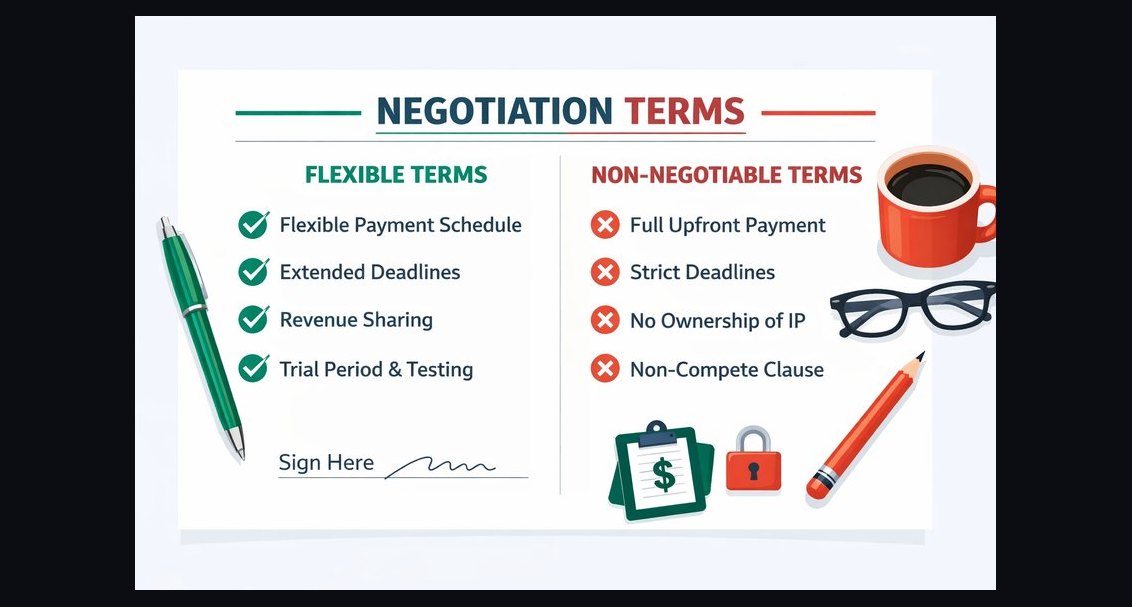 bsHow do you negotiate a complex enterprise contract when the buyer has more leverage than you in 2027?
 bsCan *How to Win Friends and Influence People* still make you more likeable in 2027?
 bsWhat’s the most underrated chapter in *How to Win Friends and Influence People* for building executive relationships?
 bsHow does *Fanatical Prospecting* change your daily routine for outbound sales?
 bsHow does *Gap Selling* help you identify hidden customer pain points?
 bsWhat’s the core strategy in *Fanatic Prospecting* for building a pipeline from scratch in 2027?