
How do you use *New Sales. Simplified.* to overcome the “no decision” stall?
 Curated byKory White · Fractional CRO · Maryland
 PULSEKNOWLEDGE LIBRARY
New Sales. Simplified. by Mike Weinberg (AMACOM, 2012) attacks the "no decision" stall head-on by reframing it as a failure of sales leadership — specifically, the salesperson's inability to create urgency, control the timeline, and disqualify non-buyers early. Weinberg's core argument is that "no decision" is not a buyer problem; it's a seller problem caused by weak prospecting, a lack of a compelling business case, and an unwillingness to force a yes/no choice. The book provides a step-by-step New Sales Driver framework — a structured prospecting system that pre-qualifies leads, compresses the sales cycle, and forces a decision by framing the cost of inaction. The most powerful weapon against the stall is Weinberg's "The Pain" concept: you must uncover a specific, urgent business problem that the prospect cannot ignore, then tie your solution directly to that pain — otherwise, the prospect's default is always "no decision."
1. The "No Decision" Epidemic — Why It's Your Fault
Weinberg opens with a brutal truth: "no decision" is the #1 reason deals are lost in B2B sales, not a competitor or price. The buyer simply decides to do nothing. The root cause: the salesperson failed to create a compelling reason to act now. The book argues that most salespeople are too passive — they ask "what do you think?" instead of "what are you going to do?" The "no decision" stall is a direct result of weak qualification early in the pipeline. If you don't discover a critical business pain in the first meeting, you're already dead. The solution: never let a prospect off the hook without a clear next step and a deadline. Weinberg calls this "forcing the decision" — and it's the antidote to the stall.
2. The New Sales Driver Framework — A Prospecting System
The core of the book is the New Sales Driver — a disciplined, repeatable prospecting system that eliminates the "no decision" stall before it happens. The framework has three phases:

- Phase 1: The Prospecting Attack — You create a target account list (no more than 50-75 accounts at a time). You research each account to find the right person (the economic buyer) and the right pain. You then launch a multi-touch campaign (email, phone, social) to get a meeting. The goal: pre-qualify — if you can't find a pain, move on. No pain = guaranteed "no decision" later.
- Phase 2: The First Meeting — This is not a "get to know you" chat. It's a diagnostic session where you uncover the specific business impact of the problem. You ask: "What is this problem costing you in lost revenue, wasted time, or competitive disadvantage?" You then quantify the pain in dollars. If the prospect can't or won't quantify it, you have a red flag — they will stall.
- Phase 3: The Business Case — You build a compelling case that shows the cost of inaction is higher than the cost of your solution. You present a timeline with a deadline (e.g., "If we don't implement by Q3, you lose $X in revenue"). You then ask for the decision — not "what do you think?" but "are you ready to move forward by Friday?"
3. The Pain Discovery Process — The Antidote to the Stall
Weinberg dedicates a full section to pain discovery — the single most important skill for killing the "no decision" stall. He argues that most salespeople ask weak questions like "what keeps you up at night?" — which gets a vague, non-urgent answer. Instead, you must ask specific, probing questions that force the prospect to confront the cost of inaction.
The Pain Discovery Framework includes:
- The "Cost of the Problem" Question: "What is this specific issue costing your company in lost revenue or wasted resources per month?"
- The "Impact on the Team" Question: "How does this problem affect your team's morale, productivity, or ability to hit their goals?"
- The "Competitive Disadvantage" Question: "How does this issue put you behind your competitors?"
- The "Personal Pain" Question: "How does this problem affect you personally — your reputation, your bonus, your stress level?"
The goal is to uncover three levels of pain: business pain (dollars), organizational pain (team/process), and personal pain (the buyer's career). If you can't find all three, the prospect will stall because they don't have enough emotional urgency to act. Weinberg's rule: No pain, no decision.
4. The "Forced Decision" Technique — Closing the Stall
When the prospect says "let me think about it" or "we need more time," Weinberg's Forced Decision technique kicks in. The idea: you cannot let the prospect leave without a clear yes or no. The technique has three steps:
- Acknowledge the Stall: "I understand you need time. But let me ask you: what specifically is holding you back?"
- Reframe the Cost of Delay: "Every day you wait, this problem is costing you $X. Can you afford to wait another month?"
- Force a Binary Choice: "I need to know by Friday: are you ready to move forward, or should we table this for now? If it's a no, I respect that — but I need to know so I can focus on other clients."
Weinberg emphasizes that the worst outcome is not a "no" — it's a "maybe." A "no" allows you to move on and find a real buyer. A "maybe" wastes weeks or months and ends in "no decision." The Forced Decision technique compresses the sales cycle and eliminates the stall by making the prospect choose. If they can't decide, you disqualify them and move on.
5. The "Business Case" — Quantifying the Cost of Inaction
The Business Case is the document that kills the "no decision" stall. Weinberg insists that every deal must have a written business case that shows:
- The Current State: What the problem costs the company per month/year.
- The Future State: What the company gains by solving it (revenue, efficiency, competitive edge).
- The Cost of Inaction: The cumulative loss if they delay (e.g., "If you wait 6 months, you lose $500,000 in missed revenue").
- The Investment: The cost of your solution.
- The ROI: The payback period and return.
The Business Case is presented at the decision meeting — not before. You hand it to the buyer and say: "This is what we've discussed. The numbers show that doing nothing costs you $X. My solution costs $Y. The payback is 3 months. Are you ready to sign?" The Business Case removes the buyer's ability to say "I need more data" — because you've given them all the data they need. If they still stall, you know it's not a data problem — it's a commitment problem — and you use the Forced Decision technique.
6. The "Prospecting Attack" — Pre-Qualifying to Prevent Stalls
The best way to overcome the "no decision" stall is to never let it happen — and that starts with prospecting. Weinberg's Prospecting Attack is a 90-day assault on a target list of 50-75 accounts. The steps:
- Step 1: Create a Target List — Choose accounts where you have a clear value proposition and a likely pain. Avoid "maybe" accounts.
- Step 2: Research the Buyer — Find the economic buyer (VP or C-level) who can make the decision. Avoid gatekeepers who cannot say yes.
- Step 3: Launch a Multi-Touch Campaign — Send a value-based email (not a pitch), then follow up with a phone call 2 days later, then a LinkedIn message, then another call. The goal: get a 15-minute discovery call.
- Step 4: Qualify on the First Call — In the discovery call, ask: "What is the biggest challenge you're facing in [area]?" If they can't articulate a clear, urgent pain, disqualify them immediately. Do not waste time on a prospect who will stall later.
The Prospecting Attack ensures that only qualified, pain-aware buyers enter your pipeline. This dramatically reduces the "no decision" rate because you've already pre-screened for urgency and willingness to act. Weinberg's mantra: "A bad prospect is worse than no prospect."
2. The "Pain" Framework — Making Inaction More Expensive Than Action
Weinberg’s most potent tool against the "no decision" stall is his "Pain" framework, which flips the buyer’s inertia on its head. The core insight is simple: prospects stall not because they don’t see value in your solution, but because they don’t feel enough pain from the status quo to justify the risk and effort of change. Your job is to make the cost of doing nothing tangible, urgent, and personally uncomfortable for the decision-maker.
The book teaches you to ask questions that surface specific, quantified consequences of inaction — not just generic "pain points." For example, instead of asking "What challenges are you facing?" you ask: "If this problem remains unsolved for another quarter, what specific revenue loss, customer churn, or competitive disadvantage will you personally be held accountable for?" This forces the prospect to confront the real-world impact of delay, shifting their decision calculus from "Should I buy?" to "Can I afford not to act?"

Weinberg also emphasizes tying pain to a timeline — a deadline that isn’t arbitrary but rooted in business reality (e.g., a budget cycle, a competitive threat, a regulatory deadline). Without this, "no decision" becomes the path of least resistance. By making the pain of inaction vivid and immediate, you transform the stall from a safe default into a risky choice.
3. The "Yes/No" Close — Forcing a Decision, Not a Stalemate
Another key tactic from *New Sales. Simplified.* is Weinberg’s "Yes/No" close, which directly attacks the ambiguity that enables "no decision." The idea is to compress the sales cycle by forcing a binary choice at key milestones — not waiting for the prospect to decide at their own pace. Weinberg argues that a clear "no" is far better than a perpetual "maybe," because it frees you to move on to qualified opportunities.

The technique works like this: after presenting your solution and building the business case, you explicitly ask: "Based on everything we’ve discussed, do you see a clear path to moving forward, or is this not the right fit right now?" This removes the wiggle room of "Let me think about it" or "I need to discuss with my team." You then pre-emptively address the most common stall objections — budget, authority, timing — by bringing them up yourself: "I know you might be worried about budget. If we could structure this to fit your fiscal year, would that remove the barrier?" This forces the prospect to either commit to a next step or admit they’re not serious — ending the stall.
Weinberg also stresses setting the expectation of a decision early in the relationship. From the first prospecting call, you frame the process as: "We’ll explore whether this makes sense, and if it does, we’ll agree on a timeline to move forward. If not, we’ll both know quickly." This pre-empts the "no decision" stall by making the prospect accountable for a timeline from the start.
4. The "New Sales Driver" — A Prospecting System That Pre-Qualifies Buyers
Weinberg’s New Sales Driver framework is not just a sales methodology — it’s a prospecting system designed to filter out "no decision" buyers before they ever enter your pipeline. The system is built on three pillars: targeting, messaging, and discipline. The key is to pre-qualify prospects based on their willingness to make a decision, not just their interest level.
The framework teaches you to define your ideal customer profile with criteria that include decision-making speed and authority. For example, you might ask: "Does this prospect have a history of making purchasing decisions within 90 days?" or "Is there a clear executive sponsor who can champion the change?" If the answer is no, you disqualify them early — even if they seem interested. This saves you from investing time in deals that will inevitably stall.
Weinberg also emphasizes consistent, structured outreach — a cadence of calls, emails, and social touches that builds urgency without being pushy. The goal is to create a sense of momentum that makes "no decision" feel like a missed opportunity rather than a safe choice. By the time you enter the final stages, the prospect has already been conditioned to expect a decision point, not an indefinite exploration.
FAQ
**What is the “no decision” stall according to *New Sales. Simplified.*?** The “no decision” stall occurs when a prospect fails to make any choice—neither yes nor no—often because the salesperson hasn’t created enough urgency or a clear business case. Weinberg argues this is a seller-caused problem rooted in weak prospecting and a lack of a compelling reason to act.
How does the book suggest creating urgency to avoid the stall? Weinberg emphasizes uncovering a specific, urgent business problem—called “The Pain”—that the prospect cannot ignore. By tying your solution directly to that pain, you force the prospect to confront the cost of inaction, making “no decision” less comfortable.
Does the book recommend disqualifying prospects early? Yes, *New Sales. Simplified.* advocates for pre-qualifying leads and being willing to disqualify non-buyers early. This prevents wasting time on prospects who will stall, as you can focus on those ready to make a decision.
What is the “New Sales Driver” framework? It’s a structured prospecting system that compresses the sales cycle and forces a decision. The framework includes steps to control the timeline, frame the business case, and push for a clear yes or no, reducing the chance of a stall.
How does the book address the prospect’s fear of making a wrong decision? Weinberg suggests reframing the decision by highlighting the greater risk of doing nothing. By showing the pain of inaction, you shift the prospect’s focus from fear of a bad choice to fear of missing out on a solution.
Is “no decision” always a seller problem? According to Weinberg, yes—it’s a failure of sales leadership. The seller must create urgency, control the process, and disqualify non-buyers. If the stall happens, it’s because the seller didn’t execute these steps effectively.
Sources
- Mike Weinberg — *New Sales. Simplified.* (AMACOM, 2012)
- Salesforce Blog — "How to Overcome the No Decision Stall in B2B Sales"
- HubSpot Sales Blog — "The No Decision Problem: Why It Happens and How to Fix It"
- Gartner — "The No Decision Dilemma in B2B Buying"
- Forbes — "Why No Decision Is the Worst Outcome in Sales"
- LinkedIn Sales Solutions — "Preventing the No Decision Stall with Better Prospecting"
- RAIN Group — "The Cost of Inaction: A Key Sales Tool"
- Sales Hacker — "Mike Weinberg's New Sales Simplified Framework"
Related on PULSE
- [What’s the most practical technique from *New Sales. Simplified.* for handling a “send me info” objection?](/knowledge/bs0400)
- [How does *The Sales Acceleration Formula* use data to predict which new hires will succeed in 2027?](/knowledge/bs0393)
- [How can *New Sales. Simplified.* help you win back a prospect who ghosted you after the first meeting in 2027?](/knowledge/bs0387)
- [What’s the main takeaway from *New Sales. Simplified.* for overcoming call reluctance in 2027?](/knowledge/bs0374)
- [What’s the best cold-calling template from *New Sales. Simplified.* for 2027?](/knowledge/bs0360)
- [What sales script does *New Sales. Simplified.* recommend for cold calls in 2027?](/knowledge/bs0330)
@Kory-White- · if Venmo asks, the last 4 of my number are 2012
 bsWhat are the key lessons from *Never Split the Difference* for negotiating a raise in 2027?
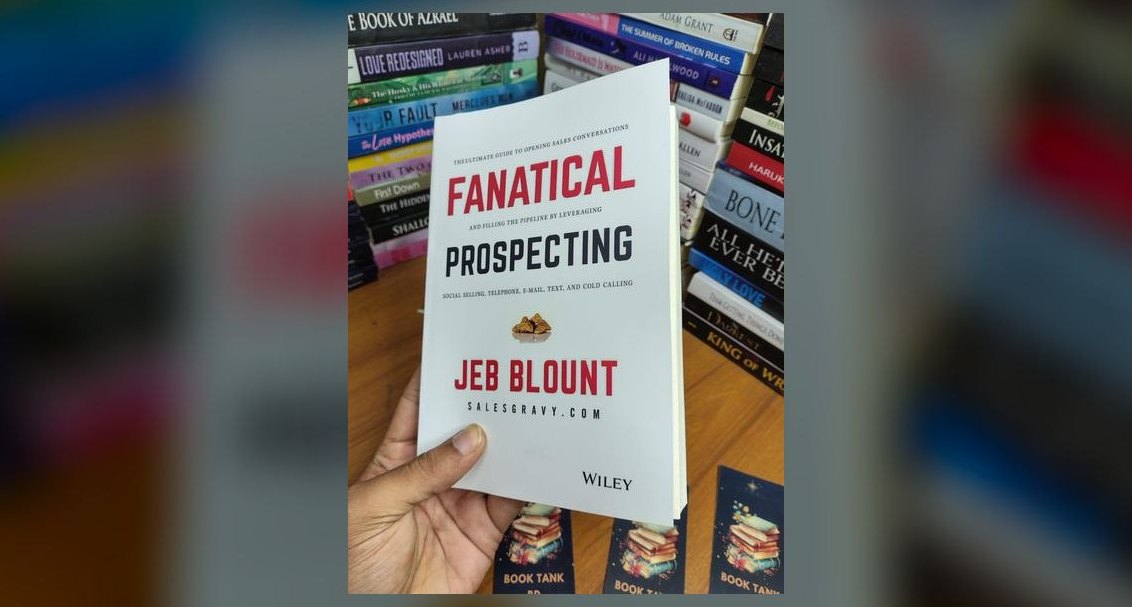 bsHow do you apply *Fanatical Prospecting* to LinkedIn outreach in 2027?
 bsHow does *Gap Selling* help you close more deals in a recession in 2027?
 bsWhat sales script does *New Sales. Simplified.* recommend for cold calls in 2027?
 bsDoes *The Psychology of Selling* still hold up for modern sales techniques in 2027?
 bsWhat’s the most actionable principle from *How to Win Friends and Influence People* for remote work in 2027?
 bsWhat’s the biggest mistake *SPIN Selling* warns against in complex B2B sales?
 bsHow does *Fanatical Prospecting* change your daily routine for outbound sales?
 bsWhat’s the most persuasive technique from *Pitch Anything* for investor pitches?
 bsWhat’s the key insight from *The Challenger Sale* for leading a sales team in 2027?