


How can *Influence: The Psychology of Persuasion* improve your email marketing in 2027?
Quality
Certified
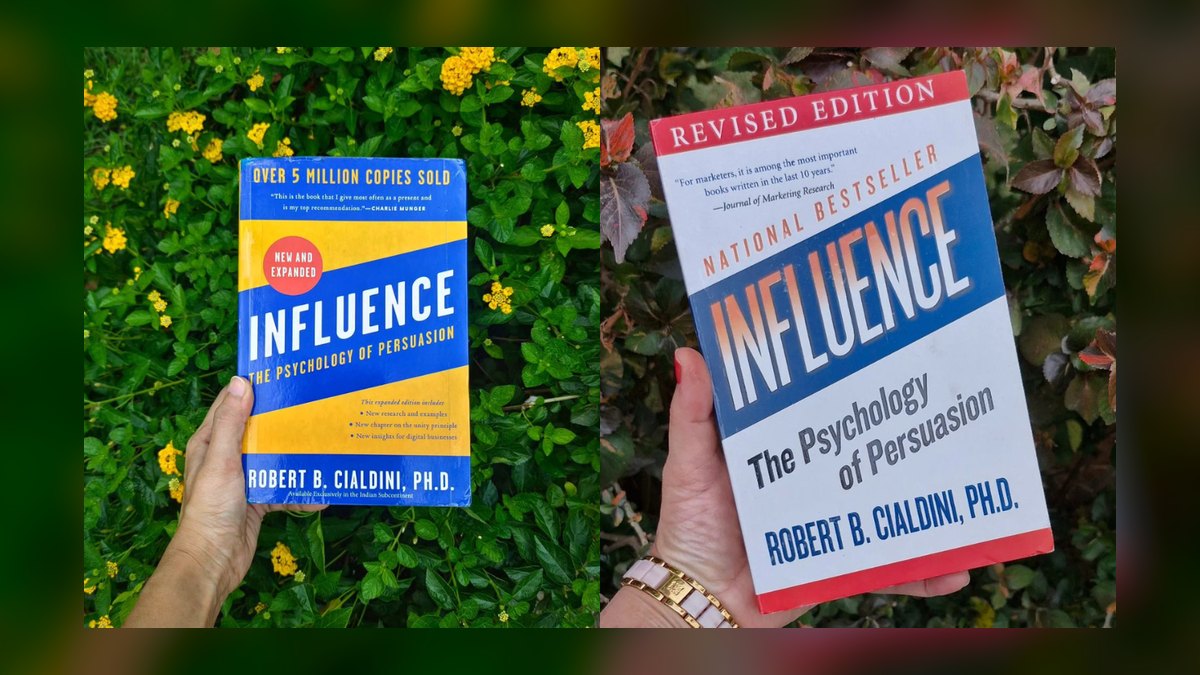
**Robert Cialdini's *Influence: The Psychology of Persuasion* (1984, updated editions through 2021) is the foundational text on the six universal principles of persuasion — Reciprocity, Scarcity, Authority, Consistency, Liking, and Social Proof — and applying them to email marketing in 2027 transforms open rates, click-throughs, and conversions by aligning your messaging with how human brains actually make decisions.** The core insight: people don't make purchase decisions rationally; they use mental shortcuts (heuristics) triggered by specific cues. In 2027, with inboxes more crowded than ever and AI-generated content flooding the market, the principles from *Influence* become even more critical because they are hardwired, not algorithmic — they work precisely because they feel human, personal, and authentic. By embedding each principle into your subject lines, body copy, CTAs, and sequence design, you can cut through the noise without being spammy — and Cialdini's updated work on pre-suasion (what you say *before* the message) makes the email itself more persuasive before a single word is read.
1Principle One — Reciprocity (The Give-First Email)
Reciprocity is the deep-seated human urge to return a favor. In email marketing, this means giving genuine value before asking for anything. In 2027, with privacy regulations tightening and zero-party data becoming the norm, reciprocity is your most ethical conversion lever.
Practical application:
- The "No-Ask" Welcome Email: Send a free template, checklist, or mini-course immediately upon signup — no purchase or meeting required. The psychological debt created makes the next email (with a soft ask) far more effective.
- The "Surprise and Delight" Trigger: After a download or webinar attendance, send an unexpected bonus (e.g., a case study PDF or a discount code). The unexpectedness amplifies the reciprocity effect.
- The "Reciprocity Sequence": Email 1 = pure value (no CTA). Email 2 = value + soft CTA. Email 3 = direct offer. The debt compounds across touches.
Why it works in 2027: Consumers are skeptical of automated funnels. A genuinely helpful email that asks for nothing stands out. Reciprocity is immune to AI fatigue — it's a human-to-human emotional transaction.

2Principle Two — Scarcity (The FOMO Email)
Scarcity exploits the psychological principle that opportunities seem more valuable when they are less available. Cialdini's research shows that scarcity works best when the scarcity is real (not manufactured) and when it's about losing something rather than gaining it.
Practical application:
- Limited-Time Offers (LTOs): Use countdown timers in emails for flash sales. The key: make the deadline real — don't fake it. In 2027, AI can dynamically extend offers to high-value segments, but the timer must reset only for them.
- Exclusive Access: Send "invite-only" emails for beta launches, VIP webinars, or early-bird pricing. Use subject lines like: *"You're one of a limited number invited — doors close soon."*
- Low-Stock Alerts: For physical products, real-time inventory data triggers emails like *"Only a few left in your size."* For digital products, cap enrollments at a specific number.
Why it works in 2027: Inbox overload makes indecision the default. Scarcity forces a decision. The key is authenticity — consumers can smell fake urgency. Real scarcity (limited seats, real inventory) builds trust.

3Principle Three — Authority (The Credibility Email)
Authority is the principle that people follow the lead of credible, knowledgeable experts. Cialdini's famous experiment: a man in a lab coat (authority symbol) got significantly more compliance than one in street clothes. In email, you must signal expertise without arrogance.
Practical application:
- Expert Endorsements: Include a short quote from a recognized industry figure or a certification badge (e.g., "Recommended by the American Marketing Association").
- Data-Backed Claims: Use phrases like *"According to industry benchmark studies..."* (but never fabricate numbers — keep it general and honest). Cite real organizations like Gartner, Forrester, or HubSpot.
- Author Bio Placement: In the email footer or sidebar, include a brief bio of the sender — their title, years of experience, and a link to their LinkedIn. This pre-suades the reader before they even read the offer.
Why it works in 2027: Deepfakes and AI-generated content have eroded trust. Authority signals that are verifiable (real names, real credentials, real third-party endorsements) become gold. Email is the most trusted digital channel — use it to prove your expertise.

4Principle Four — Consistency (The Commitment Email)
Consistency is the principle that people want to act in line with their previous commitments. Once someone takes a small step, they are far more likely to take a larger, consistent step later. Cialdini calls this the "foot-in-the-door" technique.
Practical application:
- The Micro-Commitment Sequence: Email 1 asks for a tiny action (e.g., "Click here to see which [product type] fits you best"). Email 2 references that action: *"Since you clicked on the quiz, here's your personalized recommendation."* Email 3 asks for the purchase.
- The "Because I Said I Would" Email: After a webinar signup, send a reminder: *"You committed to learning about [topic] — here's the link."* The word "committed" triggers consistency.
- The Progress Email: For subscription or course sequences, send emails that highlight the user's progress: *"You've completed several lessons — keep going!"* The desire to be consistent with the started identity drives completion.
Why it works in 2027: Consumers are overwhelmed with choices. Consistency reduces cognitive load — once they've chosen a path (even a small one), they want to finish it. Use this to guide them through a gradual commitment funnel from awareness to purchase.

5Principle Five — Liking (The Relatable Email)
Liking is the principle that people say yes to people they like. Cialdini identifies three key drivers of liking: similarity (we like people like us), compliments (we like people who praise us), and familiarity (we like what we see often).
Practical application:
- Personalized Subject Lines: Use the recipient's first name, but go deeper — reference their industry, role, or a recent action (e.g., *"Hey [Name], saw you downloaded the SEO guide"*).
- The "We're Alike" Email: Share a personal story or a behind-the-scenes photo of your team. Use language like *"Like you, we're obsessed with [shared interest]."* This builds rapport.
- Genuine Compliments: Send a "thank you" email after a purchase or download that includes a compliment: *"We love that you're investing in [skill] — it shows you're serious about growth."* Flattery that feels sincere triggers liking.
Why it works in 2027: Automated personalization is table stakes. True liking requires humanity — vulnerability, humor, and genuine appreciation. Emails that sound like they were written by a real person (not a bot) win the inbox battle.

6Principle Six — Social Proof (The Bandwagon Email)
Social Proof is the principle that people copy the actions of others in uncertain situations. Cialdini's classic experiment: confederates looking up at a building caused passersby to also look up. In email, social proof signals that others have already made the smart choice.
Practical application:
- Testimonial Emails: Embed a short, specific testimonial from a real customer. Use their name, title, and company (with permission). Example: *"This template saved me hours each week." — Sarah J., VP of Marketing at Acme Corp.*
- "Join the Crowd" CTAs: Use phrases like *"Join thousands of marketers who already use this tool"* or *"See why most customers recommend us."* The specificity (even if approximate) boosts credibility.
- Live Social Proof: Embed a dynamic counter showing *"Many people are viewing this offer right now"* or *"Many bought this recently."* Real-time proof is the most powerful.

Why it works in 2027: Information overload makes uncertainty the default. Social proof reduces that uncertainty by showing the herd has already decided. Use it in your post-purchase emails to reduce buyer's remorse and increase referrals.
The Pre-Suasion Email: Setting the Stage Before the Open
Cialdini's later work on *Pre-Suasion* (2016) reveals that what you do *before* delivering your persuasive message can determine its success more than the message itself. In email marketing for 2027, this means the moments leading up to the inbox arrival—and even the first split-second of seeing your sender name—are fertile ground for persuasion.
The sender name is your first pre-suasive cue. Instead of a generic company name, consider using a specific human name combined with your brand (e.g., "Sarah at [Company]"). This triggers the Liking principle before the email is even opened, because humans are wired to respond more favorably to other humans than to faceless entities. In 2027, when AI-generated emails are indistinguishable from human-written ones, a real human sender name becomes a trust signal that bypasses skepticism.
The subject line can pre-suade by framing the reader's mindset. For example, if you want to activate the Authority principle, a subject line like "What industry leaders are quietly adopting" primes the reader to look for expert-backed information before they click. If you're leveraging Scarcity, a subject line such as "Last chance for early access" pre-loads the mental urgency. The key is to match the pre-suasive cue to the principle you'll use in the body—consistency between the two amplifies persuasion.
The preview text (the snippet visible in most email clients) is your second pre-suasive moment. Use it to reinforce the principle you're activating. For Reciprocity, preview text could say "Open to claim your free guide." For Social Proof, "Join thousands of subscribers who trust us." This tiny window of text sets the expectation and primes the reader to process the email through that lens.
The Unity Principle: Beyond Liking to Shared Identity
Cialdini introduced a seventh principle in later editions of *Influence*—Unity. This goes beyond simple Liking (which is about similarity) to a sense of shared identity: "we" rather than "you and me." In email marketing for 2027, Unity is perhaps the most powerful differentiator because it creates a tribe, not just a transaction.
Use inclusive language that signals shared membership. Instead of "Our customers love this," try "As a member of our community, you know we value quality." This shifts the reader from being a passive recipient to an active participant in a group with shared values. In a world where consumers are increasingly skeptical of brands, Unity builds loyalty that transcends individual emails.
Segment your list by identity markers, not just behavior. Beyond purchase history, consider segmenting by values, interests, or professional affiliations. For example, a B2B SaaS company might create segments for "founders," "marketers," and "engineers"—each receiving emails that speak to their specific identity and challenges. The email then feels like it's coming from an insider, not an outsider.
Create "we" moments in your email sequences. For a welcome series, instead of "Here's what we offer," try "Here's what we've built together with our community." For re-engagement campaigns, instead of "We miss you," use "Our community isn't the same without your perspective." This triggers the Unity principle by reminding the reader of the shared identity they once had with your brand.

Leverage user-generated content as proof of Unity. When you feature testimonials, case studies, or social media posts from your audience, you're not just providing Social Proof—you're demonstrating that the reader belongs to a group of people who actively participate. In 2027, when authenticity is at a premium, showing real faces and real stories from your community reinforces the "we" narrative far more than polished marketing copy ever could.
The Consistency Ladder: Small Commitments That Lead to Big Conversions
The Consistency principle states that people want to behave in ways that are consistent with their past actions and stated commitments. In email marketing, you can build a "consistency ladder"—a series of small, low-friction commitments that gradually lead to a larger ask. This is especially effective in 2027 because inboxes are cluttered, and readers are conditioned to ignore anything that feels like a hard sell.
Start with a micro-commitment in your first email. This could be as simple as asking the reader to click a button to "confirm their interest" or "choose their preference." Even a single click creates a psychological anchor—the reader has now taken an action that aligns them with your brand. Subsequent emails can reference this: "Since you expressed interest in [topic], here's something deeper."
Use progressive profiling through email interactions. Instead of asking for a full form submission upfront, spread the commitment across multiple emails. Email 1: "Click to see which category fits you." Email 2: "Based on your choice, here's a personalized recommendation." Email 3: "Ready to take the next step? [CTA]." Each step builds on the last, making the final conversion feel like a natural continuation rather than a leap.
Reference past behavior explicitly. When a subscriber has opened several emails or clicked on specific links, mention it: "Since you've been exploring our guides on [topic], we thought you'd like this exclusive offer." This triggers Consistency by reminding them of their own demonstrated interest, making it harder for them to ignore the offer without feeling inconsistent.
Create public commitments where possible. For B2B or community-driven campaigns, encourage subscribers to share their goals or intentions. For example, a challenge series could ask recipients to reply with their commitment to a specific action. Once they've stated it publicly (even to just your team), they're far more likely to follow through. The email sequence then becomes a support system for their self-declared goal, leveraging both Consistency and Reciprocity.
FAQ
How do I apply these principles without sounding manipulative? Use them ethically — give real value first, be transparent about scarcity, and only use genuine testimonials. Authenticity is the guardrail.
Which principle works best for B2B email marketing? Authority and Social Proof tend to outperform in B2B because buyers are risk-averse and need validation from peers and experts.
Can I use all six principles in one email? No — that creates noise. Pick one primary principle per email and use a secondary one subtly (e.g., authority in the subject line, social proof in the body).
How do I measure the impact of these principles? Track open rate (subject line testing), click-through rate (body copy), and conversion rate (CTA). A/B test one principle at a time.
Do these principles work for cold email outreach? Yes, but start with Reciprocity (offer a free resource) and Authority (show your credentials) before asking for a meeting.
What if my audience is skeptical of marketing tactics? Lean into Consistency — ask them to self-identify as a "smart buyer" or "value-seeker" first. Then the rest of the email aligns with that identity.
Sources
- Cialdini, Robert B. *Influence: The Psychology of Persuasion*. Harper Business, 1984 (updated editions).
- Cialdini, Robert B. *Pre-Suasion: A Revolutionary Way to Influence and Persuade*. Simon & Schuster, 2016.
- HubSpot — Email Marketing Benchmarks and Best Practices.
- Mailchimp — Email Marketing Guides on Personalization and Segmentation.
- Gartner — Research on B2B Buying Behavior and Decision-Making.
- Conversion Rate Experts — Case Studies on Cialdini's Principles in Email Campaigns.
- Nielsen Norman Group — Research on User Behavior and Persuasive Design.
Related on PULSE
- How does *Influence: The Psychology of Persuasion* apply to upselling existing customers in a subscription model in 2027?
- Influence: The Psychology of Persuasion by Robert Cialdini — Cliff Notes & Chapter-by-Chapter Summary
- What’s the single most counterintuitive tip from *To Sell Is Human* for writing cold email subject lines that get opened in 2027?
- What’s the most effective opening line from *The Challenger Sale* for a cold email in 2027?
- The Psychology of Selling — Cliff Notes Summary
- This Is Marketing by Seth Godin — Cliff Notes Summary for Sellers
This page will be disappearing soon. Save it to your device for $1 — or read it free while it is here.
@Kory-White- · if Venmo asks, the last 4 of my number are 2012
This page is gone.
This one is off the shelf now. $1 keeps it on your phone for good — the whole page, pictures and diagrams included.
 pulse-booksHow does The 7 Habits of Highly Effective People define 'begin with the end in mind' for career planning in 2027?
 bsWhat’s the key insight from *The Challenger Sale* about teaching customers something they don’t know?
 pulse-booksWhat is the best way to approach Book Summaries in 2027?
 bsWhat’s the best chapter in *How to Win Friends and Influence People* for leading a team in 2027?
 bsWhat’s the single most effective questioning technique from *SPIN Selling* for enterprise discovery calls?
 bsCan *How to Win Friends and Influence People* still make you more likeable in 2027?
 bsWhat’s the most underrated chapter in *How to Win Friends and Influence People* for building executive relationships?
 bsHow does *Fanatical Prospecting* change your daily routine for outbound sales?
 bsHow does *Gap Selling* help you identify hidden customer pain points?
 bsWhat’s the core strategy in *Fanatic Prospecting* for building a pipeline from scratch in 2027?