


How do sales leaders build a repeatable outbound prospecting motion without a big SDR team in 2027?
Quality
Certified

Sales leaders build a repeatable outbound prospecting motion in 2027 by treating it as a systems problem, not a headcount problem: a tightly defined ICP, automated signal capture, AI-assisted research and personalization, small senior "player-coach" teams owning high-value accounts, and rigorous weekly measurement of meetings booked per rep. The strategy replaces volume with precision.
A concrete scenario: the two-person pipeline team
Picture a B2B software company selling a compliance platform into mid-market financial services. In 2023, it ran eight SDRs, each expected to make 60 dials and send 80 emails a day. The team booked roughly 40 meetings a month, but only about a fifth converted to qualified opportunities, and annual SDR attrition ran near 40%. Total cost of the function, fully loaded with management, tooling, and recruiting, sat comfortably above $900,000 a year.
By 2027, that same company runs two senior prospectors, a part-time sales engineer who joins technical discovery, and an AI research stack. They book 26 meetings a month, but 60% convert to qualified opportunities because every touch is built on a verified buying signal. The fully loaded cost is roughly $380,000. Pipeline generated is flat to slightly up, and the win rate on outbound-sourced deals has improved because the conversations start warmer.
That is the shape of the shift. The motion did not get smaller in ambition; it got narrower in targeting and heavier in leverage. The rest of this page breaks down how sales leaders actually build it.

How the mechanism actually works
A repeatable outbound motion in 2027 has four layers that feed each other. If any layer is missing, the whole thing degrades into either spray-and-pray volume or an unscalable founder-led effort.
Layer one: ICP definition tight enough to be falsifiable. Not "mid-market companies with 100-1,000 employees." Instead: "US-based insurance brokerages with 50-400 employees that have posted a compliance or risk-operations job in the last 90 days and use one of three named core systems." The tighter the definition, the more every downstream automation can be specific. A useful test: if you cannot name five companies that fit and five that clearly do not, the ICP is too vague to automate against.
Layer two: signal capture. Instead of buying static lists, the team subscribes to signals that indicate a problem is becoming urgent. Common signal categories:

- Hiring signals — job postings for roles that imply the pain (compliance analyst, risk manager, revenue operations lead).
- Technology signals — a company adopting, or churning off, a system adjacent to yours.
- Funding and expansion signals — new rounds, new geographies, new office openings.
- Content and community signals — engagement with relevant webinars, review-site comparisons, or community posts.
- Regulatory and event triggers — new rules, audit deadlines, earnings commentary that mentions the problem.
Each signal gets a score. A company hitting two or more strong signals in a 30-day window enters the active queue. A company hitting one weak signal enters a nurture queue.
Layer three: AI-assisted research and personalization. This is where the leverage lives. For each company in the active queue, the system assembles a one-page brief: recent news, likely incumbent tools, the named buyer's probable priorities, and two or three plausible problem hypotheses. A human then spends 15-25 minutes turning that brief into a genuinely specific first touch. The AI does not write the final message; it removes the 45 minutes of tab-hopping that used to precede it.
Layer four: sequenced multithreading. Because the team is small, each account gets more touches, not fewer, but spread across multiple stakeholders and channels. A typical sequence for a high-signal account runs 12-18 touches over four to five weeks across email, phone, LinkedIn, and one low-cost physical or event touch where appropriate.
The feedback loop at the bottom matters more than any single step. Every closed-lost and closed-won deal should update the ICP definition and the signal weights. A motion that does not learn is just a script.
Real numbers, ranges, and benchmarks
Numbers here vary enormously by ACV, geography, and market maturity, so treat these as planning ranges rather than promises. The point is to give sales leaders something concrete to argue with.
Team sizing and ratios. For outbound into mid-market accounts with an ACV between $15,000 and $60,000, a workable ratio in 2027 is roughly one senior prospector per $1.5M-$2.5M of new-business quota, supported by shared research automation. For enterprise ACV above $100,000, the ratio shifts to one prospector per $3M-$5M of quota because each account gets far more custom work. For transactional ACV under $10,000, outbound rarely justifies dedicated humans at all; it should be product-led or partner-led.
Activity-to-outcome math. A reasonable planning model for a senior prospector working a signal-driven list:
- 40-60 accounts in active rotation at any time
- 12-18 touches per account across a 4-5 week sequence
- 8-15% of active accounts convert to a booked meeting
- 55-70% of booked meetings convert to qualified opportunities when signals are verified
- 20-30% of qualified opportunities convert to closed-won
Compare that to a volume model where meeting-to-opportunity conversion often sits at 15-25%. The difference is not effort; it is targeting.
Cost per meeting. In a traditional eight-SDR model, fully loaded cost per booked meeting frequently lands between $600 and $1,200 once you include management, tooling, ramp time, and attrition replacement. In a signal-driven two-to-three-person model, cost per booked meeting commonly lands between $250 and $600, with the caveat that the meetings are better qualified, so cost per *qualified opportunity* improves even more sharply.
Ramp time. Traditional SDR ramp to full productivity runs three to six months. A senior prospector with domain experience ramps in four to eight weeks because they already know how to run a discovery conversation and only need to learn the ICP and the tooling.
Attrition. This is the quiet killer of the old model. Junior SDR benches often churn 30-45% annually. Senior, better-paid prospectors with real career paths churn at roughly half that rate, which compounds savings in recruiting and lost pipeline.
Tooling spend. A realistic 2027 stack for a small team runs $1,500-$4,000 per month total, not per seat: signal/data platform, sequencing, enrichment, call recording and analysis, and a CRM hygiene tool. The trap is buying ten tools and using three. Budget for the stack you will actually operationalize.
Trade-offs and alternatives
No single model wins everywhere. Sales leaders should choose deliberately based on ACV, market density, and how much brand recognition they already have.
Signal-driven senior prospecting versus volume SDR bench. The senior model wins on cost per qualified opportunity, win rate, and retention. It loses on raw top-of-funnel volume and on coverage of very large total addressable markets. If your market has 200,000 plausible accounts and a $5,000 ACV, the senior model cannot cover it; you need product-led growth or channel partners instead.
Outbound versus inbound and community. Outbound is most efficient when your ICP is identifiable by firmographic and signal data. If your buyers are hard to identify in advance and congregate in communities, events, or review sites, investing in those channels may beat cold outreach. Most healthy 2027 motions blend both, with outbound targeting accounts that show intent and community work building the brand that makes outbound land.
AI-written versus AI-assisted outreach. Fully automated personalization at scale still underperforms in most mid-market and enterprise segments because buyers detect it. AI-assisted — where the machine assembles context and the human writes the hook — consistently produces better reply rates. The trade-off is time: 15-25 minutes per account versus near zero.
In-house versus fractional or agency prospecting. Fractional prospecting teams can stand up a motion in weeks and are useful for testing a new segment. They rarely build the institutional knowledge that compounds. Use them to validate, then insource what works.
One motion versus segment-specific motions. A single motion is simpler to manage but usually underperforms. Most teams above $10M ARR eventually run two: a high-touch signal motion for enterprise and a lighter automated motion for mid-market.
The decision tree is deliberately blunt. Most bad outbound programs exist because someone applied an enterprise motion to a transactional market, or a volume motion to a 400-account market. Match the model to the math.
Common pitfalls and how to avoid them
Pitfall one: hiring junior reps to save money. The instinct after cutting an SDR bench is to replace it with cheaper junior reps. This usually fails. A two-person team of senior prospectors who can run discovery and handle objections outperforms a five-person junior team in almost every mid-market scenario. Pay for judgment, not dials.

Pitfall two: automating before the ICP is tight. Teams rush to buy sequencing and data tools before they can describe their best customer in one falsifiable sentence. The result is high-volume, low-relevance outreach that burns the list. Fix the ICP first, manually book ten meetings, then automate what worked.
Pitfall three: measuring activity instead of conversion. Dials, emails sent, and LinkedIn connections are inputs. The metrics that matter are meetings booked per rep per month, meeting-to-opportunity conversion, and cost per qualified opportunity. If leadership reviews activity dashboards weekly, the team will optimize for activity.
Pitfall four: letting AI write the whole message. Buyers in 2027 are fluent at spotting generated outreach. Use AI for research, summarization, and drafting structure — never for the opening line that proves you understand their situation.
Pitfall five: no feedback loop from closed deals. If win/loss reasons never flow back into the ICP and signal weights, the motion plateaus within two quarters. Build a 30-minute monthly review where the team updates signal scores based on what actually closed.
Pitfall six: treating prospecting as a junior career dead end. The senior model only works if prospecting is a respected, well-paid role with a path into closing or management. If it remains a two-year burnout tour, you will keep paying attrition tax.

Pitfall seven: over-investing in tools before process. A team with a clear ICP, a defined sequence, and a spreadsheet will outperform a team with ten tools and no process. Buy tools to remove a specific bottleneck you have already measured.
Pitfall eight: ignoring deliverability and domain health. Small teams sending high-quality outreach still get burned by poor domain hygiene. Warm domains, authenticate with SPF, DKIM, and DMARC, keep volume per domain modest, and monitor bounce and spam rates weekly.
Related questions
How many prospectors does a $10M ARR company actually need?
Usually two to four senior prospectors, plus shared research automation and a part-time sales engineer. That covers mid-market outbound at typical ACVs. If ACV is under $10,000, headcount should be near zero and the motion should be product-led.
What is the single most important metric for this motion?
Cost per qualified opportunity. It captures targeting quality, message quality, and rep skill in one number. Track it monthly by segment and by signal type, and reallocate toward whatever produces the lowest figure.
Can this work without any dedicated prospecting headcount at all?
Yes, in two situations: very high ACV where founders or AEs prospect personally, or very low ACV where product-led growth carries the funnel. In between, some dedicated capacity almost always pays for itself.
How long before the motion is genuinely repeatable?

Expect two full quarters. Quarter one is ICP refinement and manual proof. Quarter two is automation and measurement. If it is not producing predictable meetings per rep per month by month six, the problem is usually the ICP, not the team.
Does AI replace the prospector in this model?
No. It replaces the research and list-building work that consumed most of a junior rep's day. The human work that remains — judgment about which account to pursue and how to open a credible conversation — is exactly the work that was always most valuable.
FAQ
Is outbound prospecting dead in 2027? No, but undifferentiated volume outbound is. Buyers ignore generic sequences. What still works is narrow targeting, verified signals, and genuinely specific first touches. The motion got harder to fake, not harder to run well.
How do sales leaders justify cutting the SDR bench to the board? With unit economics. Present cost per booked meeting, cost per qualified opportunity, and win rate for the current model against a pilot of the signal-driven model. If the pilot shows a materially lower cost per qualified opportunity, the argument makes itself.
What should the first 30 days of building this look like? Days 1-10: define the ICP and list 50 accounts that fit. Days 11-20: manually research and contact 25 of them with no automation. Days 21-30: review reply rates, refine the message, and identify which signals predicted interest. Automate only what already worked.
How does this change for enterprise deals? Enterprise requires more touches per account, more stakeholders, and often an executive sponsor. The team stays small but each prospector carries fewer accounts — sometimes 15-25 active — and spends far more time on research and multithreading.
What is the biggest risk of a small senior team? Key-person dependency. If one prospector leaves, a third of pipeline disappears. Mitigate with documented ICP criteria, shared signal definitions, and a CRM that captures every touch so a replacement can pick up accounts quickly.
Should prospecting report into sales or marketing? Into sales, with a dotted line to marketing for signal and content alignment. Prospecting is a sales skill, and the feedback loop into ICP definition works best when it sits close to the closing team.
Sources
- https://www.gartner.com/en/sales
- https://blog.hubspot.com/sales
- https://www.saleshacker.com
- https://www.linkedin.com/business/sales/blog
- https://hbr.org/topic/sales
- https://www.forrester.com/research/sales/
- https://www.salesforce.com/resources/
- https://www.mckinsey.com/capabilities/growth-marketing-and-sales/our-insights
Related on PULSE
- What pipeline coverage ratio should sales leaders target in 2027?
- How do you measure cost per qualified opportunity across segments?
- What signals best predict outbound reply rates in mid-market?
- How should a two-person prospecting team structure its week?
- When does product-led growth beat outbound for mid-market ACVs?
This page will be disappearing soon. Save it to your device for $1 — or read it free while it is here.
@Kory-White- · if Venmo asks, the last 4 of my number are 2012
This page is gone.
This one is off the shelf now. $1 keeps it on your phone for good — the whole page, pictures and diagrams included.
 bsHow does *Influence: The Psychology of Persuasion* explain why “free” offers actually work in B2B sales?
 bsHow can *Predictable Revenue* help a startup build a repeatable sales process from scratch in 2027?
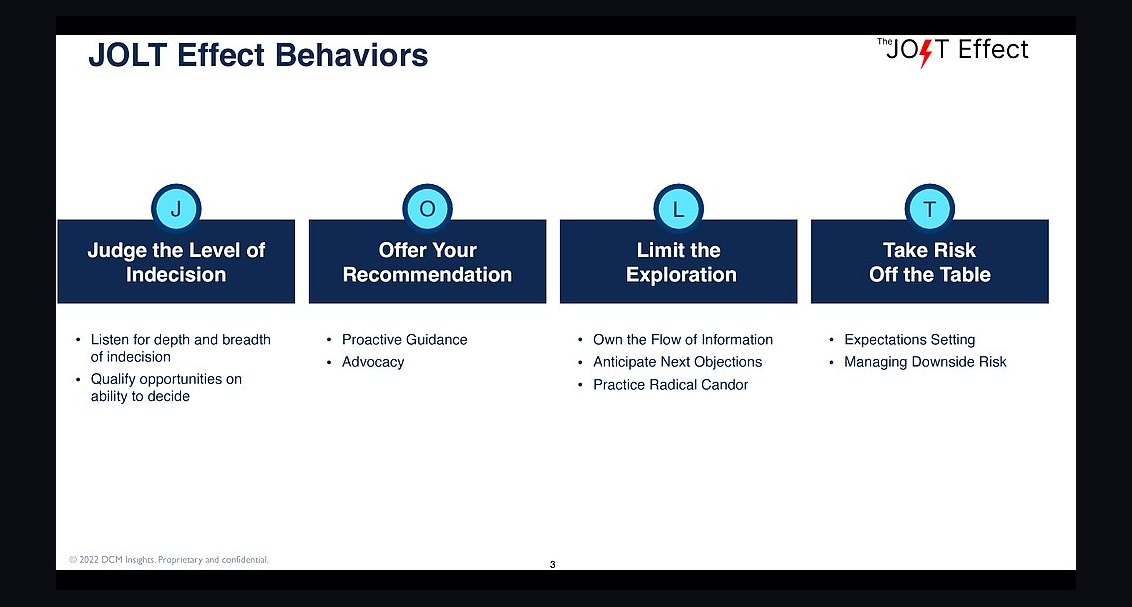 bsHow do you apply *The JOLT Effect* to reduce buyer hesitation in enterprise sales?
 bsHow does *Gap Selling* help you identify hidden customer pain points?
 bsHow do you use *Never Split the Difference* to handle difficult conversations with customers in 2027?
 pulse-booksWhat should you know before investing in Book Summaries in 2027?
 pulse-booksWhat is the best way to apply the Four Tendencies framework to build a daily reading habit in 2027?
 bsWhat’s the most underrated chapter in *How to Win Friends and Influence People* for building executive relationships?
 bsWhat’s the key lesson from *Pitch Anything* about managing your own anxiety before a high-stakes pitch?
 bsWhat’s the key difference between a situational and a problem question in *SPIN Selling* for discovery calls in 2027?