

How do you build a sales team's resilience after a major market downturn in 2027?
 Curated byKory White · Fractional CRO · Maryland
Quality
Certified

Building sales team resilience after a major market downturn in 2027 means deliberately rebuilding pipeline coverage, rep confidence, and operating discipline at the same time. The work is less about motivation and more about structural fixes: resetting quotas to the new market, diversifying the customer base, tightening qualification, and giving managers a repeatable coaching cadence so the team can absorb shocks without collapsing.
What resilience after a downturn actually means and why it matters
Resilience is not optimism, and it is not stubbornness. In a sales organization, resilience is the measurable capacity to keep producing acceptable revenue while the surrounding market contracts, shifts buying behavior, and forces budget scrutiny. A resilient team does not simply survive a downturn — it rebuilds its pipeline engine so that a 20-30% drop in inbound demand, a lengthening procurement cycle, or a sudden freeze in a key vertical does not translate into a proportional drop in closed revenue.
Why does this matter so much in 2027 specifically? Downturns are not uniform. Some sectors contract hard, others hold flat, and a few accelerate. A team that was built for a single booming market — one industry, one buyer persona, one motion — has no shock absorber. When that market turns, the entire number is exposed. Resilience is the portfolio of skills, coverage, and processes that keeps the number defensible when the environment stops cooperating.
There are three layers to resilience, and they need to be built in order. The first is financial resilience: pipeline coverage, deal mix, and quota realism. The second is operational resilience: forecasting accuracy, qualification discipline, and a cadence that surfaces problems early. The third is human resilience: rep confidence, manager capability, and a culture where a lost deal is analyzed rather than punished. Skip any layer and the others weaken. A team with great coverage but terrified reps will still miss. A confident team with fantasy quotas will burn out by month three.

The reason downturns are so damaging is that they attack all three layers simultaneously. Budgets tighten, so pipeline coverage drops. Buyers add approval layers, so forecasting gets noisy. And reps who have only ever sold in a growth market interpret the slowdown as personal failure, which erodes confidence and drives turnover — the single most expensive outcome of a downturn. Replacing a fully ramped enterprise rep can cost well over $100,000 in recruiting, onboarding, and lost productivity, and the ramp itself often takes six to nine months. Losing three reps in a downturn can cost more than the revenue gap you were trying to close.
So resilience work is not a soft initiative. It is a capital-allocation decision. Every hour spent on coverage modeling, quota resetting, and manager coaching is an hour spent protecting the most expensive asset the company has: a functioning revenue team.
The step-by-step process for rebuilding resilience
The rebuild follows a sequence. Doing these steps out of order — for example, resetting quotas before you understand the new pipeline math — creates cascading errors.

Step 1: Re-baseline the market, not the plan. Before touching quotas, pull the last 90-120 days of data and answer four questions: What is the new win rate by segment? What is the new average sales cycle length? What is the new average deal size? What percentage of pipeline is now stalling at each stage? In a typical downturn, win rates fall 10-20% relative, cycles lengthen 15-40%, and deal sizes compress as buyers descope. You cannot build a resilient plan on pre-downturn assumptions.
Step 2: Rebuild pipeline coverage to a downturn-appropriate ratio. In a growth market, 3x coverage is often enough. In a downturn, target 4x to 5x because conversion rates have dropped. That means the prospecting motion has to increase, not decrease — which is counterintuitive when leadership is cutting costs. The math is simple: if win rates fell from 25% to 18%, you need roughly 40% more qualified pipeline to produce the same revenue.
Step 3: Reset quotas to the new reality, then hold them. Nothing destroys credibility faster than quotas that ignore the market. Reset quotas using the re-baselined data, communicate the reasoning openly, and then commit to not moving them again mid-year. Reps can survive a hard number; they cannot survive a moving target.

Step 4: Diversify the customer base. If 60% of revenue came from one vertical or one region, that concentration is the core vulnerability. Set a target — for example, no single vertical above 35% of pipeline — and build targeted prospecting into the segments that are still spending. Downturns redistribute budget; resilience means following the money rather than mourning the loss.
Step 5: Tighten qualification and cut the bottom of the funnel. In a downturn, the cost of pursuing dead deals rises because rep time is scarcer. Re-score the pipeline against a strict qualification standard and remove anything that has not advanced in 30 days without a concrete next step. A smaller, cleaner pipeline forecasts better and frees capacity for real opportunities.
Step 6: Install a weekly manager coaching cadence. Resilience is built in the one-on-one, not the all-hands. Managers should review three to five deals per rep per week, focusing on next steps, stakeholder access, and risk. This cadence surfaces problems two to four weeks earlier than a monthly forecast call.
Step 7: Protect the team's confidence with evidence, not pep talks. Share win data, competitive intel, and customer outcomes constantly. Reps who believe the product still wins in this market sell differently than reps who are guessing.
The loop matters. Resilience is not a one-time project; it is a monthly review cycle where coverage, quota attainment, and pipeline health are checked against the re-baselined market. Teams that run this loop consistently recover faster than teams that treat the downturn as a temporary storm to wait out.
Costs, timelines, and typical ranges

Resilience work has a real budget, and pretending otherwise is how initiatives die. Here are the ranges a revenue leader should plan for.
Timeline. Expect 90 to 180 days to see measurable improvement in pipeline coverage, and two to three quarters before the full effect shows in closed revenue. The first 30 days are diagnostic: data pull, pipeline audit, quota modeling. Days 30-90 are execution: quota rollout, prospecting push, coaching cadence launch. Days 90-180 are refinement: adjusting segment targets, pruning underperforming plays, and reallocating headcount.
Direct costs. A quota and territory redesign typically consumes 40-80 hours of RevOps and finance time. If you bring in external help for compensation redesign, expect $15,000-$60,000 depending on company size and complexity. Sales training or enablement refreshers run $500-$2,000 per rep for self-paced programs, and $3,000-$8,000 per rep for facilitated workshops. A dedicated pipeline-generation sprint — extra SDR capacity, intent data, or targeted campaigns — commonly costs $20,000-$100,000 per quarter depending on segment.

Indirect costs. The biggest cost is opportunity cost. Reps spending time on resilience activities are not selling. Budget 10-15% of selling time during the rebuild period for training, pipeline reviews, and strategy sessions. That is a deliberate investment, not waste.
Headcount math. If you are backfilling attrition, assume a fully loaded cost of $120,000-$200,000 per enterprise rep in year one, including recruiting fees, base salary, and ramp. A rep hired in month one of a downturn may not produce reliably until month seven or eight. This is why retention during a downturn is almost always cheaper than replacement.
Tooling. Forecasting and pipeline analytics tools range from $30-$150 per seat per month. Conversation intelligence platforms run $50-$200 per seat per month. These are not mandatory, but teams with weak pipeline visibility consistently recover slower because they cannot see the problem until the quarter is already lost.
What good looks like at the end. By month six, a resilient team should show pipeline coverage at or above 4x, forecast accuracy within 10-15%, voluntary attrition below 10% annualized, and at least two customer segments each contributing 20% or more of pipeline. Those are the numbers that tell you the rebuild worked.
Where teams get it wrong
Most resilience efforts fail for predictable reasons, and naming them is the fastest way to avoid them.

Mistake 1: Cutting the prospecting motion first. When revenue drops, the instinct is to cut cost, and the easiest cost to cut is often demand generation and SDR headcount. This is backwards. Pipeline coverage is the leading indicator of next quarter's revenue, and cutting it guarantees a deeper hole. Teams that protect or expand prospecting during a downturn consistently come out faster.
Mistake 2: Keeping pre-downturn quotas to "motivate" the team. Stretch quotas can work in a growth market because the tailwind helps. In a downturn, an unreachable quota does not motivate — it demoralizes, drives sandbagging, and accelerates attrition. Reset the number to something achievable with strong effort, then reward overperformance generously.
Mistake 3: Confusing activity with resilience. Doubling call volume without changing the message or targeting just burns the team out faster. Resilience comes from better targeting, sharper qualification, and a clearer value narrative — not from raw activity inflation.
Mistake 4: Skipping the manager layer. Executives often roll out resilience programs directly to reps and forget that managers are the delivery mechanism. If frontline managers cannot coach deal strategy, run a pipeline review, or have a hard conversation about performance, no program will stick. Invest in manager capability first.

Mistake 5: Treating every lost deal as a rep failure. In a downturn, some losses are structural — budget freezes, reorgs, priority shifts. If leadership responds to every loss with blame, reps start hiding deals and forecasting becomes fiction. Analyze losses in categories: competitive, budget, timing, no-decision. Fix what is fixable and accept what is not.
Mistake 6: Over-rotating on one recovery play. A single tactic — say, discounting — can produce a short-term bump and a long-term margin problem. Resilience comes from a balanced portfolio: new segments, new use cases, stronger qualification, better retention, and disciplined pricing.
Mistake 7: Ignoring the installed base. In a downturn, existing customers are the cheapest revenue available. Teams that focus entirely on new logos while neglecting expansion, renewal, and churn prevention leave money on the table and increase volatility.
Decision framework: when to choose what
Not every resilience tactic fits every situation. The right choice depends on how deep the downturn is, how concentrated your revenue is, and how much runway you have.
The logic is sequential: fix the most existential problem first. If more than half your revenue comes from one segment and that segment is contracting, diversification outranks everything. If coverage has collapsed below 3x, no amount of coaching will fix the math — you need pipeline. If coverage is fine but forecasts are wild, the problem is qualification discipline. If the numbers are stable but people are leaving, retention becomes the priority. And if all the fundamentals are healthy, the highest-leverage move is usually pricing and expansion, because those improve revenue without adding acquisition cost.

A practical rule: run this framework at the start of each month during the downturn. The priority will shift as conditions change, and teams that re-evaluate monthly adapt faster than teams that set a plan in January and defend it in June.
Related questions
How long does it take to rebuild pipeline coverage after a downturn?
Typically 90 to 180 days of consistent prospecting to move coverage from 2x back to 4x. Conversion rates recover more slowly than activity, so expect closed revenue to lag pipeline recovery by one to two quarters.
Should you lower quotas during a downturn?
Yes, if the market data supports it. Reset quotas to the re-baselined win rate and cycle length, communicate the reasoning, and then hold the number steady. Unreachable quotas drive attrition and sandbagging rather than performance.
What is the fastest lever for restoring rep confidence?
Visible wins. Share closed deals, customer outcomes, and competitive wins weekly. Confidence follows evidence, not encouragement, and reps who see the product winning in the current market sell with more conviction.
How do you protect revenue from your existing customer base?

Prioritize renewal and expansion outreach, assign clear ownership, and track churn risk signals monthly. Existing customers are the cheapest revenue in a downturn and the most reliable buffer against new-logo volatility.
When should you hire during a downturn?
Hire when pipeline coverage is stable above 3.5x and you have a repeatable onboarding path. Hiring into a broken pipeline just adds cost and ramp time without producing revenue.
FAQ
How do you build a sales team's resilience after a major market downturn in 2027? Re-baseline the market data, rebuild pipeline coverage to 4x-5x, reset quotas to the new reality, diversify the customer base, tighten qualification, and install a weekly manager coaching cadence. Protect prospecting capacity and reinforce confidence with win evidence. Expect 90-180 days for pipeline recovery and two to three quarters for full revenue impact.
What is the single biggest mistake teams make after a downturn? Cutting prospecting and demand generation first. Pipeline coverage is the leading indicator of future revenue, so reducing it deepens the hole. Protect or expand prospecting capacity even while cutting other costs.

How do you know if a quota reset is justified? When the data shows a sustained change in win rate, cycle length, or deal size — not just one bad month. Pull 90-120 days of data, compare it to the prior period, and reset based on the delta. Then hold the new number steady.
How important is manager coaching to resilience? It is the delivery mechanism for everything else. Managers who run weekly deal reviews, coach qualification, and address performance issues early surface problems weeks before the forecast call. Without that layer, resilience programs do not stick.
Should you diversify away from your best-performing segment? Not away from it — alongside it. Keep investing in what works, but cap concentration so no single segment exceeds roughly 35% of pipeline. Downturns redistribute budget, and diversification lets you follow it.
How do you measure whether resilience efforts are working? Track pipeline coverage, forecast accuracy, voluntary attrition, and segment concentration monthly. By month six, target coverage at or above 4x, forecast accuracy within 10-15%, attrition below 10% annualized, and at least two segments each contributing 20% or more of pipeline.
Sources
- Harvard Business Review — https://hbr.org
- McKinsey & Company — https://www.mckinsey.com
- Gartner Sales Research — https://www.gartner.com/en/sales
- Salesforce State of Sales Report — https://www.salesforce.com/resources/research-reports/state-of-sales/
- LinkedIn State of Sales Report — https://business.linkedin.com/sales-solutions/resources/state-of-sales
- Bain & Company — https://www.bain.com
- Deloitte Insights — https://www2.deloitte.com/us/en/insights.html
- Corporate Executive Board / Gartner CEB Sales Research — https://www.gartner.com/en/sales
Related on PULSE
- How do you rebuild a sales pipeline when inbound demand drops sharply?
- What quota-setting methods hold up when the market contracts?
- How do you reduce sales rep attrition during a downturn?
- What does good pipeline hygiene look like in a slow market?
- How do you diversify a sales team's customer base without losing focus?
- How should sales managers coach deal strategy during a downturn?
This page will be disappearing soon. Save it to your device for $1 — or read it free while it is here.
@Kory-White- · if Venmo asks, the last 4 of my number are 2012
This page is gone.
This one is off the shelf now. $1 keeps it on your phone for good — the whole page, pictures and diagrams included.
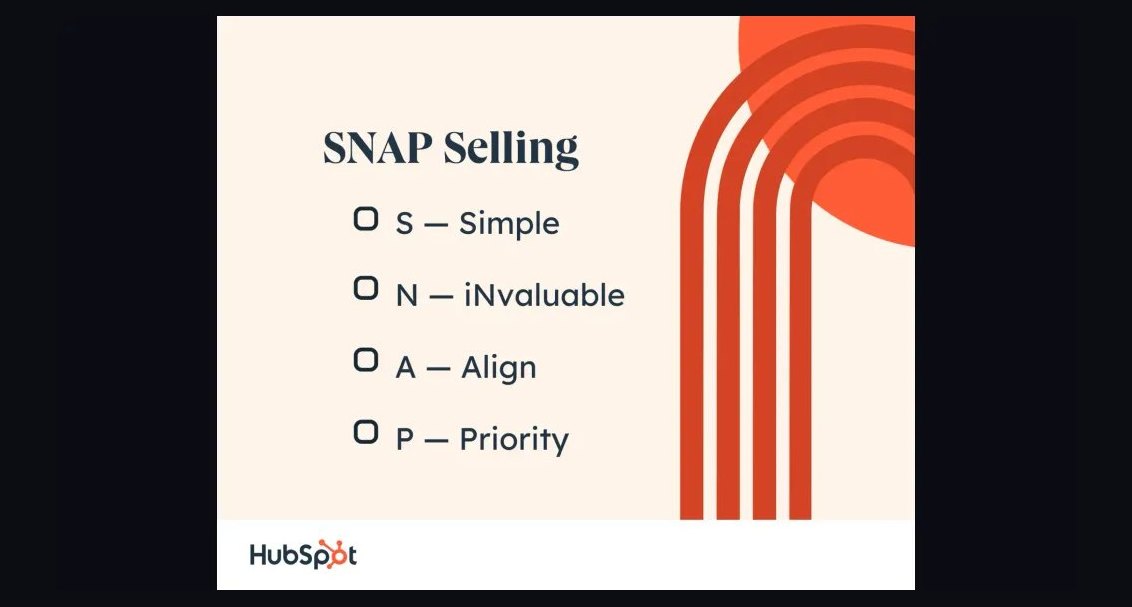 bsHow does *SNAP Selling* simplify complex sales cycles in 2027?
 bsHow do you forecast sales revenue when your pipeline data keeps changing in 2027?
 pulse-booksHow much do Book Summaries cost in 2027?
 bsWhat’s the single most effective questioning technique from *SPIN Selling* for enterprise discovery calls?
 bsWhat’s the most actionable principle from *How to Win Friends and Influence People* for remote work in 2027?
 bsWhat’s the most underrated chapter in *How to Win Friends and Influence People* for building executive relationships?
 bsWhat's the right way to structure a compensation plan so quota-carrying reps trust the commission math in 2027?
 bsWhat’s the most persuasive technique from *Pitch Anything* for investor pitches?
 bsWhat’s the key insight from *The Challenger Sale* about teaching customers something they don’t know?
 bsWhat’s the main strategy in *Pitch Anything* for holding attention in 2027?