


How does *Gap Selling* help you compete against a lower-priced competitor without discounting in 2027?
Quality
Certified

Gap Selling beats a cheaper competitor by moving the decision away from price and onto the quantified cost of the buyer's current state. You diagnose the problem's real dollar impact, size the gap to the future state, and prove the low-priced option cannot close it — so discounting never becomes the only lever you have left.
What Gap Selling actually is, and why price pressure is the wrong problem to solve
Keenan's *Gap Selling* (A Sales Guy Inc., 2018) is built on a deceptively simple claim: nobody buys a product, they buy the movement from a broken current state to a better future state. The product is only the vehicle. Everything a seller does — discovery, demo, proposal, negotiation — exists to establish that gap and make its cost undeniable. When the gap is vague, the buyer has nothing to weigh your price against, so price becomes the only measurable variable in the deal. When the gap is specific and quantified, price becomes one input in a comparison the buyer runs themselves.
That reframe matters because most price objections are misdiagnosed. A rep hears "your competitor is 30% cheaper" and treats it as a pricing problem. It almost never is. It's a value-clarity problem that surfaces at the pricing stage because that's the first moment the buyer is forced to justify a number. If the buyer cannot articulate what the current state costs them per month, they have no denominator. Your price is a large number floating next to a smaller number, and the smaller number wins by default. The rep didn't lose on price; they lost in discovery, three weeks earlier, and just found out during the pricing conversation.
There's a structural reason this got harder. B2B buying committees have expanded, procurement functions have professionalized, and buyers now arrive at conversations having already done extensive independent research — comparison sites, peer communities, analyst summaries, vendor review platforms. A large share of the buying journey happens before a seller is involved, and that pre-work is almost entirely feature-and-price comparison, because that's the only data publicly available. Features are listed on websites. Pricing is increasingly published. The cost of a specific company's specific broken process is not on any website — it exists only in that company's head, mostly unexamined. That asymmetry is the entire commercial opportunity Gap Selling exploits.

So the goal isn't to out-argue a cheaper competitor. It's to make the deal about something the competitor never measured. If you've quantified that a manufacturer's quoting delays cost them roughly eleven working days per quarter in engineering rework, and the cheaper vendor is still pitching "faster quoting," you're not in the same conversation anymore. The buyer has a number. The competitor has an adjective.
Worth naming the honest limit here: Gap Selling doesn't make price irrelevant. It makes price *proportionate*. If your solution costs $180K and the diagnosed gap is worth $200K a year, you have a strong position. If the gap is worth $60K a year, no amount of diagnostic skill saves that deal, and the disciplined move is to disqualify rather than to discount your way into a customer who will churn. Sellers who treat the methodology as a magic objection-handler misuse it. It's a qualification instrument first and a persuasion instrument second.
One more distinction that gets muddled in practice. Gap Selling is not consultative selling with a new coat of paint, and it isn't the same as value selling as commonly practiced. Value selling usually means building an ROI case *for your product* — here's what our platform returns. Gap Selling builds the case *for change itself*, independent of vendor. You establish that the current state is untenable before you've positioned anything you sell. That sequencing is what makes it durable against a lower-priced competitor: you've built a business case the buyer now owns, and the buyer then evaluates who can actually deliver against it. If you've done the diagnosis well, the specification of "what closing this gap requires" naturally maps to capabilities the discount vendor lacks — not because you rigged it, but because you were the only one who looked closely enough to know what the job actually required.
The step-by-step process for running a gap-first deal

The mechanics matter more than the philosophy, because the philosophy is easy to nod along with and hard to execute under quota pressure. Here's the sequence that holds up when a lower-priced competitor is already in the deal.
Pre-call: build a problem hypothesis, not a pitch. Before the first conversation, write down three problems you believe this company has, based on their segment, size, tech stack, growth stage, and public signals. Not "they need better analytics" — something like "at 400 employees with three acquisitions in two years, they almost certainly have fragmented customer records across at least two CRM instances, which means their renewal forecasting is manual and their CS team is working from stale data." A hypothesis gives your questions direction. Reps who walk in with no hypothesis default to generic discovery, which produces generic answers, which produce no gap.
Discovery call one: current state, in physical detail. Your job is to map the actual mechanics of how work happens today. Who does what, in what tool, at what frequency, taking how long, with what failure rate. Push past the first answer. "We use spreadsheets for that" is not a current state; "one analyst spends about six hours every Monday reconciling four exports, and roughly one in five weeks she finds an error that's already gone out to leadership" is a current state. The rule of thumb: you don't have the current state until you could describe the buyer's Tuesday morning to them and have them nod.
Discovery call one, second half: quantify the impact. Take each problem and drive it to a number the buyer supplies. Not a number you calculate and present — one they say out loud, because the ones they say they defend. Useful pathways: labor hours × loaded cost, error rate × cost per error, cycle time delay × deals affected × average deal size × win-rate delta, churn points × average contract value. Then ask the question that separates good discovery from great: "How long has it been like this?" Multiply. A $9K-per-month bleed that's been running two years is a $216K sunk number, and sunk numbers create urgency the way projected numbers never do.
Between calls: validate and triangulate. Take your quantified gap to a second stakeholder — ideally someone downstream who feels the same problem differently. Finance sees the same broken process as a forecast-accuracy issue. Operations sees it as headcount. The CS lead sees it as escalations. When three people describe the same root cause in three vocabularies, you have a gap the organization believes in, not one champion's opinion. This is also where competitive positioning quietly gets built, because you now know which capabilities matter and which are decorative.
Call two: the future state, made concrete. Describe the specific Tuesday morning after the problem is solved. Six hours becomes twenty minutes. The error rate goes to near-zero because the reconciliation is no longer manual. The analyst who was doing exports is doing pipeline analysis instead. Concreteness is what makes a future state motivating — abstractions like "greater efficiency" don't create the emotional pull that drives a buyer to fight internally for budget.
Call two, second half: define the requirements before anyone talks vendors. This is the highest-leverage twenty minutes in the entire cycle and most reps skip it. Together with the buyer, write the list of what any solution must do to close this specific gap — bidirectional sync at a specific latency, a specific compliance posture, a specific integration, a specific level of implementation support given their thin internal team. You're not naming your product. You're helping them write the spec. If your diagnosis was genuine, the spec reflects reality, and the reality is that a stripped-down cheap tool doesn't meet it.
Pricing conversation: present the gap first, the number second. Open with the restated gap and its annual cost, confirmed by them. Then the investment. Then the delta. The number lands inside a frame instead of in a vacuum.
When the objection comes anyway. It will, and that's fine. The move is never to defend your price. It's to return to the number the buyer gave you and ask a comparison question: "You told me this is running about $18K a month. Walk me through how the other option gets that to zero — specifically the reconciliation step, because that's where the errors originate." Either they can answer, in which case you have a genuine competitive gap to address, or they can't, in which case they've just discovered the cheaper tool solves a different problem than the one they have.
Costs, timelines, and what the numbers typically look like

Adopting this changes your cost structure and your cycle math, and it's worth being clear-eyed about both rather than pretending it's free.
Discovery gets longer before it gets shorter. A gap-first discovery process typically runs two calls instead of one, forty-five to sixty minutes each, plus fifteen to thirty minutes of pre-call research and a similar amount of post-call synthesis. Figure roughly three to four hours of rep time per qualified opportunity in the front half of the cycle, versus perhaps one hour under a demo-first motion. Teams often see early-stage cycle time stretch by a couple of weeks in the first quarter of adoption. What tends to offset it: fewer opportunities enter the pipeline, because the ones that shouldn't be there get disqualified in call one instead of dying at the proposal stage two months later. The pipeline gets smaller and the coverage ratio gets scarier before the win rate makes it worthwhile.
Ramp is a quarter or two, not a week. Reading the book takes a few hours. Changing a rep's reflex to stop pitching when a buyer says "so tell me about your product" takes considerably longer. Realistic pattern: two to four weeks of structured training and role-play, then a full quarter of call reviews and coaching before the diagnostic questioning holds under pressure. Reps who came from transactional or heavily scripted environments generally take longer than reps from complex-solution backgrounds. Expect uneven adoption — some reps get it in weeks, some never do, and manager coaching capacity is usually the binding constraint rather than curriculum quality.
Budget, in rough order of magnitude. Formal training programs, licensed curriculum, and certification vary enormously by vendor and headcount, so treat published list prices skeptically and negotiate. The costs teams routinely underestimate aren't the training line item — they're the internal ones. Building persona-specific discovery guides and impact-quantification templates is typically two to four weeks of a sales enablement person's time. Call-recording and conversation-intelligence tooling, if you don't already have it, is a real per-seat cost and effectively mandatory, because you cannot coach diagnostic questioning from CRM notes. Manager time for call reviews runs several hours a week per rep during ramp. Budget for the coaching infrastructure or the training doesn't stick.
What good looks like on the scoreboard. Track discount depth as a distribution, not an average — the average hides the tail where the damage lives. Track the percentage of closed-won deals with zero discount. Track how many opportunities have a documented, buyer-confirmed dollar figure attached to the current state; in most teams starting out, this is under 20%, and getting it above 60% is the single change that moves margin. Track no-decision rate separately from competitive losses, because losing to "we decided to do nothing" is a gap-sizing failure while losing to a competitor is a differentiation failure, and they need opposite fixes.
The margin math is why this pays. On a business running 70% gross margin, a 15% discount consumes something on the order of a fifth of the gross profit on that deal. Sales compensation plans that pay on revenue rather than margin hide this from the rep entirely, which is why discount discipline collapses at quarter end. If you're serious about competing without discounting, the comp plan has to make the rep feel the discount — accelerators on full-price deals, decelerators or approval friction below a threshold. Methodology alone won't beat incentive design.
Timeline to visible results. Quarter one usually looks worse: longer cycles, smaller pipeline, frustrated reps. Quarter two is where disqualification discipline shows up as improved close rates on a smaller base. Quarter three is where discount depth typically starts moving, because deals that entered the pipeline under the new discovery model are now reaching negotiation. Leadership that pulls the plug at the end of quarter one — and many do — never sees the payoff. If you can't commit two full quarters, don't start.
Where teams get this wrong
Turning diagnosis into an interrogation. The most common failure. A rep armed with a question list runs through it like a form, and the buyer feels processed rather than understood. The tell is a call where the rep asks fifteen questions and never once says "that's interesting — say more about that." Diagnosis is a conversation with a purpose, not a questionnaire. Buyers open up when they feel the seller genuinely understands their world; they close down when they feel harvested for information.
Quantifying with your numbers instead of theirs. A rep builds a beautiful ROI model, presents it, and the buyer nods politely and never references it again. Numbers the seller produces are marketing. Numbers the buyer produces are commitments. The discipline is to ask, wait through the silence, let them do the arithmetic out loud, and then write down exactly what they said and repeat it back at every subsequent stage.
Skipping the requirements co-authoring step. Reps do good discovery, build a real gap, then jump straight to the demo. That hands the deal back to feature comparison, which is exactly where a cheaper competitor wins. Without a jointly written spec, the buyer's evaluation criteria default to whatever the vendor with the best marketing site put in front of them.
Using the gap as a pressure tactic. There's a version of this that goes bad — where "quantifying the cost of inaction" becomes a manufactured-urgency script, and every buyer somehow has a suspiciously round seven-figure problem. Buyers, especially sophisticated ones, detect fabricated numbers immediately, and the credibility loss is total. If the gap is genuinely small, say so. Walking away from a bad-fit deal in call one is a use of the methodology, not a failure of it.
Diagnosing one stakeholder and calling it done. A single champion's account of the problem is one perspective, usually optimistic about their own department. Deals built on one person's diagnosis collapse when that person leaves, gets reorganized, or hits an internal skeptic they can't answer. Triangulation is what makes the gap organizational.

Treating price objections as the moment to start creating value. By the time procurement is comparing line items, the window for building the business case has closed. Everything described here has to happen before pricing, which is why late-stage "value defense" so rarely works. If you find yourself constructing an ROI case during a negotiation, you're not doing Gap Selling — you're doing damage control.
Letting leadership undercut the strategy at quarter end. No methodology survives a VP who authorizes blanket discounting in the last week of the quarter to hit a number. Reps learn in one cycle that holding price is optional, and the training investment evaporates. Discount approval has to be genuinely hard, and the exceptions have to be rare and visible.
Confusing the framework with the buyer's actual maturity. Some buyers have already done this work themselves and know exactly what their problem costs. Running full diagnostic discovery on them is condescending and wastes their time. Read the room: if they open with a quantified problem statement, validate it quickly and move to whether you can close it. Rigid methodology application is its own failure mode.
Choosing your play: when to hold, when to restructure, when to walk
Not every price-pressure situation calls for the same response, and pretending otherwise is how reps end up either discounting reflexively or dying on a hill that wasn't worth it. The decision turns on two variables: whether the gap is genuinely large relative to your price, and whether the cheaper competitor can actually close it.
Large gap, competitor can't close it. Hold price, and hold it without apology. Your move is to return to the buyer-confirmed number and test the alternative against the co-authored spec. Offer non-price concessions if you need to give something — extended payment terms, a phased rollout, additional onboarding support, a shorter initial term. These preserve headline price and annual contract value while giving the buyer a win to take back to procurement.
Large gap, competitor genuinely can close it. Be honest with yourself here. If the cheaper tool actually solves the diagnosed problem, you're not in a value fight, you're in a commodity fight, and your differentiation has to come from somewhere else — implementation risk, support depth, roadmap, the cost of switching later. Sometimes the right answer is that this segment isn't yours and the loss is informative.

Small gap, any competitor. Disqualify early. A small gap means the buyer's pain doesn't justify your price at any level of persuasive skill, and winning the deal produces a customer who churns at renewal and generates support load in the meantime. This is the discipline most teams lack.
Gap unknown. You're not in a pricing decision, you're in an incomplete discovery. Go back. A rep who reaches the proposal stage without a quantified current state has skipped a step, and no negotiation tactic fixes that.
A note on adjacent motions. The same logic transfers well beyond new-business selling. Renewals with a price increase are the identical problem inverted — you're defending a number against the buyer's memory of last year's rate, and the fix is the same: re-diagnose the current state, quantify what's been avoided, and make the increase proportionate to a demonstrated gap. Expansion selling into an existing account is arguably where diagnostic discovery is most underused, because reps assume they already know the customer's problems when what they actually know is the problems the customer had at implementation. Partner and channel motions struggle here for a structural reason worth naming: partners rarely have the account access to run genuine diagnosis, which is why channel deals commoditize faster and why partner enablement that only covers product features reliably produces margin erosion.
Professional services and agency work face the sharpest version of this, since there's no product to hide behind and the client can always find someone cheaper. The firms that hold rate are uniformly the ones that spend unbilled time diagnosing before scoping, and the ones that race to the bottom are the ones that respond to an RFP as written. Same mechanism, different industry.
Related questions
Does Gap Selling work when the buyer already has a fixed budget cap?
Often, yes. Budget caps are usually set before the problem is quantified. If the diagnosed gap materially exceeds the cap, buyers frequently find budget elsewhere or phase the purchase. If it doesn't exceed the cap meaningfully, the cap is telling you the truth about fit.
How is this different from SPIN Selling?

SPIN gives you a question sequence — situation, problem, implication, need-payoff. Gap Selling gives you an outcome to reach: a quantified distance between current and future state that the buyer owns. They're compatible; SPIN is largely a technique for executing the diagnosis Gap Selling demands.
Can you use Gap Selling in a competitive RFP you didn't shape?
Partially. If the requirements are already written, your leverage is limited to re-opening the problem definition with a stakeholder outside procurement. If nobody will take that meeting, the RFP was likely wired for someone else and your realistic odds are low.
What if the buyer refuses to share numbers?
Estimate ranges together instead of asking for figures. "Would you say it's closer to five hours a week or twenty?" gets you a usable band without demanding sensitive data, and the buyer still owns the number because they picked the range.
Does this apply to self-serve or product-led motions?
Indirectly. Nobody runs diagnostic calls at low ACV, but the same principle shapes onboarding and in-product messaging: surface the user's current-state cost with their own usage data, and the upgrade case makes itself.
FAQ
Is Gap Selling just a rebranded version of consultative selling?
There's overlap, but the emphasis differs meaningfully. Consultative selling is a posture — be helpful, advise rather than push. Gap Selling is a specific requirement: you must produce a quantified, buyer-confirmed distance between the current and future state before you position anything. It's testable in a way that "be consultative" isn't, which is precisely what makes it coachable.
How do I compete when the cheaper competitor is genuinely good enough?
Then say so internally and change your approach. If the alternative closes the diagnosed gap at a lower price, no framework rescues that deal, and pretending otherwise burns credibility. Your remaining ground is delivery risk, support depth, and total cost including implementation and switching — real differentiators when true, transparent nonsense when not. Sometimes the honest read is that a segment has commoditized and your go-to-market needs to move upmarket.
Does holding price cost you deals in the short term?
Yes, and you should plan for it. Teams adopting this typically lose some deals in the first quarter that they'd previously have discounted into. The offsetting effects — better win rates on qualified deals, higher realized margin, lower churn from badly-fit customers — usually take two to three quarters to show up in reporting. Leadership needs to see that timeline before the program starts, not after quarter one looks bad.
What's the single highest-leverage change if I can only do one thing?
Make a quantified, buyer-supplied current-state cost a required field to advance an opportunity past early stage. It's a one-line CRM change that forces the entire behavior chain upstream of it, and it exposes immediately how many deals in your pipeline are built on nothing.
How do I coach this without conversation-intelligence tooling?
It's harder but not impossible. Sit in on calls live, or have reps write a one-paragraph current-state summary after every discovery call and review those. The summary format is revealing on its own — reps who can't write a specific paragraph didn't run a specific call. Recording tools make it scalable; they don't make it possible.
Can this backfire with sophisticated buyers?
It can, when applied mechanically. Experienced buyers recognize a methodology being run at them and resent it. The defense is genuine curiosity over technique — ask about things you actually don't know, respond to what they say rather than to your next scripted question, and drop the framework entirely when the buyer clearly already knows their numbers.
Sources
- https://salesgravy.com/gap-selling-keenan/
- https://hbr.org/2012/07/the-end-of-solution-sales
- https://www.gartner.com/en/sales/insights/b2b-buying-journey
- https://www.mckinsey.com/capabilities/growth-marketing-and-sales/our-insights/the-multiplier-effect-how-b2b-winners-grow
- https://www.rainsalestraining.com/blog/what-is-consultative-selling
- https://hbr.org/2020/11/how-to-negotiate-with-a-liar
- https://www.bain.com/insights/the-b2b-elements-of-value/
- https://corporatevisions.com/blog/
- https://www.pricingsociety.com/
Related on PULSE
- Competing Against Luck by Christensen et al — Cliff Notes Summary
- The Win Without Pitching Manifesto by Blair Enns — Cliff Notes Summary
- How does *Gap Selling* help you identify hidden customer pain points?
- How does *SNAP Selling* help you prioritize leads in a busy inbox?
- How does *SPIN Selling* help you uncover customer needs during discovery calls in 2027?
- What's the biggest emotional trigger *Gap Selling* says you should never ignore in a buyer conversation?
This page will be disappearing soon. Save it to your device for $1 — or read it free while it is here.
@Kory-White- · if Venmo asks, the last 4 of my number are 2012
This page is gone.
This one is off the shelf now. $1 keeps it on your phone for good — the whole page, pictures and diagrams included.
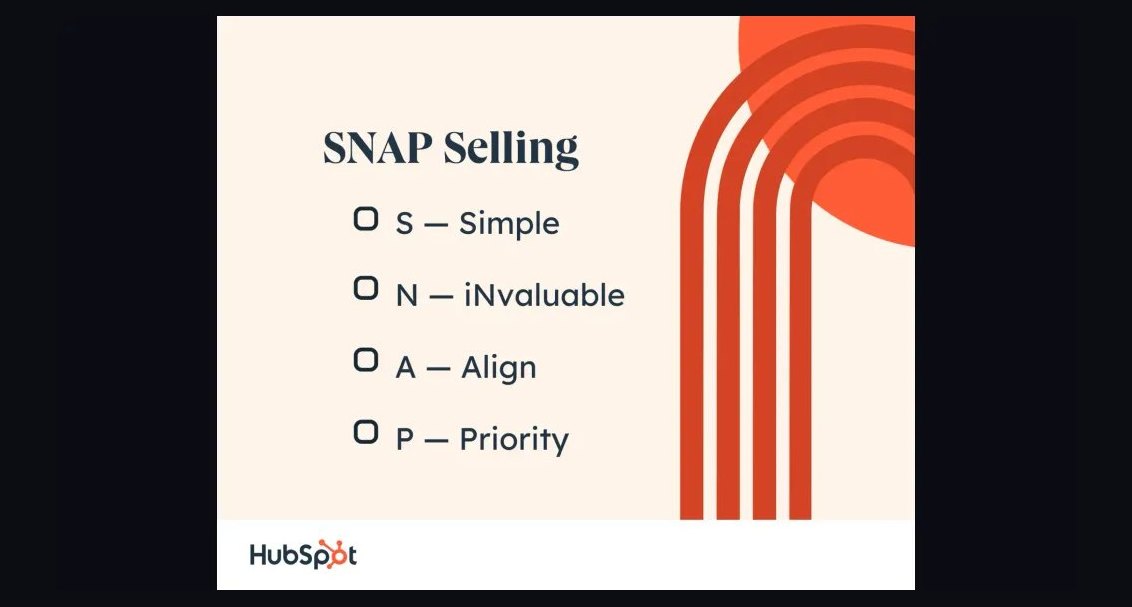 bsHow does *SNAP Selling* simplify complex sales cycles in 2027?
 bsWhat’s the biggest emotional trigger *Gap Selling* says you should never ignore in a buyer conversation?
 pulse-booksTop 10 best Book Summaries options in 2027
 bsWhat’s the core strategy in *Fanatic Prospecting* for building a pipeline from scratch in 2027?
 bsWhat’s the most effective way to use *Pitch Anything* to frame your pricing during a procurement call in 2027?
 bsWhat’s the core principle from *The Psychology of Selling* for turning a rejection into a future opportunity?
 bsHow does *Gap Selling* help you identify hidden customer pain points?
 bsWhat’s the single most effective tactic from *The Challenger Sale* for shortening a long sales cycle in 2027?
 bsHow do sales leaders build a repeatable outbound prospecting motion without a big SDR team in 2027?
 bsHow do you forecast sales revenue when your pipeline data keeps changing in 2027?