


What is the role of a 'Coach' in Strategic Selling by Miller Heiman for navigating enterprise deals in 2027?
Quality
Certified

In Strategic Selling, the Coach is your trusted information source inside a customer account — someone credible to the buying organization, credible to you, and personally invested in your win. A Coach reveals the real decision process, names the true Economic Buyer, surfaces each influence's Win-Results, and warns you of traps before they close a deal.
The outcome you should expect from a developed Coach
The practical payoff of a real Coach is not a warmer relationship — it is a measurable drop in unknowns across an enterprise account. Strategic Selling's Blue Sheet requires you to name four buying influence roles for every sales objective: the Economic Buyer, who holds final release of funds and veto power; the User Buyers, who live with the product daily and judge it on personal job impact; the Technical Buyers, who screen on specifications, legal terms, security posture, or procurement rules and can say no but never yes; and the Coach. The first three are roles you discover whether you like it or not. The Coach is the only one you actively develop, and the only one whose loyalty is to your strategy rather than to the evaluation.
When the Coach role is genuinely filled, four things shift from guesswork to knowledge. First, you learn who the Economic Buyer actually is for this specific sales objective — not the highest person on the org chart, but the individual with discretionary authority over this budget line at this dollar amount. In enterprise deals that person changes with deal size: a $40,000 renewal may be released by a director, while the same product at $400,000 crosses a threshold that pulls in a VP or a capital committee. Second, you learn the real decision process and its calendar — whether a security review is a two-week questionnaire or a ninety-day penetration-test cycle, whether procurement runs a mandatory three-bid process, whether the budget is annual or quarterly and when it resets. Third, you learn each buying influence's mode of response — Growth, Trouble, Even Keel, or Overconfident — which in Strategic Selling determines whether that person is receptive to change at all. Fourth, you learn the Win-Results for each influence: the personal Win a decision-maker gets on top of the business Result the organization receives.
The behavioral change that follows is what actually moves the number. Reps with a validated Coach stop writing proposals for an audience they have never met, stop scheduling generic demos, and stop forecasting on the enthusiasm of a single supporter. Instead they run coverage checks: every named buying influence has a documented position, a degree of influence, and a rating of red flag or strength. In practice, the difference shows up at forecast reviews. A deal with no Coach produces answers like "they're excited, legal is reviewing it." A deal with a Coach produces "the CFO releases anything under $250K without committee; our Technical Buyer in InfoSec has a standing objection to vendors without SOC 2 Type II, which we cleared on the fourteenth; the User Buyer in field ops has a Q3 headcount freeze and our Win-Result for her is avoiding two contractor hires."

You should also expect the Coach role to feel uncomfortable at first, because Strategic Selling defines it far more narrowly than everyday sales language does. Most reps call their friendliest contact a coach. Miller Heiman's test is stricter and has three simultaneous conditions, all of which must be true. That discomfort is the point: the method is deliberately forcing you to separate people who like you from people who can actually help you navigate the account.
What actually drives Coach quality: the three-part test
The three conditions are credibility with the buying organization, credibility with you, and a personal desire for your solution to win. Miss any one and you have something else — a friend, an informant, or a saboteur.
Credibility with the account is the condition reps most often ignore. A Coach who is disliked, newly hired, politically sidelined, or in a function the Economic Buyer distrusts can tell you accurate things and still be unable to help you act on them. Worse, an association with a discredited internal figure can taint the deal by proximity. A reasonable diagnostic is to ask whether this person's opinion would be sought unprompted in the room where the decision is actually made. If the answer is no, they are a source but not a Coach.
Credibility with you is a two-way trust question. You have to be willing to share your real strategy, including where you are weak, because a Coach who only hears the pitch can only correct the pitch. Reps who treat their Coach as an intelligence asset rather than a strategic partner get transactional answers. The test is simple: have you told this person something that would hurt you if it leaked? If not, you are still in the polite phase.
Desire for your success is the condition that must be earned rather than assumed, and it is where Win-Results does the work. Strategic Selling separates the Result (a measurable, objective business impact — cycle time drops, cost per ticket falls, audit findings close) from the Win (the subjective personal payoff — visible credit, a quieter quarter, a promotion case, a reduced risk of being blamed). Coaches show up when the deal produces a Win for them personally. That Win is frequently not commercial. A director who has been asking for a system for three cycles wins by being proven right. An operations manager wins by getting weekends back. A newly hired VP wins by having a visible ninety-day accomplishment. Your job is to name that Win out loud, in writing, on the Blue Sheet — not to assume it.
Three failure patterns recur. The Anti-Coach is a person who volunteers information because they want a competitor to win or want to see your process fail; they are enthusiastic, available, and steer you toward the wrong influences. The Passive Coach genuinely likes you but will not spend political capital — they will confirm facts and never make an introduction. The Single-Threaded Coach is real and helpful, and then leaves, reorganizes, or takes a leave, and the deal goes dark because nothing was known outside their head. In enterprise accounts of any size, plan for at least two Coaches — a common practice is one in the sponsoring business unit and one in a function adjacent to the decision, such as finance, IT, or the PMO — precisely because turnover in that eighteen-to-thirty-six-month bracket is routine.
Note also that a Coach can hold another role at the same time. An Economic Buyer can coach you. So can a Technical Buyer. The roles are functions in the decision, not job titles, and a single person can occupy two of them; the mistake is assuming the reverse — that a friendly Technical Buyer is automatically also a Coach. The framework's discipline is to name each role separately on the Blue Sheet even when one person fills two, because collapsing them hides which hat they are wearing in a given conversation.
Benchmarks and realistic ranges for navigating enterprise deals
Strategic Selling itself is deliberately light on universal statistics, and inventing them would defeat the method. What is defensible is the arithmetic of buying-committee size, which the framework's coverage discipline directly addresses.
Multiple widely cited enterprise-buying studies — Gartner's B2B buying research being the most referenced — put the typical complex-purchase buying group in the range of six to ten people, with larger technology and regulated purchases running higher. Treat that as an order-of-magnitude anchor rather than a precise target for your deal, and count your own account's influences from the Blue Sheet instead. The practical implication is stable regardless: a rep in a single-threaded relationship is talking to roughly one-eighth of the people who determine the outcome, and the Coach's first job is to close that gap.
Some working ranges worth adopting as internal standards rather than external facts:
Coverage. For a deal above your average contract value, set a rule that no opportunity advances past the midpoint stage without every Economic, User, and Technical Buyer named on the Blue Sheet with a position (enthusiastic supporter, supporter, neutral, not-now, anti) and a degree of influence (high, medium, low). Uncovered influences count as red flags. A deal carrying more than two red flags at the midpoint is not a forecast-category deal.
Contact depth. A common enterprise standard is a minimum of three to five distinct named contacts engaged in the last thirty days on any deal over six figures. Below three, the deal is single-threaded no matter what the CRM says.
Timeline. Enterprise deal cycles of three to twelve months are ordinary, and the Coach's contribution is usually not shortening the cycle but predicting it — knowing that the security review adds six weeks and the fiscal calendar closes in September changes your close date honestly rather than optimistically.
Validation cost. Budget one or two low-risk verification asks per Coach before you rely on them. That is the cheapest insurance in the method.
Cadence. Contact your Coach before every significant account event, not only when you need something. A biweekly rhythm during an active cycle is typical, tightening to weekly in the final stage.
Portfolio view. A reasonable target is that the majority of your named strategic accounts have at least one validated Coach and that no account above a defined revenue threshold has zero. If your account list shows Coaches concentrated in the deals you were already winning, the Coach column is being filled in retroactively, which is a data-hygiene problem, not a strategy.
Risks, edge cases, and failure modes
The most expensive failure mode is the illusion of coverage: the Blue Sheet is filled in, every box has a name, and none of it was validated. Discipline theater looks identical to discipline on a dashboard. The tell is that positions and degrees of influence never change between reviews — real accounts move.
Second is the confused-role error. A Technical Buyer who says no on a security control is doing their job, not opposing you, and treating them as an adversary hardens a screening objection into a political one. Strategic Selling's point is that Technical Buyers can only screen out; the corrective is to satisfy the specification, not to argue with the person.
Third is Coach churn. Reorganizations, promotions, and departures dissolve Coach relationships without warning. The mitigation is documentation — what the Coach told you belongs in the account record, not in one rep's memory — plus a second Coach in an adjacent function.
Fourth is over-indexing on a single enthusiastic supporter. Enthusiasm is a position, not authority. A high-enthusiasm, low-influence User Buyer feels like a Coach and can lead you into a proposal the Economic Buyer never wanted.
Fifth is the mode-of-response mismatch. Strategic Selling holds that a buying influence in Even Keel or Overconfident mode will not buy, because they see no gap between results and reality. Selling harder into that mode wastes the cycle; the work is to establish, with evidence, whether a gap exists — or to redirect effort toward influences in Growth or Trouble mode who are actually receptive.
Sixth, and specific to any forward-looking planning horizon, is assuming the framework's mechanics have changed because the tooling has. Buying committees are larger and more distributed, more of the evaluation happens before a vendor is contacted, and procurement, security, privacy, and increasingly AI-governance review are more formalized in enterprise purchasing than they were when the method was first published. None of that alters the four roles. What it alters is where the Coach's information is most valuable: the highest-leverage question shifts from "what does the Economic Buyer want?" toward "what happened in the evaluation before we were invited, and which internal review will stop this?"
Seventh is the ethical edge case. Do not put a Coach at professional risk. Asking someone to forward internal documents, share a competitor's pricing, or disclose confidential evaluation scoring can violate their employer's policies and, in regulated sectors and public-sector procurement, the rules governing the tender itself. A Coach who is disciplined or removed for helping you is a permanent loss and an ethical failure. Ask about process, people, priorities, and timing — not about protected material. And never let a Coach become a substitute for direct contact with the Economic Buyer: a deal where the Economic Buyer has never met you is a deal decided by someone else's summary of you.
A practical rollout plan for the Coach discipline

Rolling this out across a team is a change-management exercise, not a training event. The shape below is a Strategic sequencing that works because it front-loads verification and back-loads process enforcement.
Weeks one and two — inventory. Pull your top opportunities and, for each, name the Economic Buyer, User Buyers, Technical Buyers, and Coach on a Blue Sheet. Mark every unknown as an unknown rather than a guess. Expect the first pass to be uncomfortable; a common outcome is that a large share of the pipeline has no validated Coach and several deals cannot name a specific Economic Buyer.
Weeks three and four — validate. For every claimed Coach, run one verifiable-fact ask and one access or prediction ask. Reclassify anyone who fails. Any deal that loses its Coach in this pass goes on a develop-a-Coach plan rather than being written off.
Weeks five through eight — develop. For deals with no Coach, work Win-Results deliberately: for each named influence, write the business Result the organization gets and the personal Win that individual gets, then approach the influence whose Win is clearest and most credible. Track requests made and honored.
Weeks nine through twelve — instrument. Add the fields to CRM — buying influence role, position, degree of influence, Coach validated yes or no, date of last validation — and make coverage a required part of deal review. The order matters: instrument after the behavior exists, or you get compliance data instead of account intelligence.
Ongoing — govern. Review Coach status at every pipeline review. Re-validate quarterly and after any organizational change at the account. Retire Coach entries that go stale.
Related questions

Can a Coach also be the Economic Buyer?
Yes. The four roles are functions in a decision, not job titles, and one person can hold two. An Economic Buyer who guides your strategy and wants you to win is coaching you. The reverse assumption is the error: a friendly buyer is not automatically a Coach.
How many Coaches should one enterprise deal have?
At least two in any account of meaningful size — typically one in the sponsoring business unit and one adjacent to the decision, such as finance, IT, or the PMO. Coach churn from reorganizations and departures is routine, and a single-threaded Coach relationship is a single point of failure.
What is the difference between a Coach and a champion?
A champion actively sells internally on your behalf. A Coach primarily provides information and guidance about the account and the decision process. The roles overlap and one person can be both, but Strategic Selling's Coach test is about credibility and information, not advocacy volume.
What if my Coach gives me bad information?
Treat it as data about the Coach, not just about the fact. Re-run validation, check whether the error was deception, ignorance, or stale knowledge, and downgrade reliance accordingly. A Coach who was wrong once about a process detail is different from one who misdirected you about the Economic Buyer.
Does a Coach replace meeting the Economic Buyer?

No. A Coach helps you reach the Economic Buyer and prepares you for that meeting. A deal where the Economic Buyer has never met you is decided on someone else's summary of you, which is a structural weakness no amount of coaching offsets.
FAQ
Who created Strategic Selling and where is the Coach role defined?
Strategic Selling was developed by Robert B. Miller and Stephen E. Heiman and published in the book *Strategic Selling*, later revised as *The New Strategic Selling*. The Coach is one of four buying influence roles defined in the method, alongside the Economic Buyer, User Buyer, and Technical Buyer, and is captured on the method's Blue Sheet planning tool. The methodology is currently associated with Korn Ferry, which acquired Miller Heiman Group.
Is a Coach the same thing as an internal sponsor?
Not necessarily. Sponsorship is about advocacy; the Coach role is defined by credibility with the account, credibility with you, and a personal desire for your success. Many sponsors qualify, but an enthusiastic sponsor with no standing in the room where the decision is made fails the first condition and functions as a supporter rather than a Coach.
Can a Coach come from outside the customer organization?
Yes. Strategic Selling allows Coaches from your own company, a partner, a consultant, or an industry contact — anyone who meets the three conditions. External Coaches are often useful early, when you need to understand the account's structure and history before you have internal access, though their visibility into a live decision process is usually thinner.
What should I never ask a Coach for?
Anything that puts them at professional or legal risk: confidential evaluation scoring, competitors' pricing, internal documents they are not permitted to share, or information restricted under public-sector procurement rules. Beyond the ethics, a Coach who is disciplined for helping you is gone permanently, and the damage to your position in the account is difficult to reverse.
How do I develop a Coach when I have no relationship in the account at all?
Start from Win-Results. Identify which influences plausibly gain personally if the problem you solve is solved, approach the one whose Win is clearest, and lead with value rather than a request — a relevant benchmark, an introduction, a useful perspective on their problem. Then make one small, low-risk ask and see whether it is honored.
Does the Coach concept still hold up for enterprise buying today?
The mechanics hold; the emphasis shifts. Larger buying committees, more pre-vendor research, and more formal security, privacy, procurement, and AI-governance review mean the Coach's most valuable information is increasingly about the internal review sequence and what happened before you were invited, rather than only about the Economic Buyer's preferences.
Sources
- https://www.kornferry.com/capabilities/sales-effectiveness — Korn Ferry, current owner of the Miller Heiman methodology portfolio
- https://www.gartner.com/en/sales/insights/b2b-buying-journey — Gartner research on B2B buying groups and the buying journey
- https://hbr.org/2017/03/the-new-sales-imperative — Harvard Business Review on complexity in enterprise buying decisions
- https://hbr.org/2015/03/making-the-consensus-sale — Harvard Business Review on selling to consensus-driven buying groups
- https://www.mheducation.com — McGraw Hill, publisher of *The New Strategic Selling*
- https://www.salesforce.com/resources/research-reports/state-of-sales/ — Salesforce State of Sales research on enterprise selling practices
- https://www.mckinsey.com/capabilities/growth-marketing-and-sales/our-insights — McKinsey growth, marketing and sales insights on B2B buying behavior
- https://www.forrester.com/blogs/category/b2b-marketing/ — Forrester B2B research on buying groups and revenue processes
Related on PULSE
- What is a Blue Sheet in Strategic Selling and how do you fill one out?
- Economic Buyer vs. Technical Buyer vs. User Buyer: how to tell them apart in a live deal
- How do you identify the real Economic Buyer when the org chart is misleading?
- Win-Results explained: separating the business Result from the personal Win
- Single-threading in enterprise deals: how to spot it and how to fix it
- MEDDIC vs. Strategic Selling: which qualification framework fits your motion?
This page will be disappearing soon. Save it to your device for $1 — or read it free while it is here.
@Kory-White- · if Venmo asks, the last 4 of my number are 2012
This page is gone.
This one is off the shelf now. $1 keeps it on your phone for good — the whole page, pictures and diagrams included.
 book-summaryPitch Anything by Oren Klaff — Cliff Notes Summary
 book-summaryOutbounding by William Miller — Cliff Notes Summary
 book-summaryPeople Buy You by Jeb Blount — Cliff Notes Summary
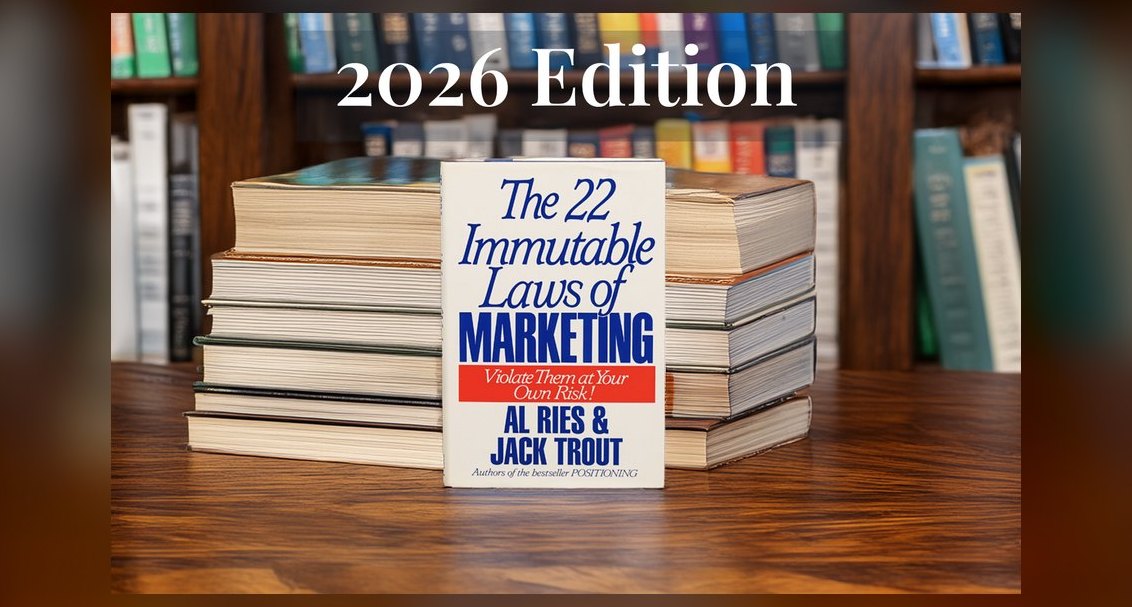 pulse-recentThe 22 Immutable Laws of Marketing by Al Ries and Jack Trout — Top 10 Key Takeaways for Sales Leaders in 2027
 book-summaryInfluence: The Psychology of Persuasion by Robert Cialdini — Cliff Notes & Chapter-by-Chapter Summary
 book-summaryPick Up the Phone and Sell by Alex Goldfayn — Cliff Notes Summary
 book-summaryThe Sales Boss by Jonathan Whistman — Cliff Notes Summary
 book-summaryThe Transparency Sale by Todd Caponi: Summary, Key Lessons, and RevOps Takeaways
 book-summaryBuilding a StoryBrand by Donald Miller — Cliff Notes Summary for Sellers
 book-summaryThe Sandler Rules by David Sandler — Cliff Notes Summary