


You Can’t Teach a Kid to Ride a Bike at a Seminar by David Sandler — Top 10 Key Takeaways for Sales Leaders in 2027
Quality
Certified

David Sandler's *You Can't Teach a Kid to Ride a Bike at a Seminar* argues that selling is a behavior, not information — you learn it by falling off the bike, not by attending a seminar. Its takeaways for leaders in 2027: qualify hard, disqualify early, reverse questions, set upfront contracts, kill happy ears, and reinforce daily.
The seminar model versus the bike model of sales development
The title is the whole argument. Sandler, a Baltimore-based sales trainer who founded the Sandler Selling System in 1967, opens the book with an analogy about teaching his own child to ride a bicycle: no amount of classroom instruction transfers the skill. You hold the seat, you let go, the kid wobbles, the kid falls, the kid gets back on. Skill lives in the nervous system, not the notebook. His indictment of the sales training industry — an industry he himself worked in — was that it sold seminars because seminars are easy to sell and easy to deliver, not because they change behavior.
That gives every sales leader a fork in the road, and the fork has only gotten sharper in 2027. Option one is the seminar model: a concentrated event. A two-day offsite, a vendor's certification bootcamp, a new-hire onboarding week, an annual kickoff with a keynote and breakouts. It is a capital event — you buy it, you schedule it, you consume it, it ends. Option two is the bike model: continuous, low-dose, reps-based reinforcement. Weekly role-play in the team meeting. Call reviews where the rep does the talking. Manager ride-alongs on live calls. A standing thirty-minute block where two reps practice one specific move against each other until the move stops feeling foreign.
The seminar model's strengths are real and worth naming honestly, because Sandler's critics accuse him of a straw man. Seminars create shared vocabulary fast. If your team has no common language for what a "pain funnel" or "upfront contract" or "no-decision" means, an event installs that vocabulary across forty people in two days in a way that weekly drip cannot. Seminars also create a social event — a marker in time that people reference for years. They are administratively simple: one purchase order, one calendar block, one vendor, one line item. And for genuinely new information — a new product line, a repricing, a regulatory change — an event is the correct delivery mechanism, because that content is information, and information does transfer in a room.
The bike model's strength is the only one that matters for skill: transfer. A rep who has practiced reversing a question forty times in low-stakes reps will reverse a question under pressure on a live call. A rep who watched a slide about reversing will not. The mechanism is not mysterious — it is the difference between recognition memory and retrieval under load. Every athlete, musician, surgeon, and pilot trains this way. Sales is one of the very few high-stakes performance disciplines that convinced itself the seminar was sufficient.
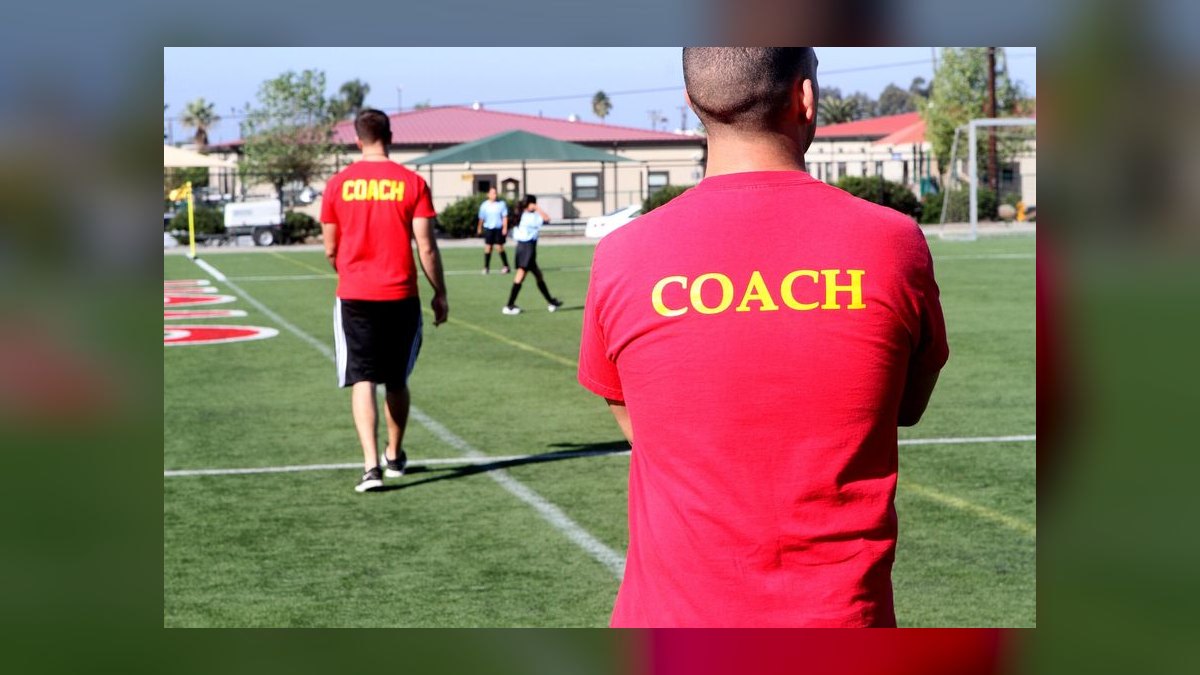
The trade-off is cost shape, not cost size. The seminar concentrates cost into a visible, budgetable spike. The bike model distributes cost into manager time, which is invisible on a budget line and therefore feels free — which is exactly why it is the first thing to get cut when a quarter goes sideways. Leaders who choose the bike model without protecting the calendar block do not actually choose it. They choose the seminar by default, three weeks later, when the pipeline review runs long.
A third option exists that most 2027 orgs are actually running whether they named it or not: the hybrid. Event to install vocabulary and cover information, reinforcement cadence to install behavior. Sandler's own franchise model was structured this way — his network sold ongoing weekly training, not one-off workshops, precisely because he believed the ongoing part was where the change happened. The event was the on-ramp, not the road.
How to decide between the event and the cadence
The decision is not philosophical. It turns on four questions you can answer in an afternoon.

Is the gap knowledge or behavior? If reps genuinely do not know something — the new pricing tiers, what the security module does, which competitor just changed their packaging — that is a knowledge gap and an event or a document fixes it. If reps *know* they should qualify budget on the first call and still do not do it, that is a behavior gap. No seminar closes a behavior gap. This distinction is the single most useful filter in the whole book, and most training budgets fail it. Ask your managers: "If I gave every rep a perfect script tomorrow, would the number change?" If the honest answer is no, stop buying seminars.
Is the behavior under emotional load? Sandler's whole psychological frame — he leaned on Transactional Analysis, the Parent/Adult/Child model popularized by Eric Berne and Thomas Harris — is that selling fails at the moments where the rep's emotional state hijacks their judgment. Asking about money is uncomfortable. Asking "is there a reason this wouldn't move forward?" is uncomfortable. Ending a call by disqualifying a friendly prospect is *extremely* uncomfortable. Behaviors that fire under discomfort require rehearsal under simulated discomfort. That is rep work, not slide work.
What is your manager-to-rep ratio and manager bandwidth? The bike model runs on managers. A frontline manager with six to eight reps can realistically run weekly reinforcement. A manager with fifteen reps and their own quota cannot, and pretending otherwise just produces a broken commitment. If your span of control is wide, either narrow it, appoint player-coaches, or accept that your reinforcement will be peer-to-peer rather than manager-led — which works, but needs structure so it does not degenerate into a venting session.
What is your tenure curve? A team with a median tenure of four months has a knowledge gap and a behavior gap simultaneously, and needs both an event and a cadence. A team with median tenure of three years mostly has behavior gaps and calcified habits, where events produce a two-week bump and no durable change.
The output of this decision is not "training" versus "no training." It is a specific allocation. Most teams that run this exercise honestly find they have been spending the large majority of their development budget on the branch that does not fix their actual problem.
The ten takeaways, and the numbers that sit behind them

Here is the book's substance, translated into what a 2027 leader does on Monday.
One: you can't teach a kid to ride a bike at a seminar. The meta-takeaway. Skill requires reps under stakes. Practically: cap event spend at a minority of your development budget and route the rest into protected manager time. A single frontline manager running a 45-minute weekly rehearsal block across a year spends roughly 35 hours on it. That is more contact time than any two-day seminar, delivered in the format that actually transfers.
Two: the upfront contract. Every call opens with mutual agreement on time, agenda, and — crucially — on what outcomes are permitted at the end, including "no." Sandler's insistence that "no" be an acceptable outcome is what defuses the pressure dynamic. The practical measure: audit twenty recorded first calls and count how many contain an explicit statement of duration, agenda, and permitted outcomes. Most teams that have never drilled this find it in a small fraction of calls, and the reps all believe they do it every time. That gap between belief and tape is the reason call recording matters more than self-report.
Three: pain drives the sale, not features. Sandler's "pain funnel" is a sequence of progressively deeper questions moving from a surface problem to its business consequence to its personal consequence for the person in front of you. In 2027 language: the reason a deal dies at legal is usually that it never had a real consequence attached, only a preference. Drill this by having reps run the funnel on each other with a real open deal, and score whether they reached a consequence the prospect stated in their own words rather than one the rep supplied.

Four: no mutual mystification. Both sides pretend to understand each other and the deal proceeds on fog. The counter is the reversing technique — answer a question with a question to surface the intent behind it. "Do you integrate with our data warehouse?" becomes "Tell me what's behind that — what would you be moving?" Reversing is the highest-value drill in the entire system because it is short, it is repeatable, and it is unnatural enough that no rep does it without practice.
Five: don't spill your candy in the lobby. Reps who dump every capability the moment they get an opening give away leverage and information. The discipline is to hold the demonstration until the pain is established and the decision process is known. Measure it: how far into the average discovery call does the first product claim appear? If the answer is in the first few minutes, you have a candy problem.
Six: qualify budget, decision process, and pain before you present. Sandler's system front-loads disqualification. This is the takeaway with the most direct 2027 economics behind it, because forecast pollution is expensive. Track your no-decision rate — deals that die without a competitive loss. When that rate is high, the cause is almost never the closing motion; it is that unqualified deals were allowed to advance because advancing feels productive.
Seven: "no" is a good answer, and early. A fast no returns the most valuable non-renewable resource a rep has, which is selling time. Give reps explicit permission and explicit credit for disqualifying. If your comp plan and your pipeline review both punish a shrinking pipeline, no amount of training will produce disqualification, because you have priced honesty above what reps are willing to pay.
Eight: kill the happy ears. Sandler is blunt that enthusiasm from a prospect is not a buying signal. Reps hear "this looks great, send me a proposal" and mark the deal advanced. The counter-drill is the negative reverse — gently testing the enthusiasm rather than accepting it. "This seems like it's going well, which usually makes me nervous. What's the thing most likely to stop this?"

Nine: sell the way people actually buy, and manage your own emotional state. The Transactional Analysis layer. A rep operating from the Child state seeks approval and therefore cannot ask hard questions. A rep in the Adult state can. Coaching to state rather than to script is the difference between a coachable moment and a lecture.
십: reinforcement, not exposure. The book's closing argument and Sandler's business model both. Spaced repetition over months beats concentrated exposure over days. Nothing in the last several decades of learning research contradicts this.
The numbers you should actually instrument, rather than the ones a vendor hands you: upfront contract presence rate on recorded calls, first-product-claim timestamp, pain-consequence capture rate, no-decision rate as a share of closed-lost, disqualification count per rep per month, and 60-day behavior retention after any training intervention. Six numbers. All observable from call recordings and CRM without buying anything new. If a training investment does not move at least two of them within a quarter, it was a seminar.
Sequencing an actual rollout, and where it usually breaks
The failure mode of adopting Sandler — or any behavior-based system — is trying to install all ten takeaways at once. Reps cannot hold ten new behaviors. They hold one, maybe two.
Weeks one and two: baseline. Pull twenty to thirty recorded calls across your team. Score them against the six metrics above. Do not tell reps you are scoring; you want the honest baseline, and you want managers to see for themselves how large the gap between self-report and tape is. This step is skippable in theory and fatal to skip in practice, because without it every later claim of improvement is a story.
Week three: pick one behavior. Exactly one. For most teams the highest-leverage first pick is the upfront contract, because it is short, it is fully in the rep's control, it happens at a predictable moment, and it makes every subsequent behavior easier to install. Second-best pick is reversing.

Weeks three through ten: the cadence. Thirty to forty-five minutes weekly. Structure: five minutes reviewing one real call clip, twenty minutes of live role-play where every rep does at least one rep, ten minutes of commitment on where each rep will use it that week. Managers must go first and must do it badly in front of the team — the single strongest predictor of whether reps will engage with role-play is whether their manager is willing to be bad at it publicly.
Week eleven: re-baseline the same metric. If the upfront contract presence rate has not moved substantially, the cadence is broken, not the reps. Common causes: the block kept getting cancelled, the manager talked for forty of the forty-five minutes, or reps were practicing against fake scenarios instead of their own live deals.
Weeks twelve onward: add the second behavior while maintaining the first. Maintenance is cheap — a five-minute spot check inside the existing meeting. Installation is expensive. Never have more than one behavior in installation at a time.
Where this breaks in 2027 specifically: the temptation to substitute tooling for reps. Conversation-intelligence platforms can now score whether an upfront contract occurred and flag calls where the rep talked too much, and that is genuinely useful — it removes the manual scoring burden that killed a decade of coaching programs. But a dashboard that tells you a rep did not set an upfront contract is a measurement, not a rehearsal. The dashboard is the mirror; the weekly block is the gym. Teams that buy the mirror and skip the gym get very precise data about a problem they are not fixing.
The second 2027-specific break is AI role-play. Simulated prospects that argue back are a legitimate addition to the bike model — they lower the cost of reps and let a rep drill at 11pm. They do not replace the manager block, because the manager block is doing two jobs: rehearsal and social permission. The permission part — that it is safe here to be bad at something, and that your manager expects you to disqualify deals — cannot be delegated to software.
Adjacent applications: where the bike principle travels

The argument generalizes past sales, and the neighboring cases are useful because they show which part of the principle is load-bearing.
Onboarding and ramp. Most ramp programs are seminars with a longer runtime — four weeks of content, a certification, then the rep is handed a territory. The bike version front-loads live reps: shadowing from day two, first live call by end of week one, three calls a day by week two, with content delivered in small pieces attached to the calls the rep just made. Ramp is where the seminar model does the most damage, because a rep who spends four weeks in a room forms no habits at all and then forms whatever habits the first month of unsupervised calls happens to produce.
Customer success and renewals. The same behaviors transfer almost directly. The upfront contract works on a QBR. The pain funnel works on a churn-risk conversation. Reversing works when a customer asks for a feature — the intent behind the request is nearly always more informative than the request. CS teams typically get less rehearsal investment than sales teams and have equally load-bearing conversations.
Manager development. The recursive case, and the one leaders skip. You cannot teach a manager to coach at a seminar either. Managers need their own rehearsal block — practicing giving hard feedback, practicing running a role-play without taking over — and they need it before you ask them to run reps' rehearsals. A rollout that trains reps and assumes managers will figure out coaching produces a room full of managers doing the seminar thing at a smaller scale.

Partner and channel teams. Here the bike model gets structurally hard, because you do not control the partner's calendar or manager. The realistic adaptation is to make reps cheap and self-serve — short drill cards, AI simulation, recorded exemplars — and accept lower transfer than you would get with direct reports.
Where the principle has limits. Sandler overstates in one direction: some things genuinely are information, and treating everything as behavior wastes rehearsal time on content a memo would fix. Pricing changes, competitive updates, product releases, compliance rules — send the document, run the event, move on. Reserve the expensive rehearsal capacity for the small number of behaviors that fail under emotional load. The book is a corrective to an industry that had over-indexed on seminars; read as an absolute, it produces the opposite waste.
A note on the book itself, because it matters for how you read it. It was published in 1995, drawn from the system Sandler developed over the preceding decades; Sandler died in 1995, and the book circulates in later editions with additional material. It is short, conversational, and occasionally dated in its examples and its framing of buyer behavior — the "prospect as adversary" undertone reads harsher in 2027 than it did then. The mechanics are what have aged well. The strategy underneath it — treat selling as a trained behavior under emotional load, measure the behavior rather than the attendance — is the part worth carrying forward, and it is the part most leaders skip in favor of quoting "don't spill your candy in the lobby" at a kickoff.
Related questions
Is the Sandler Selling System still relevant in 2027?
The mechanics — upfront contracts, pain funnel, reversing, early disqualification — remain relevant because they target behaviors that still fail under emotional load. The adversarial framing and some examples read dated. Use the behavioral architecture, modernize the tone.
How is this book different from Sandler's other material?
*You Can't Teach a Kid to Ride a Bike at a Seminar* is the foundational text laying out the seven-step Sandler Submarine and the reinforcement philosophy. Other Sandler-brand titles apply the system to specific contexts like prospecting or enterprise selling.
What is an upfront contract in practice?
A short mutual agreement at the start of a call covering time available, what each side wants to cover, and what outcomes are acceptable at the end — explicitly including a decision not to proceed. It removes ambiguity and makes "no" safe.
Can AI role-play replace manager-led rehearsal?
It supplements it. AI simulation lowers the cost of reps and enables practice outside working hours. It cannot supply the social permission — that disqualifying is rewarded and being bad at a drill is safe — which only a manager modeling it can establish.
How long before behavior change shows up in pipeline metrics?
Behavior counts on recorded calls move within two to four weeks of consistent rehearsal. Downstream metrics like no-decision rate lag by roughly one sales cycle, so a team with a 90-day cycle should not expect pipeline evidence before the second quarter.
FAQ
Who was David Sandler?
David H. Sandler was an American sales trainer who founded the Sandler Selling System in 1967 and built it into a franchised training network. He drew heavily on Transactional Analysis psychology, and argued that traditional sales training failed because it delivered information at seminars rather than building behavior through reinforcement. He died in 1995, the same year the book appeared.
What does the bike metaphor actually mean for a sales leader?

That skill acquisition requires supervised failure over time. A leader acting on it moves budget and calendar from concentrated events to distributed rehearsal — weekly role-play, live call review, manager modeling — and measures behaviors on recorded calls rather than attendance or satisfaction scores from a session.
Which takeaway should a team install first?
The upfront contract. It is short, entirely within the rep's control, occurs at a predictable moment in every call, is easy to score from tape, and makes every downstream behavior easier because both sides have agreed that a "no" is permitted. Install one behavior at a time; ten at once installs none.
Doesn't early disqualification shrink the pipeline?
It shrinks reported pipeline and usually improves forecast accuracy and win rate, because the removed deals were not going to close. The organizational problem is that pipeline reviews and comp plans often punish the shrinkage, which makes disqualification personally costly. Fix the incentive before training the behavior.
Are seminars and kickoffs a waste of money?
No — they are the right tool for information and shared vocabulary, and the wrong tool for behavior. Run the event to install language and cover product or pricing news, then run the cadence to install behavior. The error is expecting the event alone to change what reps do under pressure.
How do I know the rehearsal cadence is working?
Score the same behavior on recorded calls before you start and again around week eleven. If presence rate on the target behavior has not moved meaningfully, the cadence is broken — usually a cancelled block, a manager who monologued, or role-play against invented scenarios instead of reps' own live deals.
Sources
- https://www.sandler.com/
- https://en.wikipedia.org/wiki/Sandler_Sales
- https://hbr.org/2012/07/the-end-of-solution-sales
- https://hbr.org/2016/09/why-salespeople-need-to-develop-machine-intelligence
- https://www.mheducation.com/
- https://www.gartner.com/en/sales
- https://www.forrester.com/blogs/category/sales-enablement/
- https://www.salesforce.com/resources/research-reports/state-of-sales/
- https://www.ericberne.com/transactional-analysis/
- https://www.apa.org/education-career/guide/subfields/learning
Related on PULSE
- Upfront contracts: how to open a discovery call so "no" is a safe answer
- Building a weekly sales rehearsal block your managers will actually run
- No-decision rate: the forecast metric that exposes unqualified pipeline
- Ramp design: why four-week onboarding classrooms produce slow reps
- Coaching the coach — why manager development fails at the same seminar
- Conversation intelligence as a mirror, not a gym: scoring behavior from call tape
This page will be disappearing soon. Save it to your device for $1 — or read it free while it is here.
@Kory-White- · if Venmo asks, the last 4 of my number are 2012
This page is gone.
This one is off the shelf now. $1 keeps it on your phone for good — the whole page, pictures and diagrams included.
 pulse-recentThe Challenger Customer by Brent Adamson — Top 10 Key Takeaways for Sales Leaders in 2027
 pulse-recentWhat are the first three concrete steps in Sandler Rule #1 for a new sales rep in 2027?
 book-summaryWhat factors drive the price of Book Summaries up or down in 2027?
 book-summaryLittle Red Book of Selling by Jeffrey Gitomer — Cliff Notes Summary
 pulse-recentThe Collaborative Sale by Keith Eades — Top 10 Key Takeaways for Sales Leaders in 2027
 pulse-recentWhat are the concrete steps to implement the Sandler Rules for Sales Leaders by David Mattson in 2027?
 pulse-recentThe Customer Success Professional’s Handbook by Ashvin Vaidyanathan — Top 10 Key Takeaways for Sales Leaders in 2027
 pulse-recentSell or Be Sold by Grant Cardone — Top 10 Key Takeaways for Sales Leaders in 2027
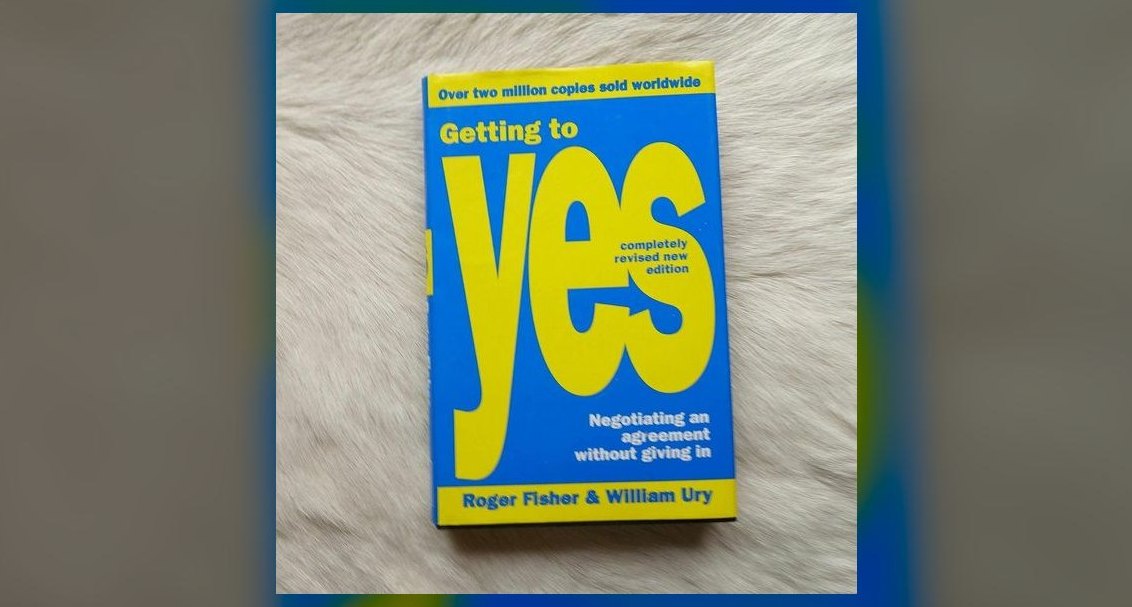 pulse-recentGetting to Yes by Roger Fisher and William Ury — Top 10 Key Takeaways for Sales Leaders in 2027
 pulse-recentInsight Selling by Mike Schultz and John Doerr — Top 10 Key Takeaways for Sales Leaders in 2027