


The Sales Development Playbook by Trish Bertuzzi — Top 10 Key Takeaways for Sales Leaders in 2027
Quality
Certified

Trish Bertuzzi's *The Sales Development Playbook* argues that durable sales development comes from a designed system built on five tenets — Strategy, Specialization, Recruiting, Retention, and Execution — not from hiring more reps or buying more tools. For sales leaders in 2027, the core Takeaways are that prospecting must be specialized, measured on qualified pipeline rather than activity, and managed with weekly execution discipline.
The outcome you should expect
Leaders who implement the Playbook's framework should expect a sales development function that produces predictable, repeatable pipeline instead of spiky, feast-or-famine bursts tied to whichever rep happened to have a good week. Bertuzzi's central promise is that outbound and inbound prospecting can be engineered like a manufacturing line: defined inputs (ideal customer profile, target account lists, messaging), a consistent process (cadence, call volume, qualification criteria), and measurable outputs (meetings booked, opportunities created, conversion to closed-won). When the five tenets run together, sales-development-sourced pipeline typically stabilizes as a reliable share of total bookings and often becomes the single largest source of net-new pipeline for B2B companies selling into mid-market and enterprise accounts.
The realistic timeline matters. Bertuzzi is explicit that a sales development strategy is not a quarter-long experiment; specialization, hiring discipline, and management rigor compound over 12–18 months before the program reaches steady state. Sales leaders rebuilding in 2027 should expect a J-curve: a short-term dip in raw output while reps are re-specialized and processes rebuilt, followed by a sustained lift in qualified pipeline once the system matures. Executives who abandon the rebuild after one disappointing quarter are the most common reason these programs never deliver the expected Takeaways.
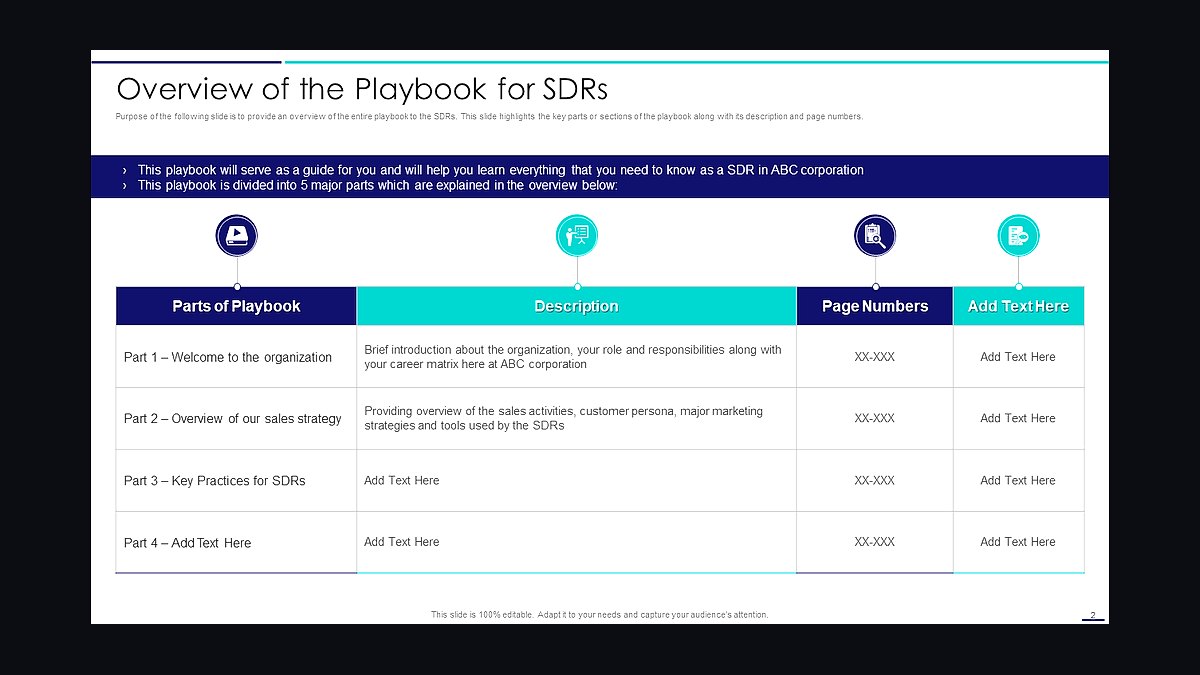
A second expected outcome is organizational clarity. The Playbook repeatedly stresses that sales development only works when it has its own manager, its own comp plan, and its own success metrics — separate from the closing team's. Leaders who implement this correctly report fewer disputes over lead ownership, less "sales says marketing leads are garbage, marketing says sales doesn't follow up" finger-pointing, and a much shorter feedback loop between what messaging is working in the market and what gets iterated into the next cadence. That feedback loop is itself a competitive asset: the faster a team learns which pain statement earns a reply, the faster the whole funnel improves.
A third outcome is talent leverage. When the SDR seat is framed as a 12–18 month developmental launchpad rather than a dead-end job, the function stops being a revolving door and starts producing future account executives, account managers, and sales operations leaders who already understand the top of the funnel. Companies that get this right treat sales development as a talent factory, not a cost center — and that shift in framing changes everything from recruiting criteria to how managers coach.
What drives that outcome
The mechanism behind the Playbook's results is specialization: splitting the sales development role away from full-cycle selling so each person masters one narrow skill — outbound prospecting, inbound qualification, or renewal and expansion — rather than being mediocre at all three. Bertuzzi's research found that generalist reps who both prospect and close consistently under-invest in prospecting because closing pays the bills faster, which starves the top of the funnel. Splitting the roles removes that conflict of incentives entirely. A rep who only prospects gets measured, coached, and paid on prospecting — so prospecting actually happens.
Beyond specialization, the second driver is disciplined recruiting and onboarding. The Playbook argues that most sales development hiring fails because leaders hire for "sales personality" instead of coachability, resilience, and process-following. Bertuzzi's recommended hiring profile favors candidates who show a track record of following a system precisely, because the entire model depends on reps executing a cadence consistently rather than improvising. Retention is the third driver: because the SDR seat is explicitly framed as a 12–18 month developmental role with a defined promotion path into closing, account management, or sales operations, turnover becomes a planned pipeline of future talent instead of a costly surprise. Companies that treat the SDR seat as a dead-end job see turnover in the 30–45% annual range; companies that build an explicit career ladder cut that significantly because reps can see the next rung.
Execution — the daily management cadence of call reviews, pipeline inspection, and messaging iteration — is what keeps the other four tenets from decaying. Bertuzzi is blunt that a strategy without weekly execution rigor degrades within a quarter, because messaging goes stale, target account lists go out of date, and reps drift back into whatever behavior is easiest rather than what the process specifies. This is why the Playbook treats management as a first-class part of the system, not an afterthought: a great strategy with weak management is just a document.
Notice the loop back from pipeline results to strategy. The Playbook is not a linear checklist; it is a cycle where execution data feeds back into targeting and messaging decisions. Teams that treat it as a one-time setup rather than a repeating loop are the ones that plateau. The diagram also shows why skipping a step breaks the whole chain: strong recruiting into a weak execution environment burns people out, and strong execution around poor targeting produces busywork rather than revenue.
Benchmarks and realistic ranges
Sales leaders benchmarking their own program against the Playbook's Takeaways should look at ranges rather than a single magic number, since company size, deal size, and buyer sophistication all shift the math. For outbound-focused sales development teams, a common range is 60–100 quality touches (calls, emails, social) per rep per day, producing somewhere between 8 and 20 qualified meetings per rep per month once messaging and targeting are dialed in — lower for enterprise ICPs with long sales cycles and small target account lists, higher for higher-velocity mid-market motions. Ramp time to full productivity typically runs 60–90 days for a well-onboarded rep, consistent with Bertuzzi's insistence that specialization and structured onboarding shorten the runway compared to generalist hiring.
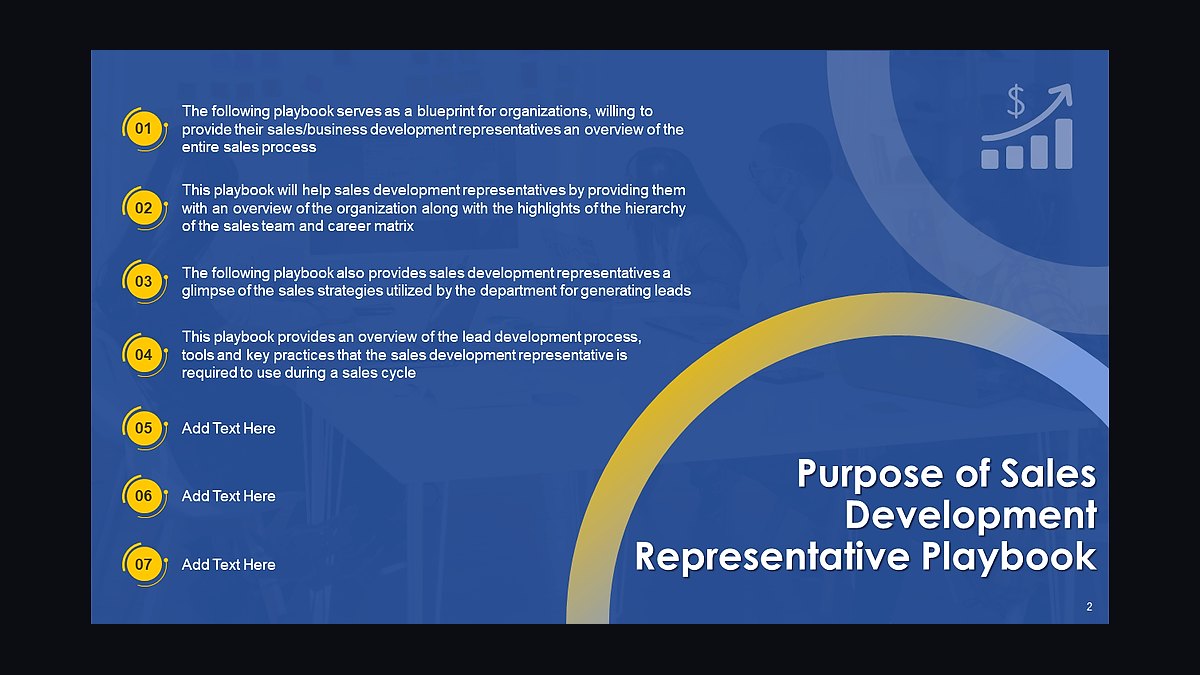
On team structure, a frequently cited ratio in sales-development-heavy organizations is one SDR manager for every 8–10 reps. Fewer than that and coaching quality drops, since the execution tenet depends on managers actually listening to calls and reviewing messaging weekly rather than only tracking activity dashboards. Compensation benchmarks generally put SDR on-target earnings meaningfully below closing roles but structured with a meaningful variable component tied to qualified meetings or opportunities created — not raw dials — which reinforces the behavior the strategy is designed to produce. A common split is 60–70% base and 30–40% variable, with the variable portion gated on meetings that survive a defined qualification bar.
Pipeline contribution is the benchmark sales leaders care about most. In organizations that have fully implemented the five tenets, sales-development-sourced pipeline commonly represents 40–60% of total new pipeline within two years, with meeting-to-opportunity conversion rates in the 20–35% range for well-qualified outbound meetings. Leaders should treat anything dramatically outside these ranges as a signal to investigate. Low conversion usually means targeting is too broad or the message misses the buyer's actual problem. Low volume with suspiciously high conversion often means the qualification bar is so strict that good meetings are being screened out before they ever reach a rep — which looks like efficiency but is really a hidden ceiling on growth.
Two more ranges worth tracking: email reply rates for cold outbound generally land in the 3–8% range for well-targeted sequences, and cold call connect rates sit in the 5–10% range depending on list quality and time of day. Neither number is a target in itself — they are diagnostic. If reply rates collapse while meeting volume holds, reps may be booking low-intent meetings. If connect rates fall but meetings hold, the list may be decaying and needs refreshing. The Playbook's discipline is to watch several numbers together rather than optimizing any single one.
Risks, edge cases, and failure modes
The most common failure mode described in and around the Playbook is treating the five tenets as a menu instead of a system — implementing specialization and recruiting changes while skipping the execution discipline, then wondering why results plateau within two quarters. Bertuzzi's takeaway is that all five reinforce each other: a strong hire in a weak execution environment burns out and leaves, and strong execution around a poorly recruited team produces busywork rather than pipeline. The tenets are load-bearing; pull one out and the structure sags.
A second risk is misapplying the framework to a business where it doesn't fit the buying motion. Product-led growth companies with low-touch, self-serve buyers, or extremely small target markets with a handful of named accounts, don't benefit from a high-volume specialized outbound engine the same way a broad mid-market B2B seller does. In those cases, a lighter-touch or account-based motion with far fewer, far more senior sales development resources fits better than the volume-oriented version of the model. Forcing a volume engine onto a ten-account market wastes money and annoys the exact buyers you cannot afford to alienate.
Edge cases around compensation design also trip leaders up. Paying purely on meetings booked without a quality gate incentivizes reps to book anything that breathes, flooding account executives with unqualified meetings and souring the relationship between the two functions — exactly the dynamic Bertuzzi's specialization tenet is meant to prevent. The fix is tying comp to meetings that survive a defined qualification bar (correct persona, correct stage of buying intent, confirmed budget or authority signal) rather than raw volume. Some teams add a clawback if a booked meeting is rejected by the AE without a documented reason, which forces both sides to agree on what "qualified" actually means.
Finally, in 2027's environment specifically, sales leaders need to account for AI-assisted prospecting tools compressing the labor cost of low-value outbound touches. The differentiator increasingly shifts toward message relevance and account research quality rather than sheer call volume. Programs that keep measuring success purely on activity counts risk missing that the bar for what counts as a "quality touch" has moved, and reps optimizing for the old metric will look busy while pipeline quality quietly erodes. The Playbook's answer is not to abandon activity metrics but to pair them with outcome metrics so volume and quality are always read together.
One more edge case: rapid scaling. Leaders who double SDR headcount in a quarter often break their own management ratio, and coaching quality collapses before the new hires ever ramp. The Playbook's structure argues for scaling in waves that preserve the 8–10 reps per manager ratio, even if that means slower hiring than the board would like. Growth that outruns management capacity is growth that reverses.
A practical rollout plan
Sales leaders adopting the Playbook's Takeaways in 2027 should sequence the work rather than attempting all five tenets simultaneously. Start with strategy: define the ideal customer profile, target account list, and the specific problem the message needs to address, because everything downstream depends on this being right. Next, separate the sales development role from closing so specialization can take hold, even if that means a smaller initial team doing only prospecting while account executives absorb more of the closing motion temporarily. Only after specialization is in place does it make sense to rebuild recruiting criteria around coachability and process discipline, since hiring against a role that still has blurry responsibilities produces mismatched candidates.
With the structural pieces in place, retention comes next: publish the promotion path explicitly so reps know the SDR seat is a 12–18 month launchpad, and tie a meaningful share of variable comp to qualified-meeting quality rather than raw activity. The final and most frequently skipped step is execution — a standing weekly cadence where managers review call recordings, inspect conversion data by rep and by segment, and retire or refresh messaging that has gone stale. Leaders should expect the first 60–90 days to look like a dip in raw output while the team re-specializes, followed by a steady climb in qualified pipeline over the next two to three quarters as the system compounds. Treat the rollout as a living process: revisit the ICP and messaging quarterly, because market conditions and buyer behavior shift faster than an annual planning cycle can track.
A few practical guardrails for the rollout. First, do not change comp and structure in the same month; give reps a stable quarter to learn the new role before the pay plan shifts underneath them. Second, instrument everything from day one — meeting volume, meeting-to-opportunity conversion, and sourced pipeline — so you can tell the difference between a genuine ramp dip and a broken process. Third, appoint a single owner for the program, usually a dedicated SDR manager, because shared ownership between sales and marketing is the fastest way to recreate the finger-pointing the Playbook is designed to eliminate. Fourth, budget for enablement: call scripts, objection libraries, and sequence templates are the raw materials reps need to execute a cadence consistently, and without them the execution tenet has nothing to run on. Finally, set a review checkpoint at 90 and 180 days with pre-agreed success criteria, so the program is judged on leading indicators during the dip rather than on raw output that is temporarily suppressed by design.
Related questions
What are the five tenets in Bertuzzi's Sales Development Playbook?
Strategy, Specialization, Recruiting, Retention, and Execution. Each reinforces the others — skipping one (commonly execution) is the most common reason implementations plateau after early gains.
Should SDRs report to sales or marketing?

Bertuzzi generally recommends sales development report into sales leadership with its own dedicated manager, since marketing-owned SDR teams often lack the coaching rigor and pipeline accountability the execution tenet requires.
How long should someone stay in an SDR role before promotion?
Most Playbook-aligned programs target 12–18 months, long enough to master the specialized skill and build a track record, short enough to keep the role attractive as a career step rather than a dead end.
Does the Playbook framework still work with AI prospecting tools?
Yes, but the differentiator shifts from call volume to message relevance and research quality — the five tenets still apply, they just get applied to a workflow where AI handles more of the mechanical outreach.
What is the single biggest Takeaway for a new sales leader?
Build the system before scaling headcount. Strategy, specialization, and execution discipline determine whether additional reps produce pipeline or just noise.
FAQ
Who is Trish Bertuzzi? Trish Bertuzzi is the founder of The Bridge Group, a consultancy focused on inside sales and sales development strategy, and the author of *The Sales Development Playbook*, a widely referenced book among B2B sales leaders building outbound and inbound prospecting functions.
What is the main argument of The Sales Development Playbook?

The book argues that sales development succeeds through a deliberate system built on five tenets — Strategy, Specialization, Recruiting, Retention, and Execution — rather than through ad hoc hiring or simply increasing activity volume.
Why does specialization matter so much in the framework? Specialization removes the conflict between prospecting and closing. When one person does both, closing activity — which pays off faster — crowds out the steady prospecting work that keeps pipeline full, so splitting the roles protects the top of the funnel.
How do I measure whether my sales development program is working? Track qualified meetings per rep, meeting-to-opportunity conversion rate, and sales-development-sourced pipeline as a percentage of total pipeline. A mature program under this framework typically sees that contribution stabilize in the 40–60% range.
What's the biggest mistake sales leaders make implementing this Playbook? Adopting some tenets — usually specialization and hiring — while skipping the weekly execution discipline of call reviews and messaging iteration, which causes results to plateau or decay within a couple of quarters.
Does this framework apply to every go-to-market motion? Not universally. Low-touch product-led growth motions and narrow enterprise account-based strategies with only a handful of named targets typically need a lighter-touch, more senior version of the model rather than a high-volume outbound engine.
Sources
- https://www.bridgegroup.com/
- https://hbr.org/topic/sales
- https://www.gartner.com/en/sales
- https://www.salesforce.com/resources/articles/sales-development-rep/
- https://www.linkedin.com/business/sales/blog
- https://www.outreach.io/resources
- https://www.gong.io/blog/
Related on PULSE
- How to structure an SDR compensation plan around quality meetings, not activity volume
- Building an ideal customer profile before scaling outbound prospecting
- What a realistic SDR-to-AE handoff process looks like
- How to design a 90-day SDR onboarding and ramp plan
- When to choose account-based prospecting over high-volume outbound
This page will be disappearing soon. Save it to your device for $1 — or read it free while it is here.
@Kory-White- · if Venmo asks, the last 4 of my number are 2012
This page is gone.
This one is off the shelf now. $1 keeps it on your phone for good — the whole page, pictures and diagrams included.
 pulse-recentNever Lose a Customer Again by Joey Coleman — Top 10 Key Takeaways for Sales Leaders in 2027
 pulse-recentWhat is the second concrete step in Strategic Selling by Miller Heiman for identifying a sales coach in 2027?
 pulse-recentCrossing the Chasm by Geoffrey Moore — Top 10 Key Takeaways for Sales Leaders in 2027
 pulse-recentStrategic Selling by Robert Miller and Stephen Heiman — Top 10 Key Takeaways for Sales Leaders in 2027
 pulse-recentWhat is the step-by-step process for Strategic Selling by Miller Heiman in 2027?
 pulse-recentTraction by Gabriel Weinberg and Justin Mares — Top 10 Key Takeaways for Sales Leaders in 2027
 pulse-recentThe Customer Success Professional’s Handbook by Ashvin Vaidyanathan — Top 10 Key Takeaways for Sales Leaders in 2027
 pulse-recentHyper Sales Growth by Jack Daly — Top 10 Key Takeaways for Sales Leaders in 2027
 pulse-recentGetting to Yes by Roger Fisher and William Ury — Top 10 Key Takeaways for Sales Leaders in 2027
 pulse-recentThe Transparency Sale by Todd Caponi — Top 10 Key Takeaways for Sales Leaders in 2027