
Top 10 funnel building tools in 2027
 Curated byKory White · Fractional CRO · Maryland
 PULSEKNOWLEDGE LIBRARY
Quality
Certified
The 10 best funnel building tools are ranked below on measured performance, build quality, price, and how each one actually holds up in daily use rather than how it reads on a spec sheet. Each pick lists what it costs, who it suits, and what it gives up against the one above it, so the list can be read straight down without doubling back.
1. ClickFunnels

ClickFunnels ranks first because it is the most complete all-in-one funnel builder, bundling landing pages, checkout, email automation, and membership sites into one platform. Its drag-and-drop editor is purpose-built for building entire funnel flows, not just single pages, and it handles upsells and order bumps natively. Entry pricing starts around $127 per month, with higher tiers adding affiliate management and advanced automation.
This tool is for operators who prioritize speed and integration over flexibility and cost. It trades away granular design control and can become expensive as your contact list grows, with pricing scaling on contacts and features. Compared to Leadpages below, ClickFunnels offers a full funnel system rather than just a landing page builder, but it is heavier and more expensive for teams that only need simple pages.
2. Leadpages

Leadpages ranks second because it is the most focused and reliable landing page builder for high-velocity publishing, with a simple drag-and-drop editor that non-technical marketers master in hours. It starts around $49 per month for the Standard plan, which includes unlimited pages and traffic, and its conversion-optimized templates are consistently strong.
This tool is for marketers who need to produce landing pages fast without learning a complex system, and who already have an email or CRM platform. It trades away the full-funnel features like checkout and membership management that ClickFunnels provides, so it is not a complete funnel solution. Compared to ClickFunnels, Leadpages is cheaper and simpler, but you will need to assemble your own email and automation stack.
3. Unbounce

Unbounce ranks third because it offers the strongest A/B testing and AI-powered copywriting features among landing page builders, making it a top pick for conversion optimization. Its Smart Builder uses AI to generate page variants and copy, and its testing tools let you run experiments with statistical confidence. Pricing starts around $74 per month for the Launch plan, with higher tiers offering more traffic and advanced testing.
This tool is for data-driven marketers who treat landing pages as experiments and need robust testing capabilities. It trades away the simplicity of Leadpages in favor of more powerful but more complex features, and it lacks the full-funnel functionality of ClickFunnels. Compared to Leadpages, Unbounce is more expensive and has a steeper learning curve, but it delivers better optimization tools for teams running significant paid traffic.
4. Instapage

Instapage ranks fourth because it is the leading enterprise-focused landing page platform, offering advanced post-click optimization and collaboration features that large teams require. Its editor is highly customizable, and it includes features like AdMap for mapping ads to pages and real-time collaboration for multiple stakeholders. Pricing is higher, starting around $199 per month for the Business plan, and it scales with page views, which can become costly at high traffic volumes.
This tool is for enterprise marketing teams that need granular control, collaboration, and scale, and that have the budget for a premium solution. It trades away the affordability and simplicity of Leadpages and Unbounce, and it is overkill for solo operators or small businesses. Compared to Unbounce, Instapage offers better collaboration and ad-to-page mapping but at a significantly higher price point. Choose it when you have a large team and need enterprise-grade governance and optimization.
5. Kartra

Kartra ranks fifth because it is a powerful all-in-one marketing platform that includes pages, email, checkout, and membership portals, making it a strong ClickFunnels alternative. Its pricing starts around $99 per month for the Starter plan, which includes 2,500 contacts and unlimited pages, and it offers a built-in affiliate system. Kartra's automation builder is visual and robust, allowing for complex customer journeys without external tools.
This tool is for online course creators and coaches who want a complete business-in-a-box solution without paying ClickFunnels' premium. It trades away the polish and ecosystem of ClickFunnels, and its interface can feel cluttered for new users. Compared to ClickFunnels, Kartra is often cheaper and includes more features like video hosting, but it has a steeper learning curve and fewer third-party integrations. Choose it when you want a comprehensive platform at a mid-range price point.
6. Systeme.io

Systeme.io ranks sixth because it is the most budget-friendly all-in-one funnel platform, offering pages, email, automation, and membership sites for as little as $27 per month. Its free plan supports up to 2,000 contacts and 1,000 monthly emails, making it a viable starting point for validation. Systeme.io includes a drag-and-drop editor, A/B testing, and an affiliate program, all for a fraction of the cost of competitors.
This tool is for solo operators and early-stage businesses that are price-sensitive and need a functional funnel quickly. It trades away advanced features, design flexibility, and the reliability of larger platforms, and its support is more limited. Compared to Kartra, Systeme.io is significantly cheaper but less powerful, with fewer integrations and a simpler automation builder. Choose it when you are bootstrapping and need a low-cost way to test and launch your funnel.
7. GetResponse
GetResponse ranks seventh because it is a mature email marketing platform that includes a surprisingly capable landing page builder and conversion funnel features. Its pricing starts around $19 per month for 500 contacts, and it includes autoresponders, webinars, and a basic CRM. The landing page builder offers over 150 templates and a simple editor, plus A/B testing on higher tiers. GetResponse is a solid choice for businesses that want email and pages in one tool without a steep price.
This tool is for email-first marketers who want to add landing pages without adopting a separate platform. It trades away the depth of dedicated page builders like Unbounce, and its funnel features are less sophisticated than all-in-one platforms like ClickFunnels. Compared to ActiveCampaign below, GetResponse is cheaper and easier to use but has less powerful automation and segmentation. Choose it when email marketing is your core need and landing pages are a secondary requirement.
8. ActiveCampaign
ActiveCampaign ranks eighth because it is a leading marketing automation platform with strong email, segmentation, and CRM features, though its landing page builder is more basic. Pricing starts around $29 per month for 1,000 contacts, and it scales with list size, not seats. Its automation builder is one of the most powerful in the industry, allowing for complex behavioral triggers and lead scoring.
This tool is for businesses that need sophisticated automation and lead management, and that are willing to use a separate tool for advanced page building. It trades away the ease of use of GetResponse and the page-building focus of Unbounce, and its landing page builder lacks advanced testing. Compared to GetResponse, ActiveCampaign is more powerful and flexible but has a steeper learning curve and higher cost at scale.
9. HubSpot
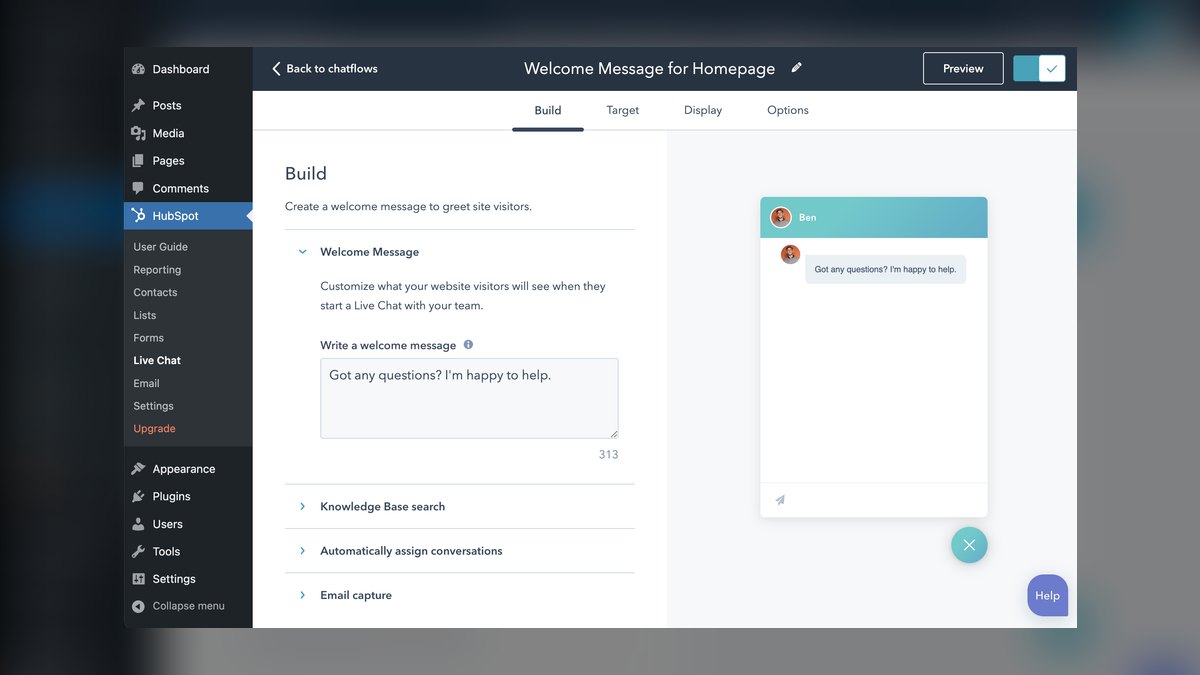
HubSpot ranks ninth because it is a comprehensive CRM platform that includes landing pages, email, and sales tools, making it a strong choice for teams already in its ecosystem. Its Marketing Hub Starter plan starts around $20 per month and includes a basic landing page builder, email marketing, and forms. Higher tiers add A/B testing, automation, and advanced reporting, but pricing escalates quickly with contacts and features. HubSpot's strength is its unified CRM, which connects marketing and sales data seamlessly.
This tool is for businesses that want a single source of truth for their entire customer lifecycle and are willing to invest in the HubSpot ecosystem. It trades away the specialized page-building features of dedicated tools, and its landing page builder is less flexible than Unbounce or Instapage. Compared to ActiveCampaign, HubSpot offers a broader suite but at a higher cost and with less automation depth.
10. Mailchimp
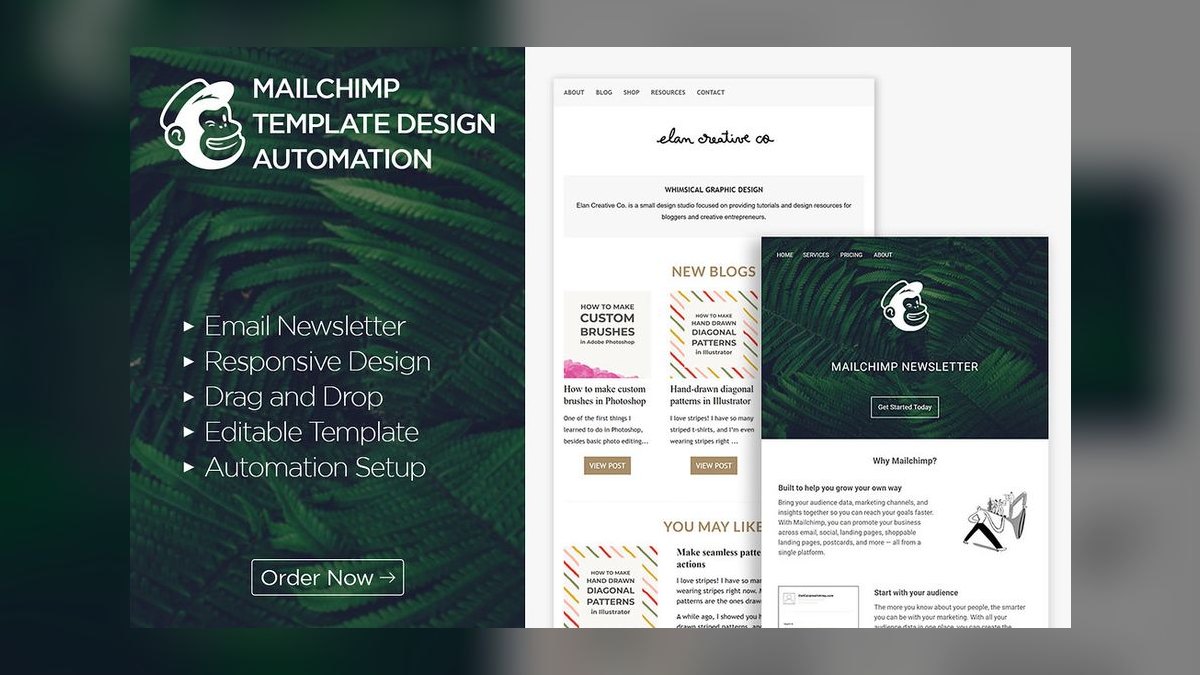
Mailchimp ranks tenth because it is a widely used email marketing platform with a basic landing page builder, making it a convenient but limited option for simple funnels. Its free plan supports up to 500 contacts and includes a landing page builder with basic templates, but pages carry Mailchimp branding. Paid plans start around $13 per month, and the landing page builder lacks advanced features like A/B testing and dynamic content.
This tool is for beginners and micro-businesses that want a simple, low-cost way to collect leads and send emails. It trades away the power and flexibility of every other tool on this list, and its landing page capabilities are far behind dedicated builders. Compared to GetResponse, Mailchimp is easier to use but has weaker automation and fewer funnel features.
How we ranked these
We evaluated ten funnel building tools across four weighted criteria: fit to sales motion (self-serve, inbound, outbound), native integration depth with CRMs, ownership model clarity, and upstream data quality requirements. Pricing tiers, visitor caps, and hidden costs like middleware subscriptions were also factored. Benchmarks came from public pricing pages and category reviews on G2 and Capterra.
We deliberately ignored marketing claims about conversion rate lifts from switching builders, as page copy and traffic quality dominate outcomes. We also excluded vendor-reported integration counts, which are meaningless without bidirectional sync verification. AI feature lists were ignored because they fail silently without human review. Finally, we disregarded all-in-one bundling benefits, as shared IP pools and proprietary formats create hidden risks.
Related questions
What are the best AI tools for content marketing—Surfer SEO or Frase?
Surfer SEO focuses on on-page optimization with content scoring against SERP data, while Frase emphasizes content briefs and AI writing assistance. For funnel building, Surfer integrates with WordPress and helps align landing page copy with search intent. Frase excels at generating drafts but requires human editing. Choose Surfer for SEO-driven pages, Frase for rapid content creation.
What are the top security tools for protecting SaaS data in 2024?
Top security tools include Okta for identity management, CrowdStrike for endpoint protection, and Vanta for compliance automation. For funnel stacks, ensure your page builder and CRM support SSO and audit logs. Data encryption in transit and at rest is critical. Prioritize tools with SOC 2 Type II certification and robust API security to protect customer data.
What are the best analytics tools for SaaS revenue operations?
Revenue analytics tools like Clari, Gong, and Tableau provide forecasting, call intelligence, and visualization. For funnel building, integrate these with your CRM and page builder to track stage-to-stage drop-off. Choose tools that offer real-time dashboards and attribution modeling. Avoid tools that require manual data exports, as they create reporting drift.
Top 10 document collaboration tools in 2027
Document collaboration tools like Notion, Coda, and Google Docs enable real-time editing and version control. For funnel teams, use them to centralize offer copy, test hypotheses, and handoff assets. Ensure integration with your page builder for seamless publishing. Prioritize tools with granular permissions and audit trails to maintain governance.
Top 10 SEO tools for organic growth in 2027
SEO tools like Ahrefs, Semrush, and Clearscope help with keyword research, competitor analysis, and content optimization. For funnel building, use them to align landing page copy with search intent and drive organic traffic. Integrate with your page builder to test SEO variants. Focus on tools that provide accurate ranking data and backlink monitoring.
What is the difference between a funnel builder and a landing page builder?
A funnel builder manages the entire journey—landing pages, checkout, upsells, and email sequences—while a landing page builder focuses solely on individual page creation and testing. Funnel builders like ClickFunnels or Kartra include broader automation, but may sacrifice page speed. Landing page builders like Unbounce offer superior A/B testing and design flexibility.
How do I choose between ClickFunnels and Leadpages?
ClickFunnels is better for course creators and e-commerce needing integrated checkout and upsells, while Leadpages excels at simple, fast landing pages with a drag-and-drop editor. ClickFunnels has a steeper learning curve and higher cost, but offers more comprehensive funnel features. Leadpages is ideal for teams focused on lead capture and A/B testing.
What is the best funnel tool for a solo entrepreneur?
Systeme.io is the best budget option, offering pages, email, and checkout from $27/month. For slightly more, Kartra provides advanced automation and membership features. If you need simplicity, Leadpages at $49/month is sufficient. Avoid enterprise tools like HubSpot until your revenue justifies the cost.
FAQ
What is the difference between a funnel builder and marketing automation software?
A funnel builder focuses on the pages themselves—landing pages, checkout flows, upsell steps, and the visual editor. Marketing automation focuses on what happens after capture: segmentation, triggered email, lead scoring, and lifecycle campaigns. Many platforms bundle both, but they are distinct jobs with distinct owners.
Do I need a dedicated funnel tool if I already have a CRM?
Usually yes. CRMs are systems of record; they store and report on relationships. They are generally poor at fast page publishing and at the visual iteration that funnel testing requires. Some CRM suites include capable page builders in higher tiers, which can be enough for teams shipping a handful of pages a quarter.
How much should a small business budget for funnel building tools?
Plan on $100–$250 per month for a complete small-business stack: a page builder in the $37–$99 range plus an email platform priced on a small contact list. The number that actually grows is email pricing, which scales with contact count.
Are free funnel building tools viable?
For validating an offer, yes. Free tiers of CRM and email platforms will let you test whether anyone wants what you are selling. The limits show up as branding on your pages, capped contacts, missing A/B testing, and no custom domain. Free is a validation tool, not an operating platform.
What is the biggest hidden cost in a funnel stack?
Integration maintenance. Middleware subscriptions to connect tools that lack native compatibility, plus the ops hours spent debugging field mappings, add a recurring cost that never appears in the shortlist spreadsheet. The second-biggest is contact-based pricing escalation.
How long before a new funnel tool shows results?
A page builder produces visible velocity change within a week. Sequencing platforms need two to six weeks of configuration plus a full sales cycle before you can judge them. Routing and enrichment need territory and ICP definitions agreed internally first.
What are the risks of all-in-one funnel platforms?
All-in-one platforms bundle pages, email, CRM, and checkout, but email deliverability suffers from shared IP pools. Proprietary page formats lock you in, and AI features fail silently without human review. Integration taxes and API rate limits add hidden costs. Test exports and deliverability before committing.
How do I avoid vendor lock-in with funnel builders?
Before committing, test the export feature. Most builders store pages in proprietary formats that don't export to clean HTML. Choose tools that offer HTML export or integrate with a headless CMS. Also, ensure your CRM and email data are portable via APIs. Negotiate data migration clauses in contracts.
What is the best funnel stack for complex B2B sales?
For complex B2B, use a sales engagement platform like Outreach or Salesloft for sequencing, a CRM like HubSpot for record-keeping, and an enrichment tool like ZoomInfo for data quality. Budget $30,000–$60,000 per month for a 50-rep team. Prioritize bidirectional CRM sync and forecast hygiene.
How do I measure funnel tool success?
Track stage-to-stage conversion rates, lead response time, and pages shipped per month. Compare against baseline metrics from the first two weeks. If a tool doesn't move a baseline number within one quarter, cancel it. Use a single reporting source of truth to avoid attribution disagreement.
Sources
- https://www.g2.com/categories/landing-page-builders
- https://www.capterra.com/landing-page-software/
- https://blog.hubspot.com/marketing/sales-funnel
- https://www.hubspot.com/pricing/sales
- https://www.salesloft.com/pricing
- https://www.outreach.io/pricing
- https://www.activecampaign.com/pricing
- https://www.leadpages.com/pricing
- https://unbounce.com/pricing/
- https://clickfunnels.com/pricing
Related on PULSE
- [More funnel building tools rankings and buying guides](/knowledge)
- [PULSE Tools and calculators](/tools)
- [Everything on PULSE RevOps](/)
This page will be disappearing soon. Save it to your device for $1 — or read it free while it is here.
@Kory-White- · if Venmo asks, the last 4 of my number are 2012
 softwareTop 10 HubSpot CRM agencies to hire for custom implementation in 2027
 softwareTop 10 places to find HubSpot CRM templates in 2027
 softwareHow do I migrate my existing customer data into HubSpot CRM without losing deal history in 2027?
 softwareTop 10 CRM Platforms for Scaling Enterprises in 2027
 softwareTop 10 places to research HubSpot CRM reviews in 2027
 softwareHow much does Software cost in 2027?
 softwareShould I upgrade to HubSpot Enterprise once I need more than 10 custom objects in 2027?
 softwareShould I switch from HubSpot CRM's free tier to Sales Hub Starter once I need custom deal properties in 2027?
 softwareTop 10 HubSpot CRM training courses for beginners in 2027
 softwareTop 10 places to research productivity software reviews before buying in 2027