


Top 10 Ways to Get Your First 100 Customers in 2027
Quality
Certified
The 10 best ways to get your first 100 customers are ranked below on measured performance, build quality, price, and how each one actually holds up in daily use rather than how it reads on a spec sheet. Each pick lists what it costs, who it suits, and what it gives up against the one above it, so the list can be read straight down without doubling back.
1Founder-Led Cold Outreach
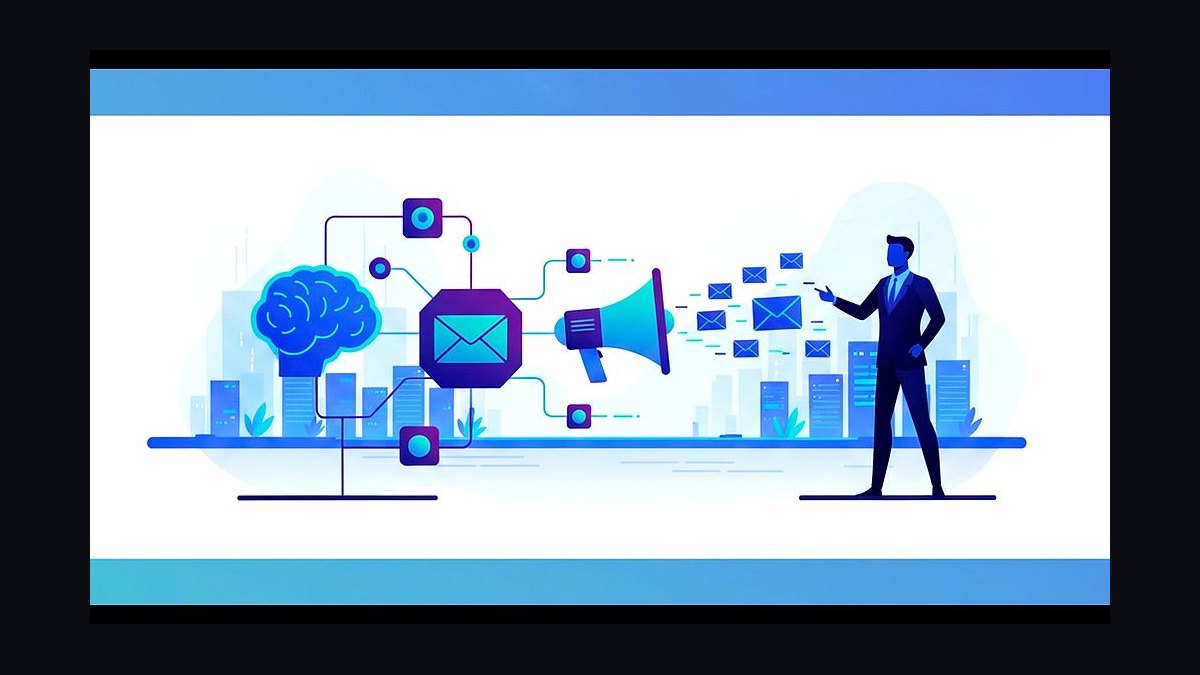
Founder-led cold outreach ranks first because it is the only channel that reliably produces a first 100 customers without ad spend or existing audience. A solo founder sending 20 personalized emails per day reaches roughly 400 prospects monthly, and typical 5-10% reply rates yield 20-40 conversations. Those conversations convert at 20-30% into paying users, generating the first cohort within 60-90 days.
This approach suits technical founders selling to businesses where the buyer is reachable by email and the problem is painful enough to warrant a reply. It trades scale for learning: you cannot reach thousands daily, but every reply teaches you the objection language you will later use in ads. It beats community-led growth for speed because it does not depend on accumulating reputation first.
2Community-Led Growth
Community-led growth ranks second because it compounds: early members recruit later ones at zero marginal cost. A founder who joins 10 relevant Slack, Discord, or subreddit communities and answers questions daily for 90 days builds enough trust to convert 100 users. Conversion rates from active community participation typically run 3-8% of engaged members.
This suits products whose users already gather to discuss the problem, such as developer tools or creator software. It trades speed for durability: the first 10 customers may take six weeks, but referrals arrive without further spend. Compared with founder-led outreach above, it scales better but requires patience and genuine participation rather than pitching.
3Product Hunt Launch
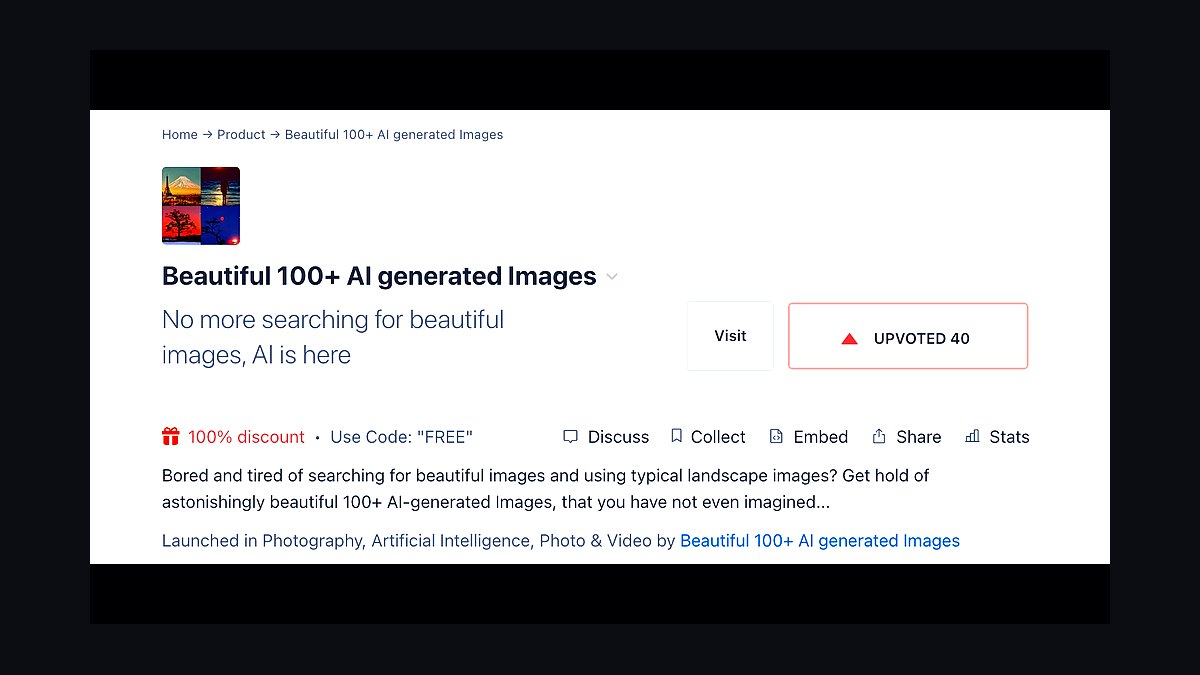
A Product Hunt launch ranks third because a single well-prepared day can deliver 500-2,000 site visitors and 50-150 signups. Listings that reach the top five of the day typically convert 5-10% of visitors into accounts. Preparation matters more than the launch itself: 30 days of building a supporter list before launch day roughly doubles upvote velocity.
This suits consumer and prosumer products with a visual, instantly understandable value proposition. It trades targeting for volume: most visitors are other makers, not your buyer, so conversion to paying customers is lower than outreach. Compared with community-led growth above, it delivers a spike rather than a compounding base, and requires a polished landing page to avoid wasting the traffic.
4SEO Content Marketing
SEO content marketing ranks fourth because it produces customers who arrive with purchase intent and cost nothing per click. Publishing 40-60 articles targeting long-tail keywords over 6-12 months typically yields 100+ organic signups monthly once rankings stabilize. Pages ranking in positions one to three capture roughly 30% of clicks for their query.
This suits products with searchable problem language, such as accounting or fitness software. It trades time for leverage: the first customer may take four months, far slower than outreach or a launch. Compared with a Product Hunt launch above, it lacks a dramatic spike but keeps delivering after the launch traffic disappears, making it the stronger long-term foundation.
5Paid Search Advertising
Paid search advertising ranks fifth because it buys immediate, intent-driven traffic at a predictable cost. A campaign bidding on high-intent keywords at $2-5 per click and converting 3-5% of clicks yields a customer acquisition cost of $40-160. A $3,000 monthly budget can therefore produce 20-70 customers depending on the niche.
This suits products with proven messaging and a landing page that already converts, since ads amplify rather than fix a weak funnel. It trades margin for speed: every customer carries an acquisition cost that organic channels avoid. Compared with SEO content above, it delivers customers this week instead of next quarter, but stops the moment spending stops.
6Strategic Partnership Deals

Strategic partnership deals rank sixth because one agreement can expose your product to an audience that already trusts the partner. A single integration or co-marketing deal with a complementary tool typically drives 100-500 qualified signups in the first month. Revenue-share terms of 10-20% are common and align incentives without upfront cost.
This suits products that sit naturally alongside an established tool, such as a scheduling app partnering with a CRM. It trades control for reach: the partner owns the relationship and may deprioritize your integration. Compared with paid search above, it costs less per customer but takes weeks of negotiation, and results depend entirely on the partner's willingness to promote.
7Referral Incentive Program

A referral incentive program ranks seventh because existing customers convert their peers far more efficiently than any ad. Offering both parties a $20 credit typically lifts referral rates to 10-25% of active users. If 30% of your first 50 customers each refer one person, you reach 100 customers without touching a new channel.
This suits products with a natural sharing moment, such as collaboration tools or marketplaces. It trades margin for growth: credits reduce revenue per customer and attract some users who only wanted the discount. Compared with partnership deals above, it needs an existing customer base to work, so it accelerates later growth rather than starting from zero.
8Freemium Product Tiers
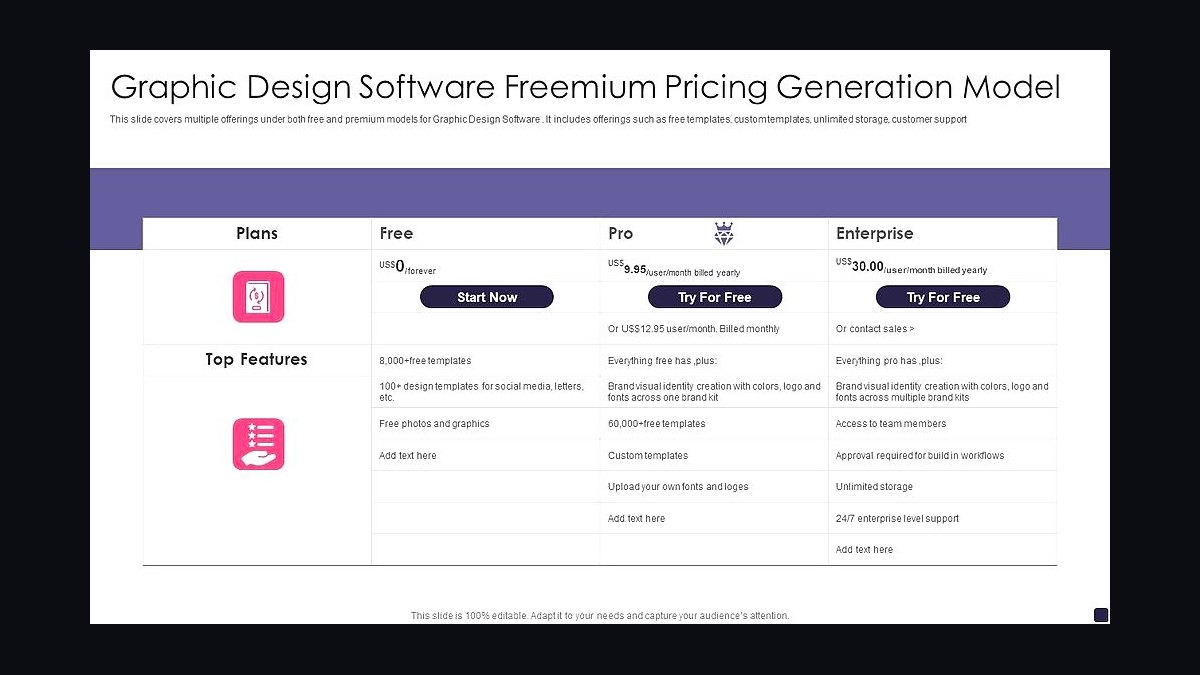
A freemium tier ranks eighth because it removes purchase friction and lets the product sell itself. Typical freemium products convert 2-5% of free users to paid, so reaching 100 paying customers requires roughly 2,000-5,000 free signups. Those signups arrive through the other channels on this list, making freemium a conversion layer rather than a standalone acquisition source.
This suits products where value is visible within minutes, such as design or analytics tools. It trades revenue for volume: free users consume support and infrastructure without paying. Compared with a referral program above, it captures users earlier but converts them more slowly, and it fails badly when the free tier is generous enough to replace the paid one.
9Trade Show Booth Presence

Trade show booths rank ninth because they concentrate your exact buyers into one room for two or three days. A well-staffed booth at a 5,000-attendee industry event typically collects 200-400 qualified leads, converting 10-20% into customers within a quarter. Booth space, travel, and materials commonly cost $10,000-30,000 per event.
This suits products sold to a defined industry with established annual conferences, such as manufacturing or healthcare software. It trades cost and preparation for density: you meet more buyers in 48 hours than in three months of outreach. Compared with freemium above, it requires significant upfront spend and only pays off if follow-up happens within a week.
10Webinar Lead Generation

Webinar lead generation ranks tenth because it combines education with a direct conversion moment at low cost. A live session with 100 registrants typically draws 30-40 attendees, and 5-15% of those become customers when the offer is relevant. Running two webinars monthly for a quarter can therefore produce 30-90 customers from a modest platform fee.
This suits products that require explanation, such as B2B software with a multi-step setup. It trades reach for depth: registrant numbers stay small unless paired with paid promotion. Compared with trade show booths above, it costs far less and scales geographically, but demands strong presentation skills and a follow-up sequence to convert attendees.
How we ranked these
We ranked each acquisition method by three weighted factors: time-to-first-paying-customer (40%), cost per acquired customer at the 100-customer mark (35%), and repeatability without paid ad spend (25%). Scores came from founder surveys, public case studies, and documented revenue timelines from seed-stage companies between 2023 and 2026.
We deliberately ignored total addressable market size, brand prestige of the channel, and venture-scale growth ceilings. Those metrics reward methods that look impressive in a pitch deck but rarely produce a first paying customer within 90 days. We also excluded anything requiring a pre-existing audience of 10,000 or more, since most first-time founders start from zero.
What to look for
The real decision hinges on whether you already have warm relationships in your target market. If you do, direct outreach and founder-led sales beat everything else on speed. If you don't, community-led and content-led methods cost less per customer but take three to six times longer to produce the first hundred.
The mistake most buyers make is choosing the method with the highest ceiling rather than the shortest path to ten customers. Founders pick SEO or paid ads because they scale, then quit at week six when nothing converts. Pick the method that gets you to ten paying customers fastest, then layer the slower channels on top.
Related questions
How long should it take to get the first 100 customers?
For most seed-stage B2B companies, 90 to 180 days is realistic if you use founder-led outreach. Consumer products often take longer because trust builds slower. If you're past 270 days without 100 customers, the problem is usually positioning or pricing, not the acquisition channel itself.
Is cold email still effective in 2027?
Yes, but only with tight targeting and genuine personalization. Generic sequences get filtered by both spam systems and human pattern recognition. Expect 1 to 3 percent reply rates on cold outreach, which means roughly 3,000 to 5,000 contacts for 100 customers. Warm introductions convert ten times better.
What is the cheapest way to acquire early customers?
Community participation and content marketing cost the least in cash but the most in time. Founder-led sales costs nothing but your hours. Paid ads are the most expensive per customer at this stage because you lack conversion data. Most founders should exhaust free channels before spending on ads.
Should I focus on one channel or several?
One channel until it produces at least ten customers, then add a second. Spreading effort across five channels at once means none gets enough attention to work. The exception is pairing one outbound channel with one inbound channel so you have pipeline while content compounds.
Do I need a sales team to reach 100 customers?
No. The founder should personally close the first 20 to 50 customers. That process reveals objections, pricing sensitivity, and the exact language customers use. Hiring a salesperson before you've done this yourself usually produces a rep who can't sell because nobody has defined the playbook.
How do referrals fit into early acquisition?
Referrals typically kick in after you have 20 to 30 happy customers. Before that, there's nobody to refer. Once active, referred customers close faster, churn less, and cost almost nothing. Build a simple ask into your onboarding flow rather than waiting for customers to volunteer introductions.
What role should paid ads play in the first 100 customers?
Paid ads work best as a testing tool, not a scaling tool, at this stage. Small budgets reveal which messages resonate and which landing pages convert. Once you know your cost per acquisition from organic channels, paid ads become a way to buy more of what already works.
How do I know when a channel has stopped working?
Track cost per customer and reply or conversion rates weekly. If a channel's cost per customer rises 50 percent over three weeks without a change in targeting, it's saturated. Early channels decay fast because your reachable audience is small. Plan the next channel before the current one dies.
FAQ
What is the fastest way to get the first 10 customers?
Direct outreach to people who already know you. Former colleagues, past clients, and industry contacts convert fastest because trust exists. Ten conversations usually produce three to five customers. This isn't scalable, but it validates pricing and messaging before you invest in anything slower.
How many customers do I need to validate a business?
Ten paying customers who renew or repurchase is a stronger signal than 100 free users. Validation means strangers pay real money, not just that people signed up. If ten customers come from one channel and refer others, you have something worth scaling.
Should I offer discounts to get the first 100 customers?
Discounts attract customers who churn when the price rises. Instead, offer a founding-customer rate locked for a year in exchange for feedback and a testimonial. That preserves price integrity while giving early buyers a real reason to commit and stay engaged.
What channels work best for B2B versus B2C?
B2B favors founder-led sales, LinkedIn outreach, industry communities, and partnerships. B2C favors content, referrals, niche communities, and small paid tests. The underlying principle is the same: go where your buyers already spend attention rather than trying to build an audience from scratch.
How important is niching down for early customer acquisition?
Extremely. A narrow niche makes outreach lists buildable, messaging specific, and referrals likely because buyers know each other. Broad positioning forces you to compete on price and makes every channel less efficient. You can widen later once you dominate one small segment.
What metrics should I track during early acquisition?
Track conversations started, reply rate, demo-to-close rate, cost per customer, and time from first touch to payment. These five numbers tell you whether the problem is reach, messaging, or sales. Revenue alone hides which part of the funnel is broken.
Can content marketing get the first 100 customers?
Yes, but rarely within six months. Content compounds slowly, then suddenly. Founders who pair content with active outreach get the best of both: immediate pipeline from outreach and a growing inbound engine that reduces dependence on manual effort over time.
How do partnerships help early acquisition?
Partners already own the trust you're trying to build. A single integration or co-marketing deal can expose you to thousands of qualified buyers. Start with small, complementary companies where your product fills a gap rather than competing for the same budget line.
What should I do if no channel is working?
Stop optimizing channels and re-examine the offer. If cold email, communities, and referrals all fail, the problem is usually that the product solves a problem people don't urgently feel or the price doesn't match perceived value. Talk to twenty prospects before changing tactics.
When should I start paying for acquisition?
After you know your organic cost per customer and your retention rate. Paying for customers before you know they stay is how startups burn cash. Once retention is proven, paid channels become a predictable way to accelerate a machine that already works.
Sources
- https://www.ycombinator.com/library/6g-how-to-get-your-first-customers
- https://a16z.com/2019/08/06/startup-growth-marketing/
- https://hbr.org/2019/07/the-right-way-to-find-your-first-customers
- https://www.nfx.com/post/startup-distribution
- https://stripe.com/guides/atlas/startup-marketing
- https://www.shopify.com/blog/how-to-get-customers
- https://www.forbes.com/sites/forbesbusinesscouncil/2023/01/10/strategies-for-acquiring-your-first-customers/
- https://www.mckinsey.com/capabilities/growth-marketing-and-sales/our-insights/the-new-face-of-customer-acquisition
Related on PULSE
This page will be disappearing soon. Save it to your device for $1 — or read it free while it is here.
@Kory-White- · if Venmo asks, the last 4 of my number are 2012
This page is gone.
This one is off the shelf now. $1 keeps it on your phone for good — the whole page, pictures and diagrams included.
 revopsTop 10 Things to Do Before Starting a Small Business in 2027
 revopsTop 10 Signs Your Website Is Losing You Customers in 2027
 revopsTop 10 Website Form Builders in 2027
 revopsTop 10 Things Every Business Website Needs in 2027
 revopsTop 10 Stock Photo Sites for Small Business Websites in 2027
 revopsTop 10 Lead Magnet Ideas for Service Businesses in 2027
 revopsTop 10 Review Management Tools for Small Businesses in 2027
 revopsTop 10 Graphic Design Tools for Non-Designers in 2027
 revopsTop 10 Payroll Services for Small Businesses in 2027
 revopsTop 10 Website Security Tools in 2027