
A Maid of Honor Speech That Makes Everyone Cry (the Good Way)
 Curated byKory White · Fractional CRO · Maryland
 PULSEKNOWLEDGE LIBRARY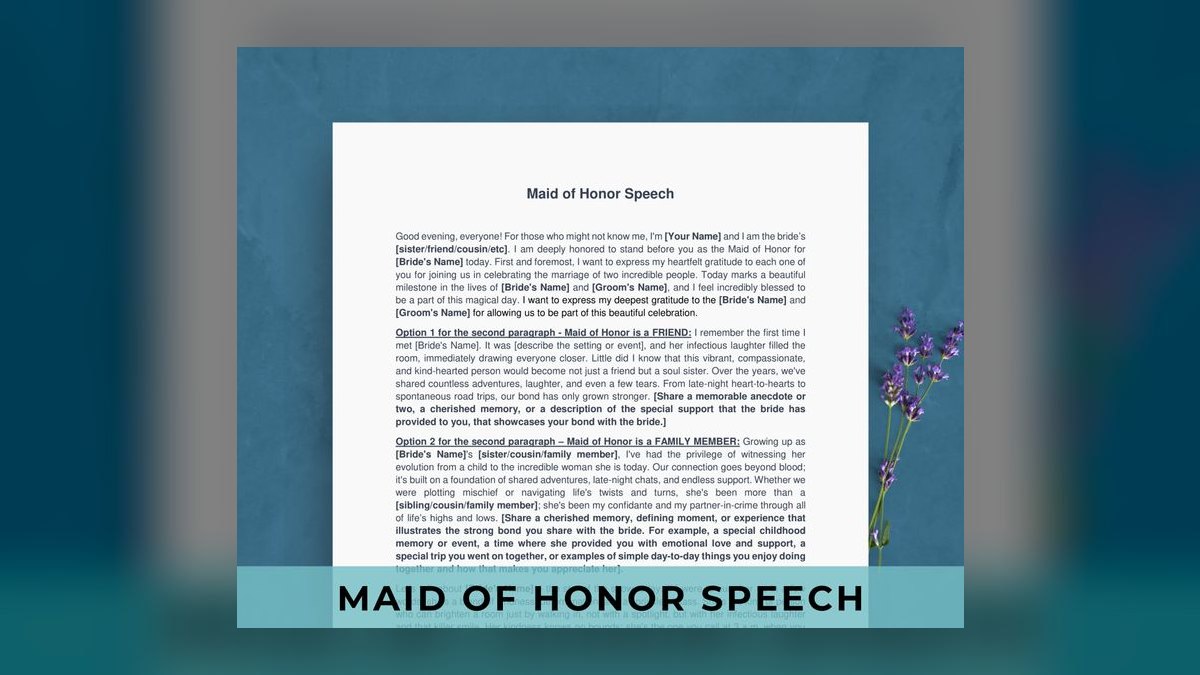
A truly emotional maid of honor speech comes from sharing a specific, heartfelt memory that highlights your unique bond with the bride, followed by a sincere expression of your joy for her and her partner. Avoid generic compliments; instead, focus on a vulnerable or funny moment that shows her growth or character, then tie it to the love you see in her relationship. The goal is not to force tears, but to speak from a place of genuine love, which naturally moves people. The most powerful speeches are built on a deliberate emotional arc that guides the audience from laughter to tenderness, creating a shared experience that feels authentic rather than scripted.
What Makes a Maid of Honor Speech Genuinely Emotional?
The difference between a speech that earns polite applause and one that leaves the room in tears often comes down to specificity. Generic compliments like "she's the best friend anyone could ask for" don't land because they could apply to anyone. Instead, the most moving speeches anchor themselves in a single, vivid memory that reveals something true about the bride's character. For example, instead of saying "she's always been there for me," you might share the time she drove two hours at midnight after a breakup, showed up with your favorite takeout, and didn't say a word — just sat with you until you fell asleep. That one image does more emotional work than a dozen abstract statements.
The structure of an emotional speech follows a predictable pattern: it begins with warmth and a touch of humor to put the room at ease, then transitions into a deeper reflection on the bride's character and the couple's love. The most important pivot point is the moment you introduce the groom. This is where you shift from celebrating the bride as an individual to celebrating the partnership. A line like "And then she met [groom], and I watched her become more of herself — not less" signals to everyone that this is a love story worth investing in. The audience leans in because they recognize the truth in that observation.
How Do You Structure the Emotional Arc of a Wedding Speech?
The emotional arc of a maid of honor speech should feel like a gentle wave — rising, cresting, and then settling into a warm conclusion. The first 30 seconds should establish your relationship to the bride and give the room a reason to trust you. This is where you share a small, affectionate detail about your history together, like the number of years you've been friends or a shared inside joke that's universally understandable. Keep this section light; you want the audience relaxed before you take them deeper.
The middle section is the heart of the speech. This is where you share a memory that reveals something meaningful about the bride's character — her loyalty, her kindness, her resilience. The key is to choose a moment that shows her growth or her capacity for love, not just a funny story. For instance, you might recall how she handled a difficult time in her life with grace, or how she showed up for someone else in a way that made you proud to know her. This sets up the transition to the couple, where you connect her qualities to why she and her partner work so well together.
The final section should be direct and intimate. Address the groom with a genuine message about how he's cared for her, then turn to the bride with a few words that make her feel seen. The toast itself should be short — three to five words that capture the essence of what you've said. "To a love that makes us all braver" or "To the real thing" gives the room something simple to hold onto.
What Delivery Techniques Amplify Emotional Impact?
Even the most beautifully written speech can fall flat if delivered poorly. The difference between a speech that makes people cry and one that feels awkward often comes down to three choices: pacing, eye contact, and the pause. Most speakers rush through emotional moments because they're nervous, but slowing down by 30% from your natural speaking speed gives the room time to feel. When you hit a line you know will land — like "and then she met [groom]" — stop completely for two full seconds. That silence is where the emotion happens; it signals that what you're about to say matters.
Eye contact should shift between three points: the bride during intimate moments, the groom when you include him, and the room for universal truths. When you look at the bride during a memory, hold her gaze for a full sentence. That sustained connection signals that this is real, not rehearsed. When you address the room, scan slowly, making brief contact with individuals rather than sweeping over heads. The pause before your final toast is your most powerful tool — take a breath, count to three silently, and then lift your glass. That breath tells everyone to prepare for something meaningful.
What Common Mistakes Kill the Emotional Moment?
Three mistakes can turn a tear-jerking speech into an awkward one, and they're all preventable. First, inside jokes without context. That story about the time you got locked in a bathroom at a cousin's wedding might be hilarious to you, but if the room doesn't know the setup, it falls flat. If you must include an inside joke, give the room a 10-second setup so they can laugh with you, not at you. Better yet, save inside jokes for the rehearsal dinner and keep the wedding speech universally accessible.
Second, negative or backhanded compliments. Never mention exes, past struggles, or "I wasn't sure about him at first" unless you immediately and genuinely pivot to why you were wrong. Even then, it's risky. The room is there to celebrate, not to be reminded of doubt. If you want to acknowledge a rocky start, frame it as growth: "I watched them navigate something hard, and it made me believe even more in what they have." Third, reading the entire speech from your phone. Paper is better because it doesn't have notifications or glare. The best approach is to write the speech, practice until you know the flow, and then bring a single index card with bullet points. That way you're speaking to the room, not reading at them.
How Do You Tailor the Speech to the Relationship?
The length and tone of your speech should match the nature of your relationship with the bride. For a sister you've known your whole life, you can draw on deeper, more formative memories — the childhood bedroom, the family vacations, the way she protected you from a bully. For a best friend you've known for a shorter time, focus on the moments that solidified your bond, like the trip where you first realized she was family, not just a friend. The key is to choose stories that are true to your specific connection, not generic.
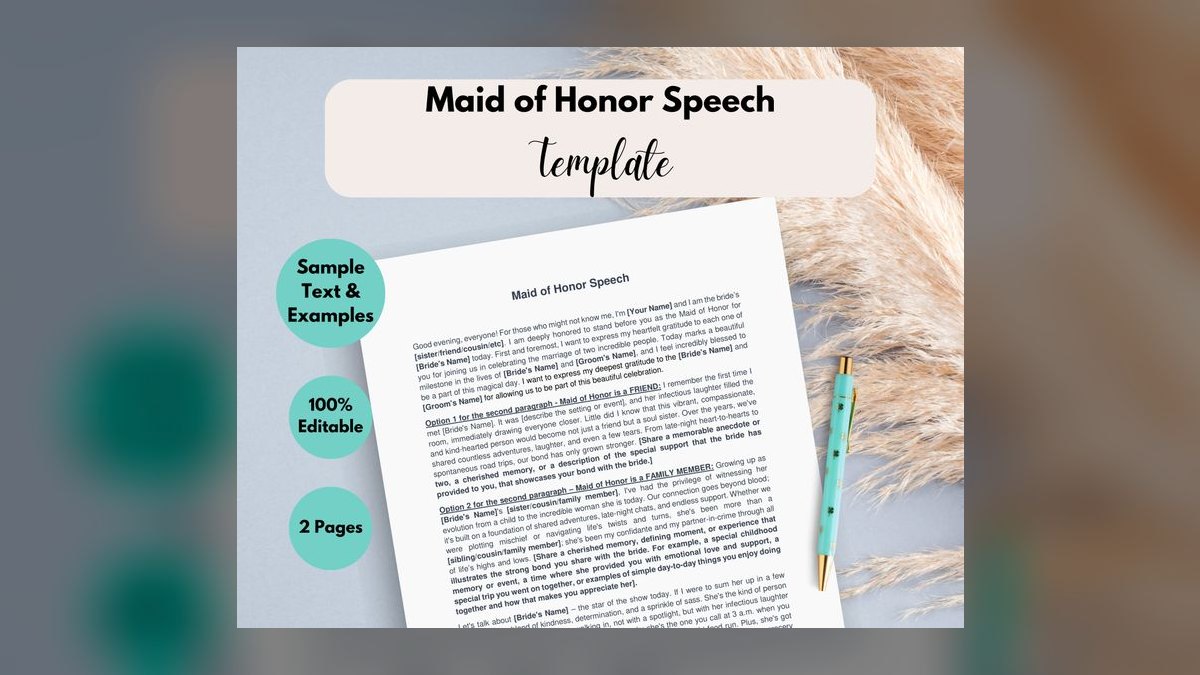
For a 2-minute short version, keep the opening laugh, the pivot to the groom, and the toast. Cut the childhood callback and the direct message to the groom. A shorter version might sound like: "I'm [name], [bride]'s [sister/best friend] for [number] years. For years I watched her love everyone around her completely, and I worried whether anyone would love her back the same way. Then she met [groom] — and she became more herself, not less. That's how I knew. [Bride], you're the bravest person I know. To [bride] and [groom]. Cheers." This version lands the emotional beat without the extended storytelling.
For a lighter, less tearful version, lead with a second joke and trade the heaviest line. Instead of "And quietly, I worried whether anyone would ever give it back to her," say: "And I figured whoever ended up with her had better be ready, because she comes with a [sister/best friend] who does background checks." Then still land the "more herself, not less" turn — it earns warmth without requiring a flood.
What Should You Practice Before the Big Day?
Practice aloud at least five times before the wedding. Read it in the shower, in the car, or in front of a mirror. Time yourself to ensure you're within 3 to 5 minutes. Pay attention to where you naturally pause and where you rush. Mark those spots on your note card so you remember to slow down. Practice the line "And then she met [groom]" with a full two-second pause afterward — this is the most important moment in the speech, and it needs to feel intentional, not accidental.
Record yourself on your phone and listen back. You'll notice where your voice wavers or where you sound like you're reading. Adjust those sections until they sound natural. If you're nervous about crying, practice delivering the speech while feeling emotional. Let yourself cry during practice so you know what it feels like and can plan how to handle it — pause, take a sip of water, smile, and continue. The audience isn't looking for perfection; they're looking for authenticity. For more delivery tips, see our guide on how to deliver a wedding speech with confidence.

Related questions
How do I start a maid of honor speech without being awkward?
Open with a warm greeting and a brief, genuine compliment about the couple or the wedding day. A simple line like "I've never seen [bride] this happy" or a short, heartfelt memory of your friendship works well — it sets a sincere tone without forcing a joke.
What should I avoid saying in a maid of honor speech?
Avoid inside jokes without context, negative or backhanded compliments, and any mention of exes or past relationship struggles. Also avoid reading the entire speech from your phone — use note cards or paper instead.
How can I make my maid of honor speech funny but still emotional?
Lead with a light, relatable memory that gets a laugh, then pivot to a deeper reflection on the bride's character and the couple's love. The humor should come from affection, not sarcasm, and should serve as a bridge to the emotional core.
What if I forget my speech during the wedding?
Take a breath, smile, and glance at your note card. If you've practiced the flow, you'll remember the next bullet point. The pause will feel longer to you than to the audience, and they'll be rooting for you.
How do I handle crying during the speech?
Pause, take a sip of water, and smile. Let the tears show — vulnerability makes the speech more moving. You can even acknowledge it with a line like "Okay, I'm absolutely going to cry" to release the tension.
Can I use a template for my maid of honor speech?
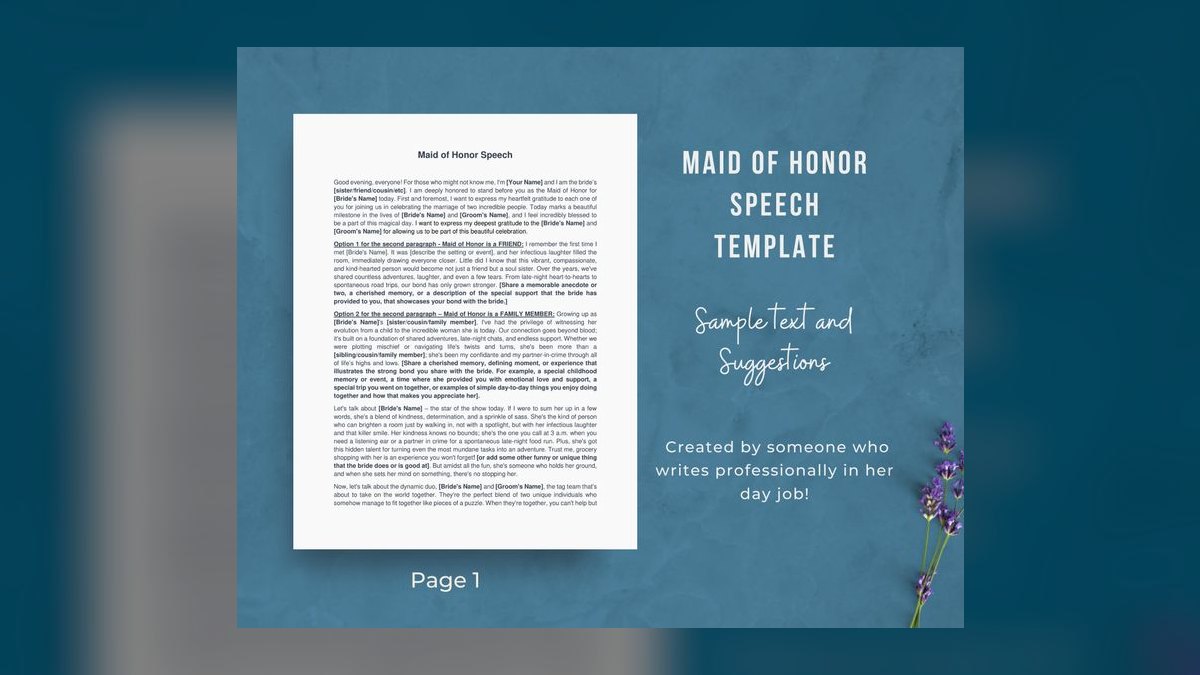
Use templates only for structure, not for word-for-word copying. The most emotional speeches are those that sound authentic to your voice and your relationship with the bride. Personalize every section with your own memories and observations.
FAQ
How long should a maid of honor speech be? Aim for 3 to 5 minutes when spoken at a natural pace. That usually translates to about 300 to 500 words — long enough to share a meaningful story or two, but short enough to keep guests engaged and avoid rambling.
What’s the best way to start a maid of honor speech? Open with a warm greeting and a brief, genuine compliment about the couple or the wedding day. A simple line like “I’ve never seen [bride] this happy” or a short, heartfelt memory of your friendship works well — it sets a sincere tone without forcing a joke.
Should I include inside jokes or embarrassing stories? Only if they’re universally understandable and clearly affectionate. Avoid anything that could humiliate the bride or groom — focus on sweet, funny moments that highlight their character or your bond, and keep any teasing light and loving.
How do I handle nerves while giving the speech? Practice aloud several times beforehand, and keep a printed copy or note cards with you. Take a slow breath before you start, speak to the back of the room, and remember that everyone is rooting for you — a few shaky words just make it more human.
What if I start crying and can’t continue? It’s totally fine — pause, take a sip of water, or take a breath. The audience will be moved, not bothered. You can even have a backup plan like a quick joke or a written line to glance at to help you refocus.
Can I write the speech myself or should I get help? Writing it yourself is best because it will sound authentic to your voice. But it’s okay to ask a trusted friend to review it for flow or length. Avoid copying templates word-for-word — use them only as inspiration for structure.
How do I practice the speech effectively? Practice aloud at least five times, record yourself, and listen back to identify where you rush or sound like you're reading. Mark pauses on your note card and practice the emotional pivot to the groom with a full two-second pause.
What should I do with my hands during the speech? Hold your glass in one hand and your note card in the other, or keep your hands at your sides. Avoid fidgeting with jewelry or the microphone. If you need to gesture, do it slowly and deliberately — quick movements can be distracting.
How do I end the speech on a strong note? End with a short, direct toast — three to five words works best. "To a love that lasts" or "To the real thing" gives the room something to hold onto. Lift your glass as you say "raise your glass" so everyone follows.
Can I use humor if the wedding is very formal? Yes, but keep the humor warm and appropriate for the setting. Avoid anything that could be interpreted as sarcastic or edgy. A gentle, self-deprecating joke about your own nervousness often works well in formal settings.
Sources
- Toastmasters International — Public Speaking Tips
- The Knot — Maid of Honor Speech Guide
- Brides Magazine — Emotional Wedding Toasts
- Psychology Today — Emotional Connection in Public Speaking
- Emily Post Institute — Wedding Speech Guidelines
- Harvard Business Review — Persuasive Emotional Narratives
- Real Simple — How to Give a Wedding Speech
- Martha Stewart Weddings — Maid of Honor Speech Tips
Related on PULSE
- [A Wedding Speech for a Maid of Honor](/knowledge/sp0104)
- [A 2-Minute Thank-You Speech for an Honor](/knowledge/sp0065)
- [What Makes Winston Churchill's "Their Finest Hour" a Great Speech](/knowledge/sp0240)
- [A Speech to Honor a Long-Serving Board Member](/knowledge/sp0100)
- [A Speech for a Scout Eagle Court of Honor](/knowledge/sp0215)
- [What Makes Lincoln’s Gettysburg Address a Great Speech](/knowledge/sp0230)
Read it free — or make it yours for $1.
@Kory-White- · if Venmo asks, the last 4 of my number are 2012
 pulse-speechesNelson Mandela’s I Am Prepared to Die (1964) — Key Passages and Lessons
 pulse-speechesFranklin Roosevelt’s Day of Infamy (1941) — Text, Context, and Why It Endures
 pulse-speechesA Promotion Celebration Toast for a Teammate
 pulse-speechesChief Joseph’s I Will Fight No More Forever (1877) — Text and Lessons
 pulse-speechesA Funny-but-Warm Best Man Speech
 pulse-speechesGeorge Washington’s Farewell Address (1796) — Key Passages and Lessons
 pulse-speechesJFK’s Ich bin ein Berliner (1963) — Key Passages and Lessons
 pulse-speechesLincoln’s Gettysburg Address (1863) — Text, Context, and Why It Endures
 pulse-speechesA Speech to Thank Donors at a Fundraiser
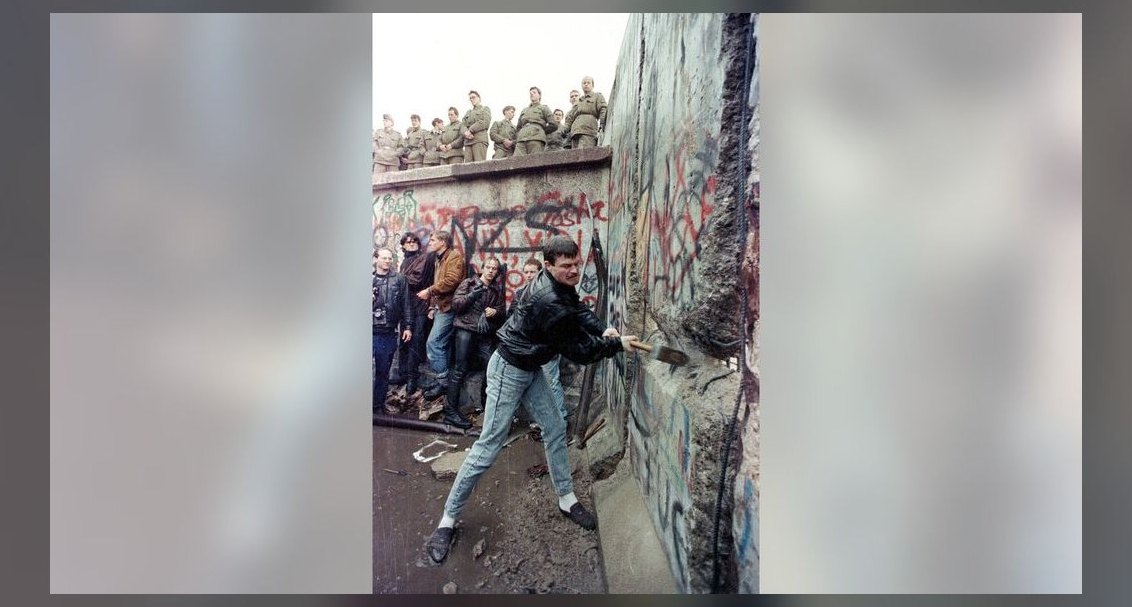 pulse-speechesReagan’s Tear Down This Wall (1987) — Key Passages and Lessons