

What Makes Reagan's "Tear Down This Wall" a Great Speech in 2027
 Curated byKory White · Fractional CRO · Maryland
Quality
Certified
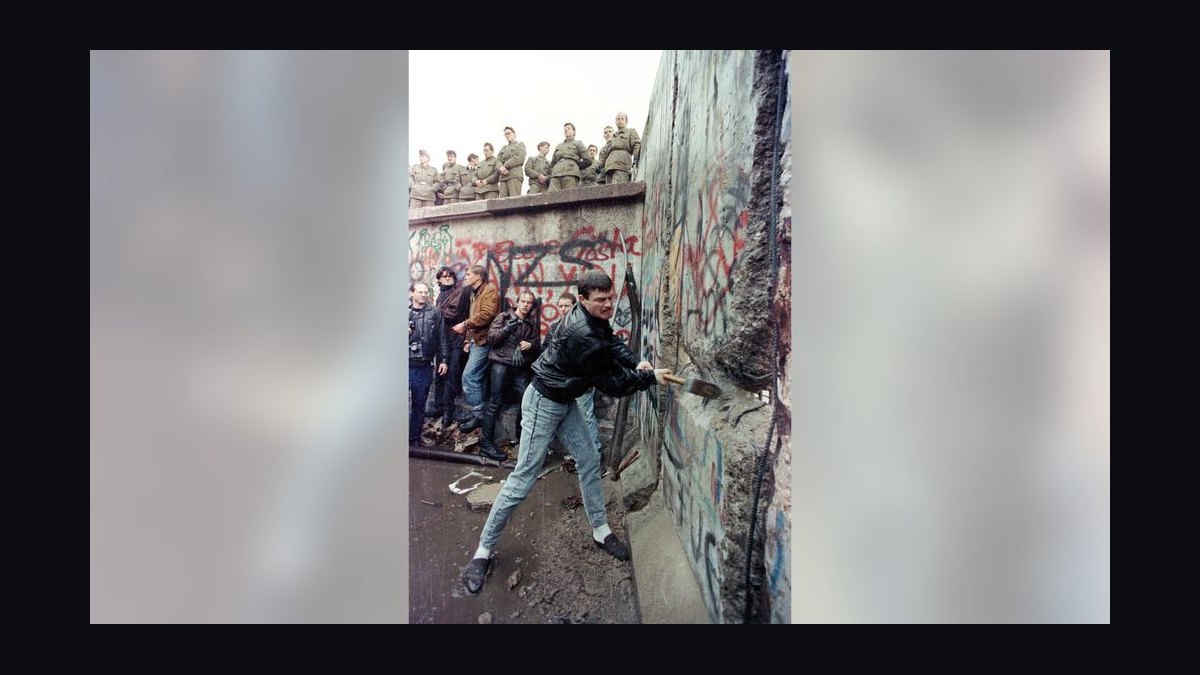
Reagan's June 1987 Brandenburg Gate address is great because it converted an abstract Cold War argument into one concrete, unavoidable demand aimed at one named person. Simple nouns, a three-beat escalation, a location that argued for him, and a prophetic close made the wall look like a choice rather than a fact.
The two speeches Reagan could have given that day
Every draft of the Brandenburg Gate address was, underneath, a choice between two fundamentally different speeches, and understanding that fork is what makes the finished version legible as craft rather than luck.
Option A — the diplomatic address. This is the speech the State Department and the National Security Council wanted, and it is the speech most presidents give at a foreign landmark. It praises the resilience of West Berlin, thanks the allies, notes progress in arms control negotiations, expresses hope that reform in the East will continue, and calls in general terms for barriers between peoples to come down. It contains no proper noun on the other side of the table. Its verbs are passive or intransitive: division *should end*, walls *should fall*, tensions *should ease*. It is entirely defensible, entirely forgettable, and — critically — it costs the Soviet leadership nothing to ignore, because there is nothing in it that can be complied with or refused. A speech with no addressable demand generates no news cycle beyond the day it is given.
Option B — the named demand. This is the version Reagan kept over sustained internal objection. It does exactly one thing the diplomatic version cannot: it identifies a single individual, Mikhail Gorbachev, and asks him for a single physical act at a single physical location. "Mr. Gorbachev, tear down this wall." Everything else in the address — the Kennedy reference, the German-language line, the extended reasonable passages about trade and air links and Berlin's recovery — exists to make that one sentence land as earned rather than belligerent.

The trade-offs were real and were argued at length internally. Option A protects the negotiating track. It avoids handing Soviet hardliners evidence that Gorbachev was being humiliated by Washington, which was the specific fear: that a public ultimatum would weaken the reformer the West actually wanted to succeed. It keeps the relationship warm heading into further summitry. Option B risks all of that in exchange for moral clarity and a line that outlives the news cycle.
What makes the finished speech a great speech, rather than merely a bold one, is that it does not actually pick one option and discard the other. It executes Option A for roughly the first three-quarters of its running time and then executes Option B at the hinge. The reasonable passages are not filler; they are the collateral Reagan posts before making the demand. By the time he names Gorbachev, he has already conceded that reform is underway, already acknowledged glasnost and perestroika, already granted that the Soviet leadership might be sincere. The demand therefore reads as a test offered in good faith rather than a taunt — which is precisely the framing that made it impossible to dismiss as mere propaganda without also dismissing the good faith.
Where the two approaches actually diverge
The divergence is not tone. Both versions can be delivered warmly. The divergence is in four structural choices, and each one is copyable.
Abstraction versus deixis. The diplomatic version relies on abstract nouns: freedom, democracy, human rights, self-determination. The kept version relies on demonstratives pointing at objects in the visual field: *this* gate, *this* wall, *this* city. Deictic language — words whose meaning depends on where the speaker is standing — cannot be lifted out of context and neutralized. An abstract call for freedom can be answered with an abstract claim that freedom already exists. A demand about a specific 3.6-meter concrete barrier standing forty meters from the podium cannot.

Unnamed system versus named actor. "The Soviet Union should" is a sentence about an institution, and institutions absorb criticism without cost. "Mr. Gorbachev, tear down this wall" assigns the decision to a person who has the authority to make it. This is the single riskiest choice in the speech and the single most productive one. It converts a geopolitical condition into a pending decision on one desk.
Conditional hedge versus escalating imperative. The diplomatic version would say the wall "may one day come down." The kept version builds a staircase: three conditional clauses ("if you seek peace… if you seek prosperity… if you seek liberalization") that establish the premises, followed by three imperatives that escalate in force — *come here to this gate*, *open this gate*, *tear down this wall*. Invitation, then request, then command. Each rung is a smaller ask than the next, so refusing the last one means having refused the first two as well.
Hope versus prophecy. The diplomatic close hopes. The kept close predicts: the wall cannot withstand faith, cannot withstand truth, cannot withstand freedom — therefore it will fall. Prophecy shifts the burden of proof. A hopeful ending asks the audience to wait; a prophetic ending asks the other side to explain why the prediction is wrong. That asymmetry is why the closing has survived as quotable material alongside the famous line.
The cost of the second column in each pair is exposure. Deixis dates a speech to a place. Naming an actor invites a personal rebuttal. Imperatives can be refused in public. Prophecy can be falsified. Reagan accepted all four exposures, and the historical outcome — the wall opened twenty-nine months later, in November 1989 — retroactively converted each exposure into an asset. That retroactive conversion is real but should not be over-read: had the wall stood another twenty years, the same choices would be taught as a cautionary tale about overreach. Greatness in rhetoric is partly a bet that pays.
How to decide which version a moment calls for
The Brandenburg choice generalizes into a decision procedure. The question is not "should I be bold?" — that framing produces recklessness. The question is whether the specific conditions that made the named demand work are present.
Applied to the actual 1987 conditions, every gate returns yes. There was a visible object. There was one person — general secretary of the Communist Party of the Soviet Union — who plausibly held the decision. Reagan had spent the preceding portion of the speech granting Soviet reforms and recalling Kennedy's 1963 visit, which bought standing. And a public refusal was survivable, because refusal would itself have been the answer to the question the speech was asking: is the liberalization real?
The fourth gate is where most modern speakers should honestly answer no, and the honest answer changes the ask rather than abandoning it. Reagan's own staircase contains the fallback: *open this gate* is a materially smaller demand than *tear down this wall*, and a speaker who cannot survive refusal of the maximal ask can stop one rung short and keep most of the rhetorical force. The staircase is not decoration; it is a graduated menu of asks, and the speaker chooses how far up to climb based on how much exposure the moment can bear.

The decision procedure also clarifies what does not matter. Length does not matter — the address runs roughly twenty-six minutes and the famous passage occupies under thirty seconds. Volume does not matter; Reagan did not shout the line. Novelty of argument does not matter; nothing in the speech's underlying case about walls and freedom was new in 1987. What matters is whether the four structural choices are made in the direction of exposure or away from it.
The concrete numbers behind each choice
Specificity is what separates analysis from admiration, so here are the figures that actually bear on why the speech works.
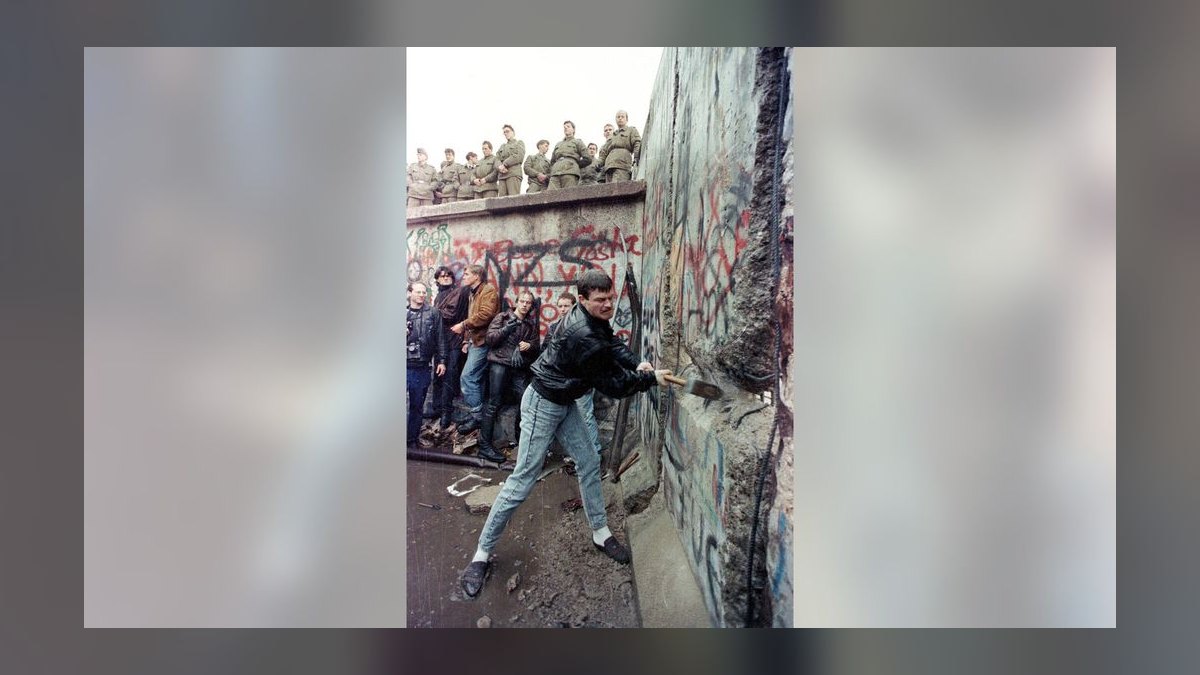
The object. The Berlin Wall went up beginning 13 August 1961 and stood until the border was opened on the night of 9 November 1989 — twenty-eight years, two months, and twenty-seven days. The final-generation barrier was concrete segments roughly 3.6 meters high topped with a smooth pipe specifically shaped to defeat handholds, backed by a death strip with watchtowers, anti-vehicle trenches, and patrol roads. The full border installation around West Berlin ran over 150 kilometers, of which roughly 43 kilometers divided the two halves of the city itself. Deaths at the Berlin border are documented in the low hundreds depending on the counting methodology used by different research institutes. These are the physical facts that make deixis available: the speaker could gesture at the thing.

The timeline. Reagan spoke on 12 June 1987. The border opened on 9 November 1989. That is twenty-nine months — the interval that gets cited whenever the speech's causal role is discussed. Kennedy's *Ich bin ein Berliner* address, which Reagan invokes at the opening, was delivered 26 June 1963, twenty-four years earlier. Gorbachev had become general secretary in March 1985, roughly twenty-seven months before the speech, which is why the speech treats his reform program as real but unfinished.
The proportions of the text. The address is roughly 2,700 words. The famous passage — the three conditionals plus the three imperatives — is under seventy words, well under three percent of the whole. This ratio is the most transferable number in the entire analysis: the memorable line is a rounding error in the runtime, and the other ninety-seven percent exists to make it survivable. Speakers who try to write a whole speech at the intensity of the climax produce something exhausting and unquotable, because a line only lands as a peak if there is a plain to peak above.
The rule of three, counted. Three conditional "if you seek" clauses. Three imperatives escalating come → open → tear down. Three things the wall cannot withstand in the close: faith, truth, freedom. Three repetitions of the direct address form "Mr. Gorbachev" in the surrounding passage. The pattern is not accidental and it is not mystical — triads are the shortest sequence that establishes a pattern and completes it in the same breath, which is why they are retained after a single hearing.
The internal fight. The line was drafted by speechwriter Peter Robinson, whose research trip to Berlin included conversations with residents that convinced him the wall was the live grievance. It was then repeatedly objected to across successive drafts by State Department and NSC staff, who proposed softer substitutes. Reagan retained it. The specific number of draft cycles is disputed across accounts, so the honest statement is: multiple rounds, sustained objection, presidential override. That override is itself part of why the speech reads as conviction — the audience cannot hear the drafting history, but they can hear that nothing has been sanded off.

The audience arithmetic. Roughly 20,000 to 45,000 people stood in front of the podium depending on which contemporaneous estimate you take. But the operative audience was larger and split three ways: West Berliners present, East Berliners within earshot or reachable by Western radio and television broadcast, and Moscow. A speech addressed to three audiences with irreconcilable relationships to the same object normally fractures. This one did not, because the object itself — the wall — meant something unambiguous to all three: to the first a scar, to the second a cage, to the third an admission. Concrete language survives audience fragmentation in a way abstract language does not.
The commercial parallel, stated plainly. The reason this address is studied outside political science departments is that the same structure governs any high-stakes ask, including the ones that move revenue: a board presentation, a renewal negotiation, a turnaround memo. The pattern — grant what is true, name the decision-maker, escalate in three rungs, close with a prediction rather than a plea — is the same whether the ask is a demolished border or a signed contract. What makes it portable is that none of it depends on the subject matter; it depends only on whether there is a visible object, a named actor, earned standing, and tolerable exposure.
Building the sequence: how the address is assembled in order
The running order is the mechanism. Rearranged, the same sentences fail.
Step one: borrow an ancestor. Opening on Kennedy's 1963 visit does three jobs in one move. It places Reagan in a lineage rather than in a personal quarrel, it reminds the crowd that American presidents have kept showing up for twenty-four years, and it implicitly frames the wall as the unfinished business of a previous generation. A speaker with no such ancestor available should substitute the nearest true equivalent — a founder, a predecessor, a prior commitment publicly made.
Step two: pay the language tax. *Es gibt nur ein Berlin* — there is only one Berlin — is a single short clause in the audience's language, and it is doing argumentative work, not decorative work. It states the speech's entire thesis in six words: the division is imposed, not natural. Speakers who insert foreign-language flourishes that carry no argument get warmth without leverage. The rule to copy is that the borrowed phrase should be the thesis, not a greeting.
Step three: be boring on purpose. The long middle passages about Berlin's postwar recovery, air links, trade, and the state of arms control negotiations are where most listeners' attention relaxes. This is deliberate and it is load-bearing. It establishes that the speaker knows the file, respects the process, and is not merely posturing. Cut this section and the demand becomes a stunt.
Step four: concede before you demand. Acknowledging glasnost and perestroika as potentially genuine is the concession that makes the demand a test rather than an insult. The logic offered to the audience is explicit: if the reforms are real, here is what real would look like. A speaker who demands without conceding first has made an accusation; a speaker who concedes first has made an invitation that happens to be non-negotiable.
Step five: lay the runway. The three conditionals are not throat-clearing. Each one names something the other side has publicly claimed to want — peace, prosperity, liberalization — so that the imperative that follows is framed as *your own stated goals imply this act*. This is the difference between an imposed demand and a derived one. Derived demands are much harder to refuse, because refusing them means disowning the stated goal.
Step six: climb, don't leap. Come → open → tear down. Physically approaching the gate, unlocking the gate, destroying the wall. Each rung is a real, distinct action with a different cost. Jumping straight to the maximal ask reads as theater; climbing reads as reasoning.
Step seven: name, then stop. The direct address is placed before the imperative — *Mr. Gorbachev,* then the verb — and Reagan's delivery pauses after the name. The pause is functional: it separates the person from the ask so that the audience registers both, and it gives the sentence a knock-on-the-door rhythm. The delivery is unhurried throughout, closer to conversation than rally, and he slows into the line rather than raising volume. Rising volume signals emotion; slowing signals certainty, and certainty is the register that matches a prophecy.

Step eight: predict. The close treats the outcome as settled. It does not ask the crowd to hope, and it does not warn that the struggle will be long. Faith, truth, freedom — three forces, one verdict. The sequencing matters here too: the prophecy only works after the demand, because a prediction delivered before an ask is a forecast, while a prediction delivered after an ask is a warning about what happens if the ask is refused.
What to rehearse. The practical sequencing advice that falls out of this: memorize the climax and the close so the eyes are free, use notes freely for the reasonable middle, and rehearse the silence after the named line at least as much as the line itself. The pause is where the audience does the work of agreeing.
Where the greatness claim is contested, honestly
A serious account has to hold two things at once: the speech is a rhetorical masterwork, and its causal contribution to the wall's fall is genuinely debated.
The skeptical case is strong on the facts. The border opened in November 1989 because of an accumulation of pressures no single address could have produced: sustained economic stagnation across the Warsaw Pact, the Hungarian decision earlier that year to open its border with Austria, mass demonstrations in Leipzig and elsewhere, the exodus through third countries, Gorbachev's decision not to intervene militarily as previous Soviet leaders had in 1953, 1956, and 1968, and — proximately — a confused East German press briefing that led to crowds at the checkpoints. Contemporaneous coverage of the 1987 speech was comparatively muted; the line's iconic status was substantially retroactive, conferred after 1989 when it began to look prophetic. Some West German commentary at the time worried it was needlessly provocative, and the official Soviet response dismissed it.

The case for significance is narrower but defensible. The speech set a public, falsifiable benchmark for what liberalization would have to include, which is a specific and unusual thing for a head of state to do. It kept the wall itself — rather than arms-control abstractions — at the center of Western framing. And it reinforced, for populations on the other side who could hear it, that the West had not quietly accepted the division as permanent.
The honest synthesis is that the speech's greatness is rhetorical and definitional rather than mechanical. It did not knock the wall down. It named the wall as the thing that had to go, in language that could not be softened, at a place where the claim was self-evidently true, addressed to the one person who could act. When the wall did fall, the speech was already there as the sentence that had said so — and a sentence positioned to be vindicated is doing something that most political language never attempts.
This is also why the speech survives as a teaching object. Its structure is fully separable from its politics. A listener who disagrees with every element of Reagan's foreign policy can still extract the four choices — deixis over abstraction, named actor over institution, escalating imperative over hedge, prophecy over hope — and apply them to an entirely different argument. Craft that outlives agreement with its author is the strongest available definition of what makes a great speech.
Related questions
Who actually wrote the famous line?
Speechwriter Peter Robinson drafted it after a research trip to Berlin where residents' frustration with the wall convinced him it was the live grievance. The line then survived repeated objection from State Department and NSC staff because Reagan personally insisted on keeping it.
Why did Reagan's own advisers want it cut?
They feared a public ultimatum would embarrass Gorbachev, strengthen Soviet hardliners against him, and jeopardize arms-control negotiations. Their proposed substitutes softened the demand into general language about opening barriers, which would have removed the named actor and the specific act.
Did the speech get much coverage in 1987?
Coverage at the time was comparatively modest, and some German commentary called it provocative. The line's iconic status grew substantially after November 1989, when the border opened and the demand looked prophetic in retrospect rather than merely combative.
How long is the speech and where does the famous line sit?
The address runs roughly 2,700 words and about twenty-six minutes. The conditionals-plus-imperatives passage is under seventy words, arriving late — after extended reasonable material about Berlin's recovery, trade, and arms talks that establishes standing for the demand.
What is the single most copyable technique?
Replace abstract nouns with demonstratives pointing at something visible: this gate, this wall, this city. Deictic language cannot be answered with an abstraction, which is why it forces a concrete response or a visible refusal.
FAQ
What makes Reagan's "Tear Down This Wall" a great speech rather than just a famous one?
Fame came from timing; greatness comes from structure. The address makes four separable choices — concrete demonstratives instead of abstract nouns, a named decision-maker instead of an institution, a three-rung escalating imperative instead of a hedge, and a prophetic close instead of a hopeful one. Each is copyable by a speaker who shares none of Reagan's politics, which is the durable test.
Was the line improvised on the day?
No. It was written into the draft and defended through multiple rounds of internal objection before delivery. What was not scripted was the pacing — the unhurried delivery and the pause after "Mr. Gorbachev" that gives the name weight — which is a delivery choice rather than a drafting one.
Did the speech cause the Berlin Wall to fall?
Historians generally treat it as one contributing factor among many, not the cause. The border opened in November 1989 after economic stagnation, Hungary opening its Austrian border, mass demonstrations, a Soviet decision not to intervene, and a confused East German press briefing. The speech's contribution was defining the benchmark, not producing the outcome.
Why does the German phrase matter so much for a six-word clause?
Because *Es gibt nur ein Berlin* is the thesis, not a greeting. It asserts that the division is imposed rather than natural, in the audience's own language, in one breath. Foreign-language insertions that carry no argument buy warmth; this one bought the premise the rest of the speech depends on.
How should a speaker adapt the structure without the world-historical stakes?
Keep the ratio and the sequence. Spend most of the runtime granting what is true and demonstrating command of the file, then make one specific ask of one named person about one visible thing, escalated in three rungs, and close by predicting the outcome rather than hoping for it. Stop one rung short if a public refusal would be unsurvivable.
Why is a triad used three separate times in the same address?
Three is the shortest sequence that sets a pattern and completes it within a single span of attention, so it survives one hearing without notes. The address uses it for the conditionals, the imperatives, and the closing forces the wall cannot withstand — which also creates a repeated rhythm the audience recognizes by the third instance.
Sources
- Ronald Reagan Presidential Library and Museum
- Miller Center, University of Virginia — Presidential Speeches
- American Rhetoric — Top 100 Speeches
- C-SPAN Video Library
- History.com — Berlin Wall
- BBC History
- Stiftung Berliner Mauer (Berlin Wall Foundation)
- U.S. National Archives
- PBS — American Experience
- Deutsche Welle
Related on PULSE
- Reagan’s Tear Down This Wall (1987) — Key Passages and Lessons
- What Makes Winston Churchill's "Their Finest Hour" a Great Speech
- What Makes Lincoln’s Gettysburg Address a Great Speech
- What Makes FDR’s “Nothing to Fear” a Great Speech
- What Makes Susan B. Anthony's "On Women's Right to Vote" a Great Speech
- What Makes Steve Jobs’ Stanford Commencement a Great Speech
This page will be disappearing soon. Save it to your device for $1 — or read it free while it is here.
@Kory-White- · if Venmo asks, the last 4 of my number are 2012
This page is gone.
This one is off the shelf now. $1 keeps it on your phone for good — the whole page, pictures and diagrams included.
 pulse-speechesA Speech for a Layoff Announcement with Compassion
 pulse-speechesWhat Makes Maya Angelou’s “On the Pulse of Morning” a Great Speech in 2027
 pulse-speechesWhat Makes David Foster Wallace’s “This Is Water” a Great Speech in 2027
 pulse-speechesA Wedding Speech for a Small Backyard Wedding
 pulse-speechesA Wedding Speech for a Surprise Wedding
 pulse-speechesA Speech for an Employee of the Year
 pulse-speechesA Speech for an IPO Celebration
 pulse-speechesWhat Makes Patrick Henry’s “Give Me Liberty” a Great Speech in 2027
 pulse-speechesHow to Write a Heartfelt Eulogy When You're Grieving in 2027
 pulse-speechesA Speech for a Mentor Recognition