
Reagan’s Tear Down This Wall (1987) — Key Passages and Lessons
 Curated byKory White · Fractional CRO · Maryland
 PULSEKNOWLEDGE LIBRARY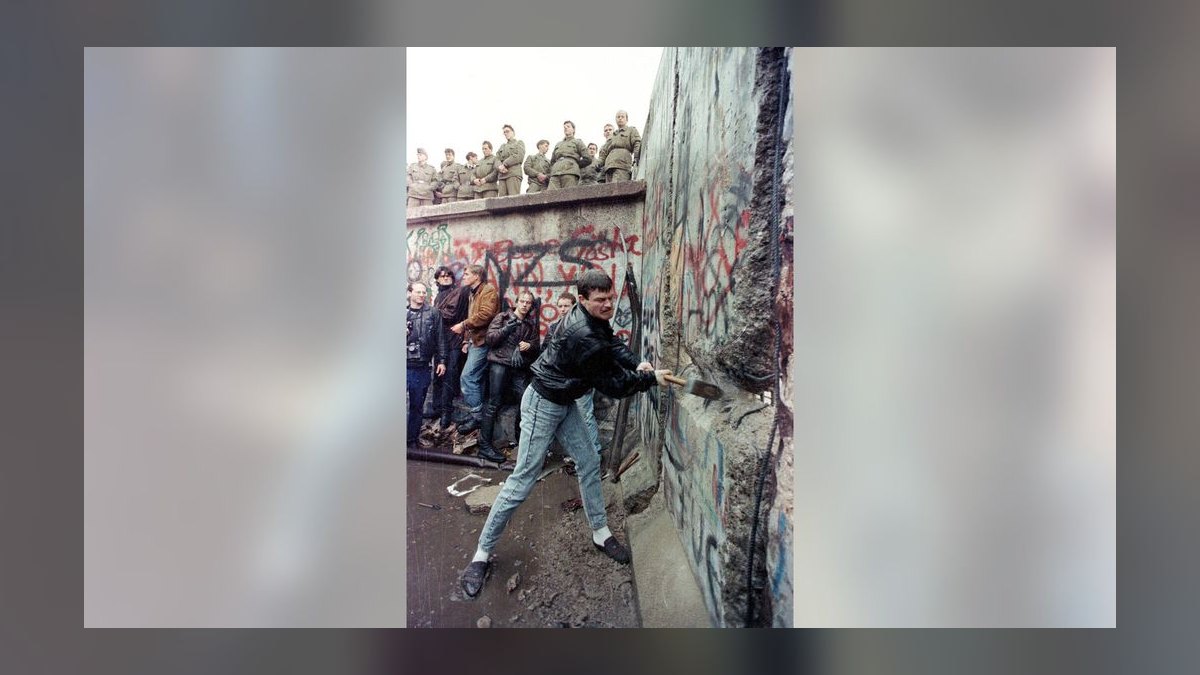
In his 1987 speech at the Brandenburg Gate, President Ronald Reagan directly challenged Soviet leader Mikhail Gorbachev to "tear down this wall," a demand for the demolition of the Berlin Wall. The key passage is a moral and political call for freedom, not a negotiation, and its lesson is that clear, principled language can pressure authoritarian regimes. The speech's impact is debated, but it is widely seen as a symbolic turning point that captured the West's resolve during the Cold War. Reagan's bold rhetoric, delivered at the physical site of division, transformed a diplomatic address into a lasting emblem of the fight for liberty.
The speech’s most famous line was nearly cut. Several of Reagan’s senior State Department and National Security Council advisers thought directly challenging Gorbachev to tear down the Wall was reckless and would embarrass a leader the administration was trying to work with. Drafts went back and forth, the line kept getting struck, and Reagan kept putting it back. He delivered it as written. Two years later the Wall fell, and the moment was recast as one of the defining images of the Cold War’s end.
What Was the Historical Context of Reagan’s 1987 Brandenburg Gate Speech?
On June 12, 1987, President Ronald Reagan stood at the Brandenburg Gate in West Berlin, with the Berlin Wall directly behind him, and delivered a speech marking the city’s 750th anniversary. The Cold War was thawing — Soviet leader Mikhail Gorbachev had launched the reforms known as glasnost and perestroika — but Germany was still split, and the Wall remained the most physical symbol of that division. Families had been separated for a generation; people had been shot trying to cross. The speech was a deliberate use of setting and timing, capitalizing on Gorbachev’s reformist rhetoric to demand concrete action. Reagan’s address was part of a broader strategy to push for liberalization while maintaining strong Western alliances, and it came at a moment when U.S.-Soviet relations were in flux, with arms control talks ongoing and tensions still high over regional conflicts.
The immediate backdrop included growing protests in East Germany and other Soviet bloc countries, where citizens were increasingly calling for reforms. Reagan’s speech aimed to amplify these voices and signal that the West would not accept the status quo of a divided Europe. The choice of Berlin, a city that had been a flashpoint of the Cold War, was intentional: it allowed Reagan to use the Wall itself as a prop for his argument. For more on how leaders use physical settings to amplify their messages, see What Makes Reagan's "Tear Down This Wall" a Great Speech.

What Were the Key Passages and Rhetorical Techniques in the Speech?
The full address runs roughly ~26 minutes (~2,700 words). The speech is more than its famous sentence, but a few short excerpts carry its argument. Reagan plants the speech in the lived reality of the divided city with: “Behind me stands a wall that encircles the free sectors of this city, part of a vast system of barriers that divides the entire continent of Europe.” He then pivots directly to the Soviet leader, offering reform a test: “There is one sign the Soviets can make that would be unmistakable, that would advance dramatically the cause of freedom and peace.” The famous line itself, which his advisers tried to remove, is: “General Secretary Gorbachev, if you seek peace, if you seek prosperity for the Soviet Union and Eastern Europe, if you seek liberalization: Come here to this gate! Mr. Gorbachev, open this gate! Mr. Gorbachev, tear down this wall!” He reframes freedom as the engine of progress, noting: “In the 1950s, Khrushchev predicted: 'We will bury you.' But in the West today, we see a free world that has achieved a level of prosperity and well-being unprecedented in all human history.”
Reagan used direct address and imperative language, breaking diplomatic convention by speaking to a foreign leader as if he were in the room. This created a sense of moral urgency and personal accountability. He framed the Wall not as a geopolitical barrier but as a symbol of human oppression, contrasting “the ashes of totalitarianism” with “the fresh air of freedom.” The repetition and parallelism — “Come here to this gate! Mr. Gorbachev, open this gate! Mr. Gorbachev, tear down this wall!” — built emotional intensity using the rule of three, with the hardest demand placed last. Reagan also wove in concrete, relatable imagery, mentioning families separated by concrete, workers unable to visit relatives, and the Wall’s “scar” across the city, making abstract Cold War tensions feel personal. These techniques transformed a diplomatic speech into a cultural touchstone. For more on how Reagan’s communication style evolved, see Ronald Reagan’s A Time for Choosing (1964) — Key Passages and Lessons.
How Did the Speech’s Immediate Aftermath and Global Reaction Unfold?
Reagan’s “Tear Down This Wall” challenge did not trigger an instant policy shift from the Soviet Union. In fact, Soviet leader Mikhail Gorbachev publicly dismissed the speech as “nothing new” and a “provocative” Cold War relic. However, the speech’s immediate impact was felt most acutely in divided Germany. West Berliners flooded the streets in celebration, while East German authorities tightened border controls and increased surveillance in the days following. Internationally, the speech was initially met with mixed reviews — some Western European leaders worried it would undermine ongoing arms control negotiations, while U.S. allies like British Prime Minister Margaret Thatcher praised its clarity. The true measure of its impact came two years later, when the Wall actually fell in November 1989. By then, Reagan’s words had become a rallying cry for East German protesters, who chanted the phrase during Monday demonstrations in Leipzig and other cities. The speech’s legacy grew exponentially after the Wall’s collapse, transforming from a diplomatic gamble into a prophetic moment that historians now cite as a turning point in Cold War rhetoric.
The speech also had a lasting effect on U.S. foreign policy discourse, reinforcing the value of moral clarity in international relations. It became a template for later presidential addresses that sought to frame conflicts in terms of freedom versus tyranny, influencing speeches on Iraq, Afghanistan, and broader democracy promotion efforts. The debate over the speech’s immediate versus long-term impact continues, but its role in shaping public expectations of leadership remains undisputed. For further reading on how speeches can reshape political narratives, see Reagan’s Challenger Address (1986) — Text and Why It Endures.
Why Does the Speech Endure as a Rhetorical Masterpiece?
The speech endures because it fused a physical setting, a single concrete demand, and a precise sense of timing into one moment. Reagan did not ask for “an end to division” in the abstract. He pointed at a specific wall, in a specific city, and named the specific man who could remove it. The demand was something you could picture being carried out. The structure builds toward that demand rather than opening with it. Reagan spends much of the speech establishing the Wall as a moral fact and praising West Berlin’s endurance, so that by the time he says “tear down this wall,” the line feels like a conclusion the whole speech has been earning. The famous repetition — “Mr. Gorbachev” three times, each clause sharper than the last — is built on the rule of three, with the hardest demand placed last where it lands hardest.
The choice to name Gorbachev directly is what gives the line its charge. Most diplomatic rhetoric is addressed to no one in particular precisely so that no one is cornered. Reagan did the opposite: he put a single human being on the spot, in public, with the Wall as the backdrop. That was the gamble his advisers feared, and it is exactly why the moment is remembered. It matters that the speech was not, at the time, treated as historic. Coverage was modest, and the Wall did not fall because of a sentence. But when it did fall in 1989, the line became the caption for the event — proof that a demand made concrete, in the right place, can outlive the caution of the people who wanted it removed. The speech’s rhetorical techniques have been studied in communication and leadership courses worldwide, offering lessons in timing, directness, and the power of symbolic action.
What Lessons Can Modern Leaders and Communicators Learn from This Speech?
Reagan’s speech offers several actionable lessons for leaders today. Timing and location matter enormously. Delivering the challenge directly at the Wall, with the Brandenburg Gate as a backdrop, gave the words symbolic weight no White House podium could match. Modern leaders should consider where and when they deliver key messages — physical context amplifies meaning. Clarity beats caution. Reagan’s advisors had debated removing the “tear down this wall” line, fearing it was too confrontational. Reagan insisted, understanding that a memorable, unambiguous demand would outlast diplomatic hedging. In today’s information-saturated world, clear, bold statements cut through noise. Speak to your audience’s values, not just their interests. Reagan didn’t argue about trade balances or military parity; he appealed to freedom, dignity, and human connection. Leaders who connect with core human values create messages that resonate beyond their immediate context. Be willing to be misunderstood in the short term for long-term impact. The speech was criticized as reckless by some at the time, but its historical vindication shows that principled stands often outlast tactical criticism. Use concrete, visual language. “Tear down this wall” is a simple, actionable image — unlike vague calls for “improved relations” or “constructive dialogue.” Leaders who translate complex issues into vivid, specific demands make their vision unforgettable and mobilizing. For more on how other leaders have used similar techniques, see Theodore Roosevelt’s The Strenuous Life (1899) — Key Passages and Lessons.
How Does the Speech Compare to Other Iconic Cold War Addresses?
Reagan’s Brandenburg Gate speech stands alongside other iconic Cold War addresses but is distinct in its directness and use of setting. John F. Kennedy’s 1963 “Ich bin ein Berliner” speech also used Berlin as a backdrop to express solidarity, but it was more about reassurance than demand. Kennedy said, “All free men, wherever they may live, are citizens of Berlin,” emphasizing unity against Soviet pressure. In contrast, Reagan issued a specific command to the Soviet leader, shifting from solidarity to confrontation. Winston Churchill’s 1946 “Iron Curtain” speech in Fulton, Missouri, warned of Soviet expansion but did not name a specific Soviet leader or demand a concrete action. Reagan’s speech uniquely combined a physical prop (the Wall), a named adversary (Gorbachev), and a measurable ask (tear it down). This combination created a moment that was both timeless and historically specific, allowing it to be replayed and reinterpreted long after the Cold War ended. The speech also differs from later addresses like George W. Bush’s 2001 speech to Congress after 9/11, which also used direct language but targeted non-state actors rather than a single leader. Reagan’s approach remains a benchmark for leaders seeking to use rhetoric to shift geopolitical momentum.
Related questions
How did Reagan’s speech impact U.S.-Soviet relations?
The speech initially strained relations as Soviet officials dismissed it as inflammatory, but it reinforced Western resolve and added moral pressure on Gorbachev, contributing to later arms control agreements and the broader thaw that led to the Wall’s fall.
What was the role of the Berlin Wall in Cold War symbolism?
The Berlin Wall was the most potent physical symbol of Cold War division, representing the Iron Curtain and the suppression of freedom in Eastern Europe, making it a powerful target for Reagan’s rhetorical challenge.
How did Reagan’s advisers try to change the speech?
Senior State Department and National Security Council advisers repeatedly tried to remove the "tear down this wall" line, fearing it would embarrass Gorbachev and undermine diplomatic negotiations, but Reagan insisted on keeping it.
What other speeches did Reagan give about the Cold War?
Reagan delivered several major Cold War speeches, including his 1983 "Evil Empire" address and his 1986 Challenger speech, each using different rhetorical strategies to frame the conflict as a moral struggle between freedom and tyranny.
How is the speech taught in communication courses today?
The speech is studied for its use of setting, direct address, the rule of three, and concrete imagery, serving as a case study in how to structure a persuasive argument that builds to a memorable climax.
FAQ
Was the "Tear down this wall" line actually in the speech draft from the start? Yes, Reagan personally pushed for that phrase despite pushback from State Department advisors who worried it was too provocative. The line remained in the final version delivered at the Brandenburg Gate, though it was not the centerpiece of the original draft.
Did the speech directly cause the fall of the Berlin Wall? No single speech caused the Wall’s collapse. The fall in November 1989 resulted from a complex mix of Soviet economic stagnation, peaceful protests across Eastern Europe, and Gorbachev’s reforms. Reagan’s speech amplified moral pressure but was one factor among many.
How long did Reagan speak at the Berlin Wall that day? The entire address lasted about 20 minutes. The famous "tear down this wall" challenge came roughly 12 minutes into the speech, after Reagan discussed broader Western values and the division of Europe.
Was the speech well-received by West Germans at the time? Reactions were mixed. Many West Germans appreciated the solidarity, but some politicians and media criticized the directness as needlessly confrontational. Public opinion polls at the time showed support for Reagan’s stance, though not universally enthusiastic.
Did the Soviet Union officially respond to the speech? Yes, Soviet officials dismissed it as "inflammatory" and "war-mongering" in state media. However, behind the scenes, the speech added to internal debates about the sustainability of Soviet control in Eastern Europe, though no immediate policy changes followed.
Are there any lesser-known passages from the speech that are still relevant today? Yes, Reagan’s broader themes about freedom, democracy, and the dangers of totalitarianism remain widely quoted. For example, his call for "liberalization" and "openness" in the Soviet system, and his emphasis on human rights, are often cited in discussions about authoritarian regimes today.
How did Reagan’s background as an actor influence his speech delivery? Reagan’s acting training gave him a strong sense of timing, tone, and visual framing, allowing him to use the Brandenburg Gate backdrop and his pauses effectively to heighten the dramatic impact of his demands.
What was the reaction of East German citizens to the speech? East Germans heard the speech through Western media broadcasts, and it inspired many protesters who later chanted "tear down this wall" during demonstrations, linking Reagan’s words to their own calls for freedom.
Why is the speech considered a turning point in Cold War rhetoric? It shifted from defensive solidarity to an offensive demand for change, using moral clarity and direct confrontation to challenge the legitimacy of Soviet control, influencing how later presidents talked about authoritarian regimes.
How does the speech compare to modern political speeches? Modern speeches often use similar techniques of direct address and concrete imagery, but few achieve the same combination of setting, timing, and historical impact, making Reagan’s address a benchmark for effective political communication.
Sources
- The Ronald Reagan Presidential Foundation and Library
- U.S. National Archives
- The Miller Center (University of Virginia)
- C-SPAN Video Archives
- The Cold War Museum
- The New York Times Archives
- American Rhetoric (Online Speech Bank)
- History.com (Berlin Wall)
- BBC History (Cold War)
Related on PULSE
- [What Makes Reagan's "Tear Down This Wall" a Great Speech](/knowledge/sp0238)
- [Ronald Reagan’s A Time for Choosing (1964) — Key Passages and Lessons](/knowledge/sp0033)
- [Steve Jobs’s Stanford Commencement (2005) — Key Passages and Lessons](/knowledge/sp0021)
- [Barbara Jordan’s 1976 DNC Keynote — Key Passages and Lessons](/knowledge/sp0018)
- [Demosthenes’ The Third Philippic — Key Passages and Lessons](/knowledge/sp0026)
- [Mark Antony’s Funeral Oration (Shakespeare) — Key Passages and Lessons](/knowledge/sp0028)
@Kory-White- · if Venmo asks, the last 4 of my number are 2012
 pulse-moviesTop 10 Movies on Netflix 2027
 pulse-moviesTop 10 Movies on Max 2027
 pulse-moviesTop 10 Fantasy Movies of All Time in 2027
 pulse-moviesTop 10 Documentaries of All Time in 2027
 pulse-moviesTop 10 Superhero Movies of All Time in 2027
 pulse-moviesTop 10 Romance Movies of All Time in 2027
 pulse-moviesTop 10 Westerns of All Time in 2027
 pulse-moviesTop 10 Musical Movies of All Time in 2027
 pulse-moviesTop 10 Thriller Movies of All Time in 2027
 pulse-moviesTop 10 Crime Movies of All Time in 2027