 Pulse Reviews and Analysis
What Makes Reagan's "Tear Down This Wall" a Great Speech
 Curated by Kory White · Fractional CRO, CRO Syndicate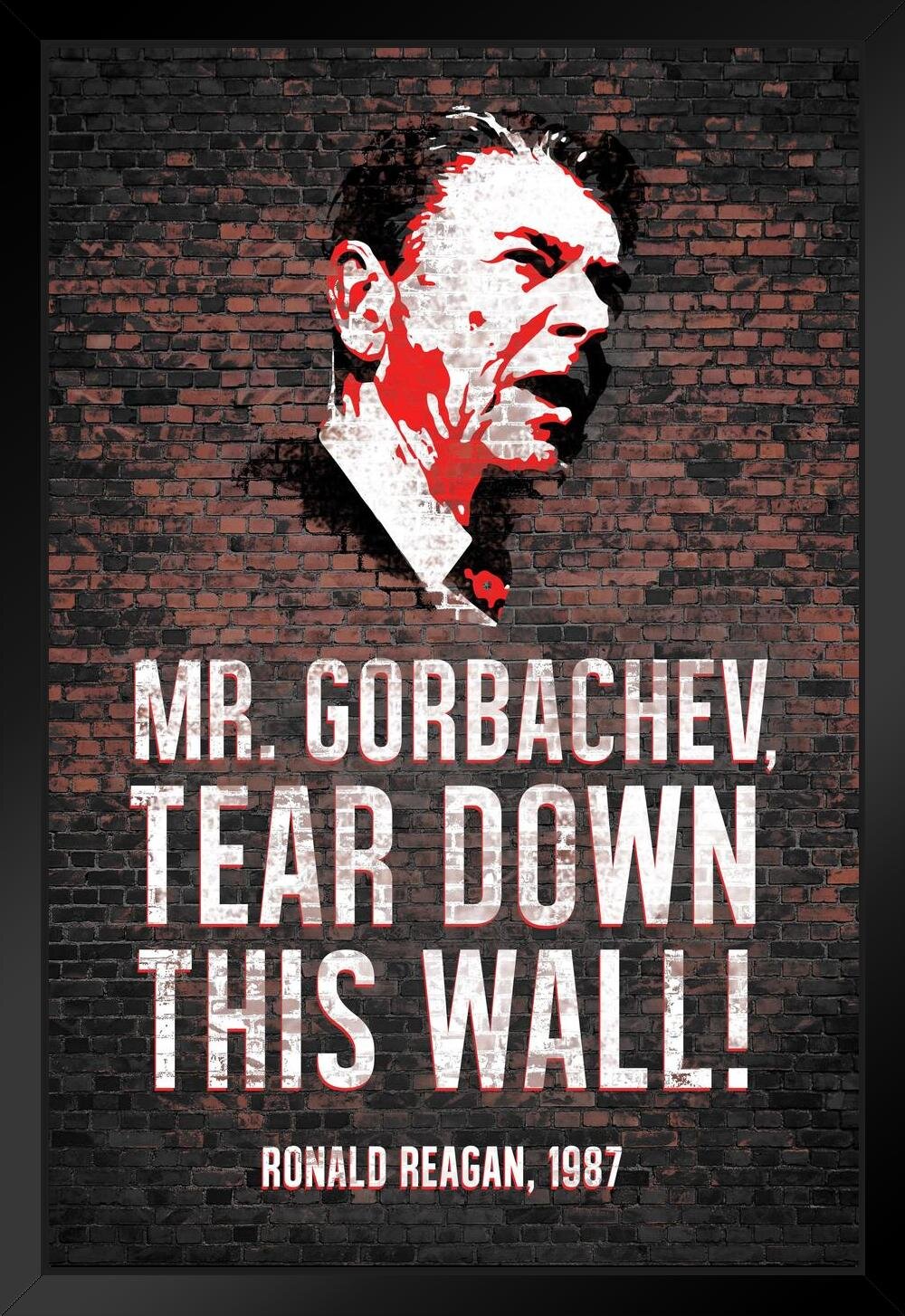
What Makes Reagan's "Tear Down This Wall" a Great Speech
The Occasion
On June 12, 1987, Ronald Reagan stood at the Brandenburg Gate in West Berlin, the Berlin Wall and its guard towers a few yards behind the bulletproof glass at his back. He was speaking to a divided city, but really to two audiences who could not stand in the same room: the West Berliners in front of him and the people on the other side of the wall who could only hear it carried on the wind and the radio.
This breakdown is for anyone studying why those four words outlived the wall itself. The address runs about ~26 minutes (~3,300 words spoken), yet history kept one sentence.
The Speech
The genius of the address is that it spends most of its length being reasonable, even diplomatic, and saves its whole charge for one demand. Reagan opens by placing himself in a long line of visitors and grounding the moment in a specific place:
Twenty-four years ago, President John F. Kennedy visited Berlin... And I join you, as I join your fellow countrymen in the West, in this firm, this unalterable belief: Es gibt nur ein Berlin. [There is only one Berlin.]
That single German line does enormous work. It is a gift to the crowd, a claim of solidarity, and a quiet argument all at once: the division is artificial, the city is one.
Then comes the turn the whole speech was built to deliver. Reagan does not hedge it, does not bury it in conditional clauses. He names the man, then makes the demand directly:
General Secretary Gorbachev, if you seek peace, if you seek prosperity for the Soviet Union and Eastern Europe, if you seek liberalization: Come here to this gate! Mr. Gorbachev, open this gate! Mr. Gorbachev, tear down this wall!
Notice the staircase. Three "if you seek" clauses build the runway, then three escalating imperatives — come, open, tear down — climb from invitation to command. The wall stops being concrete and becomes a choice somebody could make on a Tuesday afternoon.
That is the rhetorical move that made it immortal: he turned a symbol of permanence into an action verb.
What is easy to forget is how contested this passage was. Reagan's own State Department and National Security Council tried to cut "tear down this wall" repeatedly, fearing it was reckless and would embarrass Gorbachev. Reagan kept putting it back.
A speechwriter, [a specific aide], and a president who trusted the line over the experts — that tension is part of why the moment feels so deliberate rather than safe.
The address closes not on triumph but on confidence, framing the wall as already doomed:
This wall will fall. For it cannot withstand faith; it cannot withstand truth. The wall cannot withstand freedom.
He predicts the ending instead of pleading for it. Twenty-nine months later, the wall opened.
Make It Yours
If you are using this speech as a model for your own high-stakes address, here is what to borrow and what to swap:
- Swap the place name for your own concrete location. Reagan never spoke abstractly about "freedom"; he spoke about *this gate*, *this wall*, *Berlin*. Anchor your message to one physical thing your audience can see.
- Find your three-beat climb. His was *come / open / tear down*. What are your three escalating verbs?
- Prompts to spark specifics: What is the one sentence you are afraid to say plainly? Who, by name, is your demand actually aimed at? What detail (a phrase in the local language, a shared memory like [a moment your audience lived through]) would prove you actually understand the people in front of you?
Delivery Notes
Reagan's pace here is unhurried — closer to a conversation than a rally. Watch the footage and you will see he *slows down* into the famous line rather than shouting through it. Pause hard after "Mr.
Gorbachev" each time; the name lands like a knock on a door. Keep your eyes up and out, addressing the absent listener over the wall, not just the crowd in front. If the room is emotional, let the silence after your key line do the work — do not rush to fill it.
This is a speech to deliver from memory for the climax and from notes everywhere else, so your eyes are free exactly when the sentence matters.
Variations
A 30-second distillation of why it works, for a class or a toast to great oratory:
The greatest political line of the Cold War spent twenty-five minutes being polite and four words being unforgettable. Reagan stacked three invitations, then three commands, aimed them at one man by name, and turned a concrete wall into something a person could simply choose to take down. He predicted it would fall. It did.
For a longer, formal version — a lecture or essay — add the drafting history (the killed-and-restored line), the divided-audience problem, and the 1989 payoff as a three-act structure. For a lighter tone, lean on the audacity and the staff panic as a story about conviction. For a solemn tone, dwell on the people who died at the wall and the families it split, letting the demand carry their weight.
FAQ
Why is "tear down this wall" considered such a great line? Because it converts an abstraction (the Cold War, oppression) into a single concrete action aimed at a named person. It is short, declarative, and impossible to misread — and it predicts an outcome rather than merely wishing for one.
Did the speech actually cause the wall to fall? Historians debate this. The wall fell in November 1989 for many reasons — economic collapse, Gorbachev's reforms, mass protest. The speech is better understood as a defining articulation of the moment than its sole cause.
Why did Reagan's own advisers want to cut the famous line? The State Department and NSC feared it was provocative and would corner Gorbachev publicly. Reagan overruled them, reportedly saying it was the right thing to do. The tension is part of the speech's legacy.
What rhetorical techniques make it work? Anaphora ("if you seek... If you seek..."), a three-beat imperative climb, direct address by name, and the use of German to bond with the audience. Plus restraint: the big line works because the rest is measured.
Can I use this structure for a non-political speech? Yes. The bones — anchor to a concrete place, build with repetition, deliver one plain demand or wish, predict the outcome — transfer to weddings, retirements, and mission-driven talks.
Bottom Line
"Tear down this wall" endures because Reagan resisted the temptation to be safe and instead said one plain, dangerous thing clearly. The lesson for any speaker is that conviction plus concreteness beats eloquence: name the place, name the person, name the demand, and trust the silence after it.