 Pulse Reviews and Analysis
What Makes Maya Angelou’s “On the Pulse of Morning” a Great Speech
 Curated by Kory White · Fractional CRO, CRO Syndicate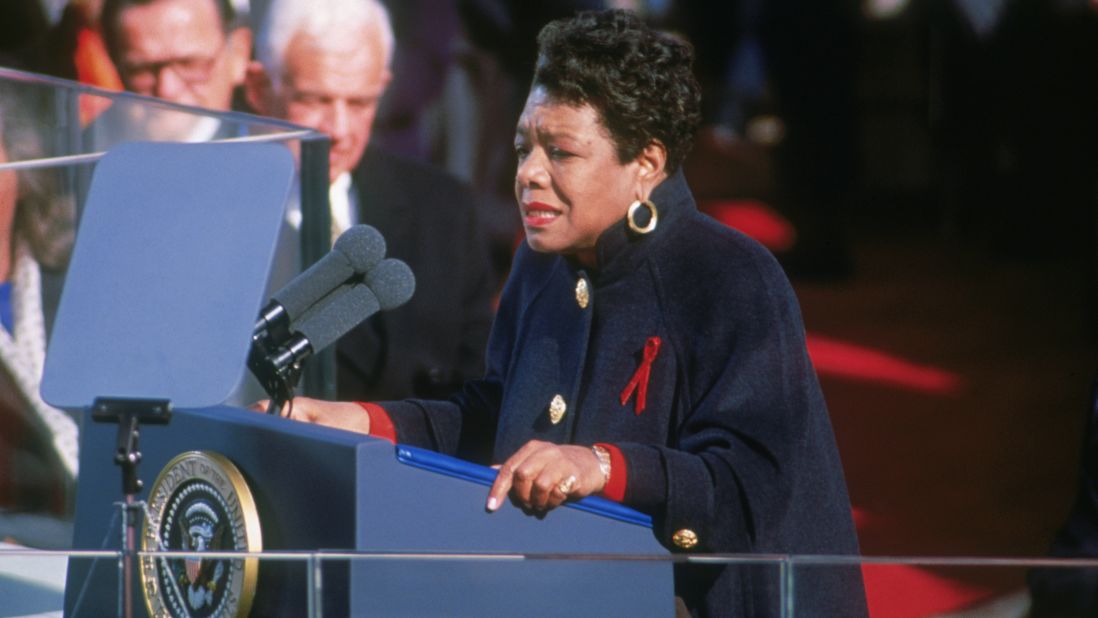
What Makes Maya Angelou's "On the Pulse of Morning" a Great Speech
The Occasion
On January 20, 1993, Maya Angelou stood at the inauguration of President Bill Clinton and read "On the Pulse of Morning" to a shivering crowd on the Capitol steps and a watching nation. She was only the second poet ever to read at a presidential inauguration, and the first Black woman.
This breakdown is for anyone who wants to understand why that reading still moves people, and how to borrow its craft for your own toast, eulogy, or address. Read aloud, the poem runs ~6 minutes (~640 words spoken), and Angelou stretched every one of them.
The Speech
A great speech rarely begins with the speaker. Angelou opens by handing the floor to the oldest witnesses in the room — the planet's own geology. She gives voice to a Rock, a River, and a Tree, and lets them speak to a young, restless humanity. That choice is the whole secret: she makes something larger than any politician the real narrator.
"A Rock, A River, A Tree / Hosts to species long since departed... / But today, the Rock cries out to us, clearly, forcefully, / Come, you may stand upon my / Back and face your distant destiny."
Notice what she is doing. She does not lecture the crowd about hope; she lets the Rock offer its back as a place to stand. The lesson is delivered as an invitation, not a command. When you write for [an occasion like a wedding or a memorial], steal this move — give the abstract feeling a physical body the listener can lean on.
Then she turns to honesty. Angelou refuses to pretend history was clean. She names the wars, the cynicism, the "bloody sear" of the past, and only then offers the morning.
"History, despite its wrenching pain, / Cannot be unlived, but if faced / With courage, need not be lived again."
That single line is the engine of the entire piece. She earns her optimism by walking straight through the dark first. A toast that only says nice things feels thin; a great one acknowledges the hard year, the lost friend, the long road, and chooses hope anyway. Make the listener trust you by admitting what they already know to be true.
She also widens the circle until no one is left out, calling the roll of peoples — the Asian, the Hispanic, the Jew, the African, the Native American, the gay, the straight, the preacher, the privileged, the homeless, the teacher. By the end the audience is not being addressed; they are being gathered.
If you are speaking to [a divided family or a mixed crowd], her generosity is the model.
The poem closes on the morning itself, on a simple human gesture that any of us can perform.
"Here, on the pulse of this new day / You may have the grace to look up and out / And into your sister's eyes, and into / Your brother's face, your country / And say simply / Very simply / With hope — / Good morning."
She lands an epic on two ordinary words. That is the discipline of a great ending: after all the rivers and centuries, she trusts a plain "Good morning" to carry the weight.
Make It Yours
- Swap her Rock, River, and Tree for a witness that fits your event: a childhood home, a kitchen table, the ocean a couple loves, a workshop a mentor built.
- Borrow the structure, not the words — open with something older and larger than you, walk through honest difficulty, gather everyone in, end small and warm.
- Prompts to spark specifics: What object in this person's life has "watched" the whole story? What hard truth is everyone thinking but no one is saying? What is the two-word gesture you want people to carry home?
Delivery Notes
Angelou read slowly, in that unmistakable measured cadence, letting silence do half the work. Match her: pace under 120 words a minute and pause fully after each image so it can land. Lift your eyes from the page on the warmest lines — her "Good morning" worked because she looked up.
If emotion rises, let your voice thicken rather than fighting it; a slight tremor reads as sincerity, not weakness. Keep the text in front of you. Even Angelou read from the page; this frees you to feel the words instead of fearing you'll forget them.
Variations
A 30-second tribute version, if you only want to invoke the poem at a gathering:
"Maya Angelou once told a whole nation that history, faced with courage, need not be lived again — and then asked us simply to look into each other's eyes and say good morning. So this morning, to [name], to all of us: good morning, and welcome to the new day."
For a longer or more formal address, read three or four stanzas of the original in full and pause between them, then offer your own three-sentence reflection so your voice and hers braid together. For a lighter tone, lean on the "Good morning" warmth and the gathering of peoples; for a solemn one, dwell on the "wrenching pain" lines and the courage they demand.
FAQ
How long should this speech be? The original runs about six minutes read at Angelou's deliberate pace. If you are quoting it inside your own remarks, keep your total under five minutes so the borrowed lines stay the centerpiece.
Can I quote the poem directly in a wedding or memorial? Yes, and a few lines go a long way. Read one stanza in full, attribute it clearly to Maya Angelou, and then connect it to the person or couple. Reading the entire poem yourself can overwhelm a personal event.
Why is "On the Pulse of Morning" considered a great speech and not just a poem? Because it was written to be heard, not read silently. Its repetition, its direct address to the crowd, and its plain closing words are speech craft — built for a living audience on a specific morning.
What is the single most useful technique to borrow? Earned hope. Angelou names the pain before she offers the morning, so her optimism feels true. Acknowledge the hard thing first; your hopeful turn will land far harder.
Do I need to memorize it to honor it? No. Angelou read from the page, and so should you. Memorization risks a flat recovery if you blank; reading lets you slow down, look up on the key lines, and stay present.
Bottom Line
"On the Pulse of Morning" endures because Angelou trusted ancient witnesses to carry her message, walked honestly through pain before reaching for hope, and gathered every kind of listener into one new day. Borrow her architecture — something larger than you, an honest reckoning, a wide welcome, a small warm ending — and your own speech will outlast the occasion.
End, as she did, on words plain enough for anyone to mean.