


A Eulogy for a Close Friend vs. a Eulogy for a Family Member: How the Tone Changes in 2027
Quality
Certified

A eulogy for a close friend leans on chosen intimacy — shared jokes, specific scenes, the person you picked. A family eulogy carries inherited history, competing grief, and an audience that already knows the stories. In 2027 the friend eulogy runs warmer and more particular; the family eulogy runs more careful, more representative, and more edited for the room.
What it is and why it matters
A eulogy is a short spoken portrait delivered at a funeral, memorial, or celebration of life — typically three to seven minutes, roughly 500 to 1,000 spoken words at a natural pace of about 130 to 150 words per minute. That much is constant regardless of who you are burying. What is not constant is the relationship contract underneath the speech, and that contract is what sets tone.
When you eulogize a close friend, you speak from a chosen bond. Nobody assigned you this person. You accumulated them over years of proximity — a dorm hallway, a shift schedule, a band, a group chat, a divorce you both survived from opposite sides of a phone call. Because the bond was elective, the audience grants you a particular kind of authority: you saw the version of this person that existed outside obligation. Friends get to say the funny thing. Friends get to describe the 2 a.m. version. Friends are, in most rooms, the ones permitted to be irreverent, because irreverence is proof of intimacy rather than disrespect.
When you eulogize a family member, you speak from an inherited bond, and inheritance complicates everything. You are not the only person in the room who owns these memories. A sibling in the second row has a competing version of the same childhood. An aunt remembers the deceased as a difficult older brother; you remember him as a patient father. Your speech is implicitly a claim about who this person was, delivered to people who were there. That is why the family eulogy tightens: you are not just remembering, you are arbitrating.
The practical consequence is that friend eulogies tend toward specificity and family eulogies tend toward representation. A friend can say "he ate cereal for dinner four nights a week and defended it like a legal position" and the room laughs, because the detail is small and harmless and true. A family speaker saying the same line risks a cousin hearing an accusation about how the household ran. Same fact, different blast radius.
Why does this matter more in 2027 than it did fifteen years ago? Three shifts. First, the audience is hybrid by default — livestreamed and recorded funerals moved from rare to routine after 2020, and most funeral homes now offer streaming as a standard line item rather than a special request. Your eulogy is heard live by forty people and later by an unknown number, including people who never met the deceased and cannot read the room's context. Second, memorial services have drifted away from strictly religious formats toward personalized "celebration of life" structures, which pushes more of the emotional work onto the speakers rather than the liturgy. Third, the raw material has changed: the deceased left behind a searchable archive — texts, photo libraries, voice notes, social posts — that both enriches your specificity and creates new consent questions about what you're allowed to read aloud.
So the honest framing is not "friend eulogies are casual and family eulogies are formal." It is that a friend eulogy is a portrait, and a family eulogy is a portrait plus a treaty. Knowing which document you're writing changes every sentence.
The step-by-step process
The drafting sequence is the same for both, but three steps diverge sharply. Work through it in this order rather than opening a blank page and hoping.

Step one: fix the assignment. Ask the person organizing the service two questions — how long, and who else is speaking. Length answers matter: three minutes is roughly 400 words, five minutes about 700, seven minutes about 950. If four people speak, assume the room's attention budget is about twenty minutes total and take your share. If you are the only speaker at a family funeral, your speech carries obligations that would otherwise be split — the biography, the acknowledgment of survivors, the thanks to caregivers.
Step two: harvest raw material, without editing. Give yourself twenty to thirty minutes and dump everything: scenes, phrases they overused, what their car smelled like, the advice they gave badly, the thing they were proud of. Aim for thirty to forty fragments. This is where the friend/family split first appears. For a friend, harvest from your own memory and the group chat. For a family member, harvest from at least two other relatives, because your version is partial by construction — you did not know your mother before you existed, and someone in that room did.
Step three: choose the spine. Pick one organizing idea, not five. Common spines: a single trait illustrated three ways; a chronology with three stations; an object that recurs; a question the person kept asking. A eulogy without a spine becomes a list, and lists do not land in a room that is crying.
Step four — this is the divergent one: run a consent and blast-radius pass. For each anecdote ask who else is implicated. A friend eulogy's risk surface is usually the deceased's family hearing a version of their son they didn't know — the wild years, the drinking, the girlfriend nobody approved of. A family eulogy's risk surface is other family members hearing themselves characterized, or hearing a family conflict aired. Estrangements, illnesses, addiction, money, and second marriages are the five recurring landmines. The rule that holds up: you may reveal the deceased's private self within limits they'd accept, but you may not reveal a living person's private self at all without asking them first.
Step five: write the open and close last. The middle is easier. Openings that work are concrete and small — a scene, a line they said, a fact. Closings that work either return to the opening image or hand the audience something to carry: what to do with the grief, what the person would want continued.
Step six: read it aloud, standing, twice, with a timer. Silent reading hides sentences that cannot be said. Mark two or three "breath points" where you can stop for four seconds if you break down. Print it in 14 to 16 point on paper — phones dim, die, and shake more visibly than paper.
mermaid flowchart TD A["Who are you to the deceased?"] --> B{"Chosen bond or inherited bond?"} B -->|"Close friend"| C["Portrait mode: warm, specific, funny"] B -->|"Family member"| D["Portrait plus treaty: careful, representative"] C --> E{"Are you the only non-family speaker?"}

E -->|"Yes"| F["Add outward line to the family"] E -->|"No"| G["Pick one lane, avoid overlap"] D --> H{"Competing versions in the room?"} H -->|"Yes"| I["Choose neutral domestic detail"] H -->|"No"| J["Freer to use pointed detail"] F --> K{"Hard circumstances of death?"} G --> K I --> K J --> K K -->|"Family has disclosed"| L["Reference once, gently, move on"] K -->|"Family has not disclosed"| M["Do not name it"] L --> N["Final pass: would a grandchild rewatching object?"] M --> N N --> O["Deliver"] </parameter> </invoke>
Applying it: suppose you are a college roommate speaking about someone who died at forty-one after a long illness. Chosen bond, so portrait mode. You are the only friend speaking, so you owe the family the outward line — tell them who he was at midnight in 2009. The illness was public in the obituary, so you may reference it once. Your best story involves a girlfriend who is now married to someone else and sitting in row four; that anecdote implicates a living person, so you ask her at the visitation or you cut it.
Now suppose you are the middle child of three speaking about your mother. Inherited bond, treaty mode. Your siblings both speak, so coordinate spines — one takes childhood, one takes her work, one takes the last two years, and nobody repeats the immigration story. Your sharpest material concerns how differently she treated the three of you. That is a competing-versions landmine; convert it to neutral domestic detail — the food, the phone habit, the way she signed cards.
A useful cross-check for either case: read your draft and ask which sentences only you could have written. If fewer than three, you have written a template rather than a eulogy. Then ask which sentences could hurt someone still breathing. If any, either get permission or cut.
Two adjacent scenarios worth planning for. If you are a friend asked to speak *because* no family member can — increasingly common with estrangement and with families who simply can't get through it — you inherit some of the treaty obligations: acknowledge survivors by name, thank caregivers, and keep the humor a notch lower than a pure friend eulogy would. And if you are family but were estranged, the honest move is brevity: two or three minutes about something true and small. Attempting a full-life portrait you don't have standing for reads as false to everyone who knows the history.
Related questions

How long should a eulogy be?
Three to five minutes for a multi-speaker service, seven at most. That is roughly 400 to 950 words at the 130 to 150 words-per-minute pace typical of emotional delivery. Time a standing read-aloud and cut about 15 percent for slower pacing on the day.
Can a eulogy be funny?
Yes, and a close friend has the widest permission to make it funny. Aim humor at habits and harmless quirks rather than character flaws or family dynamics. One or two laughs early relaxes the room and makes the sincere ending land harder.
Should a friend mention the cause of death?
Only if the family has already disclosed it publicly — in the obituary, the service program, or the officiant's remarks. Disclosure is the family's to control. If they haven't named it, speak about the person's life and let the silence stand.
What if I break down while speaking?
Plan for it. Print in 14 to 16 point, mark two breath points, keep water on the podium, and give a backup reader a copy in advance. Pausing for four seconds reads as sincerity, not failure. Nobody in that room is grading you.
How do multiple family speakers avoid repeating each other?
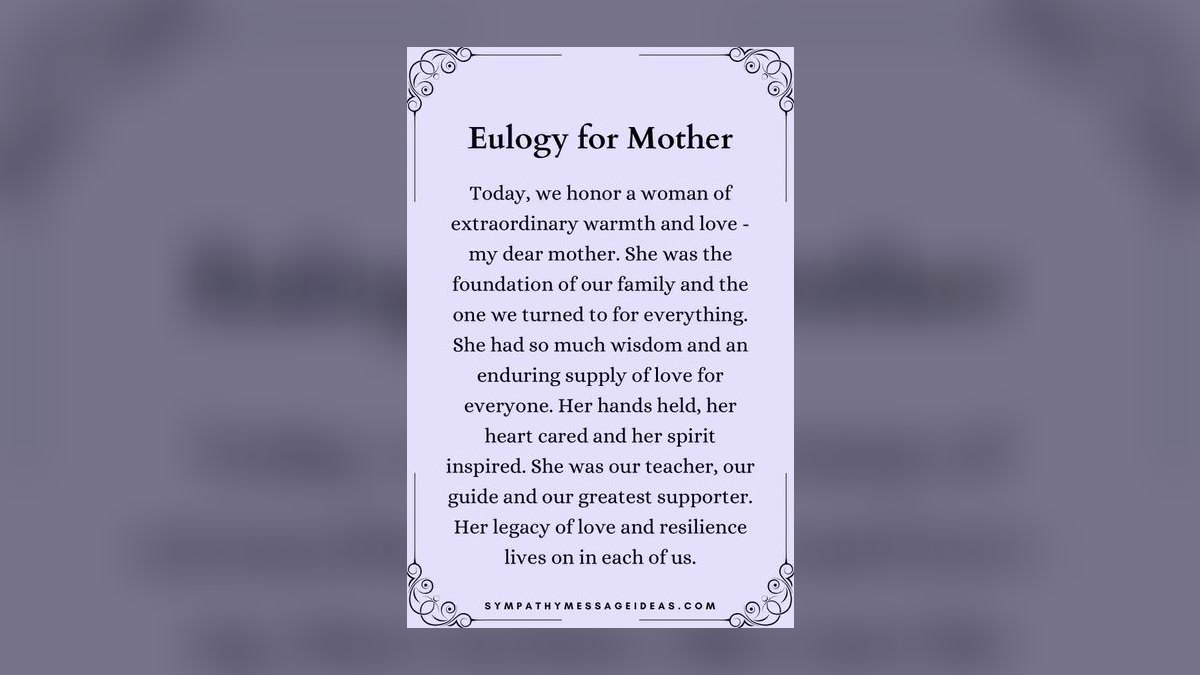
Coordinate spines in advance — one takes early life, one takes work or craft, one takes the final years — and explicitly agree who tells the famous family story. Fifteen minutes on the phone prevents the most common structural failure in family services.
FAQ
Is it disrespectful for a friend to be more informal than family speakers?
No — it is usually the point. Mourners expect different registers from different relationships, and a friend's warmth is a form of testimony that a relative cannot provide. The line is not formality; it is discretion. Be as informal as your bond was, but do not disclose things the family didn't know or wouldn't want a room to hear.
How do I write a family eulogy when my relationship with the person was complicated?
Choose brevity and specificity over completeness. Two or three minutes about one true, small thing beats a full-life portrait you can't honestly deliver. Say what you learned rather than what they did wrong, and resist the temptation to use the podium to settle anything. A room can feel a score being kept.
Can I read the last text message they sent me?
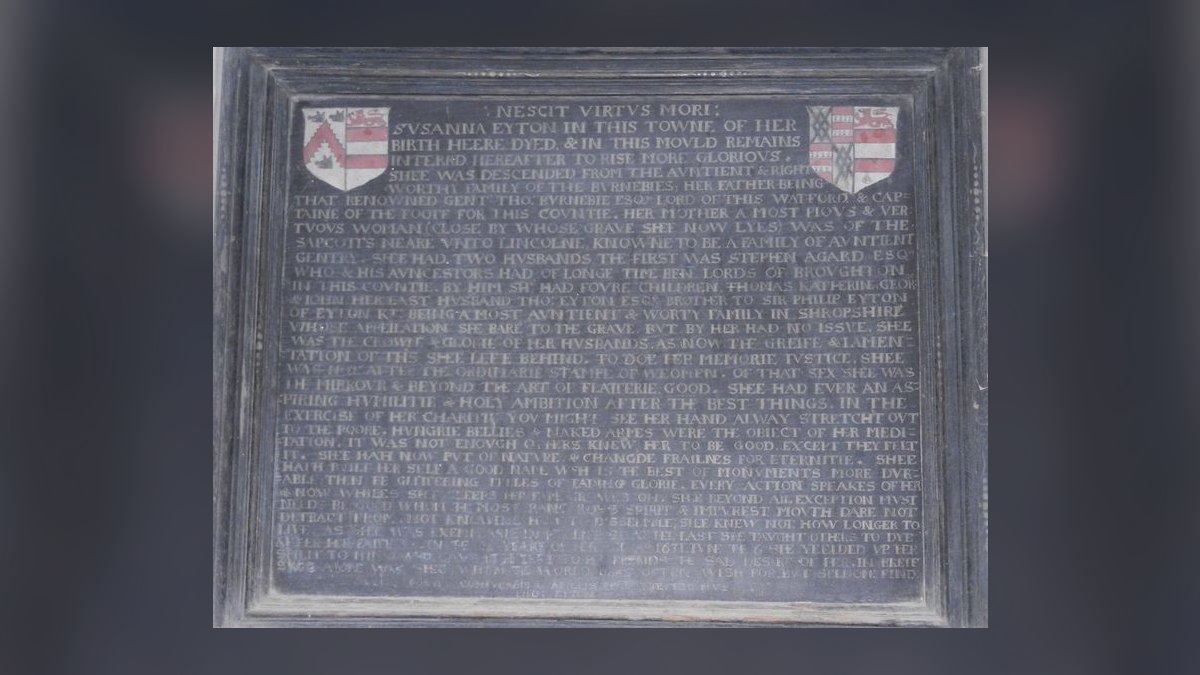
Ask the family first. A private message is intimate material, and reading it publicly can feel to relatives like a claim on the person. If the family agrees, one short line works better than a long exchange. The same caution applies to voice notes, screenshots, and any AI-assisted recreation of the person's voice.
Should I write it out fully or speak from notes?
Write it fully and bring the full text. Grief degrades working memory, and notes that feel sufficient in your kitchen often fail at the podium. Print it in large type on paper, double-spaced, with page numbers, and do not rely on a phone screen you'll be holding with unsteady hands.
What changes now that most services are streamed or recorded?
Assume permanence and a wider audience. A recorded eulogy will be watched by people who weren't there and by children later in life, so cut anything that depends entirely on being in that room. Also add one line of context before inside references — remote viewers have none of the room's shared understanding.
Who should speak if nobody in the family feels able to?
A close friend, a longtime colleague, or the officiant reading remarks the family wrote together. When a friend fills the family role, they should absorb some family obligations — naming survivors, thanking caregivers, and pulling the humor down slightly — while still delivering the intimate portrait only a friend can give.
Sources
- https://www.nfda.org/ — National Funeral Directors Association, statistics and consumer resources on funeral practices and costs
- https://www.consumer.ftc.gov/articles/shopping-funeral-services — FTC guidance on the Funeral Rule and funeral service pricing
- https://www.apa.org/topics/grief — American Psychological Association resources on grief and bereavement
- https://www.mayoclinic.org/healthy-lifestyle/end-of-life/in-depth/grief/art-20045340 — Mayo Clinic on grief and coping after a loss
- https://www.hospicefoundation.org/ — Hospice Foundation of America, bereavement and memorial guidance
- https://afsp.org/ — American Foundation for Suicide Prevention, guidance on safe language when discussing a death by suicide
- https://www.who.int/publications/i/item/9789240026629 — World Health Organization guidance on responsible reporting and language around suicide
- https://www.cdc.gov/nchs/ — CDC National Center for Health Statistics, mortality data and definitions
- https://www.merriam-webster.com/dictionary/eulogy — Merriam-Webster definition and usage history of "eulogy"
Related on PULSE
- How to write a eulogy when you barely knew the person
- Funeral program and order of service: what actually goes in it
- Speaking at a celebration of life versus a traditional funeral
- What to say to the family at a visitation when words fail
- Coordinating multiple speakers at a memorial service
- Writing an obituary versus writing a eulogy: what belongs where
This page will be disappearing soon. Save it to your device for $1 — or read it free while it is here.
@Kory-White- · if Venmo asks, the last 4 of my number are 2012
This page is gone.
This one is off the shelf now. $1 keeps it on your phone for good — the whole page, pictures and diagrams included.
 pulse-speechesA Wedding Speech for a Groomsman
 pulse-recentA Best Man Speech vs. a Groomsman Speech: Which One Are You Actually Supposed to Give in 2027
 pulse-speechesEleanor Roosevelt’s The Struggle for Human Rights (1948) — Key Passages
 pulse-speechesA Speech for a Mentor Recognition
 pulse-speechesReagan’s Challenger Address (1986) — Text and Why It Endures
 pulse-speechesFranklin Roosevelt’s Day of Infamy (1941) — Text, Context, and Why It Endures
 pulse-speechesA Eulogy for a Grandmother Who Raised You
 pulse-speechesA Speech for a Team Offsite Kickoff
 pulse-speechesA Eulogy for a Parent
 pulse-speechesA Wedding Speech for a Small Backyard Wedding