


A Top 10 List of the Most Powerful Graduation Speeches of All Time in 2027
Quality
Certified
The most Powerful Graduation Speeches of all time share three traits: one organizing image, a genuine admission of failure, and a single hard instruction. Steve Jobs at Stanford in 2005, David Foster Wallace at Kenyon in 2005, and Admiral William McRaven at Texas in 2014 top any credible List because all three survive with their occasion stripped away.
The two modes every durable graduation speech belongs to
There are only two durable modes of Graduation speech, and nearly every entry on a credible List of the most Powerful ones belongs to one or the other. Knowing which mode a speech operates in is the difference between judging it fairly and judging it against a standard it never tried to meet.
The first mode is narrative testimony. The speaker tells the story of their own life, structured so the audience extracts the lesson rather than being handed it. Steve Jobs' 2005 Stanford address is the canonical example: three stories — dropping out of Reed College and auditing calligraphy, being fired from Apple in 1985, and the pancreatic cancer diagnosis he had received the previous year — each ending in a compressed instruction ("you can't connect the dots looking forward," "the only way to do great work is to love what you do," "your time is limited"). Jobs never asserts authority; he earns it by disclosure. The Stanford text runs roughly 2,200 words, about fifteen minutes delivered, which is short for the genre — and the shortness is part of why it travels.
Admiral William H. McRaven's 2014 University of Texas at Austin address works the same way with military source material. McRaven organizes ten lessons from Navy SEAL training: make your bed, find someone to help you paddle, measure a person by the size of their heart, get over being a "sugar cookie," don't fear the circus, slide down the obstacle head first, face down the sharks, be your very best in the darkest moment, start singing when you're up to your neck in mud, and never ring the bell. Every lesson anchors to a physical, specific memory from Coronado. The speech became the book *Make Your Bed* in 2017 — itself evidence of the mode's durability, because narrative testimony converts into other formats when the stories carry the meaning.
.jpg)
The second mode is philosophical argument. Here the speaker refuses the biographical frame and instead makes a case — often an uncomfortable one — about how to live. David Foster Wallace's 2005 Kenyon College address, published posthumously as *This Is Water* in 2009, opens with a parable about two young fish who don't know what water is, then spends its length arguing that a liberal-arts education's real value is learning what to think about, and that the default setting of human consciousness is a deep, unexamined self-centeredness. Wallace's central worked example is a supermarket checkout line at the end of a long day. He does not tell the audience it will be fine. He tells them the alternative to conscious attention is a life of low-grade rage, and — in the most-quoted line — that the capital-T Truth is about "simple awareness."
The two modes trade off in predictable ways. Narrative testimony is more likely to be watched to the end, more likely to be shared, more likely to be quoted in a LinkedIn post. Philosophical argument is more likely to be reread, more likely to be assigned in a classroom, and more likely to change what someone actually does five years later. A List of the most Powerful Graduation Speeches containing only one mode has a blind spot.
A third category exists but rarely reaches the top of a List: the occasion speech, in which the speaker addresses a specific crisis or moment. These can be extraordinarily moving in the room — a president speaking to a class graduating into a war or a recession — and almost always decay, because the reader in 2027 no longer shares the context that made the room go quiet.
How to decide which mode a speech belongs to, and whether it earns a place
The decision procedure above is the one to run on any candidate speech before ranking it. It separates speeches that were Powerful in the room from speeches that are Powerful on the page — the distinction most Lists get wrong.
Start with the detachment test: strip the speech of its date, institution, and speaker name, then read the transcript cold. If it still lands, it is a candidate for the top of the List. Jobs' address survives this — the three-story structure works with no idea who is speaking until the Apple details appear. Wallace's survives almost completely; the Kenyon reference is a single sentence. A speech that collapses without its context is not disqualified, but it belongs lower.
Then apply the single-image test. Nearly every speech that outlives its occasion has one organizing image a listener can carry out of the building: water, the bed, the dots. If you cannot state the image in four words, the speech is probably a list of good advice rather than a work with a spine.
Then apply the instruction test. Powerful Speeches issue at least one imperative executable within twenty-four hours. McRaven's is literal: make your bed. Wallace's is harder but still actionable: choose what you pay attention to in the checkout line. Jobs' is the hardest and most quoted: if today were the last day of your life, would you want to do what you are about to do?
The final gate — durability — is the only one that cannot be faked, and it is why a genuinely credible List of the most Powerful Graduation Speeches of all time skews heavily toward the 1990s and 2000s rather than the last three years. A speech needs roughly a decade before you can tell whether people are still passing it around, and any List that stacks its top five with speeches from the last two seasons is measuring virality, not power.
One caveat on the detachment test: it systematically favors speakers who were already famous, because fame is what got the transcript published and indexed in the first place. Thousands of Graduation speeches at small colleges and community colleges have done more for their specific audiences than anything on a national List. The ranking measures reach and durability, not merit in the room.
The concrete numbers behind each mode
Length is the first hard number, and the one most speakers get wrong. The commencement addresses that circulate widely run short. Jobs' 2005 Stanford text is about 2,200 words. Wallace's Kenyon address is longer, roughly 3,800 words in the published transcript, and it is the exception that proves the rule — it survives at that length because it is structured as a single sustained argument rather than a sequence of topics. McRaven's 2014 Texas speech sits near 2,700 words. Practitioners writing a commencement address should target 1,800 to 2,500 words, which lands between twelve and eighteen minutes at a deliberate 140 to 150 words per minute. Speeches past twenty-two minutes lose an audience that has been sitting in academic regalia, frequently outdoors, frequently in heat.
Structure counts as a number too. The strongest Speeches use three to ten discrete units. Jobs uses exactly three stories and announces the count in his second sentence, which buys the audience's patience because they can see the end from the beginning. McRaven uses ten lessons and also announces the count. Wallace uses one argument with roughly four worked examples nested inside it. The announced-count technique is cheap and effective: telling an audience "three stories, that's it" measurably reduces the restlessness that kills the middle third of most commencement speeches.
Disclosure density is the third number. Count the sentences in which the speaker admits to failure, fear, or not knowing. In top-tier Speeches this runs high — Jobs discusses being fired, going broke conceptually, and facing a terminal diagnosis; McRaven describes failing inspections and being made a "sugar cookie"; Wallace describes his own default self-centeredness in the first person. A speech in which the speaker never admits anything is a speech the audience treats as a performance. As a working target, at least one in six paragraphs should contain a genuine admission.
Reach numbers deserve careful treatment. The Jobs Stanford video has accumulated tens of millions of views across the official Stanford channel and countless reuploads, and McRaven's Texas address similarly went viral in 2014 and produced a bestselling book. Wallace's Kenyon address had almost no video presence at all — the recording was never widely distributed — and became famous entirely through text, first via an online transcript and then through the 2009 book. That is the single most useful data point on this List: the most philosophically influential Graduation speech of the last thirty years spread with no video whatsoever. Power is not a function of production.
Quotability has a measurable shape. The lines that survive are short, imperative or declarative, and contain no proper nouns. "Stay hungry, stay foolish." "Make your bed." "This is water." Each is under five words and none requires knowing anything about the speaker. Compare that to any sentence in the same speeches that references a company, a year, or a school — none of those travel. If you are writing a speech and want one line to survive, it needs to be under about seven words and free of context.
Timing across the calendar matters practically. In the United States, the overwhelming majority of commencement ceremonies happen in a five-week window from early May through mid-June, with a smaller December cohort. That concentration means a strong speech competes with hundreds of others for attention in the same fortnight, which is part of why so few break out in any given year, and why Lists of the most Powerful Graduation Speeches of all time refresh so slowly.
Implementation details and sequencing for writing one
If the goal is not just to rank Speeches but to write one, the sequencing above reflects how the strongest examples appear to have been constructed. Work backward from the single line you want a stranger to repeat in a decade, not forward from the opening joke.
Step one: choose the mode before writing a word. Decide whether you are giving narrative testimony or making a philosophical argument. Mixing them is the most common failure — a speaker tells two personal stories, then pivots to abstract advice about the state of the world, and the audience loses the thread. Pick one lane. If your life contains a genuine reversal — a firing, an illness, a failure with consequences — take the narrative lane. If it does not, take the argument lane, because a narrative speech built on a life without reversals reads as a résumé.
Step two: write the last line first. Every top-tier speech has a landing. Jobs ends on "Stay hungry. Stay foolish," borrowed from the final issue of the *Whole Earth Catalog*, which he sets up explicitly earlier so the ending feels inevitable rather than tacked on. Write your closing seven words, then build the speech that makes them earned.
Step three: choose the organizing image and place it in the first ninety seconds. Wallace's fish parable is the first thing out of his mouth. The image is a container the audience carries for the rest of the speech; introduced late, it has nothing to hold.
Step four: build three to ten units and announce the count. Each unit should have its own concrete anchor — a place, an object, a moment with sensory detail. "I was fired" is a fact. "I was fired from the company I started, in the office I had built, by a person I hired" is a unit.
Step five: audit for disclosure. Read the draft and mark every admission. If there are fewer than three genuine ones, the speech is not yet a speech; it is a set of remarks.
Step six: cut to time, then cut again. Read the draft aloud with a timer. At 145 words per minute, a 2,200-word draft is about fifteen minutes. Cut anything that names an institution, a year, or a title without doing narrative work — those lines will not travel and they cost time.
Step seven: strip the proper nouns from the quotable lines. Do a final pass on every sentence you hope will be repeated and delete anything that requires context to parse.
The sequencing matters more than any individual step. Speakers who draft chronologically — opening joke, thanks to the president, body, uplift — produce the generic speech nobody remembers by dinner. Speakers who start from the landing and the image produce something with a shape.
One practical trade-off worth naming: the techniques that make a speech durable make it slightly worse in the room. A speech stripped of local references, institution-specific jokes, and named faculty will get fewer laughs on the day. The graduates' families want the local material. The speaker has to decide whether the speech is for the four thousand people in the stadium or the four million who might read it later, and that is a genuine trade, not a false one. The very best speeches — Jobs, McRaven — spend roughly the first minute on local warmth and then never return to it, which is a reasonable compromise.
A defensible ranking also has to state its criteria before its entries, or it is just a list of famous people. Applying the four gates above — detachment, single image, disclosure, durability — a defensible top tier includes Steve Jobs at Stanford in 2005, David Foster Wallace at Kenyon in 2005, and Admiral William McRaven at the University of Texas at Austin in 2014. These three clear every gate without argument, and the fact that two were delivered in the same year is a genuine coincidence rather than a pattern.
Below that tier, reasonable Lists diverge, and the divergence is informative. Speeches by writers tend to score high on detachment and image and low on disclosure. Speeches by athletes and military figures tend to score high on disclosure and instruction and lower on image. Speeches by sitting politicians almost always fail the detachment test, because they are written to address a moment.
The honest thing to say about ranks four through ten is that they are contested and should be. If a List presents ten speeches with the same confidence, it is overstating. A better format is a firm top three, a named set of criteria, and an explicitly unranked field below — which tells the reader how to evaluate a speech they encounter rather than just handing them ten links.
There is also a recency problem worth flagging directly. Every year produces a handful of commencement addresses that trend for a week. Almost none are on anyone's List a decade later. When evaluating a recent speech against this framework, run the first three gates, note the result, and then wait — the durability gate genuinely cannot be assessed early, and pretending otherwise is how Lists get stale.
Related questions
What makes a graduation speech go viral versus merely land well?
Virality tracks a single extractable line plus a video clip under two minutes. Landing well tracks emotional fit with the specific room. They are different outcomes: McRaven's "make your bed" clip went viral while the full address is what people actually recommend.
How long should a commencement address be?
Twelve to eighteen minutes, roughly 1,800 to 2,500 words at a 145-words-per-minute delivery pace. Past twenty-two minutes, attention collapses — audiences are seated in regalia, often outdoors, often in heat, and have already sat through the procession.
Why did "This Is Water" spread without a video?
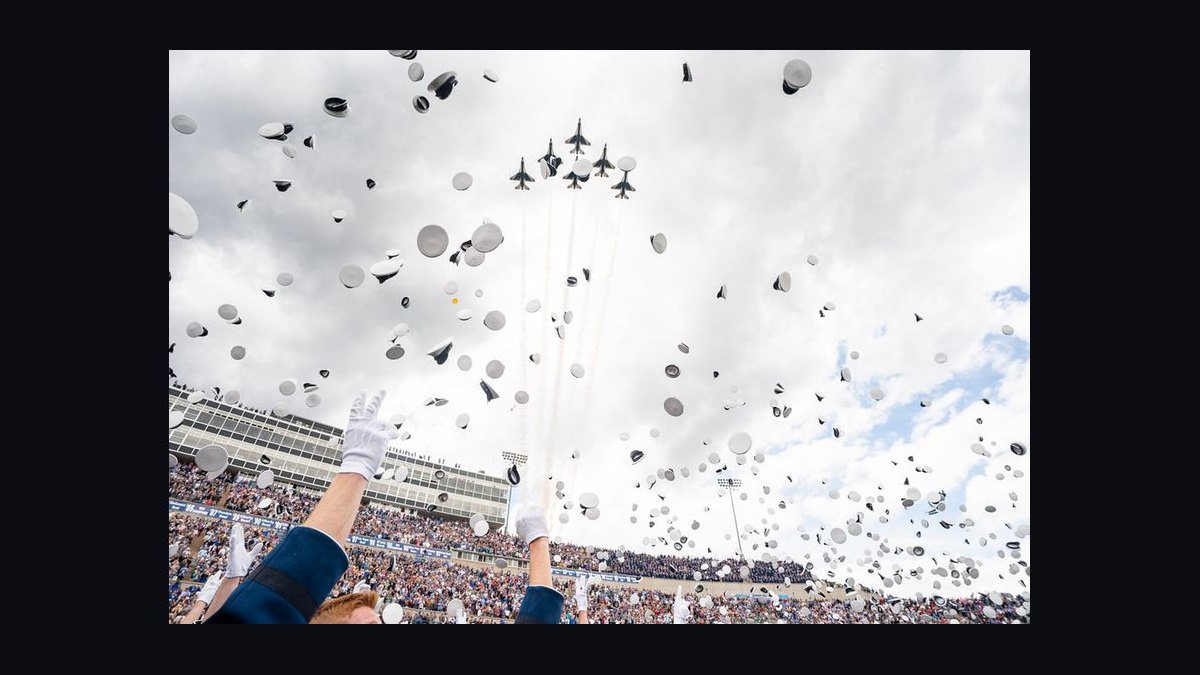
Wallace's 2005 Kenyon address was never widely distributed as video. It circulated as text online and was published as a book in 2009. That makes it the clearest evidence that argument quality, not production value, drives long-term reach.
Should a speaker use local jokes and institution references?
Sparingly, and early. Local material buys goodwill in the room but never travels. The strongest speeches spend about a minute on it up front and then commit fully to material that works for a stranger reading the transcript years later.
Can a speech by a non-famous speaker make a List like this?
Rarely, because publication and indexing follow fame, not merit. This is a real limitation of any ranking: it measures reach and durability, not the impact a speech had on the specific graduates sitting in front of it.
FAQ
Which single graduation speech is most often ranked number one?
Steve Jobs' 2005 Stanford commencement address is the most consistently top-ranked. It clears every evaluative gate: it works detached from its occasion, it has a single organizing image in the connect-the-dots metaphor, it contains three substantial admissions of failure, and it has stayed in circulation for two decades.
Is "This Is Water" actually a graduation speech?
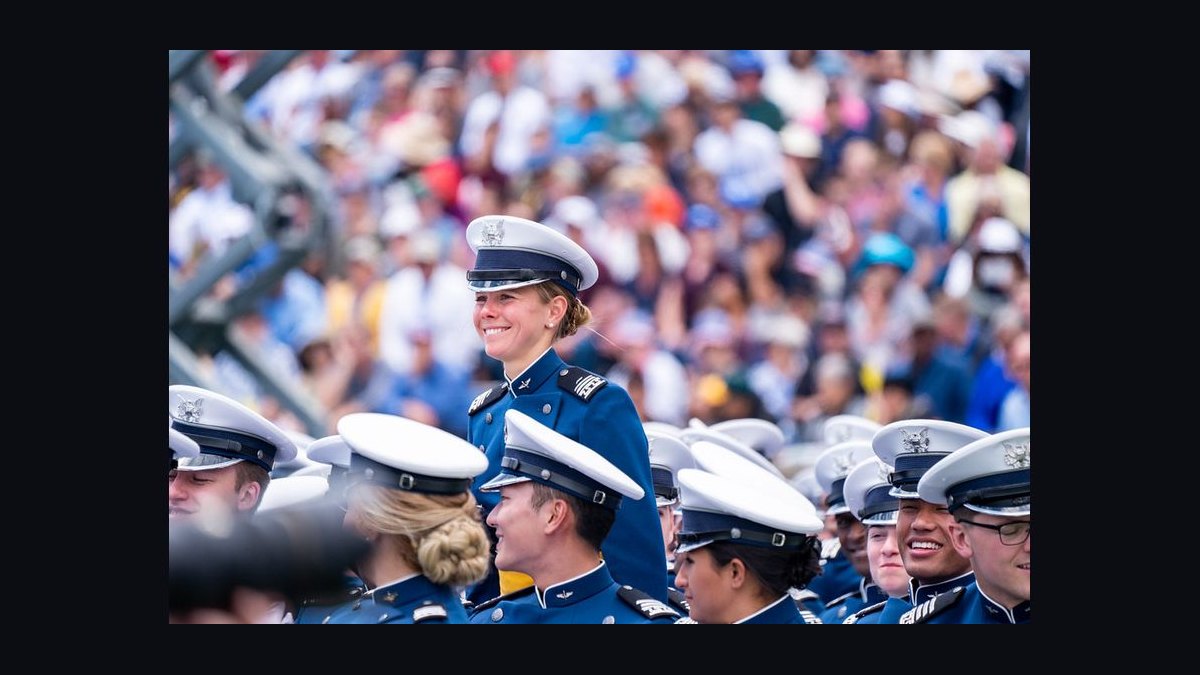
Yes. David Foster Wallace delivered it as the commencement address at Kenyon College in 2005. It was published as a standalone book in 2009 after his death. The book form is why many readers encounter it without knowing its origin as a Graduation speech.
What is the "make your bed" speech?
Admiral William H. McRaven's 2014 commencement address at the University of Texas at Austin, structured around ten lessons from Navy SEAL training. He expanded it into the book *Make Your Bed*, published in 2017. The opening lesson — make your bed every morning — became the speech's most quoted line.
How do you evaluate a speech delivered this year against historical ones?
Run the first three gates immediately: does the transcript work stripped of context, is there a single organizing image, does the speaker disclose real failure? Then wait roughly a decade for the durability gate. Any confident ranking of a speech under five years old is measuring virality.
What is the most common mistake in commencement speeches?
Mixing modes. A speaker tells personal stories, then pivots into abstract commentary about the state of the world, and the audience loses the thread. Pick narrative testimony or philosophical argument and stay in that lane for the full length.
Do the most Powerful speeches share a structural pattern?
Broadly, yes: an organizing image in the first ninety seconds, an announced count of three to ten units, at least three genuine admissions of failure, and a closing line under seven words containing no proper nouns. Not every entry hits all four, but the top tier does.
Sources
- https://news.stanford.edu/2005/06/12/youve-got-find-love-jobs-says/
- https://www.youtube.com/watch?v=UF8uR6Z6KLc
- https://bulletin-archive.kenyon.edu/x4280.html
- https://www.littlebrown.com/titles/david-foster-wallace/this-is-water/9780316068222/
- https://news.utexas.edu/2014/05/16/mcraven-urges-graduates-to-find-courage-to-change-the-world/
- https://www.grandcentralpublishing.com/titles/admiral-william-h-mcraven/make-your-bed/9781455570249/
- https://www.npr.org/series/125826778/the-best-commencement-speeches-ever
- https://www.britannica.com/biography/Steve-Jobs
- https://www.britannica.com/biography/David-Foster-Wallace
Related on PULSE
- How to structure a keynote so the middle third doesn't sag
- Why short quotable lines outlive long arguments in public speaking
- The disclosure principle: why admitting failure builds authority faster than credentials
- Writing the closing line first: reverse-engineering a talk from its landing
- Local color versus durable material: who your speech is actually for
This page will be disappearing soon. Save it to your device for $1 — or read it free while it is here.
@Kory-White- · if Venmo asks, the last 4 of my number are 2012
This page is gone.
This one is off the shelf now. $1 keeps it on your phone for good — the whole page, pictures and diagrams included.
 pulse-speechesA Speech for a School Board Meeting in 2027
 pulse-speechesA Wedding Speech for a Destination Wedding
 pulse-speechesA Speech for an IPO Celebration
 pulse-speechesFDR’s First Inaugural — Nothing to Fear (1933) — Text, Context, and Lessons
 pulse-speechesA Retirement Speech for a Factory Worker
 pulse-speechesA Welcome Toast at a Family Reunion
 pulse-speechesA Toast for a Friend’s Big Milestone
 pulse-speechesA Wedding Speech for the Father of the Groom
 pulse-speechesA Speech for a Club Induction
 pulse-speechesA Speech for a Company 10th Anniversary