


Write Your Own Wedding Speech vs. Hire a Professional Speechwriter: Which Is Worth It in 2027
Quality
Certified

For most speakers, writing your own Wedding Speech is worth it: the value comes from genuine personal voice, not polished prose, and it costs only 4–10 hours. Hiring a Professional Speechwriter makes sense when time is short, anxiety is high, or you need a public speaker's structure and pacing. Both paths can land well in 2027.
The outcome you should expect
If you write your own Wedding Speech, the outcome is a toast that sounds like you — imperfect pacing, perhaps a shaky opening line, but real specificity: the story about the groom driving four hours to bring soup, the inside joke only the bridal party understands, the moment your voice cracks because the emotion is genuine rather than scripted. Guests consistently remember detail and sincerity over polish. A self-written Speech that runs slightly long or stumbles once is still, in the vast majority of cases, received warmly, because the room is rooting for the speaker rather than grading them. The failure case is not roughness; it is blandness. A DIY speech that avoids specific stories in favor of generic praise ("she's always been there for me") lands worse than a slightly awkward one packed with real detail.
If you hire a Professional Speechwriter, the outcome shifts toward structure: a clean three-act shape (opening hook, story, toast), tighter pacing, better-placed humor, and a script built to be spoken aloud rather than read as prose. A skilled writer also knows how to trim. Most first drafts written by amateurs run 50–100% too long, and a professional cuts ruthlessly toward the 3–5 minute sweet spot. The trade-off is authenticity risk: if the Speechwriter doesn't know the couple well, the result can read as generic — "high school sweetheart" arcs and stock jokes that could apply to any Wedding. The strongest professional outcomes come from writers who interview the speaker extensively, often 60–90 minutes, and extract real anecdotes rather than inventing sentiment.
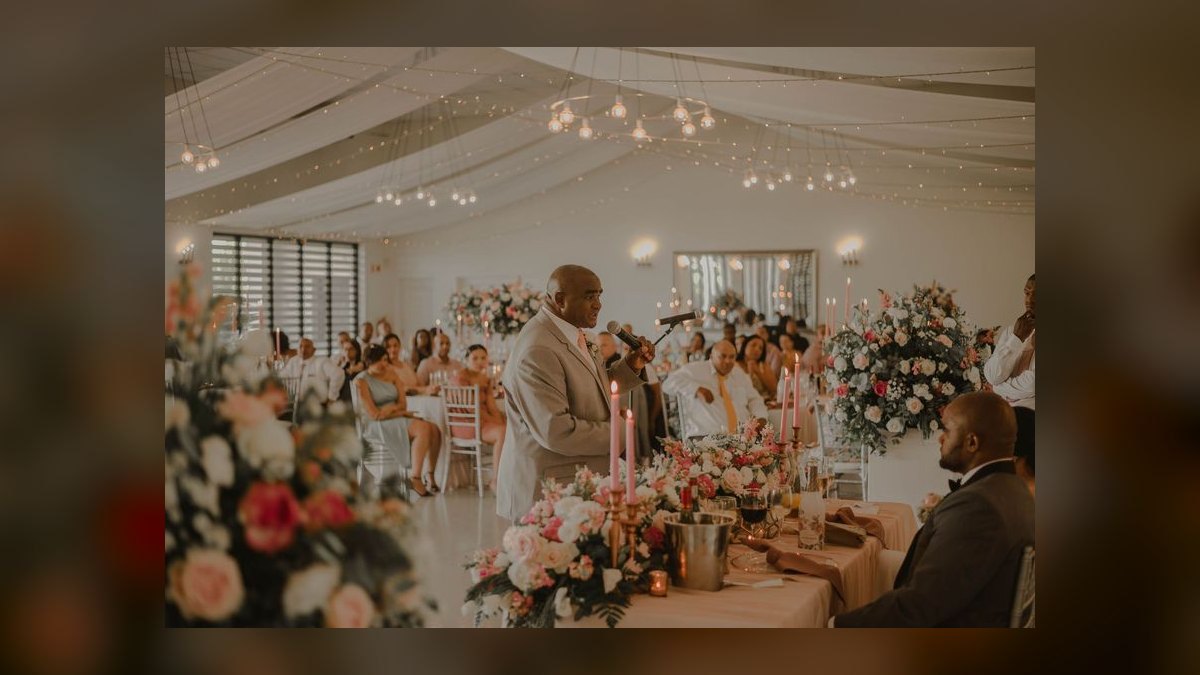
Heading into 2027, a blended middle ground is dominating: more speakers write a rough personal draft themselves, then pay a coach or editor — not a full ghostwriter — to tighten structure, fix pacing, and rehearse delivery. This hybrid preserves the authentic Wedding Speech while still buying professional polish on timing, usually at a fraction of full ghostwriting cost. The practical result is a speech that sounds like the speaker wrote it, because they did, with a professional handling the mechanics that trip up delivery.
What drives that outcome
Several concrete factors determine whether DIY or professional is the better call, and they interact rather than operating independently. Treat each as a dial, not a switch — most speakers land somewhere in the middle rather than at either extreme.
Public speaking anxiety is the single biggest driver. Someone who freezes at the thought of standing in front of 100 people benefits disproportionately from a Professional Speechwriter — not because the pro writes better jokes, but because a well-structured script with built-in pauses and cue points reduces the cognitive load of performing under stress. A speaker who has given toasts before, or who regularly presents at work, gets far less marginal value from outsourcing.
Time budget matters just as much. A maid of honor who learns her duties eight weeks out has room to draft, revise, and rehearse a personal Speech. A late-added speaker with two weeks' notice — a stepparent, a last-minute replacement — is a much stronger candidate for hiring help, simply because there is no runway to iterate solo. Below roughly three weeks, DIY quality drops sharply.
Relationship depth to the couple flips the calculus. The closer the speaker is — best man, sister, parent — the more a DIY Speech benefits from irreplaceable personal history a stranger-writer could never invent. The more distant or ceremonial the role — a family friend asked to say a few words, a work colleague — the less cost there is to outsourcing the writing.
Budget and cultural expectations round out the picture. Some Wedding traditions expect a highly formal, rhetorically structured toast, which tilts toward professional help or at least a structural template; more casual receptions tolerate, even prefer, rougher, funnier, off-the-cuff-sounding speeches. None of these factors is decisive alone — a highly anxious speaker with deep relationship history and eight weeks of runway should still write their own draft and hire only an editor.
Benchmarks and realistic ranges
Cost is the clearest benchmark. Writing your own Wedding Speech costs $0 in cash but realistically consumes 4–10 hours across brainstorming, drafting, cutting, and rehearsing. Hiring a Professional Speechwriter for a single Wedding toast typically runs $200–$800 depending on experience and how much interview time is included. Premium or celebrity-adjacent ghostwriters can charge $1,000–$2,500, though that tier is uncommon for private Weddings. A middle-ground option — a Speech coach who edits and rehearses a draft you already wrote rather than writing it from scratch — usually runs $100–$350 for a single session. This is the fastest-growing segment because it costs less than full ghostwriting while still buying the pacing benefits of professional coaching.
Turnaround time is a second useful benchmark. A Professional Speechwriter typically needs at least 2–3 weeks from initial interview to final script if revisions are included. Rushing this to under a week usually produces a noticeably more generic Speech, because there wasn't time for a real interview and a revision pass. For DIY writers, most people underestimate how long a "quick" Speech takes. Plan on writing across at least 3–4 separate sessions spread over 1–2 weeks rather than one sitting, since speeches written in a single pass tend to run long and unfocused.
Length is the benchmark speakers get wrong most often. The realistic target for any Wedding Speech, self-written or professional, is 3–5 minutes, which at a natural spoken pace of roughly 130–150 words per minute works out to about 450–750 words. Best man and maid of honor speeches can stretch to 5–7 minutes if there are multiple co-speakers splitting the toast. Parent speeches run shorter, typically 2–4 minutes. Rehearsal benchmark: read the Speech aloud, timed, at least 5–8 times before the Wedding. Most people speak 20–30% faster under the adrenaline of a live audience than they do rehearsing alone, so a Speech that clocks at 4 minutes in practice often lands closer to 3 on the day.
A final benchmark worth tracking is the ratio of story to sentiment. Strong Wedding toasts typically run roughly 60–70% concrete anecdote and 30–40% direct sentiment or toast. Speeches that invert that ratio — mostly abstract praise with one thin story — are the ones guests describe as "nice" and forget by dessert.
Risks, edge cases, and failure modes
The most common DIY failure mode is scope creep: a Speech drafted with one clear story balloons as the writer adds "just one more" anecdote, and it arrives at the reception running 8–10 minutes — long enough that guests disengage and the catering or DJ timeline gets disrupted. A second common failure is inside jokes that land for the bridal party but confuse the broader room; the fix is testing the draft on someone outside the immediate friend group before the Wedding. A third is oversharing. Reception speeches are a common place for a slightly-too-personal ex reference, an embarrassing story the couple didn't approve, or an ad-libbed addition made worse by alcohol. Any story involving an ex, past relationship drama, or something either partner might not want repeated in front of grandparents should be run past the couple, or at least the other speakers, beforehand.
The most common Professional Speechwriter failure mode is inauthenticity. Guests who know the speaker well can often tell when a toast doesn't sound like something that person would actually say, and a stilted delivery of an unfamiliar script reads worse than an imperfect personal one. A second risk is under-rehearsal: speakers sometimes treat a paid script as "done" and skip practicing it aloud, which produces flat delivery regardless of how well the words were written on the page. A third is cost surprise. $300–$800 can feel steep as one more line item on top of an already expensive Wedding, especially for a role, like a distant relative or coworker, where expectations for the toast were modest to begin with.
Edge cases worth planning for: when multiple people are speaking, best man plus maid of honor, or several groomsmen, speeches should be coordinated in advance so stories don't overlap. Nothing falls flatter than two speakers telling the same "how they met" anecdote. A last-minute replacement speaker, someone dropping out due to illness or scheduling, is one of the strongest cases for hiring a Professional on a rush basis, since there's no time to build a personal draft from scratch. For a non-native English speaker asked to give a Speech in English, or a speaker needing to weave in another language for family members, the hybrid model usually wins: write the personal content yourself, pay an editor to help with phrasing and pacing. That preserves the speaker's real voice while fixing the mechanics that trip up delivery.
One more edge case: a speaker who has never met most of the room. In that situation, the audience cannot judge authenticity, so the calculus shifts almost entirely toward structure and clarity, and a Professional Speechwriter's value rises even if the personal history is thin.
A practical rollout plan
Whichever path you choose, a fixed timeline prevents both the DIY rambling problem and the rushed-professional-script problem. Eight weeks before the Wedding, make the write-it-yourself-versus-hire decision and, if hiring, start researching two to three Professional Speechwriter candidates and request writing samples. Six weeks out, either book the chosen writer and complete the interview session, or, if going the DIY route, brainstorm and lock in three specific stories or memories to build the Speech around. Resist the urge to include more than three, since that is usually what keeps a Speech inside the 3–5 minute target.
Four weeks out, a complete first draft should exist, whether self-written or delivered by the Speechwriter, and it should go to one trusted second reader — ideally someone not in the Wedding party — for an honest gut check on tone and length. Three weeks out is the cutting pass: trim toward the word-count benchmark, remove any story that needs too much setup to land, and confirm nothing risky made it into the final draft. Two weeks out, start timed read-throughs out loud, not silent read-throughs, since speeches read in your head almost always run shorter than they do spoken. One week out, do a final rehearsal in front of at least one real person, prepare printed or index-card backups in case a phone dies or nerves cause a memory blank, and confirm final length one more time. On the Wedding day itself, eat something before speaking, keep water nearby, and have a backup copy of the Speech in a pocket. Even professionally written scripts get forgotten under the emotion of the moment.
If you are using the hybrid path, insert one extra step at the three-week mark: send your personal draft to the editor with a note on which two or three lines are non-negotiable, so the revision preserves your voice instead of flattening it into generic toast language.
Related questions
Should the best man or maid of honor write their own Speech?
In most cases, yes — the closest Wedding party roles carry the most personal history, which is the exact ingredient a Professional Speechwriter can't replicate. Reserve hiring help for structure and pacing, not the stories themselves.
How much does a Wedding Speechwriter cost in 2027?
Expect roughly $200–$800 for a full ghostwritten toast, $100–$350 for editing or coaching on a draft you already wrote, and $1,000+ only for premium or celebrity-adjacent writers, which is uncommon for private Weddings.
What is the ideal length for a Wedding toast?
Aim for 3–5 minutes, which is about 450–750 spoken words at a natural pace. Parent speeches run shorter, 2–4 minutes; multi-speaker toasts can stretch to 5–7 minutes combined.
Can AI tools replace a Professional Speechwriter?
AI drafting tools can help structure a Speech or suggest phrasing, but they can't supply real personal anecdotes. The strongest 2027 approach uses AI or a human editor only to tighten a personally written draft.
How far in advance should a Wedding Speech be written?
Start at least 6–8 weeks out. Professional Speechwriters typically need 2–3 weeks minimum for interviews and revisions; DIY writers benefit from spreading drafting across multiple sessions rather than writing it in one sitting.
FAQ
Is it rude to read a Wedding Speech from paper or cards? No — reading from printed notes or index cards is widely accepted and often preferable to an unrehearsed, unscripted ramble. Most Professional Speechwriter scripts are formatted specifically for cue cards, and a speaker glancing at notes reads as prepared rather than unprepared.
Do Professional Speechwriters attend the Wedding? Rarely. Most work is done remotely through an interview call and written revisions. The Speechwriter typically isn't present at the event, and coaching on delivery, if included, usually happens beforehand over video call rather than in person.
What should I avoid saying in a Wedding Speech, self-written or professional? Avoid ex-partner references, inside jokes that need explaining, overly personal or embarrassing stories not cleared with the couple, and anything political or divisive. When in doubt, run risky lines past the couple in advance rather than gambling on the room.
Can I combine a personal draft with professional editing instead of full ghostwriting? Yes, and this hybrid is increasingly the default in 2027. You write the personal content and stories, and a coach or editor handles structure, pacing, and trimming to the ideal length, usually for less than full ghostwriting and often in a single session.
How do I calm nerves before speaking at a Wedding reception? Rehearse out loud multiple times beforehand, keep the Speech to the 3–5 minute range so there's less to remember, have a backup printed copy, and take a slow breath before starting rather than rushing the opening line.
Is a written and rehearsed Speech better than an ad-libbed one? Almost always. Ad-libbed Wedding speeches run the highest risk of rambling, oversharing, or forgetting key names. A written and rehearsed Speech, whether self-authored or professionally drafted, consistently performs better in both length control and audience reception.
Sources
- https://www.theknot.com/content/wedding-toast-tips
- https://www.brides.com/wedding-speech-tips-5069710
- https://www.weddingwire.com/wedding-ideas/wedding-speech-tips
- https://www.toastmasters.org/resources/public-speaking-tips
- https://www.verywellmind.com/how-to-overcome-fear-of-public-speaking-3024336
- https://emilypost.com/advice/wedding-toasts
- https://hbr.org/2013/06/how-to-give-a-killer-presentation
Related on PULSE
- How much does a Professional Speechwriter cost in 2027?
- What is the ideal length for a Wedding toast?
- How to overcome public speaking anxiety before a big event
- Best man Speech vs. maid of honor Speech: what's different?
- Should you hire a Wedding planner or plan it yourself in 2027?
- How AI drafting tools are changing personal writing in 2027
This page will be disappearing soon. Save it to your device for $1 — or read it free while it is here.
@Kory-White- · if Venmo asks, the last 4 of my number are 2012
This page is gone.
This one is off the shelf now. $1 keeps it on your phone for good — the whole page, pictures and diagrams included.
 pulse-speechesA Toast for a Promotion Dinner
 pulse-speechesA Speech for a School Board Meeting in 2027
 pulse-speechesA Speech for a Ribbon-Cutting
 pulse-speechesA Gracious Farewell Speech When You Leave a Job
 pulse-speechesHow to Use the Rule of Three in a Speech in 2027
 pulse-speechesA Wedding Speech for the Father of the Groom
 pulse-speechesA Toast for a Friend’s Big Milestone
 pulse-speechesChief Joseph’s I Will Fight No More Forever (1877) — Text and Lessons
 pulse-speechesA Welcome Toast at a Family Reunion
 pulse-speechesWhat Makes FDR’s “Nothing to Fear” a Great Speech in 2027