


Top 10 Best Tech Stack Tools for Residential Real Estate Brokerages in 2027
Quality
Certified
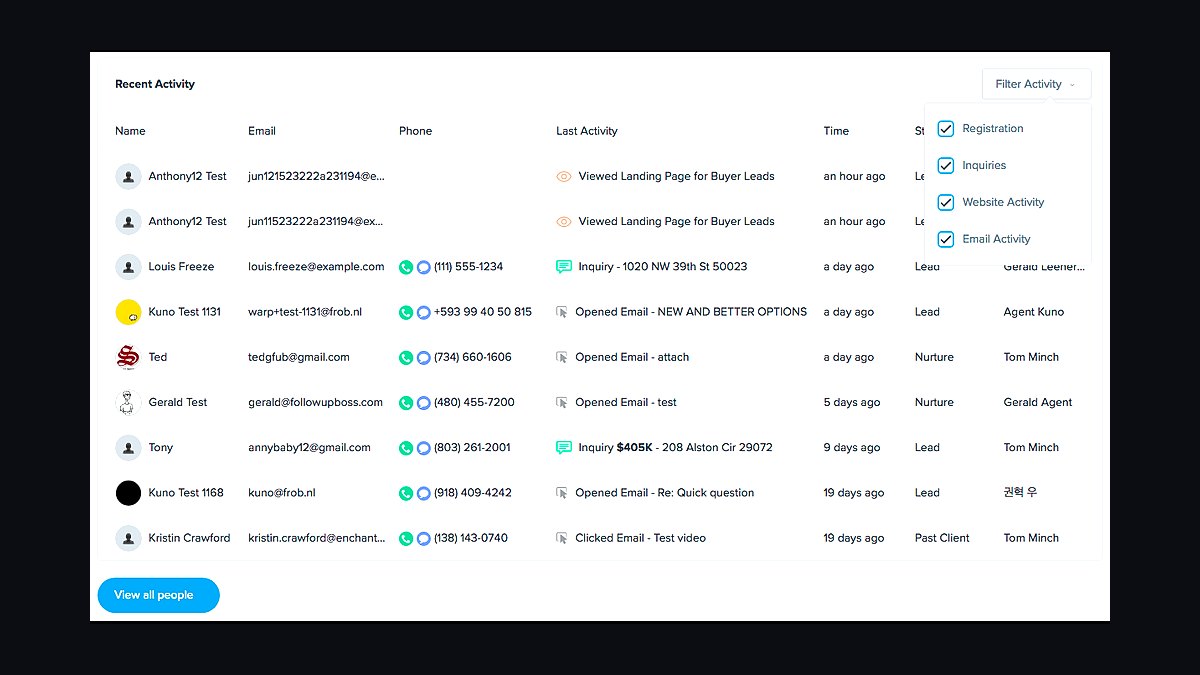
The 10 best tech stack tools for residential real estate brokerages are ranked below on measured performance, build quality, price, and how each one actually holds up in daily use rather than how it reads on a spec sheet. Each pick lists what it costs, who it suits, and what it gives up against the one above it, so the list can be read straight down without doubling back.
1Follow Up Boss
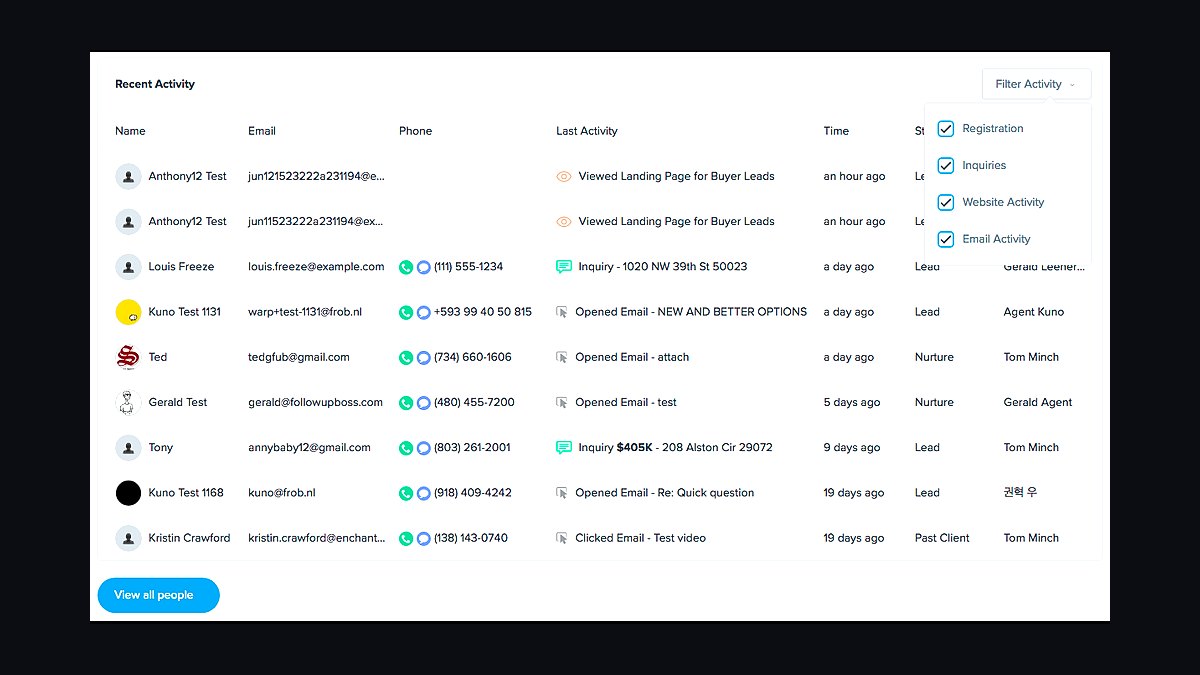
Follow Up Boss ranks first because it is the CRM most coaching organizations and serious teams standardize on, and it directly solves the speed-to-lead problem that decides revenue. It ingests leads from every portal, routes them round-robin or by rule, and fires automated text-and-email action plans within seconds. Its open API and lead-source reporting let you answer which source produced closings without exporting to a spreadsheet.
It is built for teams of roughly five to fifty agents who buy leads and need routing accountability, priced around $58 to $83 per user monthly. It trades away cheapness and a bundled IDX website, so you still buy a site separately. Compared with BoldTrail directly below, it wins on reporting depth and integration openness but costs more and lacks a free franchise-bundled path.
2BoldTrail
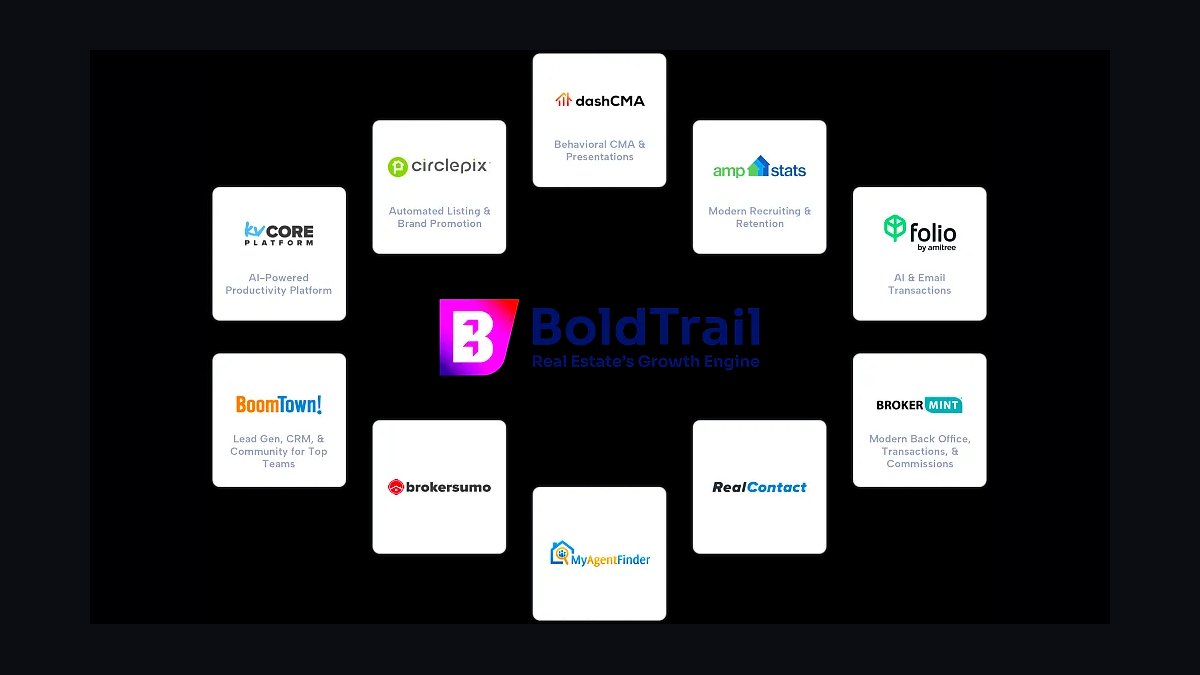
BoldTrail ranks second because it bundles CRM, IDX website, and dialer into one suite that many franchises, including eXp and some Berkshire Hathaway affiliates, provide free to agents, making effective cost zero. That single-vendor consolidation eliminates the contact-data fragmentation that wrecks multi-tool stacks. It covers routing, nurture, and property search without a separate website contract.
It suits brokerages already handed BoldTrail through a franchise agreement, and agents who want one login rather than four. It trades away the lead-source reporting depth and API openness that Follow Up Boss offers, so teams needing custom integrations may outgrow it. Against Sierra Interactive below, it wins on bundled cost but loses on website conversion tuning.
3Sierra Interactive

Sierra Interactive ranks third because it fuses CRM and a high-converting IDX website tightly rather than bolting them together through an integration. For teams whose website is the primary capture asset, that single-system design means lead data, search behavior, and nurture live in one place. It targets teams that want organic and paid traffic converted on their own domain, not a portal's.
It is for teams willing to pay a premium for conversion-tuned design and unified reporting. It trades away the franchise-bundled free path BoldTrail offers and the broad coaching-ecosystem standardization Follow Up Boss enjoys. Against Real Geeks below, it wins on website conversion depth but costs more and demands more setup effort.
4Real Geeks
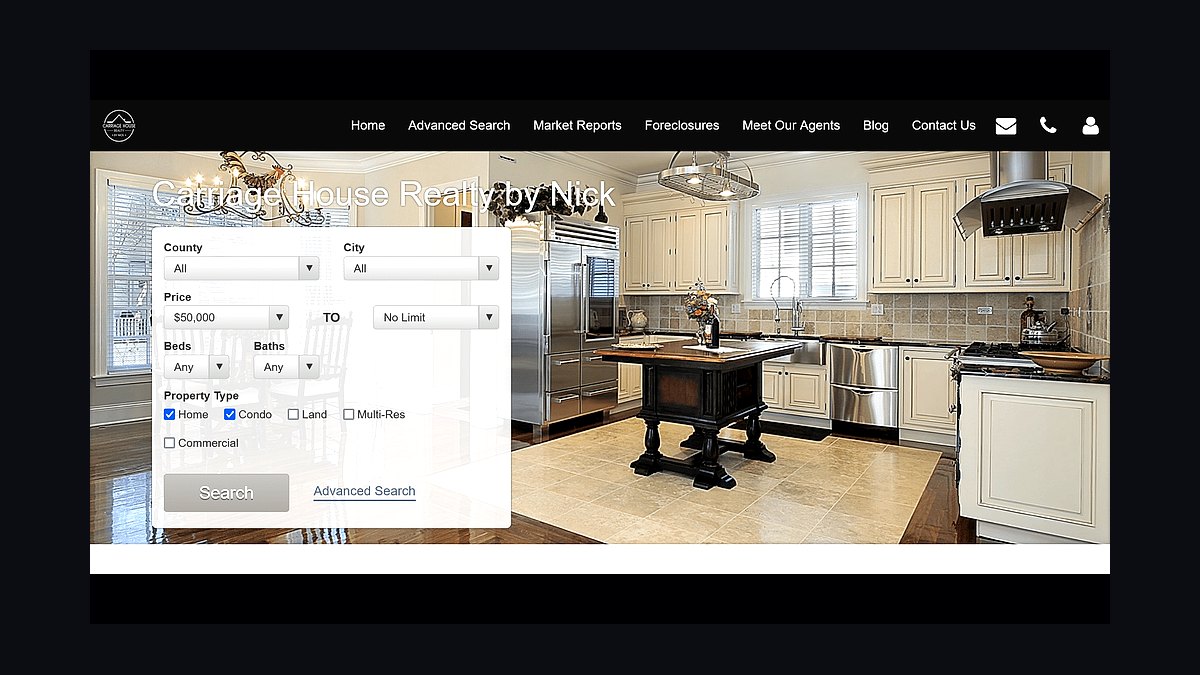
Real Geeks ranks fourth because it delivers a capable IDX search experience with a built-in CRM and lead capture at a reasonable price, making it the value pick for brokerages building an owned capture asset. The site handles property search, saved searches, and inquiry capture, then pushes leads into the attached CRM for follow-up. It is a genuine lead-to-CRM spine without enterprise pricing.
It is for small teams and brokerages that want organic SEO capture without paying for a separate CRM and website. It trades away the aggressive paid-social retargeting engine Ylopo layers on, and its CRM is less configurable than Follow Up Boss. Against Ylopo below, it wins on price and simplicity but loses on paid-lead generation firepower.
5Ylopo

Ylopo ranks fifth because it layers aggressive paid-social and Google PPC generation plus dynamic retargeting on top of your site, which is what teams buying large volumes of online leads actually need. It delivers exclusive leads with a CRM attached, so capture and nurture arrive together rather than as separate purchases. The retargeting keeps your listings and brand in front of prospects after the first click.
It is for teams whose growth depends on bought lead volume, not sphere referrals. It trades away low cost and simplicity, since ad management adds meaningful monthly spend on top of software. Against Real Geeks above, it wins on paid-lead generation but costs more; against Dotloop below, it addresses a completely different layer of the stack.
6Dotloop
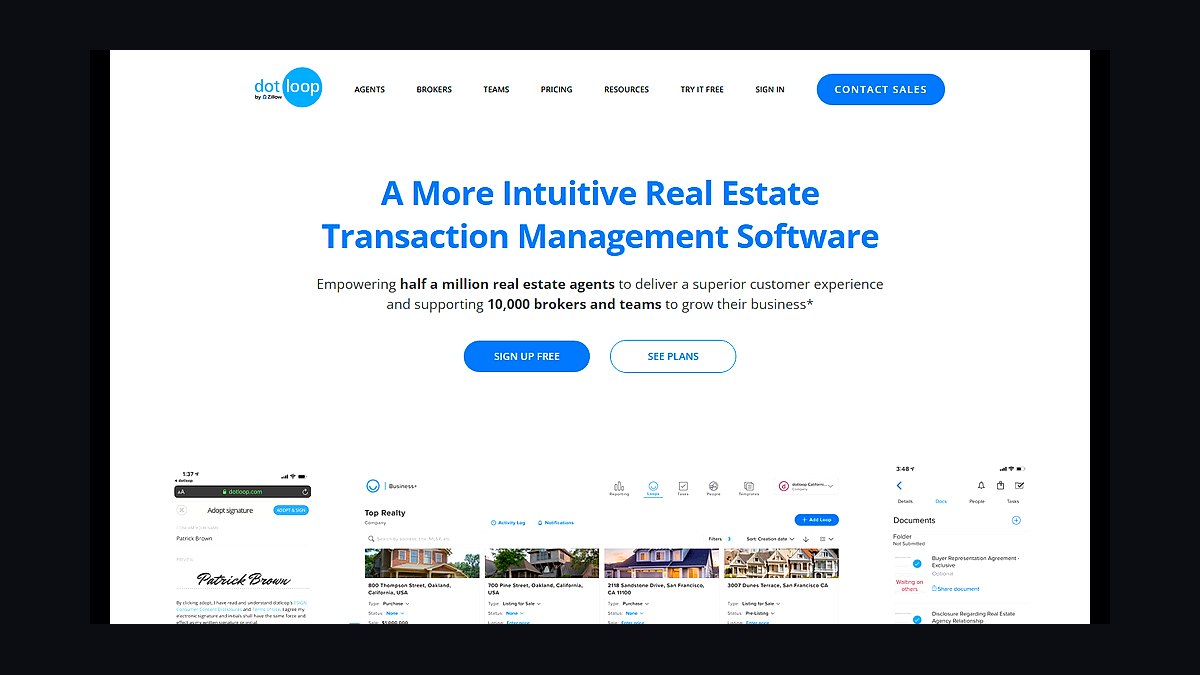
Dotloop ranks sixth because it handles document collaboration, e-sign, and task workflows in one place, and it is widely used by agents and teams who care most about a smooth signing experience. It builds the deal into a retrievable, timestamped file, which is what state commissions audit years after closing. Task workflows keep contingency deadlines visible rather than buried in email.
It is for individual agents and teams prioritizing signing flow over broker-side audit tooling. It trades away the file-completeness review dashboards that compliance-heavy brokerages need. Against SkySlope below, it wins on agent-side usability but loses on broker-of-record oversight; against DocuSign below, it covers the whole file rather than just signatures.
7SkySlope
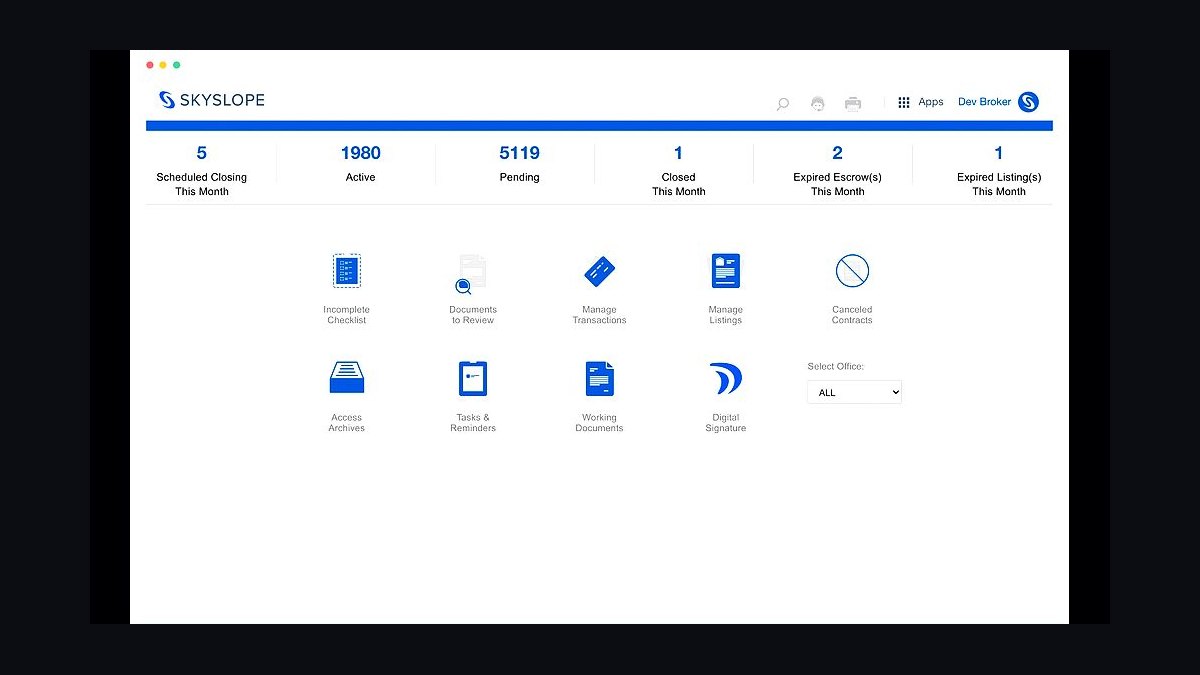
SkySlope ranks seventh because its audit and review tooling is purpose-built for broker oversight, letting a broker of record see at a glance which transaction files are incomplete. For compliance-heavy shops, that file-completeness visibility is the feature that matters most, since the broker carries personal liability for missing disclosures and addenda. It turns compliance from a training initiative into a checkable status.
It is for brokerages where audit readiness outranks document-collaboration polish. It trades away some of the signing-experience smoothness that Dotloop offers agents. Against Dotloop above, it wins on broker oversight but loses on agent-side usability; against DocuSign below, it manages the entire file rather than signatures alone.
8DocuSign
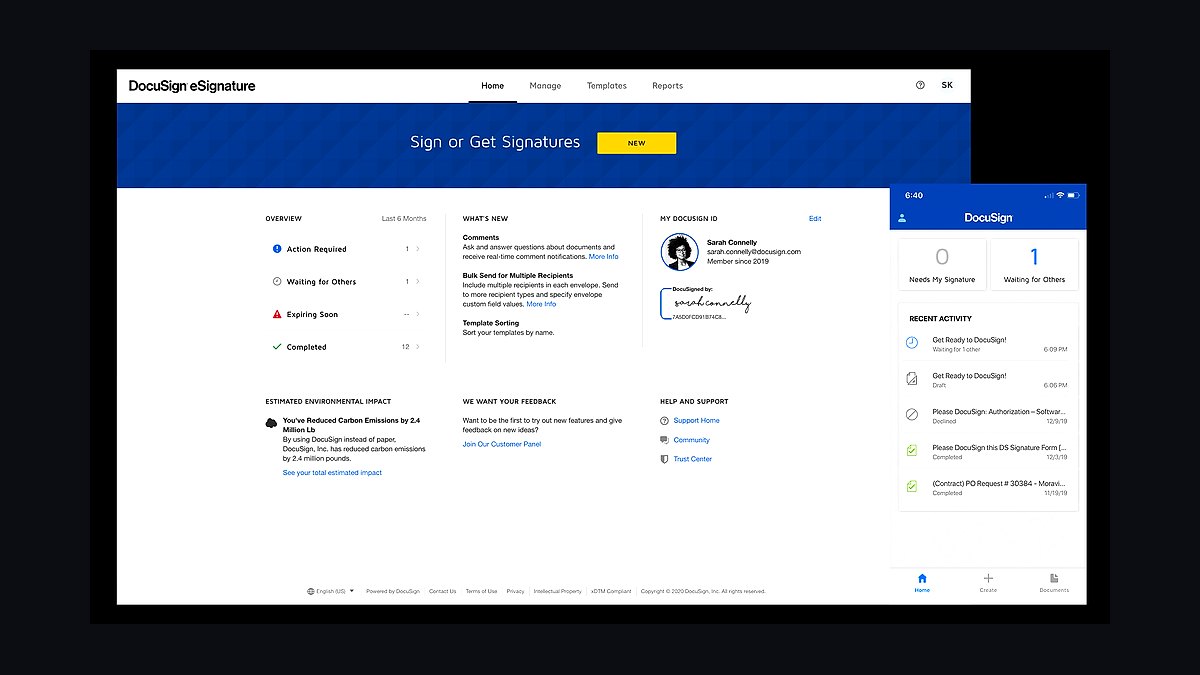
DocuSign ranks eighth because it is the industry standard for legally binding electronic signatures and integrates with essentially every transaction platform on the market. That ubiquity means signatures, timestamps, and audit trails are accepted without argument during a compliance review. Standalone pricing runs roughly $10 to $45 per user monthly.
It is for brokerages that need signatures to work across whichever transaction platform they choose. It trades away cost savings, because Authentisign is bundled free into many state and local Realtor association memberships. Against SkySlope above, it covers signatures only rather than the whole deal file; against ShowingTime below, it addresses documents rather than scheduling.
9ShowingTime

ShowingTime ranks ninth because it is the dominant showing-coordination platform and is integrated directly into most MLS systems, eliminating the phone tag that quietly consumes hours of agent time weekly. Buyer agents request showings, listing agents approve, sellers get notified, and feedback is collected automatically. It is often bundled with MLS dues, or roughly $20 to $30 per user monthly standalone.
It is for brokerages at scale where coordinating dozens of weekly showings across agents has become a real labor cost. It trades away nothing significant except the standalone fee, since MLS integration makes it near-universal. Against DocuSign above, it handles scheduling rather than signatures; against Brokermint below, it addresses the front of the deal rather than the back office.
10Brokermint
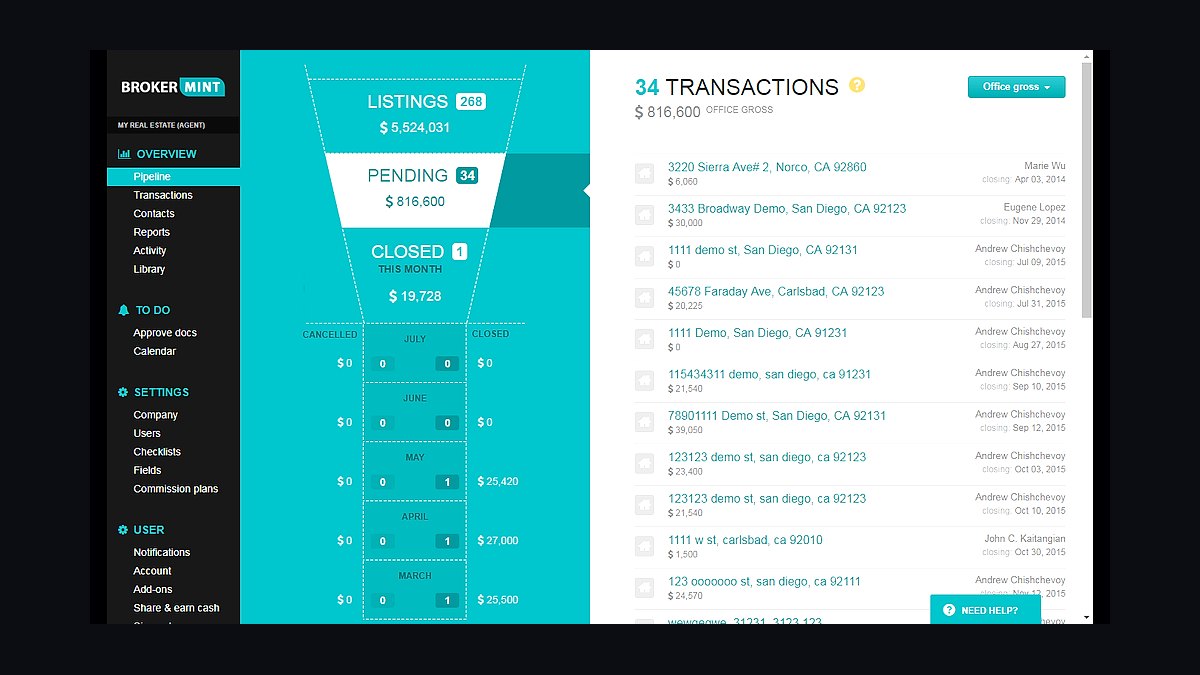
Brokermint ranks tenth because it automates commission calculations, CDAs, agent billing, and 1099s, then syncs to QuickBooks Online, which generic accounting software cannot do for tiered, capped, multi-party splits. Past roughly fifteen agents, spreadsheet commission math produces payroll errors that damage agent trust faster than any missing feature. Pricing runs about $50 to $200 monthly plus per-transaction fees.
It is for brokerages with enough transaction volume and split complexity to justify a dedicated back office. It trades away simplicity, since solo agents should skip this layer entirely and use QuickBooks Self-Employed. Against ShowingTime above, it handles money rather than scheduling; Loft47 is the trust-accounting-strong alternative where broker trust rules are strict.
How we ranked these
We ranked tools by four weighted factors: lead-to-close workflow coverage (30%), MLS/IDX compliance and feed reliability (25%), commission and transaction-file depth (25%), and verified integration breadth plus published pricing transparency (20%). Scores came from vendor documentation, RESO Web API support, and hands-on configuration of routing, nurture, and audit workflows across each layer of the stack.
We deliberately ignored brand prestige, conference presence, and vendor-reported user counts, since none predict whether agents actually log in. We excluded generic B2B CRMs and accounting suites that cannot model tiered, capped, multi-party splits. We also ignored feature-count comparisons, because a tool with fewer features configured for fast routing outperforms a bloated one configured badly.
Related questions
What is the minimum viable tech stack for a new residential brokerage?
Start with three layers: a real-estate-native CRM for routing and nurture, a transaction management platform for the compliance file, and e-signature. Add an IDX website once organic lead capture matters. Skip commission accounting until splits get complex enough that someone loses a full day monthly in spreadsheets. Roughly $300 to $700 monthly for a small shop.
Do I need both a CRM and an IDX website?
Usually yes, but they can be one product. BoldTrail and Sierra Interactive bundle CRM with IDX. If you run Follow Up Boss, pair it with a separate IDX site like Real Geeks or Ylopo. The CRM holds the contact and the follow-up plan; the website captures the lead. Buying both separately is fine if each does its job well.
How fast does a new internet lead actually go cold?
Far faster than most brokerages assume. Response within the first few minutes dramatically raises contact and conversion rates, and odds fall off steeply after that. This is why automated text plus a call attempt must fire within seconds of form submission, before any human sees the notification. Speed-to-lead is the highest-ROI configuration decision in the entire stack.
Can I run a brokerage stack on QuickBooks alone?
For a solo agent, yes. QuickBooks Self-Employed or Online handles income, expenses, and basic tax reporting adequately. Past roughly fifteen agents, no. Tiered splits, annual caps, referral fees, franchise skims, and multi-party commission disbursement authorizations exceed what generic accounting software models. That is when Brokermint or Loft47 earns its subscription.
Is transaction management software legally required?
Not by statute in most states, but the broker of record must retain complete transaction files and produce them during a commission audit, sometimes years after closing. A transaction platform is the practical way to guarantee that. The most effective adoption rule is structural: no commission check is cut until the deal file is complete in the system.
How do I know if my lead sources are actually profitable?
Tag every lead source at capture and use tracked phone numbers per channel. Then run a cost-per-closing report quarterly, not cost-per-lead. The cheapest leads per unit are frequently the most expensive per closing, and sphere-of-influence referrals that cost nothing often convert best. Without tagging, money flows to the loudest vendor rather than the most profitable channel.
Should agents be forced to use the brokerage stack?
Agents are independent contractors, so mandates are weak unless tied to money. The one rule that works: no commission disbursement until the transaction file is complete in the platform. That single policy drives compliance adoption faster than any training program. For CRM and marketing tools, adoption has to be earned through genuine usefulness or brokerage-provided defaults.
When should a brokerage add a back-office commission platform?
Add it when splits become tiered or capped, when referral partners and team leads take cuts, or when someone spends a full day monthly reconciling commissions in a spreadsheet. That usually lands somewhere between ten and twenty-five agents. Below that threshold, QuickBooks Online plus a disciplined process is cheaper and simpler than a dedicated commission engine.
FAQ
What is the best CRM for a residential real estate brokerage in 2027?
Follow Up Boss remains the default for serious teams, largely because of its open API, lead-source reporting, and routing flexibility. BoldTrail is the strongest choice when your brokerage already provides it free. Sierra Interactive suits teams wanting CRM and website tightly fused. The right answer depends on whether you buy leads or earn them through sphere and referral.
How much should a brokerage budget for software monthly?
A solo agent runs roughly $150 to $400 monthly. A three-to-ten-agent team runs $700 to $2,000 before lead spend. A brokerage with twenty-five or more agents runs $1,500 to $4,000 monthly, scaling with seats. Paid portal and ad spend sits outside these figures and is usually the largest single line item in the entire budget.
Does the MLS or my CRM hold the authoritative listing data?
The MLS is the system of record, always. Your IDX website and CRM only mirror listing data under strict display rules covering refresh cadence and attribution. The RESO Web API is the modern standard most MLSs now expose. Any tool that fights the feed risks fines or feed suspension, so compliance with MLS display rules is non-negotiable.
What is the biggest mistake brokerages make when building a stack?
Buying leads before the CRM and routing automation are live. Ad spend then pours into a shared inbox where most leads never receive a second touch. The sequencing rule is simple: get speed-to-lead working first, then turn on paid lead generation. This single ordering error wastes more brokerage money than any vendor selection mistake.
Do I need a separate e-signature subscription?
Check your Realtor association first. Authentisign, part of Lone Wolf, is bundled into many state and local association memberships at no extra cost. DocuSign remains the industry standard and integrates with nearly every transaction platform. A surprising number of agents pay monthly for a product their association already provides, so verify before buying.
How long does it take to stand up a full brokerage stack?
Plan roughly ninety days in three phases. Days zero to thirty cover the CRM spine, lead-source connections, IDX site, and routing. Days thirty-one to sixty cover transaction management, e-signature, showing scheduling, and commission accounting. Days sixty-one to ninety cover video follow-up, review automation, and cost-per-closing attribution reporting.
Is ShowingTime worth paying for separately?
Often it is already included with MLS dues, so check before subscribing. Where it is not bundled, ShowingTime eliminates the phone tag that consumes hours of agent time weekly by handling requests, approvals, seller notifications, and feedback collection automatically. At brokerage scale, that recovered time usually exceeds the subscription cost several times over.
What should a luxury or brand-led brokerage prioritize?
Invert the usual priority: the website is the product. A design-forward IDX presence, professional listing collateral, and a disciplined post-closing review flywheel matter more than lead-routing microseconds. Luxury Presence is built for this profile. Lead volume matters less than brand impression when the average transaction value is high and clients arrive through referral.
Can one platform serve sales, property management, and mortgage?
Rarely well. Property management needs rent ledgers, maintenance ticketing, and owner statements. Mortgage carries its own compliance regime. Run these as separate stacks with a shared CRM contact layer if you want cross-sell visibility, and accept minor duplication. Brokerages forcing one platform across all three usually end up with a system that serves none of them well.
How do I audit my stack for redundant tools?
Ask one question per contact record: which system holds the authoritative version of this person? If you cannot answer immediately, you have sprawl. Bundled suites frequently include a CRM and IDX site that brokerages then duplicate with standalone purchases. Audit annually, consolidate aggressively, and treat every duplicate as both a subscription cost and a data-fragmentation risk.
Sources
- https://www.nar.realtor/
- https://www.reso.org/
- https://www.followupboss.com/pricing/
- https://www.dotloop.com/
- https://www.skyslope.com/
- https://www.docusign.com/
- https://www.showingtime.com/
- https://www.brokermint.com/
- https://www.ylopo.com/
- https://www.realgeeks.com/
Related on PULSE
This page will be disappearing soon. Save it to your device for $1 — or read it free while it is here.
@Kory-White- · if Venmo asks, the last 4 of my number are 2012
This page is gone.
This one is off the shelf now. $1 keeps it on your phone for good — the whole page, pictures and diagrams included.
 pulse-tech-stacksTop 10 Best Tech Stack Tools for Tire Shops in 2027
 pulse-tech-stacksTop 10 Best Tech Stack Tools for AI Customer Support Companies in 2027
 pulse-tech-stacksTop 10 Best Tech Stack Tools for Painting Contractors in 2027
 pulse-tech-stacksTop 10 Best Tech Stack Tools for Private Ambulance and EMS Companies in 2027
 pulse-tech-stacksTop 10 Best Tech Stack Tools for AI Observability Platform Companies in 2027
 pulse-tech-stacksTop 10 Best Tech Stack Tools for Independent Landscaping Companies in 2027
 pulse-tech-stacksTop 10 Best Tech Stack Tools for Independent Food Trucks in 2027
 pulse-tech-stacksTop 10 Best Tech Stack Tools for Threat Intelligence Vendors in 2027
 pulse-tech-stacksTop 10 Best Tech Stack Tools for CrossFit Boxes in 2027
 pulse-tech-stacksTop 10 Best Tech Stack Tools for HVAC Equipment Distributors in 2027