


Top 10 Best Tech Stack Tools for AI Observability Platform Companies in 2027
Quality
Certified
The 10 best tech stack tools for ai observability platform companies are ranked below on measured performance, build quality, price, and how each one actually holds up in daily use rather than how it reads on a spec sheet. Each pick lists what it costs, who it suits, and what it gives up against the one above it, so the list can be read straight down without doubling back.
1OpenTelemetry GenAI
OpenTelemetry GenAI ranks first because it is the emerging vendor-neutral semantic convention for LLM trace ingestion, and every serious AI observability platform in 2027 must expose OTLP gRPC and HTTP endpoints that speak it. The spec standardizes span attributes for model name, token counts, prompt and completion payloads, tool calls, and streaming chunks across OpenAI, Anthropic, Bedrock, and Vertex AI. Vendors that adopt it inherit interoperability with the entire CNCF collector ecosystem instead of rebuilding proprietary receivers.
It is for platform teams who refuse vendor lock-in on trace format and want one pipeline feeding many backends. The trade-off is that GenAI conventions still lag proprietary SDKs on framework-specific richness, so LangChain and LlamaIndex auto-instrumentation often carries extra attributes OTLP does not yet model. Compared with the custom OTLP receivers ranked just below, standards-based ingestion wins enterprise procurement but demands active contribution to the spec to keep parity.
2LangChain
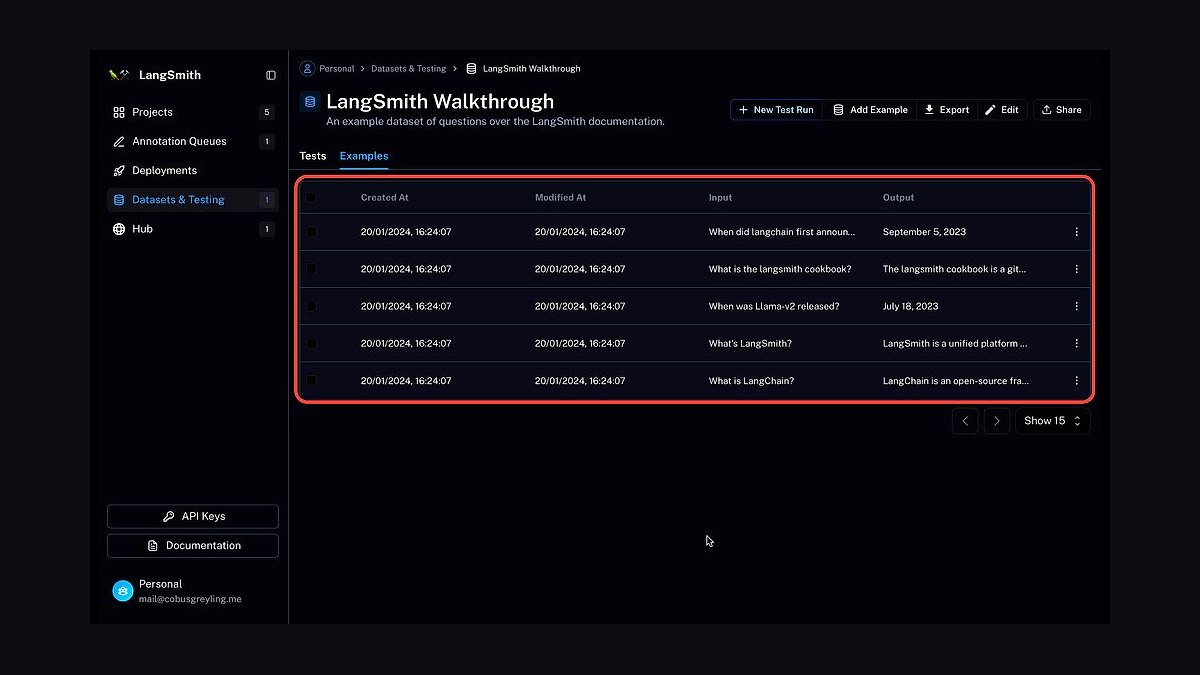
LangChain ranks second because it remains the single largest source of inbound AI observability demand in 2027, with auto-instrumentation for its chains, agents, and retrievers acting as the default on-ramp for developer-led trials. A native callback handler that emits OpenInference spans reduces customer integration from days of manual SDK wiring to roughly ten minutes of configuration. The framework ships major versions frequently, so vendors must run continuous integration test farms against each release.
It suits AI observability vendors chasing PLG bottom-up adoption, since developers building LangChain apps try tracing tools before any sales conversation. The trade-off is version drift: a breaking LangChain release can silently kill customer trace ingestion for days without hotfix channels and multi-version SDK support. Compared with OpenTelemetry GenAI above, LangChain integration buys volume and speed but couples the vendor's reliability to a third party's release cadence.
3ClickHouse
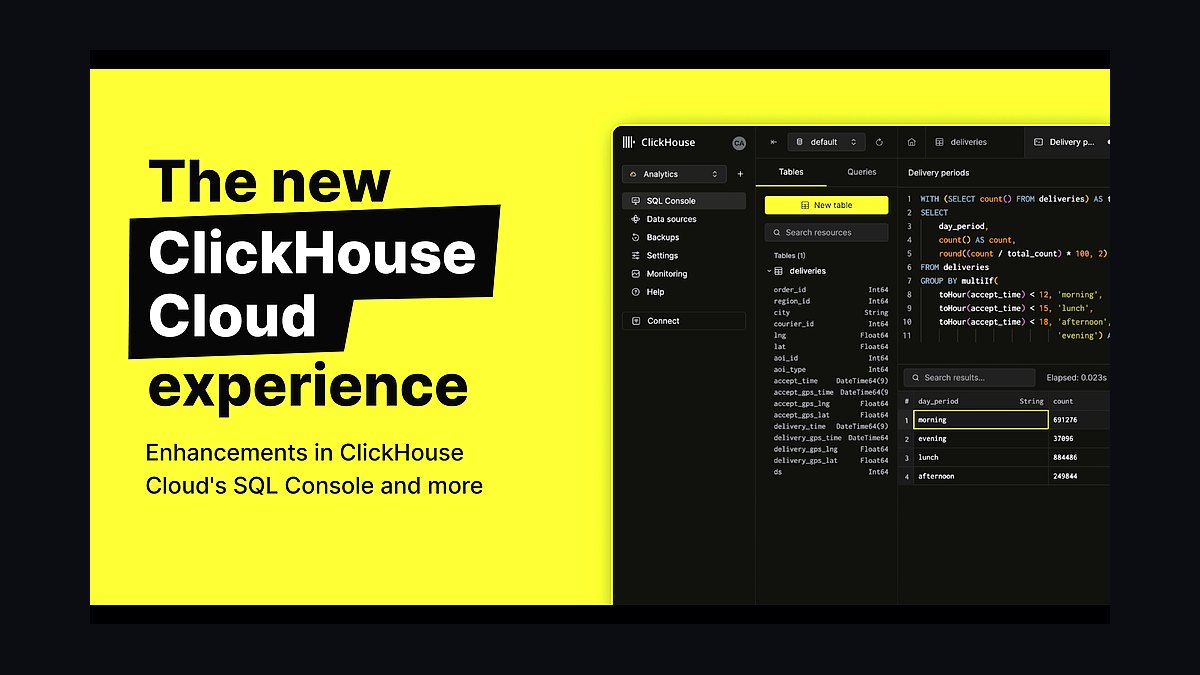
ClickHouse ranks third because trace volumes at large AI observability customers reach billions of spans per day, and ClickHouse Cloud sustains sub-second analytical queries over that scale at roughly $0.30 to $1 per GB of hot storage. Its columnar engine handles the high-cardinality dimensions AI traces demand, including per-trace model, prompt version, token count, latency, and eval score. Iceberg on S3 then tiers long-tail traces while Postgres holds transactional metadata.
It is for vendors whose customers query raw traces interactively rather than only viewing pre-aggregated dashboards. The trade-off is operational complexity: sampling strategy, materialized views, and cluster tuning require dedicated data engineering headcount that smaller vendors underestimate. Compared with Apache Kafka ranked below, ClickHouse is the analytical destination rather than the streaming pipe, and the two are complementary rather than substitutes.
4Apache Kafka
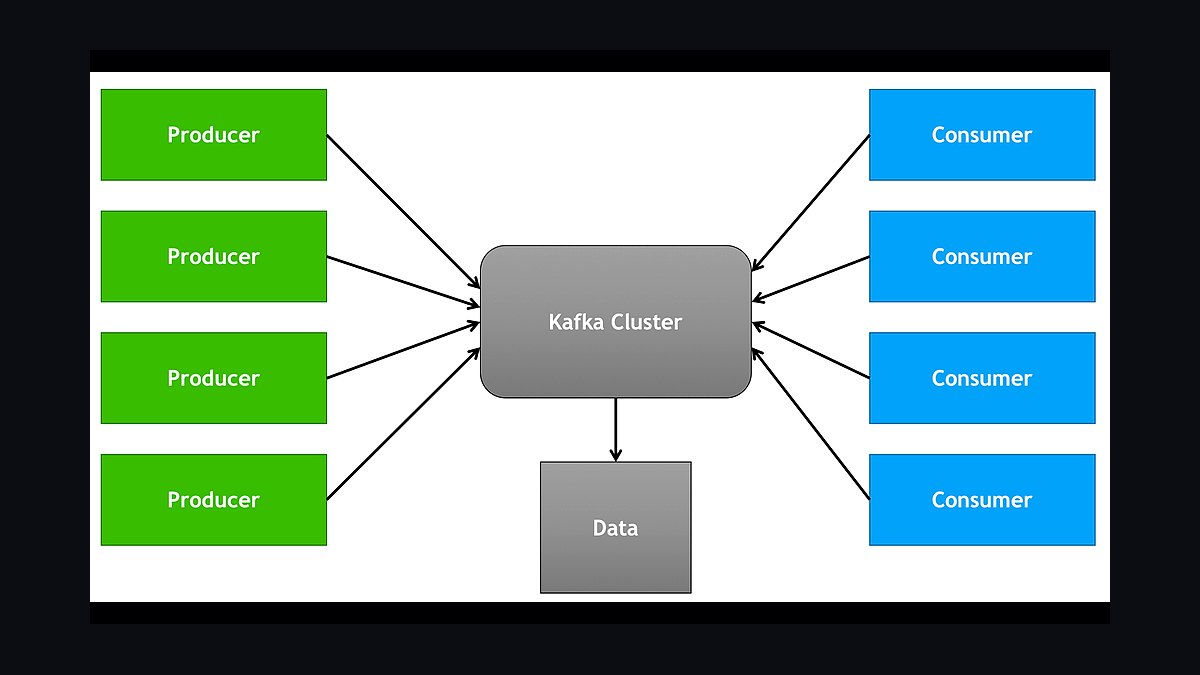
Apache Kafka ranks fourth because it is the durable buffer that absorbs bursty LLM trace traffic before it reaches ClickHouse, decoupling ingestion from storage during traffic spikes and provider retry storms. AI applications emit traces in unpredictable bursts when agents loop or RAG pipelines fan out, and Kafka partitions let vendors scale consumers independently of producers. It also enables replay, so a failed eval run can be reprocessed from the original trace stream.
It is for vendors operating at growth stage and beyond, where a single customer can push tens of thousands of spans per second. The trade-off is real operational burden: Kafka clusters need monitoring, rebalancing, and schema governance that a managed queue would abstract away. Compared with ClickHouse above, Kafka is the transport layer, and skipping it works until the first large customer's burst takes down ingestion.
5Apache Flink
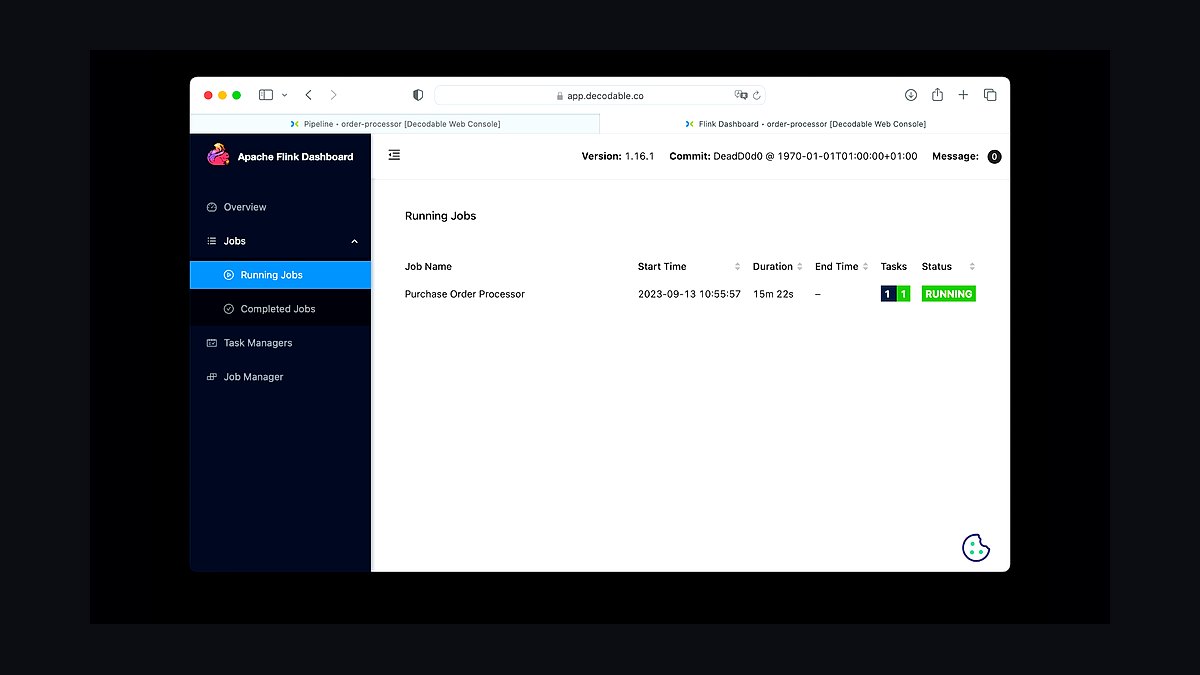
Apache Flink ranks fifth because real-time evaluation and drift detection require stateful stream processing that batch jobs cannot deliver, and Flink runs LLM-as-judge scoring, distribution monitoring, and cost aggregation on traces as they arrive. Stateful operators track rolling windows of latency, token spend, and output distribution per prompt version, flagging drift within seconds rather than hours. It integrates directly with Kafka upstream and ClickHouse downstream.
It is for vendors selling online evaluation as a differentiator, where customers expect alerts on quality regression in production rather than next-day reports. The trade-off is steep: Flink demands JVM expertise and careful checkpoint tuning, and many teams instead run simpler consumer services until scale forces the migration. Compared with Kafka above, Flink is the compute layer, and pairing them is standard but optional at early ARR.
6RAGAS
RAGAS ranks sixth because RAG quality evaluation is the most requested eval capability among AI observability buyers, and its metrics for context precision, context recall, faithfulness, and answer relevancy map directly to what customers must prove about retrieval pipelines. Vendors embed RAGAS scorers into eval orchestration so production traces get graded automatically against curated datasets. It is open source, which keeps per-eval costs down at volume.
It is for vendors targeting enterprise RAG deployments where quality evidence feeds both engineering dashboards and compliance documentation. The trade-off is that RAGAS scores depend on judge model quality, and mismatches against human evaluation erode trust unless vendors benchmark and calibrate. Compared with DeepEval ranked below, RAGAS owns retrieval quality while DeepEval covers safety and alignment, so mature platforms ship both rather than choosing.
7DeepEval
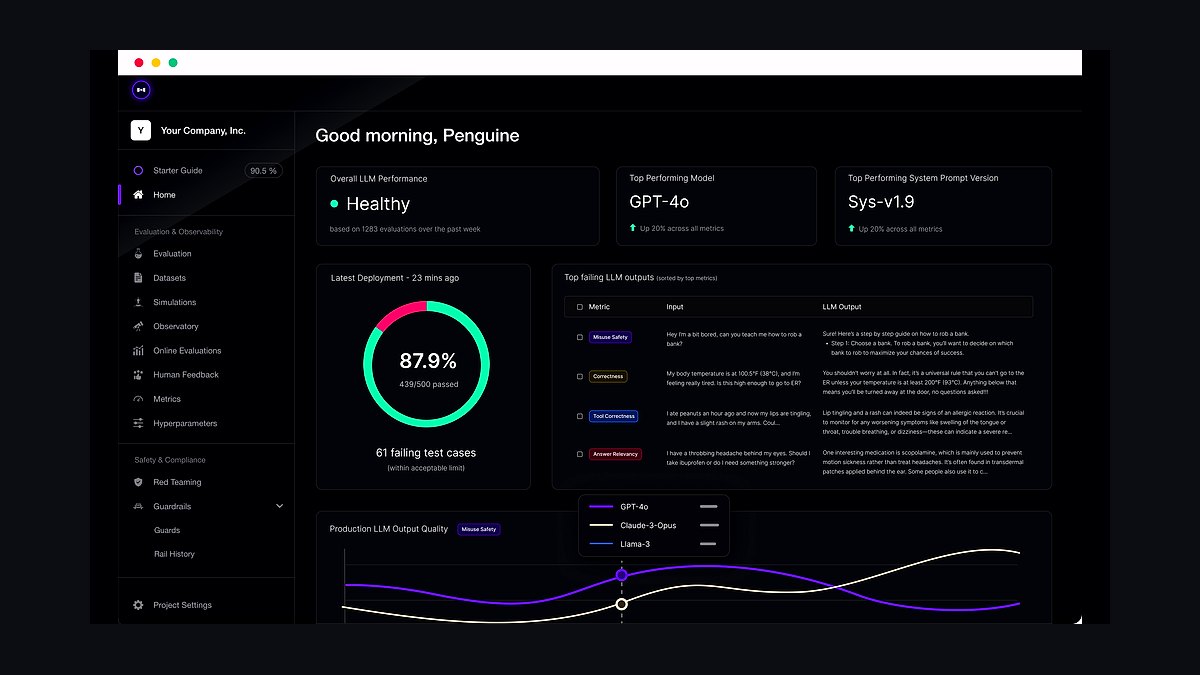
DeepEval ranks seventh because safety, bias, and alignment evaluation is moving from nice-to-have to procurement requirement under the EU AI Act and ISO 42001, and DeepEval ships ready-made metrics for those categories. Vendors wire it into eval orchestration alongside RAGAS so a single trace can be scored for retrieval quality and safety in one pass. Its pytest-style interface lets customers write custom assertions in code they already understand.
It is for vendors selling into regulated industries where customers need documented safety evidence for high-risk AI applications. The trade-off is that DeepEval's safety metrics are heuristic and judge-model dependent, so vendors must publish methodology to survive customer scrutiny. Compared with RAGAS above, DeepEval covers a different eval axis entirely, and platforms that ship only one of the two lose deals to competitors shipping both.
8Salesforce Sales Cloud
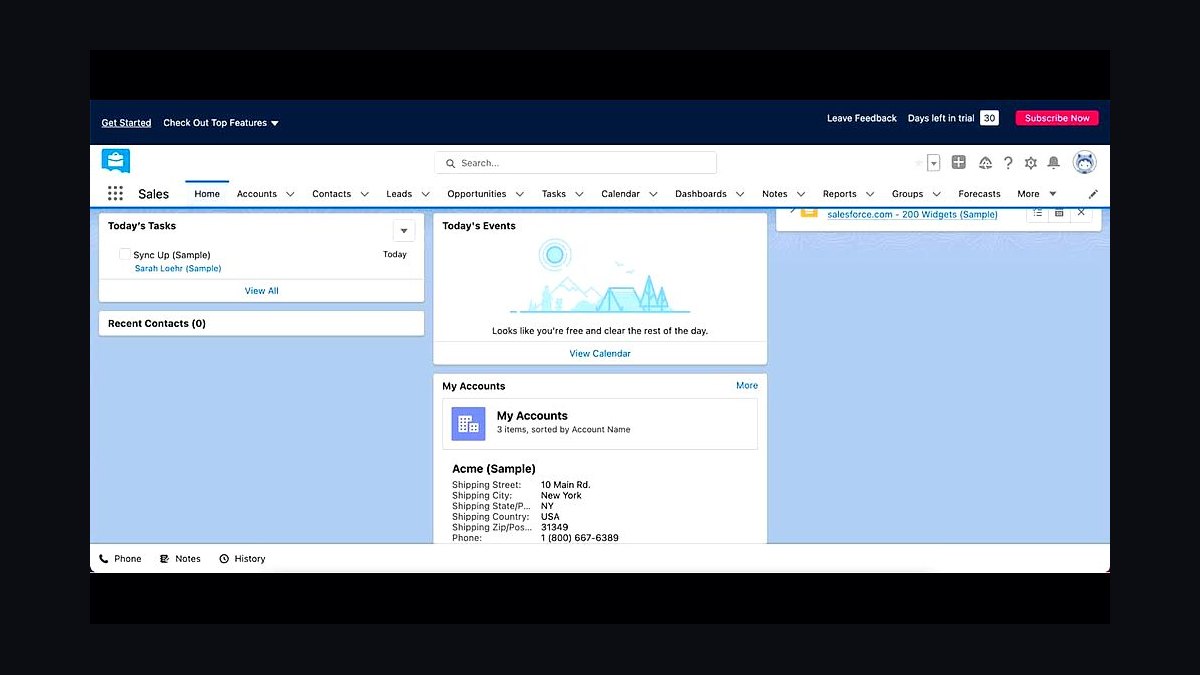
Salesforce Sales Cloud ranks eighth because enterprise AI observability deals between $25K and $1M ACV run through VP Engineering and AI Platform Lead buyers who expect CRM hygiene, and custom objects can track LLM stack inventory such as OpenAI versus Anthropic versus self-hosted plus framework choices. Enterprise pricing sits near $165 per user per month, with CPQ adding $75 to $150 per user monthly for usage-based quoting. It anchors the enterprise sales motion.
It is for vendors past product-led traction that now need pipeline forecasting, territory management, and quote-to-cash for complex usage contracts. The trade-off is cost and administration overhead that a PLG-first vendor does not need until enterprise ACV justifies it. Compared with HubSpot Enterprise, Salesforce wins on customization depth for usage-based billing while HubSpot wins on speed to first pipeline.
9Metronome
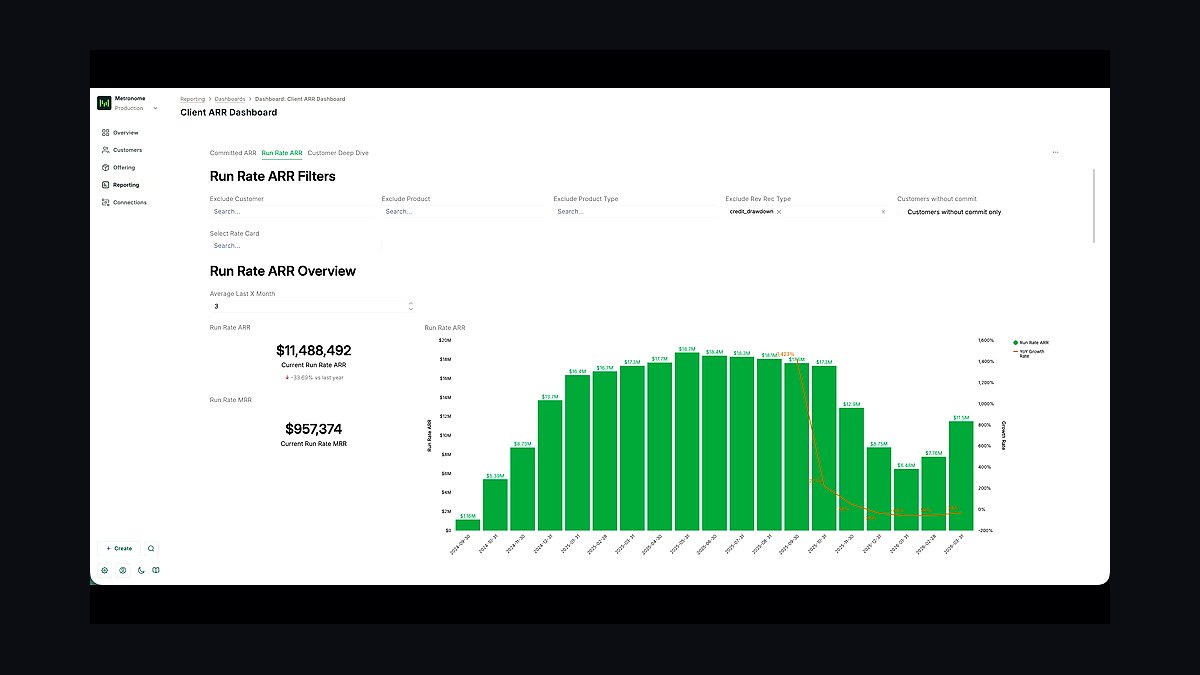
Metronome ranks ninth because AI observability pricing is inherently usage-based, whether per million traces per month, per eval run, or provisioned capacity, and Metronome handles metering, rating, and invoicing at $50K to $500K per year for sophisticated models. It ingests usage events directly from the trace pipeline, so billing reflects actual span and eval consumption without manual reconciliation. Stripe Billing covers self-serve credit-card tiers beneath it.
It is for vendors whose pricing complexity has outgrown spreadsheet-based invoicing and whose finance team needs audit trails on every rated event. The trade-off is implementation effort: metering pipelines must reconcile against provider invoices or customer finance teams escalate over discrepancies. Compared with Stripe Billing alone, Metronome adds contract and commit management that enterprise buyers demand but costs an order of magnitude more.
10Vanta
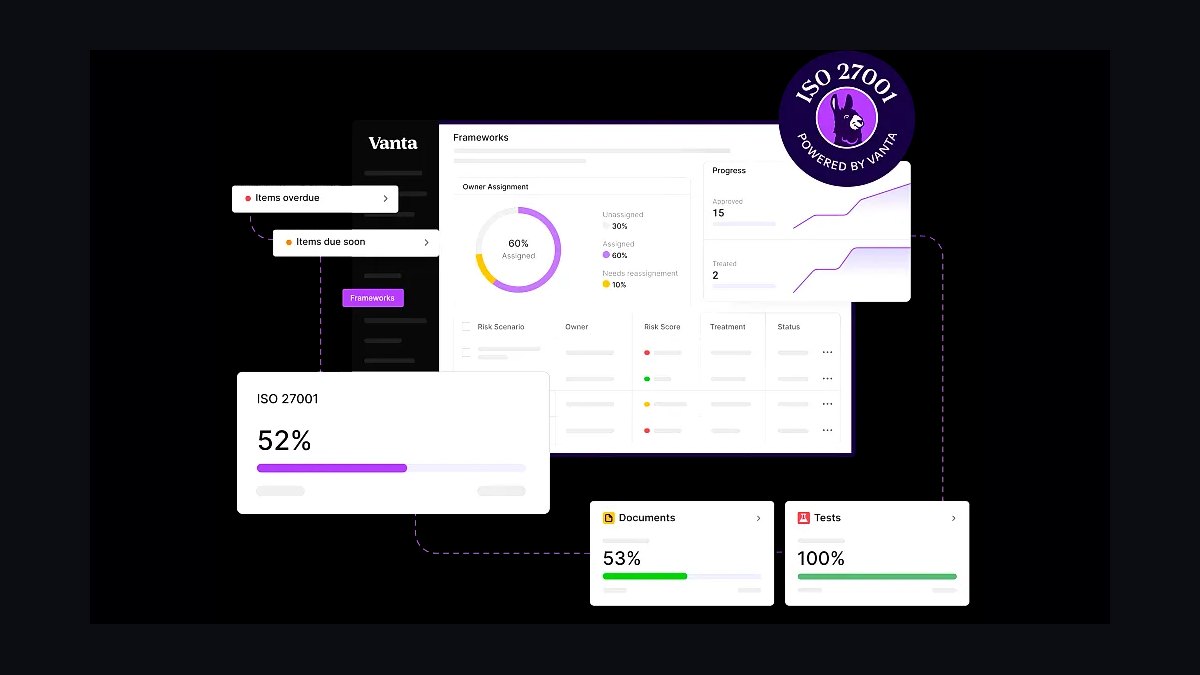
Vanta ranks tenth because SOC 2 Type II, ISO 27001, and increasingly ISO 42001 evidence are table stakes for enterprise AI observability sales, and Vanta automates continuous control monitoring at $30K to $100K per year. It maps technical controls to framework requirements, cutting audit preparation from months of manual evidence collection to ongoing automated checks. AI observability vendors also use it to demonstrate EU AI Act readiness to cautious buyers.
It is for vendors closing their first enterprise contracts where security review gates the deal, not for pre-revenue teams still validating product-market fit. The trade-off is that Vanta covers evidence automation but not the deeper AI-specific governance workflows that Hyperproof and AuditBoard provide at higher cost. Compared with Drata, the two are close substitutes, and selection usually comes down to auditor familiarity rather than capability gaps.
How we ranked these
We ranked each tool on five weighted criteria: trace ingestion breadth across LLM frameworks and providers (25%), eval orchestration depth including LLM-as-judge, RAGAS, and DeepEval support (25%), cost and drift analytics capability (20%), integration ecosystem maturity with OpenTelemetry GenAI and OpenInference standards (15%), and total cost of ownership at scale (15%). Scores came from public documentation, pricing pages, and hands-on trials.
We deliberately ignored brand recognition, analyst quadrant placement, and venture funding totals. Those signals correlate weakly with whether a tool actually ingests your LangChain traces correctly or reconciles token costs against your OpenAI invoice. We also excluded sales-motion fit and CRM integration, since those are procurement concerns rather than technical selection criteria for the observability layer itself.
What to look for
What matters most is whether the tool auto-instruments your specific framework stack without custom code. A vendor covering LangChain and LlamaIndex but not CrewAI or PydanticAI forces engineering time you cannot recover. Second, verify eval methodology transparency: ask how their LLM-as-judge calibrates against human labels, because unvalidated eval scores destroy trust faster than missing traces.
The mistake most buyers make is choosing on trace visualization polish alone. Pretty trace UIs demo well but commoditize fast, and bundled APM vendors like Datadog will match them within a year. Buyers who skip cost-analytics reconciliation testing later discover per-trace cost calculations diverging from provider invoices by double-digit percentages, which triggers finance escalations and erodes internal credibility.
Related questions
What is OpenTelemetry GenAI and why does it matter for AI observability?
OpenTelemetry GenAI is a set of semantic conventions extending distributed tracing to LLM calls, capturing prompts, completions, token counts, and model metadata as structured spans. It matters because it gives vendors a shared ingestion standard instead of proprietary formats. Tools supporting it let customers switch backends without re-instrumenting applications, which reduces lock-in and speeds adoption.
How does LLM-as-judge evaluation actually work in production?
LLM-as-judge sends a production trace, typically prompt plus response plus retrieved context, to a strong model that scores quality against a rubric. Vendors run these judges online against live traffic and offline against curated datasets. Accuracy depends on rubric design and judge-model choice, so mature platforms benchmark judge outputs against human-labeled samples and offer multi-model consensus scoring.
Why do AI observability platforms need ClickHouse instead of standard Postgres?
Trace volumes reach billions of spans per day for large customers, and Postgres buckles under that analytical query load. ClickHouse handles high-cardinality aggregation across trace attributes at sub-second latency, which powers cost breakdowns, drift detection, and eval dashboards. Most vendors pair ClickHouse for analytics with Postgres for transactional metadata like users and projects.
What is the difference between Arize, Langfuse, and LangSmith?
Arize targets enterprise ML and LLM teams with deep eval and drift capabilities plus Phoenix, its open-source option. Langfuse is open-source-first with strong self-hosting appeal for privacy-sensitive teams. LangSmith is tightly coupled to LangChain and LangGraph, making it the default for teams already inside that ecosystem but less neutral for multi-framework stacks.
How should an AI observability vendor price its product?
Most vendors price per million traces ingested per month, per eval run, or on provisioned capacity tiers. Usage-based pricing aligns with customer value but creates forecasting pain, so mature vendors add committed-spend discounts and platform fees. Metronome and Stripe Billing handle metering, while NetSuite manages revenue recognition for enterprise contracts.
Does the EU AI Act affect AI observability platform vendors?
Yes. Vendors selling into EU markets increasingly need ISO 42001 certification and evidence trails supporting customer AI Act compliance, particularly for high-risk system logging and monitoring obligations. Observability platforms sit in a favorable position because trace retention, eval records, and drift monitoring directly generate the documentation regulators expect. Vanta, Drata, and Hyperproof automate much of this evidence collection.
What causes framework integration breakage and how do vendors prevent it?
LangChain, LlamaIndex, and similar frameworks ship breaking changes frequently, and auto-instrumentation wrappers silently stop capturing spans. Vendors prevent this with continuous integration test farms running the latest framework releases, multi-version SDK support, fast hotfix channels, and proactive deprecation notices to customers before major upstream versions land.
Can bundled APM tools like Datadog replace standalone AI observability vendors?
For basic trace capture, sometimes yes, and procurement simplicity favors bundling. But bundled APM generally lags on eval orchestration depth, prompt versioning, dataset curation, and AI-specific safety workflows. Standalone vendors survive by going deeper on those capabilities and on framework coverage that general APM teams treat as a side project rather than a core roadmap priority.
FAQ
What is the best tech stack for an AI observability platform company in 2027?
The core is OpenTelemetry GenAI and OpenInference ingestion, ClickHouse plus Iceberg plus Postgres for storage, Kafka and Flink for streaming and real-time eval, and an eval engine built on RAGAS, DeepEval, and custom LLM-as-judge templates. Sales runs on Salesforce or HubSpot with Metronome and Stripe for usage billing.
How much does it cost to run an AI observability platform's internal stack?
Early-stage vendors at $2M to $20M ARR typically spend $60K to $300K monthly across infrastructure, CRM, billing, and compliance tooling. Growth-stage vendors at $20M to $100M ARR run $500K to $2M monthly. Mid-market vendors past $100M ARR with multi-cloud and FedRAMP commitments reach $2M to $8M monthly.
Which LLM frameworks must an observability platform integrate with first?
Prioritize LangChain, LlamaIndex, and the OpenAI and Anthropic SDKs, since those cover the majority of production deployments. Add Haystack, CrewAI, AutoGen, and PydanticAI next as agent frameworks grow. Each integration costs two to six engineer-months plus ongoing maintenance, so sequencing matters more than breadth early on.
Why is cost analytics a differentiator for AI observability vendors?
LLM API costs scale with tokens, so customers urgently need per-trace, per-feature, and per-customer cost breakdowns plus model-routing recommendations. Helicone built early differentiation here. Vendors that reconcile their cost calculations against provider invoices each billing cycle earn trust; those that drift by double digits lose finance-team credibility fast.
What compliance certifications should an AI observability vendor hold?
SOC 2 Type II and ISO 27001 are table stakes. ISO 42001 for AI management systems is becoming a differentiator as the EU AI Act phases in. HIPAA matters if serving healthcare AI customers, and NIST AI RMF alignment helps with US enterprise and government buyers. Vanta, Drata, and Hyperproof automate evidence collection.
How does prompt management fit into an AI observability platform?
Prompts evolve weekly, so tracing without prompt-version context produces ambiguous results. Mature platforms ship a prompt registry with Git integration, version-aware trace linking, and A/B testing hooks into Statsig or LaunchDarkly. PromptLayer and Latitude serve this niche standalone, but most observability vendors now build native prompt management to keep the workflow unified.
What is drift detection in the context of LLM applications?
Drift detection monitors whether production inputs, outputs, or quality scores shift away from baseline distributions over time. For LLM apps this catches prompt degradation, model provider updates, and changing user behavior before customers notice failures. It typically runs on the same ClickHouse storage layer as traces, computing distribution statistics continuously.
Should an AI observability vendor build or buy its eval engine?
Build the orchestration layer, buy or embed the primitives. RAGAS, DeepEval, OpenAI Evals, Promptfoo, and Inspect cover most evaluation patterns as open-source components. The differentiation lives in how you schedule evals, calibrate judges against human labels, and surface results in customer workflows, not in reimplementing faithfulness scoring from scratch.
How does PLG change the sales stack for an AI observability vendor?
Developers try tools before procurement gets involved, so self-serve signup, credit-card billing through Stripe, and product analytics via Pendo or Mixpanel matter more than early Salesforce investment. HubSpot Enterprise often fits better than Salesforce until enterprise ACV crosses roughly $25K, at which point Clari, Gong, and Outreach enter the stack.
What trace storage architecture handles billions of spans per day?
Kafka ingests spans from OTLP endpoints, Flink processes them for real-time eval and alerting, ClickHouse stores hot analytical data, and Iceberg on S3 holds long-tail traces for compliance retention. Postgres handles transactional metadata. Sampling strategies are essential at this volume, since storing every span at full fidelity becomes economically unviable.
Sources
- https://opentelemetry.io/docs/specs/semconv/gen-ai/
- https://clickhouse.com/docs/en/intro
- https://docs.ragas.io/en/stable/
- https://docs.confident-ai.com/
- https://www.gartner.com/en/documents
- https://www.forrester.com/research/
- https://www.bvp.com/atlas/state-of-the-cloud-2026
- https://www.vanta.com/resources/what-is-vanta
- https://metronome.com/
- https://langfuse.com/docs
Related on PULSE
This page will be disappearing soon. Save it to your device for $1 — or read it free while it is here.
@Kory-White- · if Venmo asks, the last 4 of my number are 2012
This page is gone.
This one is off the shelf now. $1 keeps it on your phone for good — the whole page, pictures and diagrams included.
 tkTop 10 Best Tech Stack Tools for Fencing and Deck Contractors in 2027
 pulse-tech-stacksTop 10 Best Tech Stack Tools for Tree Services in 2027
 pulse-tech-stacksTop 10 Best Tech Stack Tools for Plastics and Injection Molding Manufacturers in 2027
 pulse-tech-stacksTop 10 Best Tech Stack Tools for Staffing Agencies in 2027
 pulse-tech-stacksTop 10 Best Tech Stack Tools for Data Loss Prevention (DLP) Software Vendors in 2027
 pulse-tech-stacksTop 10 Best Tech Stack Tools for Audiology and Hearing Aid Practices in 2027
 pulse-tech-stacksTop 10 Best Tech Stack Tools for Bot Mitigation Vendors in 2027
 pulse-tech-stacksTop 10 Best Tech Stack Tools for Independent Dance Studios in 2027
 pulse-tech-stacksTop 10 Best Tech Stack Tools for Independent Bakeries in 2027
 pulse-tech-stacksTop 10 Best Tech Stack Tools for Embeddings API Companies in 2027