


Top 10 Best Tech Stack Tools for Private Ambulance and EMS Companies in 2027
Quality
Certified
The 10 best tech stack tools for private ambulance and ems companies are ranked below on measured performance, build quality, price, and how each one actually holds up in daily use rather than how it reads on a spec sheet. Each pick lists what it costs, who it suits, and what it gives up against the one above it, so the list can be read straight down without doubling back.
1ESO EHR
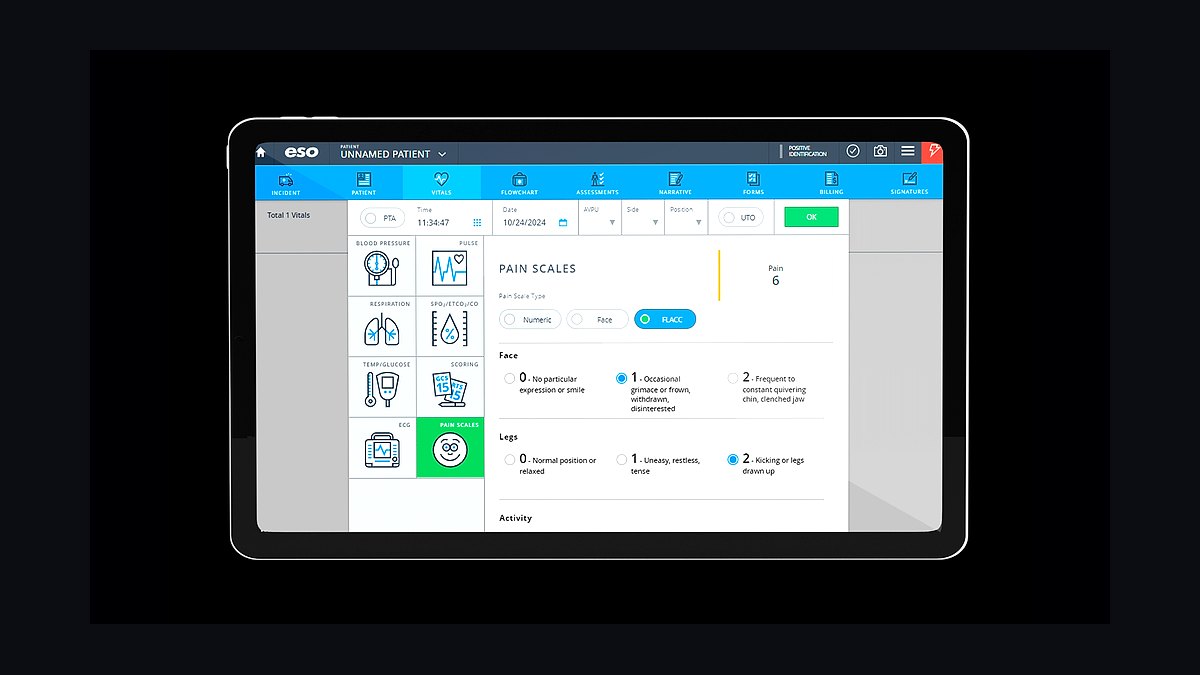
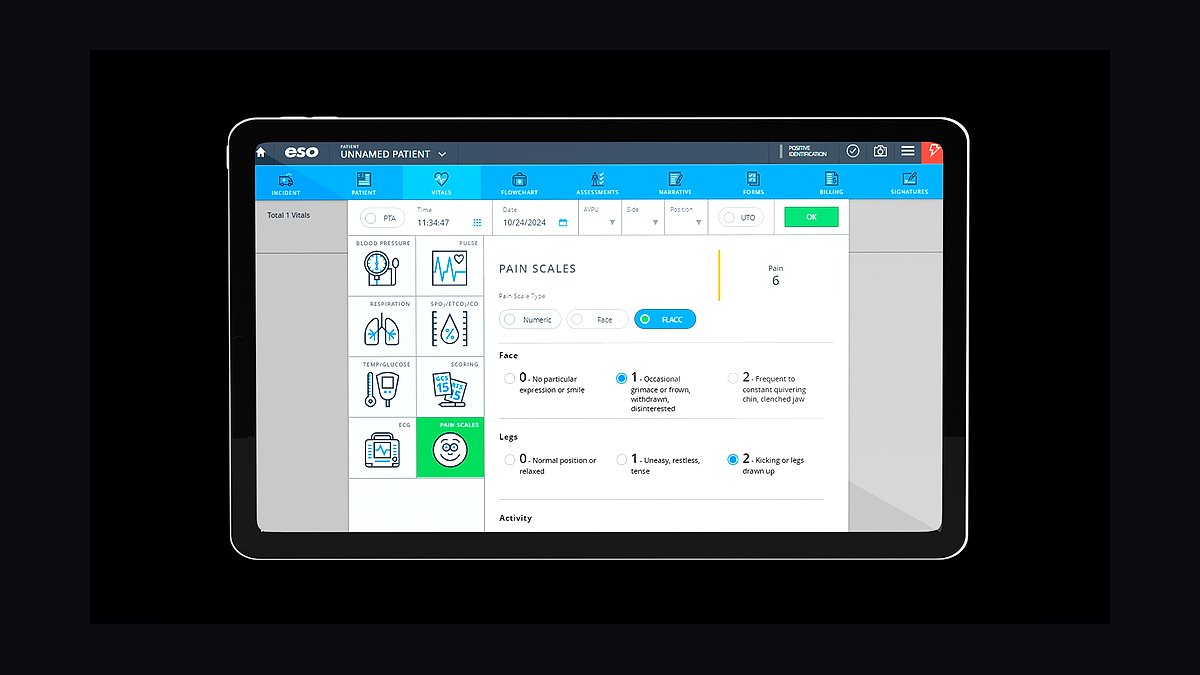
ESO EHR ranks first because it is the only platform that carries a private EMS agency from NEMSIS 3.5 field validation through state submission, billing handoff, and quality review without a second vendor. Mid-size agencies pay roughly $3,000-$15,000 per year depending on call volume and modules. Its field workflow is built for crews charting in a moving ambulance, and the structured medical-necessity fields feed claims directly.
This is for agencies that want the ePCR to be the operational center of gravity rather than one silo among many. It trades away deep custom configuration that large state-level systems demand, which is where ImageTrend Elite wins. Compared with ZOLL emsCharts directly below, ESO is stronger on analytics and billing integration but weaker on native device-to-chart flow for ZOLL monitor fleets.
2ImageTrend Elite
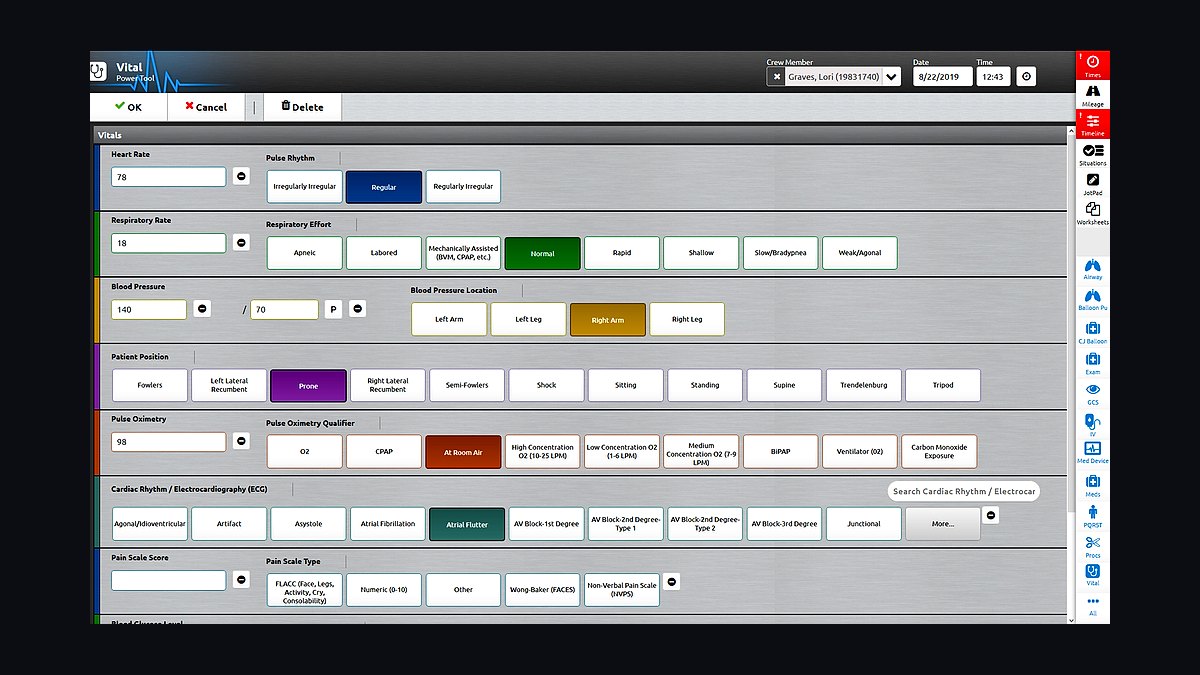
ImageTrend Elite ranks second for its configuration depth, the reason large and state-level EMS systems standardize on it. Agencies can shape the NEMSIS field set, workflow logic, and reporting to match state mandates that off-the-shelf ePCRs handle poorly. It is the ePCR most often audited by municipalities holding 911 contracts, and it scales from a single county to a statewide system.
This suits multi-county operators and 911-contract providers whose reporting requirements outgrow a standard chart. It trades away some of the out-of-the-box speed ESO EHR offers, since Elite rewards agencies with staff who can build and maintain configuration. Against ESO EHR above, Elite is the deeper clinical documentation engine but the slower deployment.
3ZOLL emsCharts
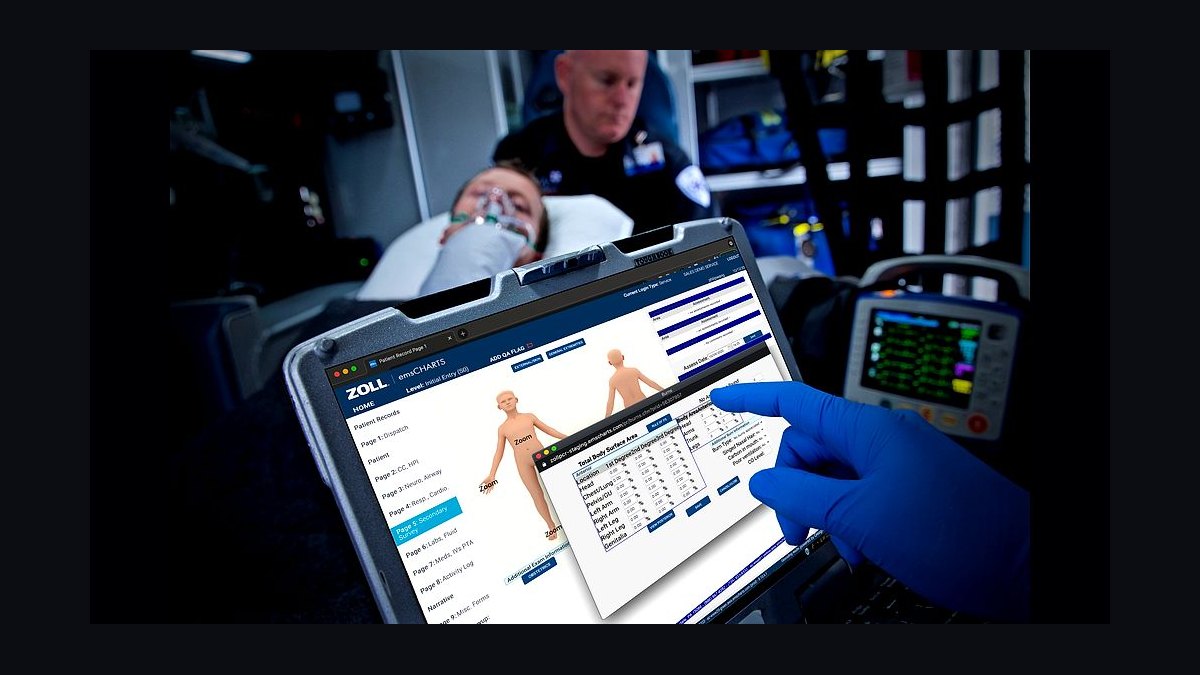
ZOLL emsCharts ranks third because it is the natural ePCR when the agency already runs ZOLL X Series monitors and wants 12-lead, capnography, and CPR-quality data flowing into the chart without manual entry. That device-to-chart pipeline removes transcription errors on the highest-acuity calls. It pairs natively with ZOLL Dispatch and ZOLL Billing for agencies standardizing on one vendor.
This is for ZOLL-equipped agencies that value device integration over best-of-breed clinical configuration. It trades away the configuration depth ImageTrend Elite offers above it, and it locks the agency into the ZOLL ecosystem for dispatch and billing. Compared with ESO EHR, emsCharts is stronger on monitor data but weaker on blended analytics.
4Traumasoft
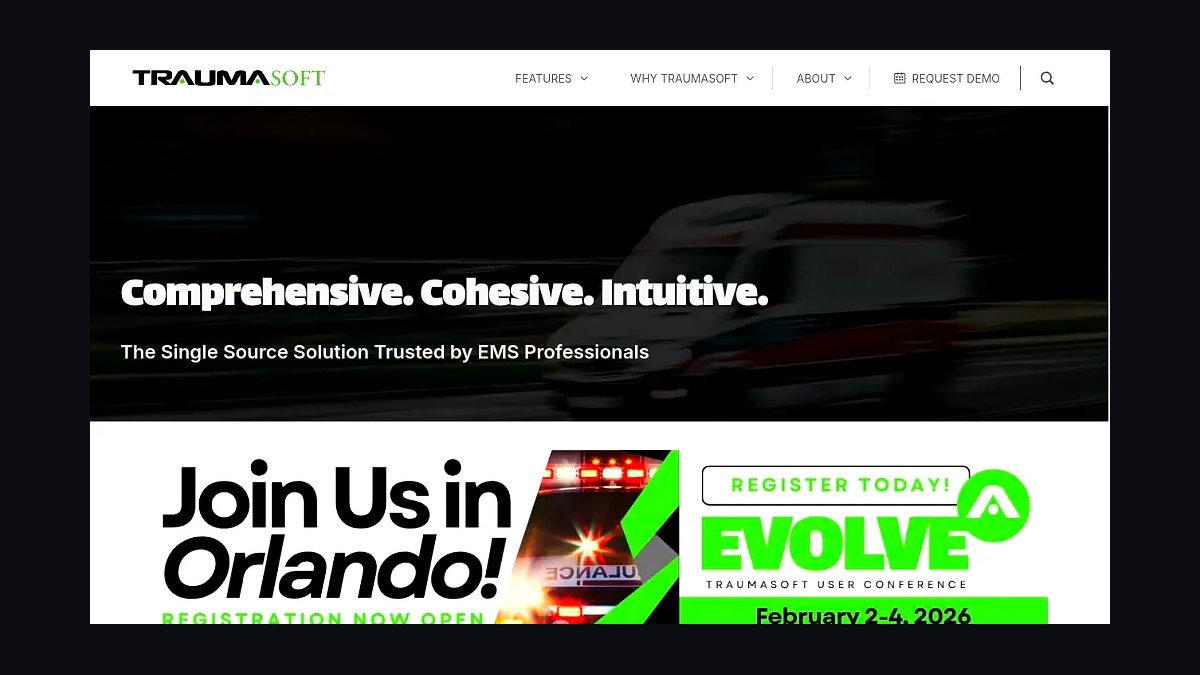
Traumasoft ranks fourth because dispatch, scheduling, ePCR, and billing share one database, which eliminates the re-keying that causes time drift between CAD and the clinical record. Mid-market agencies budget roughly $2,500-$12,000 per year bundled. It handles all three demand streams — 911, inter-facility, and scheduled transports — with ALS/BLS unit typing and response-time tracking against contract SLAs.
This fits regional private ambulance companies that want one vendor instead of a suite of integrations to maintain. It trades away the clinical documentation depth of ImageTrend Elite above it, and its ePCR is not the reason agencies choose it. Against ESO CAD below, Traumasoft is the better mid-market bundle but the weaker pure dispatch engine.
5ESO CAD
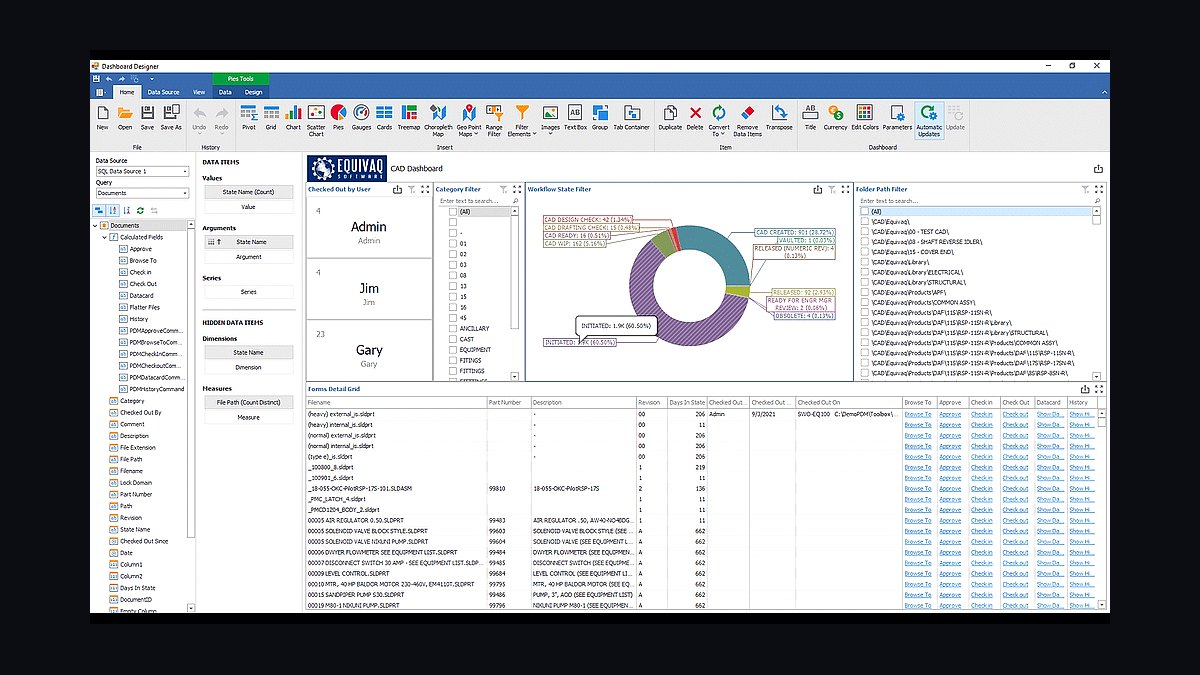
ESO CAD ranks fifth because it wins when the ePCR is already ESO, letting call data flow into the chart with no integration project. It matches ALS and BLS units, crew credentials, and equipment to 911 calls, inter-facility transfers, and scheduled runs while tracking the response-time SLAs written into municipal contracts. Pricing typically bundles into the ESO agreement rather than standing alone.
This is for agencies already standardized on ESO EHR that want dispatch inside the same platform. It trades away the scheduling and billing bundling Traumasoft offers above it, so agencies needing one database across all functions may prefer Traumasoft. Against ZOLL Dispatch below, ESO CAD is the tighter clinical fit but the lighter high-volume 911 tool.
6ZOLL Dispatch
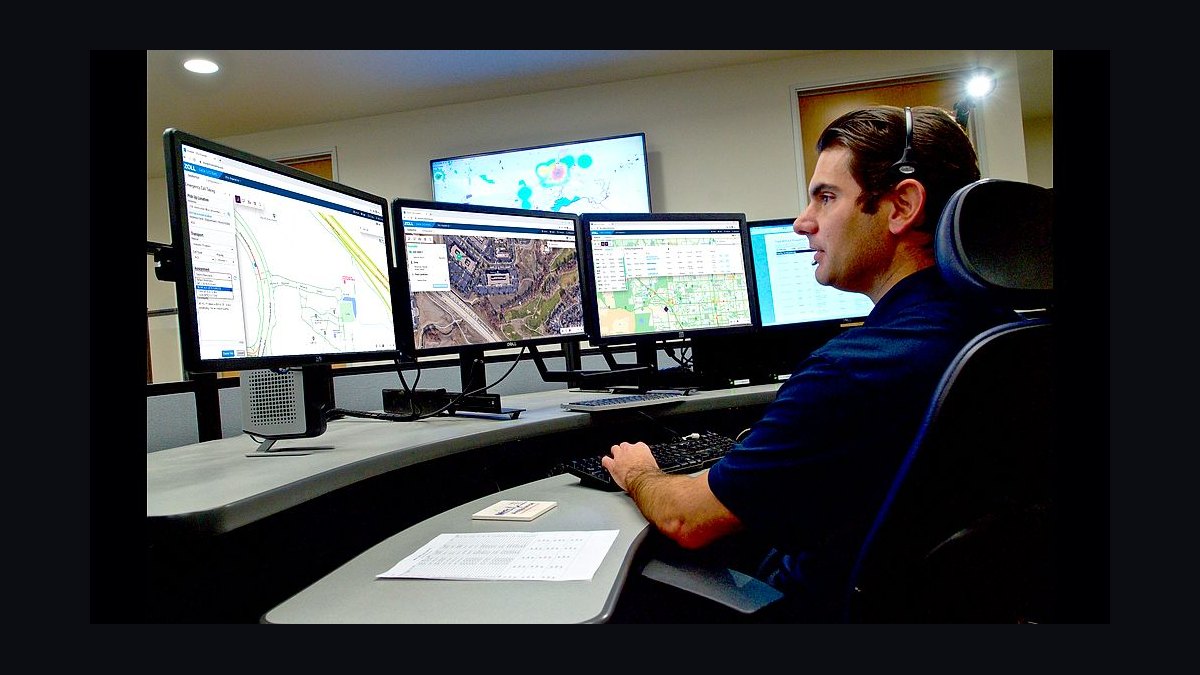
ZOLL Dispatch ranks sixth as the RescueNet dispatch engine built for high-volume 911 operations, where unit-hour utilization and response-time compliance are audited continuously. It matches the right unit type and crew to each call and feeds ZOLL emsCharts and ZOLL Billing without re-entry. Agencies already on ZOLL monitors and ePCR get the tightest end-to-end chain available.
This is for large 911-contract providers whose call volume justifies an enterprise dispatch platform. It trades away the mid-market pricing and bundled scheduling that make Traumasoft attractive above it. Compared with ESO CAD, ZOLL Dispatch is the stronger high-volume engine but the harder fit for agencies outside the ZOLL ecosystem.
7ZOLL Billing

ZOLL Billing ranks seventh because it turns the ePCR into a scrubbed, medical-necessity-supported claim against Medicare, Medicaid, and commercial payers at HCPCS levels A0426 through A0433. AR Boost adds automated insurance discovery that recovers coverage the agency did not know existed. In-house deployments run roughly $3,000-$20,000 per year plus per-claim or percentage fees.
This is for agencies with enough call volume to justify a dedicated revenue-cycle team rather than outsourcing. It trades away the staffing relief that Digitech or EMS|MC provide below it, since running billing in-house requires knowledgeable ambulance billers. Against ESO Billing, ZOLL Billing is the more mature denial-management workhorse but the less integrated option for ESO ePCR shops.
8Digitech Computer
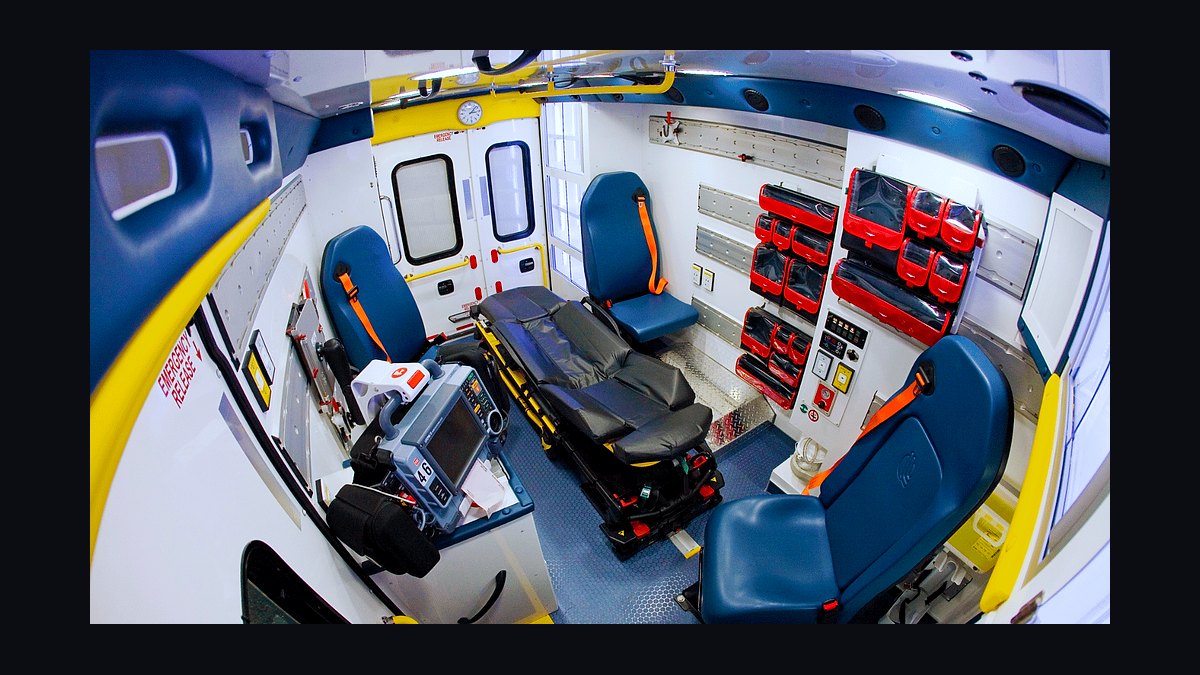
Digitech Computer ranks eighth as the outsourced revenue-cycle option now under R1, charging roughly 4-8% of net collections instead of a license fee. It removes the need to recruit and retain ambulance billers, which most small and many mid-size agencies cannot do. The service handles claim scrubbing, payer follow-up, denials, and appeals on the agency's behalf.
This is for agencies that would rather trade margin for staffing relief and predictable collections. It trades away control over appeals timing and the margin that in-house billing preserves, which is where ZOLL Billing above wins. Against EMS|MC below, Digitech is the larger-scale outsourcer while EMS|MC is the common pick for smaller services.
9Operative IQ
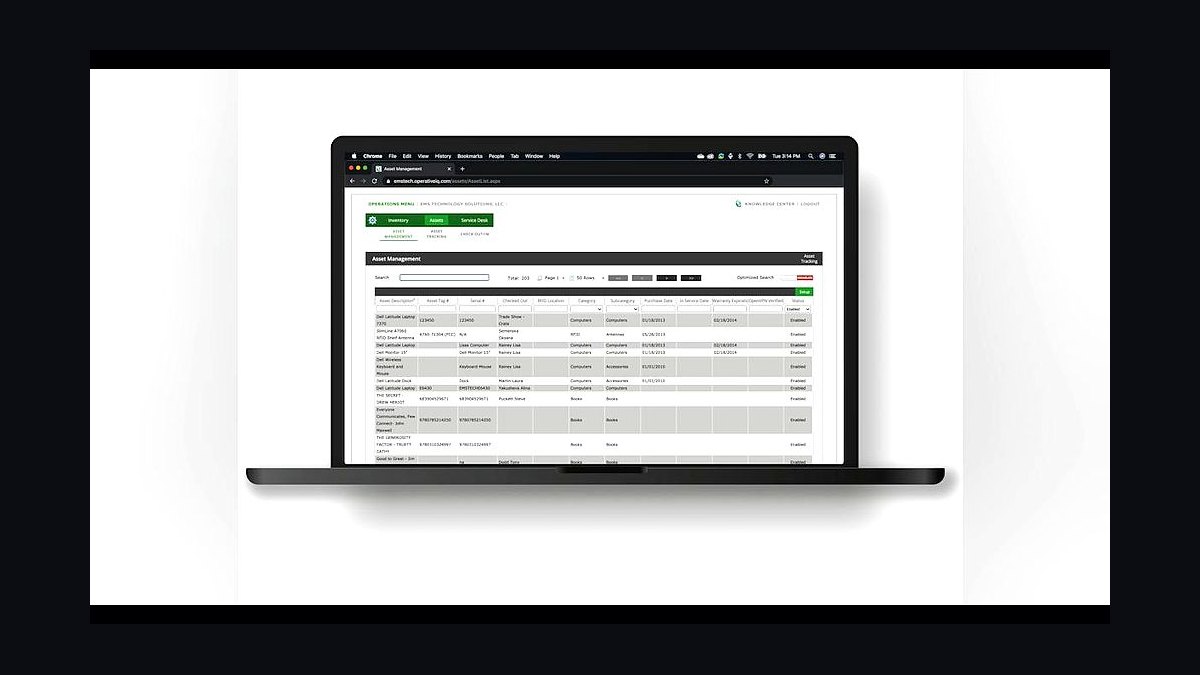
Operative IQ ranks ninth because it tracks fentanyl, midazolam, and morphine dose-by-dose with witnessed waste, chain-of-custody logs, and DEA-ready audit records, plus medication par levels and expiration. It also manages equipment and rig checklists in the same system, running about $2,000-$8,000 per year. A single unreconciled vial can trigger a diversion investigation, so this is license protection.
This is for every agency carrying controlled substances, which in practice means every ALS service. It trades away nothing clinical, since it sits alongside the ePCR rather than replacing any part of it. Against Aladtec below, Operative IQ governs drugs and assets while Aladtec governs people, and agencies running both get the full compliance floor.
10Aladtec
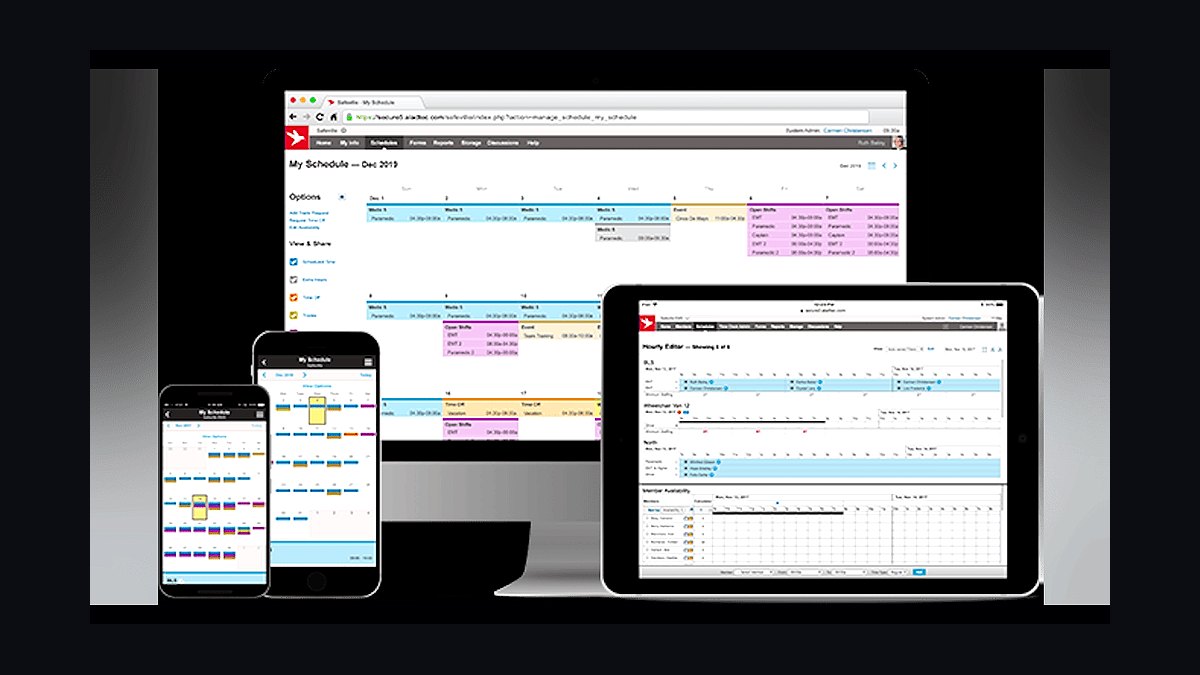
Aladtec ranks tenth because it blocks scheduling a provider whose EMT, AEMT, or paramedic license, ACLS, PALS, or protocol sign-off has lapsed, turning credentialing from a binder into a gate. It builds shift schedules, manages time-off and trades, and runs roughly $1,500-$6,000 per year. That gating prevents the clinical-liability failure of an uncertified provider working an ALS call.
This is for agencies whose scheduling and licensing live in separate systems today, which is most of them. It trades away dispatch integration unless paired with Traumasoft scheduling, which folds credentialing into the dispatch suite. Compared with Operative IQ above, Aladtec governs crew credentials while Operative IQ governs narcotics and assets.
How we ranked these
We ranked each tool on five weighted criteria: NEMSIS 3.5 compliance and state-reporting reliability (25%), depth of integration between ePCR, CAD, and billing (25%), ambulance-specific revenue cycle capability including medical-necessity and PCS handling (20%), compliance features for narcotics chain-of-custody and crew credentialing (15%), and total cost of ownership for a typical private EMS agency (15%).
Scores came from vendor documentation, published pricing, KLAS and IDC analyst commentary, and operator-reported denial rates and go-live timelines.
We deliberately ignored consumer-style reviews, generic fleet or field-service software marketed loosely at EMS, and feature checklists that never touch a patient care report. We excluded NEMT-only platforms because they lack ALS clinical documentation, controlled-substance tracking, and HCPCS-level billing logic. We also ignored raw seat counts and UI polish, since a defensible chart and a paid claim matter far more than a modern dashboard.
Related questions
Why can't a private ambulance company just use a NEMT rides platform?
NEMT software handles pickup times, signatures, and mileage fares. An EMS agency must produce a NEMSIS-compliant patient care report, document assessments, interventions, and medications, track controlled substances dose-by-dose, and bill Medicare under HCPCS levels with medical-necessity proof and a Physician Certification Statement. A rides platform cannot generate any of that, so it fails audits and payer reviews.
Does the ePCR choice have to match the cardiac monitor brand?
It should. ZOLL X Series monitors push 12-lead, capnography, and CPR-quality data most cleanly into ZOLL emsCharts, while Stryker LIFEPAK 15 devices integrate best with ImageTrend Elite or ESO. Mismatched monitor and ePCR vendors usually mean manual transcription of vitals and waveforms, which slows crews and introduces documentation errors that weaken the clinical record.
When does outsourcing ambulance billing beat running it in-house?
Outsourcing to Digitech Computer (R1) or EMS|MC typically costs 4-8% of net collections but removes the need to recruit, train, and retain certified ambulance coders. Small and rural services with low call volume usually come out ahead. Agencies above roughly 25 rigs with steady volume often keep billing in-house on ZOLL Billing or ESO Billing to protect margin.
How do we keep crews from working with lapsed certifications?
Credential data has to gate the schedule, not live in a binder. Aladtec and Traumasoft scheduling block assignment of a provider whose EMT, paramedic, ACLS, or PALS credential has expired, and they alert supervisors weeks ahead of expiration. If scheduling and credentialing are separate systems with no integration, a lapsed paramedic can still be placed on an ALS unit.
What is the minimum viable narcotics tracking setup?
Electronic chain-of-custody with witnessed waste and DEA-ready audit logs. Operative IQ is the EMS-native standard, and ESO offers an inventory module inside the clinical platform. Paper logs and spreadsheets fail the first state or DEA inspection, and a single unreconciled fentanyl vial can trigger a diversion investigation that puts the agency's controlled-substance registration at risk.
How long should an EMS software implementation actually take?
Plan on 90 days for the core stack. Days 0-30 stand up the ePCR and begin NEMSIS state reporting. Days 31-60 bring CAD live with ALS/BLS unit typing and connect billing. Days 61-90 turn on credential gating and build denial-rate and response-time dashboards. Agencies that try to go live on everything at once typically see charting backlogs and claim rejections.
Is an all-in-one platform like AngelTrack good enough for a small service?
For one to three rigs with modest call volume, yes. AngelTrack bundles CAD, ePCR, billing, and scheduling in one affordable database, which removes integration risk and the cost of stitching vendors together. The tradeoff is configuration depth and clinical workflow flexibility. Growing agencies often migrate to ESO or Traumasoft once call volume and payer mix demand more.
What denial rate should an ambulance agency target?
Best-performing private EMS agencies hold first-pass denials under 5% and total denials under 10%. Anything above 15-20% usually signals thin ePCR narratives, missing medical-necessity language, absent PCS forms, or signature defects. Fixing documentation at the ePCR level, before the chart reaches billing, moves the number faster than adding appeals staff.
FAQ
What is the best tech stack for a private ambulance company in 2027?
An ePCR that doubles as the NEMSIS reporting engine, either ESO EHR, ImageTrend Elite, or ZOLL emsCharts. A CAD and scheduling layer such as ESO CAD, Traumasoft, or ZOLL Dispatch. An ambulance revenue cycle on ZOLL Billing, ESO Billing, Digitech, or EMS|MC. Plus Operative IQ for narcotics and Aladtec for credentialing.
Why is the ePCR the center of the stack?
The ePCR is simultaneously the clinical record, the legal document discoverable in litigation, the NEMSIS submission to the state, and the structured data source that justifies the bill. If the chart is thin, billing cannot defend medical necessity and the claim denies. Every other layer either feeds the ePCR or consumes what it produces.
What does NEMSIS 3.5 compliance actually require?
The ePCR must capture and export the national EMS dataset in the current NEMSIS version, including demographics, vitals, medications, procedures, impressions, and disposition, in the format your state accepts. Vendors handle the schema, but your agency owns field mapping and validation. State reporting failures usually trace to unmapped local fields, not vendor defects.
How much should a mid-size EMS agency budget for software?
A four-to-25-rig private EMS operation running mixed 911 and inter-facility work should plan on roughly $30,000 to $120,000 per year. That covers an ESO or Traumasoft suite, Operative IQ for narcotics and assets, Aladtec for credentialing, QuickBooks, and billing fees. Large multi-market operators exceed $150,000 annually.
Can we run CAD and ePCR from different vendors?
Yes, but only with a tested integration. When dispatch and the clinical record do not share data, crews re-key call details, timestamps drift between systems, and response-time reports the city audits will not match the ePCR. ESO and Traumasoft suites avoid this. If you split vendors, demand a reference customer running the same integration.
What is a Physician Certification Statement and why does it matter?
A PCS is the signed physician order confirming that a non-emergency ambulance transport is medically necessary. Medicare and many commercial payers require it for scheduled and inter-facility transports. Missing or defective PCS forms are one of the top denial drivers in ambulance billing, so the billing engine must track signature capture and flag gaps before claim submission.
How does controlled-substance tracking work in an EMS stack?
Every dose of fentanyl, midazolam, or morphine is logged with administering crew, witness for waste, patient, and timestamp, creating a chain-of-custody record a DEA or state inspector can audit. Operative IQ is the EMS-native tool, and ESO offers an inventory module. The system also tracks par levels and expiration so seals are never broken on an expired vial.
What analytics should an EMS operator track first?
Response-time compliance against contract SLAs, unit-hour utilization, first-pass denial rate, and clinical quality measures such as 12-lead acquisition time and pain-management documentation. ESO Analytics delivers these with low lift because the data already lives in the platform. Power BI is the choice when finance, operations, and clinical data must blend into one warehouse view.
Do we need a separate fleet management tool?
Usually not. Operative IQ covers rig checklists, equipment par levels, and asset tracking alongside narcotics, which keeps compliance and vehicle readiness in one system. Fleetio is a stronger dedicated option for larger fleets needing preventive maintenance scheduling, work orders, fuel tracking, and detailed cost-per-mile reporting across many bases.
What is the biggest mistake buyers make when choosing EMS software?
Buying CAD and ePCR separately without a proven integration, then discovering dispatch times and clinical times do not reconcile. The second most common mistake is treating the ePCR as a documentation checkbox rather than the foundation of the claim. Both errors surface as denied claims and failed contract audits within the first year.
Sources
- https://www.nemsis.org/
- https://www.cms.gov/medicare/payment/fee-schedules/ambulance-services
- https://www.eso.com/
- https://www.imagetrend.com/
- https://www.zoll.com/
- https://traumasoft.com/
- https://www.operativeiq.com/
- https://www.aladtec.com/
- https://www.klasresearch.com/
- https://www.gartner.com/en/industries/healthcare
Related on PULSE
This page will be disappearing soon. Save it to your device for $1 — or read it free while it is here.
@Kory-White- · if Venmo asks, the last 4 of my number are 2012
This page is gone.
This one is off the shelf now. $1 keeps it on your phone for good — the whole page, pictures and diagrams included.
 pulse-tech-stacksTop 10 Best Tech Stack Tools for Hair Salons in 2027
 pulse-tech-stacksTop 10 Best Tech Stack Tools for Movie Theaters in 2027
 pulse-tech-stacksTop 10 Best Tech Stack Tools for Independent Dance Studios in 2027
 pulse-tech-stacksTop 10 Best Tech Stack Tools for Vulnerability Management Software Vendors in 2027
 pulse-tech-stacksTop 10 Best Tech Stack Tools for Self-Storage Operators in 2027
 pulse-tech-stacksTop 10 Best Tech Stack Tools for AI Customer Support Companies in 2027
 pulse-tech-stacksTop 10 Best Tech Stack Tools for Garden Centers and Nurseries in 2027
 pulse-tech-stacksTop 10 Best Tech Stack Tools for MSP and IT Services Companies in 2027
 pulse-tech-stacksTop 10 Best Tech Stack Tools for Mobile Threat Defense (MTD) Vendors in 2027
 pulse-tech-stacksTop 10 Best Tech Stack Tools for Employee Benefits Consulting Firms in 2027