
How much ongoing upkeep does a specialty food retailer's tech stack require in 2027?
 Curated byKory White · Fractional CRO · Maryland
 PULSEKNOWLEDGE LIBRARY
Quality
Certified

A specialty food retailer's tech stack in 2027 typically demands 5–12 hours weekly of active upkeep plus 15–25% of software spend on maintenance. Expect quarterly POS updates, monthly integration checks, continuous catalog hygiene, and annual compliance reviews. Smaller shops lean on vendor-managed SaaS; multi-location operators usually need a dedicated part-time systems owner.
What upkeep actually means for a food retail stack
Upkeep is not one job. It is four distinct workloads that get lumped together and then under-resourced. Separating them is the first step toward budgeting honestly.
Break-fix and vendor patching. The POS terminal that stops printing to the kitchen. The scale that loses its PLU table after a firmware push. The card reader that needs a re-pair after a network change. This is reactive, unpredictable, and consumes 1–3 hours per week in a single-location shop with 4–8 connected devices. It scales roughly linearly with device count, not revenue.
Data hygiene. This is the quiet monster in specialty food. A cheese counter with 180 rotating SKUs, a charcuterie program with seasonal producers, a bakery with daily-changing par levels — every one of those items needs a name, a PLU or barcode, a tax flag, a unit-of-measure, a cost, a margin target, and an allergen field. Items churn. Producers change pack sizes. Suppliers rename SKUs between order guides. In a shop carrying 1,200–3,000 active items with 15–30% annual churn, that is 180–900 item records touched per year, and each touch has to propagate to the POS, the e-commerce catalog, the label printer, and the inventory count sheet.
Integration monitoring. Every connection between two systems is a thing that can silently stop working. The POS-to-accounting sync. The e-commerce-to-inventory feed. The loyalty platform reading transaction data. The delivery marketplace pushing orders in. Integrations rarely fail loudly. They fail by going quiet — and you find out three weeks later when the accountant asks why March has no Thursdays in it.

Governance and compliance. PCI DSS 4.0 requirements became mandatory in 2025, which means annual self-assessment questionnaires, quarterly external vulnerability scans for anyone touching card data over a network, and documented access reviews. Add state-level food labeling requirements, nutrition and allergen disclosure rules for prepared items, and — if you ship interstate — a whole second layer of tax nexus configuration that has to be revisited whenever a state changes thresholds.
The reason "how much upkeep" is hard to answer in a single number is that these four workloads have completely different shapes. Break-fix is spiky. Data hygiene is continuous and grinding. Integration monitoring is near-zero until it is a crisis. Compliance is calendar-driven and lumpy. A retailer who budgets only for break-fix — which is what most do, because it is the only one that announces itself — will be chronically behind on the other three.
There is a useful comparison here to adjacent retail categories. A specialty apparel boutique with 800 SKUs has far lower data-hygiene load, because a shirt does not expire, does not have a weight-based price, and does not require an allergen field. A restaurant has high break-fix load but a small, stable menu catalog. Specialty food sits in the worst quadrant of both: high device count *and* high catalog churn *and* regulated product attributes. That is the structural reason upkeep runs heavier here than the generic "small retail" benchmarks suggest.

The upkeep operating rhythm, step by step
The retailers who spend the least total time on upkeep are the ones who run it on a fixed cadence rather than by interrupt. The cadence looks roughly like this in practice.
Daily (10–20 minutes, usually the closing manager). Confirm the POS end-of-day batch settled and the card processor totals match the register report. Check that any online orders from the previous day imported. Glance at the integration status page if your stack has one. This is not a technical task; it is a two-item checklist that catches the majority of silent failures within 24 hours instead of within a month.
Weekly (1–2 hours). Reconcile new and changed items. Run the "items with no cost," "items with no category," and "items sold but not in inventory" reports — nearly every modern POS has some version of these, and they are the cheapest data-quality instrument available. Review price changes that came in with supplier order guides. Clear the receiving queue. Check that scale PLUs and shelf labels match what the POS thinks.
Monthly (2–4 hours). Full integration audit: for each connection, verify record counts on both sides for the prior month. Sales in POS should equal sales in accounting, order count in e-commerce should equal orders in POS, loyalty points issued should tie to qualifying transaction volume. Review user accounts — terminated employees still holding POS logins is one of the most common findings in any retail security review. Apply pending non-critical firmware and app updates in a scheduled window rather than letting them land mid-shift.

Quarterly (4–8 hours). Vendor review: what did each subscription actually cost, what is the renewal date, is anyone still using it. Run the external vulnerability scan if you are in scope for one. Test the restore path — not the backup, the *restore*. Confirm you can actually get the item catalog and the customer list out of every system you depend on, in a format you could import elsewhere. Review margin by category against what the system says versus what a physical count says.
Annually (1–3 days). PCI self-assessment. Contract renegotiation ahead of auto-renewals. Hardware lifecycle assessment — POS terminals realistically last 4–6 years, tablets 3–4, thermal printers 5–7, scales 7–10. Tax configuration review, especially if you added shipping destinations. Full physical inventory reconciled against system quantities, which doubles as the most honest data-quality audit that exists.
The point of writing the cadence down is that it converts an unbounded obligation into a bounded one. "Keep the systems working" is infinite. "Twenty minutes at close, ninety minutes Tuesday morning, half a day the first Monday of the quarter" is a schedule someone can actually own — and, critically, can actually be handed to a new employee when the person who knew everything leaves.
What it costs: hours, dollars, and typical ranges
Ranges below reflect the shape of the work rather than any single vendor's pricing, which varies widely by region, transaction volume, and negotiated terms. Treat them as planning brackets to validate against your own quotes.

Single location, 1,000–2,000 SKUs, one POS station plus a scale and a label printer. Active upkeep lands around 4–6 hours per week, most of it catalog work absorbed by an existing manager rather than a dedicated hire. Software subscriptions in this tier commonly run a few hundred dollars a month across POS, payments, accounting, e-commerce, and email. The maintenance rule of thumb — budget 15–25% of annual software spend for support, upgrades, and the occasional emergency — is the number most operators skip entirely and then finance out of cash flow when a terminal dies in December.
Two to four locations, shared catalog, some centralized purchasing. This is where the curve bends. Upkeep runs 8–14 hours weekly, and the composition shifts: catalog work grows sublinearly (one catalog, more stores) while integration and reconciliation work grows superlinearly (more feeds, more edge cases, more people with logins). Most operators at this size either designate an existing ops person as roughly a half-time systems owner or retain a fractional IT/RevOps contractor on a monthly retainer. Both work. What does not work is leaving it distributed across four store managers, because then nobody owns the catalog and every store invents its own item names.
Five-plus locations or meaningful e-commerce and wholesale. Full-time ownership, or a managed services agreement with defined response times. At this point upkeep is not a task list, it is a role, and the failure mode changes from "things break" to "things drift" — the same product priced three different ways, two customer databases that disagree, a wholesale price list that hasn't matched the POS since spring.
Cost drivers that move the number more than store count:
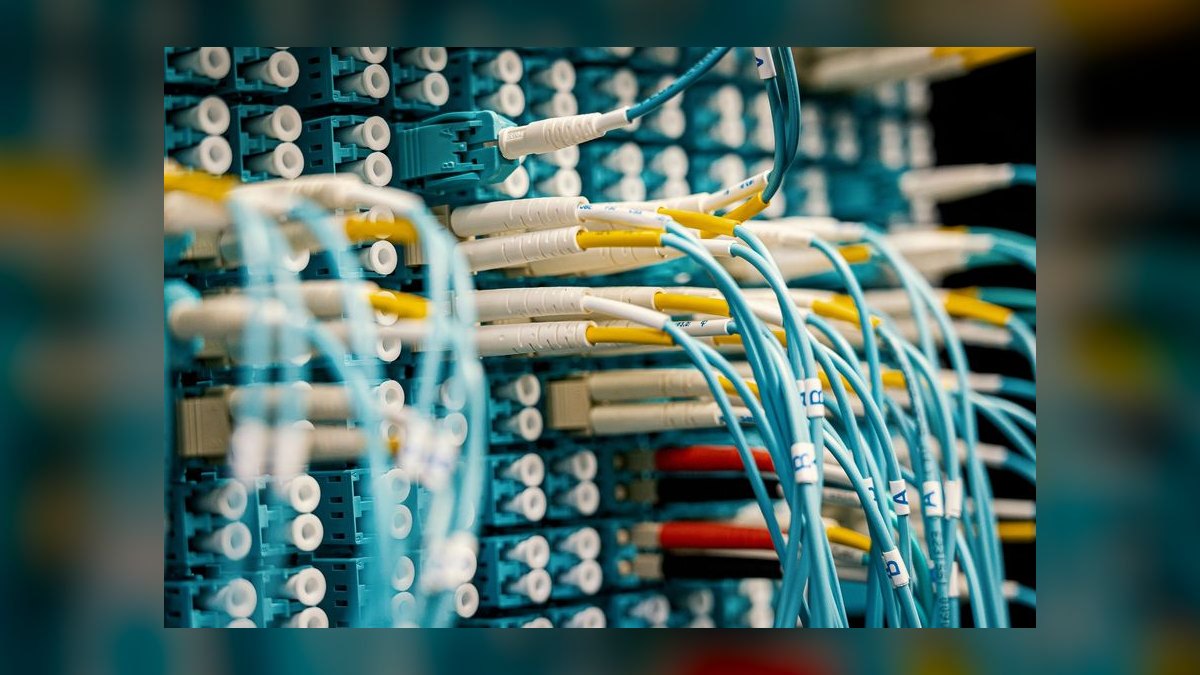
- Device count. Every powered thing on the network is a maintenance surface. Scales and label printers are disproportionately troublesome because their firmware ecosystems are older and their integrations are thinner than a card reader's.
- Catalog volatility. A shop with 400 stable SKUs and one with 400 SKUs rotating monthly have the same inventory value and wildly different upkeep. Seasonality is a multiplier — a retailer with a heavy Q4 gift program effectively runs a second catalog for eight weeks.
- Number of integrations. Rough heuristic: each additional bidirectional integration adds 30–60 minutes of monthly monitoring and one or two incidents per year. Five integrations is manageable. Twelve is a part-time job.
- Custom work. Anything built specifically for you — a custom report, a bespoke connector, a modified receipt layout — carries permanent upkeep. It breaks on the vendor's upgrade schedule, not yours, and the person who wrote it may not be reachable.
- Payments architecture. Semi-integrated payment terminals, where card data never touches your POS, dramatically reduce PCI scope and therefore compliance hours. Retailers still running fully integrated legacy setups carry meaningfully more annual compliance load.
Timelines worth planning against: a POS migration for a specialty food retailer realistically takes 6–12 weeks from contract to stable operation, with the catalog build being the long pole — not the hardware. Budget 1–3 weeks of degraded productivity post-cutover. An e-commerce integration on top of an existing POS is typically 2–6 weeks. A payments processor switch is 2–4 weeks and should never be scheduled inside your busiest quarter.
Where teams get it wrong
Treating upkeep as a cost to minimize rather than a rate to control. Deferred maintenance in a tech stack behaves like deferred maintenance in refrigeration: cheap until it isn't, and the failure arrives at the least convenient moment. The retailers who get burned are rarely the ones who spent too much on upkeep.
No single owner. The most common structural failure. When upkeep is "everyone's job," the catalog develops three naming conventions, nobody knows which reports are trustworthy, and integration failures go unnoticed because each person assumes someone else is watching. One named owner with two hours a week beats four people with thirty minutes each.
Confusing the POS vendor's support with actual coverage. Vendor support fixes the vendor's product. It does not fix your network, your printer driver, your item data, or the interaction between two vendors who each blame the other. That gap — the integration seam — is where most real downtime lives, and no single vendor owns it.
Never testing the restore. Backups that have never been restored are a belief, not a control. The specific thing to test annually: can you export your full item catalog with costs and your customer list, and could you load them into a different system? If the answer is no, you do not have a backup — you have a hostage situation with a monthly invoice.
Letting item data drift because it "still rings up fine." An item with a wrong cost still sells. It just quietly poisons every margin report downstream, which means the category decisions, the pricing decisions, and the buying decisions built on those reports are wrong in ways nobody can see. Data quality problems in food retail are almost never visible at the register; they are visible in the P&L six months later.

Buying for the store you want instead of the store you have. Enterprise-grade platforms carry enterprise-grade upkeep. A three-location cheese shop running a system designed for fifty locations will spend more time maintaining unused capability than operating the parts it needs.
Ignoring the offboarding list. Every departed employee should trigger a checklist: POS login, e-commerce admin, email, shared password vault, delivery-marketplace portal, supplier ordering sites. This takes ten minutes at departure and is nearly impossible to reconstruct a year later.
Stacking point solutions. Each individually-reasonable tool — a scheduling app, a separate loyalty platform, a standalone email tool, a review manager — adds a subscription, a login, a data island, and a monitoring obligation. Four tools that each save twenty minutes a week can collectively cost more upkeep than they save. The consolidation question is worth asking annually.
Choosing your upkeep model
There are three viable models, and the right one is determined mostly by location count, integration count, and whether you have anyone internally who is genuinely comfortable with systems work.

Vendor-managed / all-in-one. Pick a platform that bundles POS, payments, inventory, and e-commerce, and accept its constraints. You trade flexibility for a dramatically smaller integration surface — which is the single largest driver of ongoing upkeep. Best for single-location and small multi-location retailers with modest e-commerce. The real cost is switching cost later, and reduced leverage on payment processing rates.
Internal owner with best-of-breed tools. Choose the best POS for food retail, the best e-commerce for your category, and connect them. More capability, more upkeep — this model only works if you actually designate an owner and protect their time. Best for two to five locations with real e-commerce or wholesale volume.
Outsourced managed services. A retainer with a firm that handles patching, monitoring, and escalation. Predictable cost, defined response times, no key-person risk. Best when you have multiple locations and no internal appetite for systems work. The trap is retainers that cover hardware and network but explicitly exclude application-layer and data work — which is where most specialty food upkeep actually lives. Read that scope carefully.
A practical sequencing note: whichever model you choose, do the catalog governance work first. Naming conventions, category taxonomy, required fields, and who is allowed to create an item — those decisions cost nothing to make and are brutally expensive to retrofit across three systems and 2,000 records. Every retailer who has migrated a POS says the same thing afterward: the platform was fine, the data was the problem.

Adjacent pressures that raise the 2027 baseline
A few forces outside the stack itself are pushing ongoing upkeep upward, and they are worth budgeting for even though none of them is a line item.
Payments and compliance tightening. PCI DSS 4.0's full requirement set is now in force, and the practical effect for small retailers is more documentation, more frequent scanning, and more scrutiny of who has access to what. Retailers who moved to semi-integrated or point-to-point-encrypted terminals largely sidestepped this; those who didn't now carry a recurring annual obligation that did not exist five years ago.
Traceability and labeling. The FDA's Food Traceability Rule creates recordkeeping obligations for a specific list of higher-risk foods — a list that touches plenty of specialty retail categories including certain cheeses, fresh produce, and ready-to-eat items. Meeting it means item-level data your POS may not have been designed to hold: traceability lot codes, source locations, and the ability to produce records on request within a defined window. Whether you satisfy that with a system field, a spreadsheet, or a dedicated tool, it is new ongoing data work.

Marketplace and delivery sprawl. Every delivery platform, local marketplace, and gift-box channel is another catalog to keep in sync, another menu that goes stale, another set of hours and holiday closures to update. Channel expansion is a revenue decision that quietly creates a maintenance obligation, and the maintenance obligation usually isn't in the business case.
Staff turnover in retail. High turnover is an upkeep multiplier through a channel people underestimate: access management, retraining on system procedures, and the loss of undocumented institutional knowledge about how the stack actually works. Documentation is the hedge, and it is the first thing to get skipped.
AI features arriving inside existing tools. Forecasting, reorder suggestions, and copy generation are landing inside POS and e-commerce platforms rather than as separate purchases. These are genuinely useful and they are not free — they require clean historical data to work, which raises the return on data hygiene, and they require periodic validation, because a forecasting model quietly drifting after a category change will confidently order the wrong things for months.
The through-line across all five: the amount of *hardware* upkeep in a specialty food stack has been flat or declining for years, while *data and governance* upkeep has been rising. If you are budgeting 2027 upkeep using a 2020 mental model, you are probably over-allocating to devices and badly under-allocating to the item catalog, the integration seams, and the compliance calendar.
Related questions
How many hours per week should a single-location specialty food shop budget?
Roughly 4–6 hours of active work — about 15 minutes daily at close, 1–2 hours weekly on catalog and receiving, and a few hours monthly on reconciliation. Most of it is absorbed by an existing manager rather than requiring a hire.
What percentage of software spend should go to maintenance?
Plan 15–25% of annual software subscription cost for support, upgrades, emergency replacement, and occasional contractor help. Stacks with heavy customization or many integrations sit at the top of that range; bundled all-in-one platforms sit at the bottom.
Does an all-in-one platform really reduce upkeep?
Meaningfully, yes — mostly by shrinking the integration surface, which is the largest upkeep driver after catalog churn. The trade is flexibility, payment-processing leverage, and switching cost later. For single-location retailers the trade usually favors the bundle.
What's the most-skipped maintenance task?
Testing the restore. Backups are configured and then never validated, so nobody discovers until a real incident that the export is incomplete, the format is unusable, or the item costs didn't come along. Test it annually with an actual export.
How does upkeep change with wholesale or e-commerce added?
Add roughly 2–4 hours weekly per meaningful channel. Each one brings its own catalog view, pricing tier, and inventory allocation logic, plus a sync that needs monthly verification. Channel expansion is a maintenance decision as much as a revenue decision.
FAQ
How much ongoing upkeep does a specialty food retailer's tech stack require in 2027?
Plan on 5–12 hours of active weekly work depending on location and integration count, plus 15–25% of annual software spend reserved for maintenance, upgrades, and emergency replacement. Single-location shops sit at the low end and typically absorb the work into an existing manager's schedule. Multi-location operators with e-commerce or wholesale generally need a designated half-time systems owner or a monthly contractor retainer. The work splits across break-fix, catalog data hygiene, integration monitoring, and compliance — and the last three are the ones most retailers under-budget because they never announce themselves.
What drives upkeep more than anything else?
Two things: catalog churn and integration count. A specialty retailer rotating 15–30% of items annually generates continuous data work regardless of store count, and every bidirectional system connection adds monitoring load plus an incident or two per year. Store count matters less than most operators expect — a single location with nine integrations and a fast-rotating catalog is more work than three stores sharing a stable one.
Can one person handle it, or does it require dedicated staff?
Below roughly four locations, one designated owner spending part of their week is usually sufficient — provided they are actually designated and their time is protected. Above that, or with significant e-commerce and wholesale complexity, it becomes a role rather than a task list. The failure mode is not "too few hours," it's "no owner": distributed responsibility reliably produces catalog drift and unnoticed sync failures.
How do I know if my current upkeep is inadequate?
Look for four symptoms: exception reports you can't clear, margin numbers you don't trust, integration gaps you discover during month-end rather than the same day, and at least one system only one person knows how to operate. Any two of those together means you are running a deficit that will surface as a crisis rather than a gradual decline.
Does moving to cloud-based systems eliminate upkeep?
It changes the mix, not the total. Cloud platforms remove server patching, backup infrastructure, and much of the hardware lifecycle burden. They do not touch catalog hygiene, integration monitoring, user access management, or compliance documentation — which together are the majority of ongoing work for a specialty food retailer. Expect a shift from infrastructure hours toward data and governance hours.
When should upkeep trigger a replatform instead of more maintenance?
When maintenance is structural rather than incidental: the system can't hold data you're now required to keep, integrations need custom code to work at all, or the vendor's roadmap has visibly stalled. Rising hours alone isn't the signal — growth raises hours legitimately. The signal is hours spent working *around* the system rather than *in* it.
Sources
- PCI Security Standards Council — PCI DSS Documents Library
- FDA — Food Traceability Rule (FSMA Section 204)
- FDA — Food Labeling & Nutrition
- NIST Small Business Cybersecurity Corner
- U.S. Small Business Administration — Manage Your Business
- National Retail Federation — Research
- Bureau of Labor Statistics — Job Openings and Labor Turnover Survey
- FTC — Cybersecurity for Small Business
- CISA — Cyber Essentials
Related on PULSE
- [How much does a specialty food retailer's tech stack cost to build in 2027?](/knowledge.html?q=specialty-food-retailer-tech-stack-cost)
- [What POS features matter most for a specialty food retailer?](/knowledge.html?q=specialty-food-pos-features)
- [How do small retailers keep product catalog data clean across systems?](/knowledge.html?q=retail-catalog-data-hygiene)
- [What does a POS migration actually take for a small retailer?](/knowledge.html?q=small-retail-pos-migration-timeline)
- [How many integrations is too many for a small business tech stack?](/knowledge.html?q=small-business-integration-sprawl)
- [What does PCI compliance require from a small retail operation?](/knowledge.html?q=small-retail-pci-compliance)
This page will be disappearing soon. Save it to your device for $1 — or read it free while it is here.
@Kory-White- · if Venmo asks, the last 4 of my number are 2012
This page is gone.
This one is off the shelf now. $1 keeps it on your phone for good — the whole page, pictures and diagrams included.
 pulse-tech-stacksWhat is the best tech stack for a commercial parking operator in 2027?
 pulse-tech-stacksWhat is the best tech stack for a commercial security & alarm monitoring company in 2027?
 pulse-tech-stacksWhat is the best tech stack for a hedge fund in 2027?
 pulse-tech-stacksWhat is the recommended AI Code Review sales and operations tech stack in 2027?
 pulse-tech-stacksTop 10 Head-to-Head Tech Stack Comparisons for Specialty Coffee Shop Chains vs. Independent Cafes in 2027
 pulse-tech-stacksThe Odoo vs. SuiteCRM Stack for a Multi-Location Specialty Retailer in 2027
 pulse-tech-stacksWhat is the best tech stack for an independent retail pharmacy in 2027?
 pulse-tech-stacksWhat is the best tech stack for a veterinary practice in 2027?
 pulse-tech-stacksWhat is the recommended Food Delivery Marketplace sales and operations tech stack in 2027?
 pulse-tech-stacksWhat is the best tech stack for an electrical supply distributor in 2027?