

Best Cellular and Wireless Carrier in Indiana in 2027
 Curated byKory White · Fractional CRO · Maryland
Quality
Certified

Verizon is the best overall cellular and wireless carrier in Indiana for 2027, because its low-band spectrum holds up across farmland, state highways, and the I-65/I-69/I-70 corridors where other networks thin out. T-Mobile is the better pick inside Indianapolis, Carmel, Fishers, and Fort Wayne, where its mid-band 5G delivers faster everyday speeds at a lower monthly price.
Verizon versus T-Mobile, and why Indiana splits the decision
Most "best carrier" arguments collapse once you look at a state's actual shape, and Indiana has a shape that punishes generic advice. The state runs roughly 270 miles north to south and covers 92 counties, but the population is stacked into a handful of metros: the Indianapolis metro area, the Fort Wayne region in the northeast, the South Bend–Elkhart corridor along the Michigan line, Evansville in the southwest pocket, and the Gary–Hammond edge of the Chicago metro. Between those clusters sits a lot of corn, soybeans, gravel county roads, river bluffs in the south, and the wooded terrain around Brown County and the Hoosier National Forest. A carrier can look outstanding in a benchmark that samples Indianapolis heavily and still leave you stranded outside Vincennes.
That geographic split is exactly why the Verizon-versus-T-Mobile question doesn't have one answer. Verizon's strength has historically come from low-band spectrum in the 700–850 MHz range. Low-band travels far and bends around obstructions — it goes through a farmhouse's aluminum siding, past a treeline, and over a ridge in a way mid-band simply doesn't. The trade-off is capacity: low-band channels are narrow, so speeds are modest. That's an acceptable bargain if your alternative is no bars at all.
T-Mobile's strength is the opposite bargain. Its 2.5 GHz mid-band deployment — the spectrum that came out of the Sprint merger — is the reason T-Mobile posts the fastest median 5G speeds in most U.S. metro markets, including Indiana's cities. Mid-band carries much wider channels, so a single sector can push far more throughput. But 2.5 GHz doesn't travel like 700 MHz. It fades faster with distance and struggles more with building materials, dense foliage, and hills. In practice that means T-Mobile's map looks superb along interstates and inside metros and gets patchier in the rural southwest and along the Ohio River counties.
AT&T is the third genuine statewide option and it splits the difference. Its low-band footprint is solid — it's particularly reliable across the flat farm country of the northeast, including Elkhart and LaGrange counties — and its FirstNet build gives priority network access to first responders in every county, which matters if you're a volunteer firefighter, EMT, or county deputy. AT&T's mid-band 5G has expanded steadily but generally trails T-Mobile on raw median speed in Indiana metros.

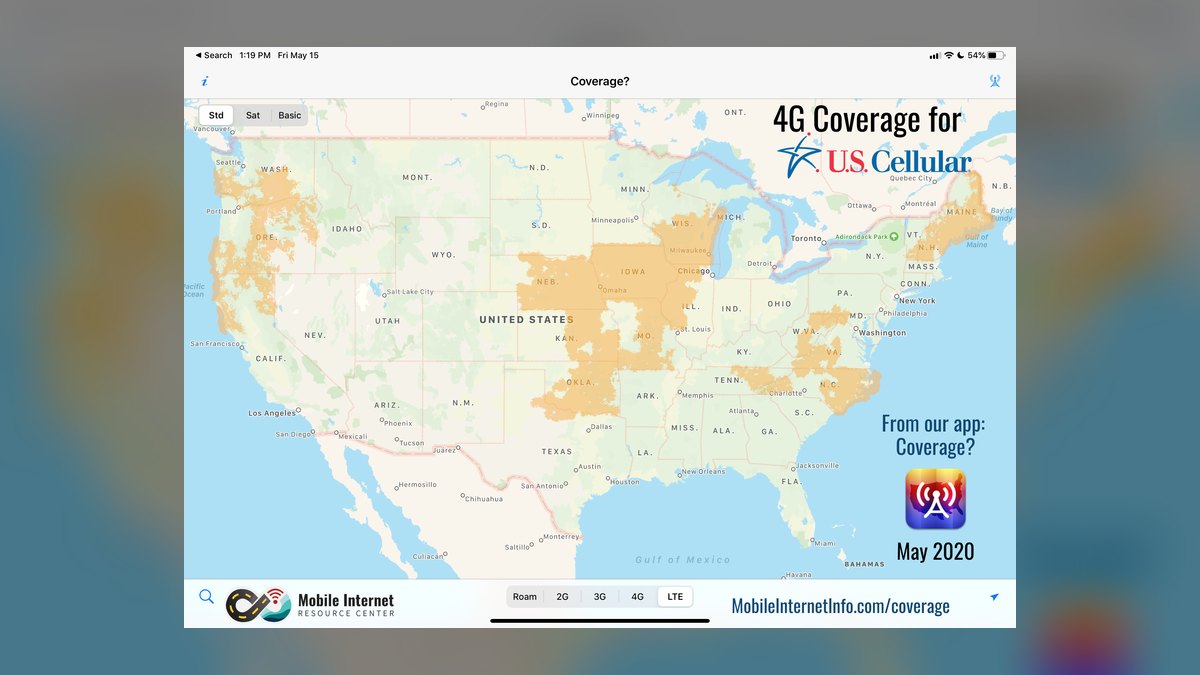
Then there's the tier most people ignore: the regional and MVNO layer. UScellular has real towers and real stores in southern and central Indiana, which is a legitimate advantage in towns where the nearest big-carrier corporate store is an hour away. Visible runs on Verizon's network at a fraction of postpaid pricing. Mint Mobile and Google Fi ride T-Mobile. Cricket rides AT&T. Xfinity Mobile rides Verizon and is bundled with home internet. Boost operates its own build plus roaming agreements. Every one of these inherits its host network's Indiana coverage map almost exactly — what changes is price, priority, and support.
That last word, priority, is the concept that trips up more Hoosiers than any other. When a tower gets congested — a Colts game, the Indiana State Fair, move-in weekend at Purdue or IU, race weekend at the Speedway — the network sheds load by serving postpaid customers first and prepaid/MVNO customers second. Your Visible line and your neighbor's Verizon postpaid line use identical towers and identical spectrum, and on a quiet Tuesday in Kokomo they'll test the same. In a packed stadium they will not. Buying the cheap plan isn't buying a worse network; it's buying a worse seat on the same network.
How to decide between them without guessing
The single most common mistake is choosing a carrier from a national review and then discovering the problem three months into a device payment plan. The decision should run off your own geography, in a fixed order, and it should end in a test rather than a leap of faith.

Start by listing the four or five places where a dropped call actually costs you something. For most people that's home, work, the commute route, and one or two recurring destinations — a parents' house in Terre Haute, a job site outside Columbus, a lake place near Monroe. Coverage anywhere else is a nice-to-have. This list is the entire basis of the decision, and writing it down keeps you from over-weighting a metro benchmark that has nothing to do with your week.
Next, run each address through the carriers' own coverage maps at the street level, not the city level. All the majors publish address-level lookups. Read the legend carefully: there's a meaningful difference between a tile marked as 5G mid-band, one marked as basic 5G riding low-band, one marked 4G LTE only, and one marked "partner" or "roaming" coverage. A roaming tile means you'll connect, but possibly at deprioritized speeds, with hotspot restricted, and with a data ceiling before the roaming agreement cuts you off.
Then check whether your problem is outdoors or indoors. Outdoor coverage is what maps show. Indoor coverage is what you actually experience, and it's governed by building materials — brick, metal roofing, foil-backed insulation, basement offices, and the metal-sided pole barns that are everywhere in rural Indiana all attenuate signal badly. If your dead zone is inside a structure that has good outdoor signal at the driveway, the fix is usually not a carrier switch. It's Wi-Fi calling on your existing home internet, or a signal booster, or a femtocell. Switching carriers to solve an indoor problem is the most expensive way to not fix it.
Only after all of that does price enter. Price is the last filter because a cheap plan on a network that doesn't reach your house is worth zero, while an expensive plan on a network that reaches everywhere is at least worth something.

The last two boxes matter more than the rest combined. Port your number only after the trial passes, and buy the phone last. A device installment plan is what converts a bad carrier choice into a two- or three-year problem, because the remaining balance becomes due the moment you want to leave. Trial first, port second, finance third — in that order, a wrong guess costs you a month instead of a contract.
The numbers that actually separate the options
Carrier marketing leans on population coverage percentages, and those numbers are close enough between the top three that they're nearly useless as a differentiator. When a carrier claims coverage of the high-90s percent of Indiana's population, remember that population coverage is weighted toward where people live — which means Indianapolis, Fort Wayne, Evansville, South Bend, Bloomington, Lafayette, and Carmel dominate the figure. Land-area coverage is the number that would tell you about the drive to a job site in Sullivan County, and carriers rarely publish it prominently. A two-point gap in population coverage can represent an enormous gap in square miles.
The numbers worth collecting yourself, in rough order of usefulness:
Signal strength in dBm at your key locations. Both iOS and Android expose this in field-test or status menus. Roughly, better than -85 dBm is strong, -85 to -100 dBm is workable, -100 to -110 dBm is marginal and where calls start dropping, and worse than -110 dBm is effectively unusable for anything but a text. This single measurement, taken standing in your kitchen and again in your driveway, tells you more than any national ranking.

Band and technology on the connection. Knowing you're on 5G is close to meaningless without knowing which flavor. A low-band 5G connection can be slower than a good LTE connection on the same tower. Mid-band 5G in the 2.5 GHz range typically delivers a genuinely different experience — video calls that don't stutter, large downloads that finish. Millimeter-wave, which exists in a few dense pockets like downtown Indianapolis and specific large venues, is spectacular within a block and gone beyond it.
Latency, not just download speed. Everyday frustration correlates far better with round-trip latency than with peak throughput. Anything under roughly 30 ms feels instant for calls and video conferencing. Above 70–80 ms, video calls start feeling like a walkie-talkie. Standalone 5G deployments generally improve latency versus non-standalone modes that anchor to an LTE core.
Premium data allowance before deprioritization. Postpaid unlimited plans across the majors commonly cap high-priority data somewhere in the tens of gigabytes per line per cycle, after which you're the first to slow when a tower is busy. If a household streams heavily on cellular, the difference between a plan with a modest premium allowance and one with a large one shows up as a mysterious slowdown in the last week of every billing cycle.
Hotspot allowance and hotspot speed. These are separate limits and both matter. A plan can advertise "unlimited hotspot" while capping the hotspot throughput at a speed that's fine for email and useless for video. If you tether a laptop for work from a truck or a field office, read the hotspot line before you read the price line.

All-in monthly cost, not headline price. Some carriers quote taxes-and-fees-included pricing and some don't, which can swing the real bill meaningfully per line. Autopay and paperless discounts are typically baked into the advertised price and disappear if you pay by card in a way that doesn't qualify. Multi-line pricing changes the math dramatically — per-line cost usually drops steeply from one line to four, which is why a family comparison and a single-line comparison can produce opposite winners.
Device subsidy structure and its lock-in. Big trade-in promotions are usually paid out as bill credits spread over 24 or 36 months. Leave early and the remaining credits vanish while the device balance accelerates. The advertised discount is real, but it's a retention mechanism as much as a discount, and it should be priced as one.
There's also a fixed-wireless angle worth pricing at the same time. Verizon, T-Mobile, and AT&T all sell home internet delivered over their cellular networks, and in Indiana it's genuinely competitive in places where the wired options are one cable incumbent or slow DSL. It's also the same tower, so a fixed-wireless test is an excellent proxy: if the home internet product performs well at your address, your phone will too. Bundle pricing frequently discounts the mobile lines when you take both, which can change the ranking outright.

Sequencing the switch so nothing breaks
Switching carriers is not risky, but it's easy to do in an order that creates a bad week. The failure modes are predictable: porting before testing, cancelling the old line before the port completes, losing two-factor authentication access mid-transition, and forgetting that the number is attached to devices nobody thinks about — a smartwatch, an alarm panel, a tractor telematics unit, a work dispatch system.
Begin with an eSIM trial on a second line while your existing service keeps running. Nearly every modern phone supports at least one eSIM alongside a physical SIM, and the majors offer trial periods designed exactly for this. Carry both networks for a full billing-cycle's worth of normal life — including a weekend, a workday, and the drive you make most often. A single afternoon's test in a parking lot proves nothing.
While the trial runs, take measurements deliberately rather than by vibe. Same times of day, same spots, both networks, written down. Peak-hour behavior is the whole ballgame; a tower that's fine at 6 a.m. can be saturated at 6 p.m. Rush hour on I-65 through the Indianapolis interchanges, or a Friday evening on I-69, is where congestion differences become obvious.
Before porting, do the account hygiene. Find your account number and transfer PIN from the current carrier — most now require a specifically generated port-out PIN, and hunting for it mid-port is where people stall. Confirm the account holder name and billing address match what you'll type, because a mismatch is the most common port rejection. Unlock the device if it's carrier-locked, which typically requires the device to be paid off and active for a minimum period.

Then protect your authentication before anything moves. Any account using SMS codes for login will be briefly vulnerable during the transition window — banking, email, brokerage, work SSO. Move what you can to an authenticator app in advance. Also set a port-out PIN or number-lock on the *new* account once it's live; that's the control that blocks SIM-swap fraud, and it's worth thirty seconds.
After the port lands, run a short verification checklist rather than assuming success. Place a call out and receive one in. Send and receive a picture message, since MMS provisioning fails independently of voice more often than people expect. Confirm visual voicemail is actually provisioned, not just installed. Turn Wi-Fi calling on and register your E911 address, which is a legal requirement and also the thing that sends help to the right house. Re-pair any connected watch, because cellular watch lines have to be reprovisioned separately and will silently stay dead otherwise.
Don't cancel the old account until you've confirmed all of that and received a final bill. Porting a number out generally closes the old line automatically; calling to cancel first is what causes numbers to be lost permanently, and a lost number cannot reliably be recovered.
Adjacent decisions this same reasoning solves
The framework above — map the geography, identify the spectrum trade-off, test before committing — generalizes past the phone in your pocket, and in Indiana several adjacent decisions run on exactly the same logic.

Home internet where wired options are thin. Fixed wireless access sold by the mobile carriers is now a real competitor to cable and DSL in much of Indiana, and it's evaluated identically: which tower serves your address, which bands does it have, how congested does it get at 8 p.m. The one extra variable is placement. FWA gateways are enormously sensitive to where they sit — a second-floor window facing the tower can be several times faster than a basement corner. If you're testing FWA, test three positions before drawing conclusions.
Fleet and field-service connectivity. Contractors, ag operators, and service companies running trucks across multiple counties face a version of the same split, but with a different weighting: for a fleet, a total dead zone costs a dispatch failure while merely slow data costs almost nothing. That pushes fleets decisively toward the widest low-band footprint, and it's why many field operations run one carrier for the trucks and a different one for the office. Multi-carrier routers that hold two SIMs and fail over automatically exist precisely because no single network covers every Indiana county equally.
Agricultural and IoT telematics. Precision-ag equipment, grain-bin monitors, irrigation controllers, and livestock sensors mostly ride LPWAN technologies layered onto the same carrier networks. These are optimized for tiny messages at extreme range and long battery life, which means they often work in places where a voice call won't. If your complaint is "my equipment reports fine but my phone has no bars in the same field," that's not a contradiction — it's two different radio designs doing what they were built for.
Business lines and the priority question. Business plans on the major networks frequently include higher network priority tiers, and for a small company that difference is worth more than the price gap. If your crew can't reach dispatch during a storm response or a busy Saturday, the cheap plan just cost you a job. This is also where FirstNet matters: public-safety-eligible users get a genuinely separate priority lane, which is a real reason for volunteer responders in rural counties to weigh AT&T differently than their neighbors would.
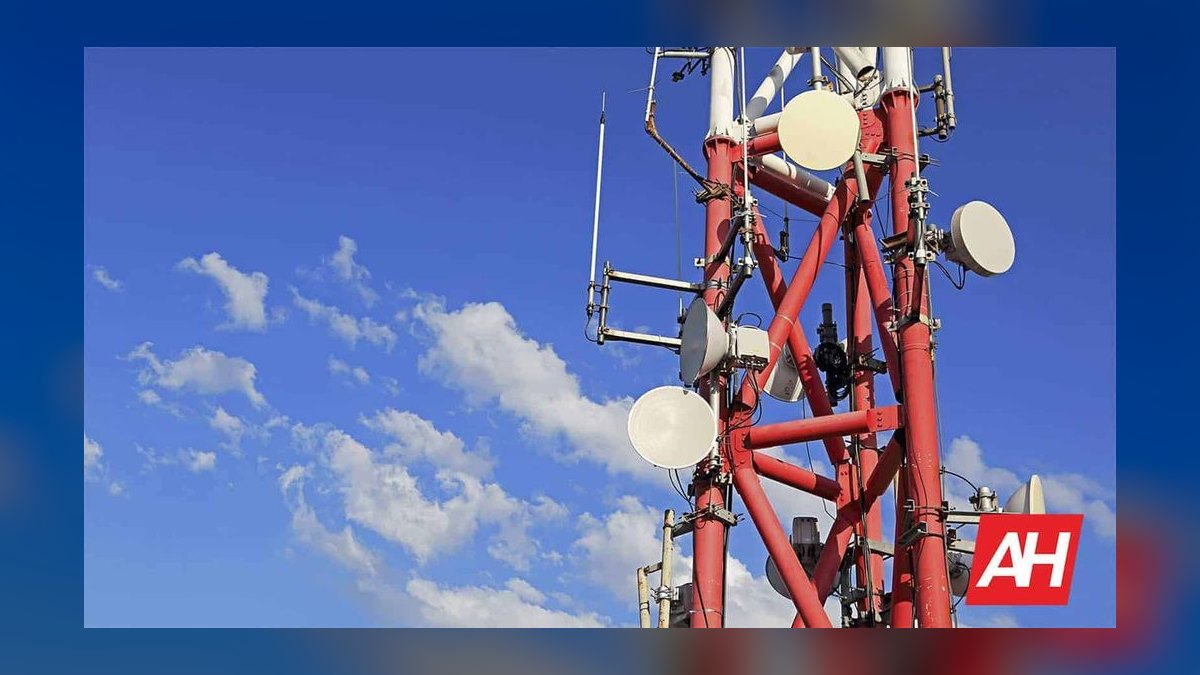
Backup and redundancy. If connectivity is load-bearing for your income, one network is a single point of failure. A cheap prepaid line on a *different* network family, kept in a drawer or as a second eSIM profile, is inexpensive insurance. The point isn't to have two good networks; it's that the outage modes are usually uncorrelated — a fiber cut, a power event at a tower site, or a software fault rarely hits two carriers at once.
Travel outside Indiana. If you regularly cross into Illinois, Kentucky, Ohio, or Michigan for work, extend your must-work location list across the line. Coverage doesn't respect state borders, but carrier build priorities do differ regionally, and the network that's excellent in Fort Wayne may behave differently an hour east.
What to watch through 2027 and beyond
Two forces will keep reshaping the Indiana ranking, and both argue for staying flexible rather than locking into long device commitments.
The first is continuing mid-band densification. All three national carriers are still adding mid-band capacity to existing sites and filling in new ones, and each new site changes the local answer. A town that had one clear best carrier in 2025 may have a different one now, purely because someone lit up a new sector. That's a strong argument for re-testing every couple of years rather than assuming your 2023 conclusion still holds.
The second is subsidized rural build-out. Federal and state broadband programs have directed substantial funding toward closing rural gaps, and while much of that targets fiber, the fixed-wireless and mobile networks benefit from the same fiber backhaul. Better backhaul to a rural tower often improves that tower's mobile performance as a side effect. Practically, this means rural Indiana coverage is a moving target that generally moves in your favor — so a coverage gap today is not necessarily permanent.
A third, slower shift worth knowing about: direct-to-device satellite messaging. Several carriers have partnered with satellite operators to deliver basic texting where there's no terrestrial signal at all. It's not a coverage substitute — it's currently limited, latency-heavy, and mostly text-oriented — but it changes the stakes of a true dead zone from "unreachable" to "reachable slowly." For someone whose only concern is being able to call for help from a remote field or a state forest, that's a meaningful safety floor even on an otherwise imperfect network.
None of this changes the core recommendation. For statewide reliability across Indiana's rural counties, state routes, and interstate corridors, Verizon remains the safest default, with AT&T a close and sometimes better alternative in the northeast and for public-safety users. For metro-centric users who want the fastest everyday speeds at a lower monthly cost, T-Mobile is the stronger buy. And for anyone in southern Indiana who values a store they can walk into, UScellular is a legitimate option that national reviews consistently underrate. Verify with a trial in your own locations, and let the measurements — not the marketing — settle it.
Related questions
Does a prepaid brand get the same coverage as its parent carrier?
Yes — the same towers and the same spectrum. What differs is network priority during congestion, hotspot allowances, and sometimes access to the fastest 5G tiers. On an uncongested tower the experience is identical; in a packed venue the prepaid line slows first.
Will a signal booster fix a rural dead zone?
Only if there's usable outdoor signal to amplify. Boosters take an existing outdoor signal and rebroadcast it inside; they cannot create coverage where none exists. If your driveway shows no bars, a booster won't help — Wi-Fi calling over satellite or wired internet is the better fix.
Is 5G always faster than 4G LTE?
No. Low-band 5G can be slower than a strong LTE connection on the same tower because the channel is narrow. The speed jump comes from mid-band 5G. Check which band you're actually on before concluding the network is bad.
How long does porting a phone number take?
Wireless-to-wireless ports usually complete within a few hours, occasionally up to a business day. Landline ports take longer. Never cancel the old account first — porting closes it automatically, and cancelling early can lose the number permanently.
Should I buy the phone from the carrier or unlocked?
Carrier device promotions can be substantial but are paid as bill credits over 24–36 months, which locks you in. An unlocked phone costs more upfront and keeps you free to switch. If you're unsure about coverage, buy unlocked.
FAQ
Which carrier has the best rural coverage in Indiana?
Verizon generally leads for rural Indiana because of its low-band spectrum footprint, which reaches farther across open farmland and penetrates buildings better than mid-band. AT&T is very close and is often equal or better in the flat northeastern counties. The honest answer is county-specific: check both carriers' address-level maps for your exact location, then trial the better-looking one, because a single tower's placement can flip the answer within a few miles.
Is T-Mobile good enough in Indianapolis and its suburbs?
Yes. In the Indianapolis metro, including Carmel, Fishers, Noblesville, and Greenwood, T-Mobile's mid-band 5G typically delivers the fastest everyday speeds of the three national carriers, usually at a lower monthly price. The caveat is indoor performance in older masonry buildings and basements, where mid-band struggles. If you live in the metro and rarely leave it, T-Mobile is the strongest value; if you regularly drive to rural relatives, reconsider.
What is the cheapest way to get good coverage in Indiana?
Take the network that covers your locations and buy it through a prepaid or MVNO brand on that same network. Visible and Xfinity Mobile ride Verizon; Mint Mobile and Google Fi ride T-Mobile; Cricket rides AT&T. You get identical towers for meaningfully less money. The trade is lower priority during congestion and reduced hotspot allowances — fine for most people, wrong for anyone who works from crowded venues.
Why does my phone show full bars but nothing loads?
Bars indicate signal strength, not capacity. A strong signal from a congested tower will show full bars while delivering almost no throughput, which is common at stadiums, fairs, festivals, and campus move-in weekends. It can also mean you're being deprioritized after exceeding your plan's premium data allowance. Check whether the problem happens only at peak hours or only late in your billing cycle — that distinguishes the two causes.
Do I need a business plan for a small Indiana company?
If field crews depend on connectivity, often yes. Business plans on the major networks typically include higher network priority, better hotspot allowances, and support paths that don't route through consumer queues. For a two-person office it rarely justifies the premium. For a service company running trucks across several counties during storm season, priority access is the feature you're actually buying.
Can I keep one number across two networks for redundancy?
Not the same number on both simultaneously, but modern phones support multiple eSIM profiles, so you can carry a primary line and a cheap prepaid line on a different network family. Calls come to the primary; when it fails, you still have data and can place calls on the backup. For anyone whose income depends on being reachable across rural Indiana, that redundancy costs little and removes a single point of failure.
Sources
- FCC National Broadband Map
- FCC Mobile Wireless Competition Reports
- Verizon Coverage Map
- T-Mobile Coverage Map
- AT&T Wireless Coverage Map
- UScellular Coverage Map
- Ookla Speedtest U.S. Market Reports
- FirstNet Authority
- FCC Consumer Guide: Cell Phone Number Portability
- Indiana Broadband Office
Related on PULSE
This page will be disappearing soon. Save it to your device for $1 — or read it free while it is here.
@Kory-White- · if Venmo asks, the last 4 of my number are 2012
This page is gone.
This one is off the shelf now. $1 keeps it on your phone for good — the whole page, pictures and diagrams included.
 telcoIs Visible worth it in 2027?
 telcoHow do I fix bad cell signal at home in 2027?
 telcoWhat is the catch with cheap MVNO carriers in 2027?
 telcoWhat is the best plan if I barely use data in 2027?
 telcoBest Cellular and Wireless Carrier in Wichita in 2027
 telcoUS Mobile vs Mint Mobile: which is better in 2027?
 telcoHow do I test a carrier's coverage before fully switching in 2027?
 telcoBest Cell Phone Plans for International Travel in 2027
 telcoIs Telco worth it in 2027?
 telcoHow do I activate a new cell phone for the first time in 2027?