

Best Cellular and Wireless Carrier in Michigan in 2027
 Curated byKory White · Fractional CRO · Maryland
Quality
Certified

For most Michigan residents in 2027, AT&T is the best overall cellular and wireless carrier, balancing statewide coverage with strong mid-band 5G reach into northern towns. T-Mobile wins on raw speed and price in metro Detroit, Grand Rapids, and Ann Arbor. Verizon remains the safer pick across the Upper Peninsula and remote northern counties.
The two headline options compared, and where Verizon fits
The practical decision in Michigan almost never comes down to ten carriers. It comes down to two — AT&T and T-Mobile — with Verizon as a third option that becomes the obvious answer the moment your regular routes push north of the Mackinac Bridge. Everything else on the market in Michigan is either a discount brand riding one of those three networks or a regional operator with a narrow footprint. Understanding that structure is the first step, because it means the question "which carrier is best" is really the question "which of three physical networks covers the roads, buildings, and towns you actually occupy."
AT&T's argument is breadth. Its network mixes low-band spectrum, which travels far and pushes through walls and tree cover, with mid-band 5G that has been steadily extended out of the metros into secondary Michigan markets — Traverse City, Alpena, Marquette, Sault Ste. Marie. That combination is what makes it the default recommendation: you rarely get the single fastest speed test in the state, but you also rarely find yourself staring at a spinning wheel in a town of nine thousand people. AT&T also carries the FirstNet public-safety network on its infrastructure, which has driven tower buildout in rural and shoreline areas that would otherwise be commercially marginal. Michigan has a lot of those areas.
T-Mobile's argument is depth in the places most people live. Its 2.5 GHz mid-band holdings are unusually wide, and where that spectrum is deployed the speed advantage is not subtle — it's often multiples of what the other two deliver, not percentage points. In downtown Detroit, in Ann Arbor, along the Grand Rapids corridor, T-Mobile is typically the fastest network you can buy, and it usually costs less per line than the equivalent AT&T plan. Its weakness is geographic: the further you get from population density, the more that mid-band layer thins out and you fall back to a coverage layer that is simply younger than what AT&T and Verizon built over decades.

Verizon's argument is the Upper Peninsula and the rural north. Its low-band footprint is the most complete in exactly the terrain Michigan has too much of — dense hardwood and pine, lake-effect weather, long stretches of road with no tower in sight. Verizon's mid-band 5G buildout has lagged in that region, so speeds there are modest, but "modest speed with a bar of signal" beats "excellent speed nowhere." If you hunt, run a cabin, drive US-2, work a trade north of Gaylord, or spend weekends in the Porcupine Mountains, Verizon is the practical answer regardless of what a national ranking says.
The adjacent decision worth folding in here: home internet. All three carriers now sell fixed wireless access — a home router that runs on the same cell network — and in a lot of Michigan the choice of cellular carrier and the choice of home broadband have collapsed into a single decision. In areas where cable never got built out and DSL is the only wireline option, fixed wireless from whichever carrier has the strongest local mid-band signal is often the best broadband available, not just the cheapest. That reframes the carrier question: you're not picking a phone plan, you're picking the radio network that will serve both your pocket and your living room.

How to decide between them
The decision is mechanical if you answer three questions in order: where do you spend time, how much do you care about speed versus reliability, and how much are you willing to pay for priority. Skipping the first question is the single most common mistake, because national coverage marketing is built on population percentages, and Michigan's population percentages hide the Upper Peninsula almost entirely. A network can cover 95% of Michigan's *people* and still be useless on the road to Copper Harbor.
Start by listing your actual geography — not where you live, but the full set of places you regularly are. Home ZIP, work ZIP, the commute in between, the school or campus, the cabin, the in-laws, the deer camp, the two or three routes you drive several times a year. Then check each of those against all three carriers' official coverage maps, which are free and reasonably honest about where mid-band 5G exists versus where you'd fall back to a slower layer. The maps are predictive models, not measurements, so treat a "fair" or edge-of-coverage rating as a likely dead zone rather than a maybe.
Second, weight speed against reliability honestly. Most people overvalue speed. Video calls, streaming, navigation, and normal work all run comfortably well below 50 Mbps; the difference between a fast network and a very fast network is invisible for those tasks. What is not invisible is a dropped call or a map that won't load. If your day involves large file transfers, tethering a laptop for hours, or replacing home broadband entirely, speed matters and T-Mobile's mid-band advantage is real money. If your day involves being reachable, reliability wins and the low-band footprint matters more.

Third, understand what you're buying when you pay more. The premium tiers on all three carriers are mostly selling two things: a larger allotment of data that stays at full priority when a tower is congested, and better hotspot terms. Deprioritization is the mechanism that makes a cheap plan feel slow — when a tower is busy, subscribers on lower-priority plans get served after everyone else. That effect is nearly invisible in a rural county with light tower load, and very visible in a stadium, a downtown at rush hour, or a college town in September. Which means the correct plan tier depends on the same geography question as the carrier choice.
A fourth question applies to families and small businesses: how many lines, and do they share the same geography? A four-line family plan that assumes everyone lives in the same coverage area breaks down when one line belongs to a kid at Michigan Tech in Houghton and another to a parent commuting on I-96. In that situation, the cheaper answer is often to split — put the outlier line on the carrier that covers their location and keep the rest together — even though it costs a few dollars more per month than a clean four-line bundle. Carriers price multi-line plans to make splitting feel expensive; do the math anyway, because a line that doesn't work is a total loss.
The concrete numbers behind each option
Pricing on all three networks has settled into a recognizable structure, and knowing the structure matters more than memorizing any single price, because promotional rates change constantly while the tiers don't. Every carrier now sells roughly three unlimited tiers: an entry plan with limited or no premium data and minimal hotspot; a mid tier with a meaningful premium-data allotment and a usable hotspot bucket; and a top tier that adds a large or effectively unlimited premium-data allotment, more hotspot, and perks like streaming bundles or international data. The mid tier is where most people should land.

Single-line unlimited pricing in 2027 runs roughly in the $50–$85 range across the three networks before autopay discounts, taxes, and device financing. T-Mobile generally sits at the low end of that band for a comparable feature set, AT&T in the middle, and Verizon at the top — with the caveat that Verizon's plan structure lets you subtract perks to bring the base price down. Per-line pricing drops sharply with line count: a four-line family plan typically lands somewhere near $35–$50 per line for a mid tier, roughly half the single-line rate. That multi-line discount is the largest single lever on your bill, larger than any promotional gimmick.
The number that actually determines your experience is the premium-data threshold — the amount of full-priority data you get each month before the network may slow you during congestion. Mid and top tiers commonly sit in the 50GB range, entry tiers well below that, and discount brands lower still. Compare that to your real usage, which is visible in your current carrier's app or in your phone's cellular data settings. Most people who don't tether use well under 20GB a month; people who stream video on cellular or hotspot a laptop routinely clear 50GB. If you're in the first group, paying for the top tier is waste. If you're in the second, the entry tier will make you miserable in any congested area.
Hotspot is the second number worth checking, and it's the one most often misread. Carriers advertise a hotspot allotment at full speed followed by unlimited hotspot at a heavily throttled rate — a rate that is fine for email and bad for video calls. If you work from a truck, a job site, a cabin, or a lake house, the full-speed hotspot allotment is effectively your home internet cap, and the difference between a 15GB and a 50GB allotment is the difference between a working setup and a monthly cliff. In that case, price out a dedicated fixed-wireless home internet line instead: those typically run in the $35–$70 per month range depending on carrier and whether you bundle, and they don't consume your phone's allotment.

Discount brands change the math again. AT&T, Verizon, and T-Mobile each own or wholesale to lower-cost brands that run on the same physical towers with lower priority and thinner premium-data allotments. Prices there commonly land in the $25–$45 per month range for unlimited, sometimes lower with annual prepayment. The trade is real and specific: same coverage map, worse behavior under congestion, less generous hotspot, and typically fewer retail locations for in-person support. For a light user in a rural county — where towers are rarely congested — a discount brand on the right network can be the single best value in the state. For a heavy user in Ann Arbor on a football Saturday, it's the worst.
Cable-bundled mobile is the other structural option. Both major cable operators in Michigan sell mobile service running on a national network, priced aggressively for existing internet customers and often bundled to knock a fixed amount off the combined bill. These plans also lean on the operator's public Wi-Fi hotspot footprint to offload data. If you already buy home internet from a cable company and you're happy with it, this is frequently the cheapest per-line unlimited service available to you — with the caveat that leaving the internet service usually means losing the mobile pricing, so you're trading flexibility for savings.

One more number worth budgeting: device financing. The advertised plan price rarely includes the phone. Carriers spread device cost over 24 or 36 months and attach the promotional credits to a specific plan tier, which means downgrading your plan mid-contract can cancel the phone discount. Before switching carriers, check what you still owe on your current device and whether the new carrier's port-in offer actually covers it — most switching promotions pay off a competitor's device balance only up to a cap, and only as bill credits spread over years, not as cash.
Implementation details and sequencing
Switching carriers well is a sequence, and doing the steps out of order is how people end up without a working phone for a day or stuck paying two bills. The whole process is straightforward if you treat it as a project rather than a store visit.
Start with a test, not a purchase. All three networks now offer some form of free trial that runs a second line on your existing phone through an eSIM, letting you use the prospective network for a few weeks without touching your current service. This is the single highest-value step in the entire process, because it replaces a predictive coverage map with your actual experience in your actual buildings. Run the trial through a full normal cycle: the commute, the office, the basement, the grocery store, the drive north if you take one. Note where it fails, not where it's fast.

While the trial runs, verify device compatibility. A phone bought from one carrier will usually work on the others in 2027, but "works" and "works with every band" are different things — an older device may connect but miss the mid-band 5G that's the entire reason you're switching. Check the specific model against the target carrier's compatibility tool, and confirm the phone is unlocked. Carriers are required to unlock devices once financing terms are met, but the request has to be made and processed, and it can take a couple of days.
Then handle the port itself. Do not cancel your old service first — porting a number requires the old account to still be active, and cancelling early can strand the number permanently. Gather the account number and the transfer PIN from your current carrier before you begin; all three now generate a short-lived number-transfer PIN in the app or on the website. Start the port with the new carrier, keep the old SIM in place until the new line activates, and only then confirm the old account has closed. Final bills often include a prorated partial month, which is normal.
After the port, run a short checklist that catches the failures people discover a week later at the worst moment. Place and receive a call. Send and receive a text and a picture message — MMS is the most common thing to break during a port. Set up voicemail fresh, since it does not transfer. Turn on Wi-Fi calling and enter an emergency address, which matters in Michigan basements and in rural buildings where signal is marginal but Wi-Fi is fine. Confirm any smartwatch or tablet lines came over, since connected-device lines often need to be re-provisioned separately. And check that two-factor authentication codes are arriving, because a number in transit can silently drop SMS for a window.

Sequencing for a household or small business adds a step: stagger the ports. Move one line first, live with it for a week, then move the rest. If something is wrong with the network in your area, you find out with one line disrupted instead of five. For a business, also inventory what's tied to those numbers — a main line published on a website, numbers embedded in a CRM or dispatch system, SMS notification integrations, fax-to-email services on a legacy line. Those break quietly and get discovered by a customer, not by you.
Finally, put a reminder at 60 days. Switching promotions pay out as bill credits that take one to three cycles to appear, and they occasionally don't apply because of a plan mismatch or a missed trade-in step. If the credit isn't on the bill by the third cycle, that's the moment to call, while the promotional order is still recent enough to be traceable. Waiting six months makes it dramatically harder to fix.
Adjacent decisions this choice quietly drives
Picking a cellular carrier in Michigan sets off a few downstream decisions that people rarely anticipate, and thinking about them upfront occasionally changes the answer.
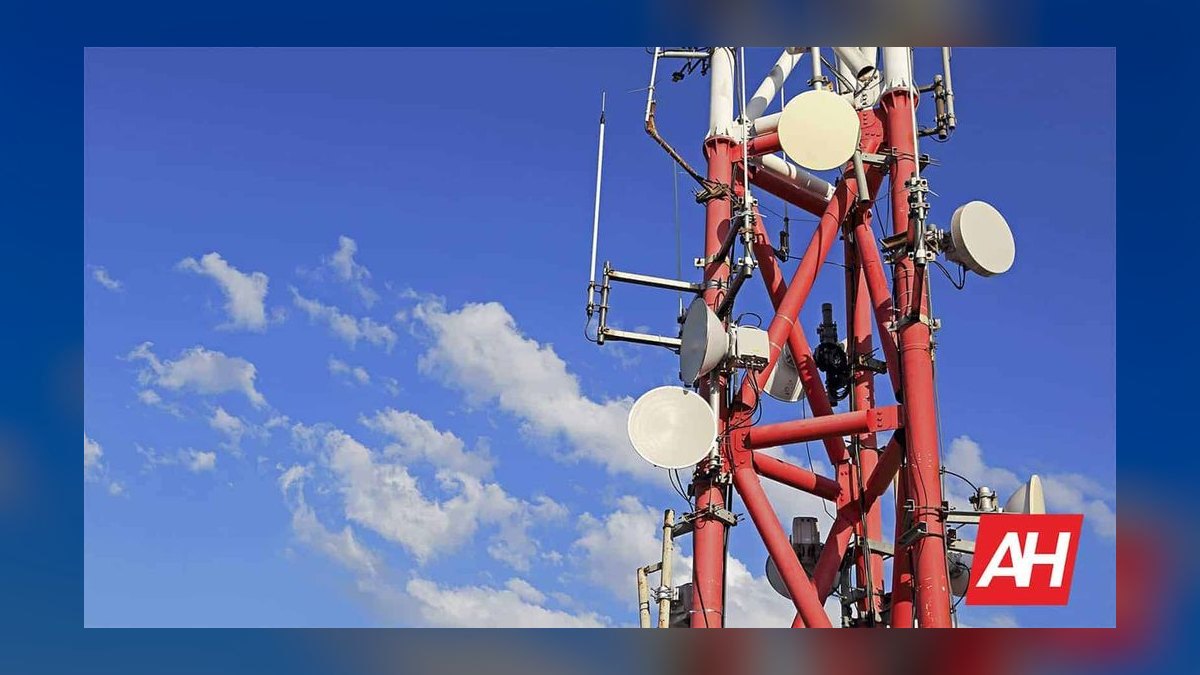
Home internet is the biggest one. Fixed wireless access from a mobile carrier is now a genuine broadband option in much of the state, and its quality is a direct function of the same mid-band coverage that determines your phone speed. In parts of Michigan where cable never reached — large stretches of the Thumb, much of the north, and pockets in nearly every rural county — the practical broadband choices are satellite, DSL, or fixed wireless. If fixed wireless is on your table, test it on the carrier whose mid-band signal is strongest at your specific address, and understand that fixed wireless is typically deprioritized behind mobile traffic on a congested tower. It also usually comes with a self-install router and no contract, which makes it low-risk to try.
Business and fleet use is another. Trades, agriculture, and logistics operations in Michigan run tablets, dispatch apps, telematics, and card readers over cellular, and those are all more sensitive to coverage gaps than a consumer phone is. A field service tech who can't sync a work order at a customer's house loses the visit; a card reader that can't authorize loses the sale. For those cases the coverage question should be answered against the service territory, not the office address — and the answer is often to standardize on the carrier with the widest low-band footprint even if a competitor is faster at headquarters. Business plans on all three carriers also add features worth having here: pooled data across lines, device management, and priority tiers.
Emergency and safety coverage deserves weight in a state with this much remote terrain. Every phone can dial 911 on any available network regardless of carrier, but staying connected afterward — for a callback, for location updates, for a text to dispatch when voice is too weak — depends on your own carrier's signal. Satellite-based emergency messaging is now a standard feature on recent flagship phones and works independent of carrier, which meaningfully narrows the gap for backcountry use. If you spend real time off the grid, a phone with that capability may matter more than which of the three networks you chose.
Cross-border travel is a specifically Michigan concern. The Detroit–Windsor and Port Huron–Sarnia crossings mean a large number of residents cross into Ontario routinely, and some carriers include Canada usage in their plans at no extra charge while others bill roaming daily. If you cross more than a couple of times a year, confirm the plan's Canada terms before signing — the difference between "included" and "a daily fee" adds up fast, and it's easy to miss on a plan comparison chart. The same applies to anyone driving the Sault Ste. Marie crossing regularly.
Coverage also changes over time, which argues against treating this as a permanent decision. Mid-band 5G buildout in Michigan's secondary markets has been ongoing, and a town that had poor mid-band coverage two years ago may have it now. Since none of these carriers require a contract for service — only for device financing — it's reasonable to re-evaluate every couple of years, particularly if you moved, changed jobs, or noticed your usage pattern shift. Keep the phone unlocked and paid off and the switching cost stays close to zero.
Related questions
Which carrier is best for the Upper Peninsula specifically?
Verizon's low-band footprint is the deepest across UP terrain, with AT&T close behind thanks to FirstNet-driven tower buildout. Mid-band 5G is limited in both cases, so expect solid reliability rather than high speeds. Avoid discount brands if you rely on remote UP coverage.
Are discount and prepaid brands worth it in Michigan?
Yes, if you live in a low-congestion area and don't tether heavily. They run on the same towers as their parent network with lower priority, so the coverage map is identical but performance degrades in crowded places. Rural light users often see no practical difference.
Can cellular fixed wireless replace home internet in rural Michigan?
Often, yes — especially where cable never got built. Quality tracks the carrier's mid-band signal at your specific address, so test before committing. It's typically deprioritized behind phone traffic on busy towers, and comes with no contract and self-install hardware.
How do I keep my phone number when switching?
Keep the old account active, get its account number and transfer PIN, and start the port with the new carrier. The number moves during activation. Cancelling first can lose the number permanently. Voicemail does not transfer and must be set up again.
Does the fastest carrier actually matter for everyday use?
Rarely. Calls, navigation, streaming, and video meetings all run well below 50 Mbps. Speed matters if you tether a laptop for hours, move large files, or replace home broadband. Otherwise reliability and coverage breadth are worth far more than peak throughput.
FAQ
Which cellular carrier has the best overall coverage in Michigan?
AT&T generally offers the best coverage-to-performance balance statewide, combining a mature low-band layer with mid-band 5G that reaches beyond the metros into secondary markets. Verizon is stronger specifically in the Upper Peninsula and remote northern counties. T-Mobile's coverage is strongest where population density is highest. The honest answer depends on your specific routes, which is why the coverage maps and free trials matter more than any statewide ranking.
Why is T-Mobile faster but not always the recommendation?
T-Mobile holds a wide block of mid-band spectrum and deployed it aggressively, which produces speeds well ahead of competitors in covered areas. The limitation is geographic reach: that mid-band layer thins out as density drops, and the underlying coverage layer is younger than what AT&T and Verizon built over decades. In Detroit, Grand Rapids, or Ann Arbor that's irrelevant. On a two-lane road in the northern Lower Peninsula, it isn't.
What is deprioritization and when will I actually notice it?
Deprioritization means the network serves your traffic after higher-priority subscribers when a tower is congested. It has no effect on an uncongested tower, which describes most of rural Michigan most of the time. You'll notice it at stadiums, festivals, downtown at rush hour, and college towns during the school year — and it's the main reason a cheap plan can feel fine for months and then fall apart at exactly the wrong moment.
How much data do I really need on a Michigan wireless plan?
Check your current usage in your carrier's app before deciding. Most people who don't use hotspot consume well under 20GB a month, which makes a mid-tier plan more than sufficient and a top tier pure waste. If you tether a laptop, stream video off Wi-Fi regularly, or use your phone as a job-site connection, you can clear 50GB easily and should buy the larger premium-data allotment.
Is it worth switching carriers to save $15 a month?
Only if coverage is equal or better where you actually are. A $15 monthly saving is $180 a year, which is real, but a plan that drops calls at your house or won't load a map on your commute costs more than that in aggravation. Run the free trial first. If coverage holds up, the savings are genuine and switching is low-friction since service itself is contract-free.
Should I buy my phone from the carrier or unlocked?
Carrier financing with promotional credits usually produces the lowest out-of-pocket cost, but it locks you to a plan tier for 24 or 36 months — downgrading can cancel the credits. Buying unlocked costs more upfront and keeps you free to switch networks at any time. If you're confident in your carrier choice, finance. If you're still testing coverage, buy unlocked.
Sources
- FCC National Broadband Map — mobile coverage by address
- AT&T wireless coverage map
- T-Mobile coverage map
- Verizon coverage map
- Ookla Speedtest — United States market reports
- FCC consumer guide: wireless number portability
- FCC consumer guide: cell phone unlocking
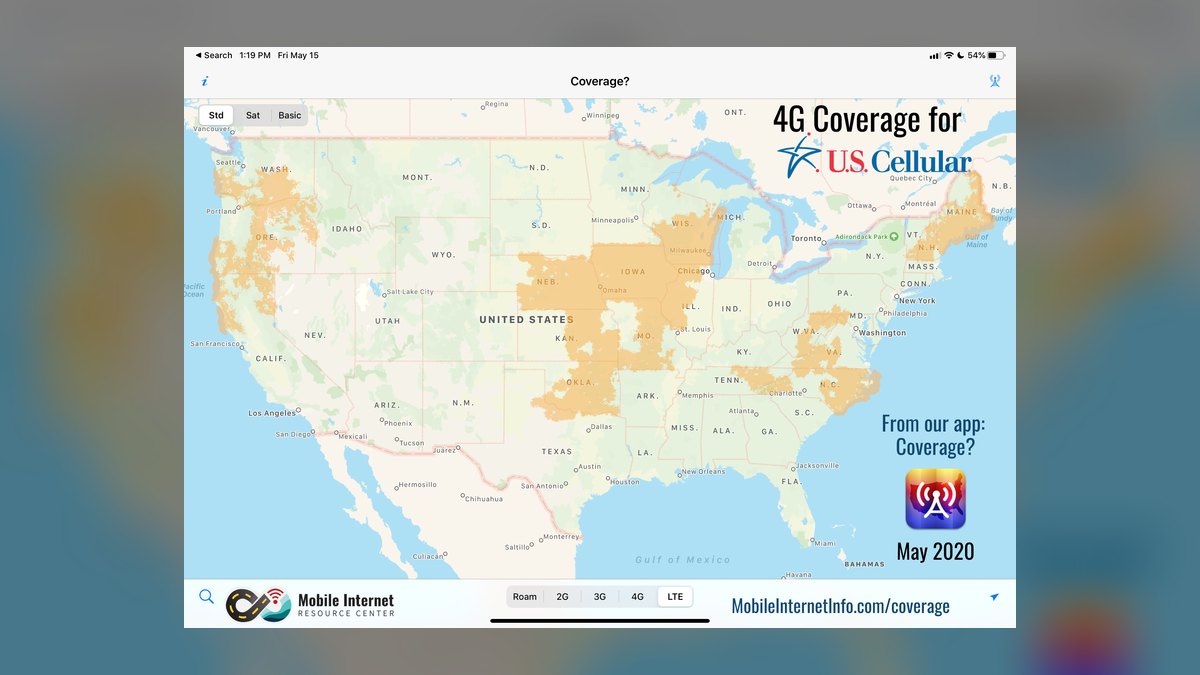
- UScellular coverage map
- FirstNet Authority — network overview
- Michigan.gov — official state portal
Related on PULSE
This page will be disappearing soon. Save it to your device for $1 — or read it free while it is here.
@Kory-White- · if Venmo asks, the last 4 of my number are 2012
This page is gone.
This one is off the shelf now. $1 keeps it on your phone for good — the whole page, pictures and diagrams included.
 telcoWhat is the best plan if I barely use data in 2027?
 telcoBest Cellular and Wireless Carrier in Wichita in 2027
 telcoBest Cellular and Wireless Carrier in Boise in 2027
 telcoWhat is the best backup option if my home internet goes down in 2027?
 telcoHow do I port my phone number to a new carrier in 2027?
 telcoBest Cell Phone Plans for Heavy Data Users in 2027
 telcoWhat is the best family cell phone plan for four lines in 2027?
 telcoMint Mobile vs Cricket Wireless: which is better in 2027?
 telcoUS Mobile vs Mint Mobile: which is better in 2027?
 telcoWhat is the catch with cheap MVNO carriers in 2027?