

Best Cellular and Wireless Carrier in Chattanooga in 2027
 Curated byKory White · Fractional CRO · Maryland
Quality
Certified
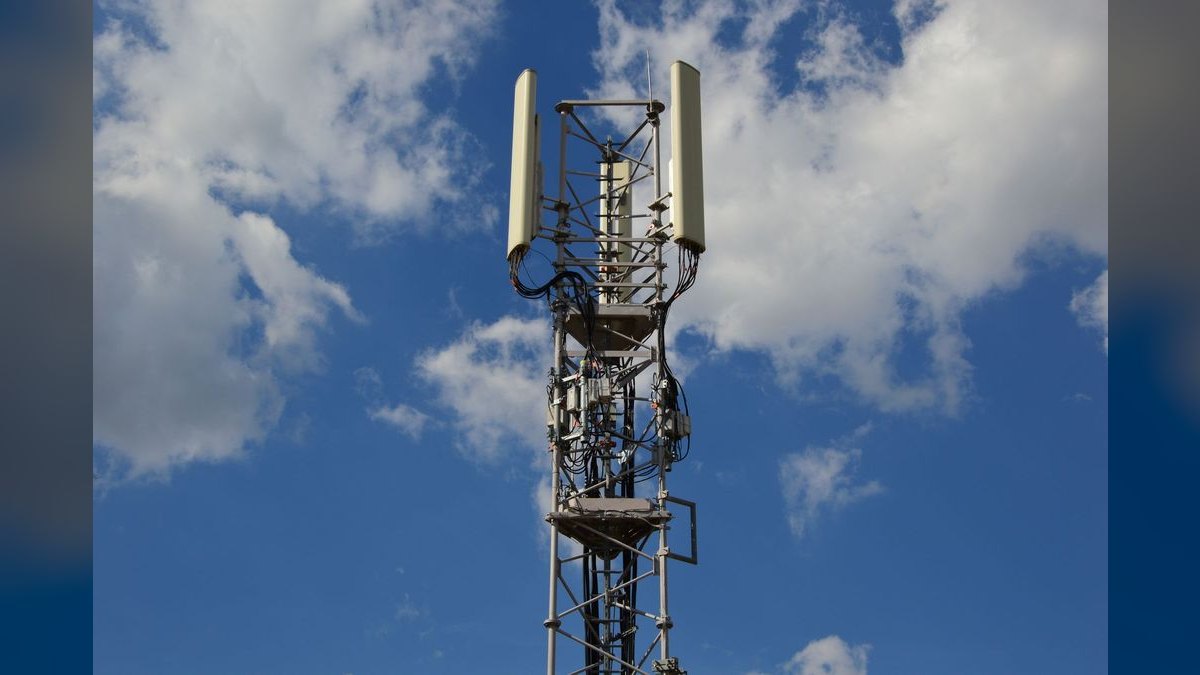
T-Mobile is the best overall cellular and wireless carrier in Chattanooga for 2027, combining 600 MHz low-band reach with 2.5 GHz mid-band capacity for the fastest citywide 5G. Verizon wins on ridge-and-valley reliability toward Signal Mountain and Lookout Valley, AT&T wins when bundled with fiber, and UScellular anchors the budget tier.
The Monday morning that exposes your carrier choice
Picture a five-person field sales team based in a converted warehouse office off Market Street. At 7:40 a.m. everyone is downtown, pulling CRM records over 5G, syncing a 40 MB proposal deck, and joining a video standup. By 9:15 two reps are climbing toward Signal Mountain for a facilities walkthrough, one is at Hamilton Place taking a call in a steel-and-concrete mall corridor, one is in the Tennessee Aquarium district, and one is heading toward Ooltewah on I-75. By noon the team has crossed four distinct radio environments, and the carrier that looked flawless at 7:40 may have dropped two calls and stalled a document upload by 9:30.
That is the actual test in Chattanooga, and it is why national "best carrier" rankings mislead here. The city sits in a river valley walled by Lookout Mountain, Signal Mountain, and Missionary Ridge. Terrain does two things to a wireless network: it blocks line-of-sight to the nearest tower, and it forces the handset onto whatever band can bend or reflect around the obstruction — almost always low-band. A carrier with enormous mid-band capacity downtown can be the weakest option 900 feet of elevation later, and the carrier that felt sluggish at your desk can be the only one holding a usable signal at a customer site on the brow.
Frame the decision the way you would frame any operations decision that touches revenue: what does a failure cost, and how often does it happen? A dropped discovery call with a qualified buyer is not a $70/month problem. A field tech who cannot pull a work order for eleven minutes is not a $70/month problem either. For a team whose work happens on the road across Hamilton County, the difference between the cheapest plan and the most reliable plan is roughly $25–$40 per line per month — call it $1,500–$2,400 a year for a five-person team. One salvaged deal or a handful of recovered service calls covers that. For a household whose phones mostly live between a home Wi-Fi network downtown and an office Wi-Fi network downtown, the same $25 gap is close to pure waste.

So the honest answer splits by usage geography, not by brand loyalty. Map where your phone actually spends its working hours — not where you live, but the ZIP codes and elevations where you need the phone to work under pressure. Downtown-and-valley users should optimize for mid-band speed and price. Ridge, plateau, and rural-fringe users should optimize for low-band coverage depth and fall back gracefully to LTE. Mixed-profile users, which is most sales and service teams in this market, should optimize for the carrier whose weakest link is least bad rather than whose strongest link is most impressive.
How carrier performance actually works in a river-valley city
Every modern cellular and wireless network runs three tiers of spectrum, and understanding the tiers is the whole game. Low-band (roughly 600–850 MHz) travels far and penetrates buildings and foliage well, but carries limited capacity — think tens of megabits, occasionally a bit more. Mid-band (roughly 1.7–4 GHz, including 2.5 GHz and C-band) is the workhorse of real 5G: it delivers hundreds of megabits with a usable propagation radius of a mile or two in typical suburban terrain. High-band millimeter wave delivers gigabit-class speeds but travels a few hundred meters and is stopped by a leaf, a wall, or a hand over the antenna, so it exists only in dense venues, airports, and stadium bowls.
Your handset does not choose a carrier; it chooses a band, constantly. Walk from an open plaza into a parking garage and the phone drops from mid-band 5G to low-band 5G to LTE within seconds. Drive up a ridge road and mid-band vanishes long before low-band does. This is why a speed test is a snapshot, not a verdict — the same phone on the same plan can post 500 Mbps and 12 Mbps ninety seconds apart with no fault in the network.
Two structural factors then decide which carrier serves you best in this specific market. First, mid-band depth: the carrier holding the most contiguous mid-band spectrum in the market can put more capacity on each tower, which shows up as higher speeds during congestion — Friday evening at a mall, a Lookouts game, a downtown festival. Second, low-band tower density and siting along the ridges: coverage on Signal Mountain, Walden's Ridge, and out toward Soddy-Daisy is a function of how many rural sites a carrier built and how well they are aimed at the plateau, and that is historically where the legacy nationwide networks invested earliest.
Network priority is the third factor and the one most buyers miss. Postpaid plans with a "premium data" allotment sit at a higher scheduling priority than prepaid and MVNO traffic on the identical tower. When a cell is uncongested, priority is invisible — everyone gets fast service. When the cell is loaded, deprioritized traffic yields first. This is precisely why a budget brand can benchmark within 10% of its parent network at 10 a.m. on a Tuesday and feel meaningfully slower at 6 p.m. on a Saturday at Hamilton Place. Any comparison run only at off-peak hours will overstate the budget options.

The practical consequence: evaluate a carrier by its band mix where you actually stand, and evaluate a plan by its priority tier at the hours you actually work. Those two variables explain most of the performance gap between any two options in this city, far more than marketing claims about network awards.
Numbers worth benchmarking before you sign
Do not trust any single published figure, including the ones in this section — treat these as the ranges to test against, then verify with your own measurements in your own ZIP codes. Coverage maps are modeled predictions, not measurements, and every carrier's map is generous at the edges.
On price, the 2027 landscape in Chattanooga sorts into four tiers. Premium postpaid unlimited from the major carriers generally lands in the $80–$90 per line range for a single line, dropping steeply on multi-line accounts — a four-line family plan typically prices out somewhere in the $35–$55 per line band depending on promotions and autopay credits. Mid-tier postpaid unlimited sits near $65–$75 single-line. Regional and value postpaid options run roughly $50–$70. Prepaid and MVNO unlimited plans occupy the $25–$55 band, with the aggressive annual-prepay MVNOs dipping toward the low end. Cable-bundled mobile lines sold to existing internet subscribers are usually the cheapest per-line unlimited option in the market, but they are gated on keeping the home internet subscription, which changes the real math.
On speed, expect a wide spread by location. In the downtown core and the denser suburban corridors — Brainerd, East Brainerd, Hixson, Red Bank — a carrier with deep mid-band should deliver low-hundreds of Mbps routinely, with peaks several times that on a lightly loaded cell. Carriers relying primarily on low-band in those same corridors will typically deliver a small fraction of that. As you gain elevation toward the brow of Lookout Mountain or up onto Signal Mountain, expect every carrier to fall back toward low-band 5G or LTE, with speeds dropping into the tens of Mbps and signal strength commonly weakening by 15–20 dBm relative to the valley floor. Millimeter wave, where deployed, is a venue feature — airport concourses, stadium seating bowls, convention halls — and should never factor into a whole-household decision.

Latency matters more than most buyers realize and is cheap to measure. Standalone 5G cores deliver meaningfully lower round-trip times than LTE-anchored networks — the practical difference between a video call that feels natural and one where people talk over each other. If your team runs on voice and video, test latency and jitter, not just download throughput.
Build a real benchmark in about two hours. Pick eight locations that mirror your week: your home, your office, two customer sites, one mall or big-box interior, one grocery or retail parking lot, one stretch of ridge road, and one interstate segment. At each stop run three tests spaced 30 seconds apart, record download, upload, latency, and the reported band, and note the time of day. Then repeat the entire circuit once during a peak window — weekday 5:30–7:00 p.m. or Saturday midday. The peak run is the one that separates carriers, because that is when priority tiering and cell loading bite. Total cost: a couple of hours and whatever a prepaid trial SIM costs, which for most carriers is now a free eSIM trial lasting somewhere between one and three months.
One more number to track that has nothing to do with speed: switching friction. Porting a number typically completes in minutes to a few hours, but a botched port on a business line can cost you a day of inbound calls. If the line is tied to revenue — a main sales number, a dispatch line — port it on a Tuesday morning, not a Friday afternoon, and keep the old service active until the port confirms.
Choosing between the real alternatives
The four facilities-based options in this market each win a specific profile, and the honest recommendation depends entirely on which profile you match.

T-Mobile is the default recommendation for most Chattanooga users because it pairs a broad low-band footprint with the deepest mid-band capacity in the metro, which is exactly the combination the valley rewards. It is the strongest pick for downtown workers, students, families in the inner suburbs, and anyone who does heavy tethering. Its weakness is the plateau and the deep hollows, where its coverage thins faster than the legacy nationwide networks. If your week never takes you above the valley floor, this weakness is theoretical.
Verizon is the pick when reliability at the edges outranks peak speed. Its low-band footprint holds a usable signal in places where competitors degrade, which matters for anyone working Signal Mountain, Lookout Valley, Soddy-Daisy, or the rural stretches of Hamilton County — utility crews, home service contractors, real estate agents working the mountain communities, and anyone whose failure mode is "no bars" rather than "slow bars." Its trade-off is that mid-band deployment is patchier, so downtown speeds may trail the leader noticeably.
AT&T is the pick when you already buy fiber. Bundle discounts on wireless lines are typically in the $10–$20 per line per month range, which flips the total-cost comparison for a multi-line household. Its low-band coverage is solid citywide and its fiber footprint in the eastern suburbs is strong. The trade-off is that the bundle locks two services together — if you leave the internet, the wireless economics change.
UScellular is the pick for cost-conscious users who stay inside the metro and want postpaid-grade service rather than MVNO deprioritization. Its metro coverage is genuinely competitive; its rural fringe is where it gives ground.
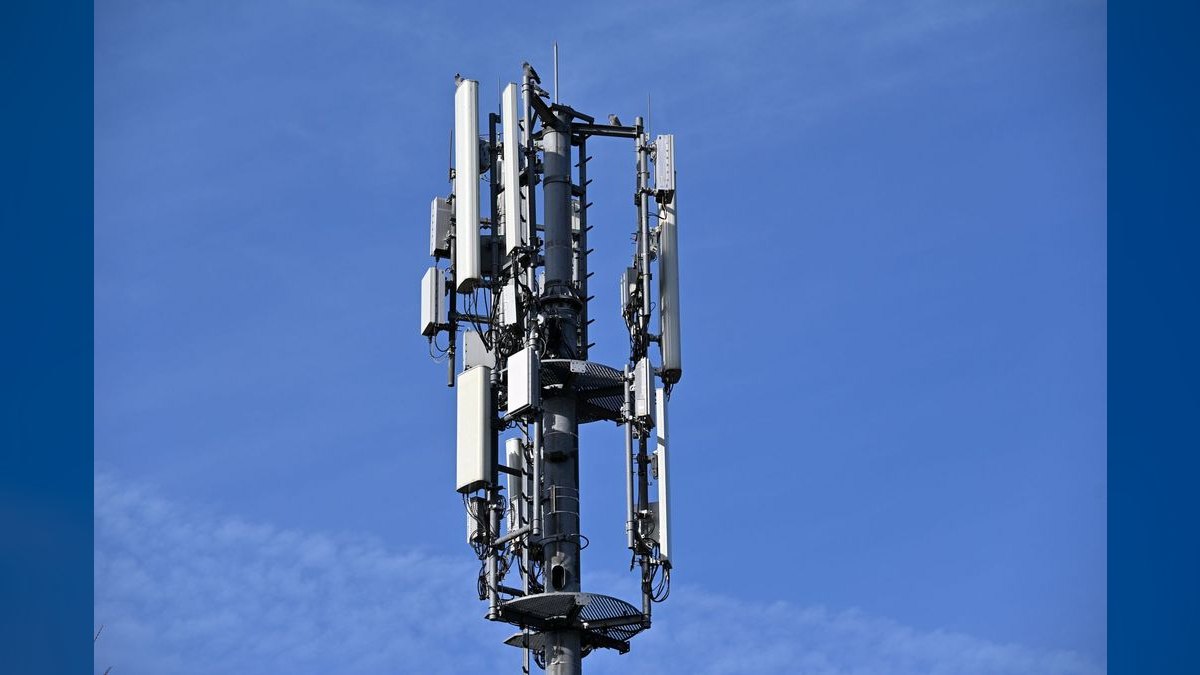
Below the facilities tier sit the resellers, and the trade-off is uniform: you get the parent network's coverage map at a discount, but with lower scheduling priority, usually capped video resolution, often capped 5G speeds, and thinner support. Verizon-based and T-Mobile-based prepaid brands, cable-company mobile lines, and senior-focused MVNOs all follow this pattern. They are excellent for light users, students, second lines, kids' phones, and anyone whose data lives mostly on Wi-Fi. They are a poor fit for a field team whose income depends on the connection holding at 5 p.m. on a Friday.
Two adjacent alternatives deserve a mention because they change the calculus. Fixed wireless home internet — a home router on the same cellular network — is a legitimate replacement for cable in parts of Chattanooga, usually priced well under wired broadband, though Chattanooga is unusual in having exceptionally strong municipal fiber, which raises the bar for any wireless home alternative. And satellite messaging, now standard on recent flagship handsets across carriers, meaningfully changes the risk profile for hikers and rural workers: the worst-case "no signal at all" scenario on Walden's Ridge now has a text-message escape hatch regardless of carrier.
Where buyers get this wrong
The most expensive mistake is choosing on a coverage map. Maps are propagation models — they assume a clean outdoor handset at a reasonable height, and they do not model the concrete parking deck, the metal-roofed warehouse, or the specific fold of terrain your customer's building sits in. Treat the map as a first-pass filter that eliminates obviously wrong options, then decide on measurements.
The second mistake is benchmarking only at off-peak hours. A test at 10 a.m. Tuesday flatters deprioritized plans, because there is no congestion to expose the priority difference. Always include a peak-hour run at a genuinely loaded site.
The third is optimizing for headline speed when the actual constraint is upload and latency. Most business phone workloads — video calls, voice, CRM sync, photo upload from a job site, payment processing — are bounded by upload throughput and round-trip time, not by how fast a large file downloads. A network that posts a huge download number and a mediocre upload number will feel worse in daily use than the reverse.
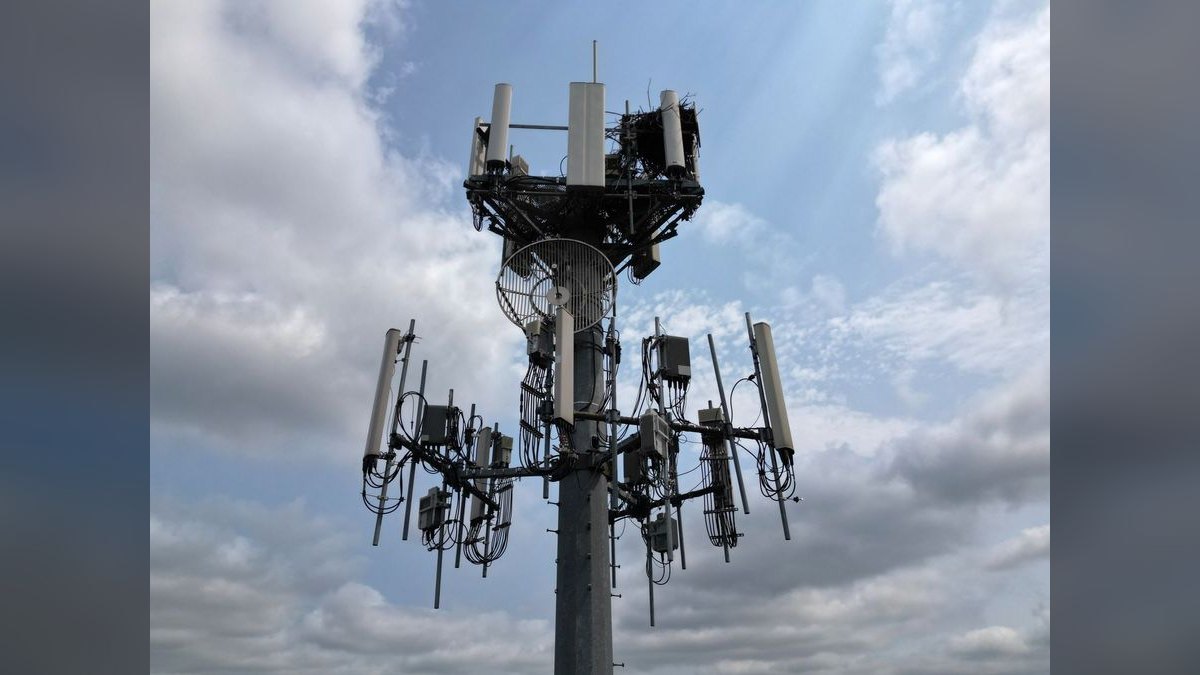
The fourth is ignoring the hidden costs in a switch. Device payment plans tie you to a carrier for 24–36 months; leaving early means the remaining balance comes due immediately. Promotional credits that pay off a device are typically distributed monthly across the full term and vanish if you leave. Autopay and paperless-billing discounts of $5–$10 per line are usually baked into every advertised price, so the real price is higher if you do not enroll. Trade-in valuations are frequently contingent on device condition, and a cracked screen can erase most of the promised credit. Before switching, total the early-termination exposure, the lost credits, the activation fees, and any bundle discount you would forfeit on your home internet.
The fifth is buying a plan tier you cannot use. Premium data allotments in the 50 GB range only matter if you actually exceed them. Most single users on Wi-Fi at home and work land under 15 GB a month; pull three months of actual usage from your current bill before paying for a higher tier. Conversely, if you tether a laptop for field work, hotspot allotment is the specification that actually governs your experience, and it is the one most heavily restricted on cheap plans — some cap hotspot throughput low enough that a video call over tether is unusable regardless of the underlying network speed.
The sixth is treating a team decision as a personal one. If you manage a sales or service organization, the right unit of analysis is cost per productive field hour, not cost per line. Compute the downtime you are actually experiencing today — dropped calls, failed syncs, minutes lost re-establishing connections — and price the upgrade against that. Where a connectivity failure sits directly on the path to revenue, the more reliable carrier is usually the cheaper choice, and it is worth splitting the fleet: put ridge-and-rural staff on the deepest low-band network and valley-bound staff on the fastest mid-band one, even if that means running two accounts.
The final mistake is treating the decision as permanent. Networks change fast — new mid-band deployments, new rural sites, new spectrum brought online. Re-run the eight-location benchmark annually, and re-check pricing at every device upgrade cycle. The best cellular and wireless carrier in Chattanooga in 2027 may not be the best one in 2029, and the switching cost of an unlocked, fully-paid handset with an eSIM is close to zero.
Related questions
Does Chattanooga's municipal fiber change the mobile decision?
Yes. Widely available high-speed home fiber means most residents offload heavy data to Wi-Fi at home, which lowers real cellular data consumption and makes cheaper plan tiers viable. It also weakens the case for fixed wireless home internet as a cable replacement here compared with other cities.
How much does terrain really cost me in signal?
Expect meaningful degradation climbing from the valley floor to the ridges — commonly a 15–20 dBm drop in reported signal strength, plus loss of mid-band entirely. The practical effect is falling from hundreds of Mbps to tens of Mbps, or to LTE-only service.
Is a prepaid brand ever the right call for business lines?
For light-use secondary lines, yes. For primary lines carrying customer calls, generally no — the scheduling deprioritization shows up exactly during peak business hours, and support escalation paths are thinner when a line breaks.
What is the fastest way to test a carrier without switching?
Use a free eSIM trial. Most major carriers now offer a trial line lasting weeks to months on a compatible phone, running alongside your existing service, so you can benchmark both networks at the same locations at the same moments.
Should I split my team across two carriers?
If your staff work materially different geographies — some downtown, some on the plateau — splitting is often cheaper than forcing one compromise carrier on everyone. Manage it as two accounts and accept the modest administrative overhead.
FAQ
Which carrier has the fastest 5G downtown?
The carrier with the deepest mid-band spectrum holdings in the market — currently T-Mobile — generally posts the highest sustained downtown speeds, because mid-band is what carries real 5G throughput. Verify with your own peak-hour test on Market Street and Broad Street before committing, since cell loading varies block to block.
Which carrier is best for Signal Mountain and Lookout Valley?
Prioritize low-band coverage depth over peak speed. Verizon is the traditional strength here, with AT&T close behind; both hold usable signal where mid-band-heavy networks fall back to LTE or drop entirely. Expect tens of Mbps rather than hundreds, and confirm at the specific addresses you visit.
What is the cheapest way to get unlimited data in Chattanooga?
Prepaid and MVNO unlimited plans on the major networks, plus cable-bundled mobile lines for existing internet subscribers, are the lowest-cost options. The trade-offs are consistent: lower network priority during congestion, capped video resolution, limited or throttled hotspot, and no retail support.
Does bundling wireless with home internet actually save money?
Usually yes on a multi-line account, in the range of $10–$20 per line per month. Weigh the discount against the lock-in: leaving the internet service forfeits the wireless credit, so compute total household cost across both services rather than comparing wireless prices alone.
How much data do I actually need?
Pull three months of usage from your current bill. Most users on home and office Wi-Fi stay under 15 GB monthly and are overpaying for large premium-data allotments. Field workers tethering laptops are the exception — for them, hotspot allowance and hotspot speed cap matter far more than total data.
How do I switch without losing my number or breaking service?
Keep the old service active until the port completes, port on a weekday morning rather than a weekend, and have your account number and transfer PIN from the old carrier ready in advance. Verify the device is unlocked and, ideally, use eSIM so both lines can coexist during cutover.
Sources
- FCC National Broadband Map — mobile coverage by address
- Opensignal mobile network experience reports
- Ookla Speedtest Global Index and market reports
- T-Mobile coverage map
- Verizon coverage map
- AT&T wireless coverage map
- UScellular coverage map
- FCC consumer guide to wireless service and number porting
- J.D. Power U.S. wireless studies
- EPB of Chattanooga — municipal fiber internet
Related on PULSE
This page will be disappearing soon. Save it to your device for $1 — or read it free while it is here.
@Kory-White- · if Venmo asks, the last 4 of my number are 2012
This page is gone.
This one is off the shelf now. $1 keeps it on your phone for good — the whole page, pictures and diagrams included.
 telcoHow much mobile data does a family of four actually need in 2027?
 telcoCan I use one carrier for phone and another for home internet in 2027?
 telcoBest Cellular and Wireless Carrier in Montgomery in 2027
 telcoWhat are the most common mistakes in Telco in 2027?
 telcoWhat is the difference between 5G UW, 5G+, and regular 5G in 2027?
 telcoBest Cellular and Wireless Carrier in Florida in 2027
 telcoBest Cellular and Wireless Carrier in Idaho in 2027
 telcoBest Cellular and Wireless Carrier in Austin in 2027
 telcoBest Cellular and Wireless Carrier in Wichita in 2027
 telcoT-Mobile vs Verizon 5G home internet: which is better in 2027?