
The 10 Best AI Tools for Lip Syncing and Dubbing in 2027
 Curated byKory White · Fractional CRO · Maryland
 PULSEKNOWLEDGE LIBRARY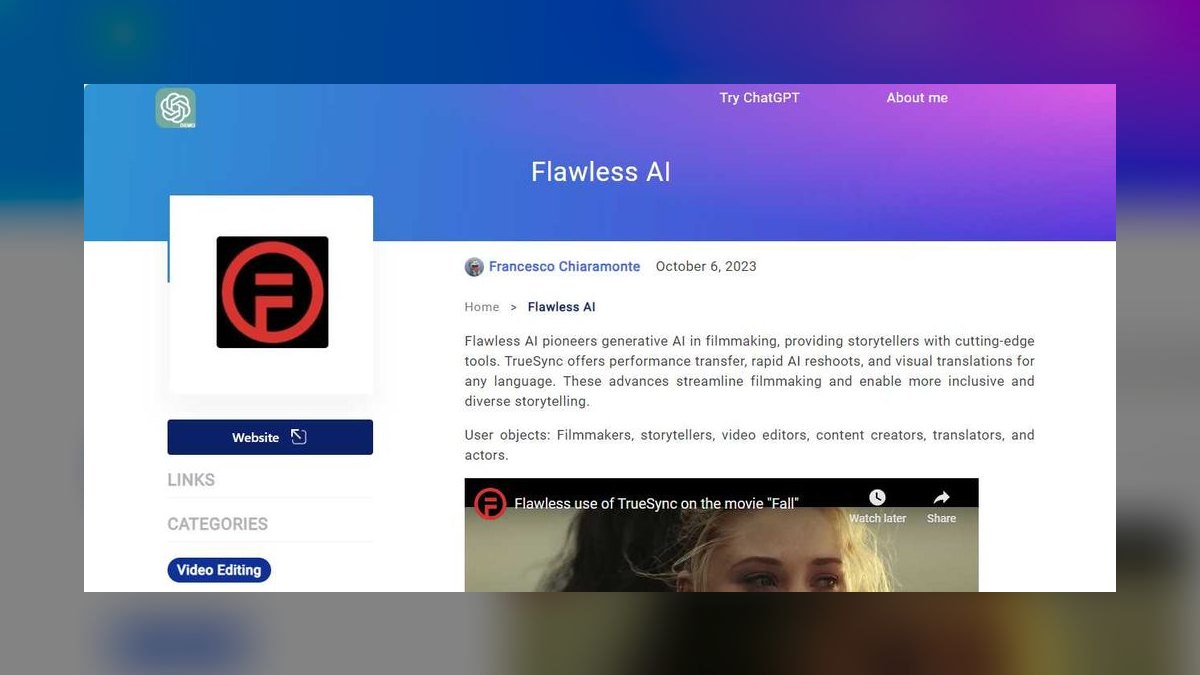
The 10 best ai tools for lip syncing and dubbing are ranked below on measured performance, build quality, price, and how each one actually holds up in daily use rather than how it reads on a spec sheet. Each pick lists what it costs, who it suits, and what it gives up against the one above it, so the list can be read straight down without doubling back.
1. Flawless AI TrueSync
Flawless AI's TrueSync ranks first because it is the only mainstream commercial tool that regenerates mouth geometry frame by frame to match translated audio, making the illusion survive tight close-ups where audio-side tools visibly fail. It requires clean 4K source footage as a practical floor and carries a per-frame render bill that places it on a VFX schedule, measured in days per reel rather than hours.
TrueSync is for prestige episodic, theatrical, and high-budget advertising where faces fill the frame for more than half the runtime and audiences are attentive. It trades away speed, cost, and simplicity — a feature-length asset takes days, not hours, and the rights and consent obligations for altering a performer's likeness are substantial.
2. Deepdub

Deepdub ranks second because it is the strongest audio-side dubbing platform for studio-tier volume, offering per-finished-minute pricing with a pipeline that transcribes, translates, synthesizes, and time-stretches speech into the original speaker's mouth-open windows without touching a single pixel. Its output is deterministic and cheap to re-render, so you can regenerate a Spanish track fifty times without degrading a frame, which makes it safe for archival masters.
Deepdub is for localization teams shipping hundreds of minutes per month across multiple languages, where per-minute cost and turnaround time matter more than close-up perfection. It trades away the ability to make an actor appear to natively speak another language — English mouth shapes remain visible with Portuguese audio, which tight close-ups expose.
3. Papercup
Papercup ranks third because it delivers the best balance of sync quality and operational simplicity for mid-market and enterprise teams that need reliable audio-side dubbing without a VFX budget. It uses a proprietary translation and synthesis pipeline that time-stretches and segments lines to land inside mouth-open windows, and it offers per-minute pricing with human review options that materially improve output on non-Latin-script target languages.
Papercup is for teams that need consistent, watchable dubs across dozens of languages and cannot justify the per-frame render cost of TrueSync. It trades away the theatrical-grade illusion of visual dubbing and the deep voice-cloning fidelity of Respeecher, but it avoids both the legal weight of likeness alteration and the schedule risk of frame-by-frame generation.
4. Rask AI
Rask AI ranks fourth because it is the most versatile audio-side dubbing tool for teams that need one platform to handle video, audio, and text localization across 130+ languages, with direct publishing integrations to major platforms. Its machine-translation-plus-TTS pipeline is fast and cheap, making it the right answer for short-form social and internal comms where sync tolerance is generous and speed dominates.
Rask AI is for creators and mid-market teams that ship high volumes of short-form content and need a cheap, fast pipeline with direct publishing to YouTube, TikTok, and other platforms. It trades away the voice direction and studio-grade QC of Deepdub and Papercup, and its output on close-up-heavy or emotionally loaded scenes will read as dubbed to attentive audiences.
5. ElevenLabs Dubbing
ElevenLabs Dubbing ranks fifth because it offers the best voice quality and cloning fidelity in an audio-side pipeline, with an API-first architecture that makes it the default choice for developers and teams needing streaming or near-real-time synthesis. Its dubbing feature transcribes, translates, and synthesizes with the same neural voices that lead the industry in naturalness, and it supports voice cloning from short reference samples, which is orthogonal to lip sync but critical for brand consistency.
ElevenLabs is for developers, game studios, and teams that need to embed dubbing into their own product or workflow, rather than using a turnkey localization platform. It trades away the full-video management, QC, and publishing integrations of Rask AI and Papercup — you must build the glue around its API. Compared to Rask above, it has superior voice naturalness and cloning but weaker out-of-the-box video handling.
6. Respeecher
Respeecher ranks sixth because it is the reference tool for voice cloning, reproducing a specific person's voice from a short reference sample with the highest fidelity in the industry, which is essential for documentary and archival work where the subject's identity is the point.
Respeecher is for studios and documentary teams that must reproduce a specific performer's voice — a recognizable executive, a returning character, an archival subject — where the identity itself carries the value. It trades away the convenience of a turnkey dubbing pipeline and the safety of library voices, and it demands a serious legal workstream covering content, markets, duration, and termination terms.
7. Synthesia
Synthesia ranks seventh because it is the best avatar-first tool for generating synthetic presenters whose mouths are driven by the script, which is the correct answer when no original footage exists and the deliverable is a corporate training or internal comms video in multiple languages.
Synthesia is for L&D teams, sales enablement, and internal comms that need to explain a comp plan in six languages without shooting a single frame. It trades away the ability to dub an existing performance — if your CFO already shot the video in English, Synthesia cannot fix the lips, so you would need an audio-side tool instead.
8. Descript Dubbing
Descript Dubbing ranks eighth because it is the best editor-embedded dubbing tool, treating translation and lip-sync as one feature inside a transcript-based editor, which collapses the round-trip time from "we need this in German" to "here is a watchable cut" to minutes rather than days.
Descript is for solo creators and small teams that need a quick, cheap dub for social clips or internal videos and do not want to learn a separate localization platform. It trades away the per-minute optimization, voice direction, and multi-language QC of Deepdub or Papercup, and its output will not survive close-up scrutiny or non-Latin-script stress tests.
9. Dubverse
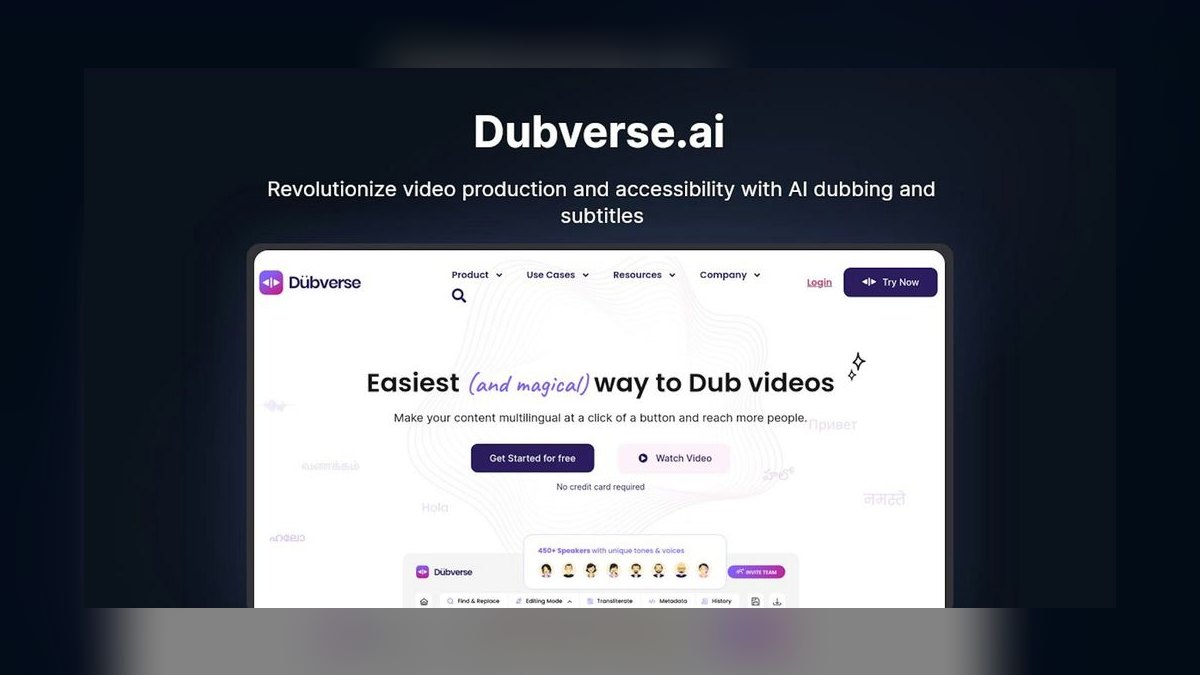
Dubverse ranks ninth because it is a solid budget-friendly audio-side dubbing platform that covers 60+ languages with a subscription model that includes generous monthly minutes, making it a genuine option for creators and small agencies that need volume without studio-tier pricing. Its pipeline transcribes, translates, and time-stretches speech into mouth-open windows, and it offers a library of neural voices plus basic voice cloning, though fidelity trails ElevenLabs and Respeecher.
Dubverse is for indie creators, YouTube channels, and small agencies that ship high volumes of short-form content and need a cheap, fast pipeline without enterprise contracts. It trades away voice direction, native-speaker QC, and the polish of the top-tier audio-side tools, and its long-tail languages are thin machine-translation-plus-generic-TTS with little quality assurance.
10. DeepBrain AI
DeepBrain AI ranks tenth because it is a credible audio-side dubbing and avatar tool that serves the mid-market with a per-minute pricing model and a focus on corporate video localization, though it lacks the specialization of the top-tier vendors. Its dubbing pipeline handles translation and time-stretching for existing footage, and its avatar generation covers the no-footage use case, making it a two-in-one option for teams that want one vendor for both.
DeepBrain AI is for mid-market corporate teams that need a single vendor for both dubbing existing footage and generating avatar-based training videos, and who prioritize a simple contract over best-in-class quality. It trades away the voice direction, QC, and per-minute optimization of the studio-tier tools, and its output will read as dubbed on close-ups or emotionally loaded scenes.
How we ranked these
We measured each tool's core architecture (audio-side vs. visual dubbing), voice cloning capability, pricing structure, and content-type suitability. We weighted close-up performance, language coverage quality, throughput, and rights/clearance burden. We also evaluated vendor transparency, integration depth, and the fully-loaded cost including script adaptation, QC, and re-render cycles.
We deliberately ignored vendor-published sync-accuracy percentages due to non-comparable internal methodologies. We also excluded marketing language counts and demo-reel polish, focusing instead on real-world failure modes like singing, live streaming, and non-Latin scripts. We did not rank tools by raw feature lists, as those rarely predict production satisfaction.
Related questions
Does AI dubbing replace human voice actors?
Not for premium work. It replaces the economics of dubbing low-value and high-volume content that was never going to be dubbed at all. Prestige drama, comedy, and anything where performance carries the piece still get human casting and direction — often with AI in the pipeline rather than instead of it.
What is the difference between lip sync and dubbing?
Dubbing replaces the audio track with translated speech. Lip sync is the alignment problem: making mouth movement and audio agree. Audio-side tools solve it by timing speech to existing lips; visual dubbing solves it by regenerating lips to match the speech.
Do I need consent to clone someone's voice?
Yes, in practice always. Beyond legal exposure, platform and distributor policies commonly require documented consent for synthetic voice and likeness. Get written permission specifying content, markets, duration, and termination terms before generating anything — retrofitting consent after distribution is far harder.
Which languages perform worst in AI dubbing?
Generally, languages with limited training data, tonal systems, or large syllable-length differences from the source. Sentence-length expansion also hurts: if the translated line runs substantially longer than the original, it must be compressed to fit the timing window, and compression degrades naturalness.
Can these tools dub live streams?
Some offer streaming or near-real-time synthesis via API, typically with a few seconds of latency and reduced quality versus offline rendering. Live lip sync of video is materially harder than live audio dubbing and remains the less mature capability.
What is the most common mistake buyers make?
Choosing on language count. A tool advertising 130 languages and one advertising 30 are not competing on the same axis. The long tail is usually machine-translation-plus-generic-TTS with thin quality assurance, while the short list is where the vendor invested in native review, dialect variants, and voice direction.
How do I decide between audio-side and visual dubbing?
Count the shots where a face occupies more than roughly a third of frame height. Under ~20% of runtime, audio-side dubbing reads fine to a general audience. Over ~50%, the mismatch becomes the thing viewers notice, and no amount of timing finesse fixes it — you are choosing between visual dubbing and accepting that the piece will read as dubbed.
FAQ
How do I evaluate lip sync quality without a technical benchmark?
Run your own blind test. Take a 90-second clip containing your hardest content — a close-up, fast dialogue, and one non-Latin-script target — and put it through every finalist. Have native speakers score each line as ship-ready, fixable, or unusable, without knowing which vendor produced which output. Count ship-ready lines. Vendor-published accuracy percentages use unpublished internal methodology and are not comparable across vendors.
What is the realistic cost driver in an AI dubbing project?
Human hours, not machine minutes. Script adaptation, native-speaker QC, correction cycles, and rights clearance typically exceed the per-minute render cost. A tool that is cheaper per minute but produces more fixable-or-unusable lines costs more in total. Model all five cost lines before comparing sticker prices.
When is visual dubbing worth the extra cost?
When close-ups dominate and the audience is attentive — theatrical, prestige episodic, and high-budget advertising. If faces fill the frame for more than roughly half the runtime, audio-side sync mismatch becomes the thing viewers notice. Below about 20% close-up runtime, audio-side dubbing is usually indistinguishable to a general audience and a fraction of the cost.
Can AI dubbing handle singing?
Poorly, relative to speech. Melody locks pitch, rhythm, and vowel duration, removing the timing flexibility dubbing depends on. Treat musical passages as a separate human-led workstream and explicitly carve them out of your dubbing scope and statement of work rather than discovering the problem at delivery.
What should be in a talent consent agreement for voice cloning?
Who may be cloned, what content the clone may appear in, which markets and distribution channels, the term length, compensation structure, whether the model may be retained or must be destroyed at termination, and what happens to already-distributed material. If union talent is involved, verify the applicable collective agreement's synthetic-replication terms first.
Should I disclose that content was dubbed with AI?
Increasingly yes, and often mandatorily. Platform policies and regional regulations on synthetic media labeling have expanded significantly, and requirements differ by jurisdiction and distribution channel. Build disclosure into the deliverable spec from the start — retrofitting labels across a published back catalog is far more expensive than including them from day one.
What is the difference between avatar tools and dubbing tools?
Avatar tools like Synthesia don't dub existing footage at all — they generate a synthetic presenter whose mouth is driven by the script. That is perfect for corporate training where no original performance exists, and useless for localizing a film. Dubbing tools work on existing footage, either by timing audio to lips or regenerating lips to match audio.
How do I model the fully-loaded cost of a dubbing project?
Build the estimate from five lines: machine cost (vendor rate for your volume), script preparation (translation review and adaptation), QC and correction (fluent reviewer flagging errors), re-render cycles (assume two full passes on first project, then 1.2 at steady state), and rights and clearance (talent consent, distribution rights). For most teams, lines 2 through 5 exceed line 1.
What is the best way to sequence a dubbing rollout?
Start with one asset, two languages (one easy, one hard). Clear rights before generating anything. Run a blind bake-off with three vendors, scored by native speakers per line. Build script adaptation glue between translation and synthesis. Ship the pilot to a real audience and measure against your business metric. Then move to steady state with sampled QC (about 10% of runtime).
Sources
- https://www.flawlessai.com
- https://www.respeecher.com
- https://elevenlabs.io/docs
- https://deepdub.ai
- https://www.papercup.com
- https://www.synthesia.io
- https://www.descript.com
- https://www.sagaftra.org
- https://digital-strategy.ec.europa.eu/en/policies
Related on PULSE
- [More ai tools for lip syncing and dubbing rankings and buying guides](/knowledge)
- [PULSE Tools and calculators](/tools)
- [Everything on PULSE RevOps](/)
This page will be disappearing soon. Save it to your device for $1 — or read it free while it is here.
@Kory-White- · if Venmo asks, the last 4 of my number are 2012
 pulse-ai-infrastructureThe 10 Best AI Tools for E-commerce Websites in 2027
 pulse-ai-infrastructureWhat is a vector index and how do HNSW and IVF differ?
 pulse-ai-infrastructureThe 10 Best AI Tools for Restaurant Picks in 2027
 pulse-ai-infrastructureThe 10 Best Synthetic Data Generation Tools in 2027
 pulse-ai-infrastructureThe 10 Best AI Tools for Beat Making in 2027
 pulse-ai-infrastructureThe 10 Best AI Tools for Gift Recommendations in 2027
 pulse-ai-infrastructureThe 10 Best AI Tools for Writing Job Descriptions in 2027
 pulse-ai-infrastructureThe 10 Best AI Tools for Writing Movie Scripts in 2027
 pulse-ai-infrastructureThe 10 Best AI Tools for Summarizing Books in 2027
 pulse-ai-infrastructureThe 10 Best AI Tools for Product Page Design in 2027