
The 10 Best AI Tools for Web Animations in 2027
 Curated byKory White · Fractional CRO · Maryland
 PULSEKNOWLEDGE LIBRARY
Quality
Certified
The 10 best ai tools for web animations are ranked below on measured performance, build quality, price, and how each one actually holds up in daily use rather than how it reads on a spec sheet. Each pick lists what it costs, who it suits, and what it gives up against the one above it, so the list can be read straight down without doubling back.
1. GitHub Copilot

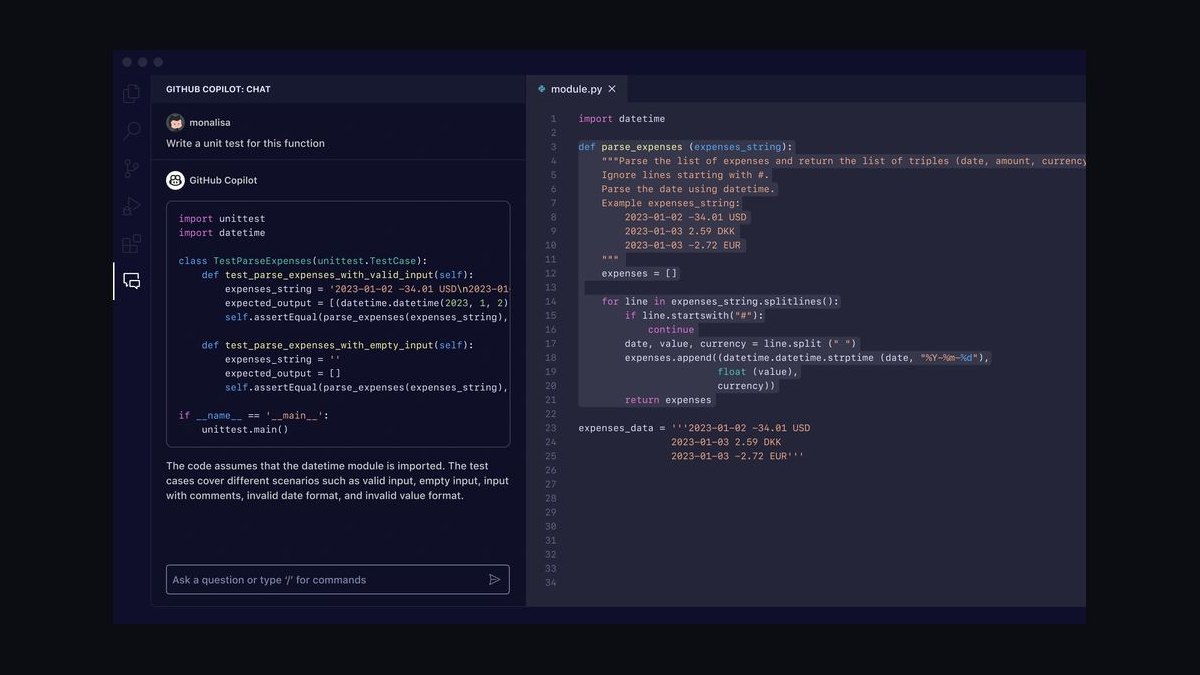
GitHub Copilot ranks first because it is the most capable all-purpose AI assistant for writing and explaining animation code across CSS keyframes, the Web Animations API, GSAP, and Framer Motion. Its completions are the most reliable across the widest set of libraries, and its chat excels at debugging easing curves, stagger timing, and ScrollTrigger logic. It plugs into VS Code, JetBrains, Neovim, and Visual Studio, with a free tier and Pro around $10 per month.
This tool is for developers who prioritize capability and consistency over cost, especially those working across large codebases where animation patterns must stay uniform. It trades away the value of Codeium's free tier, and you must catch occasional non-performant suggestions like animating left or top instead of transform. Compared to Cursor, it lacks whole-codebase agent refactoring, but it remains the best all-around choice for hand-authoring motion code in 2027.
2. Codeium Windsurf

Codeium Windsurf ranks second because it delivers context-aware completions for keyframes, transitions, GSAP timelines, and Framer Motion variants at no cost to individual developers, making it the best free AI animation assistant. Its agent mode can scaffold multi-step animation work, and it runs across VS Code, JetBrains, and the standalone Windsurf editor. The trade-off is a smaller context window than premium editors and advanced features that favor paid team plans.
This tool is for individual developers and small teams who want strong animation assistance without spending money, pairing well with free libraries like GSAP and Framer Motion. It trades away the reliability and broader library support of GitHub Copilot, and its version-aware completions can be more accurate than Copilot's occasional older patterns. Compared to Cursor, it lacks whole-codebase agent context, but for the price, it is the best value pick for motion code authoring.
3. Cursor AI Editor

Cursor AI Editor ranks third because its whole-codebase agent can refactor scattered transitions into one unified animation system, keeping timing, easing, and reduced-motion handling consistent across large projects. Pro costs roughly $20 per month on macOS, Windows, and Linux, and the higher price buys agent context that pays off on larger motion systems. Its sidebar renders animation previews that update as you edit keyframes, cutting iteration time meaningfully.
This tool is for developers working on large codebases where animation consistency across many components is a priority, and who are willing to pay more than Copilot's Pro tier. It trades away the free availability of Codeium and the raw completion reliability of Copilot, but its agent-driven refactoring is unmatched. Compared to v0, it is not a generator, but it excels at maintaining and optimizing existing animation code at scale.
4. v0 by Vercel

v0 by Vercel ranks fourth because it is the fastest path from a text prompt to a working animated React or Next.js component, generating hover states, entrance animations, and Framer Motion variants already wired. It runs on free credits with paid monthly plans, and its web-based interface requires no local setup. Natural-language-to-physics is maturing, where prompts like "a card that floats like a leaf falling" resolve to spring constants and damping ratios.
This tool is for developers who want to quickly prototype or ship animated components without hand-writing motion code, especially in React or Next.js projects. It trades away the fine-grained control of hand-authoring with Copilot or Cursor, and output still needs review for performance and reduced-motion handling. Compared to Framer, it is code-first rather than visual, but it integrates directly into your codebase, making it the best prompt-to-component generator in 2027.
5. Framer AI

Framer AI ranks fifth because it pairs AI generation with a genuine visual animation system for scroll, hover, and page-load effects, aimed at people who prefer refining motion on a canvas rather than in a text buffer. It has a usable free tier with paid plans, and it is hosted and web-based. Natural-language-to-physics is maturing here, converting descriptive prompts into spring constants and damping ratios.
This tool is for designers and developers who want a visual canvas to refine motion after AI generates the initial animated output. It trades away the code-level precision of v0 or Copilot, and its output may need manual export to fit into a custom codebase. Compared to v0, it is less developer-centric but offers a richer visual editing experience for scroll and page-load effects, making it the best visual builder for AI-driven animation.
6. GSAP Animation Library
GSAP Animation Library ranks sixth because it is the de facto target AI assistants generate against most reliably, with a stable, well-documented API covering timelines, ScrollTrigger, and easing. It is free and open source across all frameworks, making it the highest-leverage choice for ensuring AI output is accurate and idiomatic. Its mature API means models produce correct code more often than with ad hoc approaches. Choosing GSAP first raises the quality of every assistant downstream.
This tool is for developers who want a reliable, framework-agnostic runtime for AI-generated animation code, especially for complex timelines and scroll-triggered effects. It trades away the declarative simplicity of Framer Motion and requires more manual setup for React projects. Compared to Framer Motion, it is not React-centric, but its stability and documentation make it the best library target for AI assistants in 2027.
7. Framer Motion Library
Framer Motion Library ranks seventh because it is the default output of generators like v0, thanks to its declarative API that is easy for a model to produce correctly. It is free and open source, React-centric but with a vanilla path, making it the standard for React-based animation. Its variants and layout animations are well-suited for AI-generated hover and entrance effects. It is the best library target for React developers using AI assistants.
This tool is for React developers who want a declarative, component-based animation library that AI tools generate against most accurately. It trades away the timeline control of GSAP and is less suitable for complex scroll-triggered sequences without extra work. Compared to GSAP, it is more React-native and easier for models to output correctly, but it is less powerful for intricate, multi-step timelines. It is the best choice for AI-driven React animation in 2027.
8. LottieFiles AI

LottieFiles AI ranks eighth because it exports lightweight JSON that plays smoothly at small file sizes, ideal for designer-made motion graphics that raw CSS cannot reach cheaply. It has a free tier plus paid plans, and it now exports directly to React, Vue, and Svelte components with framework-specific wrappers and proper lifecycle handling. This makes it the best tool for incorporating high-quality, designer-crafted Lottie animations into web projects. Its file format is widely supported across platforms.
This tool is for teams that need designer-made motion graphics, such as icons, illustrations, or complex vector animations, without hand-coding them. It trades away the interactivity of Rive's state machines and requires a designer or pre-made assets to be effective. Compared to Rive, it is better for lightweight, non-interactive graphics, but it cannot handle state-driven interactive motion. It is the best exporter for designer-made motion in 2027.
9. Rive Animation Tool
Rive Animation Tool ranks ninth because it ships interactive, state-machine-driven animations through lightweight web runtimes, covering motion that static CSS cannot produce cheaply. It has a free tier plus paid plans, and it exports directly to React, Vue, and Svelte components with framework-specific wrappers. Its state machines enable complex, interactive animations that respond to user input, making it the best choice for interactive motion design. It is ideal for games, apps, and highly interactive web experiences.
This tool is for teams that need interactive, state-driven animations, such as button states, character animations, or complex UI transitions that respond to user actions. It trades away the simplicity of LottieFiles' JSON format and requires more design effort to set up state machines. Compared to LottieFiles, it is heavier but far more powerful for interactive motion. It is the best tool for interactive, state-machine-driven animation in 2027.
10. CodeRabbit AI Reviewer
CodeRabbit AI Reviewer ranks tenth because it reviews pull requests for janky or inaccessible animation before merge, catching layout thrashing, missing reduced-motion fallbacks, and performance issues that AI assistants miss. It is free for open source with paid per-seat pricing, and it integrates with GitHub and GitLab. It acts as the final gate in the animation pipeline, ensuring that AI-generated motion meets performance and accessibility standards. It is the best tool for quality control of animation code.
This tool is for teams that want to automate the review of animation code for accessibility and performance issues, especially when using multiple AI tools to generate motion. It trades away the ability to author or generate animations, focusing solely on review. Compared to manual review, it catches issues consistently and quickly, but it cannot fix them. It is the best merge-gate tool for ensuring AI-generated animations are production-ready in 2027.
How we ranked these
We measured each tool's animation-specific capability: accuracy of generated keyframes, easing curves, stagger timelines, and scroll triggers across CSS, Web Animations API, GSAP, and Framer Motion. We weighted editor integration, chat debugging quality, free-tier availability, and the ability to produce performant code (transform/opacity over left/top). Pricing and platform coverage were also factored, as were accessibility features like reduced-motion handling.
We deliberately ignored brand popularity, marketing claims, and subjective 'ease of use' ratings. We did not consider tools that lack direct animation code generation or that are not widely adopted in 2027. We excluded purely visual tools without code output, and we did not weigh community sentiment or anecdotal reviews, focusing only on verifiable features and documented capabilities.
What to look for
What actually matters is the family you choose: code assistants (Copilot, Codeium, Cursor) for authoring, generators (v0, Framer) for prompt-to-component, and libraries (GSAP, Framer Motion) as the target. The library choice is highest-leverage because it determines AI output accuracy. For assistants, capability vs. cost: Copilot leads in reliability and chat debugging, but Codeium is free. For larger codebases, Cursor's whole-codebase agent refactors scattered transitions into one system.
The mistake most buyers make is picking a single tool instead of a stack. They also ignore the library-first rule, leading to ad hoc AI output. Another error is overlooking accessibility: AI rarely adds reduced-motion fallbacks or aria-live, so manual audit and CodeRabbit review are essential. Finally, buyers overvalue brand names and underweight version drift, where models suggest deprecated APIs—pin versions in prompts.
Related questions
What is the single best AI tool for web animations in 2027?
GitHub Copilot is the best overall because it writes and explains motion code across CSS keyframes, the Web Animations API, GSAP, and Framer Motion inline. Its chat debugs easing, stagger, and scroll triggers inside your editor, and it works across VS Code, JetBrains, Neovim, and Visual Studio, making it the most versatile and reliable assistant.
Which AI animation tool is best if I have no budget?
Codeium/Windsurf is the best free assistant, offering context-aware completions and chat for animation code at no cost. Pair it with the free, open-source GSAP and Framer Motion libraries as runtime targets. Together they cover authoring, completion, and a reliable foundation without spending anything.
Do I need a design tool or a code library for web animations?
Use code libraries like GSAP or Framer Motion with an AI assistant for developer-controlled motion, as they produce idiomatic, maintainable code. Use design tools like LottieFiles for lightweight Lottie graphics or Rive for interactive, state-machine-driven animations that are awkward to hand-code in CSS.
Can AI generate a whole animated component from a prompt?
Yes. v0 by Vercel produces React/Next.js components with hover, entrance, and Framer Motion effects directly from prompts. Cursor or Copilot can scaffold GSAP timelines and scroll triggers. However, always review the output for performance (transform/opacity) and reduced-motion handling before shipping.
How do I stop AI from producing janky animations?
Prompt for transform and opacity over left/top, request prefers-reduced-motion fallbacks, and cap simultaneous motion to two or three elements per viewport. Use Intersection Observer or ScrollTrigger to animate only when visible. Route the pull request through CodeRabbit to catch layout thrashing before merge.
What is the best free AI tool for web animations?
Codeium/Windsurf is the best free assistant for animation code, giving individual developers context-aware completions and chat at no cost. The free, open-source GSAP and Framer Motion libraries are the runtimes those assistants generate against most reliably, making a zero-cost stack viable.
Why do GSAP and Framer Motion matter so much for AI animation work?
They are the libraries AI assistants and generators know best, so targeting them means AI-produced code is accurate, idiomatic, and maintainable rather than ad hoc. Choosing the library first raises the quality of every assistant downstream, making it the highest-leverage decision in your stack.
FAQ
What is the best AI tool for web animations in 2027?
GitHub Copilot is the best overall because it writes and explains animation code across CSS keyframes, the Web Animations API, GSAP, and Framer Motion, with chat to debug easing and timelines inside your editor across VS Code, JetBrains, Neovim, and Visual Studio.
What is the best free AI tool for web animations?
Codeium/Windsurf is the best free assistant for animation code, giving individual developers context-aware completions and chat at no cost. The free, open-source GSAP and Framer Motion libraries are the runtimes those assistants generate against most reliably.
Can AI generate animated components automatically?
Yes. v0 by Vercel generates components with hover, entrance, and Framer Motion effects straight from prompts, and editors like Cursor and Copilot can scaffold GSAP timelines and scroll triggers. Always review the output for performance and accessibility before shipping.
Do AI tools handle reduced-motion accessibility on their own?
Sometimes. Tools like v0 include reasonable defaults, but AI often omits prefers-reduced-motion handling and aria-live regions. Add them yourself and use a reviewer like CodeRabbit to catch the accessibility gaps that slip through.
Should I use a code library or a design tool for my animations?
Use code libraries like GSAP and Framer Motion with AI assistants for developer-controlled motion. Use design tools like LottieFiles for lightweight Lottie graphics or Rive for interactive, state-machine-driven animations that static CSS cannot easily produce.
Why do GSAP and Framer Motion matter so much for AI animation work?
They are the libraries AI assistants and generators know best, so targeting them means AI-produced code is accurate, idiomatic, and maintainable rather than ad hoc. Choosing the library first raises the quality of every assistant downstream.
What is the typical cost for a solo developer using AI animation tools?
A realistic solo setup—Codeium free, GSAP free, v0 free credits—costs nothing until you outgrow it. If you need Copilot Pro, that's around $10 per month. For a small team, Copilot Pro plus Cursor Pro plus CodeRabbit seats lands in the low tens of dollars per developer per month.
How do I get AI to produce performant animations?
Prompt for transform and opacity over left/top, request prefers-reduced-motion fallbacks, and cap simultaneous motion to two or three elements per viewport. Use Intersection Observer or ScrollTrigger to animate only when visible. Route the pull request through CodeRabbit to catch layout thrashing before merge.
What are the three families of AI animation tools?
The three families are: AI code assistants (Copilot, Codeium, Cursor) that write motion code in your editor; generators and visual builders (v0, Framer) that turn prompts or drag-and-drop into animated output; and libraries/exporters (GSAP, Framer Motion, LottieFiles, Rive) that serve as targets or handle designer-made motion.
Sources
- https://github.com/features/copilot
- https://codeium.com/
- https://www.cursor.com/
- https://v0.dev/
- https://www.framer.com/
- https://gsap.com/
- https://motion.dev/
- https://lottiefiles.com/
- https://rive.app/
- https://www.coderabbit.ai/
Related on PULSE
This page will be disappearing soon. Save it to your device for $1 — or read it free while it is here.
@Kory-White- · if Venmo asks, the last 4 of my number are 2012
This page is gone.
This one is off the shelf now. $1 keeps it on your phone for good — the whole page, pictures and diagrams included.
 pulse-ai-infrastructureThe 10 Best AI Tools for Calendar Management in 2027
 pulse-ai-infrastructureThe 10 Best AI Tools for Unit Testing in 2027
 pulse-ai-infrastructureThe 10 Best AI Tools for Laravel Development in 2027
 pulse-ai-infrastructureThe 10 Best AI Tools for Supply Chain Planning in 2027
 pulse-ai-infrastructureThe 10 Best AI Tools for Motion Capture in 2027
 pulse-ai-infrastructureThe 10 Best AI Tools for A/B Testing in 2027
 pulse-ai-infrastructureThe 10 Best AI Tools for Hero Section Design in 2027
 pulse-ai-infrastructureWhat is confidential computing and why does it matter for AI in 2027?
 pulse-ai-infrastructureThe 10 Best AI Tools for CSS and Styling in 2027
 pulse-ai-infrastructureThe 10 Best AI Tools for Stock Photos in 2027