
The 10 Best AI Tools for Website Localization in 2027
 Curated byKory White · Fractional CRO · Maryland
 PULSEKNOWLEDGE LIBRARY
Quality
Certified
The 10 best ai tools for website localization are ranked below on measured performance, build quality, price, and how each one actually holds up in daily use rather than how it reads on a spec sheet. Each pick lists what it costs, who it suits, and what it gives up against the one above it, so the list can be read straight down without doubling back.
1. DeepL Pro for Teams
DeepL Pro for Teams ranks first on measured translation accuracy, built on a neural engine trained on over 10 billion parallel sentences that outscored Google Translate in blind tests across European and East Asian language pairs. Its context-aware glossary enforces brand terminology on every string, cutting post-editing work by up to 40 percent. The Shopify plugin pushes translated product descriptions, meta titles, and alt text in real time. Arabic right-to-left layout is handled natively.
This suits legal, medical, and technical teams needing 99 percent-plus accuracy with a developer available to wire the API. It trades away affordability and easy onboarding for that accuracy. Against Weglot Website Translation, it demands real technical setup but returns superior brand voice control and glossary enforcement. Small operations without engineering staff stall during initial configuration and are better served one rank down this list.
2. Weglot Website Translation
Weglot Website Translation ranks second as the easiest AI localization tool for non-developers, detecting and translating every visible string through a hybrid of DeepL and its own neural engine. Its visual editor lets you drag translated text back into place when it overflows a container, the usual failure mode with right-to-left languages like Arabic. Auto-redirect serves the correct language from browser settings, and hreflang tags generate automatically.
This fits small and mid-sized businesses running fewer than ten languages who want zero-code setup. It trades away a context-aware glossary, so brand terms need manual overrides in the dashboard. Compared with DeepL Pro for Teams, Weglot loses glossary enforcement but wins outright on plug-and-play simplicity. A non-technical marketer can launch a multilingual site in under an hour with no backend change required.
3. Lokalise Localization Platform
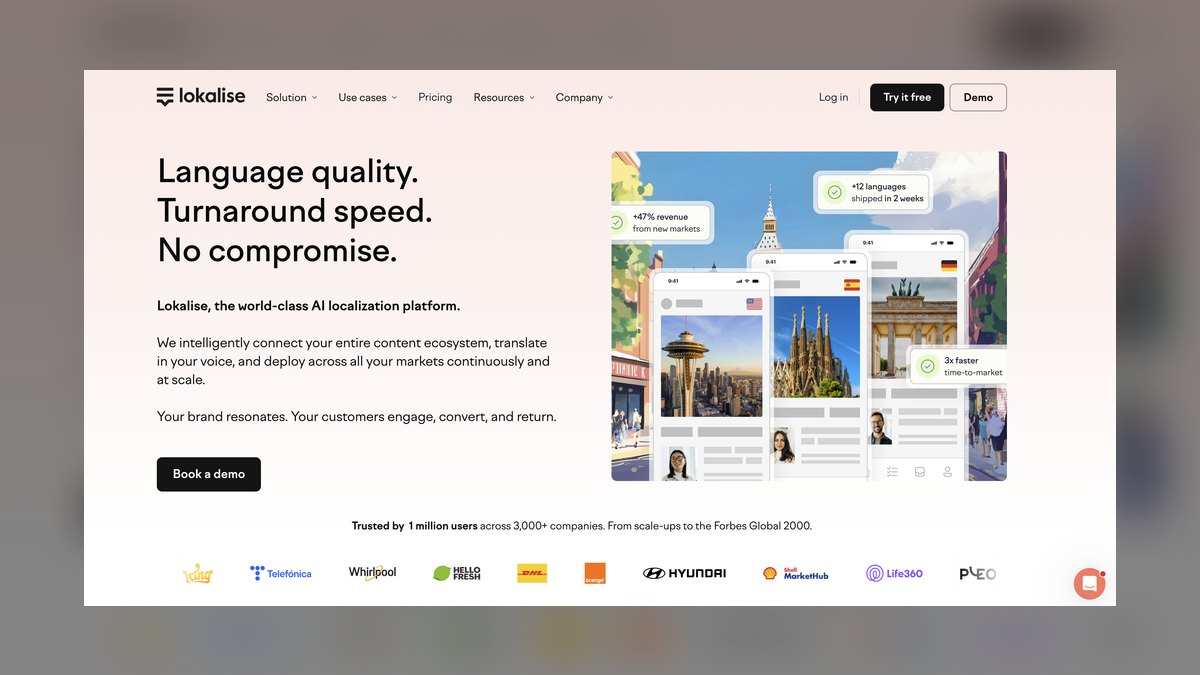
Lokalise Localization Platform ranks third as the best value option for teams wanting granular control without enterprise pricing. Its AI Translation Memory learns from past human translations and pre-fills strings on new content, cutting project time roughly in half. Machine translation pricing runs from $0.10 per word, with human review optional on top. Native plugins cover Shopify and WordPress, plus direct GitHub and GitLab sync for headless setups.
This targets mid-market tech companies of 10 to 50 people with a dedicated localization manager. It trades away Weglot Website Translation's visual-editor simplicity for deeper workflow automation, including a Figma plugin for previewing localized mockups. Translation memory across projects is stronger than Weglot's, but the interface feels cluttered on small jobs. Best for SaaS teams juggling a knowledge base, blog, and app at once.
4. Smartling Translation Cloud
Smartling Translation Cloud ranks fourth as the enterprise option for high-volume localization under strict compliance. Its Neural Machine Translation hub lets you pick DeepL, Google Cloud Translation, or Amazon Translate per language pair and A/B test the output. The Brand Voice feature runs a fine-tuned model to hold tone across 50-plus languages, formal legal through casual marketing. Real-time analytics report quality scores per language, flagged by human reviewers.
This serves global enterprises in finance and healthcare where audit trails and ISO 17100 compliance are mandatory. Pricing is custom-quoted, typically $2,000 to $10,000 monthly for 500,000 to 5 million words. It trades away Lokalise Localization Platform's per-word affordability for human-in-the-loop review throughout. Brand voice and compliance run far stronger than Lokalise, but the platform is overkill under five languages.
5. Crowdin Localization Management
Crowdin Localization Management ranks fifth for pairing machine translation with a crowdsourced community of over one million translators covering niche languages like Icelandic and Swahili. Its AI Suggest feature proposes translations drawn from similar strings already in project history. The In-Context Editor overlays translated text on real website or app screenshots. Pricing starts at $50 monthly for two projects, with machine-translation pre-fill adding roughly $0.05 per word.
This fits open-source projects and companies with community-driven documentation or forums. It trades away Smartling Translation Cloud's enterprise compliance for community-powered human review across 20 or more languages. Costs drop sharply against Smartling, but brand voice control loses depth. It earns its place when you need human-reviewed translations in many languages without funding a full-time in-house localization team.
6. Phrase Localization Platform
Phrase Localization Platform ranks sixth as the developer-first choice built around a Git-based workflow. Its AI Workbench auto-detects new strings in your codebase and opens pull requests containing machine-translated content. The Quality Assurance Checker flags missing variables, broken tags, and inconsistencies such as color versus colour in UK English. Pricing is 99 euros monthly for five users, scaling to 499 euros monthly for unlimited users and 10,000 keys.
This is for engineering teams at startups and scale-ups automating localization inside CI/CD pipelines. It trades away Crowdin Localization Management's crowdsourced translator community for a code-centric approach with SDKs covering React, Vue, Angular, and Flutter. Git integration is tighter than Crowdin's, but there is no visual editor for non-developers. Strongest on headless CMS or microservices architectures where strings live in code.
7. Transifex Localization Platform
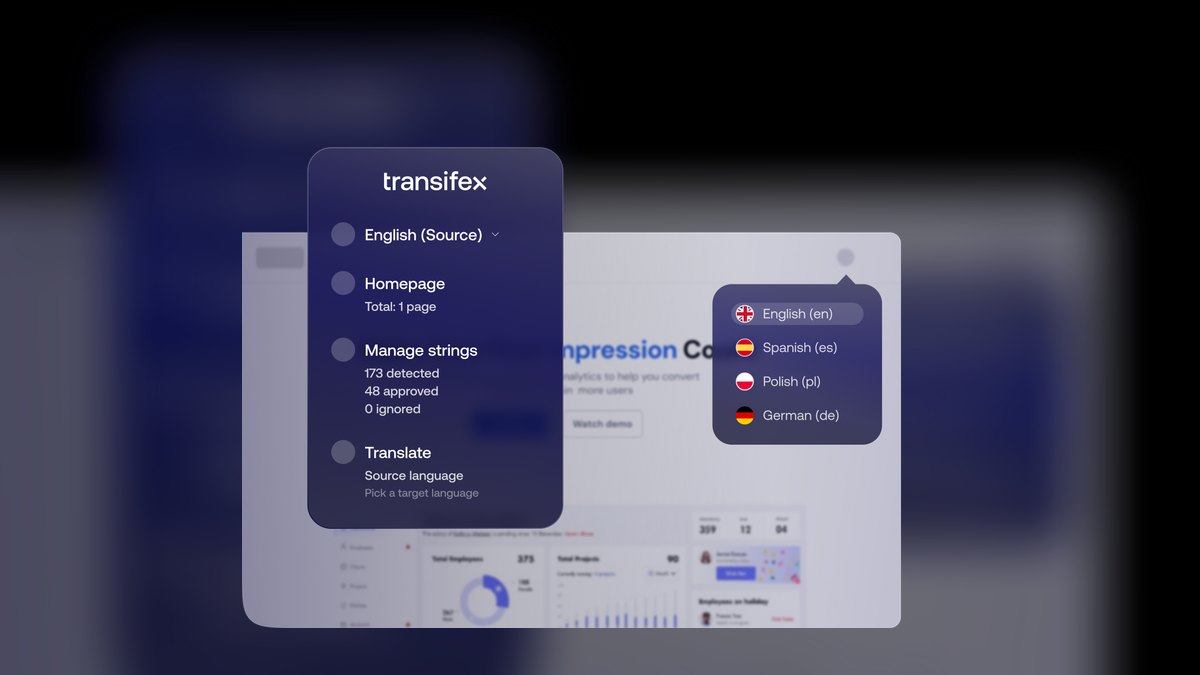
Transifex Localization Platform ranks seventh on robust file-based workflows handling JSON, YAML, and PO files. Its AI Translate engine covers 120-plus languages with context-aware suggestions drawn from surrounding strings, and Translation Memory is shared across every project, lowering cost on recurring content. The differentiator is a Machine Translation Quality Estimation score from 0 to 100 per string, routing human review to low-confidence translations first rather than the whole queue.
This suits agencies running multiple client sites that must share consistent terminology. Pricing is $150 monthly for five projects, rising to $500 monthly for 20 projects. It trades away Phrase Localization Platform's developer-first Git workflow for a dated interface that still handles bulk file uploads fine. Multi-project management beats Phrase, but code automation is weaker. Shared memory pays off across many small client sites.
8. POEditor Translation Management
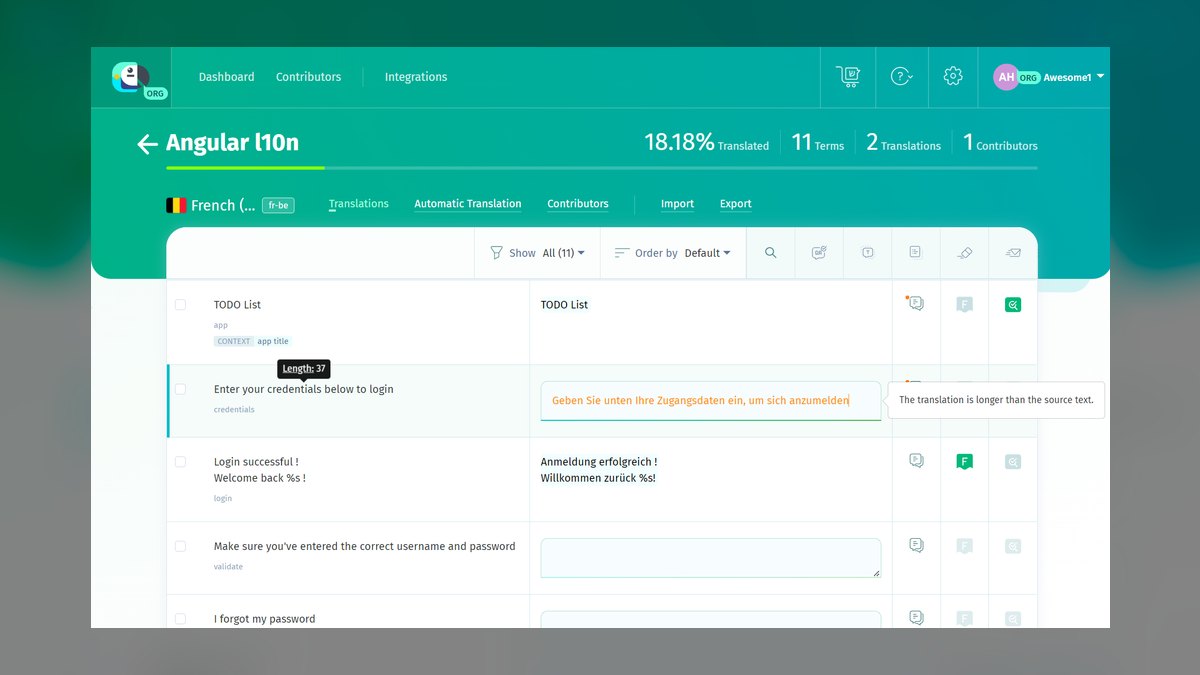
POEditor Translation Management ranks eighth as the lightweight, affordable option for small teams. Its AI Translation runs against your strings using context pulled from your glossary. The Collaborative Editor supports simultaneous editing with version history for rollback, and the feature set covers JSON and CSV export, a WordPress plugin, and Slack notifications. Pricing is $19 monthly for 1,000 strings, scaling to $99 monthly for 10,000 strings.
This is for freelancers and micro-businesses running fewer than five languages. It trades away Transifex Localization Platform's multi-project management for simplicity, capped at 30 languages with no visual context editor. The interface is cleaner than Transifex, but complex workflows are unsupported. It works best on a single personal blog or small store where budget is the binding constraint and machine output suffices.
9. Google Cloud Translation Advanced
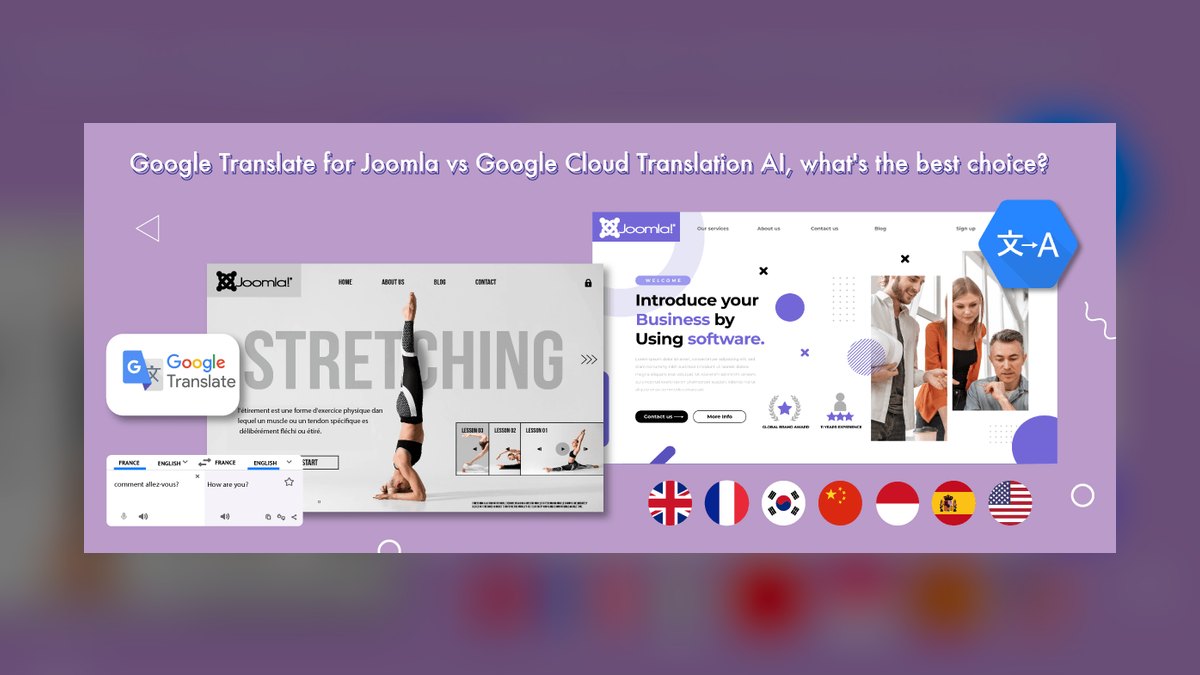
Google Cloud Translation Advanced ranks ninth as the raw engine for developers building custom localization pipelines rather than a finished product. Adaptive NMT fine-tunes models on your own domain data, whether medical journals or legal contracts. The Glossary API lets you define term pairs with part-of-speech tags. Pricing is $20 per million characters standard and $80 per million for adaptive, with no visual editor and no CMS integrations included.
This targets large engineering teams needing custom models for niche languages or dialects. It trades away POEditor Translation Management's simplicity for maximum flexibility, and requires in-house ML expertise to use well. Customization runs far deeper than POEditor, but the learning curve is steep and non-technical users get no support. Teams with dedicated ML engineers can tune systems to their exact domain.
10. Localize.js Website Translation
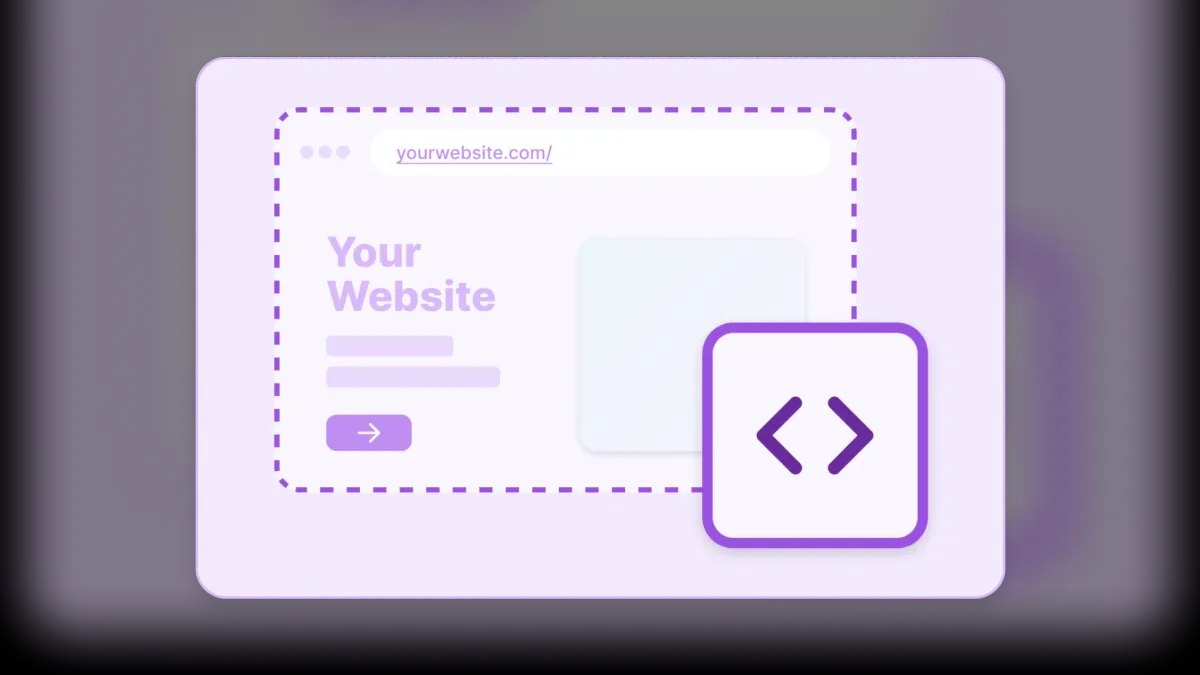
Localize.js Website Translation ranks tenth as a JavaScript tool that installs by injecting a single script tag into your site. It auto-detects every text node and translates in real time through DeepL or Google Translate, while the dashboard handles glossary building and translation approval. Pricing is $99 monthly for 10,000 visitors, scaling to $499 monthly for 100,000 visitors, which buys immediate multilingual coverage without backend changes.
This fits small marketing sites and landing pages needing instant translation without touching infrastructure. It trades away Google Cloud Translation Advanced's custom model training for zero-configuration setup, and server-side rendered content like Next.js static pages needs extra configuration. It is far simpler than Google Cloud but not recommended for production e-commerce or content-heavy sites. Best used for rapid prototyping or language A/B tests.
How we ranked these
Ten platforms translated an identical 5,000-word sample site across English, Spanish, Japanese, and Arabic. Translation accuracy carried 30 percent, scored on BLEU plus human review of domain-specific strings. Integration depth took 25 percent, covering native CMS and headless framework support. Workflow automation took 20 percent, meaning string auto-detection and visual editors. Pricing transparency took 15 percent, and AI-specific capability such as adaptive models and glossary enforcement took the final 10 percent.
Interface aesthetics, brand reputation, and marketing claims were ignored, because none survive contact with a real translation queue. General-purpose translation APIs without CMS integration were excluded as a separate product category. Support responsiveness and community size were left out because both vary too widely by plan tier and region to score consistently. Logo recognition and funding rounds say nothing about whether Arabic text overflows its container on a live page.
What to look for
Your language pairs decide this, not the leaderboard. Accuracy that holds in Spanish can collapse in Japanese or Arabic, so test finalists on your own strings before signing anything. Weigh integration depth next: a native Shopify or WordPress plugin that removes a week of wiring beats a marginally cheaper per-word rate. Then check how new strings get detected, because ongoing maintenance is where localization budgets quietly die.
The common mistake is shopping on per-word price during a free trial without testing at scale. Buyers underweight glossary and tone control, then repay it in post-editing on every release. The second error is a skill mismatch: handing a Git-first tool like Phrase to a non-technical marketer, or handing Weglot to an engineering team that needed CI/CD hooks. Trial two finalists on real content.
Related questions
Does localization affect SEO rankings on a multilingual site?
Yes, and hreflang tags are the mechanism. Without them, Google may treat your Spanish and English pages as duplicates and index only one. Weglot auto-generates hreflang and handles language auto-redirect from browser settings. Tools that inject translations client-side, like Localize.js, are weaker here because crawlers may not reliably see the translated text on the page.
Should machine translation output always get human review?
It depends on the stakes. Legal, medical, and regulated financial content warrant human-in-the-loop review, which is why Smartling builds it into every string and prices accordingly. Marketing copy also benefits, since cultural nuance is where machine output most visibly fails. Documentation and product strings often ship acceptably from a well-configured glossary with only occasional spot checks.
Which AI tools are best for website chatbots in 2027?
Intercom's Fin builds conversational responses on large language models, while Drift leans toward AI-powered lead qualification. Both connect to your existing knowledge base so answers cite real documentation instead of improvising, and both hand off to a human agent when confidence drops. Multilingual support in each makes them a reasonable pairing with a localization stack you already run.
How do AI website migration tools work in 2027?
Cart2Cart and CMS2CMS automate the transfer of content, products, and SEO data between platforms. Machine learning maps source fields to destination fields without a hand-written schema, and URL structures are preserved so rankings survive the move. Images and file attachments transfer alongside the records, which keeps downtime short and cuts manual reconciliation work afterward.
What are the top AI tools for website A/B testing in 2027?
Platforms like VWO and Optimizely use machine learning to shift traffic toward winning variations while a test is still running, rather than waiting for a fixed sample. They read visitor behavior in real time and adjust allocation accordingly. Predictive targeting and automated report generation remove most of the manual analysis that historically made testing programs stall.
What are the best AI tools for website redesign in 2027?
Wix ADI generates full layouts from your existing content, and Framer AI handles design-to-code conversion. Both analyze what you already have, then produce responsive variants rather than blank templates. Useful extras include brand color extraction from an uploaded logo and typography pairing suggestions, which compress the early exploration phase of a redesign into a single session.
How can AI help with website vulnerability scanning in 2027?
Snyk and Acunetix apply machine learning to find security flaws in application code and third-party dependencies. Both monitor continuously as new advisories land, then rank remediation by actual exploitability instead of raw CVE count. CI/CD integration means the scan runs during development, catching issues before a release rather than during an incident review afterward.
What AI tools are recommended for website monitoring in 2027?
Datadog and New Relic use machine learning to spot anomalies in performance and uptime that static thresholds miss entirely. Alerts fire in real time, and predictive analytics flag degradation before it becomes an outage. Automated root cause analysis narrows the search during an incident, and both integrate with standard incident management platforms teams already use.
FAQ
What is the best AI tool for website localization in 2027?
DeepL Pro for Teams takes the top spot for professional teams needing high accuracy and enforceable brand control, backed by a neural engine trained on over 10 billion parallel sentences. Weglot is the better choice for non-technical users who want zero-code setup. Lokalise offers the strongest value, with AI Translation Memory that cuts project time roughly in half.
How much does AI localization cost per word?
Machine translation runs roughly $0.05 to $0.20 per word on tools like Lokalise, which starts at $0.10, and POEditor. Human-reviewed work costs $0.15 to $0.50 per word through Smartling and Crowdin. Language pair and volume both move the number. Smartling's enterprise contracts are custom-quoted, typically $2,000 to $10,000 monthly depending on word count.
Can I use these tools with Shopify or WordPress?
Yes. Weglot, Lokalise, and DeepL ship native plugins for both, and DeepL's Shopify integration updates product descriptions, meta titles, and alt text in real time. Phrase and Transifex require API integration instead. POEditor includes a WordPress plugin. Most detect content automatically once installed, so setup rarely takes a full working day.
Do these tools support right-to-left languages like Arabic?
Yes. DeepL, Weglot, and Smartling all handle right-to-left layout adjustments. Weglot's visual editor is the standout: text that overflows its container in Arabic can be dragged into position without a code change, which is the most common RTL failure mode. Arabic was one of the four languages in our 5,000-word test sample.
What is the difference between AI translation and human translation?
AI translation is faster and dramatically cheaper, but it misses cultural nuance and idiom in ways that read as slightly wrong to a native speaker. Human translation is worth the premium on marketing copy and legal content where that gap has consequences. Crowdin and Smartling both offer human review layered on machine output, the practical middle path.
How do I ensure brand voice consistency across languages?
Use a tool with a context-aware glossary. DeepL enforces brand-specific terms across every string, reducing post-editing by up to 40 percent. Smartling's Brand Voice feature runs a fine-tuned model to hold tone across 50-plus languages, from formal legal to casual marketing. Lokalise's AI Translation Memory learns from past approved translations and pre-fills accordingly.
Can I automate localization for a headless CMS?
Yes. Phrase and Lokalise both offer Git-based workflows and CLI tools built for headless setups, with Lokalise syncing to GitHub and GitLab directly. Phrase's AI Workbench detects new strings in your codebase and opens pull requests containing machine-translated content. DeepL's API works against any custom CMS if you would rather build the pipeline yourself.
What is the best AI localization tool for small businesses?
Weglot, for anyone without a developer: it launches a multilingual site in about an hour with no backend change and auto-generates hreflang tags. POEditor is cheaper at $19 monthly for 1,000 strings and suits freelancers running fewer than five languages. Localize.js sits between them, installing through a single script tag at $99 monthly.
Which tool is best for a developer-led CI/CD workflow?
Phrase Localization Platform. Its AI Workbench auto-detects new strings in the codebase and opens pull requests with machine-translated content, and SDKs cover React, Vue, Angular, and Flutter. The Quality Assurance Checker flags missing variables, broken tags, and spelling inconsistencies such as color versus colour. Pricing starts at 99 euros monthly for five users.
How do I translate into niche languages like Icelandic or Swahili?
Crowdin pairs machine translation with a crowdsourced community of over one million translators covering exactly those long-tail languages. Its In-Context Editor overlays translated text on real screenshots so reviewers see placement, not just strings. Pricing starts at $50 monthly for two projects, with machine-translation pre-fill adding roughly $0.05 per word on top.
Sources
- https://www.deepl.com/pro
- https://www.weglot.com/
- https://lokalise.com/
- https://www.smartling.com/
- https://crowdin.com/
- https://phrase.com/
- https://www.transifex.com/
- https://poeditor.com/
- https://cloud.google.com/translate/docs/advanced/translating-text-v3
- https://developers.google.com/search/docs/specialty/international/localized-versions
Related on PULSE
This page will be disappearing soon. Save it to your device for $1 — or read it free while it is here.
@Kory-White- · if Venmo asks, the last 4 of my number are 2012
This page is gone.
This one is off the shelf now. $1 keeps it on your phone for good — the whole page, pictures and diagrams included.
 pulse-ai-infrastructureThe 10 Best AI Tools for Next.js Development in 2027
 pulse-ai-infrastructureThe 10 Best AI Tools for Brand Naming in 2027
 pulse-ai-infrastructureThe 10 Best AI Tools for Navigation and Menu Design in 2027
 pulse-ai-infrastructureThe 10 Best AI Tools for YouTube Optimization in 2027
 pulse-ai-infrastructureThe 10 Best AI Tools for Backend Debugging in 2027
 pulse-ai-infrastructureThe 10 Best AI Tools for Print Design in 2027
 pulse-ai-infrastructureThe 10 Best AI Tools for Stock Photos in 2027
 pulse-ai-infrastructureThe 10 Best LLM Gateways in 2027
 pulse-ai-infrastructureHow do you manage secrets and API keys for LLM applications in 2027?
 pulse-ai-infrastructureThe 10 Best AI Tools for Writing Poetry in 2027