
Best EVs for Cold Weather in 2027
 Curated byKory White · Fractional CRO · Maryland
 PULSEKNOWLEDGE LIBRARY
The best cold-weather EVs pair a heat pump, battery preconditioning, and all-wheel drive with enough rated range to absorb a 20–40% winter penalty. Prioritize those three features over headline range numbers: a 300-mile EV with a heat pump routinely outperforms a 350-mile one without, both in usable range and in DC fast-charging speed below freezing.
What cold-weather EV capability actually means
"Good in the cold" is a hardware question, not a marketing one. Two physical penalties stack the moment temperatures drop below roughly 32°F, and a vehicle either has the equipment to blunt them or it does not.
The first penalty is electrochemical. Lithium-ion cells rely on ion movement through a liquid electrolyte, and that movement slows as the electrolyte thickens in the cold. Internal resistance climbs, which means the pack delivers less usable energy on discharge and — more dramatically — accepts far less current on charge. A pack sitting at 20°F may be limited by its own battery management system to a fraction of its peak charging rate, not because the charger is weak but because forcing high current into cold cells risks lithium plating on the anode, which permanently degrades capacity. The BMS is protecting the asset. You cannot argue with it; you can only warm the pack.
The second penalty is thermal, and for most drivers it is the bigger one. A gasoline engine is roughly 25–30% efficient at converting fuel to motion, and nearly all the remaining energy leaves as waste heat — heat that a heater core captures for free. An EV powertrain runs somewhere north of 85% efficient, which is wonderful for range and terrible for cabin heat: there is almost no waste heat to scavenge. Every BTU that warms the cabin has to come out of the traction battery.

That is why the heat pump is the single most valuable piece of cold-weather hardware on an EV. A resistive heater is a coefficient-of-performance-1.0 device: one kilowatt of electricity buys one kilowatt of heat, full stop. A heat pump moves heat rather than creating it, harvesting ambient thermal energy (and often waste heat from the motors, inverter, and battery) and pumping it into the cabin. Depending on outside temperature it delivers a COP of roughly 2 to 3, meaning two to three kilowatts of heat per kilowatt consumed. On a 20°F morning that difference can be several kilowatts of continuous draw — the equivalent of adding 15–20 mph of highway speed to your consumption, permanently, for the whole drive.
The practical caveat: heat-pump efficiency degrades as ambient temperature falls. Around freezing a heat pump is dramatically better than resistive heat. In deep cold — well below 0°F — there is less ambient heat to harvest and the COP approaches 1, at which point many systems supplement with or fall back to resistive elements. So a heat pump is not magic in an Arctic snap; it is a large, reliable win across the far more common 10–40°F band where most winter driving actually happens.
The third piece is battery preconditioning: using energy to bring the pack into its optimal thermal window (roughly 70–110°F for fast charging) before you need performance from it. There are two flavors and they matter differently. Departure preconditioning runs while the car is plugged in, warming cabin and pack on grid power so you leave with a warm interior and a full state of charge — this is nearly free range. Navigation-linked charge preconditioning runs *while driving* toward a fast charger, deliberately spending battery energy to heat the pack so it can accept high current on arrival. That one costs range but buys back far more in charging time.
Anchors matter for the fourth element too: traction. All-wheel drive helps a vehicle accelerate on a slick surface and, on a dual-motor EV, enables torque vectoring and finer traction control than a mechanical system can manage. But AWD does not shorten stopping distance and does not improve cornering grip on ice. Ground clearance — the Subaru Solterra's 8.3 inches is a useful benchmark — determines whether you can traverse unplowed snow at all, since an EV with a flat underbody will plow and beach itself once depth exceeds clearance.

The step-by-step process for evaluating a cold-weather EV
Work through the candidates in a fixed order so you do not get seduced by a big range number attached to weak thermal hardware.
Step 1 — Confirm the heat pump is standard on the trim you can afford. This is the trap. Heat pumps are frequently standard on higher trims and optional or absent on base ones, and the window sticker will not always make it obvious. Check the specific trim, not the model line. If the manufacturer's spec sheet is ambiguous, the owner's manual HVAC section usually settles it.
Step 2 — Confirm both preconditioning modes exist. Departure scheduling is near-universal now. Navigation-linked charge preconditioning is not, and on some vehicles it only triggers when you route to a specific brand's network via the built-in navigation — routing through a phone app will not arm it. Verify that manual preconditioning is also available, because you will want it when heading to a charger the nav does not know about.

Step 3 — Discount the EPA number. EPA range is measured at 75°F. Apply a 25% haircut as a working baseline for sustained sub-freezing driving with the heater on, and 35–40% for deep cold, short trips (where preconditioning never finishes and the cabin never stabilizes), or highway speeds in a headwind. A 300-mile EV is a 195–225-mile EV in January.
Step 4 — Map the haircut onto your actual worst week. Not your commute. Your worst week: the round trip to family, the drive to the trailhead, the day the office loses power and you drive home the long way. If that trip exceeds 70% of your winter-adjusted range, you need either more range or a confirmed charging stop.
Step 5 — Check the charging architecture. An 800-volt platform (Hyundai's E-GMP, Audi's PPE, Kia's EV9) recovers charge faster after preconditioning, which compresses the winter road-trip penalty. A 400-volt platform is not disqualifying, but it leaves less headroom when the pack is still warming.

Step 6 — Verify AWD availability and its range cost. Expect roughly 5–10% range loss for the second motor. Many modern systems include a disconnect that decouples one motor when it is not needed, which mostly erases the highway-cruise penalty.
Step 7 — Budget for winter tires as a line item, not an afterthought. This is the highest return-per-dollar decision on the entire list, and it is covered in detail below.
Costs, timelines, and typical ranges
The 2027 field spans a wide price band, and cold-weather capability is available at nearly every rung — though the cheapest entries make you choose between range and hardware.

Value tier, roughly $40,000–$50,000. This is where the Hyundai Ioniq 5 sits near $43,000, the Subaru Solterra near $45,000, and the Chevrolet Equinox EV in all-wheel-drive form near $40,000. The Ioniq 5 is the standout because it brings a standard heat pump and an 800-volt architecture — genuinely premium cold-weather hardware — at a mainstream price, with rear-drive EPA range up to about 318 miles. The Solterra trades range (around 285 miles) for the traction package: standard AWD, X-Mode, and 8.3 inches of clearance. The Equinox EV AWD, around 285 miles, is the lowest-cost route to all-wheel drive.
Mainstream-plus tier, roughly $49,000–$65,000. The Tesla Model Y Long Range AWD lands near $49,000 with roughly 320 miles EPA, dual-motor AWD, a heat pump, and automatic preconditioning when you navigate to a Supercharger — the tightest integration of charging and thermal management in the segment, which matters enormously on a winter road trip. The Kia EV9 near $56,000 gives you three rows, up to about 304 miles, a standard heat pump, and the same 800-volt fast-charging benefit. The Audi Q6 e-tron near $65,000 brings standard quattro, a heat pump, around 307 miles, and Audi's 800-volt PPE platform. The Ford F-150 Lightning at roughly $63,000 is the pickup answer: standard AWD, up to about 320 miles on the extended-range battery, available heat pump, real towing, and the ability to back-feed a house during a winter outage.
Premium tier, roughly $78,000 and up. The Rivian R1S near $78,000 is the most complete cold-weather package: dual- or quad-motor AWD, over 400 miles EPA in long-range form, a heat pump, preconditioning, adjustable air suspension that lifts the body for deep snow, and three rows. The Volvo EX90 near $81,000 offers three rows, standard AWD, a heat pump, and around 310 miles in a heavily insulated cabin. The BMW iX xDrive50 near $88,000 delivers around 340 miles with standard AWD and strong insulation.
Ancillary costs to plan for. Dedicated winter tires plus a second set of wheels typically run $1,200–$2,000 for a midsize crossover and more for the large-diameter wheels on premium SUVs; a set lasts several seasons since it only runs a few months a year. Seasonal mounting and balancing runs perhaps $80–$150 per swap if you do not have a spare wheel set. Level 2 home charging is close to mandatory in a cold climate — not for the speed but because it is what makes plugged-in preconditioning possible — and installed cost varies enormously with panel capacity and run length, from a few hundred dollars for a short run on a modern panel to several thousand if a service upgrade is required.

Timelines. Departure preconditioning typically wants 20–45 minutes on the timer to fully warm both cabin and pack; setting it for 10 minutes mostly warms air, not the battery. Navigation-linked charge preconditioning generally begins 20–30 minutes out from the charger, which is why routing early matters. A cold-soaked pack arriving at a DC fast charger without preconditioning can take 30–50% longer to reach 80%; with preconditioning that penalty typically compresses to roughly 10–20% versus ideal conditions.
Where buyers and fleets get it wrong
Buying range instead of buying thermal hardware. The most common mistake. A 350-mile EV with resistive heat and no navigation-linked preconditioning will deliver a worse January than a 300-mile EV with a heat pump and both preconditioning modes — worse usable range *and* markedly slower winter charging. Range is a buffer; thermal hardware is a multiplier on that buffer.
Preconditioning on battery instead of on grid power. Warming the car after unplugging spends pack energy to do what the wall could have done for pennies. Always leave the car plugged in overnight when a departure timer is set, even at 100% state of charge — the vehicle will draw preconditioning energy from the outlet rather than the pack.
Skipping winter tires because the vehicle has all-wheel drive. This is the most dangerous error on the list. All-season compounds stiffen dramatically below about 45°F and lose the ability to conform to road texture; winter compounds stay pliable and the tread is siped to bite snow. AWD helps you go. Tires are what let you stop and turn. A front-wheel-drive EV on proper winter tires is materially safer on ice than an all-wheel-drive EV on all-seasons, and no drivetrain compensates for a compound that has gone hard.
Charging to 100% and letting the car cold-soak at full. Parking outside at very high state of charge in deep cold is harder on the cells than parking at a moderate charge. For daily use, a 70–80% ceiling is kinder and still leaves plenty of winter buffer; save the 100% charge for the morning you actually need every mile, and time it to finish right before departure.
Planning winter road trips on summer charging assumptions. Two changes are required. First, tighten the buffer: arrive at each stop with 15–20% rather than the 8–10% you might accept in July. Second, expect a longer session, because even a preconditioned pack in single-digit temperatures will not hit its full peak rate. Charging stops that took 20 minutes in summer should be planned as 30.
Ignoring seat and wheel heaters. Resistive seat and steering-wheel heaters draw very little power — a few hundred watts at most — and warm the person directly rather than the entire air volume of the cabin. Running heated seats and a lower cabin temperature is one of the largest voluntary range savings available, and it is comfortable rather than punishing.
Fleet-specific error: not adjusting duty cycles or the operating model. Organizations that electrify a fleet on summer numbers discover in January that routes no longer close. Winter range assumptions belong in the routing model before the vehicles arrive, and depot charging needs enough capacity that vehicles precondition on shore power rather than pack energy. The revenue consequence is direct: a delivery or service vehicle that must detour for an unplanned charge loses billable stops, and that lost throughput dwarfs the electricity cost of preconditioning every vehicle every morning.
Assuming a garage solves everything. A garage helps a great deal at departure — you start with a pack near ambient indoor temperature instead of frozen. It does nothing for the return trip, when the car has sat eight hours in an unheated parking lot. Workplace Level 2 charging, even slow, is worth more in winter than in summer because it keeps the pack warm as much as it adds electrons.
Decision framework: matching the vehicle to the winter you actually have
The right pick depends on three variables in order: how deep the snow gets where you park and drive, how far your longest routine winter trip is, and your budget ceiling.
If you drive plowed roads in a cold climate — most suburban and city drivers in the snow belt — traction hardware matters less than thermal hardware. Prioritize a heat pump, both preconditioning modes, and an 800-volt platform if the budget allows. The Hyundai Ioniq 5 near $43,000 is the value answer here and the Tesla Model Y Long Range AWD near $49,000 is the road-trip answer, thanks to the automatic preconditioning triggered by Supercharger navigation.
If you face unplowed roads, a steep driveway, or genuine snow depth, ground clearance becomes non-negotiable and outranks range. The Subaru Solterra at roughly $45,000 with 8.3 inches of clearance and X-Mode is purpose-built for this, accepting about 285 miles of range as the trade. Above it, the Rivian R1S near $78,000 solves the same problem without the range compromise, using adjustable air suspension to lift over deep snow while still offering over 400 miles.
If you need three rows, the choice narrows to the Kia EV9 near $56,000, the Volvo EX90 near $81,000, and the Rivian R1S near $78,000. The EV9 is the value play with its 800-volt charging and standard heat pump; the EX90 leans on insulation, safety systems, and cabin comfort; the R1S adds clearance and range.
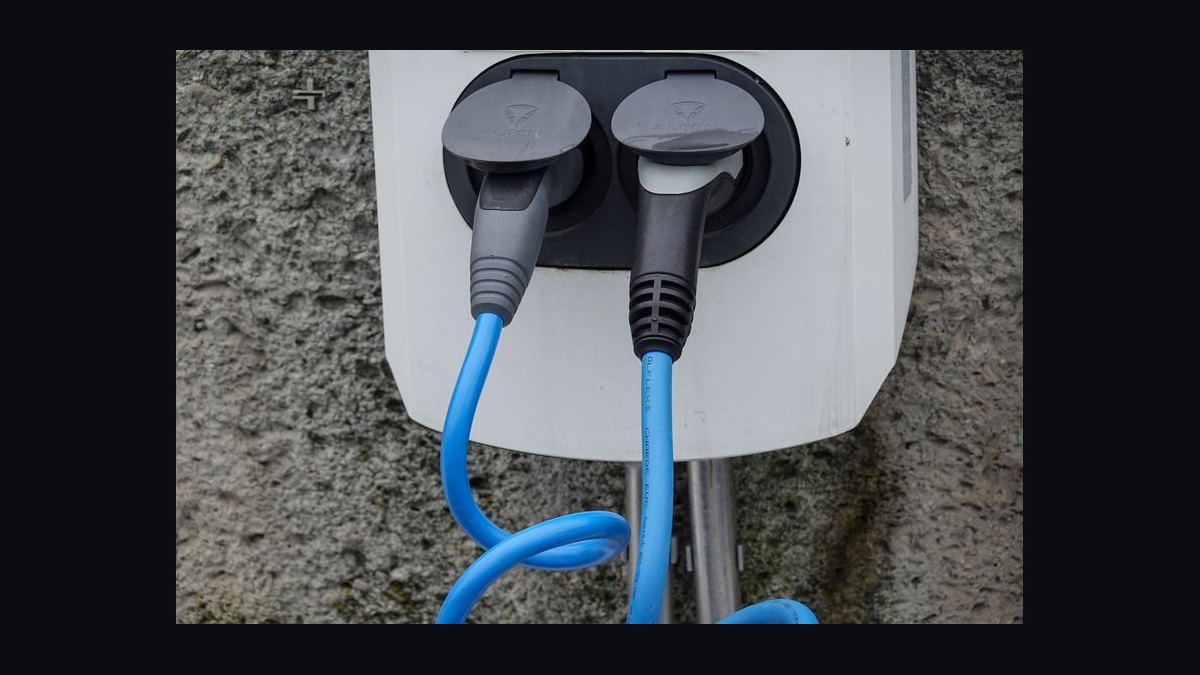
If you need to tow or haul in winter, the Ford F-150 Lightning near $63,000 is the answer, with the important caveat that towing compounds the cold-weather penalty severely — plan on well under half the EPA figure when pulling a trailer in freezing temperatures, and route charging stops around the reality that many stalls are not pull-through.
If comfort and refinement lead, the BMW iX xDrive50 near $88,000 (around 340 miles) and the Volvo EX90 near $81,000 (around 310 miles) both pair heavy insulation with standard AWD, which is worth more in the cold than it sounds: a well-sealed, well-insulated cabin holds heat and reduces continuous heater draw for the entire drive.
If the budget is the binding constraint, the Chevrolet Equinox EV AWD near $40,000 with roughly 285 miles is the cheapest credible entry into all-wheel-drive cold-weather EV ownership. Spend the savings on winter tires before spending it on anything else.
Related questions
How much range will I actually lose in winter?
Plan on 20–30% below EPA in sustained sub-freezing driving with a heat pump, and 35–40% in deep cold, on short trips, or at highway speeds. Short trips are worst because the cabin and pack never reach steady state, so heating load stays at maximum the entire drive.
Does all-wheel drive make an EV safer on ice?
Only partially. AWD improves acceleration and low-speed traction on slick surfaces, and dual-motor EVs manage torque very precisely. It does nothing for braking distance or cornering grip — those depend on tire compound. Winter tires on a two-wheel-drive EV beat all-seasons on an AWD one.
Is an 800-volt platform worth paying for in a cold climate?
If you take winter road trips, yes. The Hyundai Ioniq 5, Kia EV9, and Audi Q6 e-tron use 800-volt architectures that recover charge faster once the pack is preconditioned, compressing the winter charging penalty. For pure local commuting with home charging, it matters far less.
Should I precondition every morning even for a short commute?
Yes, if you are plugged in. Grid-powered preconditioning costs pennies and warms both cabin and pack before departure, so the drive itself starts efficient. On short trips this is where most of the winter savings live, because the heater never has to work from a cold start on battery power.
FAQ
Do all EVs lose the same amount of range in the cold?
No. Losses vary widely by hardware. EVs with a heat pump and good pack thermal management typically land in the 20–30% loss band in sub-freezing conditions, while models relying on resistive cabin heat can exceed 40%. Driving pattern matters too — short trips lose proportionally more than long highway runs because the heating load never amortizes.
Is a heat pump worth paying extra for?
In a genuinely cold climate, yes. A heat pump delivers roughly two to three units of heat per unit of electricity in the temperature band where most winter driving happens, versus one-for-one from a resistive heater. That converts directly into usable range every single cold drive. Its advantage narrows in extreme cold, when there is less ambient heat to harvest.
How much slower is DC fast charging when it is freezing?
Without preconditioning, expect a session to take roughly 30–50% longer, because the battery management system limits current into cold cells to avoid lithium plating. With navigation-linked preconditioning that penalty typically drops to about 10–20% versus ideal conditions. Preconditioning is the difference between a normal stop and a frustrating one.
Can I trust the EPA range figure for winter planning?
No. EPA testing is conducted at about 75°F and does not model cabin heating or cold-pack losses. Use 60–75% of the EPA number as your winter planning figure, and plan to arrive at charging stops with 15–20% remaining rather than the thinner buffer you might accept in summer.
Are winter tires really necessary on an all-wheel-drive EV?
Yes, and they are the best value in cold-weather EV ownership. All-season rubber hardens below roughly 45°F and loses grip; winter compounds stay pliable and the siped tread bites snow. All-wheel drive helps you accelerate but does nothing for stopping or turning. Budget roughly $1,200–$2,000 for tires and a dedicated wheel set on a typical crossover.
What state of charge should I keep when parking outside in deep cold?
For daily use, a moderate ceiling around 70–80% is easier on the cells than sitting at 100% in extreme cold, and it still leaves ample winter buffer. When you genuinely need full range, schedule the charge to complete shortly before departure while the car is still plugged in, so preconditioning runs on grid power.
Sources
- https://www.fueleconomy.gov/feg/evtech.shtml
- https://afdc.energy.gov/vehicles/electric
- https://www.nrel.gov/transportation/
- https://insideevs.com/
- https://www.caranddriver.com/electric-vehicles/
- https://www.edmunds.com/electric-car/
- https://www.kbb.com/electric-car/
- https://www.consumerreports.org/cars/hybrids-evs/
- https://www.nhtsa.gov/winter-driving-tips
- https://www.energy.gov/energysaver/heat-pump-systems
Related on PULSE
- [Best Long-Range EVs in 2027](/knowledge/ca0382)
- [Best EVs for Families in 2027](/knowledge/ca0387)
- [Best Used EVs in 2027](/knowledge/ca0386)
- [Best Performance EVs in 2027](/knowledge/ca0384)
- [Best EVs Under $40,000 in 2027](/knowledge/ca0380)
- [Top 10 Affordable EVs 2026 — Best Overall + Best Value](/knowledge/ca0254)
This page will be disappearing soon. Save it to your device for $1 — or read it free while it is here.
@Kory-White- · if Venmo asks, the last 4 of my number are 2012
 pulse-carsBest Hyundai Genesis Coupe Model Years (Ranked) in 2027
 pulse-carsTop 10 Electric Minivans 2027 — Best Overall + Best Value
 pulse-carsTop 10 Luxury EVs 2027 — Best Overall + Best Value
 pulse-carsBest Cadillac XT6 Model Years (Ranked) in 2027
 pulse-carsTop 10 Electric SUVs in 2027
 pulse-carsBest Ford EcoSport Model Years (Ranked) in 2027
 pulse-carsBest Lexus RX Generations (Ranked) in 2027
 pulse-carsTop 10 Sedans 2010 — Best Overall + Best Value
 pulse-carsBest Cadillac XT5 Model Years (Ranked) in 2027
 pulse-carsBest Audi TT Model Years (Ranked) in 2027