


Top 10 Camera Gimbals — Best Overall + Best Value in 2027
Quality
Certified
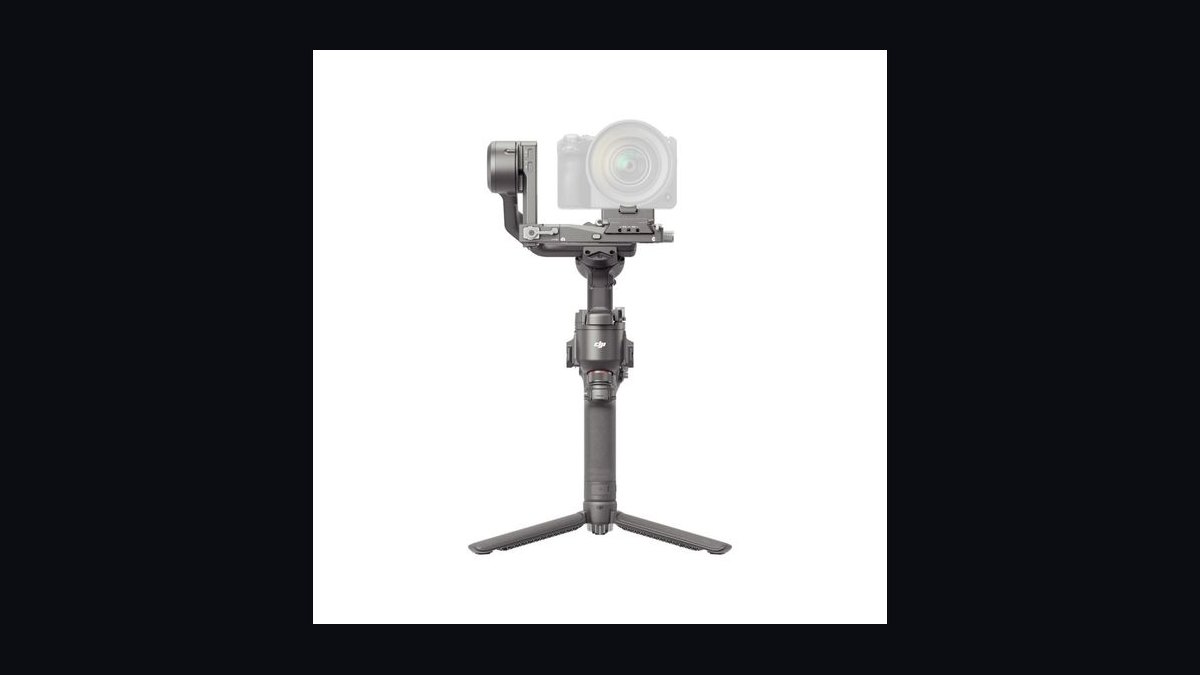
The 10 best camera gimbals are ranked below on measured performance, build quality, price, and how each one actually holds up in daily use rather than how it reads on a spec sheet. Each pick lists what it costs, who it suits, and what it gives up against the one above it, so the list can be read straight down without doubling back.
1DJI RS 4 Pro
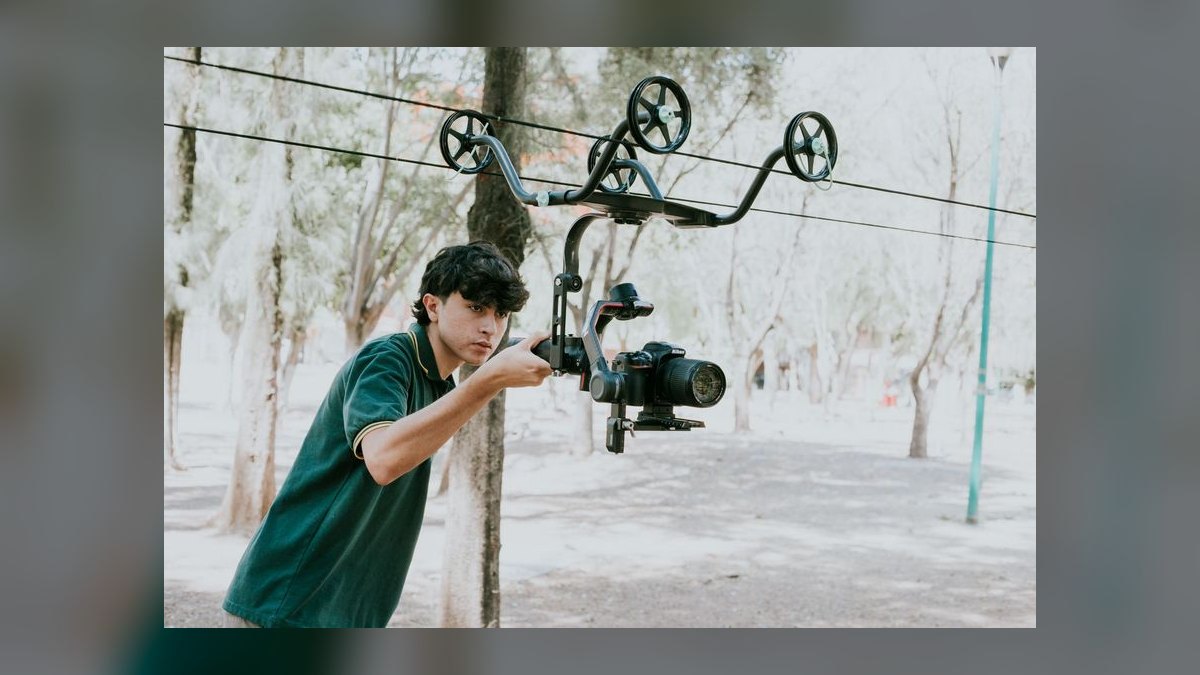
The RS 4 Pro ranks first because it carries the heaviest real-world payload in this class at 4.5 kg, enough to balance a Sony FX3 with a 24-70mm GM II, cage, and monitor without drooping. Second-generation automated axis locks cut setup to under 30 seconds. The 1.8-inch OLED touchscreen stays legible outdoors, carbon-fiber arms resist flex under load, and the swappable BG30 grip battery delivers 13 hours of runtime.
This is built for shooters doing paid mirrorless or small-cinema work who need LiDAR Focus Pro support and manual-lens follow focus. What it trades away is money: the $869 list price climbs past $1,400 once you add the $499 focus motor and accessories. Compared with the $549 RS 4 one spot below, you are paying roughly $320 extra for LiDAR, 1.5 kg more payload, and a larger screen — nothing else changes.
2DJI RS 4
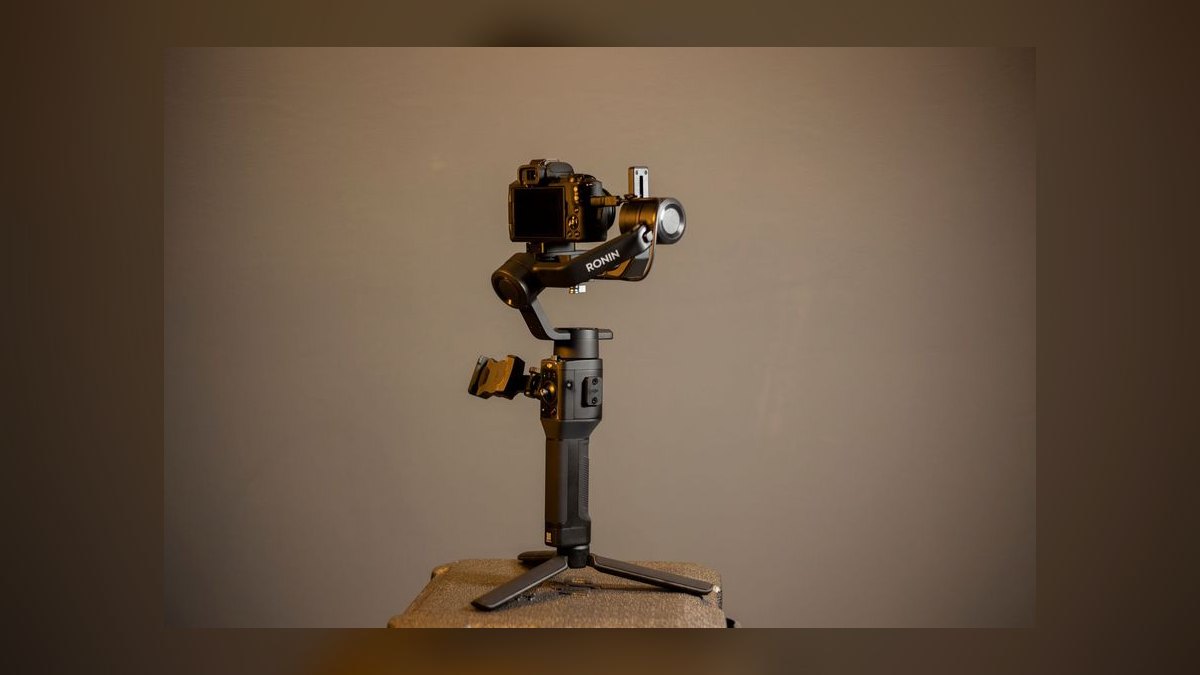
The RS 4 sits second because it keeps nearly everything that makes the Pro good — automated axis locks, native vertical mode, the 1.8-inch OLED, 12-hour runtime — while dropping payload to 3 kg and losing the LiDAR mount. It balances a Sony A7C II with a 35mm f/1.4 GM, a Canon R6 II with a 24-70, or a Lumix S5 II. Teflon-coated rails make fine balance adjustments smooth even in gloves.
Buy this if you shoot a mirrorless body under 3 kg with autofocus you trust. The trade is follow focus: no LiDAR support means camera AF or manual pulls only. Against the RS 4 Pro above it, this delivers most of the stabilization for 63% of the price, and at 1.45 kg it is lighter to carry through a full shooting day.
3Zhiyun Crane 4
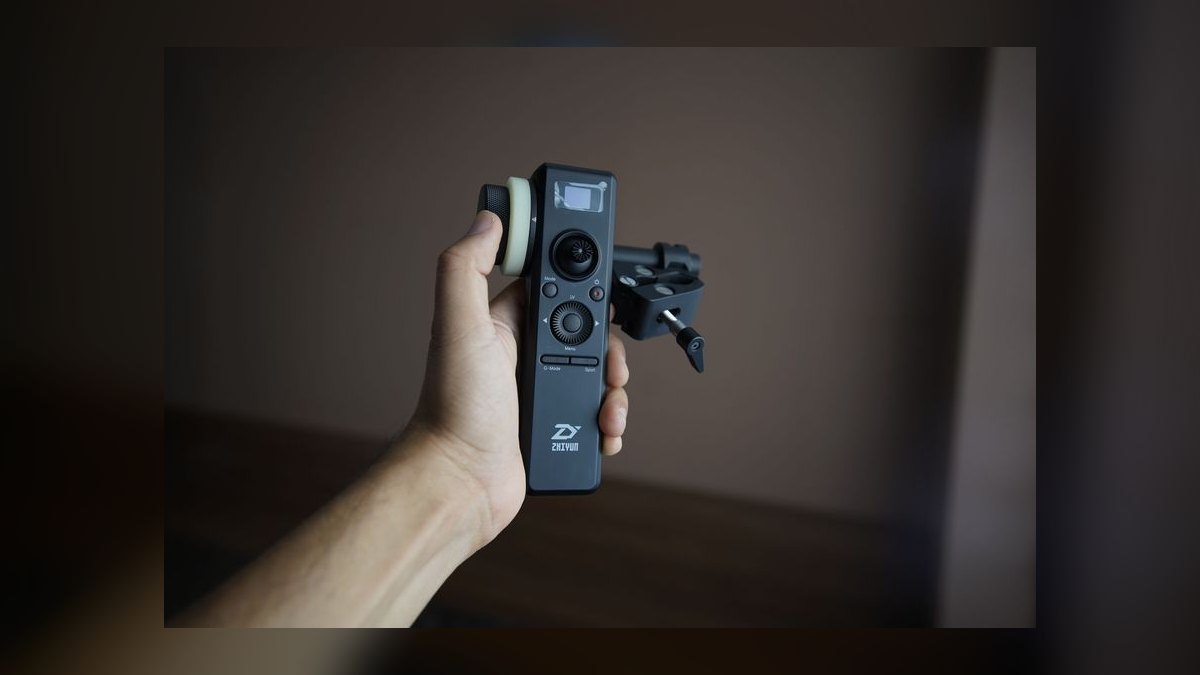
The Crane 4 ranks third as the only non-DJI gimbal competing on payload, holding 3.5 kg in real-world use against a 4.5 kg marketed figure. Its standout hardware is a 5W color-temperature-adjustable fill light built into the handle, genuinely useful for interviews and dim-room B-roll. The PD 18W fast-charging grip runs 12 hours, and tilt-axis torque stays strong under heavy glass.
Run-and-gun documentary and news shooters are the buyers here, especially anyone who wants one less light in the bag. The trade is software: the rewritten Zhiyun Play app still trails DJI Mimo for reliability on iOS 18 and later. At $699 it undercuts the RS 4 Pro above it by $170 but gives up LiDAR focus and a full kilogram of payload.
4DJI Osmo Mobile 7P
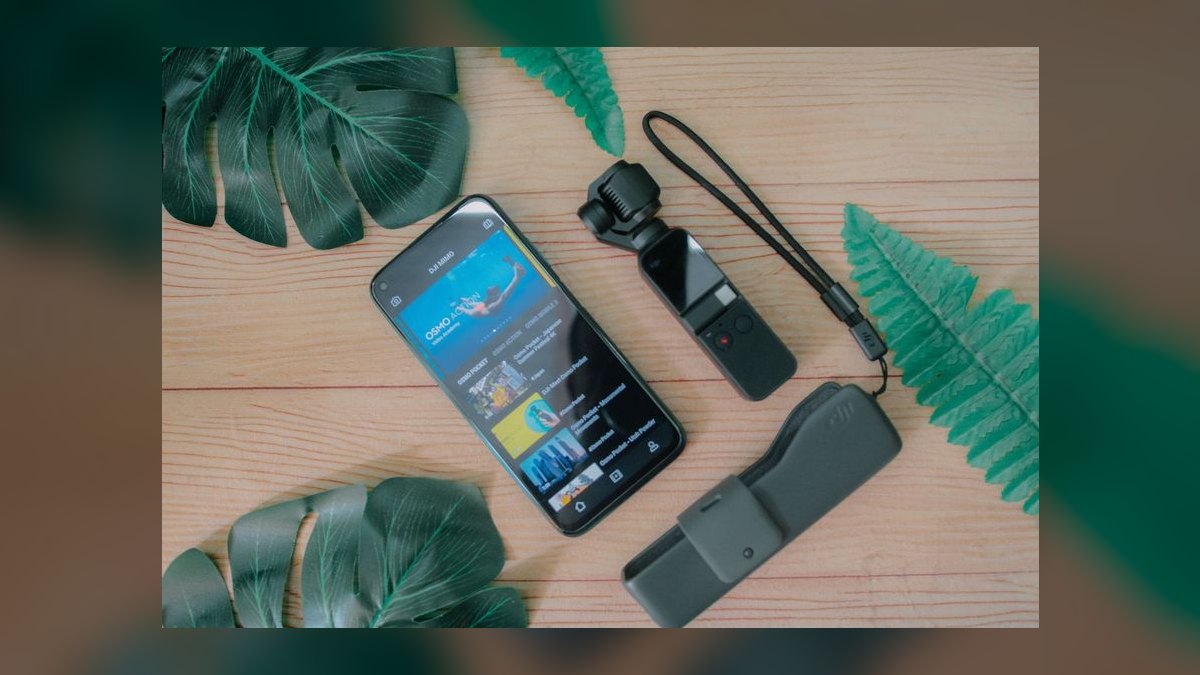
The Osmo Mobile 7P is the highest-ranked phone gimbal because ActiveTrack 7.0 holds a moving subject through partial occlusion better than anything else tested here. A 215mm extension rod is built in, and the magnetic clamp balances an iPhone 16 Pro Max, S25 Ultra, or Pixel 10 Pro straight out of the box. It weighs 368 g, runs 10 hours, and a side wheel switches between zoom and manual focus.
This suits smartphone creators who want the best tracking available and will pay for it. The trade is accessory creep: the $59 multifunctional module carrying the fill light and wireless mic receiver pushes real cost past $230. Against the Insta360 Flow Pro 2 just below, its tracking is sharper but confined to DJI Mimo rather than working inside third-party apps.
5Insta360 Flow Pro 2
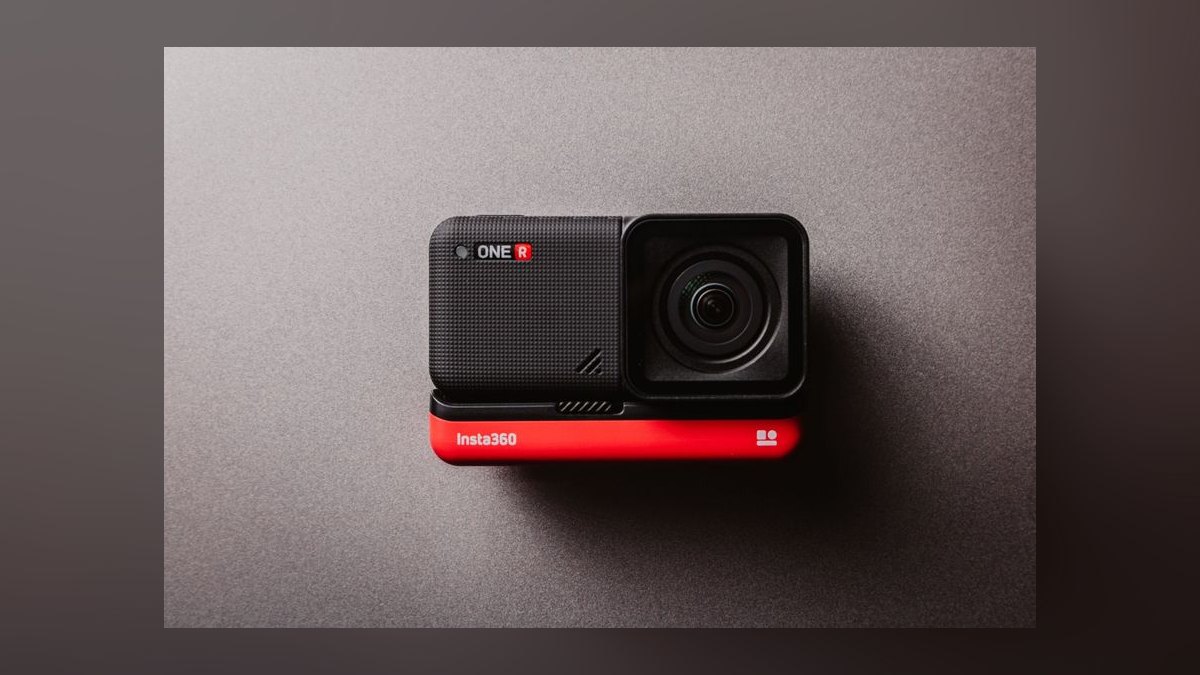
The Flow Pro 2 places fifth on the strength of a dedicated AI chip that runs subject tracking on the gimbal itself with no app open. That means tracking keeps working inside Instagram, TikTok, FaceTime, Zoom, and the native camera app. Built in are a 215mm extension rod, a CCT-adjustable fill light, a rear-camera selfie mirror, a tripod hidden in the grip, and 10-hour runtime.
Creators who publish directly from TikTok and Reels should take this over the Osmo Mobile 7P above — tracking where you actually shoot beats better tracking you cannot reach. The trade is raw accuracy: on fast-moving subjects it trails ActiveTrack 7.0 slightly. At $159 it also undercuts the 7P by $10 while bundling extras DJI sells separately.
6DJI Osmo Mobile 6
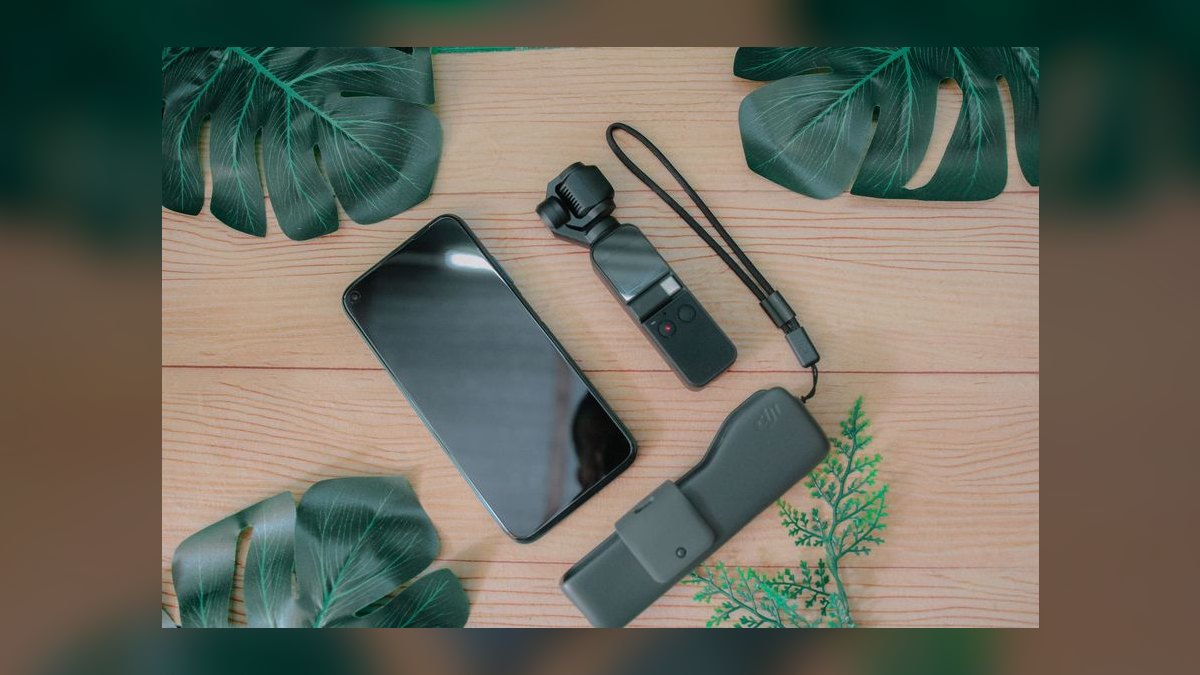
The Osmo Mobile 6 is the best value on this list because at $139 it delivers the same magnetic clamp as the $169 Osmo Mobile 7P, plus a built-in extension rod, ActiveTrack 6.0, a side wheel for zoom and focus, and a status display. It folds down to 263 g and runs 6.4 hours. The DJI Mimo app remains the most stable phone-gimbal software available.
Anyone with a total budget under $200 should stop here. The trade is tracking generation: ActiveTrack 6.0 drops fast horizontal pans more often than 7.0 does, and 6.4 hours is the shortest runtime among the phone gimbals ranked. Against the 7P above it, it gives up occlusion handling and four hours of battery for a $30 saving.
7Zhiyun Smooth 5S
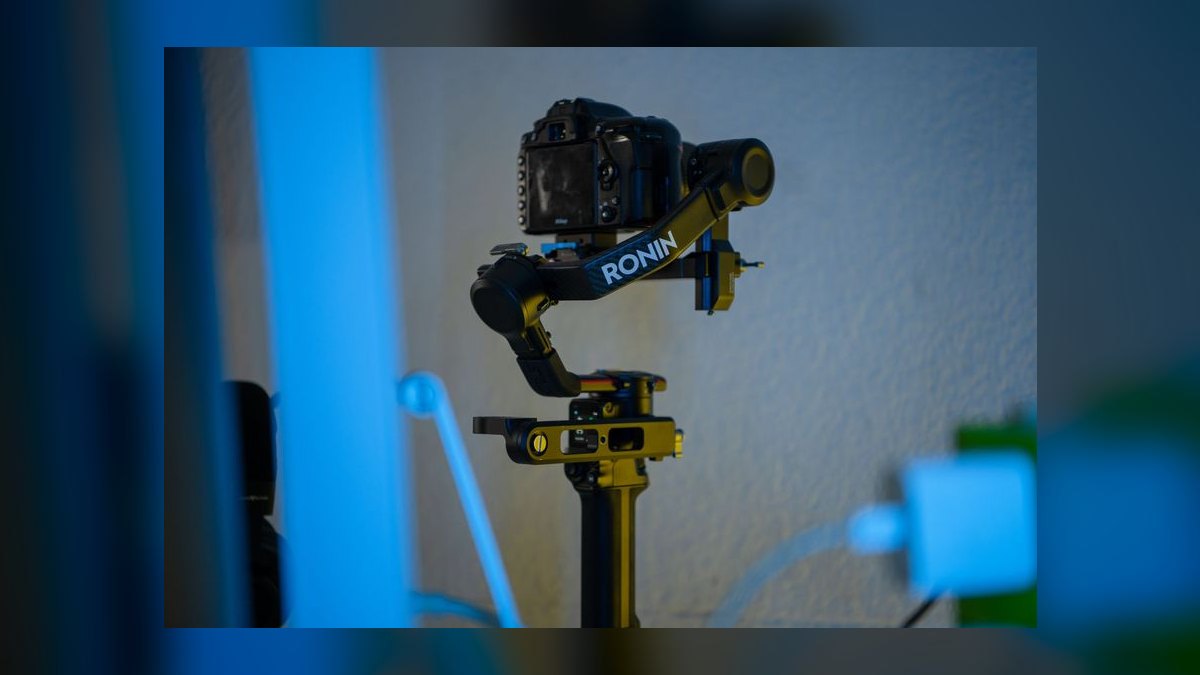
The Smooth 5S ranks seventh for its physical controls — a dedicated mechanical mode dial instead of app swipes — and a 15-hour runtime, the longest in the phone-gimbal class. It ships with three magnetic fill-light pucks in white, red, and blue. Payload tops out at 280 g, covering Pro Max-class phones in cases, and the arms tilt to native vertical against a hard mechanical stop.
This suits shooters who resent touching a phone app to change modes. The trade is mounting: there is no magnetic clamp, so you slide the phone into a spring cradle and rebalance every time. At $169 it costs the same as the Osmo Mobile 7P above while giving up ActiveTrack 7.0 and the magnetic workflow entirely.
8DJI Osmo Pocket 3
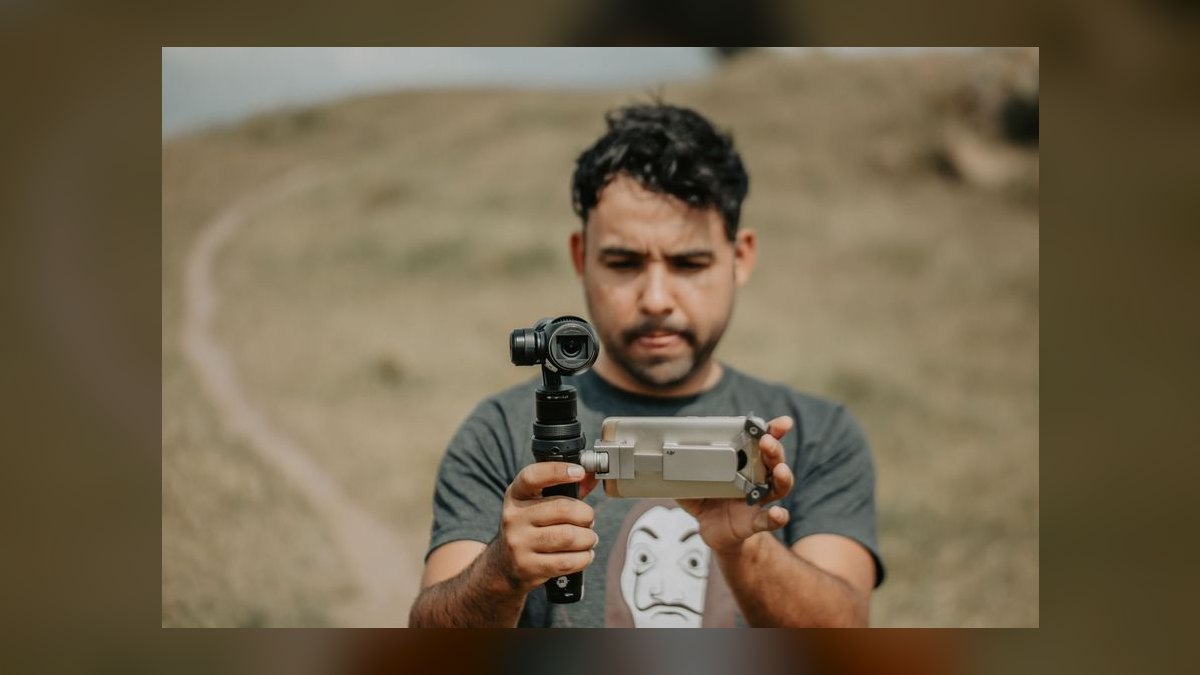
The Osmo Pocket 3 ranks here because it is not just a gimbal — a 1-inch sensor shooting 4K/120 is fused into a 179 g body. The 2-inch OLED rotates to trigger native vertical, face and object tracking run on-board, and D-Log M with 10-bit H.265 delivers broadcast-grade footage from something smaller than a candy bar. Runtime is an honest 166 minutes at 4K/60.
Vloggers who currently carry a phone plus a gimbal can replace both with this. The trade is permanence: you are locked to its lens and sensor with no upgrade path, and $519 buys no flexibility. Against the phone gimbals above it, it wins decisively in low light thanks to sensor size but loses to a flagship phone plus an Osmo Mobile 6 in bright conditions.
9Zhiyun Crane M3S
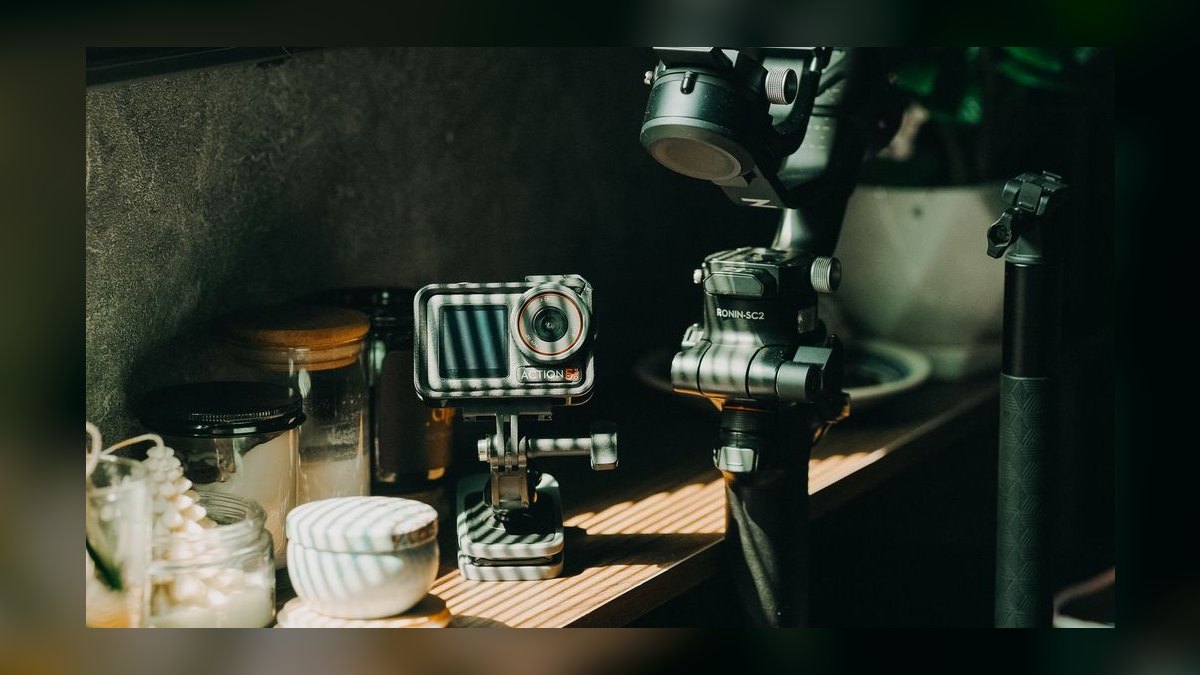
The Crane M3S ranks ninth as the lightest true mirrorless gimbal on this list at 750 g. Payload is a tight 2 kg, covering a Sony A6700 with a 16-55, a Lumix S9 with an 18-40, or a Fuji X-S20 kit. A 2W fill light sits in the head, the 1.22-inch OLED is small but readable, and Bluetooth plus USB-C triggers work across major mirrorless bodies on 2027 firmware.
Travel shooters who count grams should buy this. The trade is glass: 2 kg rules out a 24-70 GM II, so you commit to lighter primes and kit zooms or the motors fight you. Compared with the $549 RS 4 far above it, it saves $300 and roughly 700 g but surrenders a third of the payload and the automated axis locks.
10Hohem iSteady M6 Kit
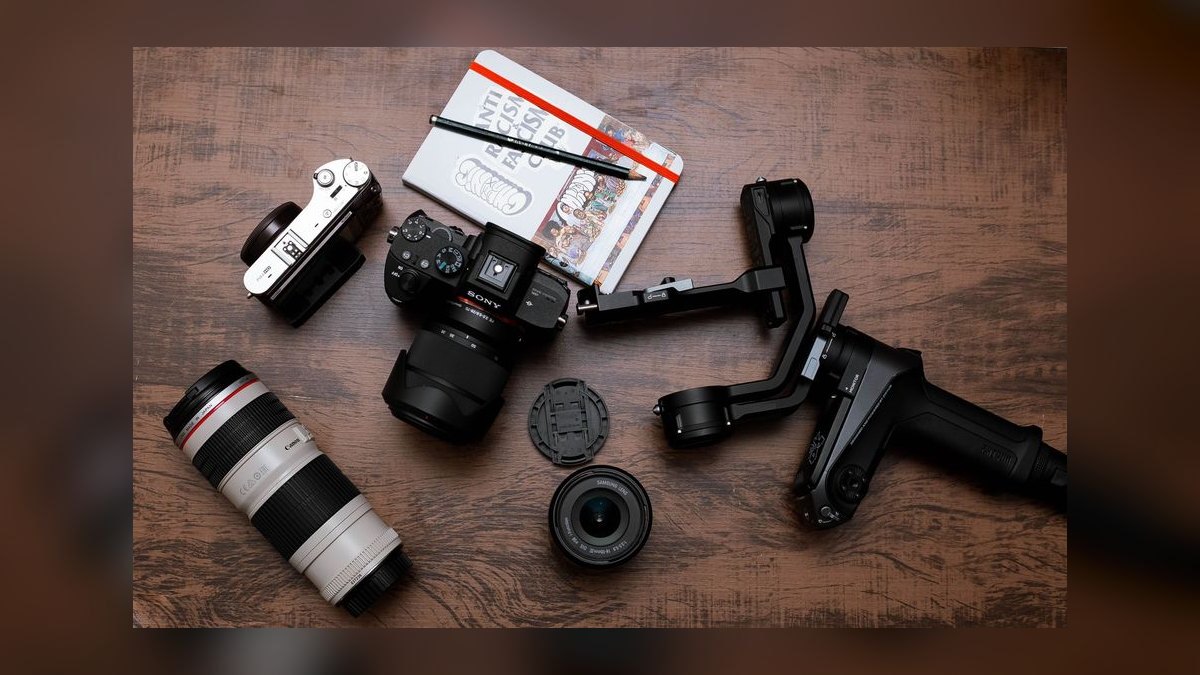
The iSteady M6 Kit earns its place on bundle contents rather than refinement: $269 buys the gimbal, a magnetic AI tracker module that works in any app, a magnetic fill light, an extension rod, a tripod, and a carry case. The gimbal handles 400 g of payload, carries a bright OLED, and runs 18 hours — the longest battery on this entire list.
This suits creators who want everything in one box on day one rather than assembling accessories over months. The trade is polish: app stability and stabilization tuning trail DJI by one to two generations. Against the Insta360 Flow Pro 2 far above, which does the any-app tracking trick for $110 less, you are paying here for the tripod, case, and light rather than better motion.
How we ranked these
We weighted stabilization smoothness on walk tests at 25%, real-world payload accuracy — what actually balances loaded with a cage, monitor, and mic versus the marketed figure — at 20%, app reliability and follow-focus modes at 15%, native vertical shooting and creator features at 15%, battery runtime and build quality at 15%, and price-to-performance at 10%. Phone and camera gimbals were ranked together because the buyer's real question spans both categories.
We deliberately ignored maximum pan rotation figures like 600°, because no working shooter uses more than a single revolution. We ignored gesture controls beyond start/stop tracking and AI auto-composition modes, novelties abandoned within a week. We ignored idle-time battery claims in favor of active stabilization runtime, and skipped Moza, FeiyuTech, and AccSoon on firmware-support grounds rather than raw hardware merit.
What to look for
Payload is the number that decides everything, and the published spec is not the number to buy against — real-world capacity lands around 70-80% of marketing, so a 4.5 kg gimbal handles roughly 3.5 kg once a cage, monitor, and lens hood are attached. Buy one payload tier above your current body, and treat native single-button vertical shooting as non-negotiable in 2027.
The most expensive mistake is bridging categories: adapting a phone onto a mirrorless gimbal produces an awkward, poorly balanced rig, and mounting a mirrorless body onto a phone gimbal rated for 280-400 g overloads and damages the motors. The second mistake is paying $499 for LiDAR follow focus on a body with reliable autofocus — that motor exists for manual cinema glass, not a Canon R5 II.
Related questions
Do I still need a gimbal if my camera has IBIS?
Yes for walking, no for static shots. IBIS handles micro-jitter while you stand or pan slowly, but footage still wobbles at the hip without mechanical stabilization when you walk. The RS 4, Crane 4, and Crane M3S complement in-body stabilization rather than replace it — run both together so IBIS smooths high-frequency shake while the gimbal kills low-frequency sway.
Is the RS 4 Pro worth $320 more than the RS 4?
Only if you need LiDAR follow-focus support, the full 4.5 kg payload, or the larger 1.8-inch OLED screen. If you shoot a mirrorless body under 3 kg with autofocus you trust, the RS 4 at $549 delivers most of the Pro's stabilization, the same automated axis locks, native vertical mode, and a 12-hour runtime — save the difference for glass.
Should I buy a phone gimbal or the Osmo Pocket 3?
If you already carry a flagship phone like an iPhone 16 Pro or Galaxy S25 Ultra, the Osmo Mobile 6 at $139 plus that phone beats the Pocket 3 in good light for a quarter of the price. The Pocket 3 wins in low light because of its 1-inch sensor, and wins whenever you'd rather carry one device instead of two.
Which gimbals work with Sony cameras in 2027?
DJI's 2027 firmware covers the A7 IV, A7C II, A7R V, A7S III, FX3, FX30, A1 II, and A9 III with reliable Bluetooth shutter and record control, so no cable is needed on the RS 4 or RS 4 Pro. Canon R-series, Nikon Z, Fujifilm X-H, and Panasonic S, G, and GH bodies also pair reliably across the current lineup.
What is the lightest gimbal that still handles a mirrorless camera?
The Zhiyun Crane M3S at 750 g. Payload is a tight 2 kg, which covers a Sony A6700 with a 16-55, a Lumix S9 with an 18-40, or a Fujifilm X-S20 kit — push past that and the motors start fighting you. It includes a 2W head fill light and runs 8 hours, making it the travel pick when carry weight outranks payload.
Why does subject tracking work in TikTok on some gimbals but not others?
Most phone gimbals run subject tracking inside the manufacturer's own app, so tracking dies the moment you switch to Instagram or TikTok. The Insta360 Flow Pro 2 added a dedicated on-gimbal AI chip in 2026 that tracks without any app open, so it follows you inside TikTok, FaceTime, Zoom, and the native camera app. The Hohem M6 kit's magnetic tracker module does the same.
Are gimbal battery runtime claims accurate?
Rarely. Active stabilization consumes roughly 60-70% of the marketed figure, because published numbers often measure idle time with the motors barely working. A gimbal rated for 12 hours typically delivers about 8 hours of real shooting. The Osmo Pocket 3 is the honest exception — its 166-minute 4K/60 rating holds up because it's measured while the camera is actually recording, not idling.
FAQ
What is the best overall camera gimbal in 2027?
The DJI RS 4 Pro at $869. It carries a realistic 4.5 kg payload, balances a Sony FX3 with a 24-70 GM II plus cage and monitor, and second-generation automated axis locks cut setup to under 30 seconds. Add native vertical shooting, a 13-hour swappable BG30 grip battery, and LiDAR Focus Pro mounting, and nothing else in the class matches it.
What is the best value camera gimbal in 2027?
The DJI Osmo Mobile 6 at $139. It's two years old and still the best sub-$150 phone gimbal made — the same magnetic clamp as the newer 7P, a built-in extension rod, ActiveTrack 6.0, a side wheel for zoom and focus, a status display, and a 6.4-hour runtime. It folds to 263 g and the Mimo app remains the category's most stable.
How much payload can a gimbal really handle?
About 70-80% of the marketed number. Manufacturers test with a perfectly balanced bare body and lens — no cage, no monitor, no shotgun mic, no lens hood. Reviewers like NewsShooter and Gerald Undone find this gap consistently in practice. A 4.5 kg-rated gimbal handles roughly 3.5 kg of assembled working rig, so buy one payload tier above what you think you actually need.
Is a follow-focus motor worth buying?
Only above roughly $1,000 in total spend, and mainly for manual cinema lenses. DJI's LiDAR Focus Pro at $499 shines on bodies with weaker low-light autofocus. If you shoot an autofocus-confident body like a Canon R5 II, Sony A1 II, or Nikon Z8, the motor just adds weight and setup time you won't actually benefit from in normal shooting conditions.
Which gimbal has a built-in fill light?
Several do. The Zhiyun Crane 4 has a 5W color-temperature-adjustable light in the handle, genuinely useful for interviews in dim rooms. The Crane M3S carries a 2W light in the head. The Smooth 5S ships with three magnetic pucks in white, red, and blue. The Insta360 Flow Pro 2 and the Hohem M6 kit both include a fill light as well.
Can I use one gimbal for both my phone and my camera?
No, and trying is the most expensive mistake on this list. Adapting a phone onto a mirrorless gimbal produces an awkward, poorly balanced rig. Mounting a mirrorless body onto a phone gimbal — rated for only 280 to 400 g — overloads and damages the motors. Buy for the device you actually shoot most often, then add a second gimbal later if you need one.
Which gimbal is best for a phone creator who hates apps?
The Zhiyun Smooth 5S at $169. It gives you a mechanical mode dial and physical buttons instead of swipe menus, three included magnetic fill-light pucks, a 280 g payload that handles Pro Max-class phones in cases, and a 15-hour battery — the longest in the class. The tradeoff is mounting: a slide-in spring cradle instead of a magnetic clamp, so you rebalance every session.
What does native vertical shooting actually mean?
A single-button switch from landscape to portrait without rebalancing your rig. For anyone posting to TikTok, Reels, or Shorts, it's mandatory in 2027. The RS 4 Pro, RS 4, Osmo Mobile 7P, Osmo Mobile 6, Flow Pro 2, and Crane M3S all clear this bar instantly. The Smooth 5S instead uses a mechanical arm flip, which works but costs you a few extra seconds.
What gimbal features are overrated?
Pan rotation specs like 600° — nobody uses a full revolution, let alone more than that. Gesture controls beyond simple start/stop tracking get demoed once and forgotten within a week. AI auto-composition modes are fun for about ten minutes. Fake battery numbers that measure idle time rather than active stabilization round out the list. Spend your money on payload headroom, app reliability, and native vertical instead.
Which gimbal comes with the most accessories included?
The Hohem iSteady M6 Kit at $269 bundles a magnetic AI tracker module that works in any app, a magnetic fill light, an extension rod, a tripod, and a carry case. The gimbal itself handles 400 g, has a bright OLED, and runs 18 hours. App polish and stabilization tuning trail DJI by a generation or two, but the box value here is genuinely real.
Sources
- https://www.dpreview.com/
- https://www.bhphotovideo.com/c/buy/Gimbal-Stabilizers/ci/23233/N/4288584251
- https://www.newsshooter.com/
- https://petapixel.com/
- https://www.tomsguide.com/best-picks/best-gimbals
- https://www.dji.com/rs-4-pro
- https://www.dji.com/osmo-mobile-6
- https://store.zhiyun-tech.com/products/crane-4
- https://www.insta360.com/product/insta360-flow2pro
- https://store.dji.com/product/osmo-pocket-3
Related on PULSE
This page will be disappearing soon. Save it to your device for $1 — or read it free while it is here.
@Kory-White- · if Venmo asks, the last 4 of my number are 2012
This page is gone.
This one is off the shelf now. $1 keeps it on your phone for good — the whole page, pictures and diagrams included.
 pulse-reviewsTop 10 Blue Light Glasses for Sales Reps in 2027
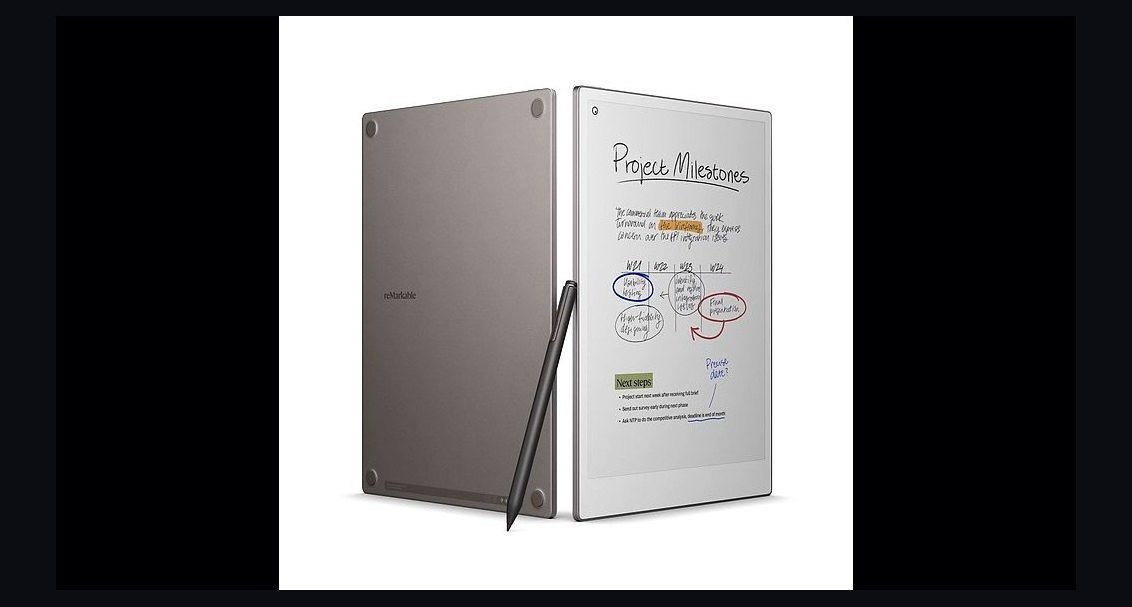 pulse-reviewsTop 10 Smart Notebooks — Best Overall + Best Value in 2027
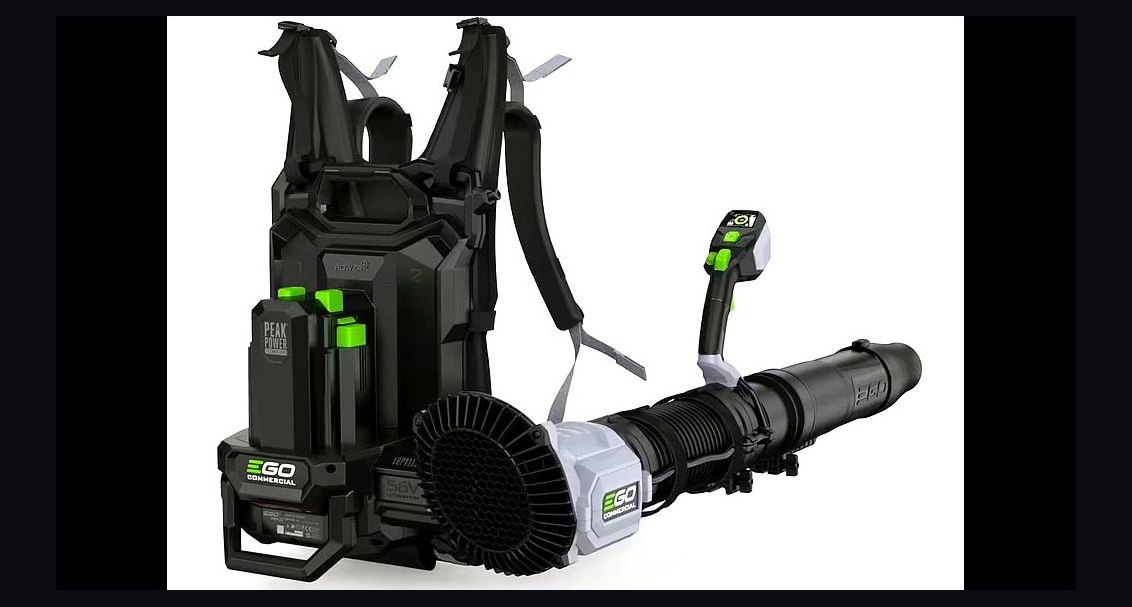 pulse-reviewsTop 10 Backpack Leaf Blowers — Best Overall + Best Value in 2027
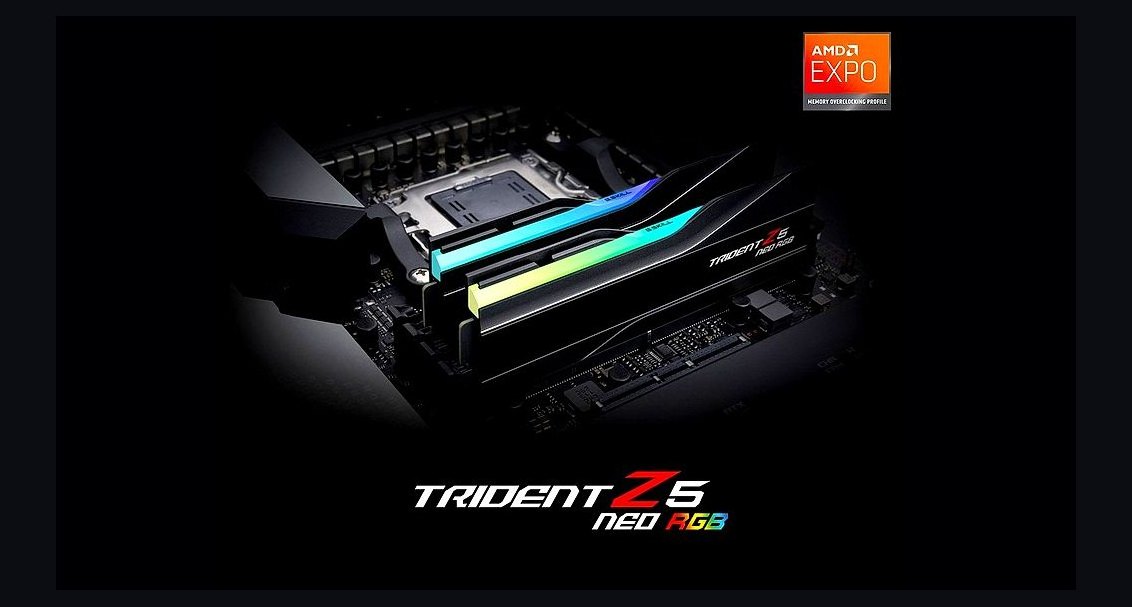 pulse-reviewsTop 10 DDR5 RAM Kits — Best Overall + Best Value in 2027
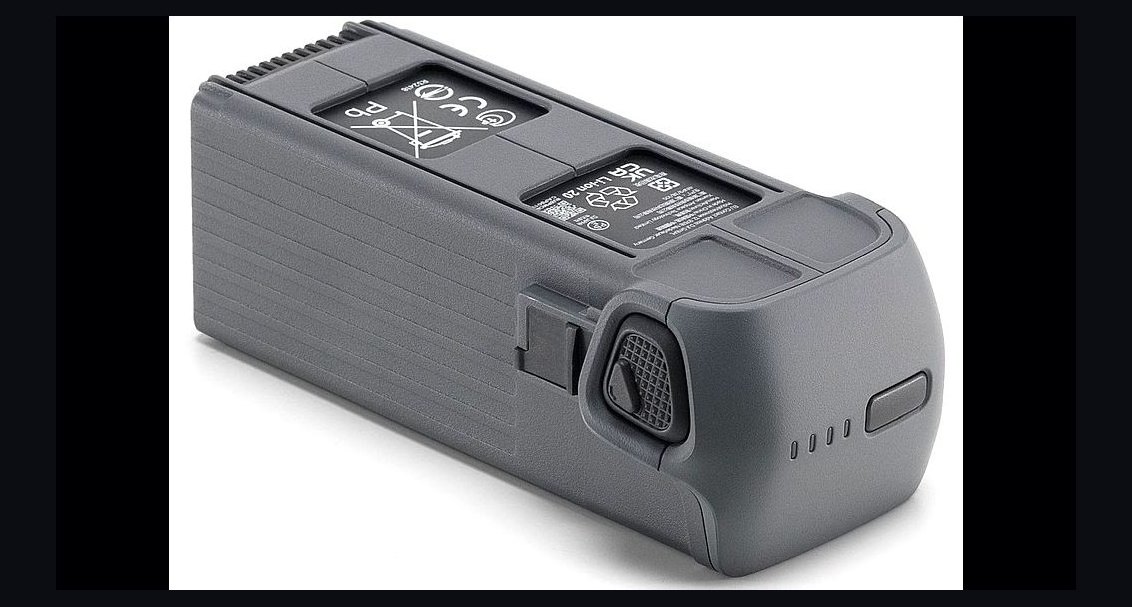 pulse-reviewsTop 10 Drone Batteries — Best Overall + Best Value in 2027
 pulse-reviewsTop 10 Car Backup Cameras — Best Overall + Best Value in 2027
 pulse-reviewsTop 10 Multimeters — Best Overall + Best Value in 2027
 pulse-reviewsTop 10 Document Cameras for Remote Demo Recording in 2027
 pulse-reviewsHow do I reduce echo in a home office for sales calls in 2027?
 pulse-reviewsTop 10 Indoor Smart Gardens — Best Overall + Best Value in 2027