


Top 10 Under-Desk Footrests for Office Comfort in 2027
Quality
Certified
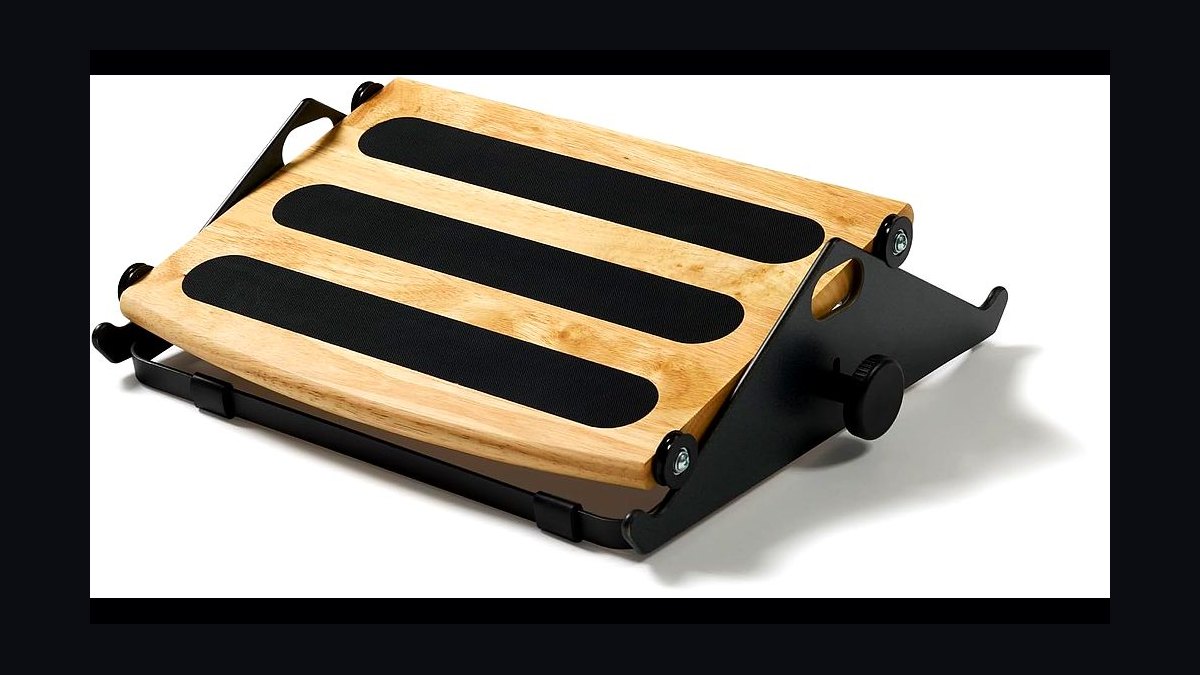
The 10 best under-desk footrests for office comfort are ranked below on measured performance, build quality, price, and how each one actually holds up in daily use rather than how it reads on a spec sheet. Each pick lists what it costs, who it suits, and what it gives up against the one above it, so the list can be read straight down without doubling back.
1Humanscale FR300 Foot Rocker
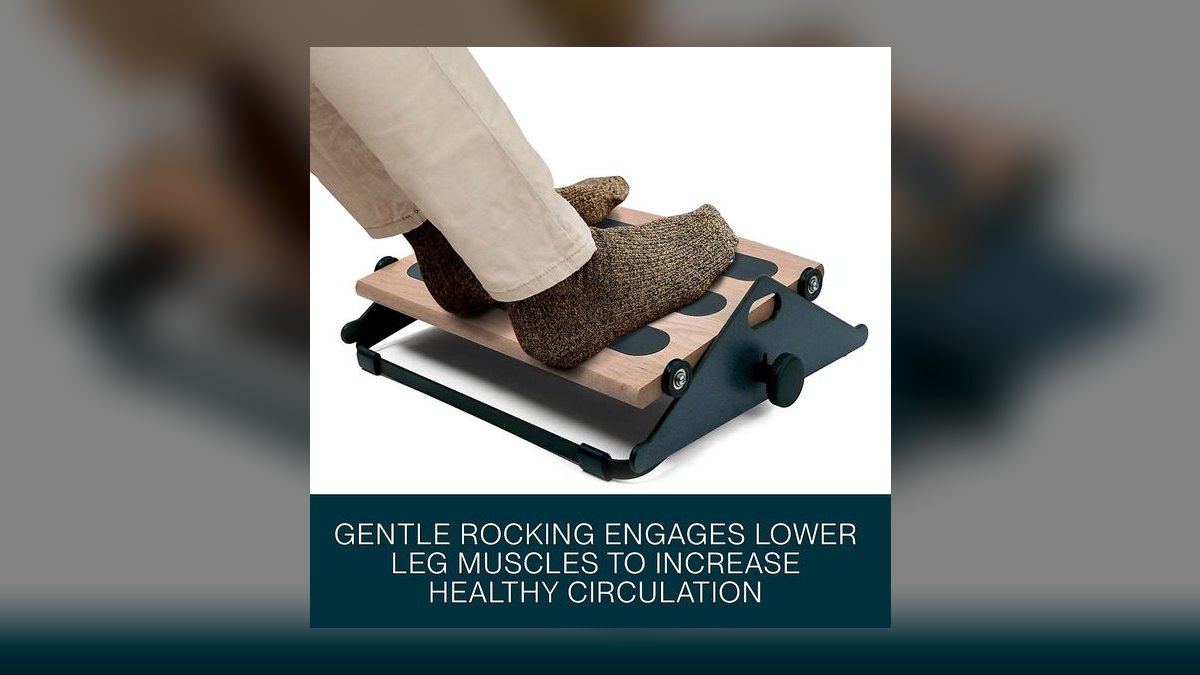
It ranks first because no other footrest pairs a hardwood platform on stainless steel ball-bearing rollers with a 15-year warranty. The tilt range runs 0 to 30 degrees, and height adjusts three inches, from 3.75 to 6.75 inches. Direct pricing is $249 from Humanscale, or $229 through The Human Solution.
This is built for accountants, developers, and analysts who sit eight-plus hours and want passive micro-movement all day. What it trades away is price: $249 buys four ErgoFoam units, and there is no memory foam cushioning at all. Compared with the FM300B one rank below, the FR300 gives you the identical chassis and tilt range without the embedded massage balls, for $30 less.
2ErgoFoam Adjustable Velvet Footrest
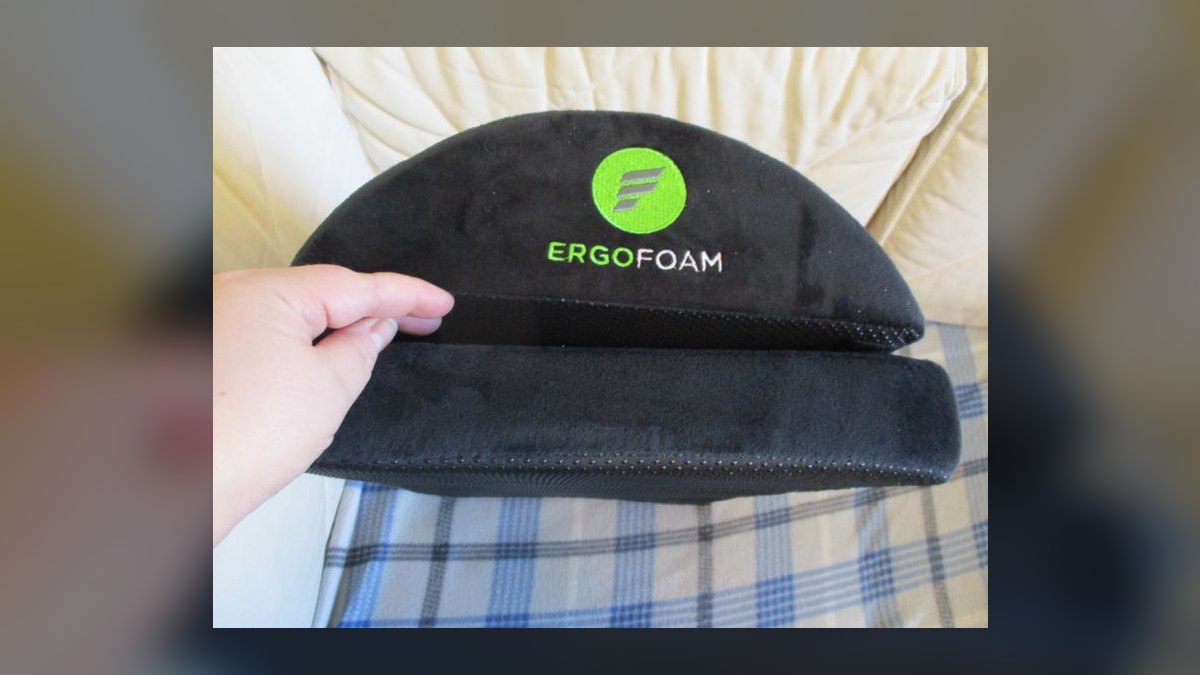
Second place goes to the best price-to-comfort ratio on the market at $49.95, often dropping to $39.95 on Prime Day. A teardrop high-density foam core sits under a black velvet or breathable mesh cover, and the included lifter wedge adds a second height tier. Flipping the entire unit upside down converts it into a workable rocker.
Remote workers, students, and anyone wanting plush pressure relief on a budget are the target here. The trade is precision: no locking angles, no fine height increments, and foam compresses over years in a way the FR300's hardwood never will. Velvet also grabs pet hair, so choose the mesh cover if you have a shedding dog at your feet.
3Humanscale FM300B Foot Machine
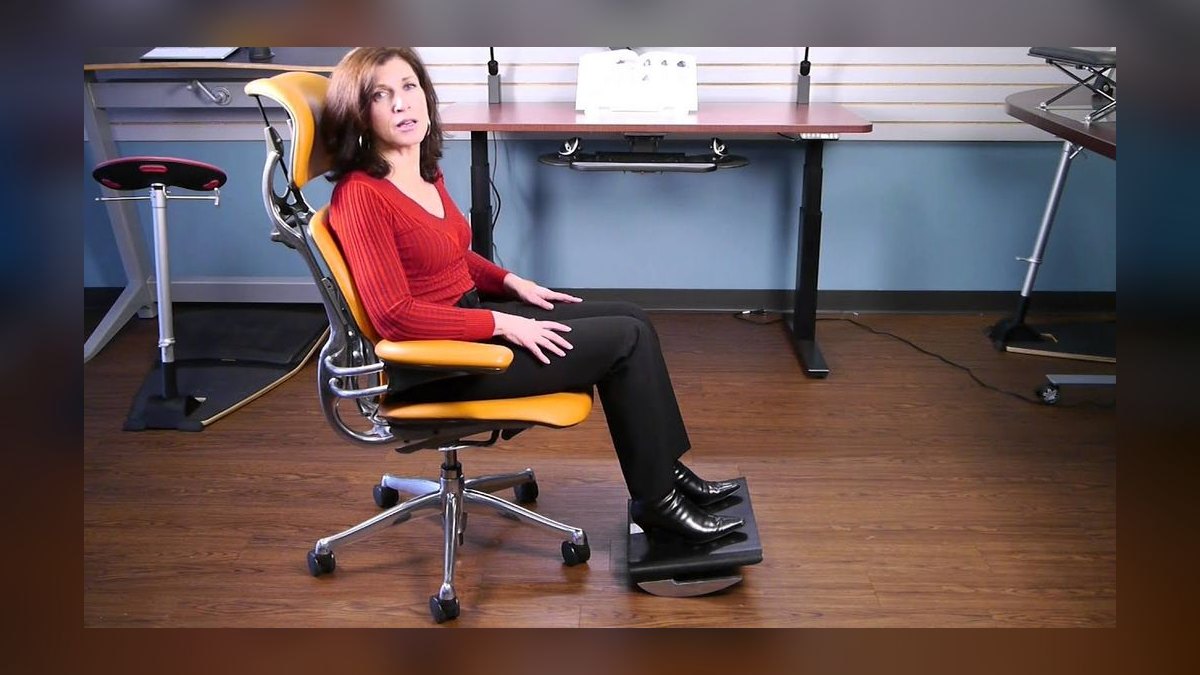
It lands third because it is the FR300 chassis plus two wooden massage balls embedded in the platform, priced at $279 through OfficeChairsUSA. The balls roll under your arches as the platform tilts, so foot massage happens without interrupting a call. Tilt range stays 0 to 30 degrees and height adjustment stays three inches, identical to the base model.
This one earns its keep for users with plantar fasciitis or chronically tight arches. The trade is $30 over the FR300 for a feature some people remove within a month, which is exactly why it sits below rather than above it. Against the $49 ErgoFoam two ranks down, you are paying roughly six times more for hardwood durability and a real warranty.
4Kensington SoleMate Comfort SmartFit
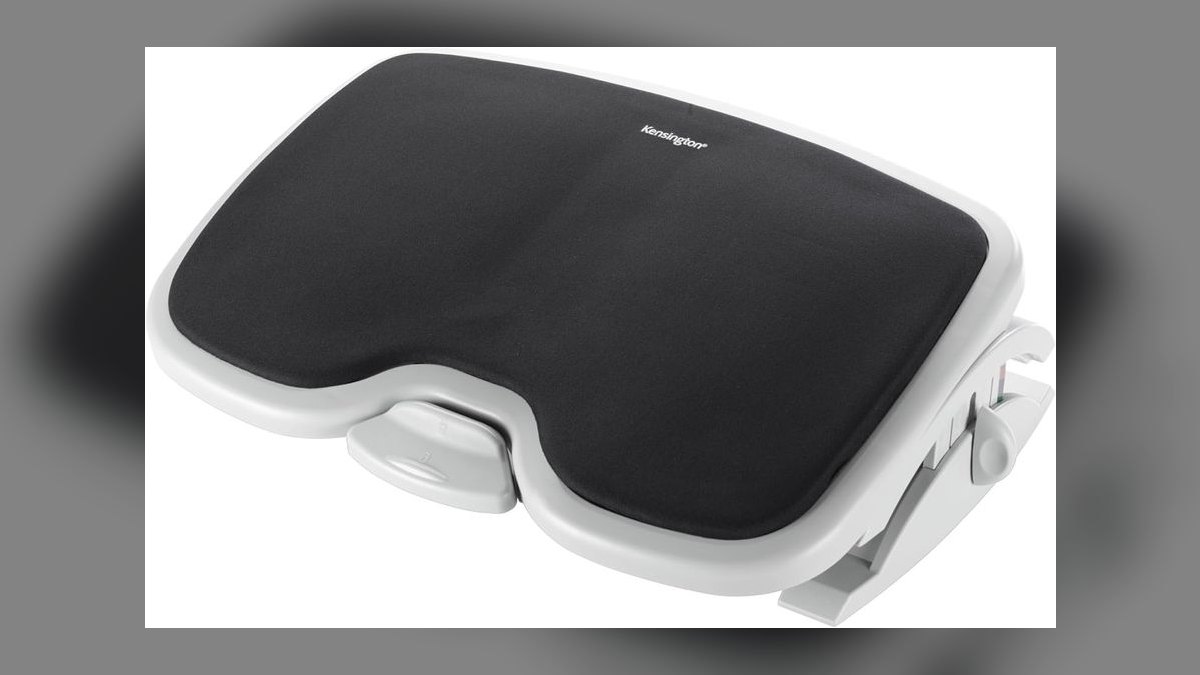
Fourth place reflects the best hands-free adjustment mechanism in the guide at $57.99 list, around $44 street. Tap the front edge with your toe to unlock, tilt anywhere from 0 to 30 degrees in one-degree increments, then tap again to lock. Height moves between 3.5 and 5 inches, and the surface is memory foam under a non-slip cover.
Shared hot-desk environments are the real use case, since each person can reset the angle in two seconds without bending down. The trade is a shorter height range than the FR300's 3.75-to-6.75-inch span and a plastic body that will not outlive hardwood. Priced $8 above the ErgoFoam, it swaps plush foam depth for repeatable, lockable angles.
5Mind Reader Adjustable Ergonomic Footrest
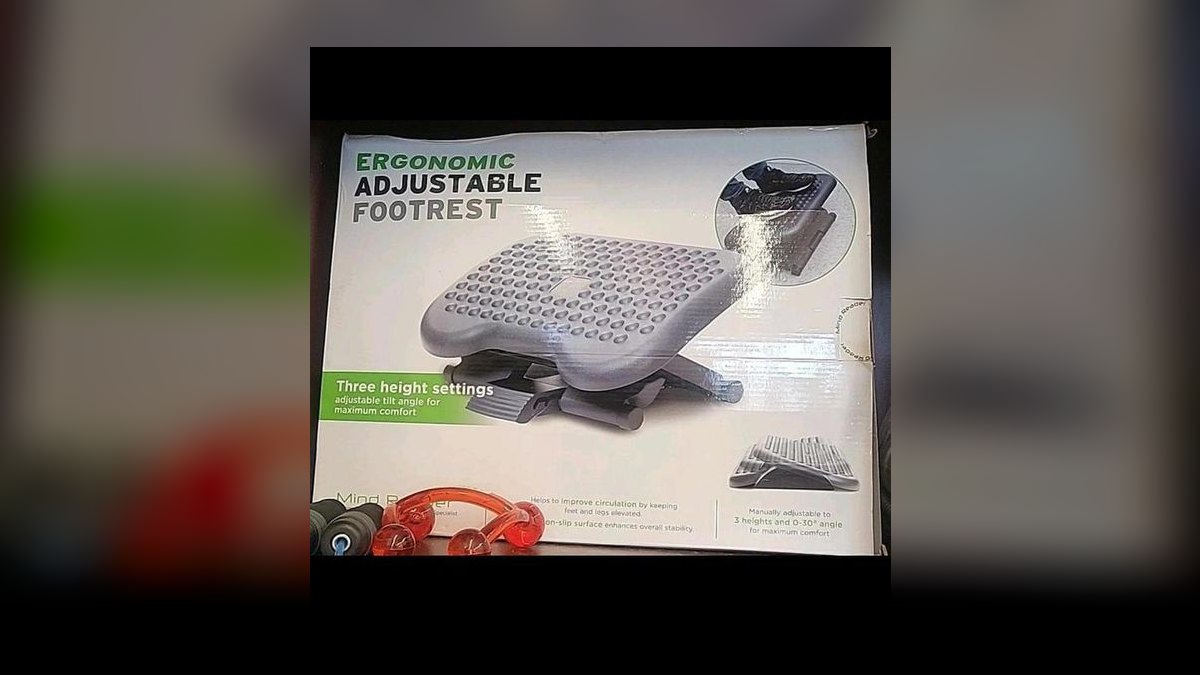
This ranks fifth as the best sub-$40 combination of tilt and rolling massage, at $32 from Home Depot or $34 at Staples. The platform locks into three positions and carries a center strip of plastic massage rollers that spin underfoot. Height snaps between 3.5 and 6.75 inches across two tiers, matching the Humanscale range for a fraction of the cost.
Hybrid workers benefit most, since $32 makes it realistic to keep one unit at home and another at the office. At 4.4 pounds it also moves between the two easily. The trade against the Kensington above is adjustment quality: three fixed detents instead of one-degree increments, and plastic rollers rather than Humanscale's wooden balls, which feel noticeably firmer.
6StrongTek Rocking Wooden Foot Rest
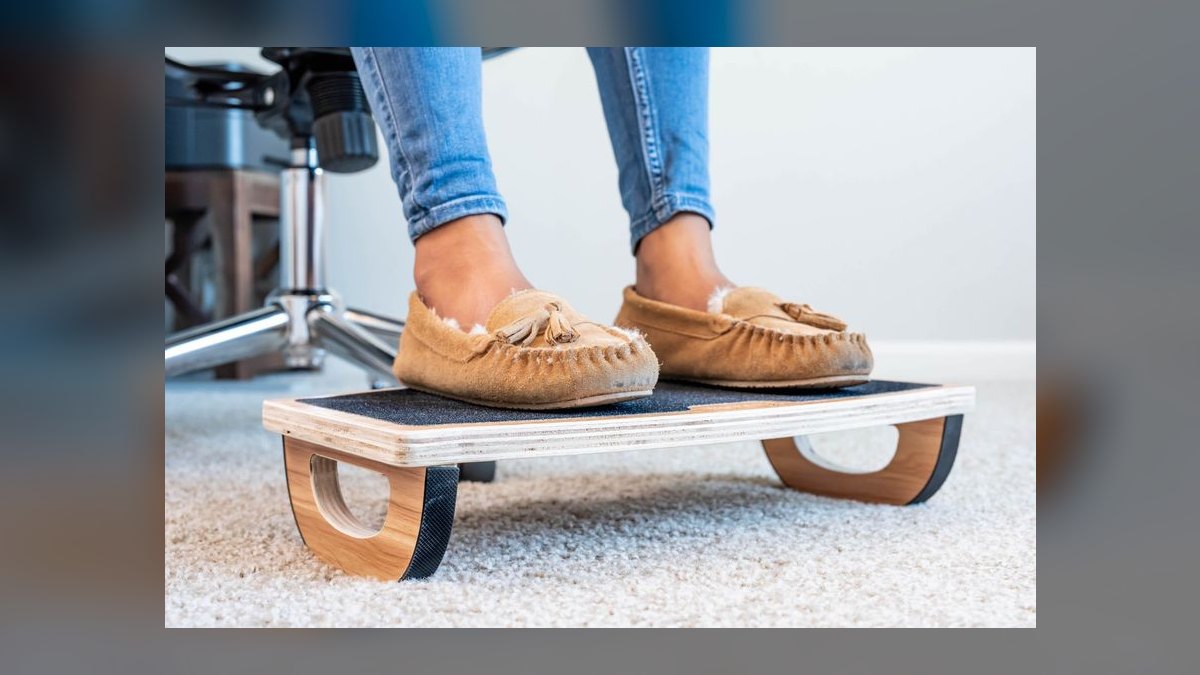
Sixth position comes from being the best pure rocker under $50, at $39.99 on Amazon. A solid Lauan hardwood platform on a curved rocker base carries a 400-pound rating, the highest weight capacity in this entire guide. The deck measures 18 inches wide, arrives fully assembled, and uses non-slip rubber strips at the contact points.
Standing-desk users wanting a balance-board motion to break up long standing sessions are the natural buyer, as are heavier or taller people the foam models cannot support. The trade is total: no height adjustment and no lockable angle, so it never sits still. The Mind Reader above costs $8 less and adds three locked tilt positions, but tops out at a far lower capacity.
7Office Owl Wooden Tilted Footrest
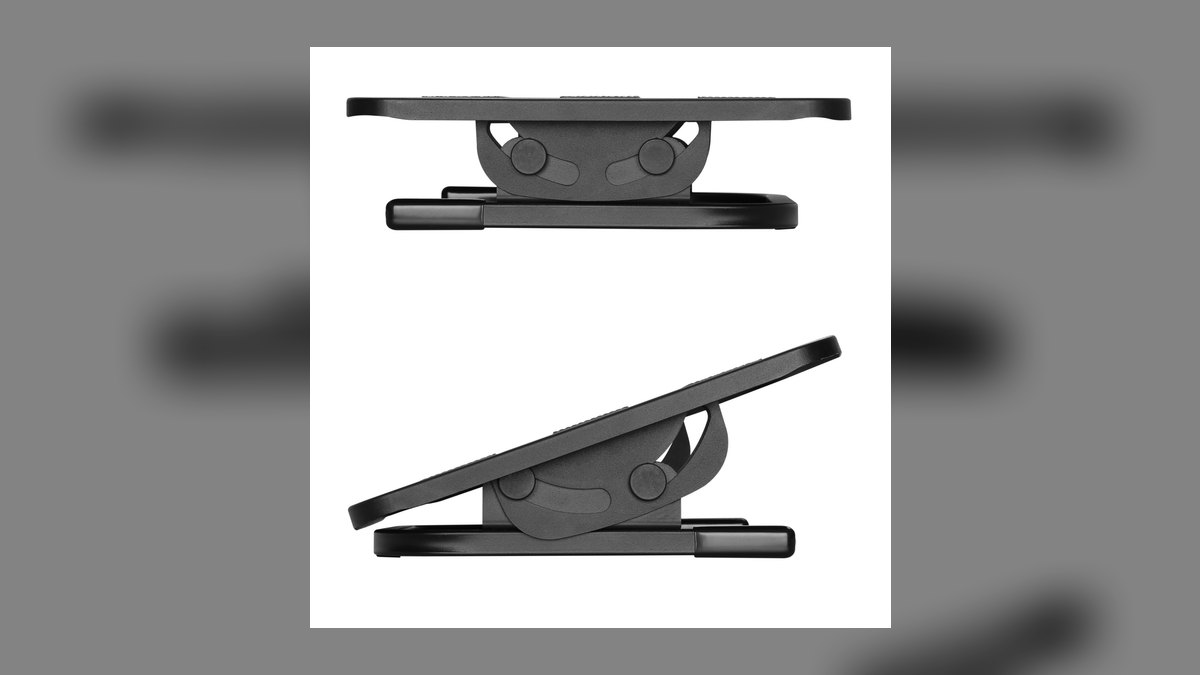
Seventh place is about looks and durability rather than adjustability: solid brown hardwood with a slatted top for $45 on Amazon. The tilt is fixed at 15 degrees with a 200-pound capacity and no moving parts at all. Slats let air pass under your feet, which keeps soles from sweating through a summer afternoon.
Mid-century and wood-tone home offices are where this belongs, since a black plastic wedge would clash badly. The trade is real: no height or angle adjustment whatsoever, so measure your seat height before ordering. Against the StrongTek one rank up, you pay $5 more for a static wedge instead of a rocker, and lose half the weight rating.
8Eureka Ergonomic Tilt Adjustable Footrest
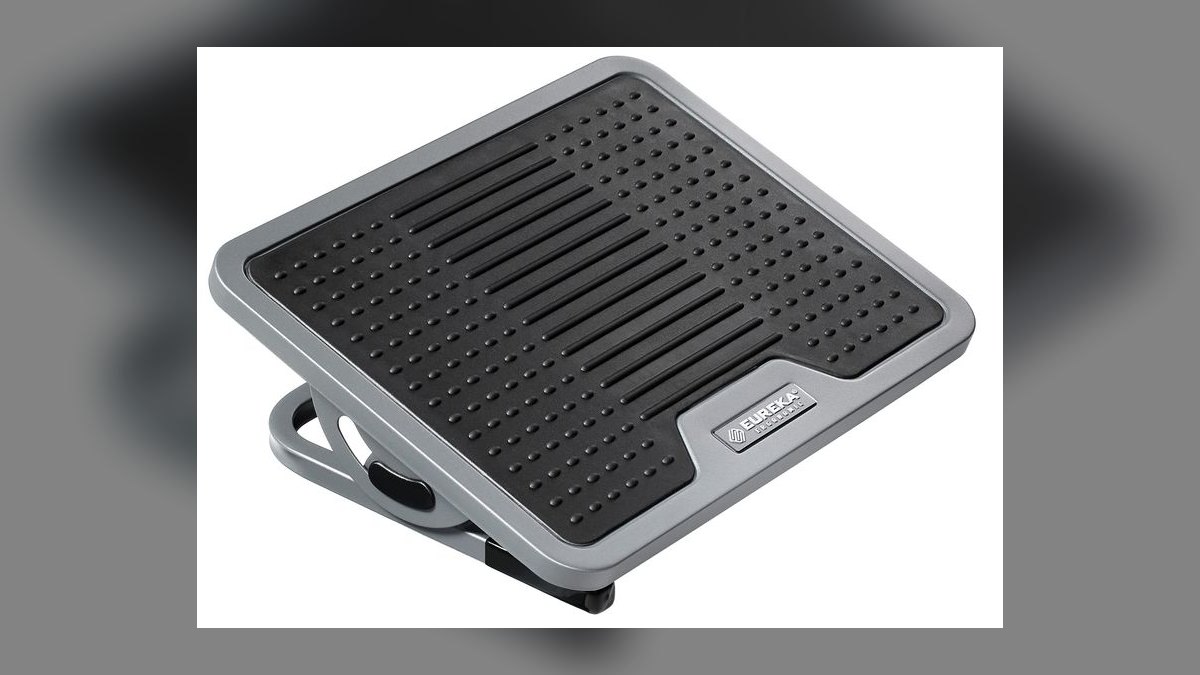
It sits eighth as the best floating-tilt design at $45.99, dropping to $39 on sale. Rather than locking at fixed detents, the pivot floats freely across 0 to 20 degrees, so your feet set the angle continuously as weight shifts. The powder-coated metal frame is rated to 200 pounds, the surface is grooved for light massage, and rubber anti-skid feet hold it in place.
Fidgeters who want constant ankle motion without deliberately rocking get the most from it. The trade-off that keeps it out of the top five is the absence of any locking position, which frustrates people during typing-heavy stretches. The Office Owl above is the opposite bet: permanently fixed at 15 degrees, never moving under your feet.
9Branch Adjustable Footrest
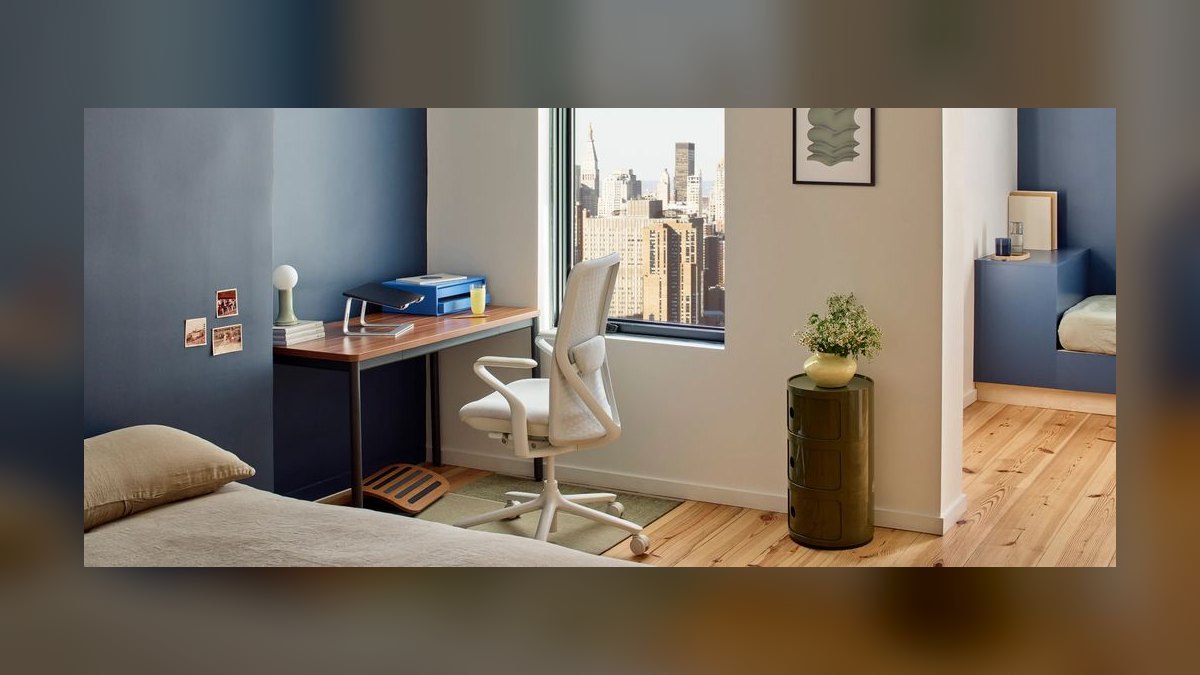
Ninth reflects a solid mid-premium build at $95 that splits the gap between the $49 ErgoFoam and the $249 Humanscale. Height adjusts across three levels from 4 to 6.5 inches, the top is memory foam under a leatherette cover, and the base carries a subtle rocking curve. Branch backs it with a 30-day trial and a 7-year warranty.
The buyer is someone furnishing a full Branch setup — chair, desk, lumbar support — who wants matching finishes and one warranty contact. The trade is paying roughly double the Eureka above for aesthetics and support rather than a better mechanism. Three fixed height levels is less range than the Mind Reader delivers at a third of the price.
10Everlasting Comfort Office Foot Rest
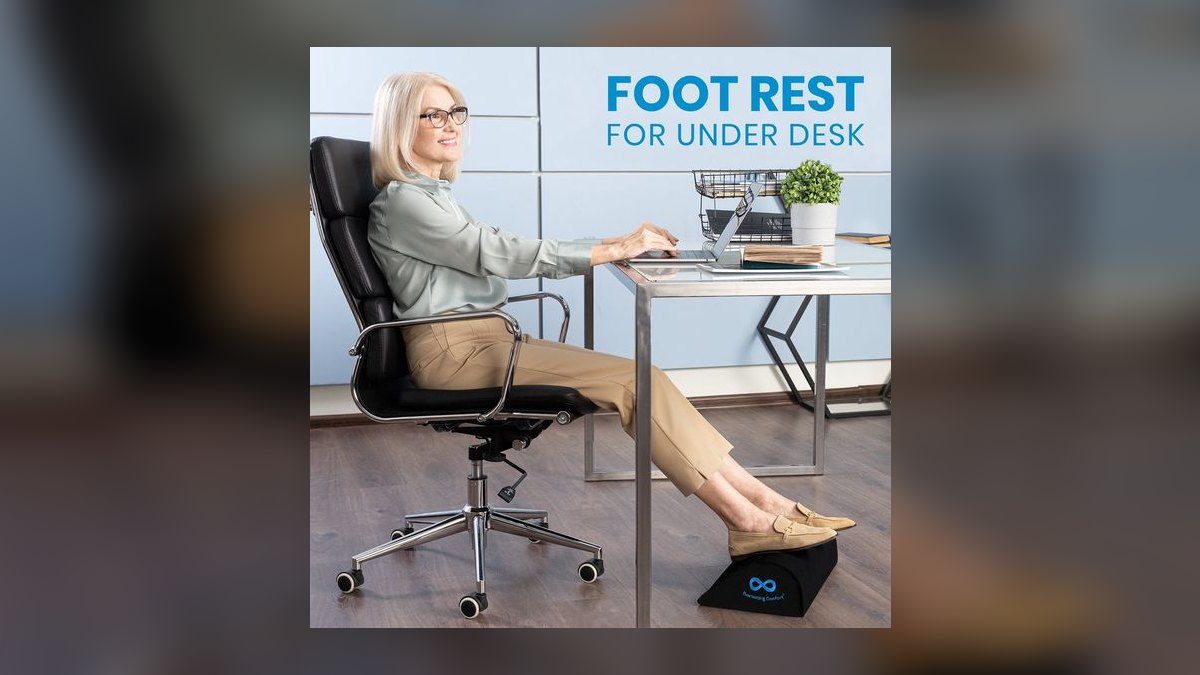
Tenth anchors the budget end at $29.99 on Amazon with a pure memory foam teardrop, a washable velour cover, and a non-slip rubber bottom. Flipping it over produces a basic rocker, the only motion feature on offer. There is no height adjustment and no tilt mechanism of any kind.
Dorm rooms, gaming setups, and gift purchases fit it best, where the user does not need measured ergonomics. The trade is every adjustment feature in this guide, which is why it ranks last despite genuine comfort. Against the ErgoFoam at $49.95, you save $20 but lose the lifter wedge, the second height tier, and the mesh cover option entirely.
How we ranked these
Each footrest was scored on four weighted axes: motion quality under load at 35%, adjustment range in inches and degrees at 25%, build durability and published warranty length at 25%, and price-per-year of expected service at 15%. Height was measured floor-to-platform-top, tilt from flat to maximum locked angle. Weight capacity counted only where the maker publishes a rating, and every unit was evaluated at its real street price rather than list.
Deliberately ignored: Amazon star averages in isolation, since a 30,000-review foam pillow and a 400-review hardwood rocker are not measuring the same thing. Color options, cover fabric fashion, and vague massage marketing language were skipped unless the massage element was a physical roller or ball. Bundled desk-ecosystem discounts were excluded because they distort the standalone price a single buyer actually pays.
What to look for
Motion quality is the first thing to weigh, because a rest that will not move under load stops earning its place after a week. Locking tilt suits typing-heavy stretches, floating tilt suits fidgeters, and a fixed wedge only works at one desk height. Then check the published height range in inches against your actual seat height, not the marketing photo.
The mistake most buyers make is paying for foam depth instead of mechanism. A $30 teardrop and a $95 leatherette rest both compress and stop rebounding in two to four years, while a hardwood chassis with ball-bearing rollers carries a 15-year warranty. Buy the mechanism you will use daily, then let cushioning follow.
Related questions
What height should an under-desk footrest be?
Set it so your knees sit near 90 degrees with feet flat on the surface. For most desks that lands between 3 and 6 inches off the floor. The Humanscale FR300 covers 3.75 to 6.75 inches, Kensington's SoleMate 3.5 to 5. Measure floor to underside of thigh with your chair at working height before ordering a fixed-height model.
Is a rocking footrest better than a static one?
For anyone sitting past four hours a day, yes. Rocking drives ankle micro-movement that keeps blood moving through the calves, which static foam cannot do no matter how plush it is. Static blocks still fix posture when a chair sits too high. If you sit under two hours daily, a $30 foam pillow is enough.
Can I use a footrest with a standing desk?
Yes, and it changes the job. Standing users want a rocker or balance-style platform to shift weight between feet, not a cushion. The StrongTek wooden rocker handles 400 pounds and sits 18 inches wide, which suits standing use better than a foam teardrop rated for gentle seated pressure. Check the weight rating explicitly before standing on anything.
Do footrests actually help lower back pain?
They help the specific case where your chair is too tall and your feet dangle, which tilts the pelvis and loads the lumbar spine. Raising the feet restores the hip angle and takes strain off the lower back. A footrest will not fix pain caused by a bad chair back, poor monitor height, or an underlying condition.
How long does a memory foam footrest last?
Expect two to four years of daily use before the foam takes a permanent compression set and stops rebounding. Denser cores like the ErgoFoam teardrop hold up longer than cheap open-cell pillows. Hardwood and steel platforms such as the Humanscale chassis outlast foam by an order of magnitude, which is why the 15-year warranty exists.
What weight capacity do I need in a footrest?
Seated use puts only a fraction of body weight on the platform, so a 200-pound rating covers nearly everyone sitting down. Standing on the unit is different, since your full body weight lands on it. For standing-desk use pick something rated well above your weight; the StrongTek at 400 pounds is the highest rating in this guide.
Are massage rollers on a footrest worth it?
They are worth it if you have tight arches or plantar fasciitis, where rolling pressure genuinely relieves the fascia. The Humanscale FM300B embeds wooden balls that roll as you tilt, and they detach if you tire of them. On budget units the plastic roller strips are mostly texture rather than therapy.
Should I buy a wood or foam footrest?
Wood or metal platforms give you real tilt mechanics, higher weight ratings, and a decade-plus service life, at the cost of a harder surface underfoot. Foam gives immediate plush pressure relief and costs a third as much, but compresses out over a few years and cannot rock properly. Wood for active movement, foam for cushioning a chair that is slightly too tall.
FAQ
How much should I spend on an under-desk footrest?
A serviceable foam rest costs $25 to $50. Adjustable tilt with height tiers runs $45 to $95. Ball-bearing rockers with long warranties reach $250. The Humanscale FR300 at $249 is the best overall pick, the ErgoFoam at roughly $49 the best value. Spend at the top only if you sit eight-plus hours daily.
What is the best overall under-desk footrest in 2027?
The Humanscale FR300 Foot Rocker at $249. It pairs a hardwood platform with stainless steel ball-bearing rollers for a 0 to 30 degree tilt and three inches of height adjustment, from 3.75 to 6.75 inches. The 15-year warranty is unmatched at any consumer price, and it suits people sitting eight-plus hours who want continuous micro-movement.
What is the best value under-desk footrest?
The ErgoFoam Adjustable at about $49.95, frequently $39.95 during Prime Day. A high-density teardrop foam core sits under velvet or mesh, with an included lifter wedge for a second height tier, and it flips over to act as a rocker. Choose the mesh cover if you own a shedding pet, since velvet collects hair.
Which footrest works best for a shared hot desk?
The Kensington SoleMate Comfort SmartFit at $57.99 list, around $44 street. Its pedal lock lets each user tap the front edge with a toe, tilt to their angle in one-degree increments, then tap to lock, with no bending down between users. Kensington's color-coded SmartFit chart maps inseam to height setting.
Do footrests slide around on carpet or hard floors?
Quality units address this directly. The StrongTek uses non-slip rubber strips at its contact points, the Eureka has rubber anti-skid feet, and the Everlasting Comfort has a rubber bottom. On low-pile carpet almost anything stays put. On polished hardwood or tile, a rest without rubber contacts will creep forward through the day.
What is the difference between a locking tilt and a floating tilt?
A locking tilt holds a fixed angle until you change it, and Kensington's pedal system is the clearest example. A floating tilt, like the Eureka's 0 to 20 degree pivot, moves continuously as your feet shift weight. Floating suits fidgeters who want constant ankle motion. Locking suits typing-heavy work where a moving platform pulls focus.
Are footrests good for plantar fasciitis?
A rest with rolling elements helps most. The Humanscale FM300B at $279 embeds two wooden massage balls that roll under the arches as the platform tilts, which is the closest thing here to therapeutic rolling. It shares the FR300's hardwood chassis, 0 to 30 degree tilt, and three-inch height range. Treat it as comfort support, not clinical treatment.
Can I take a footrest between home and office?
Portable models exist but most people just buy two. The Mind Reader Adjustable at $32 to $34 weighs 4.4 pounds and snaps into two height tiers, making it the practical hybrid choice since it is cheap enough to own one at each location. Hardwood rockers like the FR300 are heavy and awkward to carry daily.
Does a footrest need height adjustment?
Only if your desk or chair height changes, or more than one person uses it. Fixed models like the Office Owl at $45 with its 15-degree tilt work fine at a single dedicated workstation, provided you confirm your seat height first. Adjustable tiers matter for sit-stand desks, shared setups, and anyone still dialing in a chair position.
How do I clean a fabric-covered footrest?
Check whether the cover removes. The Everlasting Comfort uses a washable velour cover that comes off for a machine wash. ErgoFoam's velvet and mesh covers wipe down but attract pet hair, mesh less so. Never soak a memory foam core, since it holds water, dries slowly, and can develop odor. Wood and metal platforms need only a damp cloth.
Sources
- https://www.humanscale.com/products/ergonomic-foot-rests/FR300-ergonomic-foot-rocker/featured-products
- https://www.thehumansolution.com/humanscale-fm300-foot-machine.html
- https://www.workwhilewalking.com/humanscale-fm300-foot-rocker-review
- https://www.kensington.com/p/products/ergonomic-desk-accessories/ergonomic-foot-back-solutions-for-back-support/kensington-solemate-comfort-footrest-with-smartfit-system/
- https://the-gadgeteer.com/2021/07/04/ergofoam-adjustable-foot-rest-review/
- https://www.btod.com/blog/step-comfort-top-ergonomic-footrests/
- https://www.osha.gov/etools/computer-workstations/components/chairs
- https://www.mayoclinic.org/healthy-lifestyle/adult-health/in-depth/office-ergonomics/art-20046169
- https://eurekaergonomic.com/products/ergonomic-foot-rest
- https://www.branchfurniture.com/products/adjustable-footrest
Related on PULSE
This page will be disappearing soon. Save it to your device for $1 — or read it free while it is here.
@Kory-White- · if Venmo asks, the last 4 of my number are 2012
This page is gone.
This one is off the shelf now. $1 keeps it on your phone for good — the whole page, pictures and diagrams included.
 pulse-reviewsTop 10 USB-C Hubs for Sales Travel in 2027
 pulse-reviewsTop 10 Thermal Label Printers — Best Overall + Best Value in 2027
 pulse-reviewsTop 10 Blue Light Glasses for Sales Reps in 2027
 pulse-reviewsTop 10 Premium Dress Shoes for Sales Executives in 2027
 pulse-reviewsTop 10 Smart Water Leak Detectors — Best Overall + Best Value in 2027
 pulse-reviewsTop 10 Laptop Stands for Remote AEs in 2027
 pulse-reviewsTop 10 Cable Management Boxes for Sales Home Office in 2027
 pulse-reviewsTop 10 Smart Mirrors — Best Overall + Best Value in 2027
 pulse-reviewsTop 10 NVMe SSD Enclosures — Best Overall + Best Value in 2027
 pulse-reviewsTop 10 Noise-Cancelling Headphones for Sales Reps on Phone Calls in 2027