


Should I open or buy a Chuck E Cheese franchise in 2027?
Quality
Certified
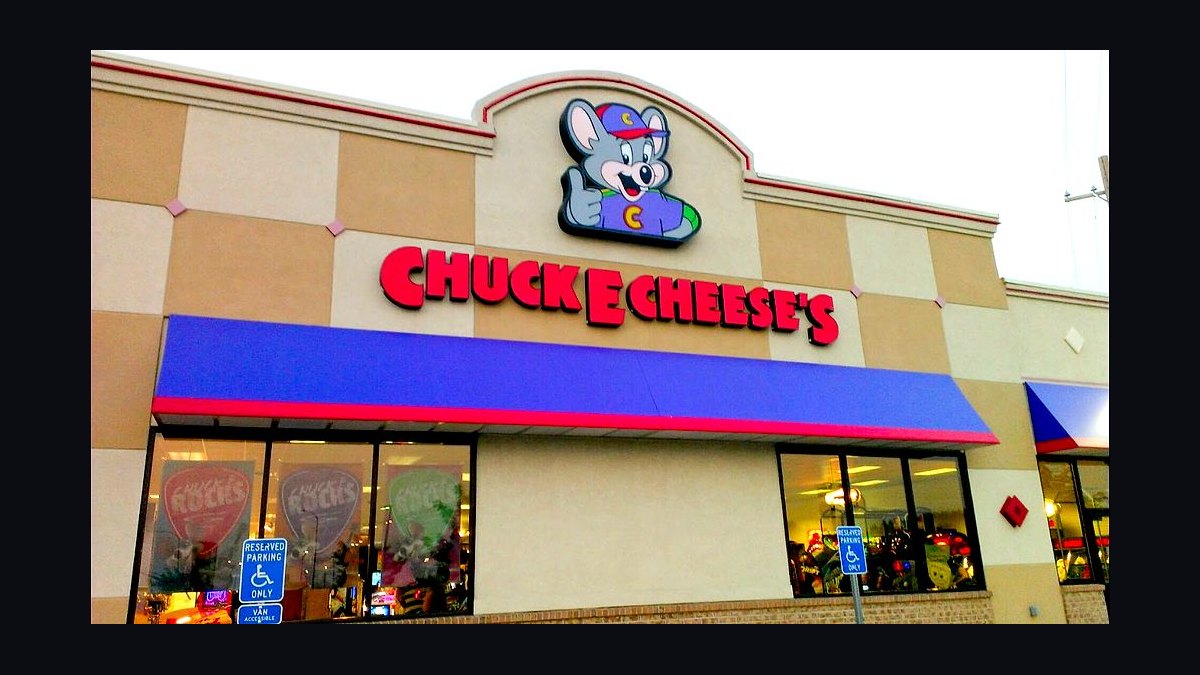
For a first-time U.S. operator, the honest answer is no — Chuck E. Cheese stopped signing new domestic franchisees after its 2020 bankruptcy, so there is no deal to buy into inside the United States in 2027. The live option is an international master franchise requiring $5M+ in liquid capital, or pivoting to Peter Piper Pizza, Urban Air, Sky Zone, or an independent family entertainment center acquisition instead.
The two (or more) options compared
Anyone researching "should I open a Chuck E. Cheese franchise" in 2027 is really choosing among three distinct paths, and conflating them is the single biggest mistake prospective buyers make. The first path — a brand-new single-unit U.S. franchise — simply does not exist anymore. CEC Entertainment Holdings, LLC, the parent company, filed Chapter 11 in June 2020 and emerged in December 2020 with a restructured balance sheet and a deliberate strategic shift: the company now operates roughly 440 of its approximately 470 U.S. locations directly through corporate ownership rather than franchising them out. That is not a temporary pause while the brand "gets its house in order" — it has held for six consecutive years, through two ownership-adjacent sale rumors, and nothing in the 2024-2026 public record suggests domestic franchise sales are reopening. If someone offers you a "Chuck E. Cheese franchise opportunity" inside the U.S. in 2027, that is almost certainly either an outdated listing, a scam, or a resale of a grandfathered unit that predates the 2020 restructuring — and even those are vanishingly rare and tightly controlled by the corporate parent's right of first refusal.
The second path is the one that is actually open: international master or multi-unit development franchising. CEC Entertainment licenses the Chuck E. Cheese brand to vetted operators in markets like Southeast Asia, India, the Middle East, and parts of Latin America, typically structured as a commitment to build 5 to 15 units over a 7 to 10 year development schedule. This is not a storefront-and-a-dream purchase — it is closer to a private-equity-style territory acquisition, with initial fees in the $50,000-$100,000 per-unit range stacked on top of territory development fees, and a single first unit costing $1.92 million to $4.1 million to build depending on market and square footage. The buyer profile here looks less like a franchisee and more like a regional operating company: someone with existing retail real estate relationships, multi-unit management infrastructure, and the balance sheet to carry a 12-18 month ramp before the first location proves itself.
The third path, and the one most individual investors actually end up choosing once they understand the first two, is sidestepping the Chuck E. Cheese brand entirely. That means either buying into a sister or competitor concept that still accepts U.S. franchisees — Peter Piper Pizza (CEC's own smaller-format sister brand), Urban Air Adventure Park, Sky Zone, or Altitude Trampoline Park — or acquiring an existing independent family entertainment center (FEC) outright through a business broker, with no royalty obligation to any parent brand at all. Each of these three paths has a completely different capital requirement, a completely different risk profile, and a completely different timeline, which is why "should I open a Chuck E. Cheese franchise" cannot be answered with a single yes or no until you know which of the three doors you are actually standing in front of.
How to decide between them
The decision tree collapses quickly once you answer two qualifying questions honestly: where do you live and operate, and how much liquid capital do you actually have access to today, not hypothetically in three years. If your operating base is inside the United States, the Chuck E. Cheese door is closed regardless of your capital position — there is no amount of money that reopens a franchise sales channel the parent company has deliberately kept shut since 2020. That single fact eliminates the brand entirely for the large majority of people who search this question, and the decision becomes which U.S.-available alternative fits your budget and risk appetite, not whether to pursue Chuck E. Cheese itself.
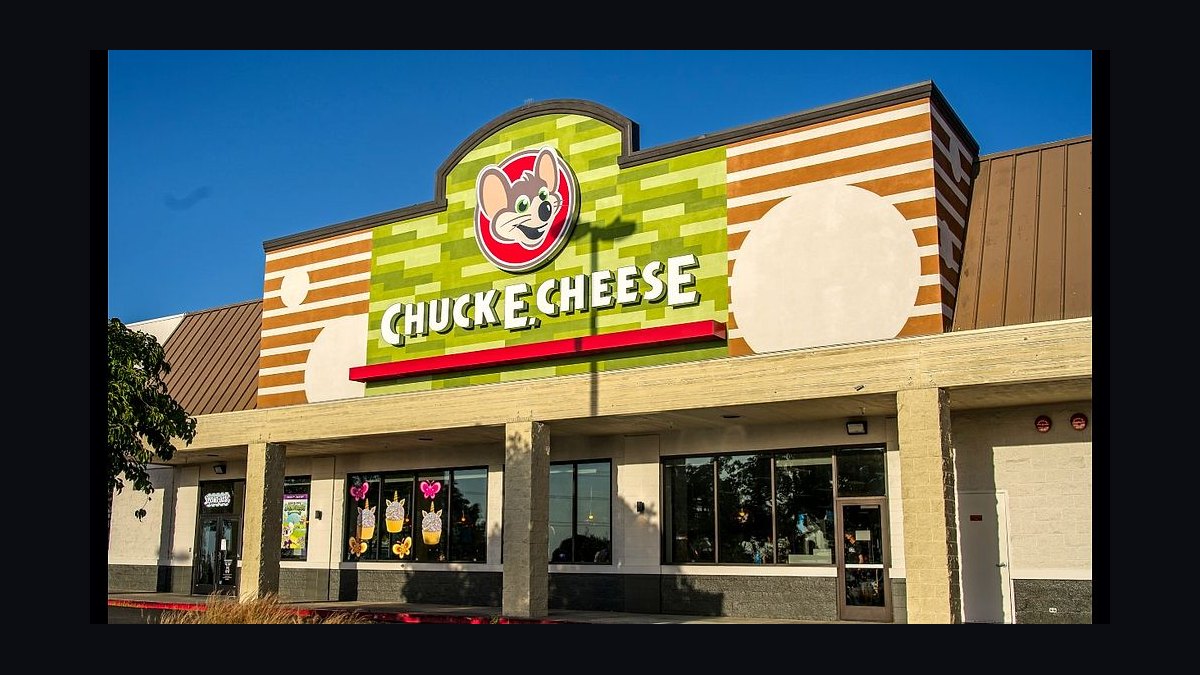
If you operate internationally in one of the brand's active development markets, the next filter is capital and experience. A master franchise commitment of 5-15 units realistically requires $5 million or more in liquid assets once you account for the first unit build-out, working capital reserves, and the territory development fee — plus prior operating experience in quick-service restaurants, FECs, or multi-unit retail, because CEC Entertainment vets development partners on operating track record, not just net worth. Someone with $1.5 million in liquid capital and no multi-unit management background is not a realistic candidate for this tier, even internationally; they would be a better fit applying as a minority area-development partner under an existing master franchisee, or pursuing the independent FEC acquisition path instead.
For the independent FEC or alternative-brand route, the deciding factor shifts from capital size to appetite for brand-building versus brand-borrowing. A franchise purchase (Urban Air, Sky Zone, Peter Piper Pizza) buys you a proven playbook, national marketing support, and a known customer perception, in exchange for a combined royalty and marketing fee typically in the 7-9% range of gross sales and a mandated remodel cadence you don't control. An independent FEC acquisition buys you full operating control and keeps 100% of top-line revenue, but you inherit whatever brand equity (or lack of it) the previous owner built, and you carry full responsibility for marketing, game sourcing, and competitive positioning without corporate support.
Concrete numbers behind each option
The international master franchise path carries the heaviest numbers of the three. Initial franchise fees run $50,000 to $100,000 per unit, and total initial investment for a single first build spans $1.92 million to $4.1 million, broken down roughly as $1.1 million to $2.4 million for the 10,000-14,000 square foot build-out itself, $450,000 to $900,000 for games, animatronics, and audiovisual systems, $35,000 to $75,000 in opening inventory and smallwares, and $250,000 to $500,000 in working capital reserves to carry three months of operations before the location stabilizes. On top of that build cost, the brand collects a 5.0% royalty on gross sales plus a 3.0% national marketing fund contribution and a 0.5%-1.0% local marketing minimum — an 8.5% combined fee load that sits on the higher end for the FEC category but reflects the brand recognition being licensed. Against that cost structure, corporate-level average unit volume runs roughly $1.15 million to $1.35 million, with restaurant-level EBITDA margins in the 22%-28% range post-remodel, producing a payback window most realistically in the 4-6 year range for a well-sited single unit and considerably longer across a full multi-unit rollout.
The U.S.-available alternative franchises carry meaningfully different numbers. Peter Piper Pizza, the closest economic substitute because it shares the same parent company and playbook at a smaller footprint, requires roughly $500,000 to $1.1 million in initial investment against an average unit volume near $850,000 and an EBITDA margin around 19%. Urban Air Adventure Park sits at the opposite end, with a $2.1 million to $4.7 million investment range, average unit volume near $1.9 million, and EBITDA margins around 22%. Sky Zone falls in between at $1.4 million to $3.1 million invested against roughly $1.6 million AUV and 20% EBITDA margins. These are all disclosed through current Franchise Disclosure Document Item 7 and Item 19 filings, which is itself a meaningful advantage over the Chuck E. Cheese international path — a domestic FDD gives you audited, standardized disclosure that an unregistered international franchise deal does not.
The independent FEC acquisition route runs on acquisition-multiple math rather than build-out math. Existing 8,000-12,000 square foot local arcade and birthday-party concepts typically trade at 3.5x to 5.0x trailing EBITDA through business brokers, landing most deals in a $900,000 to $1.6 million purchase price range against $280,000 to $520,000 in owner cash flow, with zero royalty drag because there is no brand fee to pay. The trade-off is that you are buying whatever customer perception, lease terms, and game inventory condition already exist — a thorough quality-of-earnings review and an on-site facility inspection matter more here than in a franchise purchase, where the brand standard partially substitutes for your own diligence.
Implementation details and sequencing
Whichever door you walk through, the sequencing matters more than most first-time buyers expect, because capital gets committed in stages and each stage should gate the next rather than running in parallel. For the international Chuck E. Cheese master franchise path specifically, the realistic sequence runs across roughly 90 days before signing and then 12-18 months before the first unit opens. Start by confirming your own qualification honestly: liquid net worth, prior multi-unit operating experience, and a target market with sufficient population density in the core 5-12 age demographic within a reasonable drive time of your anchor location. If you don't clear that bar, the right move is to stop pursuing Chuck E. Cheese specifically and redirect that same diligence effort toward Peter Piper Pizza, Urban Air, Sky Zone, or an independent FEC acquisition — the qualification bar for each of those is materially lower.
If you do qualify, request the international development disclosure package directly from the brand's franchise development contact, which should include three-year unit profit-and-loss ranges, territory rights, and renewal terms — treat this the way you would treat a domestic FDD even though it isn't filed with a state regulator. Commission an independent trade-area study from a firm like Buxton, Sites USA, or Tetrad before committing to a specific site; this typically runs $8,000-$15,000 and two weeks, and it is the single highest-leverage diligence dollar you will spend, because it tells you whether the local demographic and competitive density actually support the AUV assumptions in the brand's pro forma. Only after the trade-area study comes back favorable should you move into territory and unit-count negotiation, where the leverage points worth pushing for are first-unit royalty deferral for 12-24 months, build-out support from the corporate design-build team, and territory exclusivity carve-outs around major metro areas inside your development zone.
Financing validation comes next, and it looks different internationally than domestically — most master franchisees self-fund the first unit from equity, then refinance with senior debt at roughly 7.5%-9.0% once 18 months of unit-one EBITDA performance gives a lender something real to underwrite against. U.S. SBA-style financing does not apply outside the United States, so local banking relationships in your target country matter more than your U.S. credit history. The final gate, before signing anything, should be a hard decision checkpoint: walk away unless projected year-three unit EBITDA clears roughly $320,000, the committed territory totals at least eight units, combined royalty and marketing fees stay at or below 9.0% of gross sales, and renewal terms run at least ten years with a further option period. Treat any one of those four failing as a walk signal, not a negotiating starting point.
Related questions
How long does it take to open a franchise and break even?
Build timelines run 12-18 months for most FEC concepts, with breakeven typically arriving in 4-6 years for a well-sited single unit. Multi-unit development deals take longer because capital and management attention split across several ramping locations at once.
What's the difference between a franchise and an independent FEC acquisition?
A franchise buys a proven brand, marketing support, and operating systems in exchange for ongoing royalty and marketing fees, usually 7-9% of gross sales. An independent acquisition keeps all revenue but requires you to build brand recognition and systems yourself.
Can I buy an existing Chuck E. Cheese location from a current owner?
Only in the rare case of a grandfathered pre-2020 franchised unit changing hands, and the corporate parent typically holds a right of first refusal on any such sale. This is not a reliable path to opening a new location.
Is Peter Piper Pizza a good substitute for Chuck E. Cheese?
It's the closest economic substitute since it shares the same parent company and operating playbook at a smaller footprint and lower investment, roughly $500,000-$1.1 million, and it still actively accepts U.S. franchisees as of 2027.
FAQ
Is Chuck E. Cheese still franchising in the United States in 2027? No. The brand stopped accepting new U.S. franchisees after its parent company, CEC Entertainment Holdings, LLC, emerged from Chapter 11 bankruptcy in December 2020, and the corporate parent has operated the vast majority of U.S. locations directly ever since, with no public indication that domestic franchise sales will reopen.
What does it cost to become an international Chuck E. Cheese franchisee? International master or multi-unit deals typically commit an operator to 5-15 units over 7-10 years, with a single first-unit build costing $1.92 million to $4.1 million. Combined with territory fees and working capital, total exposure easily exceeds $5 million in liquid capital across the full development schedule.
How profitable is a typical Chuck E. Cheese location? Corporate-store figures show average unit volume around $1.25 million with restaurant-level EBITDA margins near 26% post-remodel. These are brand-wide benchmarks, not guarantees — actual performance depends heavily on local demographics, labor costs, and nearby competition in any specific trade area.
What's the realistic alternative if I can't access the international franchise? Peter Piper Pizza, Urban Air Adventure Park, and Sky Zone all currently accept U.S. franchisees with disclosed Item 7 and Item 19 figures. An independent FEC acquisition at 3.5-5.0x trailing EBITDA is also a strong option if you want to avoid ongoing royalty fees entirely.
Does opening any FEC-style business still make sense given changing kids' entertainment habits? The family entertainment center category is still growing overall, driven partly by subscription-style recurring revenue programs and esports-adjacent formats, but operators face real headwinds from a declining core 5-12 population in many mature U.S. markets and rising suburban commercial rent.
Should a first-time, single-unit operator attempt any version of this business? A single-unit, first-time operator carrying full royalty obligations against a shrinking core demographic faces a genuinely difficult path, especially in secondary markets. Multi-unit experience, strong site selection discipline, and a trade-area study before committing capital meaningfully improve the odds of success.
Sources
- CEC Entertainment Inc., Form 8-K dated June 24, 2020 — Chapter 11 voluntary petition (SEC EDGAR, sec.gov)
- CEC Entertainment FY2023 10-K — restaurant-level EBITDA disclosure and average unit volume table
- Future Market Insights — Family Entertainment Center (FEC) Market Report
- Allied Market Research — Family/Indoor Entertainment Centers Market Forecast
- Restaurant Dive — reporting on CEC Entertainment parent-company sale process
- Global Franchise Magazine — Chuck E. Cheese master franchise overview and international development markets
- FranchiseHelp — Chuck E. Cheese franchise cost and opportunity overview
- U.S. Census Bureau, American Community Survey 5-Year Estimates — population by age cohort
- CBRE Marketview — U.S. suburban retail rent index reporting
Related on PULSE
This page will be disappearing soon. Save it to your device for $1 — or read it free while it is here.
@Kory-White- · if Venmo asks, the last 4 of my number are 2012
This page is gone.
This one is off the shelf now. $1 keeps it on your phone for good — the whole page, pictures and diagrams included.
 franchiseShould I open or buy an Anytime Fitness franchise in 2027?
 franchiseShould I open or buy a KinderCare franchise in 2027?
 frShould I open or buy a McDonald's franchise in 2027?
 franchiseShould I open or buy a Kumon franchise in 2027?
 franchiseShould I open or buy a Little Caesars franchise in 2027?
 franchiseShould I open or buy a Kona Ice franchise in 2027?
 franchiseShould I open or buy a Massage Envy franchise in 2027?
 franchiseShould I open or buy a Wingstop franchise in 2027?
 franchiseShould I open or buy a Culver's franchise in 2027?
 franchiseShould I open or buy an F45 Training franchise in 2027?