


Should I open or buy a Kona Ice franchise in 2027?
Quality
Certified
Open a Kona Ice franchise in 2027 only if you have $50,000-$75,000 liquid, live in a warm-weather or school-dense market, and can personally book 200+ events a year working weekends April-October. Total investment runs $178,856-$226,841 with a $15,000 franchise fee and fixed annual royalties of $3,000-$5,000. Skip it if you want passive, year-round income — this is a seasonal, relationship-driven community-events business, not a hands-off cash machine.
New build versus resale: the two ways in
Anyone seriously weighing whether to open a Kona Ice unit in 2027 is choosing between two distinct entry points, and it's worth naming a third option even though it isn't Kona Ice at all — because the decision only makes sense once you've compared all three side by side.
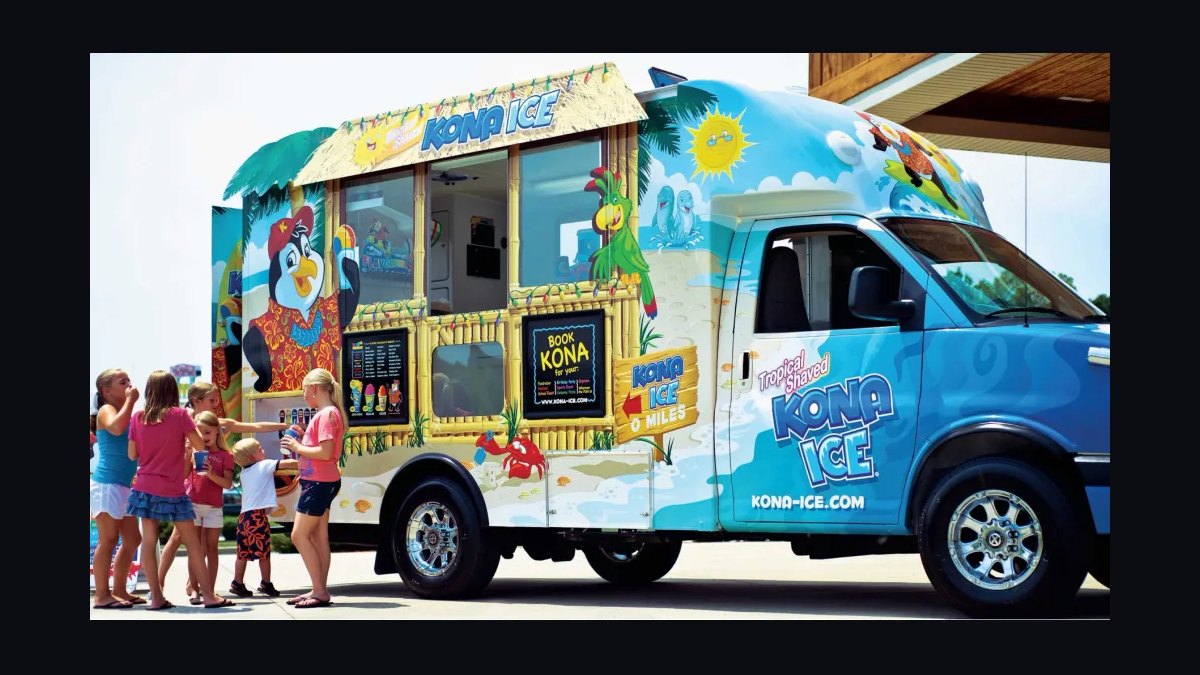
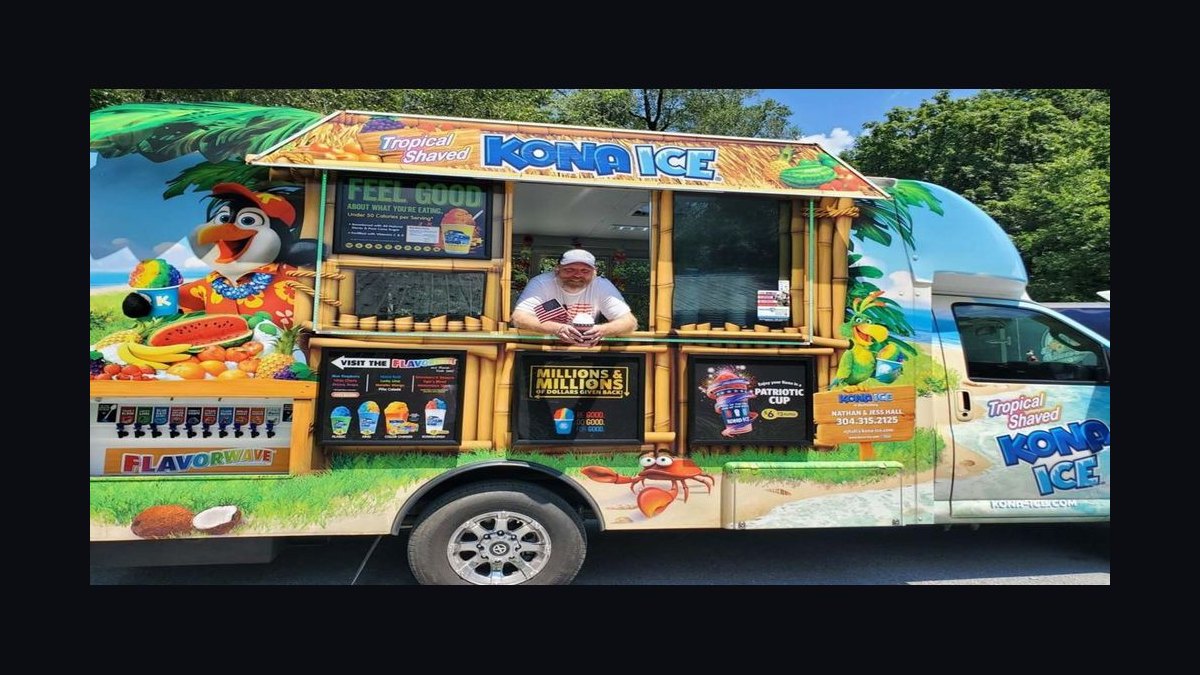
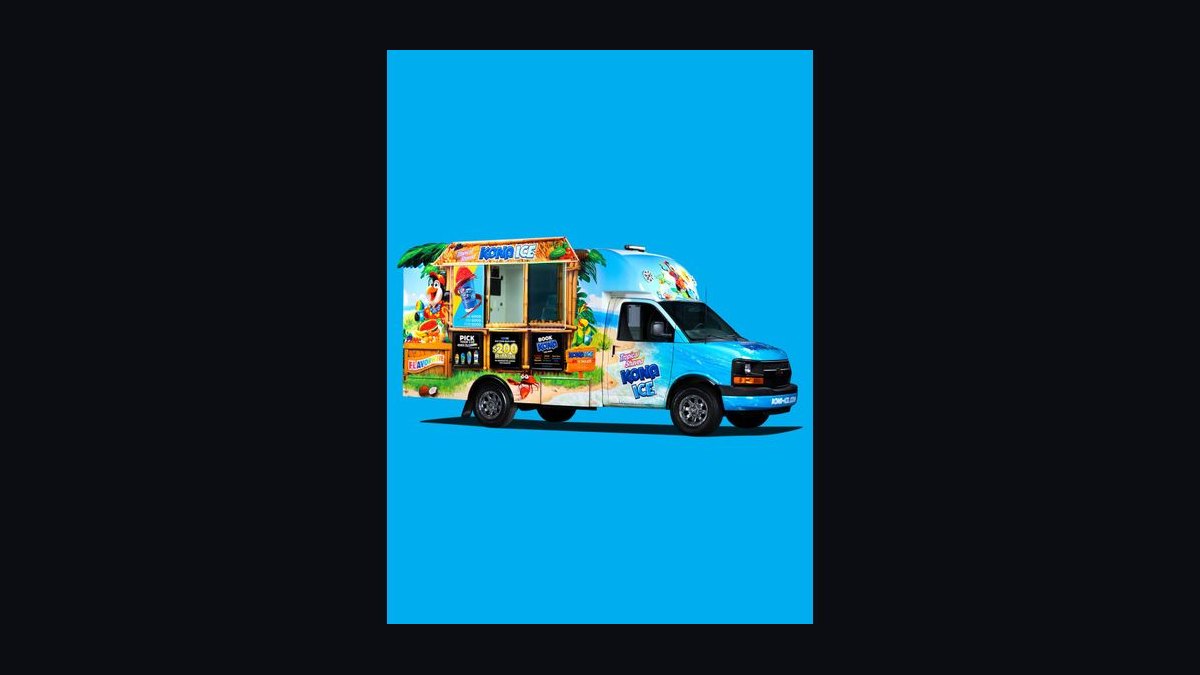
The standard route is a brand-new territory purchased directly from the franchisor. You sign the FDD, pay the flat $15,000 franchise fee, and Kona Ice maps you a territory defined by specific ZIP codes and school catchments rather than a simple radius. You then order a custom-built Kona Entertainment Vehicle (KEV), which takes 8-14 weeks to construct and typically runs $150,000-$160,000 fully outfitted with shaved-ice equipment, a generator, and branded wraps. The advantage of a new territory is a completely clean slate: no inherited customer complaints, no stale equipment, no legacy pricing commitments to event organizers who got a discount from the last owner. The disadvantage is that you start from zero relationships in a business where relationships with schools, leagues, and churches are the entire revenue engine — the truck doesn't sell itself; the booking calendar does. A new operator in a cold-start territory typically needs 60-90 days of pure outreach before the calendar fills, and Year 1 gross sales for a single new KEV commonly land in the $130,000-$160,000 range only if that outreach was aggressive from week one.
The second path is buying an existing unit through a resale. Kona Ice, like most mature franchise systems, has developed a secondary market — existing franchisees who are retiring, relocating, or simply burned out on 200 events a summer list their territory, their KEV, and their booking relationships for sale, often through brokers like Franchise Flippers or general marketplaces like BizBuySell. A resale typically costs more upfront than a new build because you're paying for the truck plus a proven booking calendar and accumulated goodwill with local schools and leagues, but it removes almost all of the cold-start risk that sinks a meaningful share of new operators in year one. If a seller can show two to three years of gross sales figures, a repeat-customer booking list, and standing contracts with schools or leagues, you're buying a de-risked cash flow stream instead of a hypothesis. The catch is that Kona Ice provides no Item 19 financial performance representation in its FDD — the franchisor does not independently verify a seller's numbers, so you have to validate them yourself with bank statements or point-of-sale exports rather than take a handshake on faith.
The third path is worth naming honestly: not opening a Kona Ice at all. Several Sun Belt metros — parts of the Carolinas, Florida, and Texas — are now largely territory-constrained, with new applicants routed toward secondary markets or resales because the primary catchments are already spoken for. If your target territory is saturated, or if your capital and risk tolerance simply don't fit a seasonal, weekend-heavy model, a rational alternative is either a competing mobile-dessert concept (Tikiz Shaved Ice, Dippin' Dots franchise units, or regional shaved-ice brands) or going fully independent — buying a used commercial shaved-ice trailer for roughly $25,000-$45,000 and operating under local health permits without paying any franchise fee or royalty. You give up Kona's proprietary syrup supply chain, national brand recognition, and the My Kona Site booking platform that now drives a large share of inbound leads for top operators, but you also shed the fixed-royalty obligation and the territory restrictions that cap how many trucks you can run in one area. This route only tends to work for someone who already has locked-in event relationships from a prior role — a coach, a teacher, a church events coordinator, or a youth-sports league volunteer who already knows the bookers personally and doesn't need a national brand to open the door.
Each path answers the underlying "should I open or buy" question differently. New-territory answers "open." Resale answers "buy." Independent answers "neither, adjacent." The right choice depends almost entirely on whether your value-add is capital or relationships — and in a community-events business built on repeat school and league bookings, relationships beat capital more often than most first-time franchise buyers expect.
Which path fits your situation
The decision hinges on three filters applied in sequence: your existing local relationships, your available capital, and your tolerance for operating without an Item 19 disclosure to lean on. Someone with deep pre-existing ties to schools, leagues, and churches but only modest capital should lean toward a new territory, because relationships — not capital — are the scarce resource that actually drives bookings; a well-connected operator with a brand-new truck will out-earn a stranger with a fully proven resale territory within a season or two. Someone with capital but no local network should lean toward a resale, effectively buying the relationships a prior owner spent years building, since a booking calendar populated with returning schools is worth far more than a discount on the truck. Someone with neither strong local ties nor comfortable capital reserves should not open a Kona Ice in 2027 through any path, because the business fails without active local booking relationships regardless of who legally owns the truck.
It also helps to think about this the way you'd evaluate any seasonal small-business acquisition: a landscaping route, a pool-service territory, a snow-removal contract book. In every one of those adjacent categories, the asset that actually generates revenue isn't the equipment — it's the standing customer relationships and the calendar of recurring work. Kona Ice is structurally the same. A buyer coming from event planning, teaching, coaching, or church administration should weight the new-territory path more heavily than the numbers alone suggest, because their existing network shortens the 60-90 day cold-start window dramatically. A buyer coming from finance, logistics, or a corporate background with no local ties should weight the resale path more heavily, or consider partnering with someone local who brings the relationships while they bring the capital and operational discipline.
Climate and local event density act as a multiplier on whichever path you pick rather than a separate decision. A well-connected buyer in a cold-climate market still faces a 5-6 month dead zone that a warm-climate buyer with weaker connections doesn't, so the "relationships versus capital" filter should be read alongside a climate check, not instead of it. Someone deciding between Florida and a Midwest suburb with comparable school density should weight the climate difference heavily, because it compresses the operating season regardless of how strong the local network is.
What each path actually costs
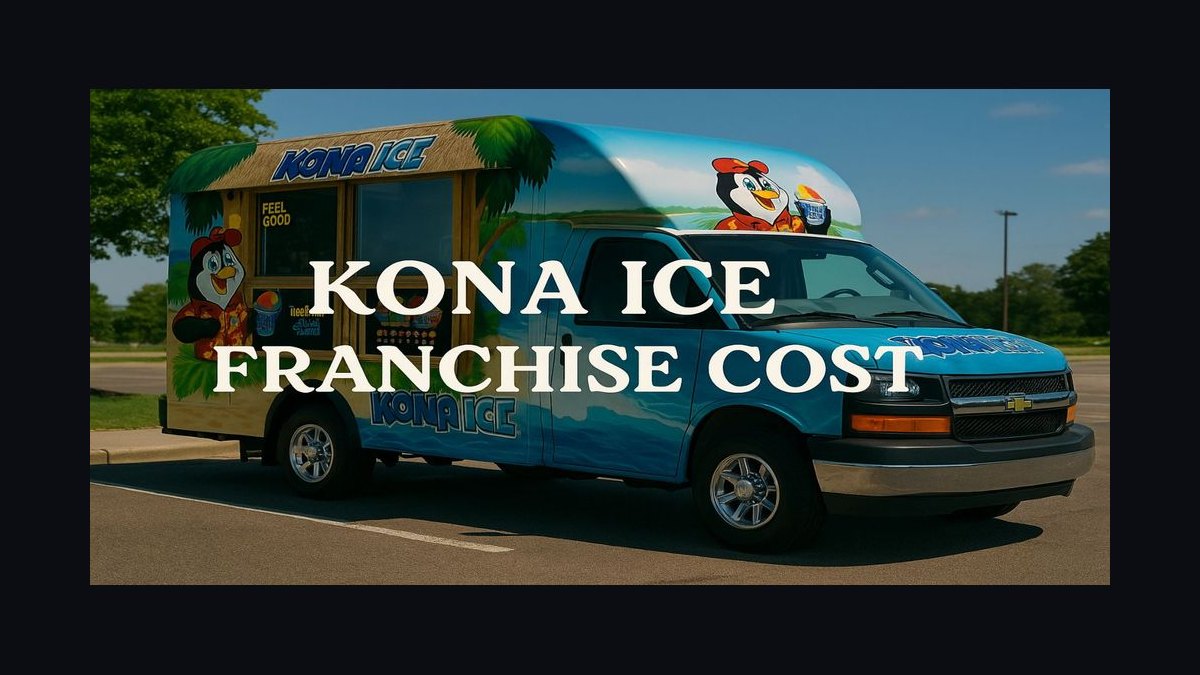
The numbers diverge sharply between opening new and buying a resale, and both diverge again from going independent.
Opening a new territory requires the full initial investment range of $178,856-$226,841, per the 2025 Kona Ice FDD Item 7. That breaks down to the flat $15,000 franchise fee (FDD Item 5), $150,000-$160,000 for the fully outfitted KEV, $8,000-$12,000 for insurance, training, and local permits, and $5,890-$39,841 in working capital to cover the first three months before bookings ramp. Royalties are fixed dollar amounts rather than a percentage of revenue — $3,000/year in years one and two, $4,000/year in years three through six, and $5,000/year in years seven through ten — plus a $500/year brand-fund contribution per KEV. Food cost sits near 6% of revenue, dramatically lower than the roughly 30% average for a typical restaurant concept, because shaved ice with flavor syrup carries minimal input cost per unit sold. That low food-cost structure is one reason Kona Ice and similar shaved-ice concepts post EBITDA margins in the 20-30% range even as a seasonal business — the unit economics per event are strong even though the annual revenue window is short. A new single-truck owner-operator working part-time should plan on conservative Year 1 cash flow of $25,000-$45,000, with breakeven typically landing in months 14-22.
Buying a resale changes the capital structure but not the ongoing royalty obligation — the fixed $3,000-$5,000 annual royalty schedule transfers with the territory regardless of who owns it, based on the unit's tenure in the system. A resale price is negotiated between buyer and seller rather than set by the franchisor, so there's no published range, but brokers report that resale valuations typically price in a multiple of trailing EBITDA — commonly cited around 2-3x for mobile food concepts — plus the depreciated value of the KEV itself. Because the KEV is already built and the booking calendar already populated, a resale buyer can often reach breakeven faster than a new-territory buyer, sometimes within a single season rather than 14-22 months, but only if the seller's disclosed numbers hold up under independent verification. Mature owner-operator earnings, whether from a new build or a resale once established, land at $50,000-$75,000 for a single truck, climbing to $150,000-$300,000 for operators running three to five KEVs with a part-time driver pool — a multi-unit scaling path that mirrors how successful landscaping or mobile-detailing franchisees grow, by adding trucks and hiring drivers rather than personally working every event.
Going independent strips out the $15,000 franchise fee and the $3,000-$5,000 annual royalty entirely, along with the $500/year brand-fund contribution, in exchange for a used trailer costing $25,000-$45,000. The tradeoff is losing Kona's proprietary syrup pricing, which insulates franchisees from commodity swings — USDA Economic Research Service data has tracked sugar prices running roughly 12% above 2024 baseline levels — losing brand recognition that helps with cold-outreach bookings, and losing the My Kona Site booking platform that now drives an estimated 40-60% of inbound bookings for top operators. Independent operators also carry 100% of the local-permitting and insurance burden without franchisor support; a $1.2M general-liability minimum is standard regardless of which path you choose, so that cost doesn't actually disappear when you skip the franchise fee — it just becomes entirely your own to negotiate.
Across all three paths, the single biggest swing factor is climate and event density: operators in Sun Belt metros or Midwest/Northeast suburbs with dense K-12 and youth-sports infrastructure report gross sales in the $142,959-$150,000 range per truck, while cold-climate operators with 5-6 month dead zones report $60,000-$90,000 gross with a much slower payback horizon on any of the three paths. That's worth weighing against comparable seasonal franchise concepts too — a pool-service or lawn-care franchise in the same cold-climate market faces a similar seasonality discount, so if you're choosing between several seasonal small-business options rather than Kona Ice specifically, climate should be one of your first filters, not an afterthought applied after you've already picked a concept.
The 90-day path to opening
Whichever path you choose, the sequencing for a 2027 launch follows roughly the same 90-day skeleton, with path-specific branches at the diligence and financing stages.
Start in days 1-7 by requesting the current FDD from ownakona.com and reading Items 5, 6, 7, 19, and 20 in full — Item 19 is worth reading specifically to confirm its absence, since Kona Ice does not publish a financial performance representation, which shifts the diligence burden onto you rather than the franchisor. In days 8-14, pull the franchisee contact list from Item 20 and schedule 10-15 validation calls, prioritizing operators in your climate zone with two to five years of tenure — a mix that avoids the bias of talking only to brand-new enthusiasts or only to burned-out veterans looking to exit. If you're evaluating a resale specifically, this is also when you request the seller's trailing 24-36 months of gross sales, ideally backed by POS exports or bank statements rather than verbal claims alone.
Days 15-30 are for local market validation: count K-8 schools, high schools, youth-sports leagues, churches, and recurring festivals within a 30-mile radius of your target territory — fewer than 75 total venues is a caution flag — then call five school principals and five league directors asking directly whether they'd book a Kona Ice for their next event. Under 30% expressed interest is a bigger red flag than any financial projection you'll build later. Days 31-45 go to building a three-scenario financial model (low/mid/high) that prices in the fixed royalty schedule, real local fuel costs, actual insurance quotes rather than estimates, and the roughly 6% food-cost line, run separately depending on whether you're pursuing a new build or a resale.
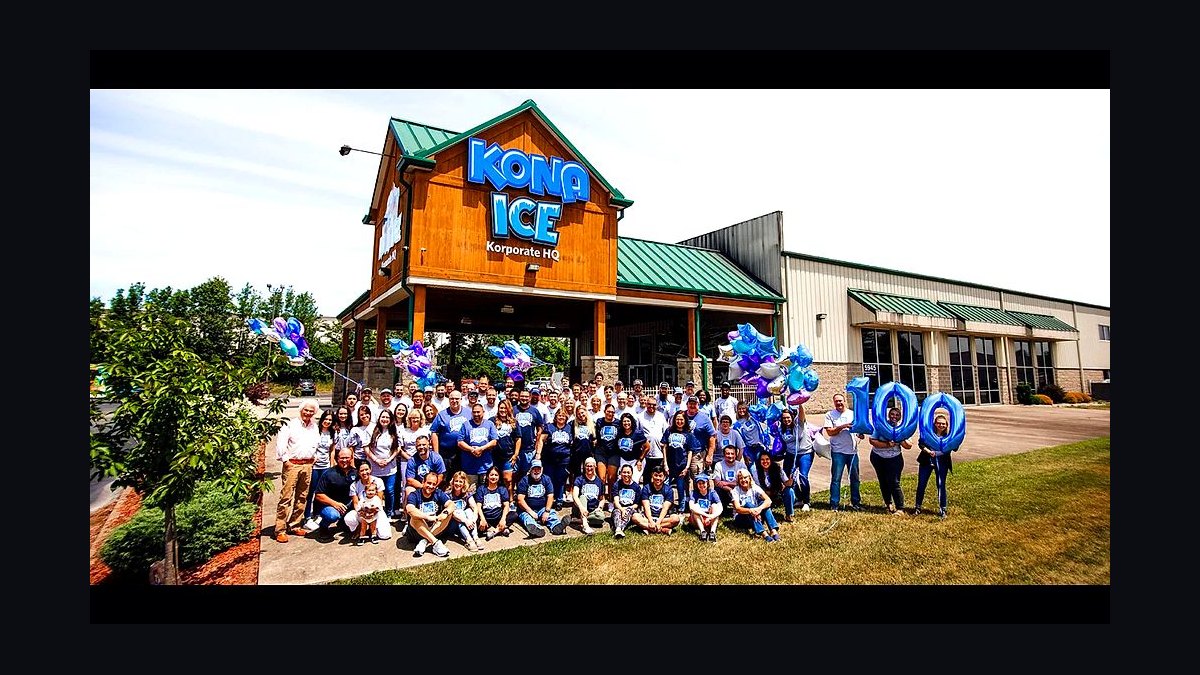
Days 46-55 are for attending a Kona Ice Discovery Day at corporate headquarters in Florence, Kentucky, where you meet the leadership team and physically inspect a KEV. For a resale buyer, this window is also when you should physically inspect the specific truck being purchased, since freezer-compressor failure is the single most common and expensive KEV repair, running $2,500-$4,500 per incident — a mechanical issue that a spreadsheet of past sales figures will never reveal. Days 56-70 are for securing financing: SBA 7(a) pre-approval, or an application to Kona's in-house financing arm, Kona Capital, with typical terms of 20-25% down and seven-to-ten-year amortization at 2026-2027 SBA rates around 10.5-11.5%. Days 71-85 confirm the territory with Kona corporate — mapped to specific schools and ZIP codes, not a generic radius — sign the franchise agreement, wire the fee, and, for a new build, schedule KEV construction given its 8-14 week lead time.
The final window, days 86-90, is pre-launch marketing: registering a DBA, setting up payment processing, binding the $1.2M general-liability insurance minimum, building the booking calendar, and reaching out to 100+ schools and leagues so the spring calendar is filling before April 1. Operators who compress this sequence — skipping the franchisee calls or the principal interviews to move faster — are disproportionately represented among the units that struggle to reach breakeven inside 22 months, because the diligence steps aren't bureaucratic overhead; they're the mechanism by which you confirm the relationships and demand actually exist in your specific territory before $178,000-plus is committed.
Related questions
How much does a Kona Ice franchise cost compared to Tikiz Shaved Ice? Kona Ice runs $178,856-$226,841 with a flat $3,000-$5,000 royalty; Tikiz runs $185,000-$270,000 with a variable 6% royalty on gross sales instead of a fixed dollar amount.
Can I run a Kona Ice franchise as a side business while working full-time? Only in shoulder months. Peak season (April-October) demands 20-30 hours weekly for bookings and event staffing, which conflicts with most full-time jobs on weekends.
Does Kona Ice offer in-house financing? Yes, through Kona Capital for qualified buyers, though most operators still pursue SBA 7(a) loans at 20-25% down and 2026-2027 rates around 10.5-11.5%.
Is a Kona Ice territory resale better than starting new in 2027? A resale with verified booking history and financials typically breaks even faster than a new territory, but only if the seller's numbers are independently confirmed, not just claimed.
What happens if my Kona Ice territory overlaps with independent shaved-ice trucks? Overlap compresses per-event pricing, especially in Florida, Texas, and North Carolina where independents like Tropical Sno and Tikiz already compete for the same festival and school slots.
FAQ
What is the total cost to open a Kona Ice franchise in 2027? The total initial investment typically ranges from roughly $179,000 to $227,000. That includes a flat $15,000 franchise fee, a custom-equipped truck, inventory, and other startup costs as outlined in the 2025 FDD Item 7.
How much cash do I need on hand to qualify? Franchisees generally need $50,000 to $75,000 in liquid cash. This covers the down payment, initial fees, and working capital before revenue starts coming in.
How long does it take to break even? Most owner-operators reach breakeven between months 14 and 22 on a new territory. A resale with an existing booking calendar can break even faster, sometimes within a single season, if the seller's numbers hold up.
Is Kona Ice a year-round business? No, it's seasonal — typically operating April through October in most markets. It's a community-events business that requires working weekends and booking 200+ events per year, not a passive year-round income stream.
What are the ongoing royalty fees, and do they differ between new and resale units? Kona Ice charges a fixed annual royalty of $3,000 to $5,000 based on the unit's tenure in the system, not a percentage of sales. This obligation transfers with a resale territory regardless of who owns it.
Do I need to live in a warm-weather state to open one? It helps significantly. The best markets are warm-weather states like Florida, Texas, Arizona, California, North Carolina, or Georgia — or any area with strong school and youth-sports density. Cold climates shorten an already seasonal window even further.
Sources
- Kona Ice 2025 Franchise Disclosure Document — Items 5, 6, 7, and 20 (ResearchForSale.com FDD library)
- ownakona.com — franchisor-published investment and royalty schedule
- Vetted Biz Kona Ice Franchise Insights (vettedbiz.com/franchises/kona-ice)
- Sharpsheets Kona Ice Franchise FDD, Profits & Costs
- 1851 Franchise Deep Dive: Kona Ice Franchise Costs, Fees, Profit and Data
- Franchise Business Review — Top 200 Franchises ranking and franchisee satisfaction data
- FinModelsLab — Kona Ice business-owner income modeling
- Franchise Chatter — Kona Ice FDD cost estimates archive
- IBISWorld NAICS 722330 Mobile Food Services Industry Report
- USDA Economic Research Service — sugar and food commodity price indices
Related on PULSE
- Best ice cream and frozen dessert franchises to buy in 2027
- Should I open or buy a Sub Zero Nitrogen Ice Cream franchise in 2027?
- Should I open or buy a Hokulia Shave Ice franchise in 2027?
- Should I open or buy a Repicci's Italian Ice franchise in 2027?
- Should I open or buy a MaggieMoo's Ice Cream franchise in 2027?
- Should I open or buy a Carvel ice cream franchise in 2027?
This page will be disappearing soon. Save it to your device for $1 — or read it free while it is here.
@Kory-White- · if Venmo asks, the last 4 of my number are 2012
This page is gone.
This one is off the shelf now. $1 keeps it on your phone for good — the whole page, pictures and diagrams included.
 franchiseShould I open or buy a Mathnasium franchise in 2027?
 franchiseShould I open or buy an Ace Hardware franchise in 2027?
 franchiseShould I open or buy a Culver's franchise in 2027?
 franchiseShould I open or buy a Whataburger franchise in 2027?
 franchiseShould I open or buy a Matco Tools franchise in 2027?
 franchiseShould I open or buy a Primrose Schools franchise in 2027?
 franchiseShould I open or buy a Jimmy John's franchise in 2027?
 franchiseShould I open or buy a Papa John's franchise in 2027?
 franchiseShould I open or buy a Valvoline Instant Oil Change franchise in 2027?
 franchiseShould I open or buy an Auntie Anne's franchise in 2027?