


Should I open or buy an Outback Steakhouse franchise in 2027?
Quality
Certified
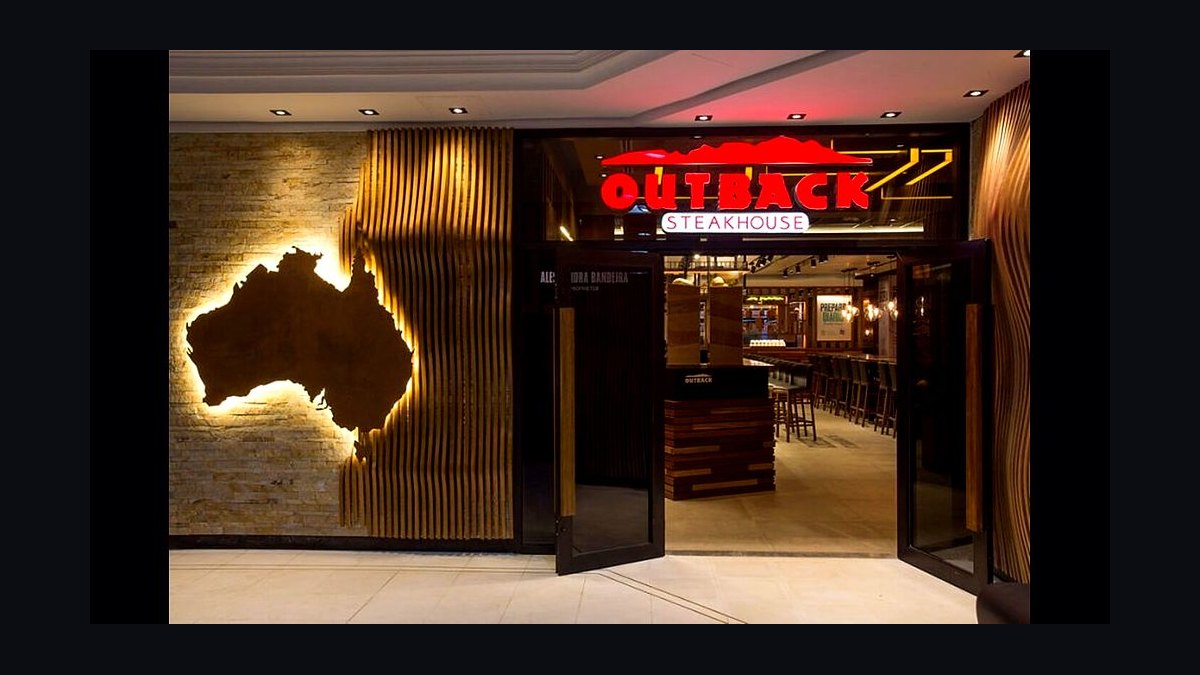
Probably not, unless you already run multiple casual-dining units. Bloomin' Brands has paused domestic Outback expansion and is refranchising company stores to existing operators instead of recruiting newcomers. Total investment runs roughly $2.5M–$8.4M against a 5.5% royalty and 2.5% marketing fee, with payback near seven to ten years.
What "open" and "buy" actually mean for this brand
The question hides two entirely different transactions, and confusing them is the fastest way to waste six months.
Opening means greenfield development: you sign a franchise agreement, pay the $40,000 initial franchise fee disclosed in Item 5 of the Franchise Disclosure Document, secure a site, build a 6,200–7,500 square foot free-standing box on roughly 2.5 acres, equip a full kitchen and bar, hire and train 90–130 people, and absorb every dollar of construction risk. Per Item 7 of the 2025 FDD, that path sits at the top of the disclosed $2,489,700–$8,419,000 range — realistically $3.5M–$5M for a typical suburban build once land, shell, kitchen, furniture, signage, and three months of working capital are stacked.
Buying means acquiring an operating restaurant — either from Bloomin' Brands itself under its refranchising program, or from an existing franchisee exiting the system. Here you are purchasing a revenue stream with known history: last year's sales, last year's food cost, last year's labor percentage, an existing staff, and an existing lease. You pay a multiple of restaurant-level EBITDA rather than a construction budget. Bloomin' has been moving company units to franchisees at roughly 3.5x–4.5x EBITDA, a discount to the 6x–7x range buyers pay for higher-volume steakhouse assets.
The economic difference is enormous. A greenfield build in this category carries 12–18 months of pre-revenue burn, a ramp curve that typically doesn't stabilize until month 12–18, and construction cost overruns that in the current environment routinely run 8–15% above budget. An acquisition produces cash the day you take the keys. In a brand that is contracting rather than growing, the case for absorbing development risk is weak — you are paying a premium for newness in a system where newness carries no traffic tailwind.
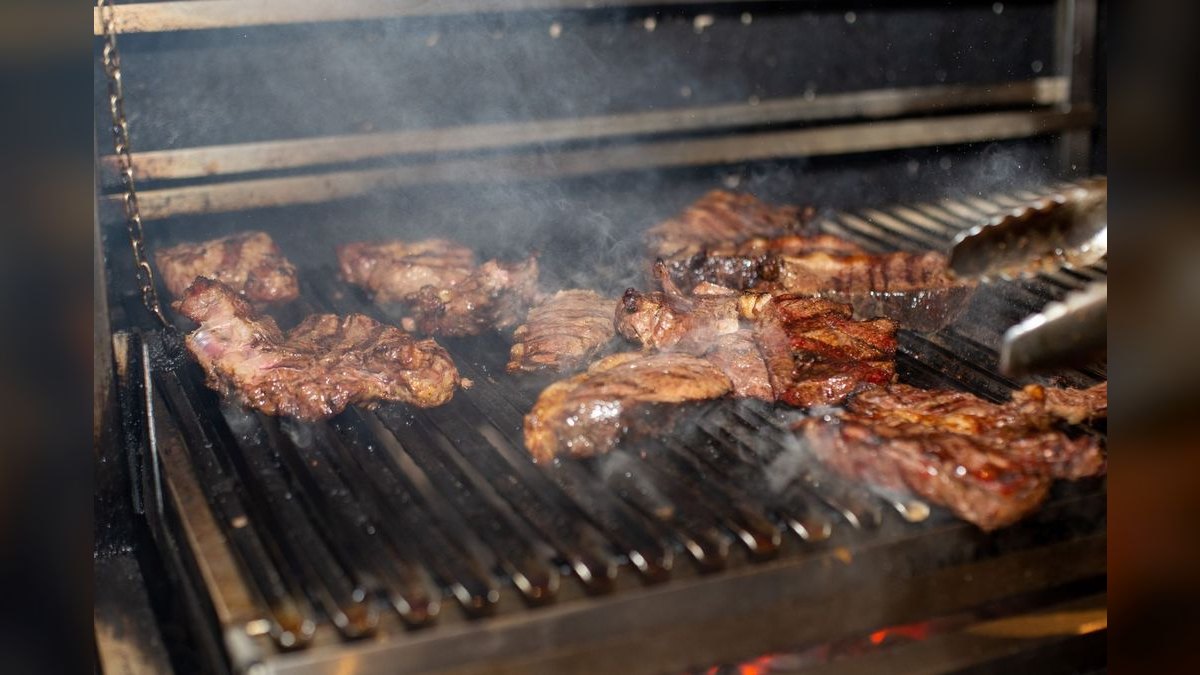
There's a third option most first-time buyers never consider: buy nothing branded at all. The same $3M–$5M deployed into an independent steakhouse in a market you already know eliminates 9% of gross revenue in royalty and marketing load. What you give up is the brand's supply chain leverage, its national advertising reach, its training system, and its financing credibility with lenders — which is exactly why franchising exists. The trade is real, not rhetorical, and it deserves an honest line on your comparison sheet rather than a dismissal.
The gate before the math: can you even get in?
Everything above assumes access, and access is the binding constraint in 2027.
Bloomin' Brands is not running a domestic recruitment engine for Outback. The company's stated capital priorities have shifted toward remodeling existing units and selling company-operated restaurants to franchise partners who already operate in the system. The 2026 refranchising transactions went to established multi-unit operators — Cerca Trova Restaurant Concepts took a package of dozens of locations, Evergreen Restaurant Group took a smaller tranche — precisely because those buyers already had district managers, training infrastructure, and supplier relationships in place.
If you send a franchise inquiry as an outsider, the realistic outcome is a polite note that domestic franchising is not currently open. That is not a negotiating posture you can charm your way past; it reflects a portfolio decision made at the corporate level.
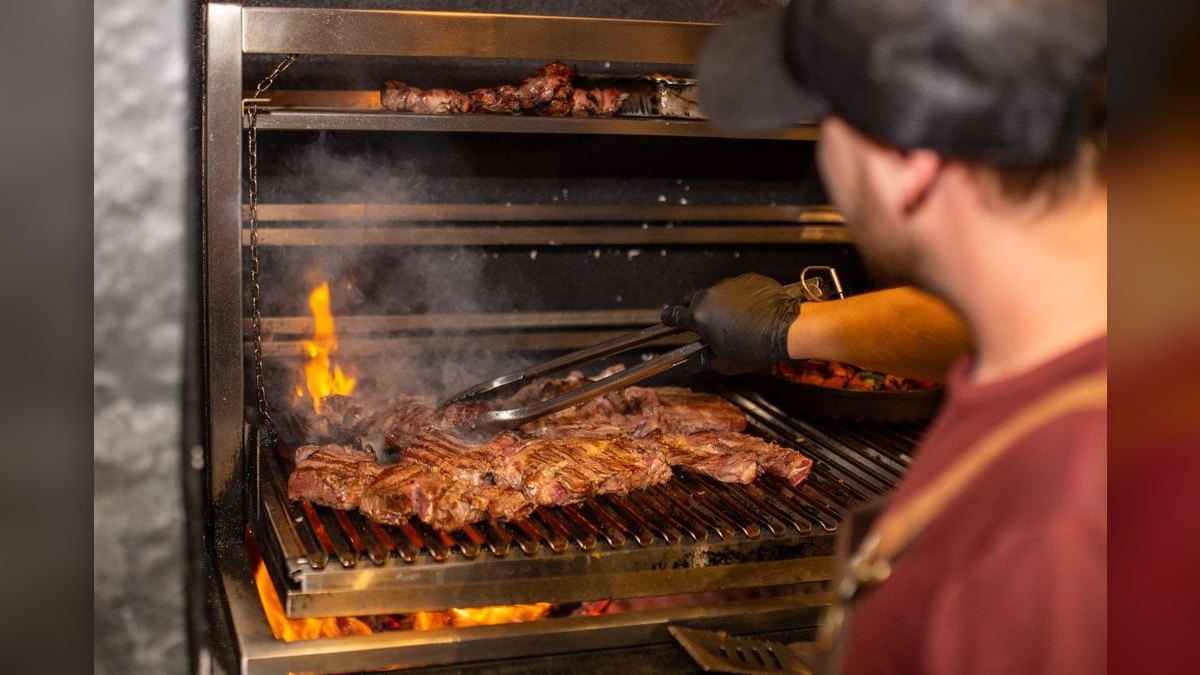
Franchisor qualification standards compound the problem. Casual-dining franchisors in this tier typically require meaningful liquid capital plus substantially higher total net worth, and Outback historically expects prior multi-unit restaurant operating experience — often three years or more running full-service concepts with liquor. The training program is built for someone who already understands labor scheduling against a forecast, food cost variance investigation, beverage attachment rates, and how to run a Saturday night on a short line. It is not a business school for career-changers.
This is where the honest answer to "should I open or buy" becomes uncomfortable. For most people asking, the answer isn't a financial verdict at all — it's that the door is closed, and the productive move is to redirect the search rather than keep knocking. The adjacent brands worth putting on the same spreadsheet are covered further down.
How to decide between the two paths
Run the decision as a sequence of eliminations rather than a single yes/no. Each gate is cheap to test and kills the deal before you spend on the next one.
The gates in order:
Gate one — access. Confirm in writing whether new domestic franchise agreements are available to you specifically. Everything downstream is theoretical until this clears.
Gate two — capital. Not just the down payment. Casual dining needs the disclosed working capital *plus* a personal reserve that lets you survive a bad first winter without pulling from the restaurant. If your entire liquidity is inside the deal, one soft quarter forces bad decisions.
Gate three — experience honesty. If you have never run a full-service kitchen, a franchise agreement will not teach you. Buying an existing unit with an intact management team partially mitigates this, which is another argument for acquisition over construction.
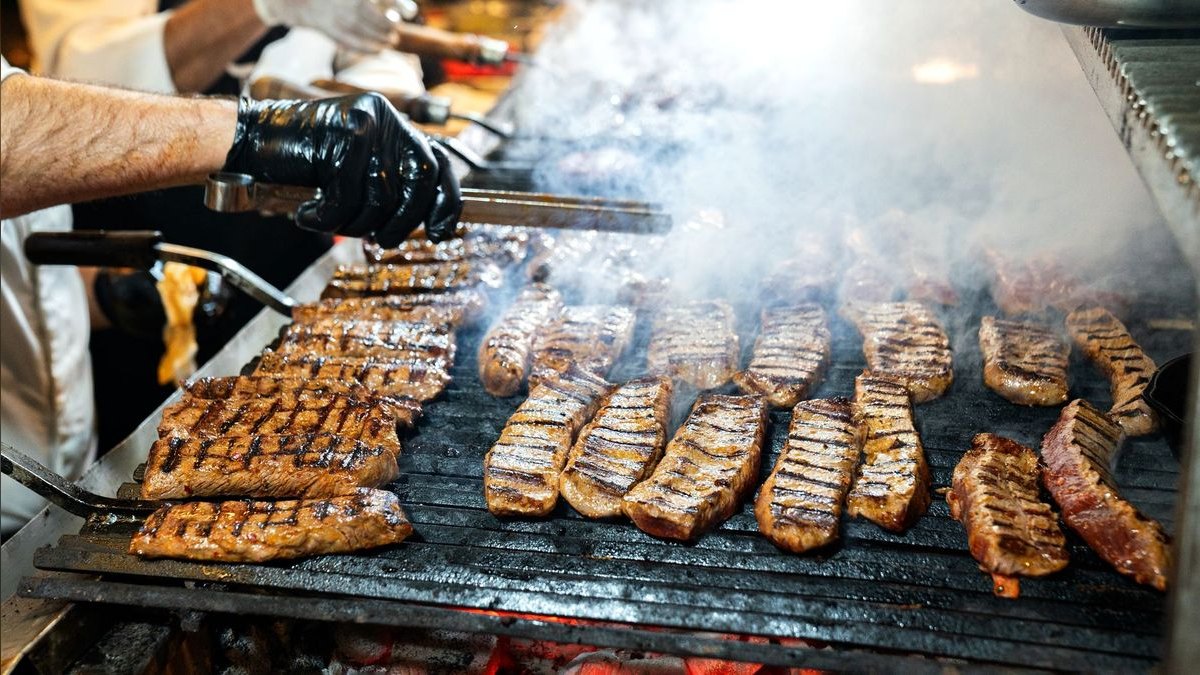
Gate four — the specific box. Franchise economics in this category are decided by site quality more than by brand. A great operator in a mediocre trade area loses to a mediocre operator in a great one. Trade-area population, daytime traffic counts, visibility from the primary road, parking count, and the competitive set within a three-mile ring matter more than any spreadsheet assumption.
Gate five — exit. Ask before entering: who buys this from you in year seven? If the brand is contracting and the buyer pool is a handful of existing operators, your exit multiple is set by their appetite, not by the open market. That illiquidity is a real cost and belongs in your required return.
Concrete numbers behind each option
Work from the disclosed figures rather than from franchise-broker enthusiasm.
Fee structure. The initial franchise fee is $40,000. Ongoing royalty is 5.5% of gross sales. The national marketing fee is 2.5% of gross sales. Local marketing carries an additional minimum obligation. Stack those and roughly 9% of every dollar through the register leaves before rent, food, labor, utilities, insurance, or debt service. On a $3.4M unit that is about $306,000 annually off the top — a fixed-percentage claim that does not shrink when traffic softens.
Investment range. Item 7 of the 2025 FDD discloses $2,489,700 at the low end to $8,419,000 at the high end. The floor represents a second-generation conversion — taking over an existing restaurant box where the shell, parking, grease interceptor, and hood infrastructure already exist. The ceiling is a ground-up build with expensive land in a high-cost market. Component ranges within that: real estate and lease deposits from roughly $250,000 to well over $1M; building and construction from roughly $900,000 to $3.8M; kitchen and bar equipment from roughly $650,000 to $1.4M; furniture, fixtures and signage from roughly $250,000 to $700,000; opening inventory in the $55,000–$90,000 band; pre-opening training and travel $35,000–$75,000; insurance and permits $30,000–$85,000; and three months of working capital that scales with the build size.
Revenue. The FDD's Item 19 financial performance representation puts system-wide average net sales around $3.51M across a base of 700-plus company and franchised units. That average conceals wide dispersion: top-quartile restaurants clear well above $4.5M while bottom-quartile units run under $2.7M. A realistic 2027 planning band for a competent operator in a decent trade area is $3.2M–$3.8M, and the responsible downside case is $2.7M.
Margins. Restaurant-level EBITDA in casual steak currently runs in the high single digits to low teens as a percentage of sales. Model 9% as your downside and 13% as a good year. On $3.4M that's $306,000 to $442,000 of restaurant-level cash flow before debt service, before any management fee you pay yourself, and before capital reserve for equipment replacement.
The cost side that is moving against you. Beef is the problem. The U.S. cattle herd has been at multi-decade lows, and center-of-the-plate protein costs have risen materially versus the 2024 baseline. In a steakhouse, protein is the single largest line in cost of goods, and menu price increases have limits — casual-dining traffic is price-elastic, and every additional dollar on a sirloin pushes marginal customers toward the lower-priced competitor down the road. Modeling flat food cost through 2027 is the most common error in these pro formas. Run 28–31% food cost as your band, not 26%.
Labor. Full-service steak requires a server-heavy model, a real bar, and skilled grill cooks. Budget labor in the low thirties as a percentage of sales, and note that turnover in hourly restaurant roles remains high enough that recruiting and training is a permanent operating expense, not a one-time opening cost.
Payback. Put those together: a $4M all-in investment generating $350,000 of restaurant-level cash flow, less debt service on borrowed capital, less a capital reserve, less your own compensation. Breakeven on operating cash typically lands somewhere in the month 30–42 window for a new unit that ramps normally. Simple payback on the total investment realistically sits at seven to ten years. That is a long duration to underwrite in a brand with declining comparable sales — you are betting on eight years of stability from a business that has not been stable for two.
The acquisition math looks different and better. Buy an operating unit doing $3.4M with $400,000 of restaurant EBITDA at 4x, and you have paid $1.6M for existing cash flow — a fraction of greenfield cost with none of the construction risk and no ramp period. Your yield on invested capital is immediately in the double digits. The risks shift to lease quality, deferred maintenance you inherit, remodel obligations the franchisor may impose, and whether the seller's reported numbers survive a quality-of-earnings review. Those are diligence problems, which are solvable, rather than execution problems, which are not.
Comparable plays worth pricing on the same sheet
If Outback is closed or the math doesn't clear, the capital doesn't have to sit idle. These are the adjacent options that show up on the same buyer's shortlist.
Higher-volume franchised steak. Texas Roadhouse operates at dramatically higher average unit volumes than the casual-steak category average — the gap is large enough that build cost per revenue dollar is far more favorable, which is precisely why franchise access is scarce and typically requires substantial net worth plus a commitment to develop multiple units in a territory. If you can qualify, this is the stronger franchised position in the segment on unit economics alone.
Brands that don't franchise domestically. LongHorn Steakhouse and Olive Garden are Darden concepts operated as company restaurants, not domestic franchises. If your thesis is "Darden runs steakhouses better," the expression of that view is public equity, not a franchise agreement. Recognizing this early saves months of chasing a transaction that isn't on offer.
Emerging steakhouse formats. Smaller growth concepts — Black Rock Bar & Grill among them — carry meaningfully lower build costs and often lower royalty rates than a legacy national brand. What you trade away is proven unit economics across hundreds of locations, brand awareness that fills the dining room on a Tuesday, and a franchisor with the balance sheet to support you through a bad year. Emerging-brand risk is genuine: you are underwriting the franchisor as much as the restaurant.
Different category entirely. The same capital in fast-casual or QSR buys a lower revenue ceiling per unit but a far better margin structure, smaller footprint, lower labor intensity, and no bar to manage. Many multi-unit operators who exited casual dining moved this direction, not because the brands were better but because the operating model is less fragile to a traffic downturn.
The real estate play. Some buyers pursue an operating steakhouse primarily for the underlying property — a free-standing building on a well-located pad with parking and highway visibility retains value independent of any single tenant's brand. If the franchise fails, the dirt still works. This is a fundamentally different underwriting exercise, closer to net-lease investing than to restaurant operating, and it requires being honest with yourself about which business you are actually in.
The point isn't that these are all better. It's that a franchise decision evaluated in isolation always looks reasonable, and the same decision compared against three alternatives often doesn't. Build the comparison before you fall in love with a brand.
Implementation details and sequencing
If you clear the access gate and want to proceed, run a disciplined ninety-day process. The sequence matters — each phase is designed to kill the deal cheaply before the next phase costs real money.
Reading the FDD properly. Under the FTC Franchise Rule the franchisor must give you the disclosure document at least 14 calendar days before you sign anything or pay any money. Use that window. Item 5 gives initial fees. Item 6 gives every ongoing fee, including the ones nobody mentions in the sales conversation — technology fees, required conference attendance, audit costs if you're found underreporting. Item 7 gives the investment range with footnotes that explain what's excluded. Item 19 gives whatever financial performance representation the franchisor chose to make, and the fine print about which units are in the base matters as much as the headline number. Item 20 gives unit counts, openings, closures, transfers, and terminations over three years, plus contact information for current and former franchisees. Item 21 gives audited financials of the franchisor itself — read them, because a franchisor under financial strain is a risk to you.
The franchisee calls are the highest-value diligence you will do. Item 20 gives you the list. Call at least ten, and deliberately include former franchisees — they will tell you things current ones won't. Ask specific, verifiable questions: What did you actually do in sales last year? What's your food cost running? Your labor? Did the franchisor's investment estimate match your real cost, and by how much did it miss? Have you been asked to remodel, and what did it cost? Would you buy another one? Would you sell if you could? Vague answers are themselves data.
Site selection. Requirements for this format run to roughly 2.5 acres, a 6,200–7,500 square foot building, a large parking count, and a trade area with meaningful population within a short drive. National brokerages handle site sourcing in this category, but do your own drive-bys at 6pm on a Friday and 1pm on a Tuesday. Traffic counts on paper and cars in the lot are different facts.
Financing. Restaurant deals in this size range typically combine conventional bank debt, equipment financing, and in smaller structures SBA 7(a) lending where the deal qualifies. Several banks specialize in restaurant franchise lending and will underwrite your pro forma skeptically — that skepticism is free consulting. If a lender won't fund your base case, take it seriously rather than shopping until someone says yes.
Pro forma discipline. Build three scenarios and label them honestly. Downside at $2.7M average unit volume, 31% food cost, 33% labor. Base at $3.4M, 29% food, 32% labor. Upside at $3.8M, 28% food, 31% labor. Apply the full 9% royalty and marketing load to gross sales in all three. If the downside case doesn't survive without a capital call, the deal is too tight regardless of how good the base case looks.
Lease negotiation is where deals are quietly won or lost. Ask for landlord contribution to build-out, a rent structure with percentage-rent relief in soft years, and a personal guarantee limited in scope and duration. A twenty-year absolute-net lease with a full personal guarantee turns a business risk into a personal solvency risk, and many operators sign it without reading it because the franchise conversation consumed all their attention.
Post-opening. Track weekly sales against pro forma from the first week and hold yourself to explaining variance. Restaurants fail slowly and visibly — six months of missing plan by 8% is a pattern, not noise, and the operators who survive are the ones who react in month three rather than month fourteen.
Related questions
Can I buy an existing Outback franchise instead of opening one?
Sometimes. Bloomin' Brands has been refranchising company units to established operators, and individual franchisees occasionally sell. Both routes require franchisor approval of the transferee and typically the same qualification standards as a new agreement, so outsider access remains limited.
How much does an Outback franchise cost in total?
Item 7 of the 2025 FDD discloses $2,489,700 to $8,419,000 total initial investment. Second-generation conversions sit near the floor; ground-up builds in expensive markets approach the ceiling. Most typical suburban new builds land in the $3.5M–$5M range.
What returns should I expect on a single unit?
At roughly $3.4M average unit volume and 9%–13% restaurant-level EBITDA, expect $300,000–$440,000 of pre-debt cash flow. After debt service and capital reserve, simple payback on a full greenfield investment realistically runs seven to ten years.
Is a Texas Roadhouse franchise a better option?
On unit economics, generally yes — its average unit volumes are substantially higher at comparable build cost. The obstacle is access: territories are scarce and typically require high net worth plus a multi-unit development commitment, making it harder to enter than to justify.
Does opening an independent steakhouse make more sense?
It eliminates roughly 9% of gross revenue in royalty and marketing fees, which is significant. You forfeit supply-chain leverage, national advertising, an established training system, and lender confidence. Independents work best for operators with existing local reputation and proven kitchen management.
FAQ
Is Outback actively selling new franchises to first-time owners?
Not in any practical sense. Bloomin' Brands has shifted toward refranchising existing corporate restaurants to experienced multi-unit operators rather than recruiting new franchisees. A first-time restaurant owner submitting an inquiry should expect to be told that domestic franchising is not currently open, and should plan alternatives rather than waiting for that to change.
What is the realistic all-in cost of an Outback restaurant?
The 2025 FDD discloses a $2.5M–$8.4M range. The low end assumes converting an existing restaurant building where shell, hood, and parking infrastructure already exist. The high end is a ground-up build on expensive land. A typical suburban new build sits closer to $3.5M–$5M once working capital and pre-opening costs are included.
How long until the restaurant pays for itself?
Operating breakeven for a normally ramping new unit typically falls in the month 30–42 window. Full payback on the total invested capital realistically takes seven to ten years at average unit volumes in the $3.4M–$3.8M range with restaurant-level EBITDA margins of 9%–13%. Acquiring an operating unit at 3.5x–4.5x EBITDA shortens that materially.
What are the ongoing fees?
A 5.5% royalty on gross sales plus a 2.5% national marketing fee, with an additional local marketing minimum, on top of the one-time $40,000 initial franchise fee. Combined, roughly 9% of gross sales leaves before any operating expense. That load is consistent with full-service casual-dining norms but it is fixed as a percentage — it doesn't shrink in a slow quarter.
Is the brand growing or contracting?
Contracting. Comparable sales have been negative while Texas Roadhouse and LongHorn have posted gains, and Bloomin' has closed underperforming locations while pausing domestic expansion in favor of remodels and refranchising. You would be underwriting an operational turnaround, not riding a growth trend — a legitimate thesis, but a different one than most buyers think they're signing up for.
Can a single unit support a family?
Yes, potentially — $180,000–$360,000 of owner cash flow in a decent year is a real living. But it is an operating job, not passive income, and the ratio of that income to $4M of invested and personally guaranteed capital is unremarkable. Most operators who build wealth in this category do it across multiple units where overhead amortizes, not on a single restaurant.
Sources
- https://www.sec.gov/cgi-bin/browse-edgar?action=getcompany&CIK=BLMN&type=10-Q
- https://www.bloominbrands.com/investors
- https://www.ftc.gov/business-guidance/resources/franchise-rule-compliance-guide
- https://www.ftc.gov/business-guidance/industry/franchises
- https://www.nass.usda.gov/Publications/Todays_Reports/reports/catl0125.pdf
- https://www.ers.usda.gov/topics/animal-products/cattle-beef
- https://www.franchise.org/
- https://www.nrn.com/
- https://www.restaurantdive.com/
- https://www.sba.gov/funding-programs/loans/7a-loans
Related on PULSE
This page will be disappearing soon. Save it to your device for $1 — or read it free while it is here.
@Kory-White- · if Venmo asks, the last 4 of my number are 2012
This page is gone.
This one is off the shelf now. $1 keeps it on your phone for good — the whole page, pictures and diagrams included.
 franchiseShould I open or buy a Cold Stone Creamery franchise in 2027?
 frShould I open or buy a McDonald's franchise in 2027?
 franchiseShould I open or buy a Jamba franchise in 2027?
 franchiseShould I open or buy a Hand and Stone Massage franchise in 2027?
 franchiseShould I open or buy a Little Caesars franchise in 2027?
 franchiseShould I open or buy a Cinnabon franchise in 2027?
 franchiseShould I open or buy a Sonic Drive-In franchise in 2027?
 franchiseShould I open or buy a Meineke franchise in 2027?
 franchiseShould I open or buy a Dairy Queen franchise in 2027?
 franchiseShould I open or buy a KinderCare franchise in 2027?