


Should I open or buy a Bahama Breeze franchise in 2027?
Quality
Certified
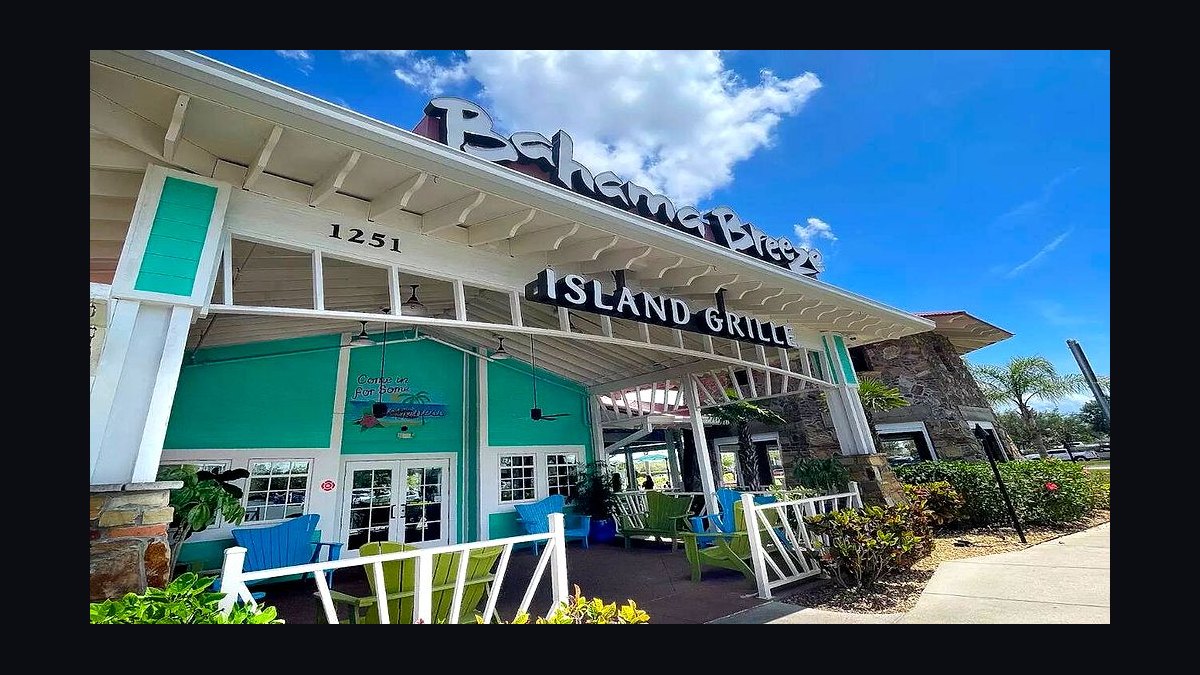
No — you cannot open or buy a Bahama Breeze franchise in 2027. Darden closed its strategic review in February 2026, shut or converted all 28 Bahama Breeze units, and froze Darden International Franchising, the only channel that ever licensed the brand. Redirect $1.2M–$2.4M toward an active Darden franchise or a self-funded tropical-concept restaurant instead.
The two paths, and only one is actually open
Anyone typing "Bahama Breeze franchise" into a search bar in 2027 is choosing between two fundamentally different transactions, and only one of them can be executed today. Path one is licensing an active Darden brand through Darden International Franchising — Olive Garden, LongHorn Steakhouse, Capital Grille, or Ruth's Chris — for an international territory or a U.S. airport concourse. That program has posted qualification criteria, a functioning training academy, live supply agreements, and an actual intake process. By every measure that matters to a buyer with capital to deploy, it is open. Path two is acquiring or relaunching the Bahama Breeze trademark itself, which isn't a franchise purchase at all right now. It's a speculative bet on a distressed-IP transaction that hasn't been announced, hasn't been scheduled, and may simply never happen.
The confusion is reasonable, because Bahama Breeze reads from the outside like any other casual-dining chain that ought to have a franchise disclosure packet sitting somewhere. It never did domestically. Every U.S. Bahama Breeze was corporate-operated; the sole franchise door was international and airport development run through Darden International, and that door closed the moment the wind-down was announced. Fourteen of the final 28 units shut by April 5, 2026, and the remaining 14 are being converted to other Darden banners on a timeline running through 2027. There is no current Bahama Breeze FDD because a domestic one never existed, and the international program stopped entertaining Bahama Breeze interest the day the brand's fate was settled internally.

That reframes the real decision. It isn't "should I franchise Bahama Breeze" — it's "which of the two live options gets me closest to what actually attracted me to Bahama Breeze in the first place." If the draw was the tropical, beach-bar-adjacent casual-dining positioning, the honest comparison sits between (a) a funded, supported Darden franchise in a sibling concept, and (b) building an independent island-grille from the ground up, retaining full control of the menu and brand at a footprint smaller than Bahama Breeze ever used. A third option — buying the Bahama Breeze trademark if Darden ever actually markets it — belongs in a contingency file, not a business plan, because nothing has been announced and the brand's own terminal unit economics (same-restaurant sales down 7.7% in 2024, average unit volume sliding to $4.0M–$4.3M against Darden's internal $5M keep-or-kill threshold) are precisely why the brand didn't survive.
Each path also selects for a different operator profile, and this matters more than most buyers initially credit. Darden International's posted standards skew toward multi-unit, multi-brand developers with institutional balance sheets — groups already running an Olive Garden or LongHorn under a Darden agreement across the Middle East, Mexico, or Latin America, or major U.S. airport concessionaires such as HMSHost, SSP America, Paradies Lagardère, or Areas USA. Those concessionaires already have the relationships, the TSA-cleared build crews, and the lease structures that airport foodservice demands, which is a meaningfully different skill set than running a freestanding suburban casual-dining box. The independent island-grille path instead suits a liquor-savvy, coastal-market operator who doesn't need or want Darden's operating system and is prepared to build training, supply, and local marketing functions in-house. The trademark-revival path, on the rare chance it opens, will suit a family office or private-equity buyer scooping up discounted IP, not a first-time restaurant owner financing a single unit with an SBA loan — the diligence, legal, and integration costs of an IP acquisition dwarf what a typical first-unit franchisee's capital stack is built to absorb.
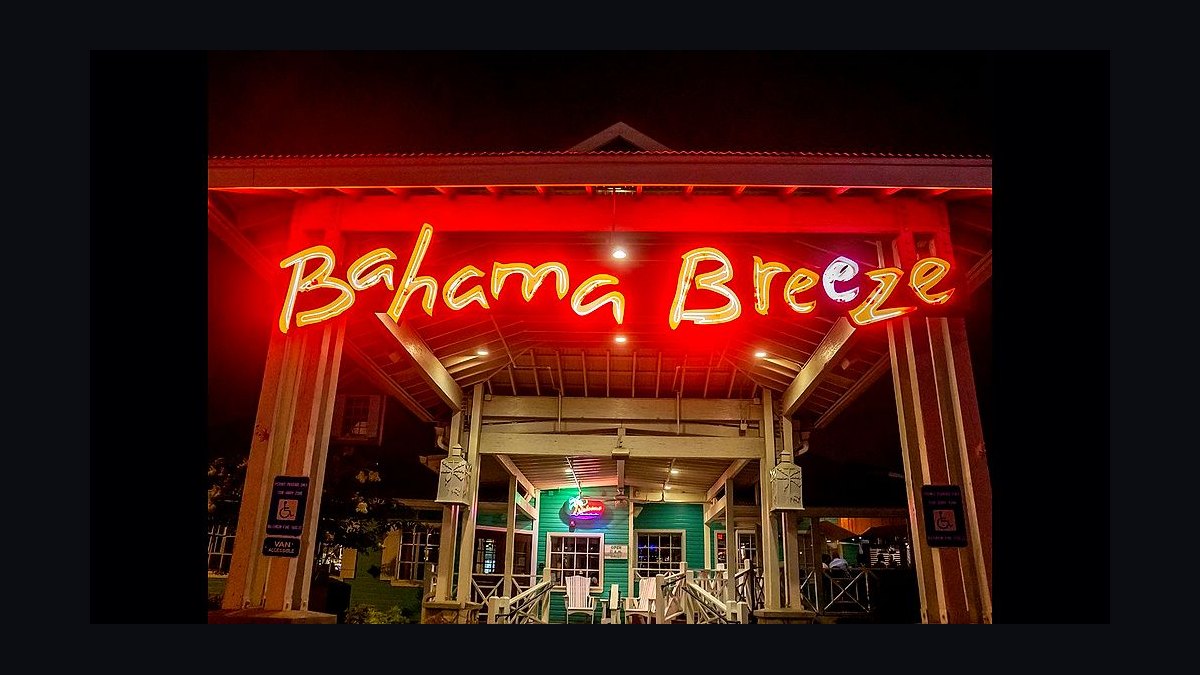
It's worth sitting with why this matters beyond Bahama Breeze specifically. Casual dining has shed several similarly-positioned mid-tier brands over the past three years — a pattern buyers chasing "the next tropical-casual concept" should study rather than ignore. When a parent company winds down a brand for margin reasons rather than brand-awareness reasons, the trademark rarely gets relicensed cheaply or quickly, because the underlying unit economics that killed it don't improve just because ownership changes. A buyer evaluating any wound-down brand — not just this one — should treat "the name is recognizable" and "the business model works" as two completely separate questions.
How to decide between the two paths

The fork in the road resolves to four questions, and the order matters, because each question is cheaper to answer than the next and should eliminate a path before you spend real diligence dollars disproving it.
First: can you actually clear Darden's posted qualification bar for an active franchise? That typically means $5M+ net worth, $2M+ in liquid capital, multi-unit casual-dining operating experience, and — for the Caribbean-adjacent positioning most Bahama Breeze fans are actually chasing — a liquor-driven concept history, since beverage ran 28%–32% of Bahama Breeze's sales mix and any tropical concept's unit economics live or die on cocktail attach rate. If the answer is no, the Darden path is closed regardless of which specific brand appeals to you, and the decision moves directly to the independent-concept branch without further analysis.
Second, for anyone who clears that bar: is the target market Florida, the Gulf Coast, a Caribbean cruise-port city, or a major airport hub with heavy leisure traffic? Darden's own performance data showed Bahama Breeze-style positioning underperforming meaningfully outside those corridors, and the identical geography constraint applies to an island-themed Olive Garden or LongHorn airport unit. An inland suburban trade area fails this test immediately, independent of brand name, because the trip-purpose dining occasion the concept depends on simply doesn't exist there in volume.

Third: does the underwriting clear an 8-year payback under the conservative case, not the optimistic one? Model year-one revenue against a deliberately discounted AUV rather than the brand's historical peak of $4.7M–$5.2M, apply a realistic restaurant-level EBITDA margin for the category, and subtract royalty and marketing fund contributions before judging payback at all. A model that only clears at best-case historical numbers isn't a working model — it's a pitch deck.
Fourth, and only once the first three clear: is there a funded plan for the capabilities Darden won't hand you even inside its own franchise agreement — local marketing execution, a bench of trained managers, and a commissary or supplier relationship suited to the target market? Buyers on the independent island-grille path need this answered from day one, because unlike a Darden franchisee, nobody is supplying these functions for them by default.
A buyer who fails any one gate shouldn't force the next one simply because money has already gone into due diligence. That sunk-cost pull is exactly how operators end up overpaying for a concept, franchised or independent, that was never going to clear underwriting on its own merits. The discipline to walk away at gate two or three — rather than at a signed lease — is the single biggest determinant of whether a franchise buyer survives their first three years, and it applies well beyond this specific brand decision.
The numbers behind each option
Comparing the two live paths side by side is the clearest way to see that they differ less in total capital required and more in risk profile and the degree of support bundled into the price.

| Line item | Darden International franchise (Olive Garden / LongHorn) | Independent island-grille build |
|---|---|---|
| Franchise fee | $50,000–$100,000 | None |
| Build-out | $650,000–$1,400,000 (larger format) | $500,000–$900,000 (3,200 sq ft, scaled down) |
| FF&E + kitchen/bar | $280,000–$475,000 | $180,000–$320,000 |
| Working capital | $140,000–$260,000 | $120,000–$220,000 |
| Liquor license + opening inventory | $55,000–$90,000 | $45,000–$80,000 |
| Pre-opening/training | $45,000–$85,000 (Darden-run) | $60,000–$110,000 (self-funded) |
| Total investment | ~$1.2M–$2.4M | ~$850,000–$1.4M |
| Ongoing royalty | 5.0% of gross sales | 0% |
| Marketing fund | 3.0%–4.0% | Self-directed, comparable budget |
| AUV | $4.3M–$6.2M depending on brand | $3.2M–$3.8M at a disciplined, smaller footprint |
| Restaurant-level EBITDA margin | 15%–19% (Olive Garden / LongHorn) | 12%–14% targeted |
| Payback period | 4–6 years | 5–7 years |
The pattern is instructive. The Darden path costs more up front and carries a permanent royalty drag, but it purchases a proven operating system — a training academy, an established supply chain, national marketing scale, and ongoing menu R&D — none of which exists for a buyer trying to revive Bahama Breeze independently. The independent path costs less and keeps 100% of the upside with no royalty leakage, but every piece of infrastructure Darden provides has to be built, financed, and staffed from zero, which is exactly why its payback window runs wider despite a lower AUV ceiling.
For context, the economics a hypothetically revived Bahama Breeze FDD would need to post, if a third party ever relaunches the brand, sit close to the Darden-franchise column on cost but noticeably worse on return: total investment $1.22M–$2.41M, a 5% royalty plus a 3%–4% marketing fee, an AUV that had already slipped to roughly $4.0M–$4.3M by closure, restaurant-level EBITDA margins of just 8%–12% — well under Olive Garden's 17%–19% — and a payback period stretching to 6–9 years. That compressed margin and extended payback, not weak brand recognition, is the actual reason Darden exited, and it's why any future revival would need a tighter footprint and leaner cost structure than the original ever carried to pencil out at all.
Labor is the line item most prospective buyers underweight when they model any of these paths. Bureau of Labor Statistics data shows restaurant hourly wages up roughly 21% versus 2019, which means a staffing model built around Bahama Breeze's 2018-era labor assumptions simply does not transfer to a 2027 P&L, regardless of which brand sits on the building. Any underwriting that doesn't bake current wage levels into its labor line is underwriting a business that no longer exists in the form its historical numbers describe. This is the same trap that has caught buyers reviving other mid-2010s casual-dining concepts generally: the brand name and menu photograph the same as they did a decade ago, but the cost structure underneath has moved enough that a straight reapplication of old benchmarks overstates the margin by several points.
Implementation details and sequencing
Once a buyer selects a lane, the two paths diverge sharply in sequencing, and conflating them wastes months of runway that could otherwise go toward site selection or financing.

The Darden International route starts with the Business Contact Form on Darden's franchising site, followed by a qualification call that screens net worth, liquidity, and multi-unit operating history before any brand-specific conversation begins. Serious candidates are typically asked to bring a market analysis — tourism statistics, airport enplanement trends, or visitor-population data for the proposed site — before Darden will even engage on site approval. Multi-brand developers who already hold an Olive Garden or LongHorn agreement move faster, because the underwriting relationship and operating history already exist inside Darden's system; a brand-new applicant should budget 6–12 months from first contact to site approval, then another 9–14 months to open, driven mostly by construction scheduling and training-academy availability that Darden, not the franchisee, controls.
The independent island-grille route is self-directed and front-loaded with the work a franchisor would otherwise absorb. The first 30 days go to site selection in a genuinely tourist- or transient-traffic-heavy market — coastal Florida, a Gulf port city, or a Caribbean-gateway airport concourse — because the concept's price points depend on trip-purpose visits rather than habitual commuter repeat business. The next 30 days go to underwriting at a deliberately conservative AUV, closer to $3.2M–$3.8M than any brand's historical peak, and to locking a liquor program, since letting beverage mix drop below roughly 22% collapses the economics of any tropical-themed concept almost immediately. The final 30 days of the first quarter go to standing up the functions a franchisor would normally provide outright: a short internal training program, a commissary or regional supplier relationship, a POS and loyalty stack, and a local marketing plan. Budget $400,000–$700,000 for this operating-system buildout on top of the construction figures above, and expect it to run in parallel with permitting and buildout rather than sequentially after it — treating it as a post-opening afterthought is one of the more common ways independent concept launches blow their first-year budget.

Both paths converge on the same final checkpoint, regardless of which one a buyer ultimately chooses: before signing anything, confirm trademark and territory availability in writing, confirm the underwriting clears payback at the conservative case rather than the brand's best historical year, and confirm the operating-system gap-plan budget is actually funded rather than assumed. Buyers who skip that last checkpoint are consistently the ones who end up over-leveraged on a concept — branded or independent — that looked stronger on a pitch deck than it ever performed on an actual P&L. This is as true for a buyer eyeing an airport food-court lease as it is for one eyeing a freestanding pad site, and it's the same discipline that separates a durable multi-unit operator from a single-unit cautionary tale.
Related questions
Can I buy the Bahama Breeze trademark directly from Darden?
Not currently. Darden hasn't announced a trademark sale; the brand is being wound down and converted to other Darden banners. A distressed-IP sale is possible later but unannounced — don't underwrite around a transaction that doesn't exist yet.
Is Olive Garden a better franchise bet than LongHorn for a former Bahama Breeze buyer?

Olive Garden posts higher AUV ($5.4M–$6.2M) and margin (17%–19%) but costs more to build; LongHorn opens cheaper with a slightly lower AUV ceiling. Pick based on the target market's actual dining mix, not brand preference alone.
Why did beverage mix matter so much to Bahama Breeze's model?
Tropical cocktails drove 28%–32% of sales mix at peak. Beverage carries far higher margin than food, so any drop in that mix erodes restaurant-level profitability faster than an equivalent drop in food sales would.
Could an airport location revive the Bahama Breeze concept even without the trademark?
Yes, functionally. A scaled island-grille operating under a new name at a Florida or Caribbean-gateway airport captures the same traveler demand Bahama Breeze once served, without needing Darden's trademark or franchise agreement at all.
How much worse are 2027 wages for this kind of concept than when Bahama Breeze was thriving?
BLS data shows restaurant hourly wages up about 21% versus 2019. A staffing model built for a $4.8M AUV store in 2018 simply does not pencil at a $4.0M AUV store operating under 2027 labor costs.
FAQ
Can I still buy a Bahama Breeze franchise in 2027? No. Bahama Breeze was never domestically franchised, and Darden's only franchise channel — international and U.S. airport development through Darden International — was paused when the brand's wind-down was announced in February 2026.
What would it cost if someone revived Bahama Breeze as a franchise?

A hypothetical revived system would likely run $1.2M–$2.6M all-in, with a 5% royalty and a 3%–4% marketing fee, based on Darden's last disclosed unit economics and comparable sister-brand franchise terms.
Is there any current legal path to open a Bahama Breeze-branded restaurant? No announced path exists. The trademark sits with Darden through the brand's wind-down and conversion process; no third-party license or sale has been announced as of 2027.
What's the safer alternative if I still want a tropical casual-dining franchise? An active Darden International franchise — Olive Garden or LongHorn at an international or airport site — offers a real operating system, training, and supply chain, with a 4–6 year payback versus 6–9 years for anything resembling the old Bahama Breeze model.
Why did Bahama Breeze fail even as a corporate-owned brand? Same-restaurant sales fell 7.7% in 2024, AUV slipped toward $4.0M–$4.3M, and restaurant-level EBITDA margins ran 8%–12%, well under Darden's portfolio average — below the threshold Darden uses internally to decide whether to keep a concept alive.
Should I build an independent island-grille instead of chasing the Bahama Breeze name? For most operators, yes. It costs less ($850K–$1.4M), keeps 100% of the upside with no royalty, and avoids betting capital on a brand revival that hasn't been announced and may never happen.
Sources
- Darden Restaurants Investor Relations — investor.darden.com
- Nation's Restaurant News (NRN) — nrn.com
- Restaurant Dive — restaurantdive.com
- FSR Magazine — fsrmagazine.com
- CNN Business — cnn.com
- Darden International Franchising — franchisedarden.com
- U.S. Bureau of Labor Statistics — bls.gov
- International Franchise Association — franchise.org
- Airports Council International – North America — airportscouncil.org
- U.S. Patent and Trademark Office TESS database — uspto.gov
Related on PULSE
This page will be disappearing soon. Save it to your device for $1 — or read it free while it is here.
@Kory-White- · if Venmo asks, the last 4 of my number are 2012
This page is gone.
This one is off the shelf now. $1 keeps it on your phone for good — the whole page, pictures and diagrams included.
 franchiseShould I open or buy a Dairy Queen franchise in 2027?
 franchiseShould I open or buy an Auntie Anne's franchise in 2027?
 franchiseShould I open or buy a Little Caesars franchise in 2027?
 franchiseShould I open or buy an Anytime Fitness franchise in 2027?
 franchiseShould I open or buy an Orangetheory Fitness franchise in 2027?
 franchiseShould I open or buy a Subway franchise in 2027?
 franchiseShould I open or buy a KinderCare franchise in 2027?
 franchiseShould I open or buy a McAlister's Deli franchise in 2027?
 franchiseShould I open or buy a Rita's Italian Ice franchise in 2027?
 franchiseShould I open or buy a Panera Bread franchise in 2027?