


Should I open or buy a Bricks 4 Kidz franchise in 2027?
Quality
Certified

Probably not — unless you already run a successful in-school enrichment side hustle, have a non-Bricks 4 Kidz day job paying the bills, and can stomach a 5-7 year payback on a small check. The 2025 FDD Item 19 reports a system average gross revenue of roughly $89,534 per franchised unit and estimated owner earnings of $10,745 - $13,431 per year — numbers that simply do not justify the $44,000 - $183,000 initial investment, the 7% royalty, and the time required to staff weekly classes. Conservative Year-1 cash flow for a typical mobile model: negative $15,000 to break-even, with breakeven on the franchise fee alone often pushed past Year 4. Most operators would earn more buying a route-based service franchise or building an independent STEM camp.
The Real Numbers
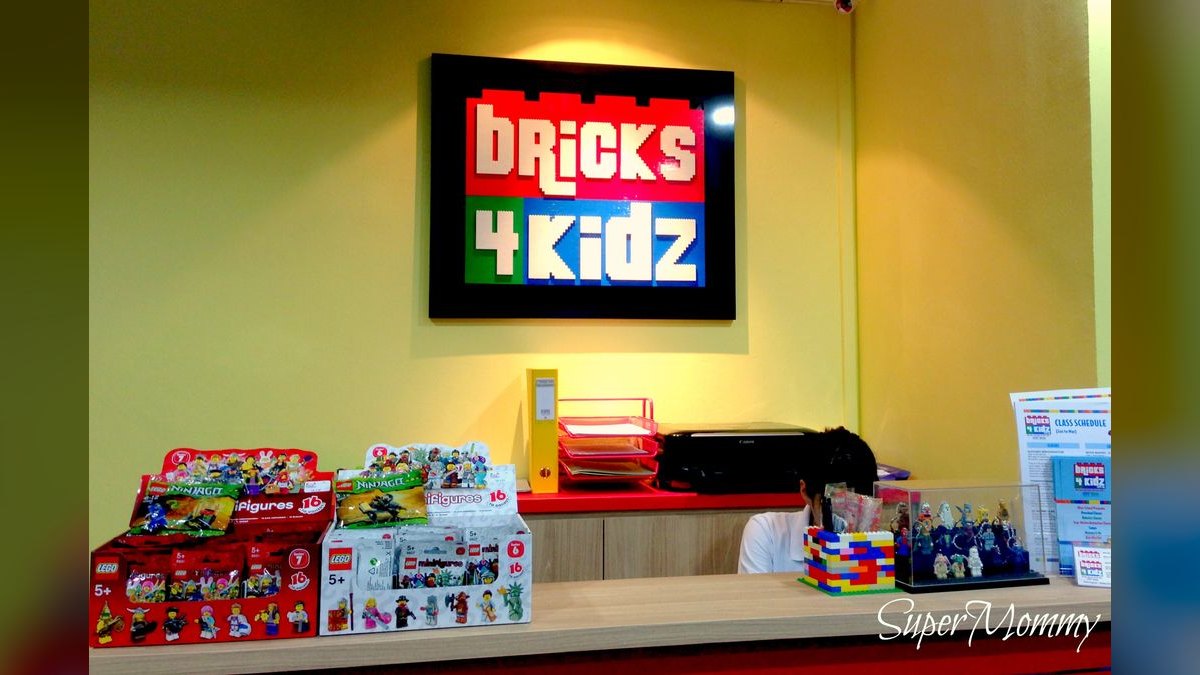
Bricks 4 Kidz is a mobile, instructor-delivered STEM enrichment franchise built around LEGO-brick models. Franchisees deliver after-school classes, in-school field-trip workshops, birthday parties, and summer camps. There is no retail footprint required for the core model, which keeps the initial check small — but also caps revenue per location at a level that most operators find painful once royalty, marketing fee, and instructor labor are paid.
The 2024-2025 FDD Item 7 range is $44,150 on the low end to $183,350 on the high end, with the spread driven mostly by whether the operator runs strictly mobile or opens a Creativity Center. The franchise fee is $43,000 for a standard territory. The royalty is 7% of gross sales, and the brand-fund / marketing fee is 2% of gross sales, paid weekly. Item 19 discloses a system average gross revenue of $89,534 across reporting franchisees, with a wide variance — top quartile owners report $180,000+ while bottom quartile clear under $35,000.
| Line item | Low | High | Notes |
|---|---|---|---|
| Franchise fee | $43,000 | $43,000 | Item 5, single territory, 10-year term |
| Initial training & travel | $1,500 | $5,000 | 5-day program in St. Augustine, FL |
| LEGO model kit inventory | $4,500 | $12,500 | Proprietary models, ongoing reorder |
| Vehicle / equipment | $3,000 | $15,000 | Most operators use existing vehicle |
| Insurance, legal, licenses | $2,000 | $6,000 | Background checks per state |
| Marketing launch (60-90 days) | $3,500 | $15,000 | Brand-fund deposit + local launch |
| Office / storage | $0 | $24,000 | Home-based to small Creativity Center |
| Working capital (3 months) | $15,000 | $40,000 | Payroll for instructors, slow Q3 |
| Optional Creativity Center build-out | $0 | $35,000 | Retail-style party + camp space |
| Total initial investment | $44,150 | $183,350 | FDD Item 7 2024-2025 |
| Royalty (ongoing) | 7.0% of gross | 7.0% of gross | Weekly remit |
| Brand fund / marketing | 2.0% of gross | 2.0% of gross | Weekly remit |
| Avg gross revenue (Item 19) | $89,534 | $89,534 | System average, ~135 reporting units |
| Estimated owner earnings | $10,745 | $13,431 | ~12-15% operating margin, owner-operator |
| Realistic EBITDA margin | 8% | 15% | After 9% combined royalty+brand fund |
| Payback period (franchise fee only) | 3.5 yrs | 4.5 yrs | At median earnings |
| Payback period (full investment) | 5 yrs | 7+ yrs | If above median |
Sources: 2024-2025 Bricks 4 Kidz FDD Item 7 and Item 19, FDD Exchange, Vetted Biz, Franchise Direct, Sharpsheets. For the broader category, IBISWorld's "After-School Programs in the US" report values the industry at approximately $20.9 billion with a 5-year revenue decline of -3.3% per year through 2025, and the IFA's 2026 Educational Franchise Profile lists STEM enrichment as one of the lowest-AUV subcategories in franchising.
Who Wins With This Business

The winners share a tight profile. Former teachers, school counselors, and PTA-active parents with deep relationships at 6-15 local elementary schools win — because Bricks 4 Kidz is fundamentally a B2B school-channel business disguised as a kids brand, and the operator who already has principal and PTA-coordinator cell numbers gets a roster of after-school programs without paying for lead generation. Operators who treat the franchise as a side business attached to an existing daycare, gymnastics studio, or tutoring center also win, because they bolt incremental Bricks 4 Kidz revenue onto fixed overhead they already pay.
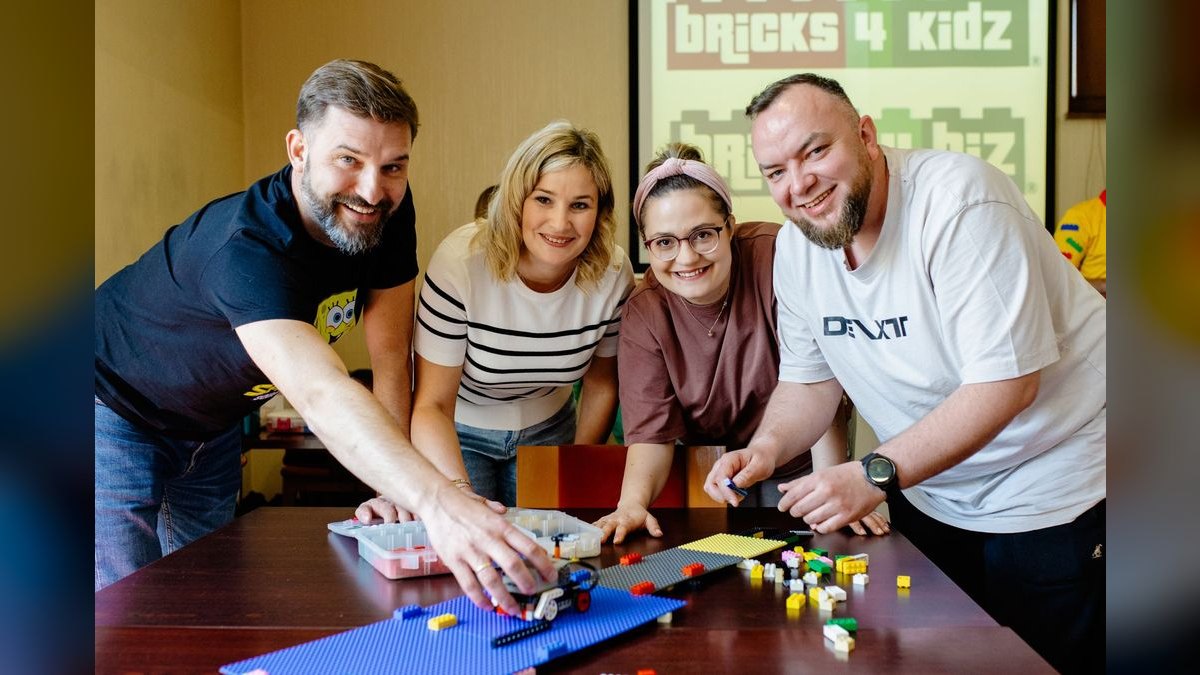
Operators who staff out delivery aggressively win. The owner who personally teaches every class caps revenue at the hours they can stand in front of a classroom; the owner who recruits 5-8 college-student or retired-teacher part-time instructors at $18-25/hr can run multiple concurrent classes across multiple schools and scale gross revenue to $120,000-$220,000, where the math finally works. Strong summer-camp operators win disproportionately — a single 8-week summer camp season at a church or community center can produce $25,000-$60,000 in revenue, often 30-50% of full-year gross.
Geographically, winners cluster in affluent suburbs with median household income $95,000+, where parents pay $200-400 per 10-week after-school session without flinching, and in dense metros with Title-I after-school grant funding that pays the franchisee directly rather than billing parents.
Who Loses With This Business
The losers also share a profile, and there are more of them. The unhappyfranchisee.com lawsuits and franchisee accounts dating back to 2009-2014 are blunt — one widely-cited claim is that the first 150 owners are mostly gone, sold, or exited bankrupt, and a separate franchisee reported filing personal bankruptcy within 8 months of opening. Whether or not those exact numbers are current, the structural problem is real: at $89,534 average gross revenue and ~12% operating margin, the business cannot support an owner who needs the franchise to replace a corporate salary.

Career-changers expecting a full-time income lose. The Item 19 estimated earnings of $10,745 - $13,431 are not a typo — that is the median owner's take-home before any salary, before any health insurance, before any taxes beyond payroll. Anyone who funds this with SBA debt at 10.5-12% interest will find that the debt service alone exceeds the franchise's operating profit.
Operators in rural or low-income territories lose, because the entire model depends on parents paying $200-400 per session out of pocket. Operators who refuse to do sales calls on principals lose — the franchise's national marketing does not generate school contracts; local door-knocking does. Operators who try to compete with cheaper independent LEGO clubs (often run by retired teachers for $5-8 per session out of a church basement) lose on price every time. And anyone betting on the brand to drive walk-in volume loses, because Bricks 4 Kidz has no retail-traffic real estate in the standard model.
2027 Market Conditions
The 2027 backdrop is mixed-to-negative for after-school enrichment franchising, particularly at the low-AUV end where Bricks 4 Kidz sits. IBISWorld's after-school programs industry has contracted at roughly -3.3% annually for five years through 2025, with the 2025-2027 outlook flat-to-slight-decline as ESSER (Elementary and Secondary School Emergency Relief) federal pandemic funding has fully wound down. Many districts that paid franchise providers directly from ESSER grants are no longer funding those contracts in the 2026-2027 school year, and the gap is not being closed by parent-pay programs.
On the demand side, K-12 STEM education globally is projected to grow from ~$38B in 2021 to $132B by 2030 per industry research, but that growth is concentrated in digital-first platforms (Kahoot!, Code.org, MagicSchool AI) and higher-AUV center-format brands like Code Ninjas (avg AUV $241,242), Mathnasium, and Snapology — not in low-cost mobile LEGO programs. AI tutoring tools are pulling parent spend away from "fun" enrichment toward measurable academic outcomes (reading, math fluency), which is a meaningful headwind for play-based STEM.
On the cost side, LEGO wholesale prices rose ~12% across 2024-2026, compressing kit margins. Instructor wages in major metros have moved from $14-18/hr pre-2023 to $20-28/hr in 2026-2027, squeezing variable margin. Background-check and child-safety insurance costs have risen materially in CA, NY, IL, and MA following several unrelated youth-program incidents. Net: operating margin is compressing, not expanding, in the exact same period the franchisor is reporting flat Item 19 numbers.
The 90-Day Decision Tree
- Days 1-7: Pull the actual FDD. Request the most recent 2026 or 2025 Bricks 4 Kidz FDD directly from the franchise sales team — not a third-party portal summary. Read Item 7 (initial investment), Item 6 (ongoing fees), Item 19 (financial performance), and Item 20 (outlets and franchisee information) end-to-end. The Item 20 transfer/termination tables are the single most important data point — they tell you the real churn.
- Days 8-21: Call 10-15 current and former franchisees. Item 20 includes contact information for current and former franchisees. Call at least 10 current and at least 5 former owners. Specifically ask: actual gross revenue, hours worked per week, whether they net more than $20,000 personally, whether they would buy again. Skepticism toward franchisor-supplied "validation calls" — call randomly off the list.
- Days 22-45: Validate the local school channel. Schedule in-person meetings with 8-12 principals in your prospective territory. Get written letters of interest for after-school programming. If fewer than 5 schools express interest, the math does not work — walk away.
- Days 46-60: Price the competitive set. Identify every independent LEGO club, Snapology, Engineering For Kids, Mad Science, and Code Ninjas in your territory. Document their per-session pricing. If you cannot price within 15% of the independent and still cover royalty, the territory is non-viable.
- Days 61-75: Build the 3-year P&L. Model three scenarios: pessimistic ($55K AUV), median ($90K AUV per Item 19), and stretch ($140K AUV). Plug in realistic instructor wages, kit costs, royalties, and a $12,000 health insurance line. The pessimistic case must survive without personal bankruptcy.
- Days 76-85: Get a franchise attorney review. Spend $1,500-$3,500 on a franchise attorney (IFA-affiliated) to review the franchise agreement. Specifically flag the territory protection language (Bricks 4 Kidz reserves online and company-owned channels even inside your territory) and the post-term non-compete.
- Days 86-90: Decide. Signal-to-noise: if at least 5 principals signed letters of interest, you have 6+ months of personal runway, you are funding without SBA debt, and you have a realistic plan to staff 5+ instructors within 12 months — sign a single-territory agreement. Otherwise, walk, and either pick a higher-AUV STEM brand (Snapology, Code Ninjas, Mathnasium) or launch as an independent.
Alternative Plays

Independent LEGO/STEM club. Skip the $43,000 franchise fee and the 9% combined royalty + brand fund. Build a local brand with the same LEGO kits at retail, charge identical session prices, and keep an additional $8,000-$15,000 in profit per year. The brand does not generate enough national demand to justify the royalty for most operators. Risk: no operations playbook, no curriculum library — you build it yourself in 6-9 months.
Snapology. Direct competitor with higher average gross revenue ($175,000-$220,000) and a more developed birthday-party + center-format option. Initial investment runs $60,000-$200,000. Same school-channel sales motion, better unit economics.

Code Ninjas (center format). Higher capital requirement ($190,000-$486,000 total investment), but Item 19 reports average gross sales of $241,242 with center-format units producing 3-4x the Bricks 4 Kidz AUV. Requires retail lease.
Mathnasium (tutoring center). $112,000-$157,000 total investment, average AUV $430,000-$550,000. Year-round recurring revenue, weather-proof demand, no school-channel sales dependency.
Engineering For Kids. Mobile model similar to Bricks 4 Kidz, but with broader STEM curriculum (not LEGO-only) and historically slightly higher AUV. $33,000-$104,000 total investment.
Build a school-channel agency. If you already have principal relationships, white-label STEM, coding, and chess curriculum from three or four providers and run the after-school programs yourself under your own LLC. Higher operational complexity, 2-3x the operating margin of any single franchise.
FAQ
How much can I realistically earn owning a Bricks 4 Kidz franchise? Based on the 2025 FDD Item 19, the system average gross revenue is roughly $89,534 per unit, with estimated owner earnings between $10,745 and $13,431 per year. That’s after royalties and typical expenses, but before your own labor—meaning you’d likely earn less than a part-time job for the hours required.
What’s the total upfront investment needed? The initial investment ranges from $44,000 to $183,000, which includes the franchise fee, equipment, and first-year operating costs. Most mobile models fall on the lower end, but you’ll still need cash reserves to cover negative cash flow in Year 1.
How long until I break even or see a profit? Conservative Year-1 cash flow for a typical mobile model is negative $15,000 to break-even. Breakeven on the franchise fee alone often takes more than 4 years, and a full payback of your total investment typically spans 5 to 7 years.
Are there ongoing fees beyond the initial investment? Yes, you pay a 7% royalty on gross revenue, plus a marketing fee (usually 1-2%). These come off the top before you see any profit, which is why the low average earnings are so tight.
Is this a good fit for someone without a teaching or business background? It’s tough—most successful owners already run an in-school enrichment side hustle and have a separate day job covering living expenses. Without that, the low earnings and high time commitment make it hard to sustain.

Could I earn more with a different franchise or independent business? Yes, many route-based service franchises or independent STEM camps often yield better returns for similar or lower investment. The Bricks 4 Kidz model’s thin margins and long payback period make it a risky bet compared to alternatives.
Bottom Line
Bricks 4 Kidz is a legitimate, long-running mobile STEM enrichment franchise with a real curriculum and a recognizable consumer brand. It is not, by 2027 standards, a viable full-time income replacement for a first-time franchisee, and the $89,534 average gross revenue + $12,000 median owner earnings disclosed in Item 19 should be treated as the headline number that disqualifies the brand for anyone who needs the business to pay a mortgage. Buy it only if you have a side-hustle thesis, an existing school-channel rolodex, personal runway of 6+ months, and zero plans to fund it with SBA debt. Otherwise, the higher-AUV alternatives — Snapology, Code Ninjas, Mathnasium — produce 3-5x the revenue per location for 2-3x the capital, and the independent path keeps the 9% royalty + brand fund in your pocket.
Bricks 4 Kidz franchise review / Bricks 4 Kidz reviews / Bricks 4 Kidz rating / Bricks 4 Kidz review 2027 / review of Bricks 4 Kidz franchise.
Sources
- 2024-2025 Bricks 4 Kidz Franchise Disclosure Document (FDD), Item 5, 6, 7, 19, 20 — franchisor-filed
- FDD Exchange — Bricks 4 Kidz FDD archive (fddexchange.com)
- Vetted Biz — Bricks 4 Kidz Franchise Insights and Item 19 analysis (vettedbiz.com)
- Franchise Direct — Bricks 4 Kidz UFOC Profile (franchisedirect.com)
- Sharpsheets — Bricks 4 Kidz Franchise FDD, Profits & Costs 2025
- Franchimp — Bricks 4 Kidz franchise database (franchimp.com)
- IBISWorld — After-School Programs in the US industry report (2025)
- International Franchise Association (IFA) — 2026 Educational Franchise Sector Profile
- Entrepreneur Franchise 500 — Bricks 4 Kidz 2026 listing (entrepreneur.com)
- Unhappy Franchisee — Bricks 4 Kidz lawsuit and complaints archive (unhappyfranchisee.com)
- U.S. Bureau of Labor Statistics — Childcare Workers wage data, OES May 2025
- Code Ninjas, Snapology, Mathnasium 2025 FDDs — Item 19 comparison data
Related on PULSE
This page will be disappearing soon. Save it to your device for $1 — or read it free while it is here.
@Kory-White- · if Venmo asks, the last 4 of my number are 2012
This page is gone.
This one is off the shelf now. $1 keeps it on your phone for good — the whole page, pictures and diagrams included.
 franchiseShould I open or buy an Anytime Fitness franchise in 2027?
 franchiseShould I open or buy a Jeremiah's Italian Ice franchise in 2027?
 franchiseShould I open or buy a Little Caesars franchise in 2027?
 franchiseShould I open or buy a Roto-Rooter franchise in 2027?
 franchiseShould I open or buy a McAlister's Deli franchise in 2027?
 franchiseShould I open or buy a Subway franchise in 2027?
 franchiseShould I open or buy a Mac Tools franchise in 2027?
 franchiseShould I open or buy a Bruster's Real Ice Cream franchise in 2027?
 franchiseShould I open or buy a Papa John's franchise in 2027?
 franchiseShould I open or buy a Take 5 Oil Change franchise in 2027?