


Should I open or buy a Roto-Rooter franchise in 2027?
Quality
Certified
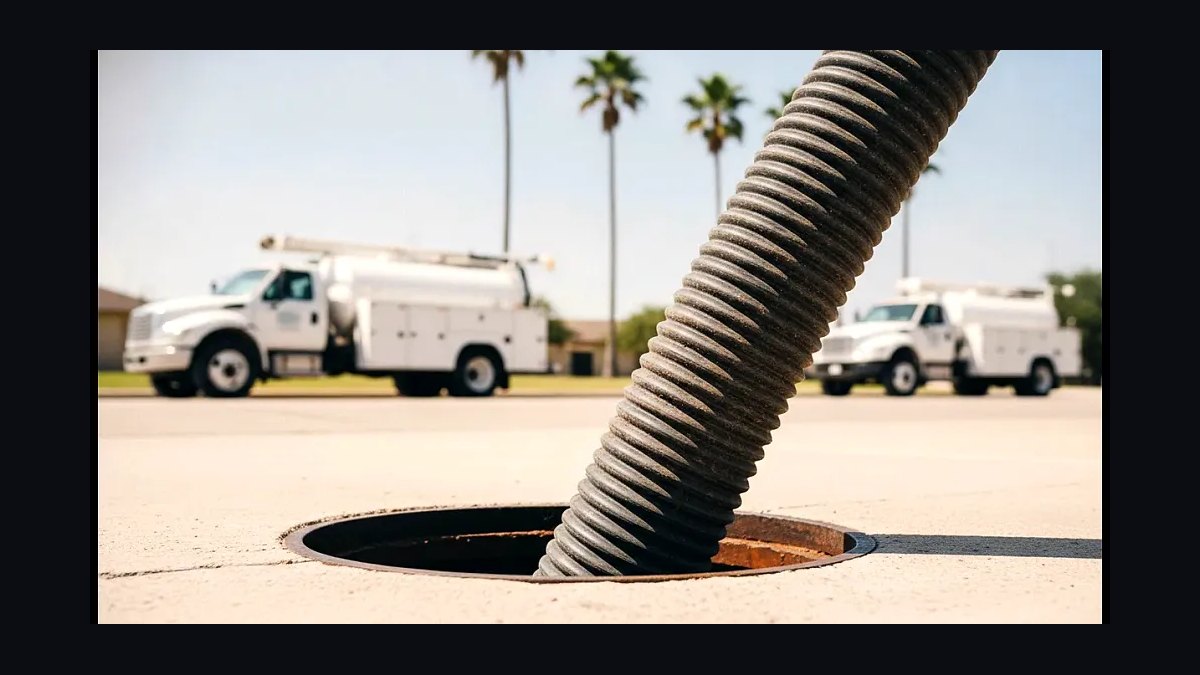
Probably not — unless you can secure a resale territory with existing customer flow, because Roto-Rooter Corp now operates most U.S. markets directly and has been buying back franchises rather than selling new ones. If you do land a territory (resale or estate sale), expect a total investment of $113,640 to $288,200 for a new build, 3-5 trucks turning $1.2M-$2.5M annual revenue at maturity, and an 8% royalty + 1.5% national ad fund drag. Realistic breakeven is 22-30 months; conservative Year-1 cash flow is negative $40K to positive $60K depending on call volume inheritance. The brand SEO and 24/7 call center lead routing are the real moat — without them, an independent plumbing LLC at the same investment level usually nets more cash to the owner.
The Real Numbers
The 2025 Roto-Rooter FDD (most recent publicly indexed; 2026 FDD carries near-identical Item 7 ranges) lays out a tight investment band for a single territory. Item 7 caps total investment at $288,200 on the high end; Item 19 is not disclosed — Roto-Rooter has historically declined to publish a Financial Performance Representation, which is a material red flag any franchise attorney will surface. Below is the operator-grade build for a typical metro territory with 3 service vans on Day 1.
| Line Item | Low | High | Notes |
|---|---|---|---|
| Initial franchise fee | $25,000 | $75,000 | Tiered by territory population (Item 5) |
| Vehicles (3 vans, used) | $45,000 | $90,000 | Ford Transit / Ram ProMaster, sewer-cam wrap |
| Drain machines + cameras | $18,000 | $42,000 | RIDGID K-7500, SeeSnake Compact2 |
| Inventory + parts | $6,000 | $14,000 | Cleanouts, fittings, hydro-jet line |
| Build-out (small shop) | $8,000 | $25,000 | 1,200-2,000 sqft warehouse |
| Insurance + bonding | $4,500 | $9,200 | GL + commercial auto + workers' comp |
| Licensing + permits | $1,500 | $5,000 | State plumbing license required |
| Working capital (3 mo) | $5,640 | $28,000 | Payroll cushion for 4-6 techs |
| Total Item 7 | $113,640 | $288,200 | Per FDD 2025 |

Ongoing fees are the larger story: 8% royalty on gross sales, 1.5% national advertising fund, plus 1-2% local marketing minimum. On a $1.8M revenue van fleet, that is $171,000 to $189,000 per year flowing back to Cincinnati. Industry EBITDA for plumbing services runs 12-18% at scale per IBISWorld 22361b and Lightning Path Partners benchmarks; franchised plumbing typically lands 2-3 points lower because of the royalty stack, putting realistic owner EBITDA at 9-15% or $162K-$270K on $1.8M revenue. Payback period on the initial investment averages 22-30 months for well-run resales; 48+ months for greenfield builds in cold markets.
Who Wins With This Business
The franchisees consistently posting $2M+ revenue and 15%+ EBITDA share four traits. First, prior trade ownership — they ran an HVAC, electrical, or restoration shop before, so technician recruiting, dispatch software, and on-call rotation are not learning curves. Second, secondary or tertiary metros — Roto-Rooter Corp still operates the top 30 DMAs directly, so independent franchisees who land Boise, Knoxville, Spokane, or Mobile type markets face less internal competition for the brand's national PPC spend. Third, owner-operators in the field for the first 18 months — they ride along, audit ticket close rates, and catch the $89 drain clear that should have been a $4,800 sewer line replacement. Fourth, resale buyers who inherited a mature book (3,000+ recurring residential customers, 40+ commercial accounts) — they skip the cold-start valley entirely. Veterans, ex-military officers, and ex-Service Brands International operators disproportionately appear on the winners' list because the dispatch discipline mirrors what they already know.

Who Loses With This Business
The losers cluster around passive-investor profiles. The owner who plans to hire a GM and check in monthly almost always blows up the unit economics within 18 months — drain-clearing margin is 71% on the ticket but evaporates fast when techs upsell without warranty discipline or skip the camera inspection that justifies the $4,800 sewer line repair. First-time business owners with no trade background also lose; they cannot evaluate whether a 3-hour cabling job at $675 was actually a 45-minute job, so labor cost creep is invisible until the P&L lands at Month 9. Capital-thin operators — anyone funding the build at the low end of Item 7 ($113K) without a $50K cash reserve — get crushed by Q1 seasonality (drain calls drop 22-34% in May-June before sewer-root season rebounds in fall). Finally, anyone counting on Item 19 numbers loses by default — there are none. Roto-Rooter publishes no FPR, so every revenue projection is the franchisee's own model, which the FTC explicitly warns about in Compliance Guide 436.
2027 Market Conditions
Three structural forces shape the 2027 plumbing-franchise buy decision. First, the EPA Lead and Copper Rule Revisions finalize full lead service line replacement by October 2027 in most jurisdictions — 9 million service lines still in the ground per the AWWA 2024 inventory, creating a $45B replacement market that municipal contracts mostly capture but residential side-spillover (private-side lead lines) flows to franchise plumbers. Second, private equity rollups: Wrench Group, Apex Service Partners, Authority Brands, and Wind Point Partners have spent $8.4B since 2022 acquiring regional plumbing platforms at 9-12x EBITDA per The Deal Sheet's 2026 plumbing M&A report. This means mature Roto-Rooter franchises now have a real exit at 6-9x EBITDA (lower than non-franchised because of royalty drag), but it also means PE-backed competitors with bigger marketing budgets are squeezing the $500-$1,500 ticket sweet spot. Third, the labor crunch: BLS Occupational Outlook 2024-2034 projects 6% growth for plumbers against a backdrop of 23,000 retirements per year and only 17,000 new licensees. Wages are up 31% since 2021 ($35.50/hr median, $48-$62/hr loaded for journeymen). Franchise techs cost the same as independents but generate more leads per tech because of national PPC — the labor math actually favors franchising here.
The 90-Day Decision Tree
- Days 1-15: Get the current FDD. Email franchising@rotorooter.com and request the 2026 FDD (effective April 2026). Note whether Item 19 has been added — if still absent, that single fact should weight the decision 40% negative.
- Days 16-30: Validate territory availability. Ask for two specific markets in writing. Roto-Rooter Corp operates direct in approximately 110 of the top 150 DMAs — confirm your market is franchisee-eligible, not slated for corporate.
- Days 31-45: Call 8 current franchisees from Item 20. Ask: "What is your gross margin after royalty?", "What is your tech turnover rate?", "Would you buy this territory again?" A franchisee who dodges the third question is your most useful data point.
- Days 46-60: Get the resale list. Ask the franchise development team for territories listed for sale or in transition. Resales typically price at 0.6-0.9x trailing revenue for established books, 0.3-0.5x for distressed.
- Days 61-75: Independent CPA review of three years of franchisee P&Ls (request from sellers or candidates). Specifically benchmark royalty + ad fund as a percent of gross.
- Days 76-90: Decide and lock funding. SBA 7(a) loans typically fund 80-85% of the Item 7 spend for Roto-Rooter (it is on the SBA Franchise Directory), term 10 years, prime + 2.75-3.5%. If the math does not clear a 1.35 DSCR at conservative revenue, walk.
Alternative Plays
If Roto-Rooter is closed or the math does not work, three adjacent plays deserve a serious look. Mr. Rooter (Neighborly portfolio) publishes a real Item 19 showing $1.99M average gross sales on $83K-$225K Item 7 with a 7% royalty + 2% marketing stack — meaningfully lower investment, disclosed unit economics, and larger franchisee count (208 units per the 2024 FDD). bluefrog Plumbing + Drain is the value tier at $104K-$201K Item 7, 6% royalty, growing fast in the Sun Belt but with thinner brand recognition outside Texas. The independent plumbing LLC route saves the $25K-$75K franchise fee and all royalty — at 8% royalty + 1.5% ad fund, an independent earning $1.5M revenue keeps an extra $142,500 per year, which over a 10-year hold is $1.4M of compounding capital. The tradeoff is slower cold-start (12-18 months to fill the calendar via local SEO + Google LSA + Nextdoor) and zero exit liquidity — a franchised book sells at 6-9x EBITDA, an independent at 3-5x.
FAQ
Can I still open a new Roto-Rooter franchise in 2027? New franchise openings are rare because the company operates most markets directly and prioritizes buybacks. Your best chance is a resale territory from an existing franchisee or an estate sale, not a startup from scratch.
What is the total investment range for a Roto-Rooter franchise? Expect a total investment of $113,640 to $288,200 for a new build, covering equipment, trucks, and initial fees. This range assumes you secure a territory, not including ongoing operational costs.
How many trucks and revenue can I expect at maturity? A typical franchise operates 3 to 5 trucks, with annual revenue of $1.2 million to $2.5 million once established. Revenue depends heavily on call volume from the brand’s lead routing system.
What are the ongoing royalty and ad fund fees? You’ll pay an 8% royalty on gross revenue plus a 1.5% national advertising fund contribution. These fees are standard and non-negotiable, reducing your net profit margin.
How long until I break even, and what is Year-1 cash flow like? Realistic breakeven is 22 to 30 months, with Year-1 cash flow ranging from negative $40,000 to positive $60,000. The outcome hinges on inherited call volume and local market demand.
Is a Roto-Rooter franchise better than starting an independent plumbing LLC? For most owners, an independent plumbing LLC at the same investment level nets more cash because you avoid the 9.5% total fee drag. The franchise’s advantage is brand SEO and 24/7 call center lead routing, which can be critical in competitive areas.
Bottom Line
Roto-Rooter is a strong brand in a contracting franchise system. The 8% royalty is defensible if the national call center actually routes meaningful volume to your territory; without that, you are paying franchise economics for independent results. The absent Item 19 is the single largest risk factor — every other major plumbing franchise discloses, and the burden of proof falls entirely on you. The winning move in 2027 is a resale in a secondary metro where Roto-Rooter Corp has no plans to operate directly, bought at 0.6-0.8x trailing revenue with a mature book and a working dispatch GM. If you cannot find that deal in 90 days, pivot to Mr. Rooter (real Item 19, lower royalty) or an independent LLC with a 3-year SEO + Local Service Ads playbook. Do not write the $75,000 franchise fee check for a greenfield Roto-Rooter territory unless you have $150K of working capital reserve and 24 months of personal runway outside the business.
Sources
- Roto-Rooter Franchise Disclosure Document (FDD), 2025 edition, Item 5 + Item 7
- FranchisePayback Roto-Rooter analysis: https://www.franchisepayback.com/franchise/roto-rooter
- Sharpsheets Roto-Rooter Franchise FDD review (2025): https://sharpsheets.io/blog/roto-rooter-franchise-costs-profit/
- Vetted Biz Roto-Rooter franchise profile: https://www.vettedbiz.com/franchises/rotorooter
- Franchise Chatter Mr. Rooter FDD review (Item 19 disclosed): https://www.franchisechatter.com/2023/05/24/fdd-talk-mr-rooter-franchise-costs-fees-average-revenues-and-or-profits-2023-review/
- Chemed Corp 8-K filings re: Hoffman Southwest acquisition ($120M, $78M revenue): https://www.sec.gov/Archives/edgar/data/0000019584/000001958419000011/che-20190917xex99_1.htm
- The Deal Sheet, Plumbing Services M&A Deep Dive (2026): https://thedealsheet.co/industries/plumbing
- IBISWorld Plumbers in the US (Industry 22361b): https://www.ibisworld.com/united-states/industry/plumbers/1946/
- Lightning Path Partners, Plumbing Company Profit Margins benchmark: https://lightningpathpartners.com/blog/plumbing-company-profit-margins
- BLS Occupational Outlook Handbook, Plumbers Pipefitters Steamfitters (2024-2034 projections)
- FTC Franchise Rule 16 CFR Part 436 + Compliance Guide
- EPA Lead and Copper Rule Revisions (LCRR) final implementation timeline, October 2027
Related on PULSE
This page will be disappearing soon. Save it to your device for $1 — or read it free while it is here.
@Kory-White- · if Venmo asks, the last 4 of my number are 2012
This page is gone.
This one is off the shelf now. $1 keeps it on your phone for good — the whole page, pictures and diagrams included.
 franchiseShould I open or buy an F45 Training franchise in 2027?
 franchiseShould I open or buy a Whataburger franchise in 2027?
 franchiseShould I open or buy a Jimmy John's franchise in 2027?
 franchiseShould I open or buy a Hand and Stone Massage franchise in 2027?
 franchiseShould I open or buy a Domino's franchise in 2027?
 franchiseShould I open or buy an Auntie Anne's franchise in 2027?
 franchiseShould I open or buy a Crumbl Cookies franchise in 2027?
 franchiseShould I open or buy a Firehouse Subs franchise in 2027?
 franchiseShould I open or buy a Wendy's franchise in 2027?
 franchiseShould I open or buy a Matco Tools franchise in 2027?