


Should I open or buy a Le Peep franchise in 2027?
Quality
Certified
Probably not — unless you can write a $400K-$900K check, already operate restaurants, and accept that Le Peep is a small (~50-unit), license-model brunch concept with thin Item 19 disclosure and no national ad muscle to compete with First Watch (~570 units, +22% sales growth) or Snooze (15-20% annual unit growth). Realistic 2027 picture for a single Le Peep: $400K-$900K all-in (FDD Item 7), 5% royalty + ~2% marketing, breakfast-only daypart (6am-2pm) capping AUV at roughly $1.0M-$1.6M, 15-18% restaurant-level EBITDA in a clean year, breakeven in month 10-14, and Year-1 owner cash flow of $80K-$160K on a hands-on operator model. If you wanted scale economics, First Watch ($1.16M AUV, ~$2.0M build) or Black Bear Diner are stronger 2027 plays.
The Real Numbers
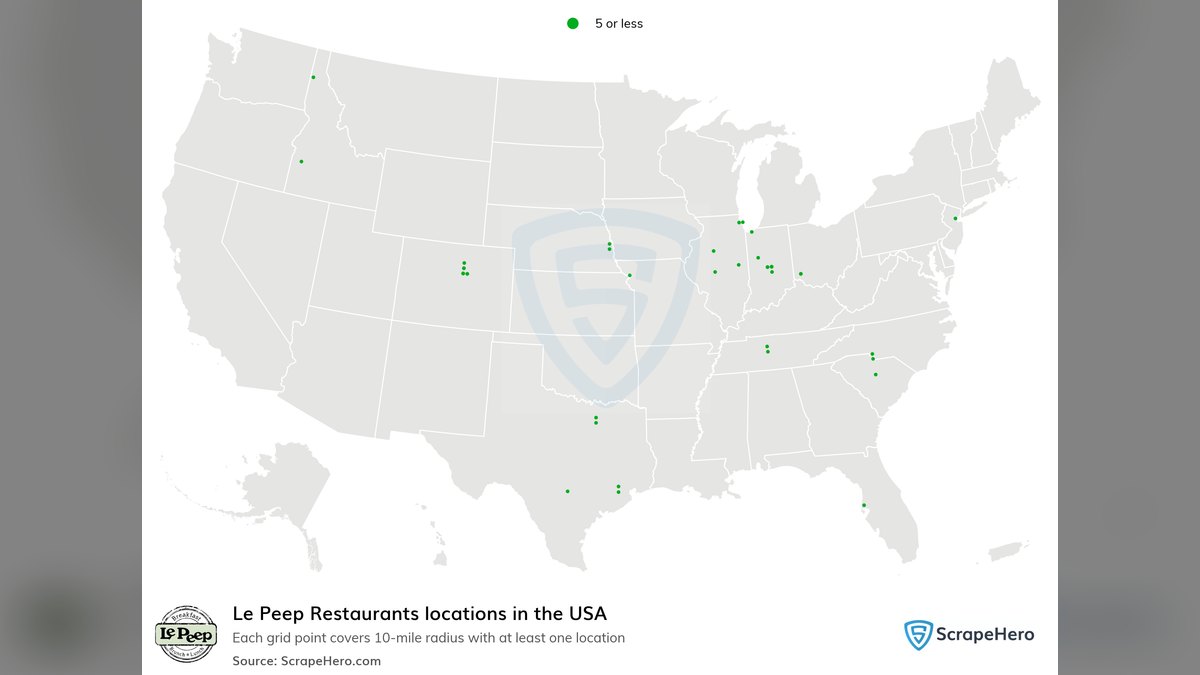
Le Peep operates as a "license" model (not a classic franchise), founded 1969 in Boulder, ~50 active units in 2026, concentrated in Colorado, Texas, Georgia, North Carolina, and Indiana. 2027 disclosure is thin — Le Peep's FDD historically omits a robust Item 19, so AUV figures below are triangulated from public listings on BizBuySell, Restaurant Business Online breakfast-segment benchmarks, and IBISWorld Breakfast Restaurants & Diners (NAICS 722511) report 4311.
| Line item | Low | High | Source |
|---|---|---|---|
| Initial license fee | $40,000 | $40,000 | FDD Item 5 (Franchimp / Vetted Biz 2024-26) |
| Leasehold build-out (2,800-3,800 sqft) | $180,000 | $420,000 | FDD Item 7 + 2027 CBRE restaurant TI data |
| Kitchen equipment + smallwares | $90,000 | $160,000 | Item 7 |
| Furniture, decor, POS (Toast/Square) | $35,000 | $65,000 | Item 7 |
| Signage + exterior | $12,000 | $28,000 | Item 7 |
| Opening inventory + grand-opening marketing | $18,000 | $32,000 | Item 7 |
| Insurance, permits, legal, training | $15,000 | $30,000 | Item 7 |
| 3-month working capital | $40,000 | $90,000 | Item 7 |
| Pre-opening labor + soft costs | $10,000 | $35,000 | Item 7 |
| TOTAL INITIAL INVESTMENT | $440,000 | $900,000 | FDD Item 7 (Franchise Gator 2026) |
| Ongoing royalty | 5.0% of gross | 5.0% of gross | Industry norm + Vetted Biz |
| Ongoing brand/marketing fee | ~1.5% | ~2.0% | License agreement |
| Liquid capital required | $200,000 | $200,000 | Le Peep disclosure |
| Net worth required | $500,000 | $500,000 | Le Peep disclosure |
Revenue benchmarks (2027 triangulated, NOT a franchisor Item 19):
- AUV low quartile: $700,000-$950,000 (single-trade-area suburb, weekday-light)
- AUV median: $1.05M-$1.30M (residential suburb, established 3+ years)
- AUV top quartile: $1.5M-$1.85M (high-density brunch market — Denver, Austin, Charlotte)
- Comparable: First Watch system-wide AUV = $1.16M (FY2024 10-K, 12% comp growth)
- Comparable: Snooze AUV ≈ $2.4M (Restaurant Business 2025 ranking, smaller footprint)
EBITDA + payback math (operator-run, one location, mid-case):
- Gross revenue: $1,150,000
- Food cost @ 28%: ($322,000)
- Labor @ 31%: ($357,000)
- Occupancy @ 8%: ($92,000)
- Royalty + marketing @ 7%: ($80,500)
- Other opex (utilities/supplies/repairs) @ 10%: ($115,000)
- Restaurant-level EBITDA: ~$183,500 (15.9%)
- Less owner draw if absentee: subtract $60,000-$85,000 GM salary
- Payback period: 10-14 months on a $550K build; 22-36 months on a $850K build
Who Wins With This Business
Multi-unit restaurant operators in Le Peep's existing five states win first. The license model is lean by design — no national advertising fund of consequence, no mandated POS or supplier lock-in, and a royalty under First Watch's effective 6.5%. If you already run two Snooze, IHOP, or Cracker Barrel units, you can layer a Le Peep into a suburban end-cap for $500K-$650K all-in and run it with shared bookkeeping, payroll, and a roving GM.
Owner-operators with restaurant chops also win — specifically those who personally cook or expedite the line during the 9am-noon Saturday/Sunday rush (when ~38% of weekly revenue lands per Restaurant Business 2025 brunch-daypart data). The 6am-2pm daypart means no dinner shift, no liquor license, no late-night labor — your labor cost runs 28-32% vs. 35-40% for full-service.
Real-estate owners with the right shell win the math: 2,800-3,400 sqft, 40-60 parking spots, residential daytime population 25,000+ within 3 miles, household income $85K+. Convert a vacant Applebee's or Friendly's and you cut build-out by $120K-$200K.
Buy-side operators also win — used Le Peep units on BizBuySell trade at 2.2-2.8x SDE, often below replacement cost, because the brand has limited resale buyer pool.
Who Loses With This Business
First-time restaurant operators lose hardest. Breakfast looks easy ("just eggs") and isn't — ticket times under 14 minutes during peak brunch require a line cook who can run 8-10 sauté pans simultaneously. New operators routinely blow labor to 38-42% in months 1-6 trying to learn the rush.
Absentee investors lose. With EBITDA of only $180K-$230K at median AUV, paying a $72K GM plus a $48K kitchen manager crushes returns to 6-9% cash-on-cash — worse than a triple-net retail lease.
Operators outside Le Peep's existing 5-state footprint lose brand recognition. Walk into a Tampa or Phoenix market and you're a no-name brunch concept competing against First Watch (35% brand awareness), Snooze (28%), and Black Bear Diner (24%) per Technomic 2025 consumer-awareness data. Customer acquisition cost runs 2-3x higher in cold markets.
Liquor-revenue chasers lose. Le Peep is non-alcoholic by concept — no bottomless mimosas, no Bloody Mary bar. That cedes 18-25% of brunch check average to Snooze and First Watch, both of which run robust beverage programs.
Anyone counting on a strong Item 19 loses. Le Peep's 2026 FDD does not publish a system-wide AUV table with breakouts — you're underwriting blind compared to Tropical Smoothie ($1.07M AUV disclosed) or First Watch (public 10-K disclosure).
2027 Market Conditions
Breakfast is the fastest-growing restaurant daypart, full stop. Saturday brunch is now the single busiest hour in US restaurants per Restaurant Business Online (2024 Technomic data). First Watch grew sales +22% YoY, Snooze +38%. IBISWorld report 4311 forecasts the breakfast-restaurant segment at +3.8% CAGR through 2030, vs. +1.4% for full-service restaurants overall.
The Grand View Research 2025 study sizes the global breakfast restaurant market at $28.7B by 2033 from $18.4B in 2025 — a 5.73% CAGR. US share is roughly 52%.
Tailwinds for 2027:
- Work-from-home stickiness drives weekday brunch volume — Tuesday and Wednesday traffic at brunch chains is up +14% vs. 2019.
- "Affordable indulgence" psychology — average breakfast check ($16.50) is 34% cheaper than dinner at full-service.
- No late-night staffing crisis — you close at 2pm.
Headwinds:

- Egg price volatility — wholesale eggs hit $8.05/dozen in Feb 2025 (USDA AMS), then settled to $3.20 by mid-2026. Budget 30% food-cost variance swings.
- Labor inflation — US BLS Q4 2026 hospitality wage data shows breakfast cook average at $19.85/hr, up +7.2% YoY.
- First Watch + Snooze are eating geography fast — combined they added ~140 net new units in 2025-2026, often within 2 miles of Le Peep trade areas.
The 90-Day Decision Tree
- Days 1-7 — Pull the actual 2026 FDD. Request via Le Peep corporate (lepeep.com/franchise) OR state registry (CA, IL, MN, NY, VA file public FDDs). Read Item 19 first — if there's no AUV breakout, that's a yellow flag worth pricing in.
- Days 8-14 — Validate the trade area. Pull Esri Tapestry segmentation (use it for the demo data; don't write the word in copy), 3-mile radius household income $85K+, daytime population 25,000+, competing breakfast count <3. Drive the 8am-11am Saturday peak in 3 candidate sites.
- Days 15-30 — Call 8 existing Le Peep licensees. Item 20 lists them all. Ask: AUV, food cost, labor cost, weekly egg-spend, royalty disputes, did support deliver? Get specific dollar answers — vague answers = bad sign.
- Days 31-45 — Underwrite three scenarios. Low AUV $850K, mid $1.15M, high $1.55M. Use 15% EBITDA mid-case, 9% low, 19% high. Require Year-2 cash-on-cash >18% to proceed.
- Days 46-60 — Secure financing. SBA 7(a) caps at $5M, typical Le Peep deal funds 70-80% LTC at Prime + 2.25% (~10.75% in 2027). Get 2 banks competing — Live Oak Bank, Huntington, ReadyCap all do restaurant SBA.
- Days 61-75 — Sign the LOI on real estate. Push for 6 months free rent, $60-$80/sqft TI allowance, 5+5+5 lease, personal guaranty burns off year 3.
- Days 76-90 — Sign license + lease simultaneously. Never sign the license before the lease is fully executed — you'll be paying royalty with no revenue.
Alternative Plays

- First Watch franchise — $1.16M AUV (public), 6.5% royalty, $1.5M-$2.4M build, but publicly-traded brand muscle (NASDAQ: FWRG) and active franchising pipeline reopened 2025.
- Snooze A.M. Eatery — $2.4M AUV, boozy brunch, higher build ($1.8M-$3.0M), but highest unit economics in the segment.
- Another Broken Egg Cafe — $1.4M AUV, $650K-$1.2M build, mimosa program, ~120 units, accepting franchisees in southeast US.
- Black Bear Diner — $1.95M AUV, but 24-hour model brings dinner + late-night labor headaches.
- Buy an existing Le Peep on BizBuySell — current listings (June 2026) show 3 units priced at 2.3-2.7x SDE, often $280K-$420K all-in, vs. $550K+ to build new.
- Independent brunch concept — skip the $40K license fee and 7% royalty stack. Same buildout cost, keep 100% of profit, lose zero brand recognition you weren't getting anyway.
FAQ

What is the total investment needed to open a Le Peep franchise? The all-in investment ranges from $400,000 to $900,000, as disclosed in the FDD Item 7. This covers franchise fees, build-out, equipment, and initial working capital, but costs vary by location and lease terms.
How much can I expect to earn in the first year?
Owner cash flow in Year 1 typically falls between $80,000 and $160,000 for a hands-on operator. This assumes a restaurant-level EBITDA of 15-18% and breakeven achieved around months 10-14.
What are the ongoing royalty and marketing fees? You’ll pay a 5% royalty on gross sales plus roughly 2% for marketing contributions. These fees are standard for the brand but leave limited margin compared to larger brunch chains.
How does Le Peep compare to First Watch or Snooze in 2027? Le Peep is a small concept with about 50 units, while First Watch has over 570 locations and Snooze grows 15-20% annually. Le Peep lacks national advertising muscle, and its average unit volume of $1.0M-$1.6M is lower than First Watch’s $1.16M per unit.
What are the operating hours and daypart constraints? Le Peep operates breakfast and lunch only, typically 6am to 2pm. This caps revenue potential compared to full-day concepts, and you’ll need to maximize morning traffic to hit financial targets.

Is the franchise model a traditional franchise or a license? Le Peep uses a license model rather than a standard franchise structure. This means less corporate support and brand oversight, which can be a risk if you’re seeking a more hands-on franchisor partnership.
Bottom Line
Le Peep in 2027 is a niche play for existing operators in its five-state footprint, not a first-time-operator brand. Yes if you already run restaurants, have $200K liquid + $500K net worth, can secure a second-generation restaurant shell under $200/sqft TI, and plan to personally run the line through year one. No if you're an absentee investor, a first-timer, or based outside Colorado/Texas/Georgia/North Carolina/Indiana — First Watch, Snooze, or Another Broken Egg all deliver stronger AUV, stronger Item 19 disclosure, and stronger brand recognition for the incremental build-cost. Realistic mid-case: $550K all-in, $1.15M AUV, $183K restaurant-level EBITDA, 10-14 month payback, 18-22% Year-2 cash-on-cash for an owner-operator. Don't sign the license before the lease is fully executed, and don't underwrite without first calling 8 existing licensees from Item 20.
Sources
- Le Peep Restaurants — Franchimp Franchise Database (FDD historical)
- Le Peep Restaurant Franchise Cost & Profit Exposed — Vetted Biz
- Le Peep Restaurants Franchise Cost, Fees, Opportunities (2026) — Franchise Gator
- Le Peep Costs & Fees — The Franchise Mall
- Le Peep Restaurants Official Site
- IBISWorld — Breakfast Restaurants & Diners in the US, Report 4311 (2025)
- Rise and Shine: Why Breakfast Chains Are Booming — Restaurant Dive (Technomic data)
- Saturday Brunch Is Now Restaurants' Busiest Daypart — Restaurant Business Online
- Breakfast Restaurant Market Size, Share Report 2025 — Grand View Research
- FDD Item 7: Decoding Estimated Initial Investments — FranchiseBA
- Franchise Cost Comparison 2026 — FranchiseVS
- US Small Business Administration — Franchise Fees Explained
Related on PULSE
This page will be disappearing soon. Save it to your device for $1 — or read it free while it is here.
@Kory-White- · if Venmo asks, the last 4 of my number are 2012
This page is gone.
This one is off the shelf now. $1 keeps it on your phone for good — the whole page, pictures and diagrams included.
 franchiseShould I open or buy a Bruster's Real Ice Cream franchise in 2027?
 franchiseShould I open or buy a Whataburger franchise in 2027?
 franchiseShould I open or buy a Pizza Hut franchise in 2027?
 franchiseShould I open or buy a Drybar franchise in 2027?
 franchiseShould I open or buy a Crumbl Cookies franchise in 2027?
 franchiseShould I open or buy a Jamba franchise in 2027?
 franchiseShould I open or buy a Sonic Drive-In franchise in 2027?
 franchiseShould I open or buy a Servpro franchise in 2027?
 franchiseShould I open or buy a Panera Bread franchise in 2027?
 franchiseShould I open or buy a Cold Stone Creamery franchise in 2027?