


Should I open or buy a European Wax Center (re-do) franchise in 2027?
Quality
Certified
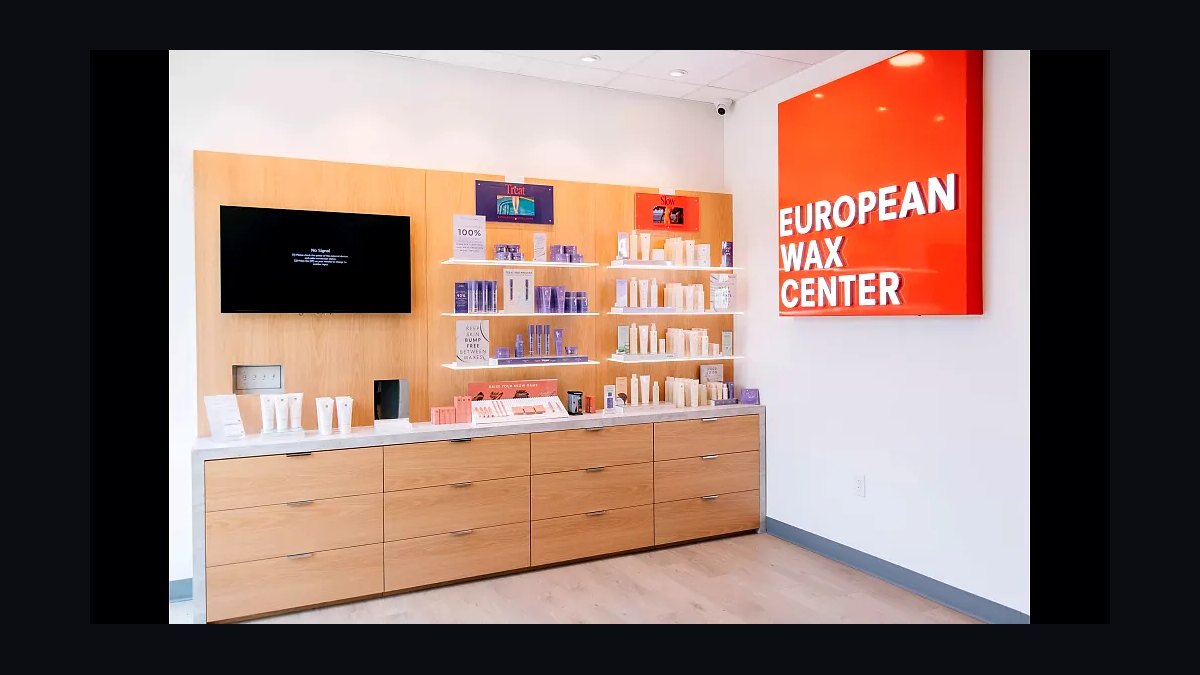
Buying a European Wax Center re-do only works if you land a distressed center $150K-$250K below build cost and can hold $400K-$500K liquid through an 18-24 month turnaround — most buyers can't clear that bar. The 2026 FDD puts new-build investment at $328,000-$837,000 against a $1.05M system-average AUV, while 2027 re-do resales run $200K-$450K on centers doing $600K-$850K. Skip it if you need owner income inside 18 months; pursue it only with multi-unit experience or deep EWC operating knowledge.
New build vs. re-do: the two paths into the franchise
Anyone evaluating a European Wax Center franchise award in 2027 is really choosing between two structurally different businesses wearing the same brand. The new-build path means signing a fresh franchise agreement, finding raw retail space, and spending $327,600-$836,950 (per FDD Item 7) on construction, equipment, and opening inventory before a single guest walks in. You get a clean slate: no inherited reputation, no legacy Wax Pass liabilities, no staff turnover history to untangle. What you don't get is speed — new builds typically take 12-18 months from lease signing to breakeven-track revenue, and the territory may have no existing guest base at all.
The re-do path is the opposite trade. You're buying an already-built center, usually $165,000-$535,000 all-in, that someone else opened, operated, and then either walked away from or had reclaimed by the franchisor. The build-out is sunk cost you don't have to pay again, which is why total investment drops by roughly half. But you inherit everything that made the prior operator fail: a depressed AUV (often $600K-$850K against the $1.05M system average), a Wax Pass liability balance that can run $80K-$150K in unredeemed prepaid service obligations, a local reputation that may have soured, and frequently a staff roster missing its best estheticians. A re-do is not a cheaper version of the same business — it's a turnaround project that happens to use the same point-of-sale system and the same Comfort Wax supply chain.
There's a third, less obvious option worth naming even though it isn't a European Wax Center play: buying an independent, non-franchised waxing salon outright. Independent salons typically trade at 1.5-2.5x seller's discretionary earnings, well below what a re-do's goodwill premium implies, and you skip the combined 9% royalty-plus-marketing load entirely. The cost is real — no national brand recognition, no corporate marketing fund, no access to the Comfort Wax formulation or the Zenoti-integrated booking stack EWC franchisees get bundled in. For an operator who already has a loyal local following and doesn't need brand pull to fill chairs, this is a legitimate fourth comparison point against both EWC paths, even though it sits outside the franchise system.
The decision isn't new-build-versus-re-do in the abstract; it's a question of which risk you'd rather underwrite. New-build risk is demand risk — will this territory support a center at all. Re-do risk is operational-repair risk — can you fix what the previous owner couldn't. Those require different skills, different financing, and different timelines, which is why the right answer depends heavily on who's asking, not just what's for sale.
How to decide between a new build and a re-do
The decision tree above collapses to one filter question: can you survive the worst realistic scenario, not just the best one. Most franchise sales conversations are optimized around the recovery case — AUV climbing back to $900K within 18 months — because that's the story that makes the purchase price look justified. The number that actually matters is the break case, where AUV slides another 10% from its already-depressed re-do level. If your financing structure can't service debt at a 1.15x debt-service coverage ratio under that break case, no amount of operational skill fixes a mispriced deal; you're just extending the runway before the same failure that hit the previous owner hits you.
Experience is the second filter, and it's not optional padding — it's the difference between a turnaround and a second bankruptcy. A first-time franchisee buying a re-do is stacking two unsolved problems: learning how to run any franchise location for the first time, while simultaneously repairing a location that a presumably competent prior operator couldn't fix. That's not a reason to never buy a re-do; it's a reason to buy your first EWC location as a healthy new build or a performing resale, bank 12-18 months of operating pattern recognition, and come back for a re-do as your second or third unit, when you already know the esthetician labor market, the rebook cadence, and the Zenoti reporting cockpit cold.
Information access is the filter that ends the most deals before they start, and it should. A seller who won't produce trailing-12 P&Ls, point-of-sale exports, and the Wax Pass liability balance isn't being cautious — they're hiding the number that would change your offer. Franchise resales, unlike arm's-length small-business sales, run through a disclosure process the franchisor polices; refusal to open the books at this stage is close to disqualifying on its own, because it tells you the surprises are bigger than anything in the Item 19 averages.
Concrete numbers behind each option
The real divide between new-build and re-do economics shows up line by line, not just in the headline total. Franchise fee alone tells part of the story: a new build pays the full $45,000 initial fee, while most re-do transfers carry a reduced fee of $0-$15,000 since the franchisor is motivated to get a struggling unit back under active management rather than collect full price. Real estate and build-out is where the gap is largest — $180,000-$450,000 for new construction versus effectively $0 for a re-do, since you're inheriting a finished space. That single line item is why total investment on a re-do can run 40-60% below a comparable new build even before any negotiation.
| Line item | New build (FDD Item 7) | Re-do acquisition (2027 market) |
|---|---|---|
| Franchise fee | $45,000 | $0-$15,000 transfer fee |
| Real estate / build-out | $180,000-$450,000 | $0 (inherited) |
| Equipment + FF&E | $55,000-$95,000 | $20,000-$60,000 refresh |
| Initial inventory | $18,000-$26,000 | $8,000-$15,000 top-up |
| Training + grand opening | $12,000-$28,000 | $6,000-$12,000 re-launch |
| Working capital (3 mo) | $50,000-$120,000 | $80,000-$180,000 |
| Goodwill paid to seller | n/a | $50,000-$250,000 |
| Total investment | $327,600-$836,950 | $165,000-$535,000 |
Working capital flips the comparison in the re-do's disfavor, and this is the number buyers chronically underestimate. A new build's working-capital reserve assumes a ramp-up curve from zero guests. A re-do's reserve has to assume a deeper hole — three months of carrying costs on a center that's already losing the trust of its local guest base, which is why the realistic range runs $80,000-$180,000 rather than the new build's $50,000-$120,000. Add in goodwill paid to the seller, typically priced at 0.3x-0.5x trailing revenue, and the "cheaper" re-do isn't cheap so much as front-loaded differently.
Royalty and marketing fee structure is identical across both paths — 6% of gross sales to the franchisor plus a 3% marketing fund contribution — and this matters because it means a re-do gets no relief on its ongoing cost structure precisely when its revenue is weakest. A center doing $650K in AUV pays the same 9% combined load as one doing $1.05M, which compresses the re-do's EBITDA margin to an estimated 8-13% in year one versus 14-18% for a stabilized new-build-turned-mature center. Payback period reflects that gap: 4.5-6.5 years for a new build that opens clean, against 3.5-5 years for a re-do bought right — faster only because the entry price is lower, not because the business performs better in absolute terms. Buy a re-do at the wrong price and that payback math simply doesn't resolve; buy it 20-30% under build cost with a credible repair plan, and the shorter path to payback is real.
Implementation details and sequencing
Sequencing matters more in a re-do than in almost any other franchise acquisition, because the diligence window is also a retention window — the staff and the Wax Pass holders you're trying to keep are watching the transition happen in real time. The first fifteen days are strictly verification: trailing-12 P&Ls, Zenoti point-of-sale exports, the Wax Pass liability balance, and the last three corporate field audits. Any refusal on these documents is a walk-away signal, not a negotiating point to push through.
Days 16-30 are for scenario modeling, and the discipline here is resisting the seller's framing. Build three cases — base (AUV holds flat), recovery (AUV climbs toward $900K within 18 months), and break (AUV slides another 10% from current depressed levels) — and price the deal off the break case's debt-service coverage, not the recovery case's upside story. Days 31-45 move into the LOI: cap goodwill at roughly 0.3x trailing revenue, build in a dollar-for-dollar price reduction for any Wax Pass liability above 8% of revenue, and get the franchisor's written consent before earnest money changes hands. European Wax Center retains approval rights over any transfer, including minimum net worth ($1M) and liquidity ($500K) thresholds on the buyer — skipping this step risks a dead deal after you've already spent diligence money.
Lease assignment, days 46-60, is where re-do buyers actually hold leverage the new-build buyer doesn't have: Class B/C strip-center vacancy running near 6.8% nationally gives you room to negotiate 4-6 months of abated rent as a re-launch concession and a flat-rent extension. Days 61-75 belong to staff retention, and it's the single highest-leverage step in the entire sequence — senior wax specialists can generate 40-60% of a center's revenue individually, and losing two of them during a transition can kill the recovery thesis before you've opened under new ownership. Meet every specialist one-on-one before closing, not after. The final fifteen days are the re-launch itself: an $8,000-$15,000 local marketing push combining paid social, local partnerships, and a lapsed-guest win-back campaign through the existing Zenoti database, paired with a hard reset on rebook discipline from the first appointment onward — every guest leaves having already booked the next visit.
Related questions

Is a European Wax Center franchise profitable in 2027?
Mature centers run 14-18% EBITDA margins at a $1.05M AUV after the 6% royalty and 3% marketing fee. Re-dos run 8-13% in year one on lower revenue, improving only if the turnaround plan executes on schedule.
How much cash flow can an owner-operator expect in year one?
$60,000-$110,000 in year-one owner cash flow is typical for a re-do under active turnaround. That's a repair-project income level, not a replacement-salary level, inside the first 18 months.
What happens to unredeemed Wax Passes when a center changes owners?
They transfer as a liability the new owner must honor. A center with $80,000-$150,000 in unredeemed passes is selling future service obligations, not a clean revenue stream — price it into the deal.
Can I get SBA financing for a franchise re-do?
Yes — EWC is listed in the SBA Franchise Directory, and 7(a) loans in the $200,000-$400,000 range at roughly prime plus 2.5% over 10 years are common for qualified buyers, especially former EWC general managers.
Are there lower-cost alternatives to a European Wax Center franchise?
Sugaring NYC ($165K-$295K) and The 10 Spot ($280K-$420K) target the same recurring-revenue beauty thesis at a smaller entry cost, though both have thinner franchisor support than EWC's established system.
FAQ
What exactly is a European Wax Center "re-do" franchise?
A re-do is a resale of an underperforming or previously closed location, sold at a discount to new-build cost. These became more common after EWC's 2026 take-private, with resale prices typically $200,000-$450,000.
How much liquid capital do I actually need? Plan on $400,000-$500,000 liquid, not just the $200,000-$450,000 purchase price. The gap covers working capital and the 18-24 month turnaround period before the center stabilizes on its own cash flow.
How long until I break even? 22-30 months is typical. Year-one owner cash flow of $60,000-$110,000 means a full return on invested capital takes longer than two years in nearly every realistic scenario.
What ongoing fees apply regardless of new build or re-do? A 6% royalty and 3% marketing fee on gross sales, charged identically whether the center is a fresh build or a turnaround acquisition — there's no fee relief for re-do buyers.
Will a new European Wax Center open nearby hurt my re-do? It can pull 20-30% of guest volume in the first year if the franchisor grants adjacent territory under a legacy agreement. Confirm territory protection in writing before closing.
Is this a good fit for a first-time franchise buyer? Generally no. A re-do stacks turnaround risk on top of normal first-time operating risk. Buy a healthy new build or performing resale first, then consider a re-do for a second or third unit.
Sources
- https://www.sec.gov — EWCZ Form 10-Q and 10-K filings (system sales, AUV, same-store metrics)
- https://www.cbre.com — CBRE U.S. Retail MarketView reports (strip-center vacancy data)
- https://www.naccas.org — National Accrediting Commission of Career Arts & Sciences esthetics enrollment data
- https://www.circana.com — Circana (formerly NPD) Beauty Tracker reports on at-home device category share
- https://www.bizbuysell.com — BizBuySell Insight Report on small-business sale multiples
- https://www.ropesgray.com — Ropes & Gray LLP transaction announcements
- https://www.sba.gov — SBA Franchise Directory and 7(a) loan eligibility listings
- https://www.franchise.org — International Franchise Association resources on franchise disclosure documents
Related on PULSE
- Should I open or buy a LunchBox Wax franchise in 2027?
- Should I open or buy a Roosters Men's Grooming Center franchise in 2027?
- Should I open or buy a Title Boxing Club (re-do) franchise in 2027?
- Should I open or buy a Burn Boot Camp (re-do) franchise in 2027?
- Should I open or buy a StretchLab (re-do) franchise in 2027?
This page will be disappearing soon. Save it to your device for $1 — or read it free while it is here.
@Kory-White- · if Venmo asks, the last 4 of my number are 2012
This page is gone.
This one is off the shelf now. $1 keeps it on your phone for good — the whole page, pictures and diagrams included.
 franchiseShould I open or buy a Mac Tools franchise in 2027?
 franchiseShould I open or buy a Planet Fitness franchise in 2027?
 franchiseShould I open or buy a Bruster's Real Ice Cream franchise in 2027?
 franchiseShould I open or buy a Jimmy John's franchise in 2027?
 franchiseShould I open or buy a Taco Bell franchise in 2027?
 franchiseShould I open or buy a Drybar franchise in 2027?
 franchiseShould I open or buy a Take 5 Oil Change franchise in 2027?
 franchiseShould I open or buy a Merry Maids franchise in 2027?
 franchiseShould I open or buy a Goddard School franchise in 2027?
 franchiseShould I open or buy a Wingstop franchise in 2027?