


Should I open or buy a Burn Boot Camp (re-do) franchise in 2027?
Quality
Certified

Probably not — unless you can underwrite $486,000-plus all-in and accept a 24-to-36-month runway to a meaningful owner draw. Burn Boot Camp's 2025 FDD Item 7 pegs the build at $281,899 to $645,344 plus a $60,000 franchise fee, with average unit revenue at $638,000 and average EBITDA of $114,000 (top quartile cracks $495,000). At 6% royalty + 2% brand fund + ~$860/month tech fee, a conservative Year-1 owner-operator clears $40,000 to $80,000 in cash after debt service — far below an executive salary. Wins if you are an owner-operator, plant in an affluent suburban submarket with under-served young-mom demand, and personally run the floor. Loses if you are a passive multi-unit investor modeling top-quartile EBITDA across all stores.
The Real Numbers
The 2025 Burn Boot Camp FDD is the most recent disclosure as of mid-2026; 2027 economics below are projected by applying 3% CPI to fixed components and holding AUV flat (Burn's growth is unit-count, not same-studio-sales). Numbers are taken from FDD Item 5 (fees), Item 6 (royalty/brand fund), Item 7 (investment range), and Item 19 (financial performance representation) as filed with the FTC and summarized by Franchise Chatter (March 2026), Vetted Biz, Sharpsheets, and 1851 Franchise.
| Line Item | 2027 Projected | Source / Note |
|---|---|---|
| Initial franchise fee | $60,000 (single unit) | FDD Item 5 |
| Total investment range | $290,000 – $665,000 | Item 7 escalated +3% |
| Build-out (1,800–3,000 sq ft) | $140,000 – $310,000 | Leasehold + flooring + HVAC |
| Equipment package | $45,000 – $75,000 | Branded turf, sleds, dumbbells, sound |
| Working capital (3 mo) | $45,000 – $90,000 | Pre-open + early payroll |
| Grand opening marketing | $15,000 minimum | FDD Item 11 |
| Royalty | 6% of gross revenue | FDD Item 6 |
| Brand fund | 2% (may rise to 3%) | FDD Item 6 |
| Tech fee | $860/mo (cap $1,500) | FDD Item 6, 2026 schedule |
| Average Unit Revenue (AUV) | $638,000 | Item 19, 2025 FDD |
| Median EBITDA | $114,000 (17.9%) | Item 19 |
| Top-quartile EBITDA | $495,000 (~28%) | Item 19 |
| Owner payback period | 3.5 – 5 years | Median EBITDA vs Item 7 midpoint |
| Min net worth required | $500,000 | Franchisor screen |
| Min liquid capital | $200,000 | Franchisor screen |
| System unit count (Jan 2026) | 385 U.S. studios | xMap + IFA press release |
| 2025 new openings | 36 studios, 51 new agreements | PRNewswire, Jan 2026 |
| 2026 target | 100 new gyms | Club Solutions, Jan 2026 |
| TX/TN open rate | 88.5% / 93.8% | Some unit churn — diligence needed |
Read carefully: Item 19 EBITDA is before debt service, before owner W-2, and before depreciation. The $114,000 median becomes a $40,000 to $80,000 personal take-home after an SBA loan. The $495,000 top-quartile number is real but not typical — it usually requires multi-unit operators, owner-on-the-floor coaching, and 2+ years of community building.

Who Wins With This Business
The Burn Boot Camp economic model rewards a specific profile. You win if you check most of these boxes.
You are an owner-operator, not a passive investor. Burn's edge is the head-trainer cult — a charismatic lead coach who runs Focus Meetings (the brand's 1-on-1 member check-ins) and 6 AM camps personally. Studios run by absentee owners with hired GMs underperform by 30-to-40% on retention according to multi-system boutique-fitness benchmarks published by ClubIntel and IHRSA.

You have a deep affluent-suburban submarket with 8,000+ households earning $100K+ within a 10-minute drive. Burn's target member is the 28-to-45-year-old mom, with average member tenure above 18 months when the studio is community-anchored.
You have community equity already. The franchisees featured in the 2026 Franchise Times multi-unit profile were PTA presidents, church group leaders, and youth-sports coaches before they opened. The studio sold out before doors opened.
You can personally underwrite a 24-month cash-burn scenario. The median Year-1 EBITDA is $114,000 — that is not enough to live on after debt service unless you have a working spouse, savings, or a second income.
You think in 3-unit packs. The unit economics flip once fixed overhead (back-office, district manager, multi-site marketing) spreads across 2-to-3 studios within a 20-minute drive radius. The Burn franchisees clearing $300K+ in personal income are almost always 2-to-4 unit owners.
Who Loses With This Business
You are a passive investor expecting manager-run cash flow. Burn is operationally heavy — 40+ class slots per week, 5-to-8 trainers, constant member touch-points. A hired GM at $60-75K plus your $60K W-2 expectation sinks the 17.9% median margin to breakeven or negative.
You are placing in a saturated boutique-fitness corridor. If your trade area already has an Orangetheory, a F45, a Club Pilates, a Pure Barre, and a CrossFit, you are fighting for the same 8% of households that buy $150-200/month boutique memberships. Burn's 88.5% open rate in Texas signals saturation failure in specific submarkets.
You are under-capitalized. The $200K liquid minimum is the franchisor's floor, not a realistic personal-finance buffer. Real underwriting for an owner-operator who needs to draw a salary requires $300K liquid plus a working spouse or business income.
You are deal-modeling on the Item 19 average. The AUV of $638K and EBITDA of $114K are system averages. Bottom-quartile studios — and there is always a bottom quartile — clear under $400K AUV and negative EBITDA in Year 1 and Year 2.

You do not like fitness or the early-morning lifestyle. The job is 5:00 AM doors, 6:00 AM camp, 8:30 AM focus meetings, 9:30 AM camp, 4:00 PM admin, 5:30 PM camp, 6:30 PM camp. Six days a week. Owners who treat it as a transaction burn out within 18 months.
2027 Market Conditions
Three forces define the 2027 boutique-fitness operating environment, and Burn sits squarely inside all three.
Boutique fitness is still growing — but moderating. The IHRSA 2025 Global Report and IBISWorld's 2026 Gym, Health & Fitness Clubs in the US report peg US fitness club market size at $47 billion in 2026, growing 1.33% year-over-year, with the boutique segment holding ~42% of memberships and expected to outgrow big-box through 2030. Burn's AUV has not grown materially since the 2023 FDD ($422K reported then by Franchise Chatter) versus $638K in 2025 — that 51% jump reflects new-unit selection bias (older, larger studios in the denominator), not same-store growth.

Unit-economics pressure from labor and rent. Trainer wages in suburban markets have risen from $22/hour in 2023 to $28-32/hour in 2026 per BLS Occupation Employment Statistics for Fitness Trainers (39-9031). Retail rent in Class-A suburban centers is up 9-to-14% since 2023 per CoStar national retail benchmarks. Both compress the median Burn margin by roughly 2-to-3 percentage points versus the 2023 cohort.
Competitive intensity is the real risk. F45 unit count has stabilized after net closures in 2023-2024, Orangetheory is in a slow-growth phase post-acquisition, Club Pilates is still aggressively opening, and CorePower Yoga is rationalizing. Burn's niche — strength + cardio + community for women 28-45 — remains defensible but not unique. Pvolve, Solidcore, and Body Fit Training target the same member.
The 90-Day Decision Tree

- Days 1-15: Pull the FDD. Request the current Burn Boot Camp Franchise Disclosure Document directly from the franchise sales team. Read Items 5, 6, 7, 11, 19, 20, and 21 carefully. Item 20 lists every franchisee contact — call at least 10 including at least 3 in your state.
- Days 16-30: Submarket diligence. Pull a 5-mile and 10-mile demographic report from Esri Business Analyst or Placer.ai. Target 8,000+ households at $100K+ income, median female age 32-44, and car-traffic count above 25,000 ADT on the access road. Map every Orangetheory, F45, Club Pilates, Pure Barre, CycleBar, and CorePower in a 5-mile ring — count them, name them.
- Days 31-45: Franchisee validation calls. Ask every franchisee: AUV in Year 1, 2, and 3? EBITDA before owner draw? Royalty & brand-fund satisfaction? Would you do it again? What is the bottom-quartile reality? Do not accept generalities — ask for actual P&L numbers.
- Days 46-60: Construction & lease economics. Get 3 LOIs for 1,800-3,000 sq ft endcap retail in your target submarket. Build-out cost is the single biggest swing variable in Item 7 — get 2 GC bids before signing.
- Days 61-75: Financing. Burn is on the SBA franchise registry, so SBA 7(a) loans up to $5 million are available. Get 2 lender term sheets. Underwrite at 9.5-to-11% interest (current SOFR + spread). Confirm debt-service coverage above 1.25x on the median Item 19 EBITDA, not the average.
- Days 76-90: The kill-or-commit call. If your submarket scores below 4 of 5 on the demographic checklist, walk away. If 3+ franchisees in your state report Year-1 EBITDA below $50K, walk away. If construction quotes exceed $250K, walk away. Otherwise, sign and put the discovery-day deposit down.
Alternative Plays
If Burn's economics don't pencil, three alternatives target the same member with different risk profiles.
Open an independent women's-focused strength studio. Total investment $150K-$280K, no franchise fee, no royalty, but no national brand pull and no operating playbook. Best for a proven local trainer with an existing book of business.

Buy an existing Burn studio. System resales trade at 2.5-to-3.5x EBITDA for profitable units (per FranNet and VR Business Brokers boutique-fitness comps). A $140K EBITDA studio at 3x = $420K purchase price — often cheaper than a new build with immediate cash flow.
Sign on as a multi-unit Burn franchisee from day one. 3-unit area development agreement lowers the per-unit franchise fee to roughly $45K and amortizes back-office overhead — but triples the capital requirement. The 2026 Franchise Times profile features friend-pairs running 3-5 studios, drawing $250-400K combined.
FAQ
What is the total investment required to open a Burn Boot Camp franchise? The 2025 FDD Item 7 estimates the total initial investment ranges from $281,899 to $645,344, plus a $60,000 franchise fee. This covers build-out, equipment, and startup costs, but actual spending depends on location size and local construction rates.
How long does it take to start earning a meaningful owner draw?
Most owner-operators should expect a 24-to-36-month runway before seeing a substantial draw. Early years typically yield $40,000 to $80,000 in cash after debt service, which is below a typical executive salary.
What is the average revenue and profitability for a Burn Boot Camp franchise? Average unit revenue is around $638,000, with average EBITDA of $114,000. Top-quartile locations can reach $495,000 in EBITDA, but these are outliers and not representative of most stores.
Can a passive investor succeed with a Burn Boot Camp franchise? It’s risky for passive multi-unit investors who assume top-quartile EBITDA across all stores. The model works best for hands-on owner-operators who personally run the floor and engage with clients daily.
What are the ongoing fees for a Burn Boot Camp franchise? Fees include a 6% royalty, a 2% brand fund contribution, and a tech fee of about $860 per month. These reduce net income significantly, especially in the first few years.
What market conditions make a Burn Boot Camp franchise most likely to succeed?

The best opportunities are in affluent suburban submarkets with strong demand from young moms. Underserved areas where the brand can become a community hub tend to perform better than oversaturated urban locations.
Bottom Line
Burn Boot Camp is a legitimate boutique-fitness franchise with defensible community-driven economics for the right operator in the right submarket. The median single-unit owner clears $40K-$80K in personal Year-1 cash — not life-changing money. The top quartile clears $200K-$300K+ but requires multi-unit ownership or an exceptional submarket. Sign if you are an owner-operator with $300K liquid, a deep affluent-suburban submarket, community equity, and a 2-to-3-unit plan. Walk away if you are a passive investor, under-capitalized, in a saturated boutique corridor, or modeling on top-quartile numbers. The franchise's 6% royalty and 2% brand fund are industry-standard, not predatory — but they leave very little room for error at the median performance level.
Sources
- Burn Boot Camp Franchise Review 2026: Costs, Fees, News, Average Revenues and/or Profits — Franchise Chatter (March 2026)
- Burn Boot Camp Franchise FDD, Profits & Costs (2025) — Sharpsheets
- Burn Boot Camp Franchise Insights: FDD, Costs & Fees — Vetted Biz
- Burn Boot Camp Franchise Costs, Fees, Profit and Data for 2026 — 1851 Franchise
- Burn Boot Camp Ends 2025 With Double Digit Growth — International Franchise Association (January 2026)
- Burn Boot Camp Ends 2025 with Major Growth — Club Solutions Magazine (January 2026)
- How Friends-Turned-Franchisees Built Multi-Unit Success With Burn Boot Camp — Franchise Times
- Number of Burn Boot Camp locations in the United States — xMap
- Gym, Health & Fitness Clubs in the US Industry Analysis, 2026 — IBISWorld
- 2025 Global Fitness Industry Report — IHRSA / Health & Fitness Association
- Fitness Trainers and Instructors Occupational Employment Statistics — U.S. Bureau of Labor Statistics
- Own a Burn Boot Camp Franchise — Investment Page (Official)
Related on PULSE
- Should I open or buy a Fit Body Boot Camp franchise in 2027?
- Should I open or buy a Camp Gladiator franchise in 2027?
- Should I open or buy a Camp Bow Wow franchise in 2027?
- Should I open or buy a Title Boxing Club (re-do) franchise in 2027?
- Should I open or buy a StretchLab (re-do) franchise in 2027?
- Should I open or buy a Sylvan Learning (re-do) franchise in 2027?
This page will be disappearing soon. Save it to your device for $1 — or read it free while it is here.
@Kory-White- · if Venmo asks, the last 4 of my number are 2012
This page is gone.
This one is off the shelf now. $1 keeps it on your phone for good — the whole page, pictures and diagrams included.
 franchiseShould I open or buy a Dunkin' franchise in 2027?
 franchiseShould I open or buy a Firehouse Subs franchise in 2027?
 franchiseShould I open or buy a Pizza Hut franchise in 2027?
 franchiseShould I open or buy a KinderCare franchise in 2027?
 franchiseShould I open or buy a Cook Out franchise in 2027?
 franchiseShould I open or buy an Auntie Anne's franchise in 2027?
 franchiseShould I open or buy a Papa John's franchise in 2027?
 franchiseShould I open or buy a Great Clips franchise in 2027?
 franchiseShould I open or buy a UPS Store franchise in 2027?
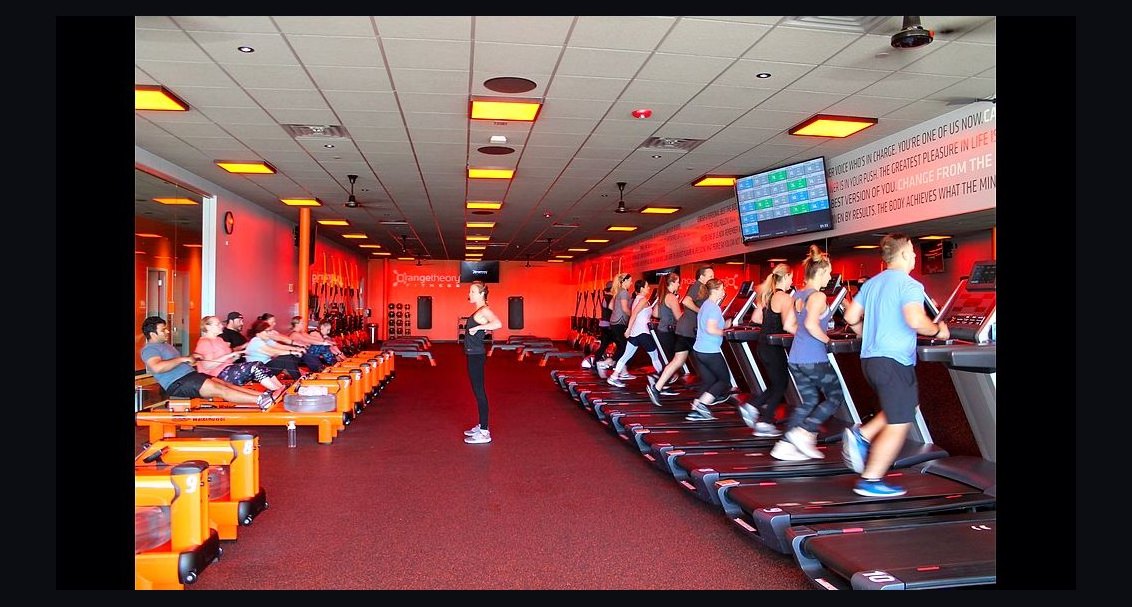 franchiseShould I open or buy an Orangetheory Fitness franchise in 2027?