


Should I open or buy a You’ve Got Maids franchise in 2027?
Quality
Certified
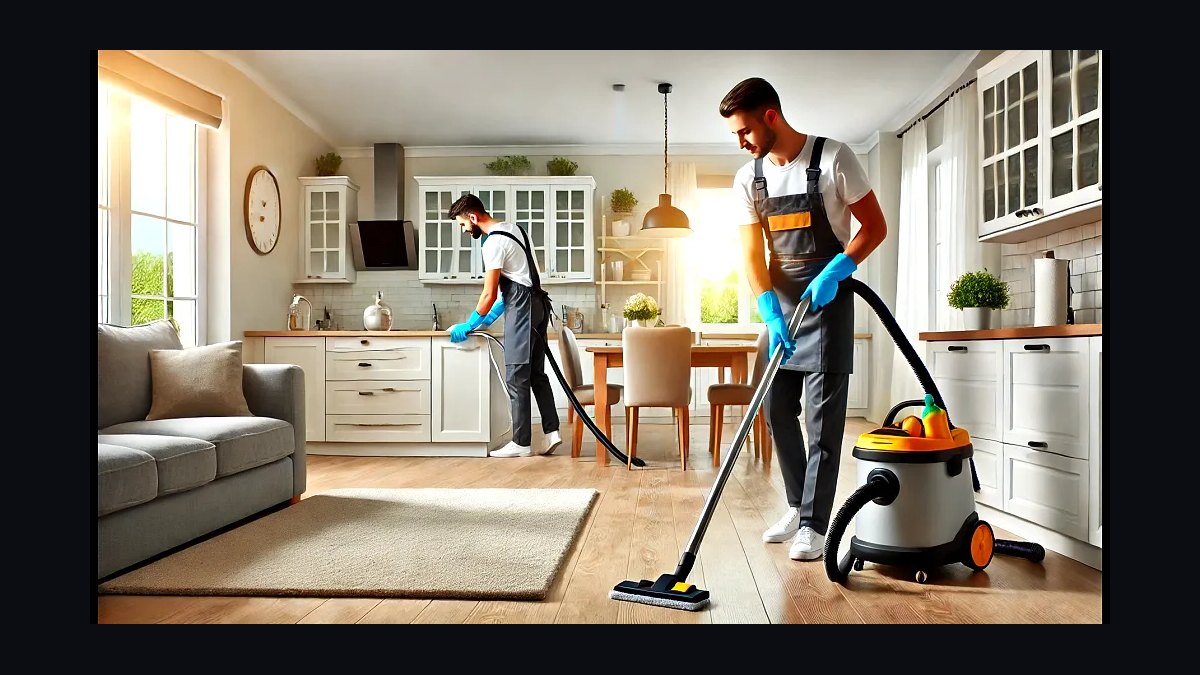
Yes, opening a You've Got Maids franchise in 2027 is worth serious consideration if you're willing to invest in staff training rather than treat cleaning as a churn-and-burn labor pool. The brand's Maid University system, $90,000-$160,000 total investment, and $500,000-$1,300,000 mature-territory revenue make it a capital-efficient, recurring-revenue play — but only for owners who commit to recruiting, training, and retaining a stable crew.
The two (or more) options compared
Anyone weighing whether to open a You've Got Maids franchise is really choosing among three distinct paths, and the differences matter more than the surface-level "cleaning business" label suggests. The first path is the You've Got Maids franchise itself: a $25,000 franchise fee, a roughly $90,000-$160,000 total Item 7 investment, a 6% royalty, and access to a training system, territory protection, and a scheduling/CRM platform. You're buying a playbook and a brand, along with an obligation to run the business the way the franchisor prescribes, including the Maid University training curriculum for every technician you hire.
The second path is starting an independent residential cleaning company from scratch. This can cost less upfront — often $15,000-$40,000 for a solo or small-crew operation — because you skip the franchise fee and the heavier marketing/technology buildout the franchise model assumes. But you also skip the training infrastructure, the territory exclusivity, the negotiated insurance and vendor relationships, and any brand recognition. Independent operators typically spend their first 12-24 months building processes that a franchise hands them on day one, and turnover management is entirely self-taught — there's no Maid University to fall back on when your third hire quits in six weeks. This path suits someone who has already run hourly-labor crews before, in landscaping, restaurants, or retail, and simply wants to redirect that operating skill into a new vertical.
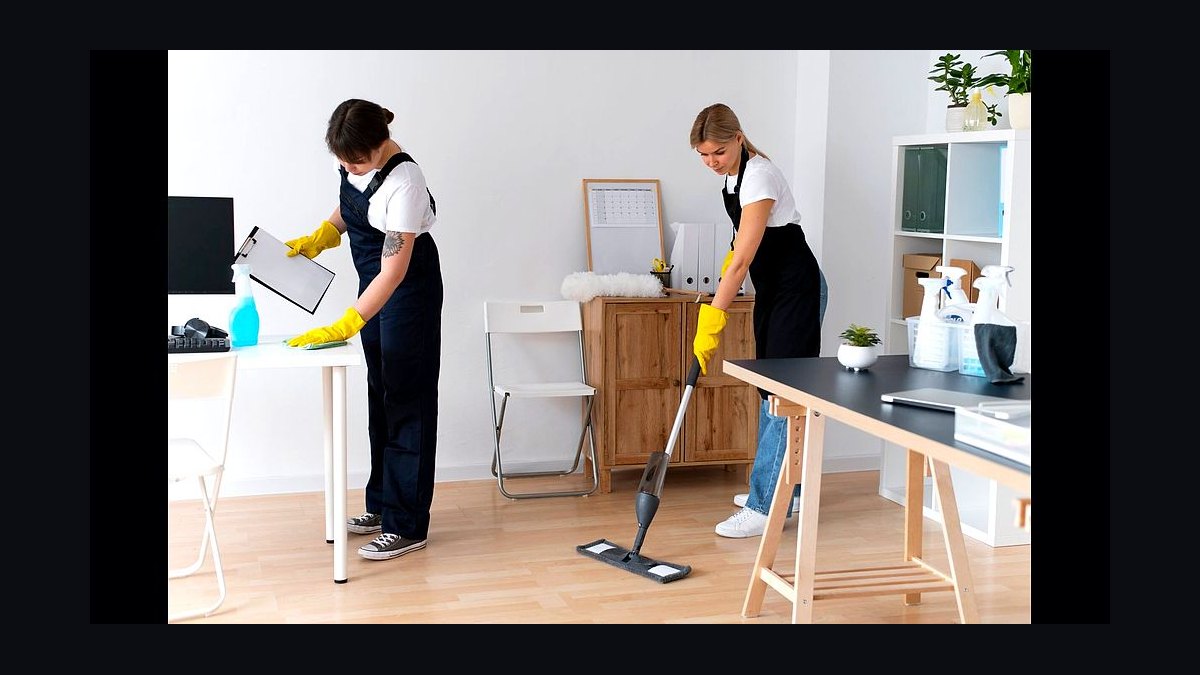
The third path is buying into a competing residential-cleaning franchise — MaidPro, Maid Brigade, The Cleaning Authority, Molly Maid, Merry Maids, Two Maids, or The Maids. These brands compete on similar economics: franchise fees generally in the $20,000-$50,000 range, total investments from $80,000 to $200,000-plus, and royalties in the 5%-7% band. Where they differentiate is operational model. Some emphasize eco-friendly product lines, some run a rotating-team model instead of a fixed-team model, and few make staff training and career-pathing as central to their pitch as You've Got Maids does. Two Maids, for example, competes on a pay-for-performance compensation structure rather than a training-ladder structure, which appeals to owners who want simpler payroll mechanics over deeper curriculum investment. If staff retention is the deciding factor for you — and in residential cleaning it usually should be, given industry turnover routinely runs 200%-400% annually — the training-first positioning of a maids franchise built around certification tiers is a genuine structural difference, not just marketing language.
Choosing between these three isn't just about capital available. It's about which constraint you're best equipped to solve yourself. If you already know how to recruit and retain hourly service labor — say you managed a hotel housekeeping department or a landscaping crew — the training premium may not be worth paying, and independent or a lower-cost brand could net you more over five years. If staffing is your biggest unknown, paying for a system that has already solved training and certification is arguably the highest-leverage dollar you'll spend in the whole investment. A useful adjacent comparison: commercial janitorial franchises (Jan-Pro, Anago, Coverall) solve a related but distinct problem — they sell sub-unit territories to owner-operators who often clean part-time themselves — so if you're comparing "any cleaning franchise" broadly, understand that residential and commercial cleaning are different labor markets with different staffing math entirely.
How to decide between them

The decision tree below reflects the trade-off most prospective owners actually face: capital available, tolerance for building your own systems, and confidence in your ability to solve the staffing problem without outside help.
Notice the branch point is staffing, not price. Franchise fee differences between brands rarely exceed $25,000, and total investment ranges overlap heavily across MaidPro, Merry Maids, The Maids, and You've Got Maids. What doesn't overlap is how each brand approaches the crew-retention problem, so the honest first question isn't "which franchise is cheapest" but "which problem do I need someone else to have already solved for me." If your answer is staffing, a maids franchise with an explicit career-path and certification model earns its royalty. If your answer is marketing or scheduling technology, several competing brands offer comparably strong systems at similar price points, and the decision becomes more about territory availability and personal rapport with the franchisor's development team.
There's also a hybrid path worth naming: some owners open a franchise specifically to borrow the training system for 3-5 years, build an internal bench of certified supervisors, then negotiate an exit or a second territory once they've proven they can replicate the model. That approach treats the franchise fee less as a permanent toll and more as tuition for an operating system you eventually run with less franchisor dependency — though you remain contractually bound to the royalty and brand standards for as long as the agreement runs, typically 10 years with renewal options.
Concrete numbers behind each option

Concrete numbers matter more than brand narrative when you're deciding whether to open a franchise, so here's what the 2026 FDD figures translate to in practice. The franchise fee sits at approximately $25,000, and it buys exclusive territory rights typically covering 50,000-100,000 households. Beyond the fee, total Item 7 investment runs $90,000 to $160,000, broken down roughly as: $3,000-$20,000 for a home-based or small office setup, $6,000-$20,000 for equipment, supplies, and vehicle-related costs, $3,000-$10,000 for scheduling and CRM technology, $15,000-$45,000 for initial client-acquisition marketing, $3,000-$12,000 for general liability insurance and bonding, $5,000-$15,000 for owner and staff training and travel, and $20,000-$55,000 held back as working capital to cover payroll before recurring revenue stabilizes.
On the revenue side, mature territories — generally those operating three or more years — gross between $500,000 and $1,300,000 annually. Labor is the dominant cost, running 45%-55% of revenue because cleaning is fundamentally labor-intensive; supplies, vehicle costs, and fuel typically add another 6%-10%. After the 6% royalty and roughly 2% marketing fee, plus local advertising and administrative overhead, owner margins land in the 12%-24% range, translating to $80,000-$210,000 in annual owner earnings at maturity. Break-even for well-run territories tends to fall in the 12-18 month window, though weaker territories or slower staff ramp-up can push that to 18-24 months.
The retention math is where the training-focused claim gets tested against real numbers. Industry-wide, residential cleaning turnover commonly runs 200%-400% per year, meaning a 10-person crew might require 20-40 hire-and-replace cycles annually. Franchisees using the Maid University system report materially better first-year retention — often cited in the 60%-70% range versus an industry baseline closer to 25%-35% — because the 40-hour initial training curriculum and subsequent certification tiers (deep cleaning, move-out service, eco-friendly cleaning) give employees a reason to stay rather than leave for the next $1-more-per-hour offer. Each turnover event costs a franchise owner roughly $2,500-$4,000 in recruiting, onboarding, and lost productivity, so even a modest improvement in retention compounds into tens of thousands of dollars in annual savings for a mid-sized territory. Owners should budget $15,000-$25,000 a year specifically for ongoing training and certification upkeep — money independent operators and owners of less training-focused brands often don't spend, and then pay for later in hiring costs.

A single crew of 2-3 cleaners typically generates $150,000-$250,000 in annual revenue depending on job mix (recurring weekly/biweekly service versus one-time deep cleans and move-out jobs) and local pricing. Mature territories usually run 3-6 crews simultaneously, which is why revenue scales well past what a single-crew independent operator could realistically achieve without the same recruiting pipeline. Average recurring-client value runs $120-$180 per visit at biweekly frequency, and franchise owners typically target a client retention rate above 85% annually to keep customer-acquisition costs from eroding margin.
Implementation details and sequencing
Opening a franchise isn't a single event — it's a sequence of gated decisions, and skipping steps, especially the owner-interview step, is the single most common reason new franchisees are unhappy eighteen months in. The sequence below reflects what a disciplined 90-day pre-launch and early-operations window looks like for this specific brand.
Start with the Item 19 financial performance representations and Items 5-7, fees and investment, in the 2026 FDD, then move immediately to owner calls — eight is a reasonable minimum, and the questions that matter most are about staff retention impact, how long it took to hit recurring-client critical mass, and actual take-home versus the FDD's projected range. Territory validation comes next: this brand performs best in suburban and exurban markets with median household income between roughly $75,000 and $150,000, dual-income households, and population density supporting 8,000-12,000 target households (homes valued $300,000-plus with two working adults) within the territory. Southeast and Southwest territories have historically outperformed Midwest and Northeast ones by 20%-35%, likely reflecting both housing stock and dual-income concentration, though local competition density — aim for fewer than three national cleaning competitors within five miles — matters just as much as regional averages.

Staff recruitment and Maid University training should begin 30-45 days before you plan to accept your first paying client, not after. A common mistake among new maids franchise owners is signing clients before a trained crew is ready, which creates exactly the service-quality failures the training model is designed to prevent. Technology setup — a scheduling and CRM platform running roughly $3,500-$5,000 one-time plus $400-$600 monthly — should be operational before crew training finishes, since new hires need to practice on the live scheduling and routing system, not learn it during their first week of real jobs. Founding-client acquisition typically leans on the centralized digital marketing system, with pre-built Google Ads and Facebook templates plus local SEO support, and a first-year local marketing budget of $15,000-$25,000 at a typical cost-per-lead of $12-$18 and a 30%-40% quote-to-booking conversion rate.
After the 90-day launch window, the ongoing discipline that separates strong territories from weak ones is simple to state and hard to execute: keep investing in training and certification even when cash is tight, because that's the lever this specific franchise model was built around. Owners who treat year-two training budgets as the first thing to cut when cash gets tight tend to see turnover creep back toward industry-baseline levels within 12-18 months, which then drags client satisfaction scores down and slows the referral-driven growth that keeps customer-acquisition costs low in a mature territory. Many owners also add a second or third crew once the first hits roughly 75% utilization rather than waiting for 100%, since hiring and training a new crew under an established manager is faster than doing it from zero.
Related questions
How does You've Got Maids compare to Merry Maids or Molly Maid specifically?

All three are residential-cleaning franchises with broadly similar investment ranges and royalty structures, but You've Got Maids differentiates more explicitly on staff training and career-pathing, while Merry Maids and Molly Maid lean more on national brand recognition and marketing scale.
Is a home-based setup realistic for this franchise, or do I need an office?
Yes — the model is designed to run without a retail storefront, using a home or small office for administration while crews work directly from client homes, which keeps the office-setup line of the investment as low as $3,000-$5,000.
What happens if I can't hit the retention numbers the brand advertises?
Retention below brand averages usually shows up first as rising recruiting costs and service-quality complaints; franchisors generally offer additional training support, but persistent underperformance often traces back to local wage competitiveness or manager turnover rather than the training system itself.
Can I negotiate a larger territory than the standard 50,000-100,000 households?
Expansion or adjacent-territory rights can sometimes be negotiated at signing, but this varies by franchise development team and available inventory in your target market, so it's worth raising during discovery rather than after signing.
How is commercial janitorial franchising different from opening a residential maids franchise?
Commercial janitorial brands like Jan-Pro or Coverall typically sell smaller sub-unit territories aimed at owner-operators doing hands-on cleaning themselves, while a residential maids franchise is built around managing crews of employees, which is a fundamentally different day-to-day role.
FAQ
Is You've Got Maids a good franchise to open in 2027 specifically, given the economy? Residential cleaning demand has proven durable across economic cycles because dual-income households treat it as a recurring necessity rather than a discretionary luxury, and the low-capital, home-based structure of this franchise keeps downside risk relatively contained compared to retail or restaurant concepts.

How is the franchise fee different from the total investment? The franchise fee, around $25,000, is a one-time payment for the right to open under the brand and operate in a protected territory; the total investment of $90,000-$160,000 also includes equipment, marketing, technology, insurance, and working capital needed to actually launch and sustain operations through the ramp-up period.
Does the training model apply to owners too, or just cleaning staff? Owners go through their own onboarding covering operations, technology, and business management, separate from the Maid University curriculum built for cleaning technicians, though many owners also complete portions of the technician training to understand quality standards firsthand.
What's the biggest reason franchisees underperform the projected revenue range? Underinvestment in staff training and local marketing in year one is the most commonly cited factor — owners who try to minimize the training and marketing line items to preserve cash often end up with higher turnover and slower client acquisition, which costs more in the long run than the savings.
Are there territories where this franchise would not be a good fit? Low-density rural markets and low-to-moderate income urban cores tend to underperform because the model depends on a critical mass of dual-income households willing to pay for recurring service, so demographic screening before committing to a territory is essential.
How does the 6% royalty compare to what independent operators effectively pay in overhead? Independent operators avoid the royalty line item entirely, but they also self-fund marketing systems, technology, and training development that the royalty partially covers, so the effective cost comparison depends heavily on how efficiently an independent owner can replicate those systems alone.
Sources
- Entrepreneur.com — Franchise 500 and franchise directory listings
- Franchise Business Review — home-services franchise satisfaction and owner survey data
- International Franchise Association (IFA) — annual franchise economic outlook reports
- Bureau of Labor Statistics — Occupational Employment and Wage Statistics, cleaning and maintenance occupations
- IBISWorld — Residential Cleaning Services industry reports
- Statista — U.S. residential cleaning services market data
- Grand View Research — Cleaning Services market analysis
- U.S. Census Bureau — American Community Survey household income data
- Federal Trade Commission — Franchise Rule and Franchise Disclosure Document guidance
- SBA.gov — franchise financing and small business startup cost guidance
Related on PULSE
- Should I open or buy a Two Maids franchise in 2027?
- Should I open or buy The Maids franchise in 2027?
- Should I open or buy a Merry Maids franchise in 2027?
- Should I open or buy a MaidPro franchise in 2027?
- Should I open or buy a Molly Maid franchise in 2027?
- Should I open a Jan-Pro commercial cleaning franchise in 2027?
This page will be disappearing soon. Save it to your device for $1 — or read it free while it is here.
@Kory-White- · if Venmo asks, the last 4 of my number are 2012
This page is gone.
This one is off the shelf now. $1 keeps it on your phone for good — the whole page, pictures and diagrams included.
 franchiseShould I open or buy an Auntie Anne's franchise in 2027?
 franchiseShould I open or buy a Roto-Rooter franchise in 2027?
 franchiseShould I open or buy a Supercuts franchise in 2027?
 franchiseShould I open or buy a Whataburger franchise in 2027?
 franchiseShould I open or buy a Smoothie King franchise in 2027?
 frShould I open or buy a McDonald's franchise in 2027?
 franchiseShould I open or buy a Chipotle franchise in 2027?
 franchiseShould I open or buy a Firehouse Subs franchise in 2027?
 franchiseShould I open or buy a Wendy's franchise in 2027?
 franchiseShould I open or buy a Big O Tires franchise in 2027?