


Should I open or buy an Ace Hardware franchise in 2027?
Quality
Certified
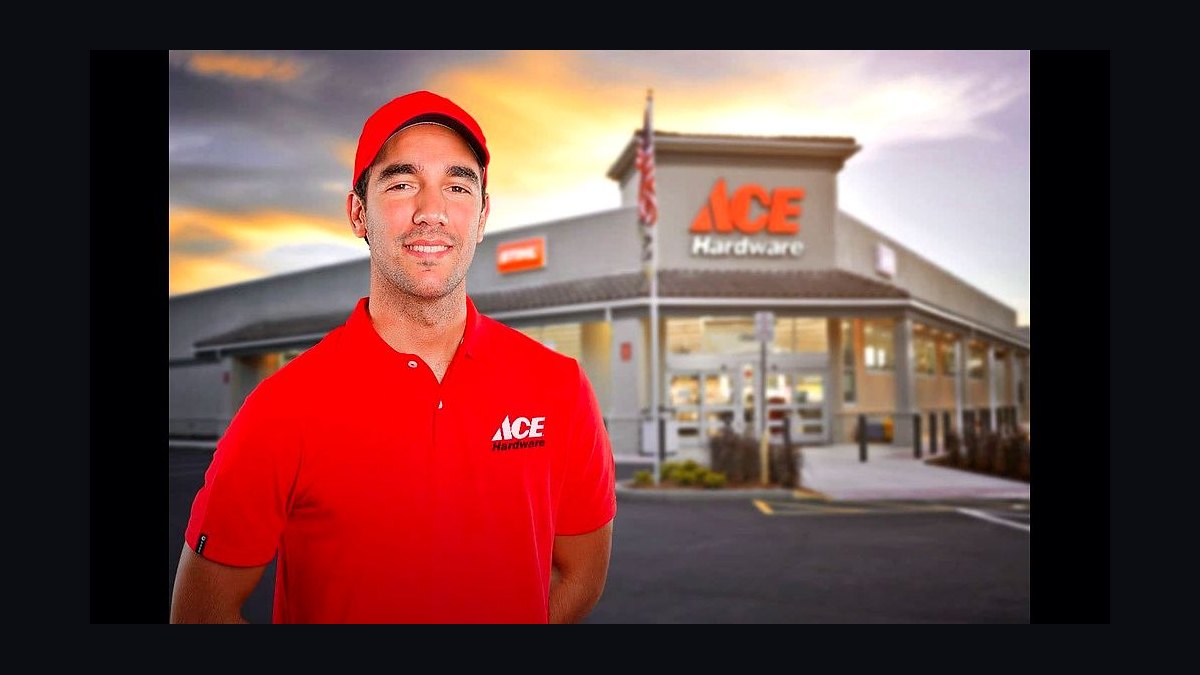
Open or buy an Ace Hardware franchise in 2027 if you have $300K-$500K in liquid capital, a net worth above $400K, and a trade area where the nearest big-box home center sits at least 10 minutes away. All-in startup runs $579,000-$1,913,000 with no ongoing royalty, breakeven typically lands 18-30 months out, and the cooperative's patronage dividend rewards patient, multi-store operators far more than single-store owners chasing fast cash.
A Trade Area, A Spreadsheet, and a Decision
Picture a candidate in early 2027 sitting on $350,000 in liquid savings, a paid-off house, and fifteen years running the plumbing-supply counter at a regional distributor. A 12,000-square-foot retail box just came open in a town of 22,000 people, the nearest Home Depot is a 14-minute drive, and the median home in the trade area was built in 1998. That profile is close to the ideal Ace Hardware franchise candidate, but the decision still hinges on math, not instinct.
The candidate's first move isn't signing a lease — it's building a three-year pro forma from the FDD Item 7 range, not the corporate pitch deck. A new-build Ace store in that town will likely need $579,000 to $1,913,000 in total investment depending on leasehold condition, fixture package, and opening inventory depth. Inventory alone could consume $250,000 to $750,000 of that figure, because a typical Ace carries 30,000 to 50,000 SKUs across hardware, paint, lawn and garden, and seasonal categories. That single line item is larger than the entire startup cost of many franchise concepts, and it's the line most first-time retail buyers underestimate.

The scenario also exposes the real fork in the road: build new or buy an existing store. A new build means full control over layout and merchandising mix, a 9-14 month runway before opening, and Year-1 revenue typically landing between $1.2M and $2.0M. Buying an existing, performing store usually trades at 2.5x-4x EBITDA plus inventory at cost, often totaling $200K-$600K for the business itself, and it comes with an established customer base, a known patronage history, and existing staff relationships — but also with that previous owner's dead inventory and whatever local reputation they built, good or bad. A buyer who skips a hard inventory audit before closing inherits someone else's slow-moving shelf space on day one.
What makes this scenario representative rather than a best-case outlier is the trade area test. Ace's economics depend heavily on being far enough from a big-box center that homeowners default to the neighborhood store for mid-size and urgent purchases — a cracked pipe fitting on a Sunday, a specific screw size, a propane exchange. Inside a 10-minute drive of a Home Depot or Lowe's, that convenience premium erodes and the cooperative's buying-power advantage isn't enough to offset foot-traffic loss. The candidate in this scenario checks that box; many who inquire about an Ace franchise do not, and that single variable predicts more about long-run viability than any other line in the FDD.
How the Cooperative Mechanism Actually Works

Ace Hardware is structured as a member-owned cooperative, not a conventional royalty-based franchise, and that distinction changes the entire cash-flow mechanism. There is no royalty percentage charged on sales. Instead, owners pay a one-time $5,000 affiliation fee (waived for U.S. military veterans) and a $5,000 stock subscription that converts into equity in the cooperative itself. From that point forward, the financial relationship runs through purchasing volume, not revenue skimming.
Every dollar an owner spends buying inventory through Ace's distribution network counts toward that store's annual purchase volume. At year-end, the cooperative calculates its net margin from wholesale distribution and manufacturer rebates, then returns a share of that margin to member-owners as a patronage dividend, scaled to each store's purchase volume. In practical terms, a store that buys $2 million worth of inventory in a year receives a meaningfully larger dividend than a store that buys $800,000 worth — which is why the mechanism rewards scale and tenure, not just profitability. A two-store owner isn't just doubling revenue; they're compounding their position inside the dividend formula.
This is also why the opening inventory investment ($250,000-$750,000) isn't merely a startup cost to minimize — it's the entry ticket into a purchasing relationship that pays recurring dividends for as long as the owner stays affiliated and keeps buying through the co-op. A new owner who under-stocks to save cash upfront isn't just risking empty shelves; they're shrinking their own future patronage check. Conversely, an owner who overbuys slow-moving categories ties up working capital that never turns into sales, which caps both operating cash flow and purchase-volume credit simultaneously.

The feedback loop above is the single biggest structural difference between Ace and a conventional royalty franchise like a quick-service restaurant chain. A royalty franchise taxes revenue regardless of profitability; the Ace model only pays the cooperative back through voluntary purchasing, and it pays the owner back through that same purchasing. That alignment is why owners who "embrace the co-op" — voting at the annual meeting, sitting on regional councils, influencing assortment — tend to outperform owners who treat Ace as a passive supplier relationship.
Real Numbers, Ranges, and Benchmarks
The numbers that matter most sit in four buckets: startup cost, revenue, margin, and payback period. Total Item 7 investment ranges from $579,000 to $1,913,000, with leasehold improvements ($50,000-$400,000) and opening inventory ($250,000-$750,000) accounting for most of the spread between a modest buildout and a full ground-up construction in an expensive market. Fixtures, signage, and point-of-sale systems typically run $102,750-$200,850 through Ace's Store Planning and Interior Décor package, and working capital for the first three months should run $30,000-$120,000 to cover payroll, rent, and utilities before the store generates reliable cash flow.

On the revenue side, the median Ace store does roughly $1.47 million in annual sales, while the average sits closer to $2.69 million because a cluster of high-performing stores pulls the mean upward — meaning a new owner should underwrite to the median, not the average, when building a conservative pro forma. First-year revenue for a new build typically lands between $1.2 million and $2.0 million as the store builds local awareness and repeat-customer habits. EBITDA margins in independent hardware retail generally run 6%-12%, and Ace stores tend to land 150-300 basis points above that range because of cooperative buying leverage — call it a realistic 7.5%-14.5% band for a reasonably well-run store.
Owner earnings vary enormously by store maturity and format, spanning roughly $72,000 to $322,826 annually once a store is established, with the patronage dividend adding another $15,000 to $80,000-plus on top depending on purchase volume. Payback period — the time to recover the full initial investment including inventory — runs 4.2 to 6.9 years, which is longer than many franchise concepts but reflects the capital intensity of carrying a full hardware assortment rather than a thin-margin service model.
A few supporting benchmarks round out the picture. Retail gross margin on hardware merchandise runs around 47.7%, while service lines — small-engine repair, screen repair, key cutting, equipment rental — often carry gross margins above 60% and should be weighted into any new owner's category mix rather than treated as an afterthought. Saturday alone accounts for roughly 22% of weekly sales volume in independent hardware, which matters directly for staffing decisions and for any owner who hopes to work a traditional five-day week. Lease economics matter too: a $30-per-square-foot NNN lease on a 12,000-square-foot box works out to $360,000 in annual rent, a figure that only pencils at $2 million-plus in store revenue — meaning lease rate as a percentage of projected sales, not absolute square footage, is the number to negotiate against.
Trade-Offs and Alternatives
The core trade-off in an Ace Hardware franchise is capital intensity and patience versus the no-royalty structure and long-term patronage upside. An owner who needs fast cash flow within the first year, or who can't tolerate $300,000-plus sitting in inventory for months at a time, is fighting the model's fundamental design. The cooperative rewards owners who can fund a full three-to-five year runway, absorb a slower Year-1 and Year-2, and keep buying through the co-op even in a soft year when the patronage dividend compresses 30%-40% — which has happened in down cooperative years and represents the entire profit cushion for a marginally performing store.
Owners who decide Ace isn't the right fit have real alternatives worth weighing on the same grid. Do it Best operates on a similar member-owned cooperative structure, with lower brand recognition but reportedly higher patronage payouts relative to purchase volume, and a comparable $400,000-$1.5 million startup range. True Value exited cooperative status in 2018 and filed for Chapter 11 protection in October 2024 before being acquired by Do it Best — it's worth watching how that integration settles before treating it as a stable comparison point. Tractor Supply competes for the same rural, DIY-minded customer but operates corporate-owned stores with no franchising path, so it matters mainly as a competitive signal in a given trade area rather than as an alternative to buy into.
For owners who want a lighter capital footprint, a Sherwin-Williams paint store franchise runs $250,000-$500,000 with a narrower product line but a notably higher gross margin (52%-55%), trading DIY foot traffic for merchandising simplicity. On the far end of capital-light retail, a UPS Store or PostalAnnex franchise can open for $150,000-$300,000 all-in, with much thinner margins but a faster path to positive cash flow — a reasonable option for someone who values speed over the compounding patronage upside that makes Ace attractive to patient, well-capitalized operators.
Common Pitfalls and How to Avoid Them

The single most common pitfall is underestimating inventory psychology. A rusty tool or a slow-moving seasonal item sitting on a shelf for six months isn't a neutral cost — it's cash that isn't earning sales, isn't contributing to purchase-volume credit in any meaningful way, and is actively shrinking the next patronage dividend. The fix is disciplined category review on a quarterly cycle, using Ace's own purchasing data to identify the bottom 10% of SKUs by turn rate and aggressively marking them down or discontinuing reorders, rather than letting dead stock accumulate out of reluctance to take a markdown loss.
A second pitfall is signing a lease without stress-testing it against a conservative revenue case. A lease priced above roughly 6% of projected sales only works if the store actually hits the high end of its revenue range — and a store that opens in Year 1 at the lower end of the $1.2M-$2.0M band with a lease sized for $2M-plus in sales will be cash-constrained from the first month. The avoidance strategy is simple but frequently skipped: build the pro forma at the median revenue case ($1.47M, not $2.69M), confirm the lease still works, and only treat upside revenue as a buffer, not a baseline assumption.
Third, buyers acquiring an existing store often pay too much because sellers who know the Ace playbook price to a buyer's emotional attachment to an established, profitable-looking business rather than to a defensible IRR. The guardrail is refusing to pay above roughly 4x EBITDA without an independent inventory audit and at least two years of actual purchase-volume and patronage-dividend history from the seller — numbers a seller can't easily inflate the way they can gloss over a verbal pitch.

Fourth, co-location risk is easy to dismiss and expensive to ignore. Opening across the parking lot from a Home Depot or Lowe's, or in a trade area with declining population, undermines the exact convenience advantage the Ace model depends on. The fix happens before signing anything: a real trade-area study — mapping every big-box competitor within a 15-minute drive, checking Census and American Community Survey data for population trend, median home age, and owner-occupancy rate — rather than relying on a broker's optimistic site pitch. Finally, owners who refuse to staff and work the heaviest trading days (Saturday alone can be roughly a fifth of weekly volume) chronically underperform their trade area's potential; building a schedule and a management bench that covers peak days without owner burnout is a pitfall worth solving before opening day, not after.
Related questions
How much does it cost to buy an existing Ace Hardware store versus building new?
An existing store typically sells for $200,000-$600,000 for the business plus inventory at cost, versus $579,000-$1,913,000 for a full new build. Existing stores carry established revenue and reputation but inherit prior inventory and local goodwill, good or bad.
Does Ace Hardware charge an ongoing royalty fee?
No. Ace charges no royalty percentage on sales — a structural difference from most franchises. Owners instead pay a one-time $5,000 affiliation fee and participate in the cooperative's purchasing and patronage-dividend system.
How long does it take an Ace Hardware franchise to break even?

Most new stores reach cash-flow breakeven in 18-30 months, with full investment payback, including inventory, typically taking 4.2 to 6.9 years. Patience and sufficient working capital through that window are essential.
What trade area characteristics predict success for an Ace Hardware store?
Owner-occupancy above 60%, median home age above 25 years, and a location at least 10 driving minutes from the nearest big-box home center all correlate with stronger DIY and maintenance-driven demand.
Is a multi-store Ace Hardware position more profitable than a single store?
Yes, disproportionately. Because the patronage dividend scales with total purchase volume, two-store owners often clear combined earnings well above twice what a single comparable store earns, making a 5-7 year multi-store build-out a common strategy among top performers.
FAQ
What is the difference between opening a new Ace Hardware franchise and buying an existing one? Opening a new build gives full control over location and design but requires higher startup costs ($579K-$1.9M) and a longer ramp to breakeven. Buying an existing store typically costs less upfront (often $200K-$600K for the business) and comes with established revenue, but the buyer inherits the previous owner's inventory composition and local reputation.
How much money can I realistically make in the first year?
First-year revenue for a new Ace franchise typically ranges from $1.2M to $2.0M, but owner cash flow after expenses is usually $40K-$90K before patronage dividends. Many owners don't see meaningful profit until year three, with full payback often taking 4 to 7 years.
Do I need prior retail or hardware experience to open an Ace Hardware franchise? No formal hardware experience is strictly required, but Ace favors candidates with retail-management instincts, strong local community ties, and basic financial literacy. The cooperative provides training, but owners must be comfortable managing inventory, staff, and customer service from day one.
What ongoing fees does Ace Hardware charge? Ace charges no ongoing royalty fee, a structural advantage over many franchise systems. Owners contribute to marketing and technology costs and purchase inventory through Ace's cooperative distribution network, which is where most ongoing spend actually occurs.
How long does it take to break even and start seeing a return? Most new Ace stores break even within 18 to 30 months given steady local demand and disciplined cost control. Full payback on the initial investment, including inventory, often takes 4.2 to 6.9 years, so adequate working capital and patience are essential going in.
What are the biggest risks before committing to an Ace Hardware franchise? The largest risk is inventory exposure — $300,000-plus in product must be stocked before opening, and slow-moving items tie up cash for months. Other risks include big-box competition even outside the 10-minute buffer, seasonal demand swings, and staffing reliability in smaller trade areas.
Sources
- Ace Hardware Corporation, "Ace Hardware Reports First Quarter 2026 Results," PRNewswire, May 2026
- Ace Hardware 2026 Franchise Disclosure Document, Items 7, 19, 20, 21
- FranchiseChatter, "Ace Hardware Franchise Review 2026: Costs, Fees, News, Average Revenues and/or Profits," 2026
- Sharpsheets, "Ace Hardware Franchise FDD, Profits & Costs," 2026
- Vetted Biz, "Ace Hardware Franchise Insights: FDD, Costs & Fees," 2026
- IBISWorld, "Hardware Stores in the US (NAICS 444110) Industry Report," 2026
- Harvard Joint Center for Housing Studies, "Leading Indicator of Remodeling Activity (LIRA)," Q1 2026
- National Association of Home Builders, "U.S. Housing Stock Age Analysis," 2026
- Marsh McLennan, "Commercial Insurance Pricing Trends Report," Q4 2025
- Ace Hardware corporate site, MyAce.com franchise opportunities portal
Related on PULSE
This page will be disappearing soon. Save it to your device for $1 — or read it free while it is here.
@Kory-White- · if Venmo asks, the last 4 of my number are 2012
This page is gone.
This one is off the shelf now. $1 keeps it on your phone for good — the whole page, pictures and diagrams included.
 franchiseShould I open or buy a Marco's Pizza franchise in 2027?
 franchiseShould I open or buy a Jamba franchise in 2027?
 franchiseShould I open or buy a Cook Out franchise in 2027?
 franchiseShould I open or buy an F45 Training franchise in 2027?
 franchiseShould I open or buy a Meineke franchise in 2027?
 franchiseShould I open or buy a Sonic Drive-In franchise in 2027?
 franchiseShould I open or buy a Massage Envy franchise in 2027?
 franchiseShould I open or buy a Goddard School franchise in 2027?
 franchiseShould I open or buy a Bruster's Real Ice Cream franchise in 2027?
 franchiseShould I open or buy a Kumon franchise in 2027?