


Should I open or buy a Glo Tanning franchise in 2027?
Quality
Certified
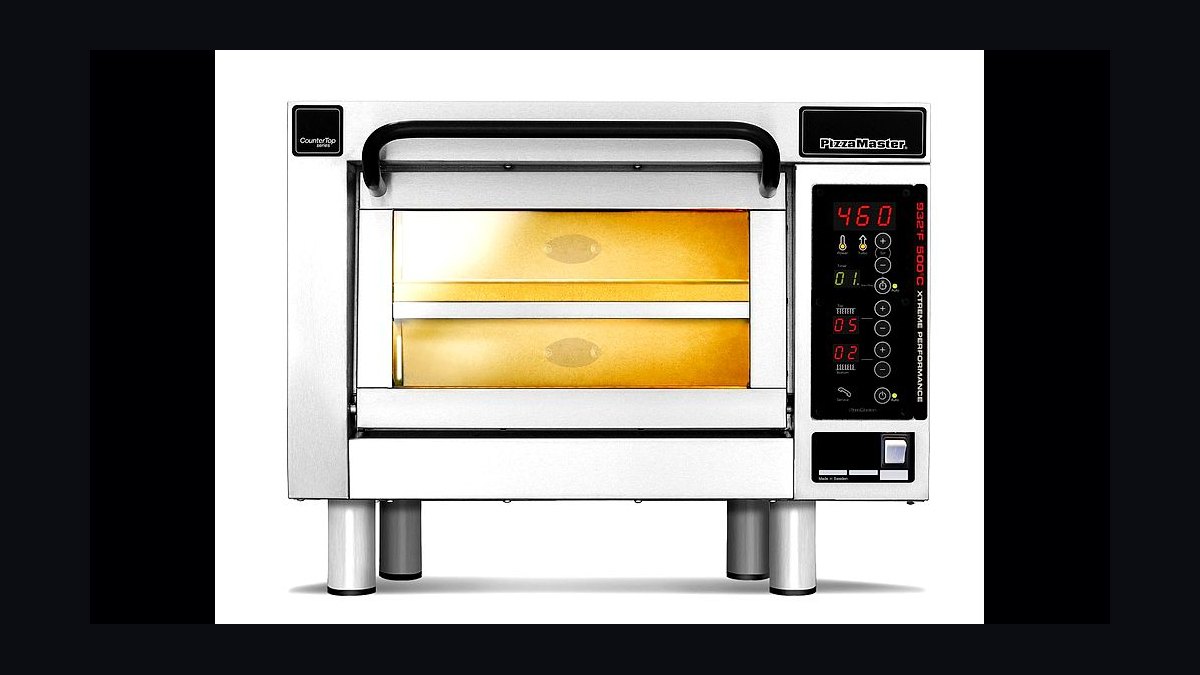
Yes, but only for a well-capitalized operator ready to run an equipment-heavy, membership-driven business. Whether you open a new Glo Tanning franchise from the ground up or buy an existing salon, plan on $700,000–$1,500,000 in total investment, $400,000+ in liquid capital, and a strategy built around recurring memberships and red-light wellness crossover rather than walk-in tanning alone. Under-capitalized buyers should look elsewhere.
Buying an Existing Territory vs. Opening a New Glo Tanning Location
Anyone evaluating a Glo Tanning franchise in 2027 is really choosing between two very different paths into the brand, and they carry materially different risk profiles, financing mechanics, and timelines. Understanding both before you sign anything is the single highest-leverage step in the process.
Path one: ground-up development. This is the standard route for the majority of Glo Tanning franchisees today because the system is still young — roughly 30 to 50 units open or in development as of early 2026 — which means resale opportunities are scarce. You sign the franchise agreement, select and secure your own site (typically 3,000 to 5,000 square feet in a retail center with strong visibility and parking), negotiate the lease, and build the salon from a bare shell. This gives you full control over the build quality, equipment mix (UV beds, spray-tan booths, red-light therapy panels), and your local marketing launch, but it also means you absorb 100% of the pre-revenue period — typically 6 to 12 months of build-out, permitting, and staff training before your first membership dollar comes in.

Path two: buying an existing, operating salon. Because the system is young, true resales are uncommon in 2027, but they do surface — usually from an early operator who over-leveraged, is retiring, or is consolidating down to fewer units. Buying an existing salon changes the calculus substantially: you're purchasing a membership base (recurring revenue that starts on day one), trained staff, and equipment that's already depreciated and installed, often at a total price below the $700,000 floor of a new build once you net out the franchisor's re-sale approval process and any transfer fee. The trade-off is inherited risk — you're buying someone else's lease terms, someone else's equipment maintenance history (UV beds and spray booths have real wear curves), and often a membership base with churn baked in that you won't fully understand until you've run the location for a few months.
A third, hybrid consideration worth naming: multi-unit development agreements. Because the model is low-staffing and equipment-driven rather than labor-driven, many franchisees who validate the unit economics on their first location pursue a 2-to-4-unit development schedule with Glo Tanning rather than staying single-unit. If you're already leaning toward opening fresh rather than buying resale, it's worth asking corporate development about area development terms upfront — the economics of a second and third salon improve meaningfully once you have a shared marketing budget, a trained float manager who can cover multiple locations, and negotiating leverage with equipment vendors buying beds and panels in bulk.

For most prospective franchisees weighing "should I open or buy" in 2027, the honest answer is that "buy" is aspirational rather than available — the system simply hasn't matured enough to generate a deep resale market yet. That means your real decision is less "new build vs. resale" and more "single unit vs. committing to a development schedule from the outset," and your capital plan should be built around whichever of those you're actually choosing.
How to Decide Between an Existing Salon and Ground-Up Development
The decision tree above reflects the reality that most franchisees won't actually get to choose freely between buying and opening — availability drives the decision more than preference. If a resale does exist in your target market, the deciding factor should never be sentiment about "not starting from scratch." It should be the seller's actual Item 19 financials for that specific unit, membership retention data over at least 12 trailing months, and an independent equipment inspection, since UV beds and spray-tan systems that haven't been well-maintained can require $50,000-plus in replacement costs within the first year of ownership.

If no resale exists, your decision collapses to a single gate: do you have the liquid capital and net worth the franchisor requires, and can your target market support an upscale, membership-priced tanning-and-wellness studio? Markets with younger demographics, higher discretionary income, and existing boutique-fitness or medspa density tend to validate faster than markets where tanning is still perceived as a purely seasonal, low-price commodity service.
The Numbers Behind Each Path
Whichever path you take, the 2026 FDD numbers are your baseline, and they don't change much whether you're financing a new build or a resale purchase — only the sequencing of when you spend the money changes.
Total investment (Item 7): $700,000 to $1,500,000, including a $45,000 franchise fee, $300,000–$650,000 in leasehold improvements for an upscale build-out, $250,000–$550,000 in equipment (UV beds, spray booths, red-light therapy panels), $25,000–$70,000 in signage and decor, $10,000–$28,000 in initial inventory, $25,000–$60,000 in pre-opening membership marketing, and $50,000–$130,000 in working capital to cover the first 3–6 months.

Capital requirements: Glo Tanning generally requires at least $400,000 in liquid capital and a net worth of $1,000,000 or more before it will approve a candidate — this applies whether you're opening new or buying resale, because the franchisor wants assurance you can absorb a slow membership ramp without defaulting on royalty obligations.
Ongoing fees: roughly 6% of gross revenue in royalties plus a separate marketing fee (disclosed in the current FDD), both of which apply identically to new and resale locations from the date of transfer or opening.
Revenue and owner earnings: mature salons in the system report gross revenue of $600,000 to $1,400,000 annually, with owner earnings landing between $120,000 and $340,000 after royalties, rent, labor, and equipment costs. A newly opened salon typically takes 18–24 months to approach the low end of that mature range as its membership base builds; a well-run resale can be earning at a mature run-rate from month one, which is precisely why resale premiums (when available) can be worth paying.
Insurance: budget $12,000–$25,000 annually in liability premiums per location, with insurers increasingly cautious about UV-tanning risk — expect 10–20% annual premium increases to be normal rather than exceptional in 2027, and confirm any resale salon's current policy is transferable before closing.
Financing: SBA 7(a) loans remain the most common financing vehicle for both paths, typically covering 70–90% of the total project cost at roughly Prime + 2.75% to Prime + 4.75% (approximately 11–14% APR in 2026–2027), with equipment leasing (36–60 month terms, 8–15% rates) commonly used to reduce the upfront cash needed for beds, booths, and red-light panels by $100,000–$200,000. Glo Tanning does not offer in-house financing as of 2026, so whether you buy or build, you are sourcing capital independently or through a preferred-lender list the franchisor provides.
Sequencing the Build: From Signing to Grand Opening

The sequencing above holds for both paths, but the weight of each phase shifts. A ground-up franchisee spends the bulk of their time and capital in the Days 71–130 window — construction, permitting, and equipment installation are the long pole. A resale buyer compresses that window into due diligence instead: verifying lease assignability with the landlord, confirming equipment service records, and validating that the membership roster the seller is showing you matches what actually bills each month (ask for a 90-day trailing billing report, not just a headline member count).
One sequencing detail that trips up first-time franchisees regardless of path: pre-selling memberships before you open. Glo Tanning's low-staffing, high-margin model depends on membership density from day one, so the marketing spend and staff time allocated to pre-sale campaigns in the 30–60 days before opening (or before a resale transfer closes) has an outsized effect on how quickly the salon reaches its mature revenue range. Franchisees who skip aggressive pre-sale and rely on walk-in traffic after opening consistently take longer to hit the $600,000-plus gross revenue mark. Whether you're opening fresh or taking over an existing member base, treat the pre-opening (or pre-transfer) window as a sales sprint, not an administrative formality.

Equipment sequencing also matters: UV beds and spray booths typically have longer lead times than red-light panels, so franchisees who order equipment late in the Days 71–130 window frequently see their grand opening slip by 4–8 weeks. Lock equipment orders as early as your build-out contractor's timeline allows, and use that same lead time to complete staff certification training, since most states require documented operator training for UV-tanning equipment before a location can legally open.
Related questions
How does Glo Tanning compare to Palm Beach Tan or Sun Tan City?
Palm Beach Tan and Sun Tan City have lower entry costs (roughly $350,000–$700,000) and larger, more established systems, but Glo Tanning's higher investment generally correlates with higher average unit volumes and a stronger wellness/red-light crossover that broadens its customer base beyond traditional tanning.
Can I finance a Glo Tanning franchise with an SBA loan?
Yes — SBA 7(a) loans are the most common financing vehicle, typically covering 70–90% of project cost at roughly 11–14% APR in 2026–2027. Glo Tanning provides a preferred-lender list but does not offer in-house financing.
Is red-light therapy a significant revenue driver on its own?

It's primarily a membership-broadening and retention tool rather than a standalone profit center — it attracts customers (including men) who wouldn't buy UV tanning alone, which supports the overall membership base the whole model depends on.
How many employees does a typical Glo Tanning location need?
Most locations run with 2–4 part-time staff, since the self-service equipment model keeps labor costs low; correct W-2 classification is essential given increased state-level scrutiny of contractor misclassification.
Are Glo Tanning resales common in 2027?
Not yet — with only 30–50 units in the system as of early 2026, true resale inventory is limited, so most prospective franchisees will end up developing a location from the ground up rather than buying an existing one.
FAQ
Should I open or buy a Glo Tanning franchise in 2027? Open a new location if you can't find an available resale in your target market — this is the more common path given how young the system still is. Buy an existing salon only if the seller's trailing 12-month membership and revenue data checks out and the equipment has been well maintained; a clean resale can reach mature earnings faster than a new build.
What's the total investment for a Glo Tanning franchise?

Between $700,000 and $1,500,000, covering the $45,000 franchise fee, leasehold improvements, equipment (UV beds, spray booths, red-light panels), signage, initial inventory, pre-opening marketing, and working capital.
How much liquid capital do I need to qualify? Glo Tanning generally requires at least $400,000 in liquid capital and a net worth of $1,000,000 or more, regardless of whether you're opening new or purchasing an existing salon.
What ongoing fees does a franchisee pay? A royalty of approximately 6% of gross sales plus a separate marketing fee disclosed in the current FDD, both calculated identically for new and resale locations.
How long does it take to open a Glo Tanning franchise? Typically 6 to 12 months from signing the franchise agreement to grand opening, covering site selection, lease negotiation, build-out, equipment installation, staff training, and membership pre-sale.
What are the biggest risks specific to the tanning segment? High capital intensity, a young franchise system with limited track record, rising liability insurance costs (up 10–20% annually in recent years), and UV-tanning regulatory and perception headwinds that red-light and spray-tan diversification only partially offset.
Sources
- Federal Trade Commission — Franchise Disclosure Document requirements: https://www.ftc.gov/business-guidance/industry/franchises-business-opportunities
- U.S. Small Business Administration — SBA 7(a) loan program: https://www.sba.gov/funding-programs/loans/7a-loans
- FDA — Tanning Bed and UV Device Regulations: https://www.fda.gov/radiation-emitting-products/tanning
- International Franchise Association — Franchise Economic Outlook: https://www.franchise.org
- IBISWorld — Tanning Salons Industry Reports: https://www.ibisworld.com
- Entrepreneur — Franchise 500 and Franchise Directory: https://www.entrepreneur.com/franchises
- Statista — Personal Care and Wellness Market Data: https://www.statista.com
- Franchise Business Review — Franchisee Satisfaction Research: https://www.franchisebusinessreview.com
- Global Wellness Institute — Wellness Industry Research: https://globalwellnessinstitute.org
- U.S. Equal Employment Opportunity Commission — Employee Classification Guidance: https://www.eeoc.gov
Related on PULSE
- Should I open or buy a Glo Sun Spa franchise in 2027?
- How long does it take to open a franchise and break even in 2027?
- Should I open or buy a Tommy Gun's Original Barbershop franchise in 2027?
- Should I open or buy a Sugared + Bronzed franchise in 2027?
- Should I open or buy a Sweathouz or Restore franchise in 2027?
This page will be disappearing soon. Save it to your device for $1 — or read it free while it is here.
@Kory-White- · if Venmo asks, the last 4 of my number are 2012
This page is gone.
This one is off the shelf now. $1 keeps it on your phone for good — the whole page, pictures and diagrams included.
 franchiseShould I open or buy a Wingstop franchise in 2027?
 franchiseShould I open or buy a Planet Fitness franchise in 2027?
 franchiseShould I open or buy a KinderCare franchise in 2027?
 franchiseShould I open or buy a Jeremiah's Italian Ice franchise in 2027?
 franchiseShould I open or buy a Jiffy Lube franchise in 2027?
 franchiseShould I open or buy a Taco Bell franchise in 2027?
 franchiseShould I open or buy a Mathnasium franchise in 2027?
 franchiseShould I open or buy a FACE FOUNDRIÉ franchise in 2027?
 franchiseShould I open or buy a Dunkin' franchise in 2027?
 franchiseShould I open or buy a Hand and Stone Massage franchise in 2027?