


Should I open or buy a Nekter Juice Bar franchise in 2027?
Quality
Certified
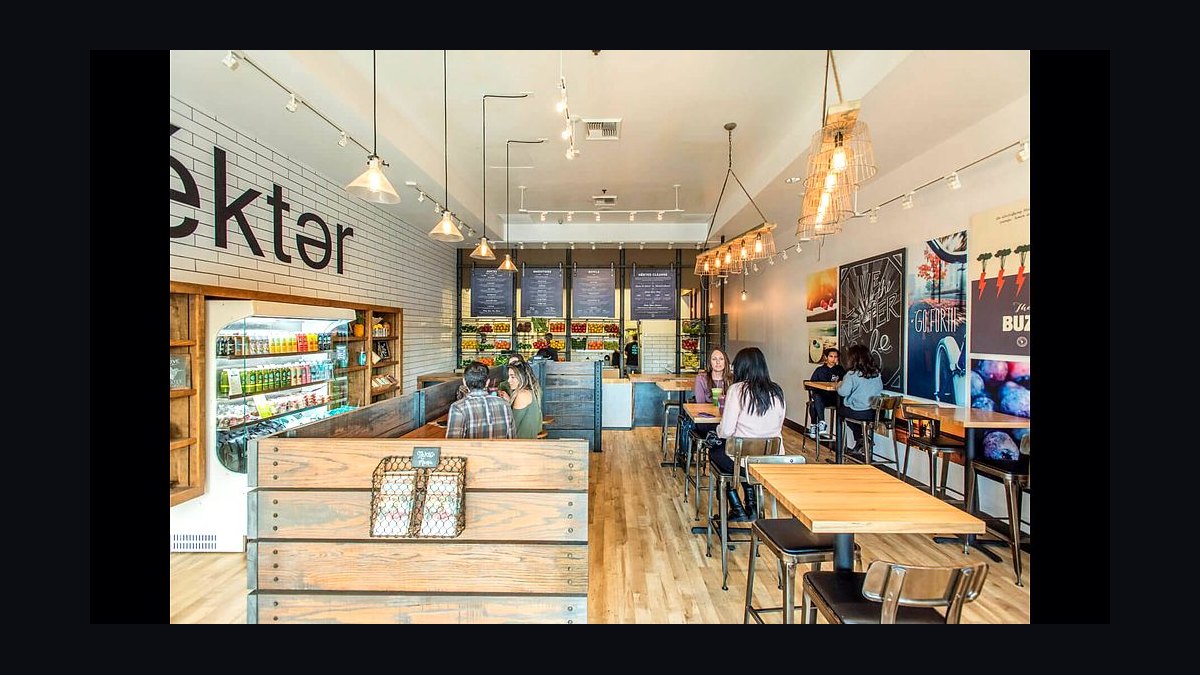
Yes, but only if you are a hands-on operator targeting a health-conscious, high-traffic site — Nekter Juice Bar is a throughput-driven quick-service beverage business, not a passive wellness brand. With a ~$280,000–$600,000 investment, a 6% royalty, and food costs of 28–35% driven by fresh-produce spoilage, it rewards disciplined, on-site management and punishes low-traffic locations or absentee ownership.
The outcome you should expect
Open a Nekter Juice Bar in the right location and you should expect a business that behaves like any other high-volume quick-service concept wearing a wellness label: revenue arrives in a steady drip of $6–$12 tickets across morning commute traffic, midday lunch crowds, and post-workout windows, rather than in a handful of large transactions. That means your first year is a volume game, not a margin game — the store's survival depends far more on foot count through the door than on any single upsell or menu innovation. Franchisees who open in strong sites near gyms, offices, or affluent retail corridors typically see revenue land in the $500,000–$800,000 annual range once the store stabilizes, while sites without genuine walk-by and drive-by traffic often stall well below that and struggle to cover fixed rent and labor.
The realistic timeline matters as much as the number. Most new stores take 6–12 months to ramp to a stable run-rate, because local customers need to discover the store, sample the product, and build a repeat habit — juice and smoothie consumption is largely routine-driven, so the first few months are about converting curiosity visits into weekly regulars. During that ramp, expect thinner margins and more produce waste than your steady-state model predicts, because you are still calibrating par levels against real, not projected, demand. Owners who go in expecting immediate profitability frequently panic-discount in month two or three, which trains the local customer base to wait for promotions and erodes the price integrity the model depends on. The outcome you should actually plan for is a breakeven window in the 12–24 month range, with well-located, well-run stores reaching profitability faster and marginal locations taking longer or never reliably getting there. If your capital plan and your patience only extend to month six, this is the wrong concept regardless of how strong the site looks on paper.

What drives that outcome
Three forces determine whether a Nekter location lands in the strong outcome or the weak one: location traffic, produce-cost discipline, and labor management. Foot traffic is the single largest lever — a cold-pressed juice and smoothie bar has almost no destination-drive demand outside of loyal regulars, so the store needs constant walk-by and drive-by exposure near gyms, office parks, or dense affluent retail to hit volume. Produce-cost discipline is the second lever: because inventory is fresh and highly perishable, a store that over-orders relative to actual traffic does not just lose margin, it physically throws away product every single day, compounding a slow-traffic problem into a cash-bleed problem. Labor management is the third: a young, often part-time hourly staff has to execute fast, consistent prep and service during short traffic spikes (the 7–9 a.m. and post-workout windows), and turnover or under-training directly shows up as slower service, longer lines, and lost walk-away customers during exactly the windows that matter most.
These three drivers interact rather than operate independently. A great location with sloppy ordering still bleeds margin through waste; tight produce discipline in a weak-traffic site still can't generate enough transactions to cover rent; and even a well-supplied, well-located store loses customers if the counter staff can't move a line during the 15-minute morning rush. Franchisees who succeed treat all three as a single daily operating discipline rather than a one-time site-selection decision, adjusting par levels weekly against actual sales data and scheduling staff around measured peak windows rather than a generic labor template.
Benchmarks and realistic ranges
Use these ranges to underwrite a specific site rather than the brand in the abstract, and always verify current figures against the live Franchise Disclosure Document before committing capital. The total initial investment for a Nekter Juice Bar typically runs $280,000 to $600,000, with the range driven by market rent, square footage, and the scope of build-out required for plumbing, refrigeration, and juicing/blending equipment. The initial franchise fee sits around $35,000 per location, and ongoing fees are a 6% royalty on gross sales plus roughly 2–3% into the brand's advertising fund — so before a single ingredient is purchased, roughly 8–9% of top-line revenue is already committed to the franchisor.
On the net-worth side, expect a requirement around $300,000 or more, with $100,000–$150,000 in required liquidity — and treat that liquidity minimum as a floor, not a target, because it typically assumes an on-schedule ramp rather than a slow six-month stretch. Operating economics run tighter than many quick-service categories: food and packaging costs typically land in the 28–35% range (higher than a typical QSR because of fresh-produce dependence and unavoidable spoilage), and labor runs about 25–32% of sales for prep and counter staff. Stack rent, utilities, insurance, and other fixed costs on top of that, and a well-run store can land in a 10–20% pre-tax profit margin, while a struggling one can sit near breakeven or negative for an extended stretch. Average annual unit revenue for healthy locations generally falls in the $500,000–$800,000 band, with top-quartile, high-traffic urban or affluent-suburban stores exceeding it and marginal sites falling well short. Multi-unit developers should also benchmark cannibalization distance and shared-management capacity before committing to a second or third site in the same metro, since Nekter actively courts multi-unit growth but density only pays off when each store still clears its own traffic threshold.
Risks, edge cases, and failure modes
The single biggest failure mode is treating Nekter as a passive, lifestyle investment. This is a labor-intensive, throughput-dependent quick-service business, and an owner who is not on-site or does not have an exceptional manager in their place will consistently see labor slippage, inconsistent product quality, and produce waste creep upward until the store's margin disappears. Absentee ownership is not a minor drag on this model — it is close to disqualifying in a category this operationally tight.

The second major risk is location mismatch: a low-traffic site cannot generate the transaction volume the cost structure requires, and because inventory is fresh produce rather than shelf-stable goods, a slow store doesn't just underperform, it actively destroys inventory value every closing shift. Competitive intensity is a related and often underestimated risk — juice, smoothie, and açaí-bowl concepts are a crowded, easily copied category, competing not just against other named chains but against grocery-store prepared foods, convenience-store coolers, and customers simply blending a smoothie at home. A Nekter that isn't clearly winning on location, speed, or brand trust in its trade area will get quietly out-competed rather than dramatically failing.
Seasonality is an edge case that catches first-time owners off guard in four-season markets: cold-beverage demand softens meaningfully in winter, so a store that underwrote its pro forma entirely on summer-quarter sales will hit an unpleasant cash-flow gap in its first winter unless it planned for it with a cash reserve. Produce-cost volatility is another underappreciated risk — commodity swings in fruit and vegetable pricing hit a cold-pressed model directly, and a franchisee without supplier flexibility or menu-engineering discipline can see margin compress even in a well-trafficked store. Finally, labor turnover in a young hourly workforce is a chronic, not occasional, risk — plan for continuous hiring and training rather than assuming a one-time staffing effort, because service-speed failures during peak windows are one of the fastest ways to lose a customer's habitual, repeat-visit pattern permanently.
A practical rollout plan
Treat the decision and the opening as a 90-day validation process rather than a leap of faith, and don't skip steps even if a site or broker is pushing urgency. In the first 30 days, pull the current FDD and study Item 19's financial performance representations line by line, paying particular attention to how revenue and food cost are actually presented rather than summarized. In parallel, assess your target site directly — walk it at the actual morning-commute and post-workout hours you're underwriting, count real foot and car traffic, and confirm proximity to gyms, offices, and dense affluent retail rather than relying on a broker's demographic summary.

In days 31–60, build a conservative pro forma using your market's actual produce costs and hourly wage rates, not brand-provided averages, and stress-test it against a slow-season scenario with elevated spoilage assumptions. Get real local build-out and lease quotes rather than budgeting off national averages, and confirm you clear the net-worth and liquidity thresholds with enough operating-capital cushion left over to fund the 6–12 month ramp without forcing early discounting. In days 61–90, interview at least five current franchisees directly and ask pointed questions about produce cost, spoilage rates, slow-season volume, and local competitive pressure — their answers will tell you more than any disclosure document. Confirm whether the franchisor expects a multi-unit commitment for your market, have a franchise attorney review the full agreement, and only sign once every one of these checkpoints has been independently verified rather than taken on faith.
Related questions
Is a Nekter Juice Bar franchise profitable?
Well-located, well-run stores can reach 10–20% pre-tax margins once past the 6–12 month ramp, with annual revenue typically in the $500,000–$800,000 range. Low-traffic or poorly managed locations often stay near breakeven or worse.
How much liquid capital do I need to open a Nekter?
Plan for $100,000–$150,000 in liquidity against a $300,000+ net-worth requirement, plus a cushion beyond the build-out budget to cover the ramp period without forcing early discounting.
What's the biggest mistake new Nekter franchisees make?
Treating the store as a passive wellness investment rather than a hands-on, throughput-driven QSR — absentee ownership consistently shows up as labor slippage and produce waste.
How does Nekter compare to other juice bar franchises?
Nekter competes directly with brands like Juice It Up!, Clean Juice, and Main Squeeze on menu breadth and price point; differentiation comes down to site quality and execution speed, not the underlying concept.
Does seasonality really affect a juice bar's revenue?
Yes — in four-season markets, cold-beverage demand softens meaningfully in winter, so pro formas built only on summer-quarter sales will understate the cash-flow gap in the first off-season.
FAQ

What is the typical total investment to open a Nekter Juice Bar franchise? Total investment generally runs $280,000 to $600,000, including the franchise fee, equipment, build-out, and initial inventory. Exact costs vary by location size, lease terms, and local construction requirements, so always confirm against the current FDD.
How much can I expect to earn in annual revenue? Average unit revenues typically fall between $500,000 and $800,000 per year, depending on foot traffic, local demand, and operational efficiency. High-performing locations in dense urban or affluent suburban areas can exceed this range.
What is the franchise royalty fee and ongoing costs? The royalty fee is around 6% of gross sales, with roughly 2–3% more going to the advertising fund. Food and packaging typically run 28–35% of sales and labor around 25–32%, leaving a potential 10–20% profit margin for well-run stores.
How long does it take to break even or become profitable? Many franchisees reach breakeven within 12 to 24 months, though this depends heavily on location, local competition, and owner involvement. High-volume stores in strong sites can become profitable sooner; lower-traffic sites may take considerably longer.
What are the biggest risks for a Nekter franchise owner? The main risks are fresh-produce perishability and spoilage, intense competition from other juice and smoothie concepts, and dependence on consistent high foot traffic. Owners who can't manage labor turnover or control food waste often struggle to hold margin.
Do I need prior food or business experience to succeed? It isn't strictly required, but hands-on experience in quick-service operations or managing a small business meaningfully improves the odds of success. Nekter provides training, but owners who lack operational discipline or can't be on-site typically see higher failure rates.
Sources
- https://www.ftc.gov/business-guidance/resources/franchise-rule-compliance-guide
- https://www.franchise.org
- https://www.qsrmagazine.com
- https://www.entrepreneur.com/franchises
- https://www.nekterjuicebar.com
- https://www.frandata.com
- https://www.sba.gov/business-guide/plan-your-business/franchise-businesses
Related on PULSE
This page will be disappearing soon. Save it to your device for $1 — or read it free while it is here.
@Kory-White- · if Venmo asks, the last 4 of my number are 2012
This page is gone.
This one is off the shelf now. $1 keeps it on your phone for good — the whole page, pictures and diagrams included.
 franchiseShould I open or buy a Dunkin' franchise in 2027?
 franchiseShould I open or buy a McAlister's Deli franchise in 2027?
 franchiseShould I open or buy a Taco Bell franchise in 2027?
 franchiseShould I open or buy a Mac Tools franchise in 2027?
 franchiseShould I open or buy a ServiceMaster Restore franchise in 2027?
 franchiseShould I open or buy a Chipotle franchise in 2027?
 franchiseShould I open or buy an Auntie Anne's franchise in 2027?
 franchiseShould I open or buy a Take 5 Oil Change franchise in 2027?
 franchiseShould I open or buy a Wingstop franchise in 2027?
 franchiseShould I open or buy a Supercuts franchise in 2027?