


Should I open or buy a Tires Plus franchise in 2027?
Quality
Certified
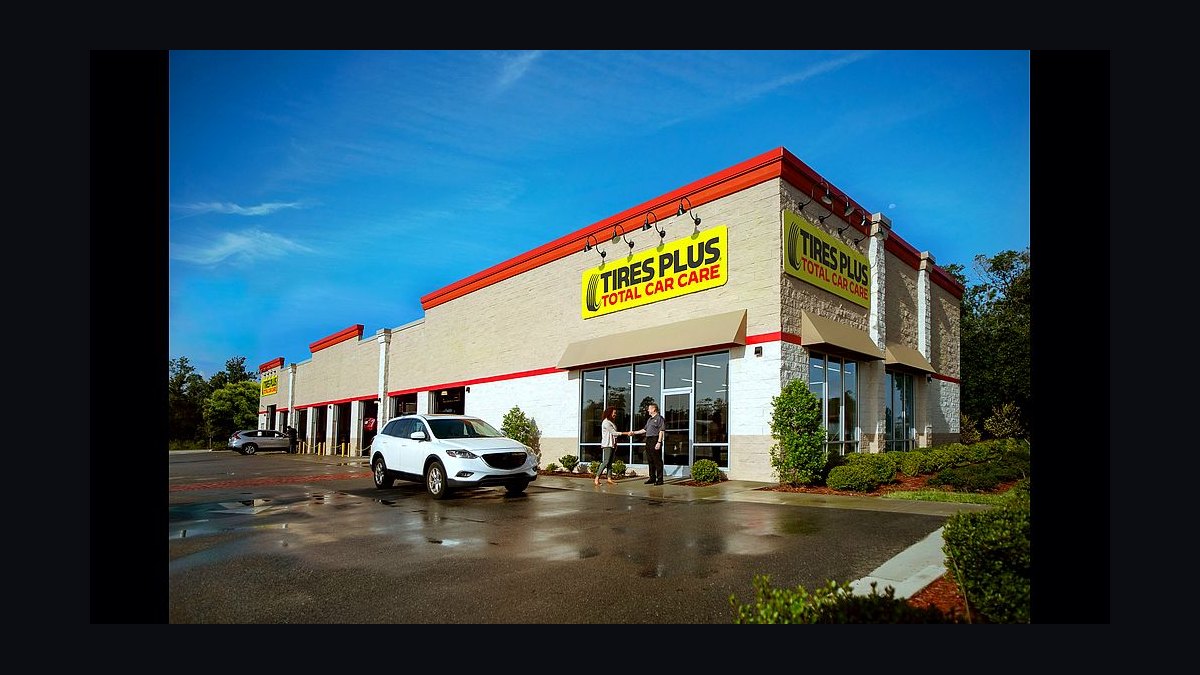
No — Tires Plus is not sold as a franchise in 2027. It operates as a corporate-owned retail banner under Bridgestone Retail Operations, alongside Firestone Complete Auto Care, running roughly 470 company-operated stores with no open new-unit program. If you want to own a tire-and-auto business, the realistic paths are a franchise like Big O Tires or Tire Pros, an independent acquisition, or a ground-up build.
A Buyer Walks Into This Expecting a Franchise Kit
Picture a operator with $400,000 in liquid capital and eight years managing a regional auto-service chain. They've watched Tires Plus stores in their metro grow busier every year — steady bays, brand recognition, a Bridgestone supply relationship that looks bulletproof from the outside. Naturally, the next move seems obvious: call Tires Plus, request a Franchise Disclosure Document, and start the 90-day process every other franchise buyer goes through. That call goes nowhere, because there is no franchise sales department to call. Tires Plus doesn't publish an FDD, doesn't run an Item 19 revenue table, and doesn't have a franchise development team fielding buyer inquiries. The stores are corporate assets, built and staffed by Bridgestone Americas to move Bridgestone-manufactured tires and capture the service revenue that comes with them.
This is the moment where a lot of prospective owners either give up on tire-and-auto entirely or waste weeks chasing a deal that was never on the table. The better move is to recognize the mechanism at play: a tire manufacturer that also owns retail doesn't need franchisees to fund expansion — it funds expansion itself because every store sells its own product. That's a fundamentally different business logic than a franchisor like Big O Tires, which needs franchisee capital to grow store count and takes a royalty in exchange. Once a buyer understands *why* Tires Plus is closed, the search reroutes quickly: Big O Tires for brand pull, Tire Pros for a conversion path if they already own a shop, Express Oil Change & Tire Engineers if they want quick-lube traffic layered onto tire sales, or an independent build if they want full equity and no royalty ceiling. The scenario that opens this section — a capable operator wasting a month chasing a franchise that doesn't exist — is avoidable the moment someone checks the ownership structure before writing a check or hiring a franchise attorney.
How the Corporate-Retail Mechanism Actually Works
Understanding why Tires Plus stays closed to franchisees requires understanding the incentive Bridgestone is protecting. Bridgestone Americas manufactures tires. When it also owns the retail floor where those tires get sold and installed, it captures two margins instead of one: the manufacturing margin on the tire itself, and the retail-and-service margin on the sale, installation, alignment, and follow-on maintenance work. A franchised store, by contrast, might stock tires from multiple manufacturers depending on price and availability, diluting Bridgestone's manufacturing-side capture. Keeping Tires Plus and Firestone Complete Auto Care as company-operated banners lets Bridgestone control the entire value chain — from rubber to service bay — and lets it merchandise its own tire lines without a franchisee's local buying preferences getting in the way.
This is the same logic that keeps Goodyear running large company-owned retail networks rather than franchising them out. A tire manufacturer with retail ambitions treats stores as a distribution and margin-capture tool, not as a franchise-fee revenue stream. Compare this to Big O Tires, which is not a tire manufacturer — it's a retail brand that sources from multiple suppliers and monetizes growth through franchise fees (roughly $35,000) plus an escalating royalty that climbs from 2% up to 5% of gross revenue as a location matures. Big O needs franchisee capital and operator hustle to expand into new markets; Bridgestone doesn't, because its own balance sheet funds Tires Plus growth and its own factories supply the product.

The practical result for a buyer: any tire-and-auto concept where the parent company is also a tire *manufacturer* is a poor bet for finding an open franchise program. The tire-and-auto brands that DO franchise — Big O, Tire Pros, Express Oil, Grease Monkey, Midas — are retail-only companies with no manufacturing stake, so franchisee capital and operator effort are exactly what they need to grow. That distinction is the fastest filter for eliminating dead-end inquiries before they cost you time.
Real Numbers, Ranges, and Benchmarks
Since Tires Plus itself carries no publishable investment figures, the useful benchmarks come from the franchised alternatives a serious buyer will actually evaluate. Total investment across the tire-and-auto category spans roughly $300,000 to $1.6 million depending on brand, market, and whether you're building new or converting an existing shop. Big O Tires sits at the higher end of that range — $464,000 to $1,600,000 all-in — reflecting its larger-format stores and full service-bay buildouts, with a $35,000 franchise fee and a royalty structure that starts around 2% and escalates to 5% as the store matures, plus roughly a 4% advertising contribution. Express Oil Change & Tire Engineers runs even higher, $1.4 million to $2.6 million, because its format combines quick-lube throughput with full tire-and-service capability; it charges a flat 5% royalty and a $35,000 entry fee. On the lower end, Grease Monkey blends quick-service and tire sales for $300,000 to $500,000 total investment, a $40,000 fee, and a 5% royalty. Tire Pros operates differently as a conversion-first program: an existing independent tire shop can join for $200,000 to $700,000, often with a low or waived franchise fee, trading a program fee and co-op advertising commitment for distributor pricing and brand recognition rather than paying to build from scratch.

Revenue benchmarks track investment size closely. Big O locations typically generate $1.5 million to $2.5 million annually; Express Oil locations run $1.4 million to $2.0 million; Grease Monkey's smaller-format stores land at $900,000 to $1.4 million. Gross margins across the category run 40% to 48%, reflecting the blend of low-margin tire sales (often 15% to 25% gross margin on the tire itself) against high-margin service work like alignments, brakes, and batteries, which can run 50% to 60% gross margin or higher. Owner cash flow on a well-run store typically lands at 10% to 14% of revenue before debt service — on a $1.6 million-revenue store, that's $160,000 to $224,000, consistent with the broader $120,000 to $280,000 range an owner-operator can expect once the service-bay mix is dialed in.
Capital requirements for entry: plan on $120,000 to $350,000 in liquid capital, layered with SBA-backed debt of $300,000 to $800,000 depending on whether you're converting an existing shop (cheaper) or building a new facility with lifts, alignment racks, and diagnostic bays (more expensive). Tire inventory alone typically ties up $150,000 to $400,000 in working capital, which is a meaningful chunk of the total investment and a line item first-time buyers frequently underestimate. Technician wages rose 6% to 8% in 2025, and an ASE-certified technician shortage is constraining service throughput at exactly the moment service revenue is the highest-margin lever available — a tightening labor market that every buyer entering in 2027 needs to underwrite into their staffing plan and pricing.
Trade-Offs Between the Real Alternatives
Once a buyer accepts that Tires Plus itself is off the table, the decision becomes a trade-off between four real paths: buy a Big O Tires franchise, convert an existing shop through Tire Pros, buy into a quick-service-plus-tires brand like Express Oil or Grease Monkey, or build an independent store with full equity. Each carries a different risk-and-reward profile.
Big O Tires offers the strongest brand recognition and the largest existing footprint, which matters in markets where consumers already have Big O top-of-mind. The trade-off is the highest total investment in the category outside of Express Oil, plus a royalty that escalates from 2% to 5% — meaning the fee structure gets more expensive precisely as the store matures and generates more revenue, which some franchisees find frustrating in years four and five. Tire Pros is the cheapest entry if you already own an independent tire shop, since you're converting existing infrastructure rather than building new — but it offers less brand pull in markets where Tire Pros isn't already established, and the "program" structure means less standardized operational support than a traditional franchise. Express Oil Change & Tire Engineers carries the highest investment ceiling in the category, but its quick-lube traffic model drives repeat visit frequency that pure tire shops don't get — a customer who comes in for a $50 oil change every 5,000 miles is a customer you can also sell tires and alignments to, compounding lifetime value. The trade-off is a $1.4 million-plus entry price that prices out many first-time owner-operators. Grease Monkey and Midas sit at the accessible end — $300,000 to $700,000 — trading a smaller-format store and lower revenue ceiling ($900,000 to $1.4 million) for a much lower barrier to entry, useful for a buyer who wants to prove out operations before scaling to a second location.

The independent build carries the most risk and the most upside: full equity, no royalty cap on growth, and complete control over supplier relationships and service mix — but no brand recognition, no established distributor pricing, and no franchisor playbook to shortcut the first eighteen months of operations. Independent tire-and-service stores that run well can command a 3.5x to 5x EBITDA exit multiple in the current automotive-services transaction market, competitive with franchised exits, but getting there requires building the operational discipline a franchise system would otherwise hand you.
Common Pitfalls in the Tire-and-Auto Search
The single most common pitfall is spending real time and legal budget chasing a Tires Plus franchise inquiry that will never resolve into a deal — verify the corporate-ownership structure of any tire brand before requesting information, filing an inquiry, or engaging a franchise attorney. A related mistake is assuming that because a brand has hundreds of visible retail locations, it must be franchising; large store counts are just as often a signal of aggressive corporate ownership (as with Tires Plus, Firestone, and much of Goodyear's network) as they are a signal of a mature franchise system.
The second major pitfall is underestimating the service-bay mix as the actual profit driver. Buyers who mentally model the business as "a tire store" chronically underprice the opportunity, because tire-only economics are thin — online competitors like Tire Rack, Amazon, and Discount Tire Direct compress tire margins relentlessly, and a store that doesn't convert tire customers into alignment, brake, and maintenance customers will struggle against that pricing pressure. The stores that perform well treat the tire sale as a customer-acquisition event, not the profit center itself.

Third, buyers frequently undercapitalize the equipment and inventory side of the buildout. Lifts, alignment racks, and diagnostic equipment aren't optional add-ons for a tire-and-auto store chasing the high-margin service revenue — without them, the store is structurally locked into tire-only economics no matter how good the location is. Similarly, tire inventory of $150,000 to $400,000 is easy to underweight in a financial model built primarily around real estate and franchise fees; poor inventory turns strangle cash flow just as fast as a bad lease.
Fourth is skipping direct franchisee validation. Item 19 tables and marketing materials show averages and best cases; calling five or more existing franchisees in each brand under consideration and asking directly about their tire-versus-service revenue split, real gross margin, and owner take-home is the only way to pressure-test the numbers a franchisor publishes. This is especially important given Big O's escalating royalty structure — a franchisee two years in may report very different economics than one entering year five.
Finally, buyers moving into 2027 need to account for the EV transition reshaping the service mix. EVs wear tires faster due to added weight and instant torque, which is good for tire volume, but they need far less traditional maintenance — no oil changes, fewer brake jobs thanks to regenerative braking. A service plan built entirely around the traditional oil-change-and-brakes model will underperform as EV penetration grows; the buyers positioning well for 2027 are building service capability around tires, alignment, batteries, and ADAS calibration rather than the legacy maintenance menu.
Related questions
Is Firestone Complete Auto Care a franchise?

No. Firestone Complete Auto Care is the sister brand to Tires Plus, also operated corporately under Bridgestone Retail Operations. Neither brand runs an open franchise program in 2027; both exist to sell Bridgestone's own tire inventory through company-controlled retail.
How much does a Big O Tires franchise cost?
Total investment runs $464,000 to $1,600,000, including a $35,000 franchise fee, buildout, equipment, and opening inventory. Ongoing royalties start near 2% and escalate to 5% of gross revenue as the store matures.
Can I convert my existing independent tire shop into a franchise?
Yes — Tire Pros is built specifically for this, typically costing $200,000 to $700,000 with a low or waived franchise fee, trading a program fee for distributor pricing and brand recognition rather than requiring a full ground-up build.
What's more profitable, tire sales or service work?
Service work — alignments, brakes, batteries, and maintenance typically run 50-60% gross margin versus 15-25% on tire sales alone. Stores that convert tire buyers into service customers consistently outperform tire-only operations.
How is the EV transition changing tire-and-auto economics?
EVs increase tire replacement frequency due to added weight and torque but reduce traditional maintenance revenue (no oil changes, fewer brake jobs from regenerative braking), pushing 2027 service models toward tires, alignment, batteries, and ADAS calibration.
FAQ

Is Tires Plus actually a franchise I can buy in 2027? No. Tires Plus is a corporate-owned brand under Bridgestone Retail Operations, not a franchise. The company operates its roughly 470 stores directly and does not sell new franchises. Buyers wanting a tire-and-auto franchise need to look at brands like Big O Tires or Tire Pros instead.
Why doesn't Bridgestone franchise Tires Plus if the stores are profitable? Because Bridgestone is a tire manufacturer, keeping Tires Plus company-owned lets it capture both the manufacturing margin on every tire sold and the full retail-and-service margin, without a franchisee's local buying preferences diluting its own product placement.
What's the typical investment range for a tire-and-auto franchise? Total investment typically falls between $300,000 and $1.6 million, depending on the brand, location, and whether you buy an existing store or build new. This covers franchise fees, equipment, inventory, and build-out costs.
How much can an owner earn from a tire-and-service franchise? Owner net income usually ranges from $120,000 to $280,000 per year, driven largely by the mix of tire sales versus higher-margin service work, local competition, and how many service bays the shop operates.
What royalties and fees do these franchises charge? Ongoing royalties typically run 2% to 5% of gross revenue, with some brands escalating the rate as a store matures (Big O steps from 2% up to 5%). Marketing fees usually add another 1% to 4% on top.
Can I buy an existing independent tire shop instead of a franchise? Yes. Independent tire shops commonly trade in the $200,000 to $800,000 range depending on location, equipment, and revenue, and this path avoids royalty payments entirely — though it requires more of your own due diligence on financials and reputation.
Sources
- https://www.bridgestoneamericas.com
- https://www.bigotires.com/franchise
- https://www.franchisedirect.com
- https://www.tirepros.com
- https://www.moderntiredealer.com
- https://www.spglobal.com/mobility
- https://www.tirebusiness.com
- https://www.franchisetimes.com
- https://www.franchise.org
- https://www.ibisworld.com
Related on PULSE
This page will be disappearing soon. Save it to your device for $1 — or read it free while it is here.
@Kory-White- · if Venmo asks, the last 4 of my number are 2012
This page is gone.
This one is off the shelf now. $1 keeps it on your phone for good — the whole page, pictures and diagrams included.
 pulse-franchisesBest franchises for veterans in 2027
 pulse-franchisesBest restoration and disaster-recovery franchises to buy in 2027
 pulse-franchisesWhat is a semi-absentee franchise and which ones work best in 2027?
 pulse-franchisesBest HVAC and plumbing franchises to buy in 2027
 pulse-franchisesHow much does it really cost to open a franchise in 2027?
 pulse-franchisesShould I open or buy a Jan-Pro franchise in 2027?
 pulse-franchisesBest pizza franchises to buy in 2027
 pulse-franchisesBest window and gutter-cleaning franchises to buy in 2027
 pulse-franchisesBest franchises to buy with SBA financing in 2027
 pulse-franchisesBest tax-preparation and financial-services franchises to buy in 2027