


Should I open or buy a Pet Supplies Plus franchise in 2027?
Quality
Certified
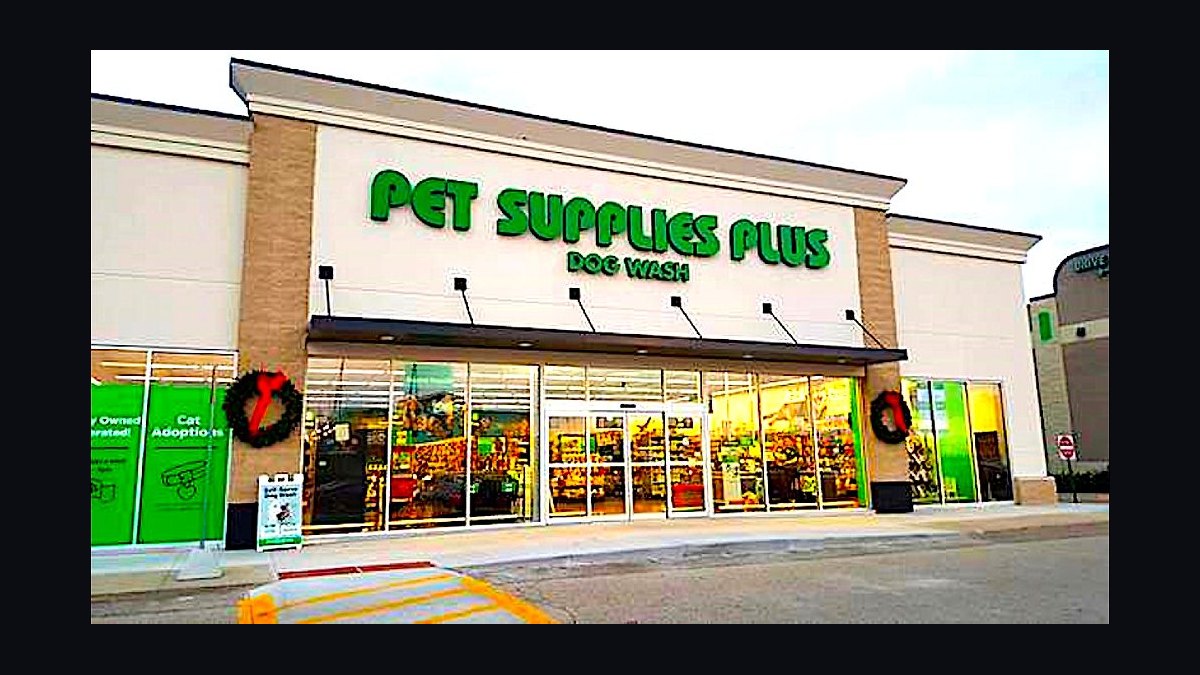
Open or buy a Pet Supplies Plus franchise in 2027 if you hold $600K–$900K in liquid capital, can run the store yourself for 18 months, and want a services-anchored neighborhood pet retailer that competes on grooming and convenience rather than price. Total investment runs $536,520–$1,965,005 (2026 FDD Item 7), with $165K–$265K in Year-1 owner cash flow after a 24–36 month payback. Skip it under $500K liquid or near a Chewy-fulfilled PetSmart.
What it is and why it matters
A Pet Supplies Plus franchise is not a passive royalty asset — it is a labor-management retail business wearing a pet-store costume. The brand sits as the third-largest pet retail chain in the U.S. behind PetSmart and Petco, with 740+ locations across 41 states per the 2026 FDD. What makes it matter as a 2027 decision, specifically, is the structural shift happening underneath the entire pet retail category: independent pet stores lost 8.1% of market share between 2022 and 2026 per IBISWorld 51391, while franchised neighborhood chains gained 4.4% over the same stretch. Pet Supplies Plus has been the single biggest beneficiary of that transfer, which means the brand's growth story right now is less about total category expansion and more about consolidation — smaller operators failing and franchised operators absorbing their customers.
That consolidation matters because it changes what "opening a franchise" actually buys you. You are not simply buying a storefront that sells kibble; you are buying a services chassis — grooming, self-wash stations, a loyalty program, vendor terms with Hill's, Royal Canin, and Purina Pro Plan — bolted onto a real estate footprint of 8,000–10,000 square feet in a strip-center anchor position. The reason this distinction is load-bearing: pure product retail in pet food is a dead end on price. Chewy ended 2025 with $12B in U.S. pet supplies e-commerce revenue, 2.5x PetSmart.com and 7.5x Amazon's pet category, and 77% of that revenue comes from Auto-Ship — a subscription mechanic that locks in repeat food purchases before a brick-and-mortar competitor ever gets a chance to bid for that customer's wallet on price. MAP (minimum advertised price) pricing on premium dry food means a franchisee legally cannot undercut Chewy even if they wanted to.

So the "why it matters" question resolves to this: Pet Supplies Plus only works as a business if you treat the store as a services and convenience play layered on top of commodity retail, not as a pet food store that happens to also groom dogs. The stores that outperform lean into the 22% of gross revenue that top locations pull from grooming and self-wash, running at roughly 88% margin on that slice — margin Chewy structurally cannot touch because it cannot ship a bath. Understanding that the franchise's real value proposition is "services Chewy can't replicate," not "product Chewy can undercut," is the single most important mental model before you evaluate the economics below.
The step-by-step process
Evaluating and executing a Pet Supplies Plus franchise purchase follows a fairly linear sequence, and skipping steps — particularly the trade-area study and franchisee validation calls — is the single most common cause of a franchisee landing in an oversaturated or under-demanded market. The process below mirrors how a disciplined buyer should move from first interest to signed agreement, roughly over a 90-day window once financing is lined up.

First comes the capital audit: confirming you have liquid capital plus SBA-borrowable capacity plus a cash reserve, since Pet Supplies Plus sits on the SBA Franchise Directory and the 7(a) loan path is a clean, well-trodden route for this brand specifically. Second is the trade-area study, where you pull demographic and competitive-density data for candidate sites — pet-owning household counts, median income, and proximity to existing PetSmart or Petco locations. Third is the FDD deep read with a franchise attorney, focused specifically on the territory protection clause, the training obligations, and the financial performance representations. Fourth is franchisee validation — calling existing owners, which the franchisor is legally required to make possible via the franchisee list disclosure. Fifth is securing real estate via a tenant representative broker. Sixth is Discovery Day at headquarters, board approval, and signing.
The reason this sequence matters more than it might for other franchise categories is that Pet Supplies Plus grants a protected territory radius of only 1.5–3 miles, which is tight. A trade area study done sloppily, or skipped in favor of "the landlord had a space available," is the single biggest reason franchisees end up 30–40% below the FDD's median average unit volume. Order matters here specifically because capital audit and trade-area study should both happen before you fall in love with a specific piece of real estate — franchisees who reverse this order end up rationalizing a weak site because they've already committed emotionally and financially to a lease negotiation.
Costs, timelines, and typical ranges

The full cost stack, per the 2026 FDD Item 7, breaks down as follows:
| Line Item | Low | High |
|---|---|---|
| Initial Franchise Fee | $10,000 | $49,900 |
| Real Estate / Rent Deposits | $15,000 | $80,000 |
| Leasehold Improvements & Build-Out | $180,000 | $725,000 |
| Equipment, Fixtures, Signage | $95,000 | $310,000 |
| Initial Inventory | $165,000 | $285,000 |
| Pre-Opening Training & Travel | $8,500 | $35,000 |
| Working Capital (3 months) | $50,000 | $200,000 |
| Insurance, Permits, Misc. | $12,520 | $280,105 |
| Total Investment | $536,520 | $1,965,005 |
Beyond the initial outlay, ongoing fees stack every month you operate: a 2.0% royalty on gross sales in year one, rising to 3.0% thereafter; a 3.5% marketing and local-spend obligation (roughly one-third national fund, two-thirds directed local spend); a technology fee around $1,200 per month; and mystery-shop and audit fees near $2,000 annually. Combined, royalty plus marketing fund equals 6.5% of gross revenue — a permanent drag that independent pet retailers do not carry, which is part of why IBISWorld pegs independent operator margins at 3.8% against Pet Supplies Plus's reported 6–10% EBITDA.

On the revenue side, average unit volume sits at $2,632,000 per FDD Item 19, with median revenue around $2,600,000 and top-quartile stores clearing $3.4M+. Cost of goods runs 62–66% (a low-margin category structurally, since food dominates the mix), labor lands at 12–15%, and occupancy runs 6–9%. Net of all that, EBITDA margin averages 6.3–10.0%, translating to $165,000–$265,000 in owner cash flow at a median-performing store once ramp is complete.
Timeline-wise, the working capital line in the FDD ($50K–$200K) is commonly understated in practice — field reports suggest real operators need $250K–$400K in reserves to survive a 9–14 month ramp to breakeven. Payback period runs 36–54 months for absentee ownership structures and 24–36 months for owner-operators who personally absorb the $190,000–$240,000 manager-replacement salary the franchisor quotes in its discovery materials. Real estate terms typically run $22–$30 per square foot NNN outside coastal metros, and franchise agreements are structured as a 10-year initial term with two 5-year renewal options.
Where teams get it wrong
The most expensive mistake is under-capitalizing working capital reserves relative to the FDD's stated range. Buyers who take the $50K–$200K figure at face value, rather than budgeting toward the $250K–$400K real-world number, frequently run out of cash mid-ramp — often around month nine or ten, well before the store has stabilized its customer base and grooming pipeline. This is compounded by treating the $200K personal net-worth minimum as a pass/fail gate rather than a floor; buyers sitting right at that line with no cushion above it are the ones most likely to face a forced sale or default within the first two years.

A second common failure is misreading the labor model. Pet Supplies Plus stores run 14–22 W-2 employees including grooming staff, and retail pet industry turnover ran 64% in 2026 per BLS Quarterly Workforce Indicators. Absentee investors who expect the store to run itself on a general manager's shoulders routinely see shrink climb to 2.8%+ versus a 1.4% chain average when no owner is physically present to manage staff and inventory discipline. The franchise's own "neighbor" brand positioning — owners who know customers' dogs by name, who sponsor local youth sports teams — is not marketing fluff; it's a genuine driver of the loyalty and repeat-visit behavior that offsets Chewy's price and convenience advantages, and it requires a present owner to execute.
A third recurring error is skipping or shortcutting the trade-area analysis in favor of whatever real estate happens to be available. Any market already served by a PetSmart, a Petco, and an independent pet boutique within three miles will see average unit volume land 30–40% below the FDD median — no amount of local marketing spend recovers that gap once the site is chosen. Teams also frequently underweight the franchisee validation call step: the FDD legally requires the franchisor to disclose the full list of existing franchisees, and skipping the 15-owner-minimum call list (split across tenure cohorts) means walking into the agreement blind to real-world ramp timelines, actual working capital burn, and grooming P&L performance that the FDD's aggregate figures smooth over.
Decision framework: when to choose what

Not every buyer profile should choose the same entry path into this brand, and not every buyer should choose this brand at all. The decision tree below reflects the core trade-offs: capital position, appetite for hands-on operation, and whether an existing store or new build makes more sense.
For buyers who clear the capital and time-commitment bar, the resale market deserves serious weight: BizBuySell shows 18–26 Pet Supplies Plus resale listings per year at 3.2–4.1x SDE multiples, which skips the 9–14 month ramp-to-breakeven window entirely and hands you a known, already-trained customer base. For buyers who cannot commit to full-time, on-floor management, alternative franchise categories with lower operational complexity — or a smaller-format services-only concept — are a better fit than forcing an absentee structure onto a model that specifically rewards owner presence. For buyers priced out of the $600K+ liquid threshold entirely, a lower-investment pet retail brand or an independent single-location store (accepting the lower 3.8% industry-average margin in exchange for zero royalty drag) may be the more realistic near-term path, with a Pet Supplies Plus purchase revisited once capital position improves.
The market backdrop that should inform this decision either way: the U.S. pet industry hit $158B in 2025, with APPA's 2026 State of the Industry Report projecting $165B in 2026 and roughly $172B in 2027 — but growth is decelerating, with APPA's 2030 projection implying a 3.0% annual CAGR going forward, down sharply from the 6.1% COVID-era surge. That deceleration doesn't kill the opportunity, but it does mean 2027 entrants are buying into a maturing, consolidating category rather than a still-expanding one, which raises the importance of site selection and services execution relative to simply riding category tailwinds.
Related questions

How does Pet Supplies Plus compare to buying an independent pet store?
Independent pet stores carry no royalty drag but average only 3.8% operating margin (IBISWorld) versus 6–10% for franchised Pet Supplies Plus stores, and independents have been steadily losing market share to franchised chains since 2018.
Is a Pet Supplies Plus resale a better entry point than a new build?
Often yes — resales trade at 3.2–4.1x SDE with 18–26 listings per year nationally, and they skip the 9–14 month ramp-to-breakeven window a new build requires.
What territory protection does Pet Supplies Plus grant?
The franchisor grants a protected radius of 1.5–3 miles per FDD Item 12, which is why trade-area analysis before site selection matters far more than it would with a wider-territory brand.
How exposed is this franchise to Chewy's growth?
Significantly on product sales (Chewy's Auto-Ship locks in 77% of its revenue), but far less on the 22%-of-gross services and grooming revenue, which Chewy structurally cannot deliver.
FAQ
How much liquid capital do I really need to open a Pet Supplies Plus franchise in 2027?

At least $600,000 to $900,000. Total all-in investment ranges from $536,520 to $1,965,005 per the 2026 FDD Item 7, and that liquidity buffer covers the franchise fee, build-out, inventory, and working capital through ramp.
How long until I see a return on my investment? Expect a 24–36 month payback window for owner-operators, longer (36–54 months) for absentee structures, assuming average unit volume and typical margins hold.
What are the ongoing royalty and marketing fees? Royalty is 2% of gross sales in year one, rising to 3% thereafter, plus a 3.5% combined marketing and local-spend obligation — 6.5% of gross revenue total.
How much can I expect to make in the first year? Conservative Year-1 owner cash flow, once ramped, runs $160,000–$265,000, based on a $2.63 million average unit volume and 6–10% EBITDA margin — actual results vary by location.
Can I be an absentee owner, or do I need to run the store myself? Plan to personally run the store for at least 18 months. The model depends on neighborhood relationship-building and hands-on grooming and staff management that absentee structures consistently underperform on.
What's the biggest competitive risk heading into 2027? A Chewy-fulfilled PetSmart or a PetSmart/Petco/independent cluster within 2–3 miles of your site — either one can pull average unit volume 30–40% below the FDD median regardless of how well you run the store.
Sources
- Pet Supplies Plus Franchise Disclosure Document, Item 7 and Item 19, 2026 issue — https://www.franchisegrade.com
- American Pet Products Association, 2026 State of the Industry Report — https://www.americanpetproducts.org
- IBISWorld Industry Report 51391, U.S. Pet Stores 2026 — https://www.ibisworld.com
- U.S. Bureau of Labor Statistics, CPI-U Pet Food and Pet Products — https://www.bls.gov/cpi
- U.S. Bureau of Labor Statistics, Quarterly Workforce Indicators — https://www.bls.gov/qwi
- SBA Franchise Directory — https://www.sba.gov/business-guide/plan-your-business/franchises
- Chewy Inc. (CHWY) 10-K filing, fiscal year 2025 — https://investor.chewy.com
- BizBuySell franchise resale listings — https://www.bizbuysell.com
- 1851 Franchise, Pet Supplies Plus Costs, Fees & Profit — https://1851franchise.com
Related on PULSE
- Should I open or buy a Tires Plus franchise in 2027?
- Should I open or buy a Batteries Plus Bulbs franchise in 2027?
- Best pet care franchises to start in 2027
- Should I open or buy a Pet Butler franchise in 2027?
- Should I open or buy an EarthWise Pet franchise in 2027?
- Should I open or buy a Pet Wants franchise in 2027?
This page will be disappearing soon. Save it to your device for $1 — or read it free while it is here.
@Kory-White- · if Venmo asks, the last 4 of my number are 2012
This page is gone.
This one is off the shelf now. $1 keeps it on your phone for good — the whole page, pictures and diagrams included.
 franchiseShould I open or buy a Merry Maids franchise in 2027?
 franchiseShould I open or buy a Kumon franchise in 2027?
 franchiseShould I open or buy a Wingstop franchise in 2027?
 franchiseShould I open or buy a Meineke franchise in 2027?
 franchiseShould I open or buy a Bojangles franchise in 2027?
 franchiseShould I open or buy a Culver's franchise in 2027?
 franchiseShould I open or buy a Jamba franchise in 2027?
 franchiseShould I open or buy a Smoothie King franchise in 2027?
 franchiseShould I open or buy a Primrose Schools franchise in 2027?
 franchiseShould I open or buy a Supercuts franchise in 2027?